Finding Brave 101: Helping Our Girls Raise Their Hands Not Lower Their Standards, with Illana Raia
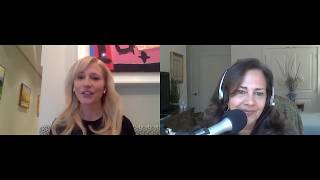
A Finding Brave episode (host Kathy Caprino) featuring Illana Raia, founder of Etra Girls, discussing how girls lose confidence around middle school and how mentorship, role models, and exposure to women in workplaces can help them "raise their hands" rather than lower their standards. The conversation cites data (Confidence Code for Girls: ~30% confidence drop between ages ~8–14; Women’s Sports Foundation: girls drop sports by age 14 at twice the rate of boys), describes Etra Girls’ site visits and girls’ advisory board model, and traces Raia’s path from corporate law to launching the site (retired from law 2014; site launched Mother’s Day 2016; visits began 2018). Practical advice for parents, mentors, and educators is provided, plus next steps (book, Etra Campus, contact/info).
Chapters
Hello, everybody. Welcome to Finding Brave today. I'm Kathy Caprino. So happy you're here. We are. I think this. This episode is going to be maybe after my hundredth episode, but whatever. How exciting. And I hope you've been with me this whole Finding Brave journey. I've loved hearing from you and hearing everything that this is, is unlocking in you about how to live a braver, bolder, more joyful life. And today, our episode today is no exception. I am so, so thrilled to have our guest, Alana Rea. Hope I got that right. Good. And we are going to be talking about, you know, it's all about how we can raise our girls to be the powerful. Well, you're going to. I'm not even going to put words in your mouth, Ilana. You're going to tell us exactly what it's about. But we were talking earlier about how a lot of us in this space are coming at different angles of the same outcome, which is how to live bravely, how to be your highest self, how not to shy away from who you really are, how to speak confidently, and how exciting it is that you are working with girls, middle school and high school girls, to do just that. Right. That's your role now. So, everyone, let me tell you a little bit about Alana, which is you are the founder of etra. Yes, that's the French way to say it. Which means to be. Right. Yeah. And it's a mentorship platform and a training platform, I think, for girls. Everything you have this wonderful new book out, but everything you teach, I think anyone who works with young girls, who parents them, who mentors them, who coaches them, who intersects in any way, can learn so much from what you have to offer. So let's dive in. Thank you for being here. So let's just start with. I love everybody to talk about kind of the mission, about why they do what they do and how that spark started. Can you tell us?
Absolutely. And thanks for having me. I think. I think Brave should start early. So I think if we're finding Brave, we should find it early. I started this. It was a very unexpected project, I have to say. I was a lawyer for a long time and I loved being a lawyer.
What kind of law?
I did corporate law, mergers and acquisitions early on. And then I helped my law firm also build websites inside to track our own data and interest, which is exactly as nerdy as it sounds, but it helped me build the website I built for Etrus. So I. It's funny, but I don't think I could have done it had I not had that experience earlier.
Did you track the data yourself or did someone else do that?
Well, they have a rockstar IT team, but we were building websites and to sort of mine the data and leverage the information that the law firm had. And they called it knowledge strategy. And I really do feel like Ettra is knowledge strategy for girls.
Oh.
Because I'm trying to highlight the best resources and these role models that girls need right now. You know, what can they leverage to make an impact and springboard the interests that they really have?
So can you do this for me? You know, I write on Forbes, as you know, and often when I'm sharing a problem, I have to give data about why this thing is a problem. Otherwise people really don't believe it or, you know, show me. I bet you have slews of it. But can you take us from the ground up why we have an issue here, what we're doing, why we're trying to teach or help or support or mentor girls. What's going on that makes this necessary?
Absolutely. The why is a different issue and it's, I think, the more important issue. But the data absolutely reflects that. By middle school, girls are losing confidence in a number of areas. You know that the Confidence Code for Girls, which is a wonderful book that's been out for a bit, tracked a number of girls between the ages of age 8 and 14. And what they noticed was that between those ages, girls, confidence was dropping by 30%. Between 8 and 14 and 14 years old, their confidence was dropping by that much. The Women's Sports foundation did a similar study in athletics and noticed that by age 14 again, girls were dropping their sport at twice the rate of boys. And yet all of these are girls that prior to these ages would find themselves and describe themselves as super bright, great at all these things. STEM sports, love their classes. And something happens when they get to that crucial age where they're less likely to raise their hand. Or maybe they opt out of a harder math or science class or they don't try for that next level soccer team. And the whys are numerous. And some of it could be peer pressure, some of it could be social media and that curated perfect world that they see. Some of it could simply be that they're not being encouraged in the right way or they're being underestimated a little bit. But the numbers are there and it was a big reason. When I started to think about mentorship, I didn't want to aim it at high school or college. I wanted to go A little bit earlier because I think that by the time you're in middle school, you know what you love, you know what class you look forward to, you know what that favorite activity is and why shouldn't you stick with it? I'm not saying don't try new things, but why shouldn't you stay with the thing you also love? Even in the face of these inhibitors or people that might not be encouraging you early enough.
This is so important. Can I just build on this Alana for a minute? I love this book, the Confidence Code, which is the other version.
Wonderful.
I think it's Caddy K and Claire Shipman and I'm actually hoping to quote them in my upcoming book Most Powerful youl. But what a lot research says to echo what you're saying is before that age, that, that age of 13, girls think of themselves as leaders, as you said, raise their hand to be leaders, think that they can be an astronaut, just like they're on par with what boys think of themselves. And at that magical age or unmagical age, they go underground. And part of it is they become very self. I don't want to say absorbed, but worried about, concerned about body image.
Right? Yes.
And I do think that it is. I don't think we come out of the womb like this. I think it's social programming. And I want to say that quickly. I had an experience. I was in fifth grade and it turns out my fifth grade teacher was my mother's distant cousin and the family was in Greece. And I'll remember this till the day I die. The teacher was very old fashioned, was talking about how boys and girls were interacting outside on the playground that she didn't like. And part of it was I think she felt that girls were too assertive or. And all I can remember is I raised my hand, I was 10 and said something like, I, I don't agree with what you're saying, which is how you think girls should act. And you know, I was a tennis player, so I had boys who were friends and I said something to the effect of boys are my friends and I want to be able to relate to them equally. She was so mad. And I want to tell you, what I remember is that the class applauded. But what I also remember is they clapped me on the back afterwards. But the key thing is she paid my mother a visit.
Oh Lord.
And I stayed in the bedroom and heard her say, Kathy was disrespectful in class. And I want you to know, people, do you think that she would have said that if a boy had said that.
Right?
Never. Never.
Right. Because raising your hand, first of all, highly respectful to be raising your hand and then respectfully saying that you disagree, advocating for yourself. And you know, the idea that we are raising girls. Reshma Sajani talks about it in another excellent book, Brave, Not Perfect.
Right.
And she's got a great quote in our too about the fact that we are raising girls to be less risk tolerant than we are our boys. You know, and we want girls to be brave, not perfect, and we want them to raise their hand, and I say it all the time to my girls, that I want you to raise your hand instead of lowering your standards. And I mean that across a variety of ways. You know, whether you're volunteering, whether you're supporting another girl, whether you're asking that question that, you know, everyone else asks or has, but they don't have the courage to ask, raise your hand instead of lowering your standards, which is exactly what you did. And I hope your mom applauded. I hope she did.
You know, I gotta give my mother's 95. I'm going to see her this, this weekend. I got to give her credit. She didn't punish me. She, you know, she. I don't think she loved it, but there wasn't punishment. But as we talk, can we also flip what we're saying so that parents and mentors and anyone who works with girls can model what we're talking about? So, for instance, for. For our girls to raise their hand and respectfully say, may I share? You know, I don't agree, but may I share? We have to, as adults, be good at taking challenge.
Yes.
So, you know, another corollary is we have to be good at doing it, but.
And we have to show them that we're doing it.
We have to show them what we're doing it, but we have to show that we can be challenged. I remember when I started becoming a therapist, I saw that I was enmeshed with my daughter and I was enmeshed with my mother too, meaning a lot of things. I won't go into that. I talk about boundaries in another episode. But I finally said to her, look, I think I'm too involved in what's going on in your life and you are more capable than that. You don't need to stay doing everything. So from this moment on, I want you to go butt out, mom with your hand when you think I'm butting in. And her eyes got so huge and she was like, yeah, you really want Me to say that. I said, I really want you to say it. So she said it twice in her life. Mom, butt out. And she looked at me like this. And the first time, I didn't like to hear it. The second time, I applauded hearing it.
Right.
So I'm asking parents to really walk this talk, be able to be challenged. Does that make sense?
Yes. And I think that we need to talk about how we're doing that in our professional lives, too. I think if we want our girls, all of our children. But let's talk about girls, to raise their hand in class or ask to try for a harder class or an advanced section or anything like that. We need to talk about what it was like to ask for our raise. We need to talk about what it was like to ask for that promotion or ask for that next project. That can't be talk. That's saved for after the dinner table. We should be talking about that openly in front of our girls so they see how we do it in a professional world. Which translates from the boardroom back to the classroom or the locker room, it translates.
Can I ask you this? How would I put this? To have those conversations? If you're married, if you have a partner, he or she or whatever it is, it's helpful if they're on the same page. So I notice I'm divorced now, but we had a long, wonderful run and raised two beautiful grown people. There might be times where I would talk about gender differences, and it would make the people in my family bristle. They would say, why are you always genderizing things? And to me, it's so fascinating to look at gender differences. It's not something, you know, I'm not always complaining. I think it's fascinating why women say they're sorry when they're not sorry, for instance, and men do not. But do you. Tell us, tell us some strategies in terms of mentoring our girls and being the kind of parents and teachers that we want to be. What do you do when, let's say, your spouse bristles at this conversation at the dinner table about what girls can be that they're not? How do you suggest.
It's a hard question for me to answer because my husband actually is so open to this and so supportive and. And would give my daughter and my son, who are only 20 months apart, the same career advice and really would empower them equally to stretch it. Truly. And what's interesting is I met him in middle school. So how about that? I know, I know.
Were you friends all through middle school?
We were, we were friends all through middle school, all through high school. Yep.
Where was that?
Was that in New Jersey? It was in New Jersey. But I will say that when that happens, or if you're at a multi generational table where perhaps the opinions and the experiences differ, I think it's important to acknowledge that times change, when conversations change and when we're at the point where men and women are each earning 100 cents on the dollar, we won't need to talk about equal pay anymore. But while there is a disparity, and while there's a disparity, that changes again by race, by education, by location, when we stop having that gap, then it won't be such a difficult conversation. But we won't change the times until we talk about these things openly and honestly. And with the younger generation, they can't learn about these things in college. I'm not saying we need to get into pages and pages of data with a middle schooler at the table, but if you break down equal pay to a word problem that a middle schooler might see in math, they'll get it right away.
What a great suggestion. You know, I want to say I got an email from a young man and I could tell he was firing it off, but basically he said I had done a Forbes Post in a YouTube video on what is feminism and why so many men and women still hate it. Briefly, he said, you're wrong. You're outdated. There isn't discrimination anymore. In fact, women are running things and, you know, basically marginalizing men. And he went on to share five things. So I wrote him this email. My family's like, why? Why are you spending so much time writing back? Because it was a chance to calmly give my view, but it was data driven. And really what I was showing is exactly what you're talking about. Of course there, for anyone listening, of course there are instances where women are unfairly dominant or, you know, whatever. They're controlling things that no one should control. Who knows? Or you have a female boss who's discriminatory against men. Of course, of course you have this. What we're looking at are data driven points of inequity. We're talking about pay inequity, we're talking about women, you know, who are graduating with more MBAs, yet why are they not in leadership? So we're not just saying, hey, this is how it sounds. It's data, it's research. And the research is not skewed. It can't be skewed across 50 different sectors. And 100 different research studies. Right? Would you?
But that's exactly why I want to show the girls, the women who are in these positions. So if you take the data and say, you know, this is the way it is and we want it to be different, we should have more female CEOs, we should have more women on boards, we should have more than 20% of the Congress women. Once we understand that, let's find the women who are in the senior positions and bring our girls to meet them. And that's really what I wanted to do with this when I first put the website up. So I retired from law in 2014 and I wanted to do something with mentorship. I had had such great mentors in my life and so I built a website, like I was saying, knowledge Strategy for Girls. And I thought, well, I'll highlight some great resources for middle school girls if they want to stay active with STEM or their school didn't have something, and I'll find some role models and I'll interview them and I'll put the quotes up. And that sort of evolved into putting together a board of advisors of girls and driving to see what they wanted. They wanted to do more than interview the women. They wanted to meet these women. And at the time, we had just been doing it maybe 12 months. I knew that we weren't going to get amazing women to come to us. So I started emailing people at different companies and saying, can I bring a small group of girls in to meet the women at your company? And it's for exactly the reason you're talking about. If this disparity exists, let's find the women in leadership positions and bring girls face to face at a young age so they can really ask their questions. And this became this incredibly joy filled project to say, here are 10 girls, let's pick a company where you use the product. So not a company they've never heard of. Spotify hosted our inaugural visit and the girls knew more about it than I did. And we went and we met women in all different levels in all different departments. And those girls had their hands up all afternoon. They asked everything from did you know you would have a job like this when you were my age? To girls asked, were you scared to raise your hand? What was your favorite class? What's hardest about your job? And I knew from that first visit at Spotify that this was going to be the heart of what I was doing. It was no longer going to be about posting resources. It was going to be about bringing girls directly into the companies. So they could see where these women work, watch them at their desks, see who their assistants were, watch them in a boardroom. We don't stay that long. We stay maybe an hour or two. Very light lift for the company, but impactful. Endlessly for these girls.
I love it.
Do you have a.
When they come, is it really question and answer mostly, or do they. Do these women stand up and say something? How does it work?
It varies depending on the place and depending on how we're traveling. If I'm taking a bus with these girls from, let's say, New Jersey or Connecticut into Manhattan, we tour the place right away because you get off the bus, you got to walk around. The girls are great about not photographing if there's an area where they're not allowed to have their phones out. So we were at YouTube, and phones were in our pockets for a considerable portion of that. But otherwise, they're taking pictures, they're seeing everything. And we usually wind up in a conference room. And either the company brings a number of women in to talk to the girls and a panel format, or sometimes we've been at Morgan Stanley or Goldman Sachs, where we went to different directors offices and talked to them about their jobs. It can vary, but the girls are on their feet and moving around and really getting a sense of the culture of the company, which is important.
How do you choose these girls?
So the board. When I said I started a board initially.
I want to hear that. Yeah.
So when I first had the idea of doing this, my daughter was in middle school, and it kind of got tabled until I left my law firm. At the time. I wound up taking her to have lunch with a bunch of different accomplished women who were just friends of mine because I felt like she wasn't seeing enough female role models. I felt like she didn't know what I did every day. And she'd never had a female pediatrician or a dentist. And I just somehow felt like I went to a woman's college. I'm a very enlightened person. How am I not showing her this enough? And then I wanted to expand it when I. When I stopped practicing law. So the idea of forming a board was important. I no longer had a middle schooler. So the girls. Initially, I had about 10 girls. They were daughters of friends, or one of them would tell another friend. But when I started doing the visits, it grew exponentially. I have 70 girls on my board now, all of whom inform every single thing I do.
So how do you do that for any entrepreneur, Anybody in A business that, you know, I'm always saying, when you're making a big decision, ask. Ask the people you serve.
Don't. Once a month.
Yeah. Well, how do you do that?
No. So once a month I send. We don't meet in person because the board members are all over the country. Once a month, I send an email out and I give them a little update as to what we're doing. We interviewed this person. We went here, you know, when we were working on the book. Here's where we are with the book. And then I ask five to 10 questions. And the answers to those questions drive every single thing we do. I don't want to take them to a company they're not interested in. I don't want to interview someone where they don't have a lot of questions that are relevant to their age. So if I say, oh, we're going to interview an astronaut, what would you ask? They all send their questions, and I pick from those questions, and that's what I use. So when I'm interviewing women, they're not my questions. As fascinated as I am by these women. These are questions from the girls, or sometimes they'll conduct the interview too. So the feedback. So the feedback is really very, very direct. And so then in terms of the lunch and learns, the more active we are on social media, the more one girl tells another girl, oh, we're doing this. People email. They email me directly. I want to go on this one. Or is there a space for this one? I try to keep it very diverse. I don't necessarily want a group from all one school. I like to mix it up. I like girls that don't know each other. I want girls from different backgrounds and different ages because I think it makes the conversation in the conference room more dynamic.
How fantastic. And, you know, just everything you're describing is also showing how you are demonstrating a respect for young women. You know, you're having them inform you.
Sure. Well, this is for them, the access. I'm nothing more than the springboard to provide them access to these women or to put them in the door of the company. How the conversations go is up to them. How they focus on a particular topic. I was fascinated. We went to Google and I had so many girls asking, did you like math when you were my age? Were you scared to raise your hand in math when you were my age? And to their credit, these women, one after another, said, it wasn't my favorite subject or I loved science, but I was intimidated by math, but I stuck with it. And I asked questions. And now look what I get to do every day. That, to me, was more impactful than having their mom say it or their aunt or their teacher because they were in this unbelievably cool place. Looking at this woman who got her job because she stayed with something that was difficult initially and then the world opened up.
How incredible. So there's two paths I want to go down in our time together, remaining time. What I'm burningly wanting to ask, let's go there. So many women and men are in fields like law and they come to me and I hear from hundreds, you know, over the years saying, I want to do something so different. I want to do something of value, of meaning, of purpose. But I make a lot of money. I have a big house. There's no way I'm scared of money. We need the blah, blah, blah. I'm taking care of my. A million. You know, I call them. Excuse me. Nobody wants to hear that. They're excuses, but they're excuses. I know because I made all of them. Can I just ask you for a minute for a detour? How did you. Oh, I'm guessing there might have been a little fear to give up your law practice, your work in law. How did you. What was the journey from the moment you said, maybe I could do something to this? Can you give us some of that?
Absolutely. I was not at all unhappy at my law firm. I loved my law firm. I know how unusual that is to say. I loved it and it was a big global law firm and I was there a long time and it just was terrific. It was a growing place for me. It was a very forward looking company and the things I got to do there for me were very creative and so interesting that I loved it. When I felt like it was time to leave, it was just this feeling that I don't think this is the last job I'm supposed to have. And so, yeah, it didn't come from an area of dissatisfaction. It just came from a what's next? And it was tied into my kids were going off to college and there was just a new chapter that was starting and the department that I had been in was built and humming along and I just felt like it was going to be an okay time to do it. And I had been to Arianna Huffington's thrive conference in 2014.
I was there too.
Really?
With who co hosted it. I've interviewed her too. Oh my God, I can't remember. I. Is that her name?
Yes, yes, yes. And they had the Big. It was the sleep revolution. And they had the bed on the stage and everything. Yes, I was there. And, oh, so you're gonna like this story. So I. It had really been interesting for me. And she had said something important, which was, you can accomplish something by putting it down. You can accomplish something by saying, it is time for this to stop and something else to start. And that helped in my decision. And so when I then launched the website, which I was petrified to do, like I said, I did not have a strong tech background, so I built this thing with a drag and drop platform. It was as rudimentary as it could possibly be. And I sent the link every day to someone I didn't know saying, I just did this. I'd love your feedback. Good or bad. I'm new at this. Tell me what you think. And I sent one email to Arianna Huffington saying, I had been at your conference. Well, I'm fearless about it, and I had nothing to lose. It was a free website. I was trying to. And she wrote back almost immediately saying, I love what you're doing. I'd love for you to write for Huffington Post. This is when she was still there. We'd love a video of you with these girls for the Talk to Me series. And that took away a lot of my fear because it came so early. You know, they said, send a logo. We didn't have a logo. I took a screenshot off the corner of the website. But the fact that she liked it, the fact that it resonated with her on some level, made me feel like this is very, very scary and a very public thing I'm doing, which was new for me. But she gave me the courage, and starting to write for Huffington really gave me the courage to explore these issues and try breaking down big topics for girls questions.
Because I want to break this down for everyone listening. And what goes off in my mind is, well, yeah, sure, you got Arianna Huffington to say something good about you.
That.
Because people are looking for why they can't do what you did, why they can't do what I did. So I want to break things down. First of all, I'm interested. Why did you not hire someone to do the website? It sounds like what you were afraid of was how the website looked.
Not worried that you were doing it. I was worried it wouldn't have all the capabilities and the bells and whistles that. That perhaps it should have. I didn't hire anyone because I didn't really tell anyone I was doing it in the beginning. I put this thing up on Mother's Day of 2016 because I knew it would be a day everyone would be on email and checking things, and I just figured it was good to put it in the traffic. But I hadn't told a lot of people. I had sent screenshots to maybe 20 women who had really great jobs and I thought might give quotes and I thought would like the idea of the mentorship. But it had been a fairly private thing in the beginning. I have to say I would have done it even if someone like Arianna Huffington hadn't responded. If I had never heard from her, I fully believe I would have stayed with this. And so if you're talking about other adults who want to make a change, who want to find that brave and make that shift, I think do it. I think you have very little to lose. If it had been awful, if everyone had responded and said, this is a ridiculous idea, or if they'd said, there are 900 others just like it, the time has passed, I hopefully would have tried to find a fresher way to do it, but stayed with the idea. I wanted to give back to girls. I had a network of strong women and I wanted to have the right voice to write to the girls. So that's why I wanted to write the content on the website and write the articles. I wanted a consistent casual voice. And I think, I think you just try it.
So I'm gonna highlight a few things. What you said reminded me of something I learned from Sarah Blakely in a talk she gave years ago, which was she didn't win. She didn't announce to everyone what she was doing with Spanx. She started quietly, quietly, and that's what you did. And I see a lot of coaches, a lot of people coming out and I've done the same thing.
Woohoo.
I'm doing this thing. We don't have to announce it to the world. You know, it doesn't take you risking everything in the world to do you want to do. Do it quietly, do it on a bootstrap.
It, stay in your comfort zone, stay.
And do in your law firm, start a website. It doesn't take over your life.
So the way it grew was one person told someone else, I sent it to people and said, show it to your daughter. What do they think? The girls sent it to each other. It was as quiet, whisper style, hey, have you heard about this as it possibly could have been? And it's still growing. It's still fairly young.
You're also asking for help. If everyone knows that let's stop thinking we know all the answers and let's just get curious. I love it. I love it. All right, a few other things. Now. Tell us more about how we can mentor the girls in our lives. What can we do?
You know, give us advice here, Listen to them. Don't underestimate them for a second and listen to them. If they say they love chess and none of their friends love chess and you don't play chess, let's find some clubs, some online resources, a local park that has safe play where they can explore that. I think if they're expressing an interest in something, even if it's not the thing that you did as a child or that all of their friends are doing or it's something you know nothing about, let's explore the resources they're out there and help them stay true to the things they love right now. So I think that's one way. I think the other way is mentors don't have to be in person. You can find mentors for your children in books on social media. It doesn't only have to be the celebrities and the rock stars to do it. If your children are interested in space, NASA has so many different social media accounts where you can follow the astronauts, see where they're going, DM them and ask them questions. There are lots of different ways to find a role model on film. And it doesn't have to be. You don't have to know them personally. It can start that way. But find the right role models for them and let them. Social media can be used for good in that respect.
Oh, I so agree. You know, there's role models and they can be fictional, they can be deceased.
Yep.
Mentors are a different story in that, you know, we want them in our lives. And sponsors. Can I just throw out that? Sponsors, in my view, are high level, powerful mentors who can open doors when you're not in the room.
Yes, absolutely. But at the middle school level or even at the high school level, these things can kind of compress into the same thing, which is someone who does the thing that you want to get better at. And they're willing to take the time to encourage you and to guide you and someone that you're going to stay in touch with as time goes on. So as they get older, those labels will become more important. But in the beginning, it's an expert that's interested.
Oh, I love it. You know what you said about listen to your child and honor what they care about. I interviewed Esther. I'm not sure. I'm pronouncing it Wojcicki, who has raised three incredibly successful daughters. One who's the CEO of YouTube, another CEO of a tech, you know, huge tech firm, and she is a renowned educator. And she said the same thing. Follow their lead. And, you know, another piece of that is say your daughter says, I love engineering, and you think, that's not something a girl does. Be aware of your own gender biases. Some of the research is showing one of the reasons that girls go underground in STEM and and don't pursue it are the teacher's biases.
Interesting.
So be so hip to your own bias. Whatever they want, honor it. I don't care if you think, she can never get a career in this. Shut up.
Honor what your child wants and surround them with books and movies. And there are so many different forms of media now where they can see themselves in these roles. It doesn't just have to be a visit to Google or YouTube. It can be the right movie that shows female astronauts, female engineers, athletes. It's there for them to see. And if we're watching it, they'll watch it.
Oh, I love it. Now, what's next? So you started with this vision, and you did this in 2016. You started.
We launched in 2016. We started the company Visits. It's fast. We started the company visits in 2018, and the book came out four weeks ago. And the book really is a compilation of all the articles when I was writing for Huffington and Thrive and the people that we were interviewing. And it's a big compilation, a tangible vision of what we've been doing. So that's been four weeks. What's next is really interesting to me because now that we're three years old, we are growing with our girls. So I had my first set of girls who were high school students on the board going off to college, and they said, I want to keep this with me. How do I mentor younger girls now that I'm in college? And how do I reconnect with the women that we met on these trips? So I think that we're going to start ETRA Campus, which is going to be a college branch of this, so that girls can do just that if they want to get involved for a community service project or sororities mentoring younger girls in the area. Let's provide a curriculum to do that. And then if they want to reach back, talk to the women who spent time with them when they were younger. Let's talk about how you make a LinkedIn profile. Let's talk about how you do a resume and let's reconnect you with some people. We're going to try it and see the girls to help.
So, you know, I've interviewed two people recently who have mentorship matching programs or so you know, one has 300 universities who are. So Mike, one question I have is do you have a mentorship matching where I want to talk to someone who's in media. That would be Kathy. You know, do you have.
I don't yet. But again, I'm learning.
Let's talk.
Right. So let's talk about that because that's exactly what we need. And this is exactly how it's been happening. There hasn't been a formal. This is our giant business plan, which I recognize for a corporate lawyer not to have gone into this with a big business plans a little ridiculous, but it has grown in this organic way and it happens just like this with conversations like this. I love it.
And just to talk about that, in a way, I feel like first of all, you're very business savvy. You're very, very data savvy. I'm sure you're very financially savvy. I'm guessing sometimes going off and doing a huge business plan. And although I tell every would be entrepreneur, you got to have one. Sometimes doing it can be demoralizing because you're looking at the big vision and you feel so far away from that that you don't even get out of the gate. So in your case, I think it was great that you didn't have it.
Now I think it might be what I didn't. Yes. And it's forming and. And I'm having conversations with mentors of my own to figure out exactly what that needs to look like. I knew at the beginning what I didn't want it to be and I think that was helpful. I didn't want it to be something that focused solely on the social, on the emotional, on the middle school bullying and what happens at the lockers. I think that's very important and I think there are experts more qualified than me to handle that stuff. We weren't talking about sex or drugs or faith or any of those things. Again, I feel like that's the province of people more expert. I wanted to find out what the girls were interested in and try to make the connections so they could meet these women or hear from these women. And I knew that was the sandbox I wanted to stay in. And the 10 topics that are on the website, which are also the 10 chapters in the book be strong, be brave, be connected, be innovative. We're all leading towards. Let's talk to entrepreneurs and be innovative. Let's talk to athletes and be strong. I wanted to stay in that space because I knew that's where it was legitimate for me to play.
And there's another tip, folks. Find the niche that speaks to you. I mean, as someone who's been doing my own thing 15 years, I've been on every up and down. Let me be an executive coach where a company helps me or hires me. Let me do this, let me do that. You know, you went immediately to let me stay in the sandbox, in the swim lane that I want to be in. That's my gosh. You saved yourself a lot of time and a lot of money. So everyone who's listening, stay where you want to stay, where there's value, where there is a need. I think sometimes we mess it up five different ways. We're doing something that we think we should to make money or, you know, I really don't want this niche, but I think this is where I have to go. Go where you feel drawn to. Go where there is a need. And you did that so beautifully.
Oh, thanks.
So tell us, where do we read the book? Where do we find out more? Where do we reach out to you and say, could I be a mentor maybe?
You know, Absolutely. Or a board member? The website is etra girls.com and all of our social media is the sametragirls. The book's available on Amazon, Barnes and Noble, Indie bound. There's a book page on the website. You can find all the options there. And that's the idea of it. Etra means to be. And the idea of asking girls who they want to be, I don't think it's too young to start. So anytime you see Etra Girls, that's where you're gonna find us.
Etra Girls. Oh, I'm so inspired. Thank you for coming and sharing.
Thank you for having me.
And I want to help in a bigger way. I hope you do too, people. I would love that, you know, and if they do want to really reach out and say, I'm ready to help.
There'S a contact me page on the website.
I want you to be inundated in your inbox.
No, no, no. My email's there. I've got interns at the ready. Bring it. I would love it.
You're inspiring in every way. Thank you so much, folks. If.
Thank you so much.
We would love to hear what. What you're getting out of this talk to us even about the challenges. How are you challenged in raising your middle school girl or boy? Let's not forget boys are also going through their own things as well. You know, it's a patriarchal world we live in, and boys are put in boxes that they don't fit in either. So we don't mean to exclude. But what are your challenges? How can any of us help? Let's hear from you. We'd love to. Thank you so much. I want to come back again. Everybody, have a great week, and we'll see you next time. Bye. Bye.
More from Kathy


Elevate Yourself, Elevate Others, and Amplify Good | Chris Cooper | Finding Brave Ep. 334

Finding Brave Epis #333: How Leaders Can Harness AI Without Losing Their Humanity, w/Bennett Borden

Finding Brave Epis 332- How to Stay Brave, Valuable and Visible in the Age of AI, with Raman Rai

Finding Brave Epis 331 - The Power of Positive Disruption, with Dr. Patrick Leddin


Finding Brave Epis 330 - Being 40: Letting Go and Embracing Who You Are, with Stacey Lindsay

Disrupt Career Reinvention with Kathy Caprino - via The Disruption Lab Podcast w/Patrick Leddin

Creating Neurodiversity-Friendly Work Cultures: Simple Workplace Adjustments Matter

Finding Brave Epis 329 - How To Create a Neurodiversity-Friendly Workplace, with Kristen Pressner

Finding Brave Epis. 328: Reclaiming the Power to Trust Your Own Voice, with Dr. Cindy McGovern