Finding Brave 106: Turning Our Creativity Into a Leadership Force, with Laverne McKinnon
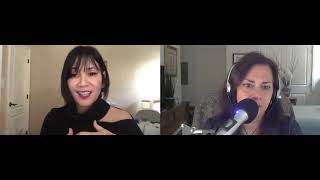
A Finding Brave episode (Jan 16, 2020) in which Kathy Caprino interviews Laverne McKinnon about turning creativity into leadership. Laverne shares her path from story-obsessed student to TV/film executive and producer, and discusses resilience after rejection, emotional intelligence in story work, and common barriers women face when stepping into leadership (people-pleasing, mistaken beliefs about leadership, discomfort with money/numbers). She describes her coaching approach (identifying saboteur thoughts, clarifying values), a six-month LA-based leadership program launching end of January, and contact points (website and Instagram). Kathy notes her own upcoming book (July 2020).
Questions this video answers
July 2020
Website: lavernemckinnon.com; Instagram: @laverne.mckinnon
The program starts at the end of January (next offering begins at start of January; program begins end of January).
Chapters
Hello, everybody. Kathy Caprino here. Welcome to another episode of Finding Brave. We are going to have a ball today, but before we launch in, I just want to take a breath. How are you doing? I forget actually when this is coming out because we do these in advance, but maybe it's even after the holidays. So I'd love to hear from you how you do and how did you make it through. The holidays can be rough, and it can sometimes require Finding Brave in our conversations, in our boundaries, in how we take care of ourselves, which I'm going through a lot of you can kind of hear in my voice. I just came off the three concerts in a row, holiday concerts, and I forget to care for myself, which, you know, sometimes the coach needs a coach lots of times. But I hope you're doing well. And I'm so excited to introduce our guest today, Laverne McKinnon. Laverne, thank you for being here. Thank you for your time.
I'm so happy to be spending this time with you.
Oh, it's so great. And we haven't caught up in a while, and I want to tell you how I heard of Laverne, but I want to tell you what we're focusing on here, which is how to turn your creativity into a leadership force. Right? Which is exactly what you embody. So before we get going, everyone, I want to tell you about Laverne because it's going to blow your socks off. Laverne is the executive producer of the Netflix series Girlboss and the co founder of K and L Productions, a film and television company created by Kate Cannon, writer of Pitch Perfect, the Pitch Perfect franchise, which I adore, and director of Blockers. K and L has a. You have to explain what this means to me. A first look production deal at Sony Television with multiple projects sold, including Amazon, Fox, cbs, NBC, abc, TBS, and more. Laverne and Kay are passionate about championing underdog and underserved stories. I can't wait to hear more about that. Laverne is also a leadership and personal coach, certified grief counselor, and an adjunct professor at Northwestern University's Master's program in Leadership for Creative Enterprises. For a significant part of her career, she was successful programming executive with stints as svp, Drama development at Seattle Holy Cow. And EVP of original programming and development for Is it. How do you say it? Epix.
Epics.
Great. What I also just adore about your bio is that you're a passionate advocate for adoption and foster care programs as well. What are you doing with your. What am I doing? With my time, given that. It's so amazing. Holy cow. All right, let's dive right in. First of all, I really would love to know how you got into. Into entertainment. Laverne, how did that happen?
Well, it all started when I was really, really little because I. I adore my older sister, and she taught me how to read when I was teeny tiny. So I grew up loving story, and my parents never had any restrictions in terms of how much television I could watch. So I watched hours and hours and hours, and. And I was so painfully naive because I didn't really understand what entertainment was. I got the sense that, oh, there are actors, then there are actors. And it was finally in college, I went to school at Northwestern, that I learned that, oh, there are writers, there are directors, there are producers. And so I just followed my passion in terms of story, and I love research. And I talked to a gazillion people, and I discovered that, oh, you go to Los Angeles or you go to New York and you become a part of the entertainment industry. I was really fortunate to be able to move to la and I got a job as an assistant. And, you know, those layers of naivete just started to peel away.
What was the biggest shocker once you got into the field? What was the big, oh, my goodness, this is not what I thought.
Yeah, I discovered that there was a job that I could do where I could read material and give creative thoughts. And this was a job, a creative executive job, a development job. And I was like, oh, my God, people are going to pay me to actually read something and give an opinion. I have no idea that that in a million years could ever even exist. It wasn't even something that I thought, oh, if I could do that. It just was like, holy cow. So that was a huge epiphany. And as soon as I learned about that, I was like, that's what I want to do. And that turned into a segway into producing.
I'm interested in this. Did you. In watching the hundreds of hours of television and reading, do you think you had an innate gift of understanding what good story is? Do you think you had a gift more than other people? I don't mean for you to feel like you're bragging, but why not? It sounds like you were able to identify this is what makes a good story early on. Were you?
I think that I have really solid emotional intelligence. And so the stories that resonated for me are the ones where a character goes on a real journey of transformation. And so. And then I Started to really study the craft of story. And I used to write and produce educational films. And I discovered that I didn't love sitting in front of a screen and writing, but through actually writing scripts early on in my career, I really learned a lot about story craft and I continue to see it as well. It's like I read so much material. Even now I'm just constantly, you know, studying like, oh, how did that, you know, outlining things and being like, oh, that's how that happened. Broken.
I so admire this talent. You know, I'm a nonfiction writer and I'm really comfortable in that world. But I, I think as we talked when we first met in 2017 and you helped me find my wonderful writing coach, Bruce Gelfand. Yeah. I find the creation of characters, the depth of it's hard. I don't have. I don't have a natural ability. I really admire your talents. Wow.
You know, I think it's interesting because there's like an important, I think distinction between having like that hard conversation with yourself of is this like a saboteur voice talking like one of those voices? It's like, oh, I'm not good enough.
I got that in spades.
Yeah, we all do. Versus oh, you know what? This isn't my talent. This isn't my gift. And so, you know, like being able to discern between is that, you know, horrible voice that's keeping me small or is there a hard truth here that I just need to face and you.
As my coach as well as Bruce, because, wow, it really did rear its ugly head. My imposter feeling or you don't know what you're doing or you're going to be terrible. I was even afraid to give my assignments to Bruce. He's like, good God, you know. All right, well, that's enough about me. Let me ask this. So you got into entertainment in a niche that I think you sound perfect for, but you, you really thr there where I think many don't. Would you agree? You know much more about it than I do. La. You really have thrived. What, what is that right? And what, what do you think are some keys to that thriving a cutthroat world, Maybe even thriving a male dominated world. What do you think made you rise above?
Well, I definitely had significant face plans in my career. I've been fired stakes. And I feel like ultimately what has allowed me to thrive and to succeed is that we as human beings are naturally creative, resourceful and whole. And it took me a long time to actually embrace that. And Recognize it, and to understand that I am resilient. It's just like, who we are as human beings. And so I think it's that resiliency and the ability to say, you know what? I face planted, Wow, I really screwed that up. I, you know, I stepped on my own values. I got out of line, you know, all of that stuff, and then go, okay, that's what happened. And then how do I continue to move forward? I had. There was one point in my career where I felt like I wanted to leave. I was like, this isn't working. I'm a failure. And I called up someone, a man named Gavin Pallone, who I knew as an agent. And he was like one of those cutthroat agents. And then he had became a producer and a director. And I called him out of the blue because I wanted some, like, hard truth advice. And he was so lovely. He's like, let's have breakfast tomorrow morning. I was like, oh, my God. I think it was like two days before Christmas. And I confessed. He was like, I just feel like I'm at the end of my rope. And he gave me amazing advice that I hold so close to my heart, which is. He's like, the only thing that's stopping you from success is giving up. He's like, just stay with it. And so I feel like in terms of that's because that every day in the entertainment industry, regardless of what position you hold, you're hearing no after no after no after no after no.
Is that what was the hardest thing for you? I was gonna ask. What was the thing that you said? All right, this is it. I'm done.
You know, I think it was honestly feeling misunderstood, because I do feel like I have a big heart and a good heart, but I'm also. One of my qualities is that I'm a lifelong learner and I'm a voracious reader. I'm always taking workshop. It's like, I'm constantly looking at self improvement. When I'm in a job for a period of time, I get restless because I feel like, oh, I've learned this, and now I want to go learn other things. And then I'm also ambitious. And so I feel like the combination of me wanting to always learn something new with ambition, people perceive that in a way that I didn't intend. And so I. Which is, I think I stepped on some toes, you know, by always asking. And people were like, oh, she's judging me. It's like, why is she asking me this? Or she's so uber ambitious. She's, like, constantly looking for more responsibility. And I was like, no, I'm looking for more opportunities to learn.
I can't tell you how I relate to this. Laverne, like, how I needed to talk to you today. And can I just highlight two things for people who are listening? I think when we want to learn, sometimes our questions sound like challenges, and they are not. They're just. And I'm in a situation where I'm with other people right now in a learning situation, and they're not asking questions, and I don't care. I have to ask questions. When you're telling me to do something, I gotta understand it. But if the person you're challenging doesn't come from a rock solid foundation, they feel like you're judging and criticizing, and the other people are like, why don't you just shut up and do what you're being told? Does this resonate with you?
Is this what kind of what you're resonates? And then, because I'm also recovering perfectionist, and so you combine that sense of curiosity that manifests or looks like criticism with being a perfectionist, and it just. It becomes sort of flammable.
Oh, you're so right. I call it, as we've talked about, a perfectionistic over functioner doing more than is appropriate, necessary, and healthy and trying to get an A in all of it. And I call myself a recovering po. I can tell you folks, it sounds funny. It can really damage your life. It can damage your relationships. It can exhaust you. All right? So thank goodness for this wonderful tough love friend. Not tough love, but a friend that you respected who said, don't quit. Don't quit.
Yeah. And the truth is, he's not even a friend. He's just an acquaintance with incredibly generous heart. And I feel like that breakfast also taught me so much about how to, you know, segue into, like, leadership of, like, you know, he just had a very honest, straightforward conversation with me, and he made a stand, you know, based on his own value system. But, wow. And I try to really pay it forward in the same way of, you know, being curious and compassionate and being supportive is sometimes telling people, you know, some hard truths.
It's like, you know, have you ever had to tell someone, I don't think this is the right field for you?
Not the right field, but I've had to have some. A lot of tough conversations in terms of the quality of the work is not meeting the standard that either the company that I'm representing or the company currently in is, you know, like, we're really holding the bar. And, like, my desire to, you know, work with you is because I really believed in you. But now what's coming back, I don't think is reflective of, you know, your talent or what I perceived as your commitment to this project. And. And so tough conversation and is that usual?
So I want to segue to leadership because you're doing a lot of leadership work. You do. You're launching a program. I want to segue to that. And part of leadership is effective communication that builds bridges, doesn't destroy people, doesn't. You know, there's so much terrible communication in between human beings, but certainly leaders to managers to employees. But when that happens, do you sometimes have to fire them or do you. When do you decide? As a leader, I think you have enough talent that I'm going to work with you to develop it, or when is it. I can't. I can't do this anymore with you. When do you make that decision?
I feel like if someone's willing to do the work, I'm totally on board. But if someone's not willing to do the work, which is not just about the, like, the work of the project, but it's also the personal development work, because it's just like, it's one of my core values. And I just feel like, you know, we all have room to grow and to evolve and meet our potential. And our potential, I think, is always shifting. So it's like, we may not be the right partnership, and we have to part ways. And so can you tell me, Laverne.
What is the biggest personal growth in Gap? You see as a leader, as a manager, as a project developer, as an innovator, what do you see people not doing personally, in terms of growth?
Yeah, it's. It's really about looking at the quality of our thoughts.
It's a tweetable. Tell us more. Quality of our thoughts. Tell. Tell us.
Being able to, you know, going back to the conversation about saboteurs, it's really being able to identify, okay, is this, you know, is this thought helpful or hurtful? Is this thought a saboteur voice that's keeping me small? You know, and to get into some lingo here, is this a mistaken belief? Is this, you know, me saying, oh, it's never easy? It's like, well, that's a mistaken belief. You know, it's like. And that's like, sometimes I slower stop myself because I'm like, this is just gonna be too hard. I'm not gonna do it. And or, you know, again, using some lingo here, a cognitive distortion. So it's like, where the actual thinking thought is distorted. So, for example, that might be catastrophizing. I got a parking ticket the other day, and I was like, oh, my God, this is a disaster.
It's kind of a first world problem and not a big one, right?
Yes.
Yeah.
And so it's like, really, like, in a way, like pruning our thoughts, like pulling out the weeds. It's not a quality thought. Like, let me yank that. And so let me come up with, you know, replace that thought with something that's actually going to be helpful.
Love it. Do you ever. I'm going to use you as my therapist right now, Laverne. I hope that's okay. Do you ever. I'm going through this right now. I'll be really honest. I'm elevating to another level, I think, because I have a book coming out with Harper Collins, and what I find is I am so beleaguered even more with how many. How much people want of me. So I hear from about 500 people a month who want to be. Literally, I mean, who want to be featured in Forbes, who want to be on my podcast, who want this, who want that. And I have boundary problems as it is. I'm a people pleaser as it is. So what I find. Yeah. So I'm interested as a leader. If I were working for you and you saw that she's beleaguered and she's not saying no, and. Or there are things I really want to say that the good girl in.
Me.
Can'T say because I don't want to hurt anybody. So if you saw someone like that, I mean, I really think, no, we don't want to run around hurting people, but I think sometimes hard truth has to be said.
Yes.
Like, I'm not going to connect with you. I'm not going to feature you, because, frankly, the way you just treated me, it's not. It's. It's not in line with my values, and I only feature people who are in line with my values. I'm so scared to say that. I'm being really transparent. What would you say to someone who's working for you that you see they can't say the hard truths that need to be said. Have you ever had this? I don't want to talk about it if you've never had it as a.
Leadership issue, because I think that, you know, your situation isn't unique. And you're right. You are in this wonderful, like, transformation moment congratulations on, and that you've got 500 people who are reaching out to you consistently to say, hey, me, me, me, me, me.
Right?
What I hear you saying is that you have real clarity around this value of hard truth. And also that you're in the space right now of you're looking to multiply what you do and such onto a grander level. So it's making that, like, being conscious of what value am I honoring? And you already know this because you said this, but value my honoring by saying, no. And it's like this discomfort that you're feeling. And again, I'm just telling you things that you already know. It's like, it's uncomfortable because you're growing and you're changing. And so what part of you could you be accessing in order to say, no, we're not, you know, we're not aligned. Or it's like. And also, I have to say, getting comfortable with just not responding, that takes a lot of time and energy as well. And if you don't feel it inside of you, I come up with this thing that I learned from the coactive training institute where I got my certification as a coach.
I love coactive. It's my favorite training program for coaches.
So that, like, the crew member, what part of yourself, or is there someone outside of yourself that you can identify? So, for example, who can help you create that boundary and say no? So, for example, one of my crew members is Victoria Beckham. And I mean this with so much love and respect. I want her as a crew member. She talks about this thing where she is, like, resting this bitch face, and I'm such a people pleaser. I want to be nice, but sometimes they have to call on, like, my Victoria Beckham to say, you know what? This situation requires me to have resting bitch face and say, no. And being able to, like, channel that energy helps me defeat the saboteur who's like, no, no, no. Now they're going to hate you and they're going to say bad stuff about you. I'm going to come back again. Or they're going to, you know, spread rumors about your. My brand or et cetera, et cetera.
Right?
No, it's like my Victoria Beckham resting bitch face says, not my people.
My God. First of all, I can tell what an amazing coach you are. And, folks, as you're listening to this and watching, look at what great coaching is. You didn't make things up out of thin air. You listened intensely for everything I said, right? And Then you pulled it out, and what you said took it to another level, but none of it was jarring and unusual. It's everything we know. Like you said, you believe every person is whole and resourceful and resilient. It's. We either forget it or. One thing I just want to highlight. I think we often lose ourselves when either we're tired and not taking care of ourselves. So the strength and the courage that is required to be what we want to be wanes because we're exhausted, we're beleaguered. But also, I really see it that when you launch to the next level, it's almost like a breakdown moment happens so that you can have the. Like, I've had so much conflict and confusion in the past week, and I think it's so that I can strengthen myself.
Exactly. You are totally reading my mind. Where it's like the beleagueredness, it's like the breakdown leads to a breakthrough because you're like, we're holding on to something that's no longer working for us. It was wildly effective.
Right.
But now it's like, as you said, like, you leveled up. And so those tools and skills, they were good for that, you know, the level below. But now it's like you. You're developing new skills and tools for this next level. So. Yeah, and it takes energy. It's like going from, you know, like lifting 8 pound weights to all of a sudden lifting 12 pound weights or 15 pound weights.
And you're going to maybe hurt yourself in the beginning because you're applying the same approach. Folks, this is why people need coaches. I mean, I really teach this stuff every day, but when you're in the thick of it in your own life, ah, you know, let's face it, we need an outside intervention. Well, thank you for being my coach. All right, now, about leadership. Can you tell us. So we're talking to people that, let's say, have a creative gift, but they also don't want to just supply that gift, but they want to be leaders in their field.
Yeah.
What are some of the things you see, either the gaps you see that women face or men or the tips or the, you know, the pitfalls you face that you had to learn to be just like what you just shared. Beckham's, you know, bitch face. What do we need to know? Especially? I mean, I really do feel women tend to be people pleasers. They tend to have these seven damaging power gaps. They don't understand their talents. They don't ask for what they deserve. They don't speak up. Powerfully, powerfully. What do we need to know when we want to ratchet up from. I'm an incredible creator and contributor, but now I want to lead.
Yes.
What do we have to know?
My experience is that. And you're so dead on, is that women. And I hate to generalize, but I'm going to for a moment that absolutely we don't see ourselves as. As leaders because there's an inherent mistaken belief that leaders are extroverts who are in CEO positions, who are politicians, who are, you know, they bully, they tell people what to do and how to do it. That's actually not a leader on any level. Maybe at the most effective, they're a really good manager. But leaders touch, move and inspire and bring. And going back to coactive, there's this really great way of describing it's being in action together is how describes leadership. And as women, we are so naturally able to do that, to be in action together, because we are naturally empathic. We naturally are incredible listeners. We are naturally able to take horrific things and then turn them into wonderful things. So the biggest obstacle I see in terms of, you know, specifically women making that leap is having that mistaken belief. So the coactive model says that there are several different types of leaders. There's a leader in front, which is the traditional leader of the extrovert, but there's also the leader behind the leader in the field. And of course, we all have the leader within. And so I very much think of myself as the leader behind or the leader beside. I love to help people across their finish line. And that's, you know. Yeah. And so that's. Get rid of that mistaken belief and realize it that we can define leadership in so many different ways.
I love it. You know, I've interviewed Karen Kinsey House, the co founder, twice. Once on this podcast. Once, what a love and what a brilliant mind. And she. So do you know her? She just walks it, she just embodies it. Oh, I just send everybody there who really wants to become a great leader as well as a great coach, which is a beautiful marriage. Can I add a layer to what you're saying, Laverne, and see if you agree? I couldn't agree more with every word you said. And I believe this. For us to have the life and the career we want, we need power. And what women say to me, some women, I don't want power. And I say, why not? And they say, because power is abused. Just take at a look. Look around.
Yeah.
And I try to Edge, educate, or train around. You know, as Shakespeare said, nothing is but thinking makes it so. Power is, of course, not inevitably abusive. It's. It's how you wield it. And it's time that each of us step up to embrace and claim more positive power. You cannot have what you want in life with no power because you're Jen, just a victim. Would you agree with that? Would you agree that. Oh, she may not.
You know, I. I totally get what you're saying, and I agree with it philosophically, but with. I guess I'm like. Like wordsmithing, word adjustments, because I just. And I've certainly been on this pendulum swing where it's like I feel completely powerless, and then I get into a situation. I'm like, oh, my God, I'm powerful. And then I'm like, oh, my God, I'm losing my power. And I'm like this. I'm constantly swinging back and forth.
Interesting.
A lot of the work that I do with leaders and in my coaching practice and how I want to live my own life is about knowing my values, being crystal clear on what my values are and living them and honoring them, and knowing what my purpose is. And when I do that, I actually. The pendulum slows down and I come to a place of empowerment, and so I'm not interesting back and forth. And so that place of empowerment is just so rich and delicious and allows us to navigate those natural obstacles and challenges and face plants that are just, you know, that are part of life.
So I want. This is important for people to hear. We come from a slightly different angle, but I would say what you talked about, the balance is power. You just don't want to talk about it that way. If we're swinging back and forth, we're not in a place of power. Like, knowing your values, aligning with this is what I believe. You may not believe it, but, you know, I'm. I'm comfortable not connecting with you or whatever because we are not on the same page or. Not that we have to be exactly duplicates of everyone we work with. But that's power to me. I don't mean it. The way people immediately interpret it is who we have in office today or people that are, you know, manhandling. I mean, just what you talked about. I am really clear about what matters to me and what I value and how I want to live my life. That is power to me.
Yes. Yeah. I totally, absolutely agree. Yeah. Yeah.
Interesting. Interesting. All right. What else do you think we, as creators and innovators have to learn? To if we wish to move from. I'm a contributor to now I'm leading something large. I'm guessing girl boss. These have big budgets. You're probably managing some very huge budgets. No.
Yeah, When a movie or TV series goes into production, at least, you know, in terms of premium streaming. Yes. It's quite. Yeah, it's tens of millions of dollars.
So there's another piece. We have to be comfortable with our money story, with our money relationship, with how we manage, how we look at numbers, how we write that there's a piece of our leadership, if we're working in these fields that are going to be incredibly expense related oriented, we have to be comfortable with that too, don't we?
Yes. And also being comfortable with I don't know what, I don't know. And again, going back to that, being creative, resourceful and whole. That again, I see this more in women than men, that we, we've all heard the story. Like women feel like we have to have the mastery before we put ourselves forth. Trusting that I've got skill, I've got talent and anything that comes with my way, I'm going to figure it out. Yeah, it's, you know, knock on wood. We do, you know, in terms of the Western world, have incredible resources. And so, you know, being in that place of power of saying, I'm awesome at this, you know what one of my needs is. Like, I'm not fabulous at casting. And so it's like one of my needs is, okay, I need people around me who are really good with casting because I just, I go to like the most obvious choice. I'm not necessarily inspired when it comes to that.
Right.
That's just a need. But, you know, in order to be a successful producer, I have to, you know, I have to, you know, have somebody know, great casting, I love it, I love it.
So you're saying we have to get over, you know, when you were speaking, I was thinking of, I interviewed a woman, Susan Sabat. I think we pronounce, pronounce it. Who was then the head of Amex Open for Entrepreneurs, the segment of American Express for entrepreneurs. And I asked her, what's the difference between male and female entrepreneurs? And she had very clear answers. One, women don't own the numbers. They say, I don't, I'm not comfortable with the numbers. I don't own the numbers. Number two, when you ask a man, can you scale this? He doesn't hesitate. Yes, I can scale it. Whereas women, like, I don't know, I'm not sure. And the third thing is, why did you start this business? And the man tends to say, to make money. And the woman tends to say, it's mission and passion driven, which sometimes can not favor success. When, when you don't look at it like a business that we launched it and it has to move forward, it has to generate revenue, you know, so. Wow. So fascinating. Now I'm aware of our time. Oh, no. But you tell us about, you have a new leadership program, right? Tell us all about this.
I piloted a program last year. I met a group of incredible women through Time's up. And then we started a subgroup, Asian women. And we piloted this leadership training program. It's for six months. It was awesome. So I'm going to launch this again just under my own coaching banner at the end of January. And it's rigorous. We meet once a month. We do a digital check in, you know, between those in person meetings. But it has a very substantial curriculum with homework assignments that circling back to what you were saying before of like, things are going great, but now it's like, how am I going to level up and how am I going to make a stand? What are the skills, what are the resources? What are the tools that I need to have in order to do that? And then also the accountability around it and also the support system of like, whoa, I just tried that and oh, that was a disaster.
I can really relate. I can relate. So I got a question that you may not want to just answer publicly. So answer what you feel comfortable about, but I can see that you're very drawn to the leadership work.
Yes.
Is that a new direction that you might really focus on more? 100%.
I, you know, I do, I feel like I'm doing it right now because I. Here's the like. So I feel like many women are kept small because we're told that we have to choose to do one thing.
Yeah.
It's like you're a mother or you're, you know, you have a career, but you can't have both. Or if you're a career, then you're a teacher or you're a scientist or you're a secret or. And I'm a multi hyphenate, you know, I coach, I teach. And part of my leadership stand is saying we can, we can do whatever we want. And if you choose to do one thing, that's awesome. But I'm so, you know, going back again to that leadership question. It's like, let's stop asking permission. You know, if we've got the capacity and the ambition and the energy. Yes. Let's do it all. So I love, love showing up as a leader in my work as a producer and, you know, my work as a teacher and now, like really taking my coaching practice and saying and challenging my clients and the workshops that I leave to say, you know, you're a leader because our world is in desperate need of a new kind of leadership.
Boy, is that the truth. Oh, and you are it. I can see it. It just exudes out of you. You love to be. What is it you called yourself? Alongside Leader. That's you, aren't you?
Yeah. Leader beside.
Yeah, I love it. I just have to ask, is. Is your leadership training program for entertainment people?
Mostly the people that I have been working with are primarily entertainment.
I love it.
Absolutely. Open. It is an LA based program. There's real value in terms of, you know, face to face contact. You know, maybe someday, you know, it'll move morph into something else.
Oh, my gosh, it's so needed. And I just want to highlight one thing, then I'll let you go, sadly, come back again soon. But you are an epitome of what I call connecting all the dots. They're not separate. Being a leader and teaching leadership and being a coach and also producing and developing amazing projects creatively, they're not separate, but the world wants us. Like, even personal branding. When I was writing this book, a lot of publishers said, what is this, a personal growth book or a business book? And I was like, people, don't you read a book? Don't you understand? It's all an amalgam. Don't force me into a bucket. Where. And of course, now the book is a career book, but it's all about your personal growth as it's who you are when you show up to your work. So it's my little secret that it's all of it. But the world somehow wants us to niche down.
Yes.
And not say, I'm a leader. I'm a producer, I'm a writer, I'm a mother, I'm a daughter. So I love that. I do think power comes from not succumbing to that, but to being. To connect all the dots of who you are and leveraging all of it. Yeah, you do so beautifully. Oh, I love it. So where do people read about it, Laverne? Where do they come to you and see all your great work? Where do we send people?
My website is the best place. It's Laverne mckinnon.com and also Instagram @laverne. McKinnon.
Oh, I don't know that I'm not on your. Following you on Insta. I will right away. I can't thank you enough. And thank you for letting me use you as my coach and therapist.
Great to reconnect with you. And when is your book coming out?
July 2020.
Oh, my God.
So we've got some time birthing the baby, and I can't wait to learn more about your leadership program. How many people can you take? I want to send 100 people your way.
Your podcast is a platform. It's. It's pretty intimate, though. It's only like, 15 people.
Okay. All right. So sign up for the waiting list, people, if you miss out. And when is the next offering? When do you open it? Next.
Next it'll be at the beginning of January. The program starts at the end of January.
Great. Wonderful. Oh, I can't thank you enough. Thank you for all you're doing in the world to help us in your beautiful, powerful leadership ways. Come back again, everybody. Let us hear what you. You know what this come. What comes. Oh, I'm tired. What comes up for you? What do you feel about what we're talking about? Power and empowerment and leadership and managing and creativity. Let us know your questions. Laverne is a consummate coach, and I'm sure we'd love to do our best where we can to answer your questions and help you alongside of you. Thank you, everybody. Have a fantastic week and come back again. Laverne. Bye, everybody.
More from Kathy


Elevate Yourself, Elevate Others, and Amplify Good | Chris Cooper | Finding Brave Ep. 334

Finding Brave Epis #333: How Leaders Can Harness AI Without Losing Their Humanity, w/Bennett Borden

Finding Brave Epis 332- How to Stay Brave, Valuable and Visible in the Age of AI, with Raman Rai

Finding Brave Epis 331 - The Power of Positive Disruption, with Dr. Patrick Leddin


Finding Brave Epis 330 - Being 40: Letting Go and Embracing Who You Are, with Stacey Lindsay

Disrupt Career Reinvention with Kathy Caprino - via The Disruption Lab Podcast w/Patrick Leddin

Creating Neurodiversity-Friendly Work Cultures: Simple Workplace Adjustments Matter

Finding Brave Epis 329 - How To Create a Neurodiversity-Friendly Workplace, with Kristen Pressner

Finding Brave Epis. 328: Reclaiming the Power to Trust Your Own Voice, with Dr. Cindy McGovern