Finding Brave 110: Are You a Toxicity Handler at Work? Here's Why You Need To Be, with Frank Wander
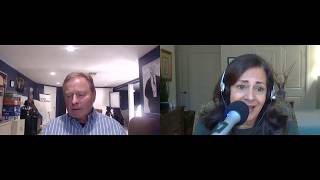
Frank Wander, a turnaround CIO, explains why organizations need toxicity handlers to absorb workplace poison before it spreads. Toxic people damage productivity at a neurobiological level. His firm People Productive measures cultural fitness to help large companies shift from industrial-era thinking to human-centered systems.
Chapters
Hello, everybody. Welcome to this week, Finding Brave. How are you? I'm Kathy Caprino. How is the week? Are you feeling brave? Are you feeling not so brave? Are you having a breakdown moment that might turn into a breakthrough moment? You know that I'd love to hear from you. Please let us know what's going on in your life. And I'm so, so excited to have our guest today, Frank Wander. Who you're just gonna, your head's gonna explode. You're gonna learn so much about our topic today. Are you a toxicity handler? And if you're not, here's why you need to be. And Frank is such an expert on that. So thank you for joining me, Frank. I'm so excited to have you.
I'm just thrilled to be here. Thank you. I love the title, you know, Finding Brave. How could you not want to be here?
Oh, thank you for saying that. Thank you. You gotta be ready for it, though. I think some people are like, I want to, but I'm not quite finding it. Finding it yet. But that's why we're here, right? So everybody, let me tell you about Frank, because it's such an illustrious bio and you're doing such great work in the world, Frank. Here it is. Frank Wander is an author, former Fortune 250 turnaround CIO and founder of People Productive, a human capital productivity company. I mean, I could just stop there. That's just amazing. Prior to People Productive, Frank was a turnaround CIO at three different companies, but most recently Guardian Life Insurance Company of America, as well as the president of GroupIntelligence.com during the. Com era. You don't hear that term very often anymore, do you? Early on, he developed a knack for transforming organizations and spent many years turning around failing IT divisions across corporations. You do a lot more than this, Frank. You're a board member. But what we're really going to be focusing on here, what People Productive is doing and why you're doing it. So I would love to launch in Frank and ask you. You turned around failing organizations. I would love to know. And we chatted a little about this before. Oh, and I do want to share with you all that I learned about People Productive through my awesome brother in law, Steve Plant, who works with you. And we're, we would have discussions in the kitchen about what is wrong with work cultures today.
Oh, yeah.
That seems to almost be resistant to change because I'm 59. I've been working a lot of years. Broken cultures galore. And so we were talking about what we've seen over and over. That seems so hard to change. So can you tell me from your work turning around, failing IT organizations, what was the biggest thing that was going wrong? What were you doing in these?
I'm going to, I'll answer that second, But I got to tell you, I met Steve and I was referred to him by a gentleman who we were both connected to and Steve had written an article called the Human Experience in the Digital Age. I guess it was early 2017. And this other gentleman we both happen to know said, talk to Frank Wander. You know, he'll, he's really into that. That's how you met kindred spirits. Yeah, he was working on, on an org, which he did publish on LinkedIn.
I think I commented, see what we can do when, when people connect us to like minded people. Wow.
Yeah. But anyway, getting back to your question, you know, what do you have to fix? It was interesting. I got into it rather serendipitously. I was a bio major and I had never taken an IT course, but back back then, I got into it in 1979, a training class at Equitable Life and I had passed all the aptitude tests of flying colors, had no idea I had any aptitude for the business.
You were testing to get into it?
Yeah, to be a programmer from bio.
From being a bio major.
Yeah. It was a different era back then and companies did train a lot of people and help them develop the skills they needed and that were lacking in the company. But anyway, you know, my brother was in it, loved it. So I said, you know, let me apply for a couple of these jobs. And you know, I got into this and really loved kind of programming. You could create something and it would work and it would do things and it was, you know, it was just an exciting business at that time and you could see it changing a lot. I quickly moved into leadership role because I left Equitable after two years, went to Chase. There was always a shortage of, you know, leaders. And I got into leadership, then went to Merrill. I was running a project. We got this incredibly tough project done absolutely on time. And that's, you know, what the people always did if you created an environment where they could actually work effectively. And you know, when I left Merrill and went to Peru and it was a turnaround situation, I walked in and I said, well, you know, I was doing a lot of turnarounds and fixing broken things at Merrill and wow, it's the people side that's not working. This is not an isolated problem. This seems to be a problem across corporate America. And you know, the classic IT project or program, you know, people wrote books and articles for decades on IT projects and programs failing. And they did, and they had these big, big, huge efforts and they'd, you know, $50 million, they'd flush it down the toilet. And I realized at that moment that it was failing because people had absolutely zero idea. This is 1997. How to operate the human infrastructure. Right. Humans. There is a way to create an environment where people are both motivated and able to give their best. And I realized nobody really cared about the experience of the people at all. They all wanted to focus on technology. And when your heritage is. You're coming out of an industrial era where how well the equipment in the factory works is what really matters. You quickly discover as I dug into this, like, how could, how could this. This is so obvious. And I think it was kind of the canary in the coal mine, because now we're heading into the digital era and every company is becoming a tech company. But back then, this industrial capitalist mindset that existed in companies that came out of the industrial era where it was all about the numbers and the equipment, it became very obvious that this was a huge blind spot. And having been a bio major, I was just acutely aware that. About how living things work.
Systems.
Yeah, living systems. You know, a group of people together is, you know, it's a, it's a culture or a living system.
I need to interrupt you and ask something, Frank, that I can't, I can't wait on. So, you know, leadership has been written about for a hundred years, right? And you, you weren't a psychology major, you were a bio major.
I was a bio major.
And, you know, I had a keen interest in psychology and I was always looking at what makes people tick. So that was that. You know, it's no surprise now that I became a therapist and now coach. But this is what I literally don't understand. I need your help. Yeah, well, I'm going to say something maybe controversial, but okay. In the industrial revolution, it was all men running the show.
Yeah.
Women we know now through research that emotional intelligence for men is not as acute developed as for women. Empathy, I think might be falling a little behind, typically with men. But how is it that we've been writing about and talking about leadership for 100 years? I'm thinking I don't know the date. And we don't understand and still don't understand that leadership is leading people to be their best selves, to contribute at the highest level. Why is it such A disconnect even now, Frank?
Well, we come out of an educational system that was designed to make people very good factory workers. And, you know, I interviewed John Gillen, who's a work historian, and, you know, he's gone back to all these old factories and when you go look at pictures of, let's say, the Hawthorne works, where a lot of the famous experiments took place, you can see the way people are sitting in their desks and it looks a lot like a classroom. The fact of the matter is people were basically taken from the farm and put in classrooms to basically be parts in a factory. And in an environment where the production represents your return on capital investment, then the machines and how well those machines work and how well they're maintained is everything. And it comes down to how efficiently you can get that to work. And whether the people show up motivated or not didn't have a huge impact as far as they could see. And Taylor did write about some of this in that the unseen part of the human side of the business may in fact have a bigger impact on the overall productivity of the system. But nobody knew what it was. Nobody understood it because it's invisible. All of this emotion and energy, you know, is invisible. It's like electricity. It's there, but you actually can't see it. So we are wired together. It is a quantum universe. We are entangled and, you know, there is a vibe that we share between one another. So, so true. It's an unseen. It's a blind spot because, you know, people were trained not to see it, to ignore it.
Does that mean that in relationships outside of work, no one was understanding how we bring out the best in people, in relationships, in community? Did we not know it there either?
Well, there were certainly, I think there were always very caring and compassionate people around that were greatly appreciated. There were, you know, before, before there was any kind of welfare, there were a lot of organizations and very caring people that took care of those who were less destitute. It just wasn't seen as valuable to the company. And it is, let's face it, you know, for a. For a company to actually provide for all of its workers and be able to give them a good living, it has to produce a profit. That connection between the people thriving and the company thriving together did not exist. But I think it's become, it's become completely obvious. And to me, you know, the reason I even started people productive is people have build the skills and competencies that are missing. Nothing else is ever going to work. And it's not just the leaders, it's every individual. Anybody could be toxic. Anybody can create toxicity in the workplace. So we all have to be highly informed and you know, we must shoot to create a world where everybody wins. There is absolutely no reason that people and the companies they work for cannot completely flourish together. And I proved it through every one of the turnarounds. When I came into those places, they weren't getting much done. And after I cared about the people and created an environment where we collaborated, in fact, then a lot more was getting done and for less money generally.
I love it. Now can we make this clear? Absolutely. We've talked about, you know, it perturbs me a little that we must talk about the business case of helping people thrive. It's like people really, you don't understand, but I know business is. We measure everything. So we need to measure this. That's what People Productive does, right? Tell us about it.
Well, we, I saw very early on and certainly it was always the challenge. How do you, how do you, how do you fix this very fundamental problem? There's no talent Operators manual. There's an operator's manual for everything. How do you fix the fact that on an assembly line we can monitor everything? We know if every one of the piece of equipment is working, if it's optimized. But when it comes to human infrastructure, we had very weak monitoring systems. We had sensors called engagement. And the fact is the people didn't have the skills to change any of the results anyway. So you run this stuff all the time and every year and people would go, oh my God, another engagement survey is going to change nothing because they handed out the reports and everybody moved on because the skills were missing. And this is the fundamental problem. And it's not just that the skills are missing. It's a linkage between how people work together and the barriers they have to overcome and what gets produced. And I think it's that inextricable linkage to the bottom line that we've been focused on. Because at the end of the day, in order for the companies and people to thrive, that linkage has to be there. And you've got to actually produce better business outcomes and more wealth to be shared with all the people. And that's how you keep your best people. So that removing that blind spot is the key to the whole game.
I love it. And I know you at People Productive. You have a platform and a tool and follow up resources and services that help you actually measure aspects of engagement. But before we go there, you know, this this is about toxicity. Have you ever, I would love to know from you because I've written about this, you know, infinitum. Have you ever seen a study? I haven't. So point it to me if you can. I think you can have kind of a machine, a system, a culture that's humming beautifully. But if you have one toxic person, and I'm talking, we all know what they are. Narcissistic, you call them sociopaths. You know, I think in some ways, and it's a spectrum, it can be someone who, a little rageful when things don't go their way, all the way through pure narcissism, extreme narcissism, which is literally damaging to the psyche, to anyone who's around. But you can have this well oiled machine and one cog in the wheel, one peg that's toxic and I think you can blow the whole thing out of the water. Would you? Have you ever measured, you know, I didn't, you know, 80% or whatever, one.
Person can reduce productivity, 40% toxic, one toxic person. That is a statistic from a study that I did come across and frankly I believe it. And I will tell you, in my travels, it always came down to really removing certain toxic people that were in the way. In particular leaders where that toxicity would actually bleed down through the organization or toxic individuals on teams, listen, they have a huge impact, huge. And it's amazing when you can get rid of a few toxic people, how everything starts to flow. Now it's a deeper problem because the minute toxicity is allowed to exist and these toxic threatening behaviors are allowed to persist in an organization. This is just like Pav's Law of Dogs. Paul Ekman studied this years ago. And it's fear imprinting. And that individual will be imprinted in that person's brain as a threat to them. And the minute they come in the room, their threat sense of the amygdala goes off, their heart rate goes up, they fail to pay attention, they focus on the threat at hand. So just coming down the hallway, entering a room in a meeting, you know, people say, oh, you know, the vibe changed when they entered the room. This is what this is, this is. And it's actually science and it is very damaging and they need to be taken out of there because unfortunately they are imprinted in the brains of these individuals as a very threatening organism. And you can, I love your perspective.
It's the bio perspective, the systems perspective, it's the neurobiological responses. And I couldn't agree with you more. Let Us talk a little bit about if we're not in a position to remove the toxic source, how can we be a toxicity handler? Frank, what do we do?
I would say two things, and I do believe there's this great article. It was one of the first one I saw. The Toxic handler, Compassion in Action, was a Harvard Business Review, maybe go back to 2008, maybe even early link to it. Really, really great article. And I do think everybody should handle it because this role, it's a role that a person plays in life or in a company. And when people are suffering, certain people are there to relieve that suffering. They're called toxic handlers. It's compassion in action, going over and recognizing it. You know, my mother was like a Mother Teresa. She really was. She was always out helping people.
I want to be that. I want to be that.
I definitely. I definitely. You know, you learn from what you. What you see happening in your house. And, you know, one of the things my mother passed on to me is that to be bothered by suffering. And, you know, when you see somebody suffering, it always bothered me. And, you know, I couldn't help but go over and say, hey, what's bothering you? You okay? Do you need any help? Do you need anything? And that's what toxic handlers do. If I would always, I'd come into these companies where there'd be, you know, some toxic individual, give a talk, and they always have a way of using the most horrible words that end up spreading a little bit of fear through the organization. It's unintentional because they have no sense of emotion in others. Right. They're totally.
Empathy, no empathy. They cannot understand how people receive. That's a compassionate way to look at it, really. Let's recap, folks. And then we're going to talk about how you measure engagement and help people be more productive in cultures to help people thrive. But let's give a few ways that right now, today, you can be a toxicity handler. And I know some people are going to say, handle it. I can't even. I can't help other people's hand. Other people handle it. I'm drowning in it myself. Well, if you are, there's. There's things to think about, which is, you know, I once worked for an organization. It was like turning the Titanic around. There was no changing it. No. And in fact, I got drummed out and laid off. But I think that if, you know, systems, you know, that there's certain perturbing of the system that the system will eventually not allow. And I really believe, then it's time to leave. And you have to assess that. Would you agree with that?
Listen, that's a personal decision, for sure. I am very, very. I'm very, very buoyed by the fact that I think there's this huge awakening going on. You know, I started, I remember getting up in front of Everybody approximately in 2007 at the IBM 97. Actually, 1997 had the IBM guy with me and I. But we both got up and said, we're going to build a collaborative workplace, right? We're going to work together. Even though it was outsourced and we were told to throw everything over the wall to these people, it was foolhardy and would never work. But that had a huge impact and it set the tone of the place that we were actually going to build a highly collaborative, cohesive organization. It was 1997. Steve Bradisich was the account manager for IBM. I got him up on stage with me and it worked, believe me, like a charm. The amount of work that started flowing through the. As all these walls and silos broke down was remarkable. So I do believe everybody can have an impact at every single level. Now, if you're in a toxic organization and you're a leader, you're at some level and these emotional sewer pipes are flowing in, you gotta do your best to shut those sources down. You gotta do your best to reframe all these toxic messages so people can begin to focus and get back to work and understand that their safety really probably isn't at risk. It was just some offhand comment by an uninformed individual who's in a position of power. And these things happen all the time. You can actually set a tone in your area or organization that says, you know, we're going to have some fun, we're going to care about each other. Fun is the antidote to stress. And humans don't like to have fun. They need it. It exists physiologically as the antidote to stress. It is absolutely necessary. And all the studies show that social laughter is 30 times more prevalent than solitary laughter. No way. Yes. It is actually a phenomenon of humans being social organisms. And it's so important to create an environment where people are having fun. You know, loosen up, feel free to have a little appropriate fun in the workplace because it really helps drive higher levels of productivity, helps people, you know, want to stay. If you see people, you know, start to notice people's baseline operating, you know, level, who are they? What is their baseline mood? And, you know, be observant. And if you happen to be sensitive enough to pick up on changes in mood, go over, find out what's wrong, offer to help them. You know, they did a study in a call center where, you know, people coming into work who were very, very, let's say, unhappy. If somebody went over to them, they were 10% more productive all day. That little stop by to say, are you okay? Can we help you? Somebody in a position who cared about them, noticed them, wanted to help them, person realized they had their back. And humans, more than anything, need to be needed. They're social organisms, and that meant they cared about them and they probably needed in the place. So that made me feel good.
I so love that there's so much to talk about. This is going to be hard for me to end. But you say it. You know, the human part of work is not soft skill. It's skill. I mean, as long as we call it soft in its own soft, we don't need that. That doesn't work. It's marginalized, don't you think?
Well, it is, you know, and this is. This is the other problem, right? If people were taught to think but not to feel, then that became soft. Everything else became hard. The practical reality is this is a skill. Humans are born to grow this skill. It is so fundamental to being a social organism and a living thing that actually survives by collaborating collectively to overcome challenges. That's who we are. And people need to grow these skills consciously. That means they need understanding, they need new practices. They need to do it and to understand why they're doing it and to see the impact of doing it, because it is ultimately that epiphany. You can't actually see any of this. You could see somebody caring about somebody. Sure, you might see their baseline mood. But all of the kind of the energy and the feelings of things that change, you know, inside, you know, one another as people come together, is really not a visible phenomenon. Sure, their face might light up, you can see these things, but there's so much more going on underneath. And when you see that this produces better results, you can have an epiphany. And then it becomes very real. And that was the epiphany I had that this actually worked. And I set out to understand why, because I wanted to do my job the best way possible. And I will say this, for most of the time I was doing it, I don't think bosses, you know, they just wanted the job to get done and almost didn't even want to hear about it. So I could never lead with the human side of business ever. And when I tried, everybody pushed back and said, you know, focus on the projects, not knowing this was the key to getting the work done. So, you know, it was kind of my, you know, private enthusiasm. And I knew this worked. And those other folks hadn't had an epiphany yet, but they will or they won't be in leadership. They're not going to make it.
And you know what I love? In this chapter of your work, you are leading with it. You launched people productive.
Yes.
You know, you're like, okay, people, you put your money where your mouth is. You know that I am going to do this. So tell us about how you help organizations assess the way they are helping people engage. I know you have these categories of trust and can you tell us a little bit about it?
You know, we have, we have a very deeply human framework. It's all of the human emotional and enabling needs and just all the things that more or less I came across to get work done with. Just a lot of research by, you know, even a social psychology PhD that was working with us at one point. So there are many, many sciences here, but underneath it all, there are these human emotional needs that have to be met and there's enabling needs that have to be met. And they come in in a hierarchy. Maslow laid it out. And you've really got to move up this hierarchy and understand where you are. So we assess what your level of maturity is. What are the missing skills and competencies really in the organization across every area. You know, if it's a big, big place, we look at every nook and.
Cranny and it's self reported by the employees, correct?
Absolutely.
And it's not you necessarily coming in and saying, here's what I think, it's the employees making it clear what is and isn't working. Isn't that right?
That's right. I think, you know, one of the flaws in many, many of these solutions is the sensor or the assessment was the beginning and the end for us. The sensor was merely input into really the rest of the solution, which is to build these missing skills and competencies, to create a language around this to make sure people learn and understand the human side of business. And, you know, it's the missing talent operator's manual for the human side of work. And actually it's the human side of life too, although we don't go into every everything.
And don't you have. So would you mind me sharing a little? As I understand it, if there's a system, let's say it's a hospital system and they want to use your assessment. Isn't it that every person in that designated division gets the app and is able to record their whatever assessment of these things and you can see it real time, can't you?
I mean, visually tell us it's all real time. And you know, we do have a very, very good app that we use for all the microburst learning and for people to take the assessments. There are many organizations that still want people to do it on a browser through the desktop and that's fine too. It's a somewhat different experience, but everything was built to be real time. You can get a group of people in a room and assess vulnerability right there if you want to.
Like you can see. Oh no. Engagement is only. How would it come out? 30% feel engaged on a scale of blah, blah, blah, how would it come out for people?
You know, we use. Our model is really cultural fitness because we want them to build a very fit culture where people are both willing and able to give their best and motivated and driven and passionate and you know, engagement is one measurement, but we've really moved beyond that.
You know, what else do you look at?
Well, we, we look at a number of things. We look at organizational energy. So, you know, we're really looking at the level of passion and mood in the place and you know, trust I think too.
Right. How much people trust their.
Yes. And under mood, of course, you know, there is a, there is a vibe and whether or not there's. People feel safe and trust the place and actually work begins with safety. Nothing happens unless people feel safe in the workplace. And in fact, you know, humans have a threat sensor and the goal is to make sure the threat sensor is off and stays off. It's called the amygdala. And anything that will trigger that threat sensor to go off is what you've got to take out of that environment. There is, of course, physical safety and if people don't feel it's physically safe, you know, that's a different problem. That's a different type of threat, but it is a threat sensor. But mostly today we're really talking about emotional psychological safety and you know, toxic people. This is level two of maslow. But toxic people keep an organization so incredibly uncollaborative and unproductive because that toxicity switches off. And organizations like that, you know, they're characterized with very low organizational trust, which means a lack of equality and fairness. These are corrosive forces that are highly toxic and in fact revolutions in Countries have been fought over lack of equality and fairness. These go to the root of whether you as an individual are going to be able to survive. And that's why these are the third rails. They're incredibly important to get right. As a leader, you got to just treat everybody with the same level of fairness and respect everybody. Because you can look at any of these studies and you will see that primates respond to lack of fairness, period. Not humans. They get it. They know that this is actually something that's ultimately a threat to them and their survival. And it's very, very simple.
I love how so many of us are saying the same thing, but we come at it with a different passion, a different focus, a different set of skills. I love how you can quote 52 research studies that are saying what we all should know is true, but there's research to support it. It's not you and I sitting here making things up. So I'm just interested because I don't know the answer. Who is your ultimate client? So if someone is listening to this and works for blip or organization, who is an ultimate client that you think are a perfect fit to work with.
People productive, you know, companies with 500 people and above. We love large organizations with, you know, 5, 10, 15,000 people. I think it's very powerful at that level because toxicity can hide in any corner. But, you know, we, I think, you know, you've got to have a place of enough size that this talent operating system makes sense when it's a small company. Come on, you could go walk around and you can get a sense of what's happening. The problem may be doing that. We could certainly help them, but the reality is you got to get out of your office, walk around, talk to people, meet them. You can get your arms around a place like that. This is a tool for a bigger place. It was built to be an enterprise solution because I would manage a place with over a thousand people and I would really have to go out of my way to find out everything that was happening and Toxicity could hide. And you really need to make sure that that toxicity is absolutely caught before it spreads because it is very costly to the company and the lives of the people. It just is.
I'm getting choked up yet again. I want to end with this and see what you think. When you mentioned a while ago, you need to go and say to the person in your team who's not seeming, you know, their mood seems down, and you say, you know, how are you doing? You know, what's needed for this, of course you do, is that I trust you, that you're not going to hurt me with the information that I share with you. And why people are hurt is that so many people. How would I put it? One of my friends calls them. They're not good actors, they're bad actors. Meaning when fear hits them. Yeah. They're gonna give up someone. So let's say you work for me, and I can see you're feeling down, and I ask, what's going on, Frank? And you share. I've just. I've just been beaten up by Sally in a meeting, and I'm so. Well, I. For me to help you, I have to be a trustworthy, evolved, mature, balanced individual to not use that information for my own gain. So that. Do you understand what I'm getting at?
Well, you're doing it. You're doing it authentically.
Authentically. But even more than that, there's skill involved. I mean, having become a therapist, I learned all the skills that I didn't have prior to being a therapist. You have to be emotionally balanced yourself. You have to be not afraid. You have to be trustworthy. You have to put yourself in that person's shoes. And I think so many of us, particularly in stress situations, are not our best selves. Would you agree with what I'm saying here?
Well, there's no question that, you know, stress without a doubt causes an emotional reaction. And, you know, the cognitive thinking side of the mind, which may take a different course of action, is going to be shut off. And this is why, you know, these very strong emotions are so dangerous, because they do override.
They hijack. They hijack our best intentions.
That's right. So you always want to in those situations. You know, the prefrontal cortex is what controls all of this stuff. But, you know, you've got to just have a very simple model to say, I'm going to count to five, and then you got to go cool off so that you can actually do the right thing. Reacting emotionally isn't really the solution. And whether or not you can trust a leader, you know, I think their actions always speak louder than words. People know who's trustworthy and who isn't. But humans, more than anything, will determine who to trust based on warmth. You know, I've done a lot of studies on this, and warmth is a vibe. And it means I'm not really very, very threatening. It's that kind of forward, open, caring look, smile. People care that leaders care about them. Right. And are warm more than they care that they're competent. And all the studies show that because if they don't want you to hurt them, right, they'd love you to help them. But more than anything, they really don't want you to be a danger to them. And this is super important. And you know, people always could trust me to come and tell me anything. I never turned anybody in and I would never betray people's confidences. But you know, toxic people, you know, we're easy to catch in the act of doing things. And you got to create a culture where it's safe for people to speak up in a meeting. Which is why building the DNA of the organization that says, you know, we don't tolerate any kind of, you know, emotionally negative, destructive behaviors in this place for any reason. And if you see them, you can call them out because that stuff has to be dealt with when it's occurring. And people have to be empowered to say, you know, we don't do that around here.
And you know what I want to. Can I leave on this note? I think compassion and care also goes to people that, you know, we know wounded people wound people. And people who are toxic are wounded people.
They are.
So I do think that if we, you, anyone listening sees somebody behaving toxically, if we can engage our heart and have a frank conversation with them with love in our heart. I mean, someone said you can say anything when you say it with love. But I think we, we also need to take on the toxic person, but in a loving, compassionate way. Because they're wounded.
Yes. It's not about luck, first of all. It's not about hurting anyone at the end of the day. And you know, there are people who have deep wounds that are just in a bad role. They'll have to find their way in life. They're people. Because, you know, our educational system doesn't really help people find what they're great at. They put them through this, you know, pre configured set of classes year by year by year, never ever trying to find what their passion is so that they can go lead a life where they're working on things they love. So people end up in jobs and then they have families and they're doing their best to survive when they're in jobs that they were never even well suited for. So I think you have to be compassionate when people get themselves in situations and do your best to help them find their way. You know, toxic people shouldn't be in a leadership role. Maybe they shouldn't even be on a team. You know, that's, that's up to that individual situation. But look, it's not about disliking them or anything. It's about making sure that that 40% impact on productivity is, isn't occurring and that you're making sure that the people can succeed together because that is ultimately it. You've got to thrive together. And when somebody is reacting in a very, very negative, toxic way, then they don't really have a role. And I love the fact people are waking up and we're all going to see how actually misinformed it was that this ever, ever was allowed to persist in companies.
Amen, Frank. Oh, I love it. I love what you're doing. So now where do people learn about you? People productive? Where do we send them?
Yeah, they should go to www.peopleproductive.com.
Great.
And they can find.
You're an author. Where can we get your books?
My book is called Transforming IT Culture. It uses it as a lens into the human side of companies. You know, because I think technology was kind of the first area where this kind of very deep collective creativity had to come together and where toxicity shut the equipment down. So, you know, I wrote it through that lens of how do you actually create a productive, you know, IT organization. And by the social intelligence, all these things matter.
It's so rewarding and interesting to see your perspective. But netting out in the same place, I think that so many of us are that without humans working together in rewarding, enriching, productive ways that they can fulfill their potential, you got nothing. You know, you might hum along for a little while, but it's not going to last and it's not going to thrive. So figure it out.
Yes, figure it out. Because in the digital era, people are the most important tool. And if you don't know how to use that tool as a leadership team or as a collaborator, you don't know how to work with others, then you're really not going to have a future. You're going to be in much lesser roles in places. And it's up to every individual to choose a path to be their best and to start thinking about, you know, how they can contribute more, how they could build the missing skills and competencies and how they could grow to become an integral part of one of these digital companies that's going to help change the world. And that's what they should be working.
I love it. I can't thank you enough, Frank. It's so enriching and validating and all of it. I hope you all have gotten something out of this. Either you recognize in yourself, which is wonderful. We need self awareness that, gosh, I think I need a little growth and help on this. Or, yes, I am in a toxic culture, but I believe in it and I want to help. Or it might even be, I'm done trying to turn the Titanic around and it might be time for me to find a culture that's more evolved at this moment. But definitely check out people productive. I know firsthand that they're doing fantastic things. And. And the aim is where it needs to be. Helping cultures thrive.
Yep.
Helping you come back again soon. And everybody, have a fantastic week. And we will see you again next week.
Thanks so much for having me on. It was great.
Thank you, Frank. Thank you.
More from Kathy


Elevate Yourself, Elevate Others, and Amplify Good | Chris Cooper | Finding Brave Ep. 334

Finding Brave Epis #333: How Leaders Can Harness AI Without Losing Their Humanity, w/Bennett Borden

Finding Brave Epis 332- How to Stay Brave, Valuable and Visible in the Age of AI, with Raman Rai

Finding Brave Epis 331 - The Power of Positive Disruption, with Dr. Patrick Leddin


Finding Brave Epis 330 - Being 40: Letting Go and Embracing Who You Are, with Stacey Lindsay

Disrupt Career Reinvention with Kathy Caprino - via The Disruption Lab Podcast w/Patrick Leddin

Creating Neurodiversity-Friendly Work Cultures: Simple Workplace Adjustments Matter

Finding Brave Epis 329 - How To Create a Neurodiversity-Friendly Workplace, with Kristen Pressner

Finding Brave Epis. 328: Reclaiming the Power to Trust Your Own Voice, with Dr. Cindy McGovern