Finding Brave 111: How Building Relationships Helps Your Business Grow, with Shama Hyder
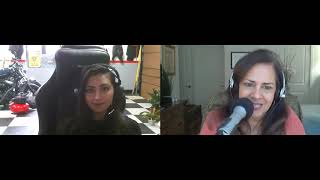
Podcast episode of Finding Brave (episode 111) in which Kathy Caprino interviews Shama Hyder, founder & CEO of Zen Media. Hyder recounts her immigrant upbringing and rapid early success, and argues that the current chase for attention (vanity metrics) is misplaced—attention is a beginning, not an end. For B2B brands she recommends focusing on relationships and a clear Brand–Outcome–Differentiator (BOD) framework, building narratives, continuously differentiating, and measuring real outcomes (e.g., demand generation). She endorses LinkedIn for professional community-building and points listeners to ZenMedia.com and a free B2B manifesto.
Questions this video answers
On average, clients saw a 98% increase in demand generation (reported for 2019).
Chapters
Hello, everybody. Welcome to another week of Finding Brave. How are we doing today? I must say I played tennis last night, which I do every Monday night, but I'm feeling it. I'm feeling everything's a little sore and I'm a little tired. But hopefully you won't know that, although I just told you. Anyway, I'm so happy you're here and I'm so excited to have our guest today. Shema Heider, who we were just talking before, I have been following your, well, I can't even say following your meteoric rise because you had risen meteorically when I first learned of you, when you won the Forbes 30 under 30 entrepreneurs. And I hopped on reaching out to you and we did a few interviews. You were on my other podcast with Maureen Fall. But I'm so, I mean, so inspired, Shema, by what you do, but how you do it and your messages and so I'm just honored that you're here and we have so much to talk about.
Thank you so much for having me, Kathy. It really is a pleasure. I enjoy the questions you ask. I think you always put your audience first, which is sort of the number one thing right, for any podcast host or anything that you can hope for. So I love that about you and it's a pleasure to be here.
Thank you. I hope that's true. So everyone, let me tell you about Shema because you're going to just fall off your chair. But as we know, you're very humble. So I just learned something that you would never have on your bio. But here we go. Shema is the founder and CEO of Zen Media, the first business relations agency where they help B2B brands succeed in the digital age. And we are going to talk about what does that mean to be a business relationship. We don't mean pr. We don't mean that, do we? We mean building relationships. And today we're going to talk about something that I think is contrarian from what we hear from all the gurus about how do we get attention. Oh, I can't wait to hear what you have to say. But I want to also brag about you that we were talking about just a few of your clients and I saw on your bio that Forbes is one of your clients and you just helped them with a big launch for is it forbes events?
Shemma Forbes 8. They have a new platform out that's can think about it as like the Netflix of entrepreneurship and so it's mobile based and they've got a great subscription content on entrepreneurship and business and so they've got interviews with leaders and how tos and just, you know, all the content that you would think would help an aspiring entrepreneur.
And I would. I would have to say, I don't think there's anybody better to help them than you. And it is about time. You know, we need. We needed that. As a Forbes contributor, I can say that. All right, let's jump in what we want to talk about. And folks, we don't have any, you know, designed questions. We are talking as if. And I think everybody's going to want to know. Shama, are those your motorcycles? And do you ride?
That's what they.
That's the first question they're going to ask.
So I guess, yeah, if you're watching the video version of this. Right. If you're listening, then they're like, no idea what we're talking about.
That's right.
Right. So, because Kathy has. Has me doing video today as well with her podcast, I do not ride. My husband rides. He's an avid rider, so I guess I take that back. I do ride with him.
You do? You hop on the back with him? Yeah. And you go on long trips or.
We do. I mean, I love it. That's how we connected. My dad used to have motorcycles when I was a kid, so I grew up. I'm a motorcycle kid. You know, we used to go cross country. This was in India. No seat belts, no helmets.
You were a daredevil even then.
It was a lot of fun. And so, you know, I really think it's something that's in your blood in some ways, I think. So.
I don't think it's my blood. I keep my feet on the ground a little bit.
I love it. So I love speed. And my husband and I, our first date was actually a motorcycle. Well, I take that back, because if he hears this, I'll say, no, it wasn't. It was snowmobiling. But speed has always been a part of our. Or a dynamic, I guess so.
Speed. I love it.
So he rides. It's a lot of fun. Although I will say that we have not ridden since I had my son, or I guess since I got pregnant with my son and had my son.
How old is your son?
He's five months old. Oh, my gosh. Congratulations. Thank you. His name is Archer.
Archer.
And for those who are familiar with the cartoon, yes, I named him after that character. But please don't tell him until he's 18. I just think it's.
I think that's going to be challenging to Keep that from him.
So. Yeah. But it's funny because for now the bikes are on hiatus because we feel like it is more of a daredevil type thing. We feel like he should have his parents and so babies change things. Yeah. So. But I'm trying to convince my husband otherwise, not about him having parents, but that we really should keep writing because I do love it so much.
That's. I love it. Now, before we also launch into what we're going to talk about, which is I'm going to share this with you people. Shema has said, you know, we're striving so much for attention today. Thought leaders, businesses, brands, attention, attention. It's exhausting and it's draining. And I think so many of us are going about it the wrong way. And you're going to tell us why we're doing that, what we're doing wrong, and what we can learn and what to do instead. But before, just to put a context to it, Emma, can you tell us. I remember reading when you were Forbes 30 under 30, I said, how is this possible that this woman has done all this and pretty much on your own? I know you're going to say, no, that's not true. I mean, I have a great team. But just how did it happen that you made such a splash at such an early age? What do you think went on there that helped you do that?
It's a combination of things, right, Kathy? I never deny right time, right place. It's absolutely fundamental. In fact, I was just speaking to a young lady yesterday that I'm mentoring, and she had a question. She said, you know, I've read your bio. I want to start. I'm really excited about it. I'm starting my own business, you know, but I'm finding it very difficult right now. And I said, well, yeah, I would, too, because it's not 11 years ago. Right. So I think part of it is right time, right place. You have to give the market what the demand is there. Right. It's basic economic supply, demand. When I started Zen Media, when I started my company originally, there were. There were no social media firms. There were no, you know, people said, Twitter, you know, is that a cartoon? Facebook had just opened its doors beyond college students. LinkedIn wasn't even on the map the way it is now, which I'm very gung ho about, by the way. I'm happy to talk more about that.
Me, too.
My favorite social network right now. Yeah. And not just because they named me their top 10 voices in marketing. I think this is the fourth year in a row. But I. Yeah, I'm happy to talk about why I think LinkedIn is such a winner among all the social networks and why I'm not a TikTok fan talking about contrarian viewpoints, if you will. So, yes, I think part of it was right time, right place. I think the other part of it is consistency. People assume, oh, we've all heard, like, the overnight success, right, but there's really no such thing. I think that it's a lot shortened now. That Runway is a lot shorter. So, yes, if you do have a good product or service or you're doing something really cool or different, you can have that success within months, weeks. You know, think about this. You could start a YouTube channel with something really creative and cool that people engage with and it can go viral. Right. I think it was just posted the other day. It took, you know, the airline industry, like, 64 years to hit, you know, however many million flyers. And then it took Facebook so many years. And then, you know, Pokemon go took like 52 days, so. Or 14 days or something like. So it's just the. The timeline gets shorter and shorter. So I think, you know, part of what I'm very gung ho about is the Internet, believe it or not. I still, you know, people, I think, still do not realize the power of what it's able to do, how much it's changed the way we're able to communicate, get our message out there and scale faster than ever. So I think the true part is the real question there is how did I scale so quickly? And part of it is the Internet, because you don't have gatekeepers there, right? So there's no. Like when I wrote my first book, the Zen of Social Media Marketing, and some of the folks may not know this. I'm also, by the way, wearing my husband's headphones. So if my head looks way too small for this setup, everybody's going to.
Race to this video. Now they're like, what, motorcycles?
So it's funny because when I wrote the Zenith Social Media Marketing, it was my first book. It's now in its fourth edition, probably going to go into its fifth edition soon. And I wrote the book initially as an ebook, right? People don't realize this. I wrote it and I published it. And I said, here you go. There's nothing on social media right now. There's no book. No book that I could point to and tell people, go read this. Where people are like, where do I learn more? I was like, great question. I don't know, right? And then I thought, well, why don't I create something? So in fact, I wrote the last chapter first, which was like burning Q and A. So I took all the questions people had, I answered them first. And that was, that was one of my key chapters. It was after it was published and it had sold, you know, however many copies, thousand copies or whatever, that it got a publisher and an agent and so forth. And so part of it, I think is because there's no gatekeepers, there's no one really stopping you from succeeding.
But I love it and I agree with you. But there. And you know, all I keep thinking is I've got to hire you because I'm rocking it on LinkedIn, but YouTube just lays there. I'm like, shema will help me. I got to hire you. But one thing I think that's really important for people to understand, you delivered first. You weren't thinking, how do I get on Forbes 30 under 30? I'm guessing you delivered. You said, I don't know. And I am interested in how old were you when you started your company?
22.
Okay, so this I need to understand. The audience needs to understand. Yeah, you obviously come, come from a place of, I don't know, let me jump in here and do. And then you're seeing questions, you're answering questions. All right, let me write a chapter, let me write a book. You're putting, you put your audience first, I think. But here's my question. At 22, I have a 22 year old son and a 25 year old daughter. So I know what 22 looks like. You know, I can't even remember back then for me, but how did you have the confidence to say, I can figure this out or I can do this?
How? How did you have that Great question? You know, it's a combination of things. I think again, a big part of it is parenting. You know, I owe a lot to my parents in that they were entrepreneurs. They were entrepreneurs. But remember, I'm an immigrant myself. So my parents moved here, moved to the US from India when I was nine years old. Nothing in their pocket. Very the immigrant. Typical immigrant story, right? You hear this across the board. And so from them, I do not come from money. So a lot of times people say, oh, of course. Your parents finance? No, my dad drove taxicabs. My mom worked at a dry cleaners. They held blue collar jobs until they had enough to purchase their businesses and grow in their fields. And so from them though, I think I got a lot of, you know, it's the gift that I think our parents gave my sister and I, which I hope that I can pass on to my son, is that they valued our happiness over anything that they felt personally was, was appropriate. And what I mean by that is when I went into college and I wanted to study communications, you know, coming from an Indian background, a lot of times the questions are people like, I have friends whose parents said, you have to be a lawyer or a doctor or there's this, you have to be secure and do these things. I never had that pressure from my parents. It was very much a, you do what makes you happy because life is short. And I think when you have that sort of support, it really changes the dynamic, right? Because then you're not, you're not trying to please anybody. My parents, you know, made it very clear that as long as my sister and I, there's two of us were happy then, they were happy with that now, given that we were being productive members of society. So this isn't like regardless of who you're harming type thing, but, you know, as long as we were productive and doing something that was fulfilling and adding to the world and we were happy in the process, that was all they cared for. So I, they never had. My dad, I think at some point wanted me to be a doctor, but that was more because he felt like, oh, you're so good with kids. I excelled at science. It was aptitude, but not necessarily like a passion of mine, right. So I, I stayed away from that. So I think there was that. The other thing is, some of it I think is just innate to your personality. I am rather fearless by nature. Cue motorcycles. You know, whether that's good or bad, I don't know. My sister does not have that same level of gene. So I think there's definitely something that's genetic or personality wise where I'm not scared of a failure. And I think you, again, as a best thing, I think that happened in my lifeline was coming to the States as a kid and immigrant and guess what? You get made fun of, you deal with the blows. You fail a ton, right? Socially, like, there's just a lot of things that you don't know. So you're constantly kind of like, oh man, that feels awkward and hard and. But you grow from that. So one of the things that I think very proactively about is my son will not have those same challenges because of the sacrifices of his grandparents and where his parents are. But I want to make sure that I never protect him from the Real world. Because the real world means hearing no. The real world means being told you're not good enough and being like, okay, back to the drawing board. You have to be able to take that feedback. And when you don't, and you know, I see that now. I see that in a lot in young people, say young people. I see that in fellow millennials. I see that in Gen Z where they've never heard no or they don't. They've never heard well, you're not great at that. It's very personal. And I guess for me it's not personal, it's okay. What do I do to fix it? How do I make it better? So I've always just been in that way, very driven and fearless, you know, good and bad there for sure. And then I think the thing that's really helped me a lot, and this is such a key thing, I hope everyone on here takes one thing away from this, then this is it. I've always been an editor and I hundred percent believe in being an editor. I'm not a perfectionist. So the opposite of that is folks who feel like, I gotta get it up just right before it's out there. I never cared. Right. I'll put something out there, I'll edit it, I'll refine it, I'll keep making it better. Because it goes back to what you hit on so well earlier. It's value. Because it's not an ego thing for me. It's not. I'm not hurt if someone says no. Right. It's not personal. Right. If someone doesn't buy my book, it's not like, oh, no, you're rejecting me as an author. I don't feel validated by all of that. I feel pretty grounded and I have as a child felt pretty grounded in who I am and where my value stems from. So my work is more about what value do I bring to my audience. And so even now I look and I think I have three constituencies, if you will. Right. That I serve. I've got my employees and that's key because how I treat them and how their lives go is that's the foundation of my company. You don't have that. You don't have much. Then it's the clients. How are we constantly serving our clients, helping them stay cutting edge? How do we help our B2B brands that we really work with Excel and realize that they are not. This is not like their daddy's marketing or mommy's or grandparents. Very different. The way B2B is today is Dramatically different. And then the global audience, which honestly, some of them I'm speaking to now, right through this podcast, there is a global audience that follows my work, that sends me questions, that's very engaged in what, in learning more about business and technology and marketing and digital age. All these things that I'm passionate about, that I speak about. So I feel like my responsibility is to those three key areas, professionally speaking. Right. And so everything I create is I think about, does this add value to one of my groups? And so if I say yes to a podcast, like, when you ask me, I think, all right, what can I share here? What's going to be valuable for the audience? Like, is this something that's going to help me serve my global audience? Because when we're done, I'm going to be able to share it on LinkedIn, I'm going to be able to share it on Twitter. These are questions, the ones you're asking people have often and that they can get those answers right. So it allows me a bigger platform to be able to share and get my message out there.
Can I just highlight what I'm hearing from this? And then we're going to talk about how to get attention, which is at the heart of what you're saying. I just want to highlight, you know, I'm in the middle of writing my book the Most Powerful youl.
But.
And a lot of these themes come up, but number one, parenting. I am so passionate about this. What you said that your parents said, I just want you to be happy. You know, I just interviewed Bruce Daisley, who knocked my socks off. Former. Very recently former VP of Twitter outside the US What a guy. But he was talking about embracing the idea that I am gonna fail. I'm gonna fail. So why don't I fail doing the thing that matters most to me, doing the thing I'm passionate about. We are going to fail. So this concept that you had parents that said, I want. I believe in you and do what makes you happy, what that does is reinforces that they believe you can make the right choices for yourself. That is a life changer for how to raise a child. So, number one, love your parents. Hugging them up. Are they still here with you?
Yes. Yes. So my parents are still working. They're very active, they're fairly young. And, you know, more than telling us even that they try to trusted us to make right choices. Part of it was they lived by example. I mean, I saw my parents fail a ton. Right. They're trying all this stuff. They internalized it absolutely they're, you know, they don't know my parents. I spoke. I spoke English at home in India. So for a lot of Indians, English is not even a second language, but something you grew up speaking dually. So I speak or do I speak English fluently. I can go back and forth. So my parents didn't have that struggle, but they still struggled. You know, they coming to a new country, the norms are different. They've no family support. They're starting from scratch. You know, my dad never understood, like, Halloween. He was like, I don't understand my kids supposed to go beg for candy. Like, I don't like the concept to. To people outside the US or Western countries, I think, because it's like, wait, I don't. You go door to door. So there's just a lot of cultural stuff, you know. And then I saw them, even with their. With their work, fail a ton. And never let it be disheartening. It was always like, ah, okay, live. Live to fight another day. Find something else out. And so I think, like, being able to see them be that agile and, and see what you know. And now, of course, as an adult, I have an even greater appreciation for what they were able to do. But I think you. Yeah, I think a lot of it is you live by example. Like, I don't remember my parents telling my sister and I to say please and thank you and do certain things, but in my head, I remember that they always said please and thank you. And just the other day, we were out on a walk, my husband and I were walking, and I saw a bottle of water and had been discarded on the sidewalk. And I picked it up and I put it in the stroller, and I said, I'll throw it away when I get home. And I thought, man, where did I. Where did I get that? Like, where did that come from? Right? Because I always think about now, like, as a parent, how do I. How do I teach that to my son? And I realized my parents never said that, but my dad, every single time we'd go to a big event, like, you know, one of these big was like an Independence Day event or something outdoors, a game or whatever, and people would, of course, leave all their trash, as they tend to do when they leave. He would at the end, as we're walking to the car, start picking up all the trash and start throwing it away. And, you know, he would look at the janitors, he would smile. They would smile at him because they appreciated him helping. So I think it was just that, like, there's so much that I think you learn by watching your parents and how they live their lives that I feel like that's probably the best thing you can do, at least as a parent now I feel like the best thing I can do is it's not what I tell my son as he gets older, it's what I'm constantly enacting, you know what? And so that's, that's something that my husband, we talk a lot about, we think about what it means to be. Not just tell him what's important, but how to set good examples. Like even like putting our phones away now when we go out to breakfast or something together. Because it's not, you know, he's, he's very young now, but it's not going to be long before he's like, well, where's my phone? Where's my tablet?
Right? Mommy's texting during lunch.
Exactly. So time and place.
I love it. I so love it. All right, now let's talk about the whole piece about how do we get attention? Where are businesses and brands going wrong and what do we need to do? Shemma, tell us.
So here's the thing. I think attention is really overrated. And this whole chase that people have behind get attention, get attention, it's frankly a little infuriating because attention is the beginning, it's not the end. Right?
And do you mean, let's just clarify, when you say attention, do you mean the vanity metrics? I have 900,000 followers on LinkedIn, that kind of thing. What kind of attention?
I mean, a nation, right? So yes, there's vanity metrics, but this idea, this obsession behind just being able to get someone's attention is so, to me, it's just not fitting with, with how people communicate and do business, especially in the B2B world. Right? So because here's the truth. I could go out in the street and I could throw a shoe at someone and do you think I'll get their attention?
Yes.
Yeah, I'll get their attention.
It won't go well, but you'll have their attention.
But you'll have their attention. And I think that's what a lot of brands are doing. Our people are doing. Or like, you know, on, on Instagram, I have gals who message me and they say, oh, you know, shama. But whenever I post something that's business related and it's not me in a bikini, I don't get as many likes, I don't get as many people who comment and, and I'm like, yeah, but that's not the. They're getting a lot of attention. It's not what they want to be known for. Right. And so I think this obsession with attention that we have is costing us. It's costing us. Yes. The wrong focus on vanity metrics is costing us. The missing the bigger picture. Because especially in the B2B world, when you are selling to another business, it's not about the attention. It's much more about aligning with their goals and it's much about building that relationship with them.
So for people who, you know, a lot of my listeners are self employed private practitioners, consultants, coaches, small business owners. When you're selling to another business, let's take Forbes or you can, you don't have to name.
Sure.
Why do you feel that that's different than B2C? Tell us. I mean, why is this issue around attention different?
Yeah. And see, even with B2C it's very similar in that if you focus on attention, you're going to look at interrupting, you're going to look at waving whatever flag you can wave to get someone to retweet you to like your comment. It's not a great combination. You might get their attention, you might get on their radar, but not for the right things. What's much more important is can you align with their goals? You know, because here's the cross, here's a crazy stat. Cathy, 64% of people will already have made up their mind when it comes to a B2B purchasing decision before they ever reach out to your company. Okay. This is true for consultants. This is true for even, let's say you're a small business owner on here and you're a consultant, you're trying to sell your services, chances are someone who wants to work with you and you know the difference. People who are listening know what I'm talking about. There's a difference between when someone talks to you and they say, I read your articles, I've listened to your podcast. I think you, what you do is great. How can you help me? That is a. That is based on relationship, right. Versus who are you? What do you do again, Tell me which conversation is preferable in a business.
And don't you feel like in order to have that you have had to put out in the world content, program, services, whatever it is, material information that number one, I'm making this up here so you tell me if it's right, is authentic and has a perspective that isn't like everybody else that's brave enough to have a perspective. Right. Number two, it's got the audience in mind. So it's trying to be of value. Number three, there's a consistency where there's a pattern of thought, a pattern of a model for change, a pattern of Kathy's going to be doing it this way, and these are her values because this is what is coming from her. I think those things are what gets sustainable attention. Would you agree with that?
Yeah, absolutely. And so, you know, in my first book, the Zenith Social Media Marketing, I created this framework called a bod, right, bod. It's like, how do you have a great business bod? And so the idea was it stands for brand, outcome and differentiator. Because these are the three things and these are the three things that you just mentioned, Kathy. It's how do you have a great brand that's recognizable, that's trustworthy? Because here's the thing about relationships that's so key to understand. They don't have to be two ways online, right? In the sense that you can have a relationship, Kathy. Your listeners have a relationship with you, you have a relationship with your listeners. But it's different when you come on board and you bring a guest on here. There's a trust, there's an inherent trust there that you are going to look out for them, that you are providing value that is your brand. Right? And so today you can have a solid relationship, build that credibility and have that trust without them ever talking to you first. We see that all the time. We have lots of relationships with people whose content we enjoy, who we look up to, who we feel like we learn a lot from, whether there's authors, speakers, podcasters, whatever that may be. So that's the brand, that's who you are. The outcome is important. What do you deliver at the end of the day? So one of the key reasons I pivoted Zen Media from we were one of the first social media agencies in the world to really now launching as a business relations agency. I don't know of any else in the world out there, but the real focus on that is understanding what do we deliver at the end of the day. And with our clients, they want to break into new markets or they don't understand why inferior competitors are getting their business when they're better. Because here's the thing, it's not the best that gets the business, it's the one that's perceived as the best. And those are two different things. Wow. Right? You can be the best in your industry. You can say, man, I do such amazing work. Yet this guy or this gal they're getting all the business. Why? Because of perception. Right. So what we do is drive a lot of that perception, create that share of voice, build those brands up so then they. At the end of the day, it's not about how many likes you have or what, who cares? It's about moving that needle. You know how much the last 12 months it was looking at our 2019, on average, clients see a 98% increase in demand gen. That's what we're focused on. Everything else, the pr, the social, the marketing, it's the how, but it's the outcome. What do you deliver at the end of the day? And then the D stands for differentiator, which to your point, what's different? Why you over everybody else or why your methodology or you know, what is that thing? What is the difference? What is the differentiating factor? One of my favorite books, which I highly recommend and it's been on my list for a long time, is called Blue Ocean Strategy and it's written by these two professors and it's a great book about how to create and lead your own category versus constantly competing in a red ocean, which as you imagine sharks and bloodied waters. And so you're competing for that same business versus competition. When you differentiate well enough, you are very much in a league of your own.
Oh, I have so much to talk to you about. We're already over time. Let me ask you two questions. Shemma, could I. Because you know what I love about this podcast? I'm sitting here actually like you're the professor and I'm the student and that's how I feel. I ask the questions that I want to understand. So two things. I find that with anyone who comes to me who wants to grow, have, you know, launch their business in a bigger way, whatever, I would say the vast majority, if not 98%, do not know how they're differentiated. They have no idea. Is that true of the. Of the brands that you deal with and some of them are well known. Do you do. When they come to you, do you. No matter where they are in the market or how long they've been around, do you feel that they really get how they're differentiated or do you think they struggle with that?
Everybody struggles with differentiation today. Because here's the thing. What? And a lot of the brands we work with, which are enterprise companies, and maybe they're trying to market, you know, really go after small business owners or they're a B2B company or whatever it may be the differentiator that worked for Them five years ago even is not what works for them today.
Gotcha.
Right. So even. I'll use myself as an example. When I started Zen Media, originally we were known as. After the launch and then marketing Zen. There were no social media firms. Right. That was a blue ocean. That was the differentiator. Today, that's no longer a differentiator. So if you're not constantly reinventing yourself, your company, your brand, you're getting left behind. I mean, this age really belongs to those who can adapt. And it's an age of relentless adaption.
Oh, that's a tweetable. And I see that in my own small business, what I used to talk about, what I used to focus on, it's had to change. One, because I wanted it to. Two, because a million people are doing it and whatever. So true. Now, can I ask, and I don't want to take too much of your time, but this is really important. You said people will come to you and say, why is she or he or that brand getting all the. All of the engagement? Not just attention, but they're selling more. We're the best. Why? Tell us how you fix perception. So some organization, some brand is the best, let's say, based on your interpretation, your data, but they are way behind. How do you deal with addressing perception?
So that's my favorite type of client, Kathy. Honestly, it's where someone has the steak, but they don't have the sizzle. Because it's much harder when someone have a sizzle and there's no steak. Right. Because that runs out. That's a very short runaway. You get away with that for a little bit, but eventually when we say authenticity, that's exactly what we mean.
You mean you have the sizzle, but you don't have a value proposition. You got nothing.
Yeah. Or you've got a lot of attention, but you can't fulfill that. You can't see it through. Right. There's a lot of glitz and glamour, but where's is it the real deal? Does it move the needle? And so for me, my favorite type of client is when they're like, we've been in business for however many years, we do great, but everything has been, you know, like, it's, it's. They've succeeded because they have a good product or service, and that's why they've grown and they are doing great. But it's like nobody knows the story. So part of a big part of what we do is discover that narrative and really establish the differentiator. Like sometimes it'll be a brand will come to us and they'll say, you know, we've been growing. We're doing. We've been doing well. But the challenge is we can't attract new employees because they don't want to work for us. We're not cool enough or we're not positioning ourselves well enough to get new talent like we need. And that's a, That's a big, major problem for a lot of organizations. It's, how do you. So for all of these, which again, relationships, right? How do we build relationships with prospective employees, with the media, with our prospective business owners? A lot of it starts with understanding your narrative and what's the story you're telling, what. What is. And sometimes you'll discover these amazing things that I'm like, you didn't think that was, like, important, you know, or like, you know, my great, great grandfather started this company and, you know, he was worked, you know, was a soldier in the union. Like, there's all this history sometimes that people just take for granted because it's their company. Or they'll say, oh, yeah, of course, you know, our clients have been with us for, for 20 years. And I'll say, wait, wait, wait. Your competitors, their clients, when you're 20, like, yo, it's hard for anybody. Anybody, and I mean, myself included, because to see the forest from the trees. So part of what we do is help them see the forest from the trees and then lay out and execute a plan that helps them. Right. Increase their share of voice, make, add that sizzle to the stake, because that's what they're missing. You already have the stake. That's the easy part. What I don't work with and what. I have a very hard time with this, folks. And companies that have a lot of sizzle but no steak. It reminds me of like that old Wendy's commercial they used to like, where's the beef? Where's the beef? Right? And so. And I think that's. That's a lot of what we see today.
Oh, there's so much I could ask you and learn from, but I'm aware of our time. Tell us where we can. You know, I'm finding I have the wish to read your two books again and also case studies, which I'm guessing you have. And so where do people who are thinking, holy cow, either I don't have the beef, or I do have the beef, but I don't know, I'm losing things here. I'm losing share. I'm losing connection with people. I could Serve. Where do they learn more from you? Where they.
Yeah, so we've got a couple of great resources and we walk the talk, so feel free to take a look and see. You know, I think reverse engineer what you can from us, and it's an open book. There's nothing stopping anyone from saying, ah, this is how you position things. So Zen Media.com, that's our site. You see lots of case studies, video written. I mean, take your pick, your poison. There's also a manifesto that I've written on the age of business relations. It's a free B2B manifesto that you can download from there. I mean, of course, Connect with me on LinkedIn. It's one of my favorite platforms right now.
We talk about that for one second. LinkedIn, because it's my happy place. To me, it's the cocktail party in the sky, you know?
Yeah, we can definitely. We definitely wrap with that. I am a huge LinkedIn fan because I think that's where you see great engagement. There's always a time period where there's great organic engagement, and then it sort of dies off until you can do advertising. Right. LinkedIn is that special baby right now, where if you've got value, if you. You can build a community there, like you could on Twitter 10 years ago, or you could on Facebook five years ago. But right now, that community is happening and on LinkedIn. And so if anyone's. You're listening to this and you serve any type of professional marketplace, you must absolutely be on LinkedIn. And if you want to see how it's done, again, connect with me. You can follow. You can see exactly the things I post. Steal. You know, steal like an artist. I'm still. I'm totally fine with that.
Steal like an artist. I cannot thank you enough. You are such an inspiration. I've learned so much. Please come back soon. Have fun with Baby Archer and be careful on those bikes. But keeping your fearless, beautiful self. I so appreciate it.
Thank you for having me. Appreciate it, everybody.
We take Shema up on it, and me, too. Let's hear from you on LinkedIn. I post this on LinkedIn on my personal channel and my business. Please write your questions and ask, ask, ask, Engage. We're there. We both engage like mad. All right, I hope this has been a brave, wonderful hour for you all, and we'll see you next week.
Bye.
More from Kathy


Elevate Yourself, Elevate Others, and Amplify Good | Chris Cooper | Finding Brave Ep. 334

Finding Brave Epis #333: How Leaders Can Harness AI Without Losing Their Humanity, w/Bennett Borden

Finding Brave Epis 332- How to Stay Brave, Valuable and Visible in the Age of AI, with Raman Rai

Finding Brave Epis 331 - The Power of Positive Disruption, with Dr. Patrick Leddin


Finding Brave Epis 330 - Being 40: Letting Go and Embracing Who You Are, with Stacey Lindsay

Disrupt Career Reinvention with Kathy Caprino - via The Disruption Lab Podcast w/Patrick Leddin

Creating Neurodiversity-Friendly Work Cultures: Simple Workplace Adjustments Matter

Finding Brave Epis 329 - How To Create a Neurodiversity-Friendly Workplace, with Kristen Pressner

Finding Brave Epis. 328: Reclaiming the Power to Trust Your Own Voice, with Dr. Cindy McGovern