Finding Brave 113: 30 Simple Hacks to Infuse More Joy and Meaning In Your Job, with Bruce Daisley
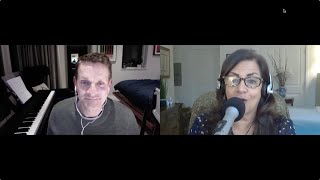
Bruce Daisley, former Twitter and YouTube executive, shares 30 research-backed ways to reduce burnout and add joy to work. Walking meetings, turning off notifications, protecting weekends from email, and scheduled laughter all measurably improve team performance and creativity.
Chapters
All right. Hello, everybody. Welcome to Finding Brave today. How's the week? I think we're going to be in February when this launches. How's it going? I hope the weather isn't too crazy, like it is so many places. And I am so excited. I'm a little nervous, to be honest, Bruce, to have Bruce Daisley here talking about what's wrong with work today and 30 simple. You're not going to give all 30, probably, but 30 simple hacks to bring more joy and meaning into our work, which, you know, is. Is what we're all trying to do. So, Bruce, thank you for your time.
Thank you so much. Well, the last thing I wanted is for you to be nervous, so let's deal with that.
I'm nervous because of your illustrious work, which I'm going to. I don't know why that makes me nervous, but here we go. I want everyone to hear about your. Your amazing background bio. Here we go. Bruce Daisley was previously, very, previously Twitter's most senior employee outside of the US in his role of VP across Europe, Middle east and Africa. He joined the company in 2012. That seems like a hundred years ago, doesn't it?
Yeah, it does.
I can't even imagine the changes we'll talk about have pre. And having previously run YouTube UK at Google. That just would be like an hour of an amazing chat. What you've been through, what you've seen, that'll be another time. He has also worked in the magazine, publishing and radio industries, having got his first break by mailing a cartoon resume of his life to prospective employees. I am dying to see that. Bruce. Do you copy of that?
You know, if you're on Twitter and you search. In the uk, we use the two letters, C, cv, curriculum, V, Time for. And if you search Bruce Daisley and cv, you'll see it. And the best way I could describe it for you is that it's. I sent this resume. I'd been out of work for a while after graduating and I drew this resume, which I'm a. The way I would describe it to people is I'm a three out of ten cartoonist. You've got to imagine something that's a bit more playful than like a Marvel comic. It's a bit more. Yeah, it's a bit more like Calvin and Hobbs style. You like, sort of strip cartoon, like. Like Peanuts and. And I drew that, which was like the story of my life. And here's the interesting thing I discovered is that actually the scarcity when you come into applying for jobs, the Scarcity is people's attention. And when something arrives on their desk, and I used to send an accompanying letter in a yellow paper when something arrives at their desk. And you've got to imagine Most people filtering CVs are bored. They're in a state like, here we.
Go, a seasoned professional.
And when something arrived that was a bit odd and seemed inviting and, you know, like I said, I'm not a good illustrator, but it was okay. What happened was I immediately got this remarkable reaction. In fact, not only did I get countless job interviews, I got a number of job offers from it and I got my first ever job from it. So I always say about that resume, you know, and I'd spent weeks and months on unemployed, I say that changed my life.
Did you have the actual CV there?
Absolutely, absolutely.
All right, we can't. We're going to have it there. We're going to show it for everybody.
Well, I'll send it to you. Absolutely.
Thank you. Thank you. But now flash forward lots of years. Bruce passion for improving work led him to create the podcast Eat, Sleep, Work, Repeat, which I've just heard has been number one in the uk. And you're all over the place and it's all about making work better. And it became a number one smash, as we just said. And you have an international best selling book called the Joy of Work, which is now coming out in a bit of a different edition in the US February 25th. So we're talking about all of this now. We were sharing before how I love to get at the whys underneath things. Can you tell me of everything you've ever done, of everything you could write about, I think, on LinkedIn? Does it call you a tech guru?
You have a wonderful little tech supremo.
Oh, okay, then I guess we can brag on LinkedIn. That's what I say, anyway. What made you write this? What were you seeing over and over that you said, I got to sit here and write this book?
Well, I read something last week that said that it was a dying trade, that people were. I remember there was, there was a time when they used to say that a third or half of all the chief Execs in the US had once worked at McDonald's. And in fact, we're seeing that that's no longer the case. You know, they've done Saturday work, they've done evening work that paid their way through colleagues, and we're seeing that that's no longer the case. But I was still part of that cohort who worked my way. I Did Saturday jobs, I did evening jobs to pay my way through education. And even from that stage, I observed that there were some really wonderful places where you turned up. And they might be big firms, there might be small firms, there might be bars, there might be hotels, but there was somewhere you immediately thought, I'm going to have some fun here. There's just, there's a play. To the characters I'm surrounded with is a really wonderful energy. And then some of the time, some of them are turned up. And I suspect it was normally because there was a culture of fear and intimidation and bullying. I turned up and I thought, oh, I'm not going to enjoy it here. And I was really struck with, wow, the chemistry, the alchemy that creates those things seems to exist at all levels of employment. And then when I was fortunate enough to my cartoons resume got me a grown up career job. And I just really was struck. The first place I went to work was familial. It was wonderful. It was really. It sort of had real companionship and camaraderie from the people I was working with. And as I then went on and worked in some of the most beloved and respected companies in the world, I worked at Google, at YouTube for four years, and I've worked at Twitter for eight years. I was really struck by sometimes some of the cultures that we admire from afar, that when we go to websites and we think, tell me the best place in the world to work and we're regaled with these stories of this just extraordinary benefits and perks that these people have. I was really struck with my experience at Twitter where there were times where the culture just felt like the most successful sporting team, the most brilliantly productive. You know when you watch a great TV show and you're like, why? The team that are doing this, they just seem to be minting magic. They seem to be creating something so special. And I felt when I was doing my job at Twitter, for a long while we had that. But here's the remarkable thing, here's the thing that I discovered that we reached stage where just something went wrong. And so, you know, out of vanity, that I believed that somehow I was partly responsible for the good culture that we'd created. I'd built the team from the time that we could, the team in the uk when I first joined, we could have traveled around in a mini cab. It was tiny. And so I felt as we built something strong and impressive, it was, I felt some degree of responsibility. And in fact, what happened was that something went wrong and we Reached a stage where I felt like I needed to take responsibility for fixing this. I needed to, to some extent, say, okay, if I took credit for the good times, I need to take responsibility for the bad times. So there's. So there's the problem. I witnessed people around me burnt out. I witnessed colleagues leaving with no job to go to. And I thought, wow, I need to fix this because. And the question I asked myself is, you've ever. If you've ever had a party and the party starts dying, you could often never get the party going again. No matter how many bottles you reach for, no matter how much cake you offer people, you can't get the party going again. And that was the question in my head, can I get this party going again? And I thought, did you have.
Bruce, did you have a clue what was at the heart of why the party was dying?
Yeah, I mean, you know, often the issues, they say, you know, the issues, they come down to the same things. We'd gone through a tough time, and often when times are hard, businesses, leaders, all of us, are reluctant to be as honest as. As we should be about how bad it is.
The financial, the finance, the numbers, competitive.
Landscape, the whole consequence of those numbers. And we were in a situation where we were probably moderating what we were telling people. We weren't telling people the. The unvarnished truth. And so, you know, the strange thing about that is that it's an illusion because by not telling people, they start presuming that it's worse and they lose a degree of trust. And the actions I took, I think, were partly responsible for that trust gradually going, so here I am, I'm in a situation where two fifths of the team had left in a year. You know, there's a strange thing that happens then, Cathy, as well, that where when that happens, you, you know, you're constantly wondering, who's next. You're looking at your best people thinking, I hope they don't leave next. If they leave, I'm in trouble. In addition, the people we had there were showing signs of burnout. And I think the reason why we're all talking about burnout more and more is because it's becoming so prevalent. We're spending so long using our phones, we're spending so much time connected to our devices that by one account, I read half of all US Workers are in a state of some degree of burnout. And I was witnessing it in my colleagues. So I sat there thinking, right, what can I do? What action can I take to resolve this? And so that's how I got on this journey.
I have so much to ask. Did you feel the burnout?
Most definitely. I think, you know, the strange thing that happened was that. Forgive me. Can I get some water?
Go. I'll have my coffee.
There you go. I'm back. Yeah, yeah. Most definitely I felt burnout. What I. What I experienced was.
Drink. Go ahead, Bruce. It's all right. No worries. We'll edit. Are you a little sick or does it just. You've been talking?
Oh, no, not at all talking. So I think most definitely I was experiencing burnout. And I think when you look into the symptoms of burnout, they are often the symptoms can be quite straightforward. They can be that things that used to be fun aren't as enjoyable anymore. We often feel overwhelmed. One of the ways that can be expressed is that we wake up exhausted, but weirdly, we go to sleep wired. We can't sleep. When we go to bed, we're just filled with thoughts and anxieties. I think they contribute to us not getting a good night's sleep. The final symptom that is often recognized as burnout. Burnout is recognized by the World Health Organization, but the final symptom.
Yeah.
Yeah. The final symptom is depersonalization. This is an interesting one for me. This is where you stop seeing the people around you as full and complete adults. So if you've ever sat at your desk annoyed with the woman next to you chewing, or the guy in the meeting who's chewing gum and he's driving you crazy, or someone tapping their pen really, really setting you off, then you might be suffering symptoms of depersonalization. And I. Most definitely, I was finding. I was exhausted. I wasn't enjoying things anymore. A job that I previously adored now felt like a burden.
Wow.
So most definitely, it wasn't just my team. It was me, too.
I have to ask you this. And then I want to get to these hacks, these simple hacks, and you say that, you know, there's a lot of research about this, but it's buried in white papers and scientific research, and we're not seeing it. So I believe you when you say they're doable and they're simple and we're going to get to some of them. But I'm going to ask you a question that I don't think you're prepared for because we didn't talk about it, but maybe you're asked this a lot. You know, I have a book coming out with HarperCollins leadership on the most powerful. You. 7. Seven power gaps that I see that professional women face differently from men. I think they face them, then they. They face them, but they don't in. In integrate them, process them in the same way. So here's my question, and no pressure. Did you see a lot of this syndrome, that women were experiencing it differently from men?
That's an interesting question. So let me think of specifics. I don't have an answer prepared on it. I think, you know, definitely what. One of the things that we observed was that there is a disconnect. You often observe, you often experience this. There's a disconnect between our rational intuition and our emotional intuition. And so one of the dissonances that people often experience is that they might feel that emotionally. I love working at this place. You know, I've got rapport. The number one, interestingly, the number one thing that correlates with people thinking they have a good job is if they have a close friend at work. So something as simple as that, sort of, that friendship can make a big impact to whether you wake up in the morning and you're happy. And I think. And what the challenge is that when you get a disconnect between people's rational connection with. With their work and they're emotional, so they feel emotionally attached to people they're working with. And, you know, no doubt the empathy that we observe in female employees, the emotional connection will often be incredibly strong. But it's that rational distance when people think, you know, I love these people, but I can't see us getting out of this situation. That distance is one of the challenges. And I think probably companies exploit not thinking specifically of this instance, but companies exploit that emotional connection. So, you know, most definitely, I do think that that was an interesting challenge. One of the things that did discover just on the subject of gender, was that collective intelligence was a really interesting factor. So collective intelligence is the notion that collectively we're more intelligent than we are individually. And it's emphatically the case whether you're in a quiz team, whether you're solving a problem, if you've got a group of diverse intellects, a group of diverse brains, you'll do a better job than if it's one person on their own. But here's one of the strange things that some researchers have started to try and measure collective intelligence. And in fact, they've made incredible progress at doing so. One of the best people studying this is a woman called Anita Williams Woolley, and she produced a brilliant piece of work on collective intelligence. And here what she discovered, she discovered that the teams with the best collective intelligence were teams that had over 50% women in them. That's interesting because she discovered that when you've got less than 50% women, the women are often crowded out. They don't speak up, they've, they, they are dominated by the other people on the group. When you've got just over 50% of the group is female, the collective intelligence is higher. And she then went further and she said, I wonder why that is. What she found was that it's all down to empathy. This is a really wonderful test that any of your listeners or viewers can do, which is called, it's got a confusing name. It's called the Reading the Mind in the Eyes test. And this is a test devised by a guy called Simon Baron Cohen. He's actually Sacha Baron Cohen's cousin. And it's a test designed for autistic kids. And one of the challenges of autism is that autistic people struggle to read other people's emotions. So they give them this test, which is a series of, I think it's 37 photographs of people's eyes. And from these eyes you've got a intuit what emotion the person's feeling. It was designed for autism. But here's the remarkable thing. It's actually a really good guide for us in our offices to assess how good we are at reading other people. And it's a really fun exercise to do. You can, you can all do. It's a lot harder than you think. And you search this test up and you take it. And one woman in my team, one woman who worked next to me, actually her score, she got 36 out of 37. She was nine. I think I got something closer to 22 out of 37.
Okay, not so bad.
Okay, but.
And I'm guessing, Bruce, women are in general better at this.
Exactly that. So that's why having more women in a team seems to help with our team's collective intelligence. Women generally, and I don't know if it's by design or by genealogy, but women are generally better at reading the room. And they've learned over time, I suspect that reading the room is a wise way to interact. So. Fascinating. So, yes, on the subjects of gender, there are some things that can be work enhancing that are gender based. Yeah, that's right.
Thank you. What a wonderful, interesting. And we're going to link to all of this below. Now let's get to. You've got 30 easy to do hacks. We can't get to all 30, but I know you mentioned there's one that you go to when you more than any of them when you're struggling. Is there one that speaks to you more?
Yeah, I mean, you know, I think the most versatile for me is going for walking meetings. So here's how I set about doing this. So the book is largely about how to improve your workplace culture. And so it might seem strange thing that the book there then starts with 12 interventions to make your own life better. And it was largely a reflection that had people contacting me saying I want to improve our culture, want to improve our team dynamic. And I went into one organization, it was a nonprofit. And they said to me, you know, we've tried to fix the culture around here. We invited everyone to a kickoff meeting, a three hour kickoff meeting, and no one came. And I think in that sentence, in that description, you hear one of the challenges with modern work. We find ourselves spending 16 hours a week in meetings. We find ourselves overwhelmed with the demands upon us. And we find ourselves in a zone where we feel overwhelmed with just all the things we're beset with. So 200 emails that we send and receive every day in countless two days a week of meetings. And so we're constantly overwhelmed. And so if someone invites you to another meeting, we just feel like we want to commit sort of calendar bankruptcy. We can't take it anymore.
Can I add something? Don't. I think if I were beleaguered, I might say, fix it yourself people. Now you're going to make me on top of what I have to do that you're paying me for. I'm helping you lead this company in a different direction. Know, is that possible? Do people frustrated?
I mean that was almost, that was almost my notion with this book. I thought, okay, none of Us are the CEO of our organizations and CEOs generally don't read books like these. They sort of, they go on hundred thousand dollar causes at Stanford and Harvard. You know, they indulge yourselves themselves in other ways. So I was like, okay, how could any of us maybe considering we don't have a lot of power, how can any of us set about changing our workplace culture? That was, you know, I was envisaging someone maybe in their early 30s or late 20s, low power, but wanting to get on in their job.
Oh, I love it.
And yet facing sort of a sense that they're overwhelmed, they're exhausted, they feel like they can't change things. Maybe their boss is emailing them all weekend. They feel like they can never escape their inbox and so my feeling was, okay, are there any interventions that any of us can stage? And let me give you the one that I mentioned. So for me, one of the most versatile ones to get in the habit of is walking meetings. And the reason why is because if we're spending 16 hours a week in meetings, which is the most common estimate of people in office jobs, then one of the things you encounter with that is that it just feels physically exhausting. And it's exhausting for two reasons. Moderating our behavior is exhausting. So spending time around your in laws or around someone else's parents house is way more tiring, honest, mentally and physically than spending time with our loved one, our friends. Why? Because we moderate our behavior. We were careful about the words we say, we're careful about. We don't put our feet on the table in the same way we moderate ourselves. And so it is with meetings, we moderate our behavior and so we can find ourselves becoming exhausted. And here's one of the things about walking meetings is that often, you know, there is a need to have a discussion with someone. But when we set about just walking, people report that their energy levels, rather than going down, they go up. The additional benefit is that it activates something in our brain which is called divergent thinking, basically creative thinking.
So when we walking process.
Yeah, that's right, that's right. Even more so if you go walking in nature. So maybe if you've got a park a block away from your office, going and walking around the park, the first time you suggest it, it will be really awkward. The second time it will be like, okay, that was good last time. If it can become part of your routine, if your Thursday 11am meeting becomes we walk around the park with a coffee, then immediately becomes something that's, that's quite liberating. And one of the things that of course any of us might say is that we might say, but hang on, if I'm talking about confidential things, yeah.
I can't be hacking about it in.
The park, surely I can't be talking. Well, here's the good news. The biggest trial that a member of the Mafia, a senior member of the Mafia ever had, he was asked about walking meetings and he said Mafia preferred walking meetings over anything, simply because the confidentiality of walking meetings was way better than meetings in a car, in a house, in a club, in a hotel. So the Mafia endorsed walking meetings. So not only are they liberating, not only are they creative, but they're also a secure place to discuss next year's.
I think that should be an endorsement on the back of your book. In the US we love that.
Endorsed by the Mafia.
Oh, my God. I love it. I love it. And I so love. You know, I am not a quantitative researcher as much as a qualitative listener and researcher. So much of what you say makes such perfect sense to me, and I may have observed some of this, but I love that you bring science to it. You bring the study of it to it. It's not just us sitting here making it up. I love it.
You know, the critical thing, I thought there was back to who's reading this book? And if you've got someone who you know is just getting on the careers ladder, if they turn up and they say to their boss, I want to start, you know, I think we should stop weekend emails. I think we should try to work less in the evenings. I think we should do this, this effectively. It becomes a battle of opinions. But if you can say, okay, well, there was this study done amongst workers who worked in a management consulting firm, and the quality of their work went up, the energy they were able to bring, their jobs, all these things rose when they changed these behaviors. Then it stops being a battle of opinions and it becomes, okay, we're bringing some science to the table.
I love it. Now I want to share with you something. I call it perfectionistic over functioning, which I learned as a therapist. But it's over functioning is doing more than is appropriate, necessary, and healthy. Perfectionistic over functioning is trying to get an A in all of it. And this is one thing I see women do a lot. And so there's not much the culture can change. When you have this drive internally, you're going to exhaust yourself and burnout. So I talk a lot about how you have to create boundaries and that is so hard and why you are striving so hard to get an A. What does it say about you? So I've got that covered in this podcast. I talk about it a lot. What I'd love to hear you talk about. There are some of these that if I read all 30 out loud and maybe you want to. Or we'll have them. We'll have a list in the show notes. A lot of them would be, yeah, I know that. I just find it hard to do that. But some of them are really counterintuitive. Some of them, one would not think would make a difference. Is that right, Bruce?
Yeah, I think so. I think that they're fair. The critical thing for me was that as I was sitting and writing this book and it became, it was from the product of doing a podcast and chatting to people and being and their provocations along the way. And so I've gone and I've researched all of these things and I think the critical thing that probably I found myself doing was thinking, okay, well, if we work on the basis that we're all feeling more exhausted than ever before, if you're like me, you stumble to the end of the holiday season and you're so in need an escape, so in need of like that lull of emails. You're like, I'm not sure I can carry on like this. And then thankfully, this sort of this end of semester feel and we start again in the new year and before we know it, we're back to the same cycle. And so for me the question was not is there? You know, the iPhone has given us this expectation in life that we're going to have a new model of things announced next year. We're going to have a new version of my job announced. That's better. We're not going to have a new version, are we? So the thing for me was, okay, can we improve the job that we're doing by maybe 3%? If we improve it by 3%, would it feel a little bit better? And I think that's why I'm so thrilled with the feedback that people have sent me. People have sent, you know, one of my suggestions, one of my interventions is to turn notifications off on your devices. So you turn. Yes, well, because here's the truth, Kathy, I guarantee you've got an email right now. You've got an email for you. You being notified you have an email does nothing other than cause your anxiety levels to go up. And here's one of the strange things we've discovered. We've discovered that creativity, inventiveness and anxiety live in opposition to each other. So it's why, you know, your favorite musical artist, their second album wasn't as good as the first album. Why? Because they had something to lose. They knew if I don't do something as good, then I might lose all those fans, I might lose this house in the Hollywood Hills. So they become a bit more risk averse. Creativity and stress live in opposition to each other. So once we know those things, it starts saying, okay, well look, can we turn notifications off on our phone? And here's what people say. People say, when I turn notifications off on my phone, I didn't forget I had emails. But it gave me some mental head space where I felt like I Wasn't constantly interrupted. And, you know, I shan't go into all the science of that now, but the science is well proven on those things. But look, some of them are counterintuitive. And the one that I feel most passionately about is the importance of laughter. And here's the strange thing, is that along the way, we love laughing. Whether it's laughing at home with our parents, whether it's laughing with our very. Our besties. You know, these moments when you laugh.
To think about it, where you laugh so hard your belly hurts you, there's an endorphin rush, and you just.
We know that our best times are laughing. And yet I'd witnessed. Maybe we've all witnessed this, but I'd witnessed bosses telling me, now's not the time to be seen laughing. And so I ended up believing that we don't laugh at work, and certainly we don't laugh at work in bad times. And here's the strange thing. So I found, when I was researching this book, I thought, I've got to find the answer on laughter. Because, you know, if there's times to laugh, times not to laugh, then I need to be candid about that. And here's what I discovered. I spoke to the world's leading expert and laughed. A wonderful guy, a guy called Robert, Professor Robert Provine. And he said some interesting thing he spent years, decades, trying to catalog when people laugh. He said he followed people into offices. He'd follow people around in nature. Here's the strange thing. The first thing he noticed was people laugh, not necessarily when things are funny. So I know that that's like the first thing we reach for. We said in offices, people laugh more to signal connection with each other. Let me give you an example. Maybe this. This will make more sense. You're in a meeting and someone says, well, it's Paula's turn next. Good luck with that, Paula. And everyone laughs. That's funny. But you like as itself, to an outsider, this. This is not funny. But we're laughing at something. I remember General Norman Schwarzkopf, the leader of the force in the Gulf War one, and he said he'd never been funny in the whole of his life till the day he became the leader of those forces. He said every time I stood up and gave a speech, I'd say something. And, you know, if, like, if it was attempting to be light, people would laugh.
Really.
And this is how we use laughter. We use laughter to signal connectedness. Now, of course, this. There are moments where we're creasing up with our friends and we're just in joy of laughing. But that's not the majority of the time. In fact, a wonderful British professor talked to me and she said she could never understand why her aunt had such an unusual laugh. She laughed at inappropriate times. And this professor, Professor Sophie Scott, she said to me, then I realized my, my aunt didn't have an inappropriate laugh. I just don't like her. And so the aunt was laughing. The aunt was laughing at things, signaling.
And she's like, forget it. Shut your mouth. Stop laughing. I don't like you.
Now, once you know that fact, watch what happens. Because when you meet someone you don't like and they, they make jokes and maybe other people around the table are laughing. Observe, you often find, like, you don't want to laugh.
Irritated, right?
Isn't this strange?
That is so interesting, isn't it? And thinking, oh, I'm sorry, go ahead.
But here's the interesting thing. So, right. So number one, we know laughter is about team bonding, team cohesion. So then what else does laughter do? Well, it's incredible for resilience. In fact, there's a wonderful guy who's written a series of books about survivors. And these are people. Their planes crash in the middle of mountains or the middle of jungles, and three months later, they've been given up. People presume they were gone. Three months later, someone emerges from the, from the jungle or someone emerges from. And they often. This guy, Lance Gonzalez, he goes and interviews them and he says to them, describe to me what was happening every day. Almost every, every recollection, every description. They will say, you know, I laughed at what a mess I was in. You know, sometimes I sat there shaking my head, thinking, you're doomed. Here's the strange thing. We think that it's going to be like these bear Grylls, like these survivors that going to emerge from these situations. And I guess the best of the best would. But most of the time it's people who are able to use laughter to reset their anxiety. And we see it all the time. If you see combat troops come back from a tour of duty and they've been in particularly difficult times, and you say to them, or firefighters. Firefighters are really. I spoke to some firefighters and they say, we laugh every day. And I said to one of the firefighters, could you tell your partner what you laughed about? He said, never. I could never tell my partner, why.
Be so inappropriate or so inappropriate color or something.
And here's the strange thing. Because they're presented with something that probably most humans would be traumatized by. But what do they do? They, they aren't bad people, but they use humor to, to cope. They use humor as a coping mechanism, to release. Right. How interesting. So laughter bonds us with others. Laughter is a release. And so then you start going, laughter helps survivors emerge from the. Then you start going, wow, laughter seems like, look, the old truism, laughter's the best medicine. And it seems remarkably true. So then you start going, okay, so if a business is having hard times, man, let's find a time for them to laugh, right? Let's find the time for the team to get together and laugh.
How do you do that, Bruce?
Well, Robert Provine says, in fact, you can really signal laughter ready moments. So, you know, one of the things that I encountered along the way is some of the best organizations spend time once a week to get together socially, to get together, to just chat, to get together, to just be themselves. I met one British organization last week, so long after I've committed the book. But I talk about one organization that used to spend time getting together and just having snacks every Thursday. And he said, yeah, we've taken that. We all gather for a cup of tea. Very British, it's what the Queen would have wanted. But we gather every Tuesday at 4pm and it's in the diary as cup of tea. And he said, new people join and they say, what's this? Do I need to come to this? Do I need to prepare anything?
I'm busy, I've got a report due.
And he says, he says, this is when we sit down and we just chat. And he said, the strange thing is it's become just like the moment. And of course you need to find the right time in your week. It's become the moment in the week where we just connect with each other, where someone will talk about his daughter's gymnastics, someone else will talk about her new dog. And it's just really simple and unstructured. But what you discover, this is a strange thing. When teams talk to each other in a social capacity, they are 10 times more likely to talk to each other in a professional capacity in the next week. So even though this feels like a waste of time, all it's doing is it's building moments of connection that then we can exploit for professional reasons.
Oh, Bruce, those are fantastic. I know. I'm aware of our time and I want to let you go, but can I ask you this? What is the one of these 30 that you get the most pushback about that?
No.
I either don't want to do this or I don't believe you that this helps. What's the one that might be the hardest for people to embrace?
I'm a big fan of a no fly zone for emails at the weekend. And most workers probably intuitively know that if their boss is a weekend emailer, then it's just like a fact of life. You got to deal with it. You join a new company. All right, here we go. She's emailing all weekend and you just. I used to have one boss, he used to hand out a manual. Can you believe this? He used to give everyone a two page word document saying almost like he's serving instructions. This is how you work with this guy. And one of the comments he had in his document, whilst you might not work all weekend, but I do.
Good grief.
Right? Can you imagine? And so every Saturday morning around 11, once he'd done his workout, emails would start and they would start and they would start. Now here's what happened is that while he used to say, you don't need to reply, people would start replying. So you would get, you would come back and you would, you would, you know, maybe you'd come back from seeing a movie and you would glance at your phone and you'd have 50 or 60 emails from a thread that he had started and all the replies and.
Would he actually expect you to reply?
He said no.
Did he?
But you can't help but wonder if the people who were getting promoted weren't the people who were the ones who seem more responsive. Now. Here's the strange thing. We found ourselves at Twitter and I found myself in my team seeing people quitting with no job to go to. And you know, it's such a vivid signal if people are leaving with no job to go to, they're desperate. And we had to ask ourselves, okay, so if people are leaving with no job to go to, why are they feeling like this? And we had to answer ourselves one of the reasons why they feel spent, they feel like all their energy, they feel like just utterly depleted. And so we said to ourselves, okay, we have to be honest about what we're doing. People are leaving with no job to go to because they feel exhausted by what we're demanding of them. And so let's be candid. These weekend emails, they don't have to go at the weekend. In fact, I'm not against if someone wants to compose an email on Saturday morning because they've got a thought in their head, write as much as you want for the moment you press send on it, the evidence suggests that every, every hour that a boss spends emailing his or her team, each member of that team will on average work 15 minutes. So if a boss spends three hours emailing at the weekend and they've got a team of 20 or 30 people, they're creating hours and hours, dozens of hours of work. And, you know, we reached the conclusion that our team weren't as inventive as we wanted them to be, they weren't as fresh as we wanted them to be, and ultimately they were leaving for other jobs because of these things, that we weren't making difficult decisions to say, let's not do it. So a lot of bosses push back. They say, look, you know, no one has to read my emails. But our feeling was the quality of the work is better. Here's one thing I'll say to you. Here's a strange thing I discovered about neuroscience. So if we were to split the way that the brain works into three very simple functions, this is like neuroscience. One on one, you and I are embarking upon our first lesson of neuroscience. These three systems. The first system is called the, is called the Executive Attention Network. So this is the system in the brain. It's distributed all across the brain, but it's what we're focusing on. At any point, if we've got our phone in our hands, typing an email on our phones, it's the Executive Attention network that running that second network is, runs in directly in parallel with it at the same time. It's called the Salience Network. Salience Network means that while I'm sitting here and you're sitting in that beautiful house there, then while you're doing that, the Salience network is making sure that the room you're in is safe, that nothing is going to happen. Right? But here's the strange thing. There's a third network and there's a third network of cognition. And when neuroscientists were first observing it, they couldn't quite understand. You've just been doing, you've just been doing a Rubik's Cube, you've just been typing an email, but then you stopped and all of a sudden loads of other areas of your brain lit up like, oh, but shouldn't your brain be doing nothing? Because when we asked you how you were feeling, you said, I'm thinking about nothing. And here's what they discovered. The final area, it's called the default network or the default mode. The final area of the brain is occupied in those times. And what we might describe if we were talking about what we were doing. We might say, I was bored. Do you remember boredom? I mean, like, what's that?
I don't know what that is.
Not since childhood have any of us experienced that boredom that we really felt there. Why? Because computers and devices have taken it away. But boredom or distraction or not thinking, that's what we would be in the default mode. But here's the strange thing that we observe that when people have their best ideas and you say to them, what were you doing? Right? I've just had an idea. What were you doing? They say, oh, I was staring out the window. I was walking my dog. You know, I was in my commute and we were in traffic and I was listening to a song. And then I had an idea. What's happening? It's when you're in the default mode, right? And here's the strange thing. My favorite example of this is the screenwriter Aaron Sorkin. Immensely successful screenwriter, wrote Moneyball a couple years ago, Social Network, the West Wing. He said he realized he's famous for, like, this zingy, witty dialogue. And he realized he was having these best ideas for clever lines. Not when he was sitting at his computer screen, he was. But when he was in the shower.
In the shower. That's it for me. And when I just wake up in the morning, brilliant.
Here's what Aaron Sorkin did. He realized that, you know, he earns money from these Zyngas. He had a shower installed in the corner of office. He says he has. He says, I promise you. He told Hollywood Reporter magazine, he said, have six to eight showers a day.
Imagine, Imagine his skin is revolting, you know, rebelling.
But, okay, imagine what's his moisturizing routine?
Did he really. Did he really, truly.
And he was asked about it. He said, I want you to be clear, this isn't like an obsessive cleanliness thing. He said, I feel it resets my thinking. And I suspect. I suspect he only does it when he's on deadline. He's got a script. He Sundays, I have six to eight showers. Just like trying to get into that zone. Well, there's that.
One of your hacks, one of the three.
But, like, it's just like understanding that what we might. If we're obsessed with productivity, if we're obsessed with getting the most out of every moment, we might lose these moments. Moments of unfocus seem as powerful as moments of focus. And that for me was a revelation.
Even more powerful because different thing that emerges. I am so fascinated by what you're saying. You're so interesting to listen to. You know, I'd love to keep you for another hour. So come back in a few months, Bruce, and we'll have this again. But what now that you're not with Twitter, what's next for you? I mean, what I see is you're so fascinating to teach and do leadership training and culture training. Are you doing that?
Yeah. Well, look, I want to combine my time across two things. Firstly, yeah, I've had so many organizations that have contacted me saying we'd love to do this in our organization. And, you know, I live a pretty modest life, so I'm hoping that, you know, working here and there, doing those things will help. And I'm also trying to dedicate my time to climate change and.
Wow.
Because I said to myself, you know, there's no point me waiting until I retire and then trying to do something like that. I wonder if, I wonder, honestly, if any of us can do something. And I think, you know, we're all taken with what's happening in Australia right now and the floods that everyone's seen around the world. And, you know, percentage wise, 100% of all scientists say that climate change is a real thing. And so my feeling was if I could dedicate two or three years of my life now to contributing to that, then I hope that I would look back and say, what a good use of my time.
And what are you going to do to contribute to that?
You know, I've had, I announced this last week. I've had so many wonderful connections. And they go from people who are running technology solutions, and they're like, you know, it probably be unfair for me to describe them as mad professors, but it conjures an image. And they say, they've said to me, would you just help us turn, create a business plan so we can get some funding? Absolutely. Right. I met a big charitable fund that gives money out and like, the amount of money they've been given for their climate change fund is the equivalent, about $150 million. And they said, we don't know where to start. Could you help us? So who knows? Who knows? But, you know, here's the interesting thing, Kathy. I'm working on the basis I'm going to fail, but if we. Knowing that you're going to fail, actually.
You mean you will fail in making a difference or.
Yeah, but here's the strange thing. It's disinhibiting because once you think I'm going to fail, you're like, well, good. There's no downside. There's no downside.
I got to embrace that I'm gonna fail. Not even gonna sell one book. Yeah, write the damn thing that I want to write.
Right, exactly. That. I used to. I used to talk to people. My big thing. When I announced I was leaving Twitter, one colleague contacted me and she said, the big thing you taught me was do your job, not worried about if you get fired. Because so often, so many of us can be worried about what would happen. And so.
Yikes.
I often used to. If I saw something I was unhappy about on Twitter, I would often tell everyone, you know, my boss is like, this is not okay. And no doubt that probably made me a difficult colleague at times, but my feeling was, that's fine, I'm going to get fired. So, you know, go down with a blaze of glory and. But what happens is it's disinhibiting because it makes you think, okay, well, truly, I'm doing my best job, and if I fail, then at least I can tell myself I tried my best. And that's the climate change thing. You know, we're probably all going to fail at this. But if I say to myself, I try my best, then.
Then you lived a good life.
I can have no regret.
It's a good life.
But if I tell you what, if any of your listeners know anything about climate change and they want some fall to work for nothing to help them, then they should get in touch with me. And truly, I don't want money. I live a modest life. I don't want money. I just want to do.
And where do they find you? Where do they reach out? Where do we go? Where do we buy your book? What do we do?
Yes. So eatsleepworkrepeat.com is my website. The books out in February, like you say, so, like, any day now, please, everyone. It's fun. It's got. It's sort of. It's deliberately intended for people who don't really read books like this. So I hope. I hope that spirit comes through.
It does. Thank you, my friend. Come back again. I'm so inspired. Oh, and all the best. The climate change piece. I mean, here's my net. The finding brave life is living it not for what other people expect. What makes you look good. It's for you. You're going to get to the end of it and you're going to look back and you're going to want to have done what mattered to you in the way that matters to you. And I think you're an embodiment of that. Bruce thank you so much.
Thank you. I'm so honored for coming on. Thank you.
Come again. All right, everybody, we need to hear from you. If this one doesn't get you excited, I give up. I'll do something else. I'll join you with climate change. Love you all. I hope it's been really enlivening, as it has for me this. This hour. We'll see you next week. Thank you. And thank you, Bruce.
More from Kathy


Elevate Yourself, Elevate Others, and Amplify Good | Chris Cooper | Finding Brave Ep. 334

Finding Brave Epis #333: How Leaders Can Harness AI Without Losing Their Humanity, w/Bennett Borden

Finding Brave Epis 332- How to Stay Brave, Valuable and Visible in the Age of AI, with Raman Rai

Finding Brave Epis 331 - The Power of Positive Disruption, with Dr. Patrick Leddin


Finding Brave Epis 330 - Being 40: Letting Go and Embracing Who You Are, with Stacey Lindsay

Disrupt Career Reinvention with Kathy Caprino - via The Disruption Lab Podcast w/Patrick Leddin

Creating Neurodiversity-Friendly Work Cultures: Simple Workplace Adjustments Matter

Finding Brave Epis 329 - How To Create a Neurodiversity-Friendly Workplace, with Kristen Pressner

Finding Brave Epis. 328: Reclaiming the Power to Trust Your Own Voice, with Dr. Cindy McGovern