Finding Brave 114: How to Quickly Land Your Best Positioning and Get Noticed, with Jeremy Ryan Slate
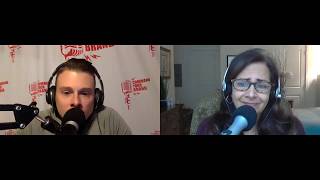
Jeremy Ryan Slate shares how a knee injury at 19 and his mother's stroke in 2012 shaped his purpose. He walks through positioning tactics: niche down, pitch local media with press releases, create native social content, and use Story-Message-Call-to-Action in interviews to get noticed.
Chapters
Hello, everybody. Welcome to Finding Brave. I'm Kathy Caprino. Excuse my little hoarse voice. I'm recording this right after the holidays with the awesome Jeremy Slate. Jeremy Ryan Slate. What a story. And I think I partied and overdid it a little too much. Little too much singing, little too much, you know, Christmas cookies. But here we are. So forgive my little froggy throat. How are you? Are you having a Finding Brave week? I was just telling Jeremy I had a little some bumps today. But you know, it can't all be perfect. I mean, we've got to know, we've got to walk the talk and handle our bumps in the way that we, you know, uplift other people to do that. Wouldn't you agree, Jeremy?
I would totally agree. And to your comment about Christmas cookies, my 14 month old just discovered cookies. Oh, no. And she looks up and goes, mmm, yeah.
Oh, you better nip that in the butter. 59 years later, Cookie, my ex husband says, mom's hard on cake. I'm like, oh, thanks, I appreciate that. But I am hard on chocolate cake, I gotta say. Anyway, Jeremy Slate, everyone. I'm so excited and I learned of you through your team and your wonderful podcast and your story is so inspirational. Jeremy, you really do inspire in what you do. I'm gonna get choked up, but I can't wait for everyone to learn all about you. But let me share your bio because it's so impressive. Jeremy Slate is the founder of Create youe Own Life podcast. A show to help people create their own life. No, no. Create life on their own terms at the world class level. He studied literature at Oxford University. You know, I worked at Cambridge University in New York, but I always wanted to attend Oxford. I want to hear about that. Is a former champion powerlifter turned new media entrepreneur. After his success in podcasting, Jeremy Slate and his wife Brielle founded Command. You'd brand media to help entrepreneurs hone their message and impact thousands with the power of storytelling. Thank you for being here. And we are talking about this is not an easy thing and it's not a one step process. But I know you have great tips for because you're successful at it, how to quickly land your positioning. And I'm sure we're going to be talking about niche as well. How do we figure out who we want to serve? Because, you know, if it's everybody, we all know we're not serving anybody. But how do we land our positioning quickly and get noticed? All right, so can we start? Do you mind with your story from what happened at age 19, right? Tell us.
So at that point in time. So I was in college. I have my. I was. I was studying. My undergrad degree is in Catholic theology and Torah. I was a double major. Go figure. And I was. Perspective. Yeah. I was playing. Playing pickup football, like, not even real football. And I was playing cornerback. So I'm covering the wide receiver. I'm backpedaling five yards to cover with receiver. I step in a drain, I turn my. My leg, and I tear three major ligaments in my knee. And that was a really interesting situation because it doesn't hurt because it's like. It's so severe that the adrenaline kicks in. You don't feel anything. You just fall on the ground. You're like, why can't I stand up? Like, what's happening? So one of my friends ended up taking me to the hospital. We took a look at the whole thing. I had torn my acl, pcl, and meniscus. Those are the, you know, three of the major ligaments near knee. I'd, like, shredded the thing. And believe it or not, it's supposed to be a pretty easy surgery. And you're going again in like, three to six months and everything's going well. But I had an issue with the anesthesia. And I found out later on, after the statute of limitations had gone away, that I couldn't see them anymore. That basically your lungs branch off into what are called bronchioles, right? The tubes that go into your lungs are called bronchioles, and there's a path between them that they put the breathing tube into with the in between them so that both lungs get enough oxygen. So what happened is they shoved the tube down too far, and my left. My right lung over expanded. My left lung collapsed, and I had a lot of trouble breathing. And they couldn't figure out what the problem was right away because nobody really knew, like, what had occurred. So I had, like, all these chest X rays. I had, like, a priest come in and give me last rites. And I had. It was a crazy experience. And the weirdest part about it was being in and out of consciousness, in and out of consciousness. And three days later, I just started breathing in on my own. And they're like, all right, well, you can go home. And I'm just like, wait, what? And I feel like a lot of people talk about something like that, and it changes their lives. And the skies open up and they hear the cherubim and seraphim, and it's all different. It wasn't different for me. I Just got out and I'm like, I'm just going to go, you know, figure things out. And it wasn't until 24 and almost losing my mom, my mom had a really severe stroke that I actually came home from the gym one day and actually ended up finding her. I was the 911 call and that for me was the thing. And I'm like, what am I doing here, man? Like, I need to figure out something where I can actually make an impact here. Wow.
Let me go back for a minute. Studying Catholic theology and the Torah. So. So when you say at 19, you know, you recovered from it and it wasn't some big life altering thing. So you didn't have what people would call the near death experience of seeing the light and going in the tunnel.
I didn't have that. Like I didn't have a tunnel or anything. I just like, it was really weird because like you can hear everything, you're aware of everything, but you're not really there. I don't know any other way to describe it. Like you know every single thing that's going on in that room, but you're not really there, if that makes any sense at all.
It's a little bit like hypnosis I've had.
I know what that sounds like. Actually. That's exactly what it sounds like. And it's just very weird because it's.
Like there's like an alternate reality.
Yeah. And there's, there's this phenomenon be called being trapped. Have you ever heard about this where people are trapped in their body and like they can't do anything. That's what it was. Kind of like for three days you're just kind of like. So it was really weird.
Can you tell me with that plus mom, what do you think the biggest thing shift in perspective you got that wouldn't have been possible without those.
It wasn't me, honestly. Because I feel like, especially at 19, like you think you're invincible and you got, you know what I mean? Like anything can happen to me and I'll keep going type of thing. But my parents and I are very, very close. And when it was my mom, I was kind of like, it really shook me because it was like, you know, we, we still have my mom with us now, but she's lost her language skills, she can't use the right side of her body, she hasn't been able to work. And you know, that was 2012 since then. So it is a very different reality that I have now. And it kind of made me look at you know, life could end at any moment here. Like, what are you going to do to make an impact? What are you going to do to help people? And did I make that decision right away? No. I was teaching high school at that point in time. I was. I was kind of freaked out on what that change is going to look like. And it took me some time to be able to make that change. Took me about a year to actually, like, end up jumping ship. And I would have jumped on any opportunity would have shown me at that point in time. So it was. I went through a number of different businesses, so I ended up doing what we're doing now.
Do you mind me asking how old you are now?
I'm going to be 33 in May.
Oh, what a good year. You know, I just interviewed Bronnie Ware. Do you know of her work tonight? Progressive the Dying. She was nine years in palliative care of people dying. And, you know, she is remarkable. But a lot of what you say to me, there are parallels that when we. And I think sometimes aging. I'm 59 and looking that at the possibility that you have fewer years ahead of you than behind you. There's a sense of urgency that many people have, a sense of, wait a minute, am I living on my own terms? Am I making the impact? And so you had an accelerated journey to that and how lucky we are.
That you did so interesting, because perspective, like, you try to make everything you do matter. Like, to a point. Like, I, you know, when my wife is away on a business trip or something, I love that I get to spend time with my daughter. Like, we have so much fun. Like, we were dancing in my kitchen and singing Beatles songs yesterday.
She's 14 months.
He said 14 months. Oh, she's awesome. But it's like you make life matter so much more because you've had this experience. Like, it's not a negative thing. It's a very positive thing.
No, I know that. And too bad it's like Breakdown to Breakthrough, my first book. Too bad that we often need a breakdown experience to shatter it all and come back in a different way. All right, so let's talk about now, your business, your podcast, what you help people do. And, you know, I'm all about learning from my guests. I ask questions that I feel I need to know, you know, so tell me, what is it that we need to know? Small business owners, entrepreneurs that we're getting all wrong? What are we. What are we missing?
Well, most business owners don't understand public relations or pr. They have A massive confusion between PR and marketing, and I think they're kind of the same thing. Like, all right, well, what is my ROI off of this? Well, especially on pr, you're not always going to be able to find the roi, but it's the real difference maker. So let me. Let me explain it to you like this. Let's say there's five chiropractors in a town and that there's one that's open less hours, and he's two times more expensive and he's harder to get to than the other four, but he's busier and makes way more money. It's because he's known as a leader in his space. He's seen with the right people in his space, and the right people are knowing and talking about him. That's the difference in pr. And it's so hard to show an ROI off of that. But it's a huge difference because you've actually changed the positioning of that person. Like, they're seen in a different position in their space, and that's why they're able to do what they do. You can play a bigger game when you think that way.
Do you think. How do I put it? You know, I'm thinking about myself and the clients that I have. As you talk, do you think some people try to fake that and accelerate that when it's not even true? Like, there's one chiropractor who says, I'm.
Sorry, give me an example so I can wrap my head around it.
Okay, so let me throw this out. There's. There's a term thought leader, and I use it when I say who I interview on my podcast, but I don't tend to use it about myself. Kathy, that wouldn't be my tagline on LinkedIn.
Neither do I understand.
You know what I'm getting at? I think there are people that come out of the chute. They want to be coaches. They want to be small, successful small business owners, and they begin to tout themselves as the chiropractor that only has to work three days a week and charges $1,000 an hour before they've done the work to become the leader. He's laughing.
Anybody in my company knows I'm always complaining about this because I think it's the dumbest thing ever. They managed to create a course on how to create a course and how to create a course while they're coaching coaches that coach coaches to coach coaches. Like, if you have done something and if you have something unique that you can do, then you deserve to help other people do that. If you haven't done it, then what's the. Excuse my language. What's the damn point here, man? You're just lying to people. And that's only going to last so long because eventually people are going to see through that. Now, what I'm talking about is strengthening your authorities in the correct way, Right? So, like, here's a great example of that. Let's say that one of the major programs you're going to do as a local chiropractor is you're going to speak in and speak in schools, let's say, on anti drugs. Because for me, one of my big. My big missions is I care a lot about keeping kids off drugs. So you would then do these talks. You actually do them. You do a great job. You care about what you're doing, because don't do it if you don't care about it. And then you write a press release to your newspapers about that. That's perfect. And that's going to get you the right type of attention for doing the right kind of thing. So hold on one second here.
Yeah. Oh, your little sweet dog.
I'm sorry about that. My dog had surgery and she's being a pain in the butt.
So give her the love. Give her the love. It's okay. I'll put you on.
I apologize. I have to move her.
Yeah, yeah.
I am so sorry about that problem.
We'll edit it out. Don't think a thing of it. She comes.
The reason I'm working from home today is so that I can watch her. We are talking about building your thought leadership in the right way. So when you're talking about things that you're already doing or something that's unique about what you're already doing, or like with myself, right when I started out with my podcast, we promoted it to local media. When I hit my first 50,000 downloads in the podcast world, that's not like, it's not that big of a deal. But to the traditional world that doesn't understand podcasting, that's really interesting and exciting. So you get that out there in the media and you write a press release. You find the right local paper, they cover it. And in New Jersey, we have local and we also have regional. So we had a regional newspaper called the Bergen Record pick it up, and a television producer happened to be reading that press release printed in the Bergen Record. And I got on TV for something that was true that I had actually done, showed I had some leadership in that space and then helped me to strengthen my leadership. So if what you're doing is true, because it's got to be true, because people can see right through it and working and you know how to put it out there on the right lines, you can strengthen your leadership at a local level, which is what most people are totally neglecting because they're saying, okay, I want to get on HuffPost online. I want to get an inc. I want to get in Forbes. I want to do all these different things. And it's like, that's great. But if you don't have the underlying leadership in your area, then you're never going to get those things because it's kind of. It's stairs. There's no elevator at the top. You know what I mean?
I so echo that. And I just. I want to say this as kind of a highlight to what you're saying. I once had a client who was launching her coaching business, and I looked at her website. It was beautiful, sexy, splashy, and it said, working with women, blah, blah, blah. So I said to her, how many women have you worked with? And she said, I've had two clients. And I gasped. And I said, I am going to be straightforward with you. What you're doing here is wrong. You are misleading. You're making it sound like thousands of women or hundreds of women that will not get you what you want. So I know what people are going to be thinking. Like, you know, people say to me, how'd you get on Forbes? How'd you write a book? It's taken me years to do this. It's taken me years to be a senior contributor on Forbes. So can you talk to me about this is really dear to my heart. This question, which I would love some feedback on. I had someone recently who I really trust say, I think this is really being transparent, but you should give more without worrying about what the reward or return is. Which I think is true from almost everybody I've ever met. But in business, when we are, it's not necessarily the way we feel about human relations. It's business. So there needs to be an roi. Sometimes I struggle with how much I want to be of help because I hear from about 10 people a day, I'm not kidding, who are asking for some kind of help that either falls under my free materials or wanting to talk to me. And I can't fulfill all of that. How do we know the degree to which we should give without it having to be an roi? And what I mean is, here's your guy, your chiropractor. Who's talking about how to keep kids off drugs and he's doing at the local library. That may not generally generate a client that minute, but my experience is the giving, the giving, the giving, the doing is going to generate times 10, times 100. Can you talk about that?
Well, here's the thing, I'll say to that, right? If that doctor is doing that, there's still an exchange there, right? The exchange is goodwill. Like he's doing something and he's getting goodwill in return. Whether it's from the people or from their parents or whoever it may be, there's still an exchange there. Now somebody walked into his office and said, I want a free adjustment and I want a free, you know, test of some sort. No, because that's your service and that's something that you offer and there's no exchange there for that because that person's not going to get better. Do you know what I mean? Like somebody's not going to get better if they're getting it for free. It's the same thing with giving somebody like a free course. They're probably not going to do it. You know what I mean? There has to be some sort of exchange there. That's right. Like one of, one of my, one of the programs that we run in our business is we do an internship program and we have interns come in. Because I've gotten really good at booking high level guests and I have a big process to it and there's like lots of training to it. So kids want kids in college aren't getting that experience, so I can give them that experience and in exchange they do the process for me for 10 weeks or 12 weeks or whatever, maybe for that semester. So there has to be some sort of exchange there. Or you know, you're screwing yourself or you're, you're screwing the person that you're doing it for because you're just hurting them by not making them exchange. So that's what I'll say about that. But in terms of information, like information is free. Like Grant Cardone puts out so much great information and he doesn't make a lot of money off that information. But it's so more people know about him. So there's still an exchange there. He's getting more well known. So you need to take a look at what you're doing and say, am I getting an exchange for this? Because you're not helping yourself and you're not helping the person that's getting it if there's no exchange from them.
I Love it. And I want to say that I made a commitment that I don't just want to work with wealthy people. So for me, I want to be able to serve everybody who comes my way. But for many people, it will be with the free videos, free materials, free training, free guides. The. That to me is the exchange that I'm helping you.
But then they could tell somebody else about you, or you could get more well known on YouTube or something like that. There's still exchange there.
That's right. Oh, I love the way you put it. I love it. Now tell us about. You know, you talk about Facebook and LinkedIn ads, which is. It's really interesting. Well, you didn't say ads, so tell me what you think. I've never had success with ads.
The way that you write your content. I'm not a huge believer in paid advertising, especially on. Because that's the reason they actually started Facebook Stories a number of years ago is they ran out of places to place ads. They started Facebook Stories Avenue place to place ads. So I'm not a huge believer in paid traffic. I have some friends that do very well with it. But I'm a bigger believer between your content marketing strategy and how you write your content. So you need to know, like, what native content for that platform looks like. And the reason I say that because the underlying piece is that media feature that we just talked about. So, like, maybe you wrote a press release to a local paper and it got picked up on their online version. What I like to call your small pond. You find these small areas of influence you have that are going to care about what you're doing and don't have a ton of competition. And you get press pieces written up that way. Then what you do is you take that press piece and you make it work as native content, meaning it's written specifically for that platform, whether it be Facebook or Instagram or LinkedIn, and you figure out how to make it work for that platform. Facebook really loves video content with a little bit of short copy. They love beautiful imagery that's long copy. They don't like. I don't know how to put this, but they don't like poorly done imagery. It's just nobody's gonna care about it. It shouldn't look like somebody made it in 1997 in Microsoft Paint, like, just not a good idea. Instagram is an interesting one because it changes a lot. So, like on Instagram right now, I've been using a lot of headliner quotes and stuff like that to promote interviews. That's worked decently well. But once again the beautiful aesthetic imagery and I just feel like that communicates to people more on a spiritual level as well. So it's really connecting with that.
Couldn't agree more. Like, of everything I've gotten viral attention on, it's a quote and I do them in Canva. I'm the biggest fan of canva.com it's a quote that speaks to me and it's an image. And Those will get 50,000, 60,000 views on LinkedIn with comments because. And I also think that that's how we digest now. We want to see it quickly and we want it to speak to us. So I love it. I love what you're talking about.
Can I add LinkedIn there as well? Because in terms of what you're doing on LinkedIn too is like a native thing of what's doing well there. It's changed a lot because video used to be really big. They were favoring it for a while. Then my view number started getting crushed and I went back to long form written content that's mobile friendly, meaning you're skipping lines in between because that big blocky text, people can't read it. So you're skipping lines in between. And if you know, on LinkedIn when you write something you get like three lines and there's a little button that says See more.
Right.
Those three lines are like really important. So you want to have a shocking fact, an interesting, interesting something that's going to make somebody click that see more button and refer it on your story and go through it. And that's what brings people back around to the content.
So, you know, I got a big following on LinkedIn and I think I got it through sharing the posts that I write. So. But I won't just share, you know, when you do that, the image comes up and obviously it's got to be a great image that compels. But I will also share in kind of that long form way why I wrote this post or something more than just read my post. But when you're doing the long form, are you licking linking to something else or it's really a standalone little piece.
So here's what I'm always usually linking to something, but here's what I'll say and I'd be interested to see if this works for you. Yeah, but usually what I, you know when you put in a link and it shows you a little preview before you post it and there's a little X in the upper right hand corner.
Yeah.
If you click That X the link in the post is still clickable, but the platform looks as a plain text.
Post and they like better.
They don't like anything that's linked and that's fate. That goes for Facebook, that goes for LinkedIn. Because you're leaving their platform, they want to kind of keep you in social media prison.
But so it's okay that the link is hyperlink is live.
Correct. As long as you remove the link preview because it's treated as plain text. So I'd actually be interested to see on some of these posts you're talking about, you're sharing, if you deleted that link preview and just left the link, make sure, you know, make sure the link preview isn't there before you click post. I'd be interested to see if you see a slight.
I'm gonna try it now. Can we back up a second? I have so much to ask you. I've talked a lot about what it is to become someone who's at the forefront of, you know, their niche, thought leadership. And I, you know, I wrote a post on the 10 Questions to Ask if you're ready to be a thought leader. But for me, one of those things is that you have kind of a model for change for people. If you're training people, if you're a coach, if you're an entrepreneurial expert, you don't just talk about what you did. Like do this because not everybody had a near death experience, not everybody had a corporate life that almost crushed them and killed them and changed and became a therapist. So to say, well, write a blog on Forbes and you'll be. It doesn't work. You have to have a model for change that works with almost everybody. And so can you tell us a little bit about. Yes, you want to land your positioning and get noticed, but you also have to be a person of substance. I mean, you have to have something going on. Do you have kind of a methodology you bring people through to make sure that what they offer is substantive because they've done the work? What would you say about that?
Well, let me add something to what you're saying too, because I feel like this fits perfect here as well. I changed the way I write content about a year ago after talking to my good friend Robert Sislow Jr. And one of the big things that you need to do when you're creating content, like you mentioned before, it has to be a methodology everyone can go through. When it's content that you're writing to promote what you do, talk about your own experience because people don't like you, you, you, you, you should, you should. You need to. You, you, you, you. Because you're creating this instant resistance to what you're doing. You talk about your own experience. People see that you've made the change and you've made the transformation. So that's what I'll say first in making, creating your content now in terms of what our methodology looks like is we find out first and foremost, because I love that you said this before, is being different. It's really, really important. As we say, who is your audience and how are you different? Because all too often, like, if your audience is everybody, it is no one. Because your audience, your, your message isn't going to impact somebody. And how are you different? Because there in the podcast world, there is probably 200,000 shows that have tried to create Entrepreneur on Fire again and again and again. And John's done a great job with that. But don't be John. Be you. And if you. So if you're not different, you know, we can't promote something that's not different. You know what I mean? We can't promote something that's the same as everything else. So first and foremost is like, you have to know who your people are. We can help you niche down more if you need to figure that out. But how are you different? Different? Differentiation is so important. And in terms of, like, when we're actually gonna help somebody get on a podcast, we look at the three major elements of every interview. We call it story, message, call to action. Your personal story gives you permission to then teach, which is your message, your three to five key teachable points. And make sure you really teach. Don't just focus on, like, go to my website. And then your call to action is something applicable based on what you just talked about so that people get a win and they remember you. So that's really what our methodology looks like, is who are your people? Why are you different? And then get your story, message, call to action down. And the interesting thing that you're going to find about that is that works for whether it's a podcast interview or a TV interview, or whether you're doing a guest blog post. It works so well because you make sure all three of those things align to actually get you someplace.
Say that again.
Story, story, message, call to action. And it's really important. Like, we had a client in the real estate space that did better than any other client we ever had because he got on interviews and just talked about every single thing. He knew where the hosts were, like, wow, I need to hire you. Like, people, when they hear that you know how to do something, people. I think. I think people are often afraid that, oh, my gosh, if I give away everything, somebody's gonna go do it. People are lazy. They would rather hire you to do it for them. They just want to know that you know what you're doing. And I think that's what's really important about talking about your content is tell people what you actually do and how you do it. They're not going to do it.
You're making so many good points. Can I highlight a few? When I wrote my first book ten years ago, I was reaching out to media, and I didn't have a Forbes blog then. And I remember one woman who's now become a really good friend and she wrote for a big magazine said, well, what are these 12 hidden crises that your book is about? And the book hadn't. I don't think it had come out quite yet. I didn't want to give it away. And nobody's going to read it posted me. I said, I'll give you three, but I'm not comfortable giving you 12. Kiss of death. Kiss of death. So I do you have. You. I'm sure, Jeremy, you've had the same thing where you go on a training webinar and, you know, it's so formulaic. Minute 12. You're doing this and there's no effing content. All I did was get pitched.
There's a few really big influencers out there, and I'll leave their names out of it because I don't, like, negatively about people. But you get on there. I'm like, I am never going on one of your webinars again. They're two hours, and I keep waiting for the content, and the content never comes. And the next thing is, I'm being sold something like, come on, dude. Like, I want to, like, learn something.
I can't stand that. This might be too feminist. Ish. But I do think that's kind of a male worldview. You got to do minute 12, minute 19, minute here, here, here, and you got to sell, and you got it. Where's the relationship? But when people are worried that they're giving away too much, I have to ask, don't you think there's more inside between your ears than those seven sound bites? What are you worried about?
It's a scarcity mindset as well. Like, they think, this is the only single thing I have, and once it's gone, I'm not valuable. And it's like, not really. Nobody can quite do it. Like, you can do it if it's that special.
That's number one. Number two, would you agree with this? The only way to know how you're different is to do something is to do it. So for me, in the beginning, after leaving corporate life, I was a therapist. I didn't know how what I was focused on as a therapist. I had to be a therapist to know how I'm different. And then left therapy and became a coach. And now I watch. So this is the tip people story, message, call to action. Watch yourself, split yourself in half. The one half is doing the work. You're an entrepreneurial marketing expert. I'm a career coach for women. Split yourself in half and watch what you attend to. Watch what you light up. Watch what makes you light up. Watch the direction you take the conversation in. That's what makes you different. But you're not going to know how you're different when you're two months into doing new work. Would you agree with that?
So in our business, we've booked, like, I think almost 3,500 podcasts at this point since we started in 2015. When we started.
You mean you've gone on 3,500 podcasts?
No, no, no. Our company has booked clients in over 3,500. But when we started, I did that. I was the booking guy. I figured out how to. I was also the sales guy. I was also the marketing guy. So you find out, like, what you stink at and what you could be better at. Like, was I the best booker? No, but I scored some. Some cool bookings for clients, but I found somebody who's better than me and put them there. And then I kept going, kept going, kept going. Where I'm really great is at marketing and content creation. And that's what I continue to do. Just what you're saying, you find out what you're good at by doing it. You can't just decide on that. That's why I never, like, I don't know if you remember this, this quote, but Gary Vaynerchuk says, don't do things you don't like to do. And I disagree with that totally. Because you don't know what you don't like to do until you do it. Then you're like, okay, I don't like that.
And within, I don't like to do this sales. There's a niche of that you might love. You know, the business development part where you're actually blah, blah, blah.
Yep.
Interesting. I mean, I Do say, don't build a career around what you hate to do every minute of the day.
Oh, no, absolutely. As a business owner. As a business owner, there's going to be some things that you have to get done, but if you don't like them, find somebody to do them.
And, you know, wouldn't you agree with this? And if not, please do challenge me. We don't. I don't only need guests that agree, but a lot of people say, kathy, I want what you have. I don't want to work a day in my life. I'm like, who gave you that impression? This is work. This is, although it's fun work and it's rewarding work and it's work we wouldn't give up for anything, but it's work. Right, right. All right. What else? How do we get noticed on a budget and really stand out? Tell us more. What are we not. What are you seeing a million people do? Like, oh, no, they need me to tell them they're doing something wrong.
So let me go back to actually what we were talking about before a little bit. And that's the idea of this small pond. Because everybody, like, it's a good idea to think big, but I think a lot of people think too big out of the gate and they skip what should be their power base. So we talked, I was talking before about finding, like, local places that care about you. So I teach people what's called the small pond strategy. You find the small areas that you're close to that actually care about you and that are easy to reach. So here's. Here's some examples. Maybe your Rotary Club has a newsletter. Maybe your university has a magazine that goes out every month. I live in a lake community. We have a magazine that goes out weekly. I've been in it a few times. So find out what these small things are, and those are the things that you need to promote to. And here's the best part. Find the ones that have an online version. And most of them, because they're quote, unquote, news sources, end up in Google and Apple News. So you're actually getting, like, some really good link juice from them. So I found a small weekly newspaper we have here in our local area. It gets mailed to every house in the three counties around me.
Wow.
On a Thursday. And I know their press day is Tuesday, which means anything that I'm gonna have printed on Thursday has to be done on Tuesday. I grew up in a small town. It's five, eight of a mile in size. We don't have a grocery store and so nothing really happens here. So when I write a press release. So a major skill you need to learn is how to write a press release. Search HubSpot press release and there's a great article on how to do it, but helpful. Write a press release to like I did to this small local newspaper and my first 12, you know, or dozen whatever press features were to the small local newspaper. And then we use those to build up a media page. My website with logos and different things. And that helps you to really start to build up a power base and notoriety and people locally are saying, wow, everybody's talking about you. And that's how you start to get it rolling and start to be able to reach out to bigger media places and is don't forget the power base you're already a part of and promote to them because that's going to help you to go bigger from there. Find your small pond and talk to those people.
You know, another piece I love is look, it's wonderful to have a strong ego and to know that you can impact the world. But don't skip from A to Z. Start, you know, start letting. Put the pebble in the, in the lake and let the ripples go.
It's stairs, it's not an elevator. There's, there's too many people that because, because of, just like you're saying, because of ego. They're like, well, I only have to be in the biggest media feature or the biggest podcast or the biggest TV show. And it's like, that's cool man. But nobody knows about you yet. You gotta, gotta create that notoriety and get more known before you can get these other things. I love it.
You know what just came to my mind, Jeremy? What do you think? I had wanted to do a TEDX talk. I had that in my mind and of course I thought wanted a million views. I have to say preparing to do one before you have an offer to do. And it's a fascinating. I suggest everybody do that. Write the talk that you wish you could give 12 minutes, memorize it, write it. It's very hard because you're, you know, it's. Imagine everything you can teach. You have to distill it into 12 minutes. But then you can reach out to people and it really has to connect with the theme of that, that year's TEDx talk. But I really feel that in some ways doing that can put some people on the map. Now they're becoming much more common and the quality of a lot of them are not as what, what they were before. But are there any other pivotal things that you've seen once your client could do that, it put them on the map in a different way.
Anything, honestly, just their message and how they deliver it. Like we have clients that come to us and they'll say, man, like, yeah, I've been getting attention, I've been getting more people and, you know, more customers and things like that. But I'm so much sure about my own story. And the more you know yourself and your own message, you get your own story and how you deliver it down, the better, the better it is. Honestly, like I, for myself, I do a lot of speaking now. Like I've spoken all over Europe, South America. But like one of the. But like I don't really have to prepare for a talk. I could just, I, I'll get up a lot of times and I'll say, alright, so I have two talks prepared. Are you guys interested in learning about this one or this one? And we see what they want because you want to deliver to your people what they need. But you need to be sure enough about your content, you can do that. And I feel like that's what's really, really important. There's a lot of people that aren't sure enough in their own content, even though they're great at it. You may know a lot of stuff, but you got to deliver enough time so that you're comfortable and you're flexible and you can do a lot with it.
I love it. You know who's wonderful to learn from? Nancy Duarte. And I featured her and it's coming out on the podcast, but she's even looked at the Anatomy of a fantastic talk by some of the best speakers and orators in the world. There is an anatomy to it, there's a structure to it. So definitely check out her work. It doesn't just. Most of us aren't just gifted as great, you know, great speakers. We have to learn a little bit. Okay, what else do in our last few minutes, Jeremy, what else? What would you say? Another huge mistake that you're constantly correcting with people who are starting out honestly.
It's such a basic thing, but it's how their website is done. You know, I find so many people that they don't have like their about me page is written in third person, whether it's them talking about themselves. And it's kind of weird, like it should be written in such a way where media can use it. You know what I mean? Because if you're trying to Get a media feature, they want to go find your bio, they don't want to go find this information about you. That's really important. Also, having a media page on your site is vital. And what a media page is. It's images and logos of all the places you've been featured as well as links to those. And that also helps to build your authority. Another simple thing is a blog on your site. It doesn't mean you have to be blogging every week or whatever, but if you're an opinion leader, you have something different to say and people need to be able to consume your content. Even if it's content you've written on another site that you have permission to reproduce, that you can post on your site that you've written, whatever it may be, you need to have things that you've said. And then the other thing is like the way the copy on your site is actually written. Your copy on your site should not be written, like I said before, in first person, it should be written in third person, meaning it's someone else talking about you as a person. Because it shows that, hey, there's more than just me. Because there was just like this weird thing in marketing where everything was written first person for a while and it was kind of like, yeah, that, that's cool and you're trying to be personable and whatever, but it's not gonna help you build your, your thought leadership because people don't see that you're credible. Because people that are important don't talk about themselves. Other people talk about them. And that's honestly how it's put together. It's such a basic thing, but people mess it up.
I would also want to add this if I could and, and get your take. So literally, Jeremy, I'm pitched about 400 times a month. I'm not kidding. To be featured from PR firms and direct people to be featured in my Forbes blog or on this podcast. Now there is a right way to pitch a media person and there's a frickin wrong way. Gosh. So I, I want to hear what you think the wrong way is. Will you.
You send out an email and it says Dear First Name Fix because it's an email list that you've been added to and the name of the podcast is wrong, the font sizes are different, so it looks like it's not actually written to you. And I would be a great guest for your show because of. So I find honestly that the format of Story Message Called Action actually works great for a pitch as well. Like Here's a little bit about my story. Here's a little bit about the things I can talk about. And this is why I'd like to help your audience, because everybody knows you got something to pitch. Everybody knows that, like, you don't need to talk about that in your email to, like, get the media coverage, because they don't care. Like, it needs to be about how you can help their audience and how you can add some value to them, not about you. And that's honestly what I find, because I hate these, like, egotistical pitches I get. They're annoying.
So can I. For people who go, wait a minute, he's going fast. I don't understand.
I'm sorry, I speak really fast.
Yeah, I love it. You mean I'm thinking, or let me turn it to what? I mean, I'm not going to cover you. If you've got a new handbag line, so What? So do 10,000 other people. I want to know what story you're pitching. I want to know what piece of message you're pitching. I want to know how you can help the people who follow me. Not that you've got the new widget, not that your new app did this. Is that what you mean?
That's 100% what I mean. It's about how you can help that person's audience, whether it's people that they're writing to or people that they're talking to.
Otherwise, you're simply asking me to give you free press for your app, your business, your widget, your. And that ain't gonna do that.
You could feature so many people that actually, like, want to share and help your audience. Like, you know what I mean?
That's it. 100%. 100%. You are so full of a wealth of information. Where do people find? I'm sure you have all sorts of training, all sorts of resources. Where do we go to find more?
Well, we talked a lot about media coverage today. We talked a lot about getting featured on podcasts and things like that. And I know for me, like, once I learned how to, like, use media the right way and how to pitch correctly and all these different things, it was like a game changer for myself and for my business. So what I actually did is I put together a really awesome resource for your audience, and it's the seven reasons why no one knows you. And it's something anybody can implement, and anybody can start working, and it doesn't matter where you are in your business to start using it. So that's over at commandyourbrand media7reasons. And the number seven or the word seven will work.
Oh, I love it. I love it. I love it. Thank you so much for all your tips. I know that you could be on for another two hours and not stop talking. That's how much you know. And I can feel the passion that you have to help people. Thank you for taking the time, Jeremy. So great to have you.
Absolutely. Thank you so much for having me today, Kathy. This was awesome.
Thank you, my friend. Come back again. All right, people, if you're not on fire here, and listen, if you have questions, because we both talk fast and we know what we're talking about, but there might be questions in some of the way we present it, let us know. Wherever you see this, ask a question. I have a feeling Jeremy's on it. So tag him and tag me, and we'll answer your questions. Let's help you command your brand and get known for the amazing work that you do in the world. All right, everyone. Hope you're gonna find Brave after this and have an incredible week. We'll see you next time. Thank you, Jeremy.
Thank you.
More from Kathy


Elevate Yourself, Elevate Others, and Amplify Good | Chris Cooper | Finding Brave Ep. 334

Finding Brave Epis #333: How Leaders Can Harness AI Without Losing Their Humanity, w/Bennett Borden

Finding Brave Epis 332- How to Stay Brave, Valuable and Visible in the Age of AI, with Raman Rai

Finding Brave Epis 331 - The Power of Positive Disruption, with Dr. Patrick Leddin


Finding Brave Epis 330 - Being 40: Letting Go and Embracing Who You Are, with Stacey Lindsay

Disrupt Career Reinvention with Kathy Caprino - via The Disruption Lab Podcast w/Patrick Leddin

Creating Neurodiversity-Friendly Work Cultures: Simple Workplace Adjustments Matter

Finding Brave Epis 329 - How To Create a Neurodiversity-Friendly Workplace, with Kristen Pressner

Finding Brave Epis. 328: Reclaiming the Power to Trust Your Own Voice, with Dr. Cindy McGovern