Finding Brave 115: How Your Intentional Energetic Presence Boosts Your Impact, with Anese Cavanaugh
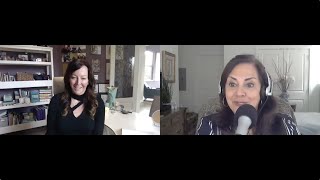
Anese Cavanaugh explains her Intentional Energetic Presence method for leaders. The approach uses breath, intention, and four types of energy (physical, mental, environmental, and relational) to boost impact, set boundaries, and reduce mistreatment at work.
Chapters
Hello, everybody. Welcome to Finding Brave. How are you this week? How are you? I am. I'm having a ball, I gotta say. I just want to take one minute to say I'm pinching myself for the guests that I just. I don't even call them guests. Friends that I get the chance to talk to. And what. Who we have today is Anise Cavanaugh. And, Anise, I want to ask you a question right away because I know you do a lot of talking, a lot of speaking, a lot of working with leaders. Don't you find that the joy is that you are learning while you're supposed to be teaching or while you're. I mean, I get to sit here with you in your gorgeous house and ask you everything I want to know that's going to help me, you know, it's like so selfishly wonderful. Do you know what I mean?
A thousand percent, yes. I agree. I agree. I think. I think the joy of this work is there's not a minute that goes by that we're not learning from the people around us.
I know.
Do we go in to talk and teach?
We may be half a step ahead on one little aspect. And I came from a life where I didn't have that. I had a corporate life that was not. It was the antithesis of that. So every day I feel grateful and I hope you all are finding so much benefit out of these conversations. I hope so. So today I'm so honored and thrilled to have Anise Cavanaugh, who we now know we're like, in many different circles together, which we hadn't really realized till we sat down here. And Anise is talking today about how to be authentically and positively contagious, which I cannot wait to learn about. But let me tell you about Anise. What a beautiful name. Anise is devoted to hell. I want to know where that came from. Devote. Oops, I got to put on my glasses. Devoted to helping people show up. And their best self. Oh, no, excuse me. Best selfs to the table in order to create significant positive impact in their lives and I'm guessing in their organizations and people around them. Right. She is the creator of the IEP method. Intentional Energetic presence. I can't wait. An advisor and thinking partner to leaders and organizations around the world, a keynote speaker and an author of four books. I am, you know, gasping through my second book, which is, as we were saying, not easy to write a book. It's a labor of love. And your books are contagious culture. I'm not giving the Subtitles but you're going to see them in the show Notes. Contagious you create the impact. Is that it? Create the impact you want. Is that the third one?
That's. Oh, no. Contagious you.
That's the subtitle for thank you and the leader you will be, which is so beautiful. You showed that to me. You are a leading voice on intention, energy, and presence. I really do want to also talk about how we frame that word in leadership today, because sometimes energy can be people resist that and you help people unlock greater leadership potential, collaborate more inspiringly, create more openly into it more bravely. Bravely. Yay. And lead more joyfully and effectively. And a lot of people have worked with you and hired you. I'll give the list below. So thank you for being here.
Oh, my gosh. Thank you for having me. Thank you so much for having me.
My pleasure. All right, can we jump in here? Can you tell me how this work got started? First of all, what was the impetus? What made you want to talk about intentional presence? Yeah.
Yeah. So I actually started my career in kinesiology working with athletes years ago. I was kind of. Yeah, it was. That was. I was obsessed with. From a really young age, from about 14 elements. I was obsessed with, you know, how people use their bodies to make things happen out on the field or just in their lives. I was obsessed with, you know, how do we actually create Pact. You know, how did. I can remember a specific. I used to work at Baskin Robbins and I can remember a moment in Baskin Robbins scooping world class chocolate ice cream where I was going through a really hard time in my own life and I was feeling very victimized by it. I can remember this very dramatic 14 year old going in to scoop this ice cream and all of a sudden asking myself the question of what if life isn't happening to me, but what if it's happening for me?
How old were you?
I was 14. I was 14. Like, that was a divine. That was like a angel on my shoulder, just like, hey, you know. But I had the question, like, what if it's happening for me? And how do I turn what's happening to me or for me into something that's really. I create a really great life. And that was my first exposure to intention and to deciding to do something really cool. And then I got really obsessed with, well, who would I have to be in order to create a really great life? How would I have to take care of myself? You know, how would I have to, you know, like, exercise was A really big part of my life. And it just kind of evolved and evolved and evolved and.
All right, I have questions already. Can I ask them? So clearly you're a spiritual person. And I know for, let's say it this way, spirituality, I don't mean religiosity, I mean hearing the sound of your own spirit, hearing, feeling what you are beyond this human form, beyond your ego, beyond your personality. But what I sensed in you is when you said that at 14, you heard something, you felt a message. And literally, you know, I took a retreat of 25 women to see Lorna Byrne in Ireland, and she actually sees angels. I know that sounds very woo woo, but being in the presence of someone who. It was incredible. But did you actually have an intuitive flash? And can you tell us. You clearly are very intuitive. Here's your. Your whole methodology, right, about energy and intuition. Did you tell. Can you tell us about that? Did you hear it? Did you feel it? How did you know this was something you should listen to rather than. Well, that's an interesting thought.
Yeah, Yeah, I felt it. You know, Kathy, it's so. It's. I didn't hear it. I felt it was more of a feeling. And then I, from the feeling probably made up that I heard it, but it was more of a feeling because I can still now, years, years and years later, I can still feel the energy of that knowingness. I can.
What was it? What did it feel like?
It was just. It was like a clunk in my chest. It was like a. It was like a. It was like in my heart space where I went, okay, hold on a second. And it was almost my experience of. It was almost like a relaxation, a calming, a knowingness of just like. Hold on a second. It does not have to be this way. It actually can be really. It can actually be very different. And that feeling, even as I tell that story years later, I can always get in touch with it. And even now, if I'm feeling lost or I'm feeling overwhelmed or uninspired or off track, if I can just take a deep breath and come back to my heart space and kind of reconnect, and I think of it as grounding myself, if I can just ground myself, all of a sudden I can connect with that feeling again and then I can trust that things are taken care of, I just might have to do some really good work around it to make those things happen.
Yeah. So resonate with what you say. And can I highlight something? I think you are so farther on the path than I am on this truly. But when you know what that feels like, it's very jarring when you're living out of that. Right. Like sometimes it has to hit me like a cosmic two by four. Even in writing this book, you know, they say you've got to kill your darlings, kill your babies. You know, I'm hanging on to the babies for dear life. And then I'll have that knowingness feeling. And sometimes it's from someone else saying, hey, Kathy, but that feeling that comes over you, that is that calm, solid ground, boy, isn't it quite different from how we can live every day?
Yeah, yeah, it is. And I, and I think, I love, I love the point you're bringing up that when we're out of alignment with ourselves, how discombobulating that is, but we.
Don'T see it that way. We just, we feel agitated, defensive, worked up, out of control. That's how we feel. We don't know that it's out of alignment. So we get back in alignment. Right.
It's so true. Yeah. I couldn't agree with you more. I love it. Gosh, I love this conversation already. I do feel like we're having a really beautiful meal together because I, you know, you first started asking how this body of work came and another way of looking at it is that part of my obsession became how do I create the space in my life to be in touch with that feeling more often. Right. Which is where the IEP work comes from. Because IEP stands for Intentional Energetic Presence. But it's also your intentions, your energy and your presence. And when you look at the methodology, there's a whole methodology around clearing your space, getting quiet, taking really good care of yourself so you can hear those messages. It's so important. Well, my experience, my experience has been that if I'm not taking really good care of myself and present and connected to my intention, I can't hear that wisdom. I'm not in touch with that knowingness. And so then that puts me out of alignment. And then my leadership is going to be yucky, and then my culture that I'm creating is going to be yucky. And so if you get a bunch of people together and they're not in alignment and they're not being intentional and they're not managing their energy, they're not present, you have no chance at creating really great leadership or great culture.
Kelly, I love it. So I have a question. This is what I want to know. How did you decide, Let me work with leaders. And how do you get leaders to not Freak out at this point.
Oh, interesting to not freak out. Like, oh, my God. Energy.
What is this?
Woo woo.
What's she talking about? You know, I got a bottom line. Where's my roi? You know, big time, I do want to hear your methodology. I want to understand it. But how did you get drawn to leaders? How do you help them hear this?
Yeah, big time. That's such a great question. So. So when I first started out, I wasn't. I didn't see. I didn't set out to work with leadership. I didn't even set out to do leadership development. It was. It was really funny. I started. When I first started my company, I was just gonna work with people around performance and health and productivity. And I was bringing my kinesiology in. And then what was really interesting, I was doing kinesiology and performance optimization.
And can you just define kinesiology for us? I think some people don't know.
It's the study of movement. It's the human body. It's the way that the body works. It's the way that we move. My original. When I worked in corporate America, I also did corporate America for a while, and I worked in health and productivity for a really large oil company.
Oil company.
Oil for Chevron, actually, years ago.
Wow.
Yeah. Yeah. And I would work with their workforce and then also their executives around health and productivity. And how did we get people to take better care of themselves so that our, you know, OSHA recordables were lower? People weren't getting hurt. Like, all these different.
What a role.
It was really cool.
What a dream role.
It was super cool. It was like. Yeah, it was very diverse because, you know, you're talking about, like, oil rigs and what would happen for people when they had oil rigs. We do back injury prevention programs. And then you talk about healthy eating and the obesity and like all these different pieces. And so that was where I started.
Sounds very progressive for Chevron.
No, it was. Well, they were really way ahead of their time when I was there in 95, but they were really ahead of the time. They had won the C. Everett Coop Award, which was like a big. Do you know that one?
I've heard of it. Yeah.
Yeah. And it was really cool because when I first started working, that department was just getting going. And then 10 years later when I went back to visit after the department had really taken off, because people were really valuing health and productivity in their organization. So you were super progressive around the way they were handling it. It's cool.
Amazing. All right, so now we're talking about how you were drawn to leaders.
Yeah. Yes. So I left. So I left. There I went and I worked for Dean Ornish, who is a. Do you know Dean Ornish? Yes.
I mean, not personally. Not personally, no. But know of. Yeah. Yes.
Well, I moved out to. I got married and I moved out to Chicago. And the program, the heart disease reversal was operating out of a health system there. And so I went and they asked me to be a director. So I directed that program. Then I got pregnant, and then I decided I was never going to work again. And I had that little baby, and I was like, I'm never leaving him. And then very, very, very long story short, that lasted for a year. And I really missed him. I really missed my work. But I didn't want to go back and work in corporate. I didn't want to work for anybody. So I basically pulled all the things that I loved from my career and I made a job description out of it, and then nobody would give me that job. So I created a company. And when I started the company, it was going to be around health and productivity. But what happened was I started attracting all these business leaders.
You did.
It was really interesting. There was one business leader in particular that I worked out at the gym, and I would see this guy come in, and I wanted to. Really. I've never. I don't think I've ever told this story publicly, but I really was intrigued by this gentleman. Like, I would see him on the bike and he'd have his glasses, and he'd be always looking at a PowerPoint deck on his, you know, his pad or whatever. And I wanted to get into corporate, doing this health and productivity work in corporate. So I started stalking him. And I would basically go, and I'd ride the bike next to him. And about the third time I did that, he said, hey, what's your scoop? And we started talking. Long story short, we ended up creating, like, a really fun friendship. He brought me in to work with the company. It took me about 13 months for him to trust me to come in, because I was talking about energy and I was talking about health and all these things. He said, all right, come on in. If you are any good, work with me for three months. If you're any good, I'll bring you to work with my team. And that actually started my career in corporate, in bringing this work in. And then with that, he was an executive in that organization. Well, he turned me on to his other executives. So then all these executives started saying, hey, this has Got the work that you're doing with health and productivity and the way that you think about life and the way you think about accountability. That's leadership. Come do leadership coaching. And I was like, oh my God, I don't know anything about leadership. So I went and I got credentials in leadership and I got credentialed in coaching. And I went and I got my. I did my work to really get trained and certified appropriately for that. And then from there, that kind of propelled me onto having this background on kinesiology and energy and all this stuff with the chops to do leadership and business consulting. I blended it together and then I created the IEP methodology out of it.
I love it. I want to highlight a few things. Can I.
From what I hear, oh gosh, please do.
To me, you've done something that reflects an ideal role, that makes the impact that's meaningful to us, which is you're not stuffing yourself into some already formulaic mold. You were drawn to something. You learned more about it. You saw then a need. You followed your intuition and even talked to this guy. I don't know. There's something here. I want to talk to him. You didn't say you were crazy. You didn't say he's going to think I'm stalking you. He actually, it sounds like open the door for you. Like he saw the seeds of your future before you'd even planted those seeds, it seems. Is that right?
Yeah, big time. I tremendous gratitude for him. He's since retired. We're still in touch. I just got a note from him last week when the book came out or last month when the book came out. Yeah, huge gratitude because he really was the one that said, all right, I'm gonna give you a chance to come in and try this energy stuff out. And at that time, I wasn't calling energy. I was talking actually it wasn't IEP then. It was actually I was talking about sustainable leadership and I was talking about how do we. How do we create more sustainable leadership? And my heart was in self care of the leader and how the leader was managing their energy and taking care of themselves. Because I feel like if that's handled, everything else gets handled, but if we're burnt out and fried, we can't lead.
And that's what I was going to ask you. Of all the leaders you've worked with now and all the cultures, what are the two biggest challenges that you see that others aren't addressing, that other leadership books aren't talking about? What do you see?
Yeah, well, it's the energy. It's really looking at energy as a very tangible thing, which is we are always communicating energetically, whether you think of it as your vibe, whether you think of it as how you feel when you're around somebody, we're always communicating energetically. And if you like that word or don't like the word, I'm not attached to it. It's the way I think about it. The thing to be looking at is what is the energy we're putting out and then how are we taking care of our energy so that we can put out good energy? And when we're not taking care of ourselves, when we're not eating well, when we're not sleeping, when we're saying yes to things that we really should be saying no to, when we're not talking nice to ourselves, self kindness is so huge. That's all energy that we're taking in that is depleting to our system. And then we go out and try and leave from that place. It's not sustainable, it's not compelling, it's definitely not joyful. And so the energy piece is a really big component. And then the other piece is, you know, as much as the word presence is tossed around as like this cliche thing, the presence of how present am I truly to my life? How present am I to my people? How am I actually showing up? What is my own leadership presence? How present am I in the moment with this person? Because just even 30 seconds of true presence with another human being, that to me is such an up level for leadership, you know, so energy and presence. And then of course, intention. Of course I'm going to say intention because my whole life is around iep. So those three things.
Thank you so much. So I got a question and I'm sure you're going to answer it differently from what I expect, you know, and I bet you'd agree with this. But push back if you don't, you know, what we're interested in and then what we get trained in is what's on our radar. So you're looking at energy. I'm for instance, writing this book, I'm looking now at power gaps. So in about five minutes I can see what, where it seems to me there's a gap in power, confidence, self esteem, self authority. So that's on my radar.
So delicious. Thank you.
But it's interesting, other coaches perhaps or writers are looking at strengths. Well, I find that we've got the strengths going. It's where you have the gap that is preventing you from your highest potential. So when you talk about all of those things, energy, presence, are you filled up? Do you know what goes through my therapy mind? Your emotional state, did you get enough love? Do you feel whole? Do you feel your glass is half full? Are you resentful? Were you manipulated as a child and can't be who you really are? All of that?
Yeah.
When you talk about energy, I'm guessing you pro. You might not go to those dimensions. You talk about other ways to intervene in terms of energy. Is that accurate what I just said there?
It's. Well, I love where you're looking. I just, real quick, I love that you're looking at the gap. I just, I just want to add that I love strengths. I just want to, I just want to applaud that.
Thank you. I appreciate that. Because some people might say that's negative. Do a strengths for finder thing and I find that it's the gap that holds us back. But I appreciate that.
Yeah, I mean I think, I think strength finders, I think it's important to look at all of it. I have an especial gratitude for looking at the gap because the gap, really, that's the thing that people are so afraid to go to and it's where the power is a lot of times. So I think have the strengths, but also being aware of the gap is really beautiful. To answer your question, I would say I do look at that in the IEP work there's a, in the actual model, there's. There's three different levels of model and one of the levels is looking at four different kinds of energy and the physical and your environmental energy, which is how you're taking care of yourself. Your physical well being, your environment, you know how your office, your clothing, your car, like how messy your car is, like that has an impact. Your email, your calendar, like looking at every single thing that has an impact on physical or environmental energy, that's the first quadrant. And that to me is the thing that we have the most control over. The second quadrant is looking at your mental and your emotional energy, which is where I would say what you're talking about, which is looking at, you know, your background, your psychology, your, the way of thinking, your language, your self talk in that second quadrant. I'm not a therapist and so what I will. The IEP methodology is not a therapy model. It's therapeutic and that helps people kind of identify what they need. But oftentimes when people do this work, they'll find the gaps in that mental emotion where they go, oh, My gosh. I actually need to go get some therapy to heal this thing that keeps coming up. And so I do look at that. And I do make. In the work and especially in Contagious U, I made an entire chapter around mental well being because I want. I actually worked with a psychotherapist to help me with that chapter because I wanted to make this conversation on mental health and mental well being and getting extra support. I wanted to make it like super, super obvious and super friendly so that more people accessible. Right, Accessible.
Not clinical jargon that makes, you know. What are the other two quadrants?
Yeah, the other one. So the third quadrant is your vibrational energy. So this is what you're putting out. And this is. I do call it vibrational. I always tell people, you know, if you don't like vibration, call it your vibe. You can call it how you make people feel, but it's what you're putting out, what you're. You know, this. And this is everything from just walking to a room. And if you're feeling contracted, if you walk into a room and you're contracted, people are going to feel that when you walk into a room and all of a sudden the room gets really careful. That is. That has to do with the vibe that's going on in that room.
The room gets careful. What a way to say it.
Oh, my gosh. Careful. You know, that leader that walks in the room, everyone just kind of shuts down. Or that leader that walks in the room and everyone goes, oh, my God, I'm so glad they're here. They don't have to say a word. I mean, I think about all the people you've worked with and how many leaders have you worked with where they walk in a room, they don't have to say a word. Just their presence was their impact. And it felt so good to have them there. That's where they were the most valuable.
I know that I've had many leaders and managers that have been that. That make you go, oh, I'm so glad they're here. I have had precious for you.
Really?
Have you? Aside from the great people that you're helping and working with, did you have bosses and leaders that you went, oh, thank goodness I've had.
I mean, I've had. I have people in my life like that and I've had. Where I really notice it is when I've worked with people privately. And what I noticed is sometimes, like, nobody walks into a room with a negative intention and we're still on vibrational energy. Generally speaking, People don't walk into a room and go, oh, I want to suck the life out of the room. Nobody's really. There's like a person or two that really loves doing that. I don't know. But, you know, generally speaking, our intentions are usually good. And what I've noticed in vibrational energy is that there are the leaders who go into a room and they're so internally focused because they want to look good or they want to contribute, or they want to be the smartest person in the room, that the vibe that they put out is so self focused and it's so contracted that it actually creates the opposite effect. So when I've worked with people or when people go through our programs, because we have a couple different programs in the room with them when they go through our programs, I'll go, okay, what's your intention? Because if my intention is to look really good, I'm coming in with me. Energy, focused, contracted, not helpful. But if I stop and I actually take a breath and a reboot and I go, all right, what is the impact I want to have here? And my intention is to just serve and be present. My vibrational energy when I walk in that room is very different. And I may or may not say a single word because if I'm being in service of the room, I might not have anything that needs to be said.
How evolved you have to be. All right, here's a question. Have you ever worked with someone who truly from their heart has that intention but cannot get out of the contracted Me. Right. What do you do with that? What do you do?
We start with awareness. We start with just awareness, I think, Kathy, for me, I'm curious if you'd agree with this. Like, when I think about this work, 70% of it is in awareness. If I have the awareness that I'm that person, if I have the awareness, my 70%, like right there, that's an opportunity for me to then choose how I want to work my way out of it. So 70% is awareness. 30% is what I do with it. So for that person, it's about noticing again and again and again and catching the contraction. We're always a breath away from expansion. So the more I can catch myself and just monitor and go, okay, hold on a second. I'm contracted. Wow, what's going on for me? Well, you know what? I really want to look good right now, or, oh, you know what? I'm really pissed off about this thing that just happened. The more I have awareness, the more I can breathe and Find the next best thought or state of being to give me a little bit more space. And then that over time, becomes something that is very coachable.
Every leader needs this. So can I punctuate and make sure I'm understanding?
Yes, please.
First of all, I am 100% in alignment. I learned in therapy training, greater awareness equals greater choice. And if you're not aware, what can you change? So it's exactly that, and I love it. And I have found that being aware opens an enormous pathway to having the tools or being on a. On a path to getting those tools. So cool. I love it. What was the second thing I wanted to punctuate? Breath. I mean, it said in a lot of spiritual worlds that breath is life. And I remember interviewing a guy who wrote a book, three Deep Breaths. Why am I forgetting his name? But there are logical neurobiological reasons why breathing church changes our. It's our parasympathetic system. Is that what it's called? But I think there's other reasons. Can you talk about why it's not absurd, it's not ridiculous. It's science based. Why breathing deeply down to your toes changes us. Can you tell us about that?
Yeah, I mean, there's. Gosh, so I'm gonna mess up the neuroscience like crazy. There's an entire. I also worked with a neuroscientist because I didn't. I'm not a scientist. So there's an entire chapter w that last book called the Science of Showing Up. And what I can speak to off the top of my head is that when we take a breath, we're oxygenating our body. So there's physiological stuff that's happening. We're calming down, we're actually getting present. So there's physiology that's happening. But to me, it's even more the mental and emotional that happens because the minute that I take a breath and I fill my heart space up with air, and I just am even aware that I'm not breathing, I've just created a moment, a little pocket of life for myself that I now get to decide how I want to be at choice with how I interact with the rest of the world. So there's the physiological magic of it, but there's also the, like, I'm claiming my space by taking my breath.
Oh, my gosh, I love it. It's almost like an act of self love, isn't it? Big time.
Big time. And you know, I'll tell you, Kathy, one of the things, one of the biggest hacks for a team or for a leader or for anybody going to give a talk, give a meeting, they're getting triggered in the meeting. They're getting uptight about something. The biggest hack is just stop to get that awareness of contraction and take a breath. And if you take that breath and you just get clear, I'm like, okay, here I am. I'm in my body. This is me. This is what's happening right now. And. And what is my intention? If you can connect with your intention, then everything else becomes easier. Courage becomes easier. Service becomes easier. Love becomes easier because I'm connected to my intention and my breath. But if I don't have that, then life is happening to me and it's exhausting.
And our, you know, we're social people and we live in fear of how we're going to be judged, how we're going to be received. And I think those fears hijack what you want. But bringing forward your intention lets you connect more to that than the fear of rejection, the fear of judgment. Right. It's fear that makes us. It's fear. I mean, I. Yes, the evil exists, I think, but in general, I think everybody's, you know, nobody's getting out of bed saying, I want to blow it today. I want to make people mad. I want to push people away. We all trying our very best, but we're afraid and exhausted and burnt out and confused. We don't understand why people are responding the way they are to us. Right.
Yeah.
Oh, I love it. Did we talk about the four quadrants? Did we get there? We missed the fourth.
The fourth one is. So the funny thing is the fourth one, by the time you get to the fourth one, if you're tending to the first three, the fourth one is the easiest. And the fourth one is usually the one that people come in and they go, this one's the hardest, and I don't know how to do this, and I got to fix this person. And the fourth one is relational energy.
Tell us more.
So relational energy is the energy between any relationship. So the dynamic. So just like we have our own energetic field, every single relationship in our life has got an energy about it. And so, like, you know, the phone rings and you see caller ID and you feel your whole body contract. There's probably some relational energy that needs some TLC there, you know, or that person walks in the room and you feel on purpose and inspired, and that relational energy is probably in really good shape. So. So one on one, you and I have relational dynamics. If we're on a team, the team Has a relational energy. The organization has relational energy. So paying attention to that fourth quadrant is really looking at do the relationships in my life, are they expansive or do they contract, Are they life giving or soul sucking? And if they're not what I want them to be, how is it that I'm contributing to it? Because it takes two people in a relationship. So the minute I have authority and ownership over how I'm showing up in that relationship, I now am at choice to help expand and open up the energy in that relationship. Doesn't always work. Sometimes, you know, relationships are meant to be completed. You know, somebody is just doesn't want to play like it's like for whatever reason. But the more awareness I have around the relational energy, the more choice I am to decide if I'm going to complete the relationship, if I'm going to fix it, if I'm going to nourish it, like whatever I'm going to do. And so if I'm attending to my physical and environmental energy, so I'm taking good care of myself and my system is clear, if I'm tending to my mental emotional energy so I know what my triggers are and how I'm contributing to whatever energy is happening and if I'm attending to my vibrational energy so I'm clear about what I'm projecting on the person, by the time I get to relational, relational gets cleaned up very, very easily.
You know that I want to feature you in this book that I'm writing because you have just said something. Tell me what you think about this. A little hard.
Yeah.
I'm currently writing finalizing chapter five, which is the power gap of acquiescing instead of saying stop to mistreatment. Oh, and I'm going to really be honest here folks. You know, I do this, I have seen over and over in my own life and thousands of other women that when you finally say don't mess with me, I can send out love, I can accept, I can, you know, but don't think of messing with me. It doesn't mean that all mistreatment disappears. It doesn't. We live in especially strong women. Look at it today, wherever we are, strong women are punished. Strong women are attacked. You know, there's research that there perceived as less competent, less valuable, forceful women. It doesn't mean we're all going to skip down happy lane. It means however that when you become stronger in who you are and there's more self love there, you have greater choice as to what you're going to do in the face of mistreatment. And because you have greater choice, certain forms of mistreatment move on.
Yeah, for sure.
Would you agree with that?
I 100% agree with you on that.
But the way you say it. How would I put it if I say it? Sometimes I'm so strident in the way I say it that people think I'm blaming the victim, that, oh, you're making it sound like there's something wrong with me if I'm getting mistreated. And I so don't mean that. I mean that almost everybody in every life has been mistreated in some way. Gender bias, unfair, unethical, sexual harassment. Maybe when you know your part in what you can do differently, things shift. Can you tell us more? Because the way you say it, anise really rocks.
Oh, cool. Well, I'm so glad. Thank you for saying that. I love what you're looking at. I think the way that I look at it is authorship. So there is definitely there's, you know, it's. I can be victim in my life or victim in a dynamic, or I can be author. And it doesn't mean that there's not victimization that happens. So somebody treats me badly, I get discriminated against, like, whatever. For sure there's victimization there. However, the way I look at it is that I have a choice in how I want to respond to that. And so my choice of how I want to respond is going to determine whether I stay victim to it for the rest of my life or whether I actually use it to become stronger and more powerful within myself and to learn about how I want to interact with that kind of situation in the future.
And do you find that when you become author?
Yeah.
Or, you know, it's not one to ten, you know, it's not zero to a thousand. It's on the path to becoming the author.
Right.
Do you find in the work that you do that the mistreatment lessens?
I personally do. I personally do. I personally do. I find for me personally that stuff might come up, but I'm quicker to notice when it's coming up and I'm quicker to be able to hold a boundary around it and to speak to what I need or to, you know, told a boundary is the best way I can think about it, the awareness increases. I think that the more, you know, bad stuff happens 100%, I think that the more we can be present and take care of ourselves and stay conscious of what's happening and how we feel about it, and the more we can honor ourselves by holding boundaries, speaking to what we need, and also really getting curious about how might I be contributing to creating. Like, if a dynamic is happening over and over and over again, there is an opportunity for me to really look at. Okay, nice. How am I creating this dynamic again and again and again?
Because being attracted to it or staying too long, you know, yes, we may not create it, but we co create or sustain or blind to it, or. Janetta Bolander, a friend and therapist friend of mine, says, for many people, our picker is broken.
Right?
And that's when we grew up where we couldn't listen to ourselves, we couldn't speak our truth. We pick ill. We, we don't pick. Well, in terms of spouses or bosses or jobs. We go jumping right into toxic places.
Oh, right. Well, and the thing with that is that so in that, I mean, talk about courage, you know, your show is finding brave. I mean, talk about an act of courage. The act of courage to me is to have that thing where I keep picking the wrong thing. Or, you know, you always hear people go, oh, I always have the worst bosses or always pick the worst boyfriends or always, you know, this, this. And there's always. And it's like the common denominator in that. And I always say this with a ton of love, and I say this with a ton of love to myself, by the way, when I'm finding that I'm right. We're not.
We don't eject out and live some life of nirvana. It's always happening. We're just learning from it, maybe differently. Right?
For sure. For sure. And I, And I think that the opportunity that. And the authorship is that if I am realizing, and I'll just use myself if I see that I continue to create the same same dynamic in my life again and again, and I'm feeling victimized by it. And there may, you know, it may be truly like, there may be truly terrible things that are happening, but if that keeps happening over and over again, the authorship comes in my awareness to go, okay, how is it that I am co creating this in my life and what healing might I need to do to put a stop to this? So it might mean going back into therapy for looking at something that happened in someone's childhood or whatever. And so that. That's the authorship. That's the act of co. Courage to go, all right, I'm creating. There's a dynamic that I don't like that keeps happening in my life. I feel powerless in this area. How is it that I might be co Creating this. And what is the support that I need to get to a place where I can hold a better boundary or see it more clearly before it gets to that point?
Oh my gosh.
That authorship and is so beautiful.
Oh, it's so beautiful. And I'm guessing you can look at that four quadrant methodology and apply it to this situation as well. I only have a few more minutes with you. I so love what you're saying. Can you. What else do we need to understand about how to be contagious intentionally, authentically? What do we need to do? Three steps that we can take today, Anise.
Okay, great. So, all right, so the first thing is if you look at the IEP method and you've got resources, you can give people where they can get, we're.
Going to learn from you in a second where to get those.
But if you, if you look at the IEP method, there's three parts to it. The first, you know, I just gave you the middle quadrant, middle level. But the three parts are one, being able to reboot your presence in the moment.
Reboot it in the moment.
Reboot it in the moment. So you're going into something, you don't like what's happening, you don't like the way you feel. No big deal. Take a deep breath, set an intention and reboot. It's as simple as that. It can be very, very quick. Just reboot your presence in the moment. It's a huge leadership superpower. We all have it available to us. It is an active discipline to notice when we're not present. So reboot. The second thing is the ability to build a strong energetic field and foundation. And that has to do with everything. What you put in your body, the food you're eating, if you eat a bunch of donuts and sugar and a bunch of wine and then you go into a meeting. I'm being very dramatic. But if you eat stuff that doesn't make you feel good, it's going to be harder to hold your energetic space when stuff is coming at you. So really pay attention to who are you surrounding yourself with? What is your environment like, what are you putting in your body? How do you take care of yourself? Because that is building. It's either building or depleting your energetic field at all times. And this is a core part of the IEP methodology. And then the third component is the ability to create intentional impact. So before you go into any conversation, any meeting, any talk you're going to give writing a chapter, you want to think about what is the impact I want to have here and in my work there's a five step framework to help you map that out. So super, super simple.
I want to tell you I think it's a blessing I'm talking to you today and I'm diving into your materials because I can learn this so well. And can I add something which I think is probably pretty common. What derails me most is exhaustion and beleagueredness that everyone is so bored of hearing me. And I don't mean to whine, but I love to be responsive in the world. So sometimes I'm responding to things at a ridiculous hour at night, whatever, or even playing tennis and I get tired. When I'm tired, I can feel that my ability to do these three things is compromised. So it's what you eat, it's how much sleep you get. Right? Listen, we're physical beings here in the world. It is a lot about our own physicality and how we feed it or not. Is that right? Yeah.
Yes, I agree. I agree. Our physicality and then our. Also our mentality, you know, like the way that we feed or don't feed our brain and our thinking and you know, how nice, I mean, I'm really hot right now on self talk and how kind we are to ourselves or not. Because I find that. I don't know about you, but I know if I'm being hard on myself, that's exhausting. That's so true.
Even though it's the easiest, quickest thing thing to do, sometimes you're like, you dumbass, why'd you do that? It sucks the life, life essence right out of you, doesn't it?
Well, it's total contraction. So that's another thing to start paying attention. How do you be more positively and authentically contagious? Just pay attention to the cues. So if I am being negative or talking bad to myself, I promise you I'm feeling contraction in my body. I just might not be conscious. So I want to be really present to notice that the minute I am in touch with the fact that I've just created contraction in my system. Because the way I just talk to myself, I'm now a choice to shift it and to find better language so that will energize me versus exhaust me. And so what I'm finding, Kathy, is a lot of times like there's the physical component and our exercise and our food and everything, huge impact. Our mental component and the way we're talking to ourselves and the way we're judging each other, that's exhausting and that's actually what I believe is creating a huge part of our burnout. It's our mental dialogue.
It's huge. I couldn't agree more. I want to ask you one other question, if you don't mind.
Anything.
Have you ever worked with someone who can't shift their intention like they say? I know I'm supposed to, but I can't stand this company I work for or I'm going to kill my boss. So, no, I don't have a good intention.
Yeah, totally.
And what do you see is at the root of that?
I don't know what's at the root of it. Well, okay. I don't know what's at the root of it. If I had to make it up, I think that a lot of times what's at the root of that is that they feel like they should feel differently, and so there becomes resistance. So what? The way that I handle that is I go, great. I once had a client tell me that they had no gratitude for anything and that the only thing they would be grateful for was if their boss died. Like, I literally had somebody tell me that once. And I went, okay, great. Why don't you sit with that for a while and just enjoy that feeling? And I sent them home. I didn't fix it. I didn't try and talk them out of it. It was like, let yourself feel that way. Let yourself have the emotion of, I can't stand my job. I can't stand my boss. I don't feel grateful. I hate my life. Let yourself sit in that and really have your experience without trying to fix it, make it right. Pollyanne. It la la land it. Let yourself have it. Because if you really let yourself have your emotion, it will pass through and you'll get new information.
And what happened to this person?
Actually, this person ended up two months later sending me a whole thing about gratitude and how they found so much gratitude in their life because they were allowed to sit in the experience of not being grateful for anything and having such anger and hatred for this person that they worked with. And also they allowed themselves to sit. Sit in it, to not have anybody try and fix it, including me, and just let themselves have it. And then they found their way out of it organically where they could find something authentic. So to me, I never know it's the root of anything for anybody. But I do believe that one of the things that's the root for us when we're stuck somewhere is that we're trying to get out of it. And we're not giving ourselves full, authentic permission to just have our emotion so helpful.
And I'm going to leave it with. I hope you. This resonates. I think most of us are good and it feels bad to feel like that, but you gave that permission to that person, permission to process it, feel it, and eventually they want to let that go.
Yeah, for sure. I mean, I think. I think we kind of have to dare to let things suck sometimes.
Dare to let. Gosh, so many tweetables. I cannot wait to learn more and to have you featured in the. In chapter five for me. So I'm talking to you in one half a second, if you don't mind. People, what do you think? I find this so beautiful. And, and there's such a brave component to this bravery that, you know, I'm not really loving every piece of my life right now. I'm not loving the impact I'm having or it. Somethin feel right, but I don't know what to do. I think your. Your books and your. Your methodology are an answer. Well, thank you for joining me. I. Please come back soon.
Oh, my gosh. Anytime. I loved it. I forgot we were. I forgot we were.
Doesn't that happen? Like, sometimes I feel like I could be in an igloo and I forget with a friend and I forget where I am, you know? Oh, I loved it. Thank you so much. Oh, and where do people learn all about you? Where do they get your info, your books, your. Your training?
Okay, great. Okay, so Anise Kavanaugh.com just go to my site. There's a ton of information there. We have an entire leadership presence starter toolkit. They can just download that. They can subscribe. We have a ton of stuff that we just give out for free because we just want people to feel good. And then there's programs, there's online programs. We've got three new programs that we're launching this year. I'm super, super excited about announcement about probably beginning of February, which is kind of a culmination of all this work, all the books together, all the best practices I found. So that'll be fun. And then for your people, if you guys go to IEP IO, there is a special, like, virtual presence toolkit. There's all sorts of resources as well there. So that'll get them subscribed and then they'll be in touch with, like, future announcements of programs and all that stuff.
Thank goodness you're so prolific. It's too fantastic just to be bottled up in that beautiful soul there. Thank you for sharing it all. Thank you for being here. Oh, everyone, I hope you're feeling even shifted listening to this. I am, I am. Let us know. Let us know what you think. We'd love to hear from you. And if you have a challenge that you know you want to shift but don't know how, let us know and we'll do everything we can to help. Have a wonderful, brave, love filled week. And love yourself. Love yourself up. All right? Thank you. And come back again. Denise, will you soon?
Thank you. I will. Absolutely. Thank you.
Thank you. Bye, everybody. See you next week.
More from Kathy


Elevate Yourself, Elevate Others, and Amplify Good | Chris Cooper | Finding Brave Ep. 334

Finding Brave Epis #333: How Leaders Can Harness AI Without Losing Their Humanity, w/Bennett Borden

Finding Brave Epis 332- How to Stay Brave, Valuable and Visible in the Age of AI, with Raman Rai

Finding Brave Epis 331 - The Power of Positive Disruption, with Dr. Patrick Leddin


Finding Brave Epis 330 - Being 40: Letting Go and Embracing Who You Are, with Stacey Lindsay

Disrupt Career Reinvention with Kathy Caprino - via The Disruption Lab Podcast w/Patrick Leddin

Creating Neurodiversity-Friendly Work Cultures: Simple Workplace Adjustments Matter

Finding Brave Epis 329 - How To Create a Neurodiversity-Friendly Workplace, with Kristen Pressner

Finding Brave Epis. 328: Reclaiming the Power to Trust Your Own Voice, with Dr. Cindy McGovern