Finding Brave 116: How To Manage Our Depression and Anxiety in Fearful Times, with Dr. Gregory Jantz
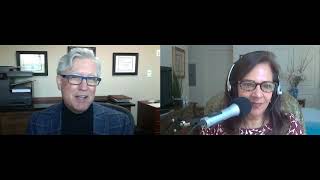
Dr. Gregory Jantz offers practical ways to manage anxiety and depression during crisis: stay hydrated, eat protein, move your body, and maintain connection even from a distance. He warns against panic buying and isolation, and suggests gratitude and kindness as resilience tools.
Chapters
Hello everybody. Kathy Caprino here and welcome to another episode of Finding Brave. I am so, so, so honored to have our amazing guest today. And frankly, I need this talk with Dr. Gregory Jantz here who is a mental health expert and you're going to hear all about him. But before we do start our interview, I do want to say a few words which I don't tend to as a preamble but I do want to share with you that this is the first episode since the pandemic spread that is giving you live content rather than what I have distributed before which has been pre recorded. So the whole point here is that I'd love to be as responsive as possible and bring kind of cutting edge information that will hopefully help you right where you are today. So I am going to ask your forbearance on some of the others that have come out that were pre recorded. I think they're still not tone deaf. I'm trying not to be tone deaf. And you know, I see all sorts of businesses sending out their promotions and it's like wow, look at your autoresponders, look at the things that you're sending out with without knowing it and change them. But this is my effort to bring you kind of cutting edge material. The other thing I want to share with you is you probably all know I'm a former therapist, you know, got got all that going on and if you need any help, I hope you will just reach out to me@infoathycaprino.com with a question about anything. Your career, your job, how you're feeling. I'm more than happy to help you and I am launching a mentorship program, an application based mentorship program for free. And so stay tuned for that and if you can think of any other ways I can be of help to you, please let me know@infocathycabino.com and I am sending you hugs and love every minute. Okay, now let's get to what we're talking about today which is what's our headline here. How to manage depression and anxiety in fear inducing times. In in chaotic times. And who do we have here? A best selling author, 39 books you just shared with me, Dr. Jantz. Oh holy cow. And psychologist Dr. Gregory Jantz is the founder of the Center A Place of Hope where he treats people suffering from anxiety, depression, PTSD, addiction, eating disorders and more. And Dr. Jantz's latest book, Healing Depression for Life. I mean who doesn't want to read this is on the shelves now. Thank you for jumping in at the last Possible minute and talking to us and, you know, just I'm hugging you up for the work that you do. You shared that your. Your center is fully operational, and it's a residential, you know, center. Wow. You know, you haven't skipped a beat in helping people who need it more than ever now. Your. Your work. Thank you for that. So let's. Let's start with the question I think might be on everybody's mind is it's what my friends are dealing with. Colleagues, clients, what I'm dealing with. When we're in these times where, and I think it's safe to say I'm not being hyperbolic, we feel so uprooted. Everything that we've taken so for granted is shifting. I kind of feel like a tumbleweed flying through the desert, unhinged, going wherever the wind may blow. And the information we're getting changes every minute. I am a person that loves information, and when it changes, whoop. Don't. No, that's wrong. It's not just elderly people getting sick. It's everyone. Blah, blah, blah. What do we do first, Dr. Janss, to rein in our fears? Where do we begin?
Well, you know, when we get to that place of panic. Panic breeds panic, and people run in herds. And what I mean by that is somebody in Seattle decided to start buying toilet paper.
Right. Okay.
Just using this as an example. And now across the country, we have a toilet paper panic pandemic, and everybody. And part of that is, well, if everybody else is doing it, I need to do it as well.
And if we see the shelves empty, we don't think that's hoarding. We think there's going to be an absence of what we need. Don't you agree?
Yes, I think so. But the other factor that we need to look at is if I go out and do something, because it appears that everybody else is, and I have a sense of control, it's like I've done something, and I feel a little more control because everything seems out of control.
Right.
And then here's the next step.
Wait, can I go back to that, Dr. James?
Oh, sure.
So are you saying we need to rein in that and maybe only buy enough toilet paper for two weeks? Well, how do we handle this sea of behavior that scares us, but we were swept up in it.
Well, last Sunday, I did a little personal experiment. I went over Sunday afternoon to Costco, and I didn't go in. It was full, and it looked kind of crazy, and there were people lined up outside. And then I actually drove almost exactly one Mile away to a chain grocery store one mile away. I went in and everything seemed pretty normal. Nobody was rushing through. I went down the aisle where the tissue and toilet paper was, and there was actually nobody else there. And there was toilet paper on the shelf. And I looked at. I go, panic goes in herds, decide, am I going to be a part of that? There were some people, I would say, a little more peacefully shopping than others. And what that looks like is they're not caught up in that intense anxiety. So anxiety means it's hit me physically. I have physical symptoms. Shortness of breath. I feel it in my gut. There's an intensity physically to anxiety. That's the edge. Now I hear concern. This is incredible to watch what's going on, but I have a choice about how am I going to respond to this. Just like we're not too far from Seattle and it's a beautiful day here and we have patients here. And one told me earlier this morning, I feel safer here. This is a safer place and people are not in panic. And so we do have a choice. And granted, it's not always an easy choice, but I want to keep people from getting on that edge of panic where you feel that desperation.
I love it. I'm already calmer listening to you. I'm sure a billion people have said it. Your voice is so soothing. What I want to ask you here is we were talking about how do we balance. Oh, no. There is something I want to highlight in what you said. Those of us who are in a helping profession, it's kind of our job to understand that we broadcast. I did a podcast a year ago with Michelle Gillen, who used to be, I think, a CBS broadcaster. And, you know, they were doing research on if you listen to eight minutes only, a day of frightening doom and gloom news, your mood has changed for the entire day. So I think many of us understand that we are broadcasting emotion. So I noticed. I just went to CVS down the road. There was a woman who had a mask and she looked at me like I was the devil. And I am trying to breathe and smile at people and laugh and share calmness. I'm trying to broaden broadcast calm. And I think that part of what you've said is, isn't it not only how you're taking it all in, but who you want to be for other people, who you want to be for the people you work with and. And your children and your loved ones. Can you talk about that a little bit? How do we. How do we have this demeanor that you have, which is so soothing. How do we do it?
Well, I think we also have to decide where we're going to anchor ourselves. And I think we all need three to five really great positive, if you will, relationships that people that will tell us the truth. We can really be empowered by each other right now. I heard somebody say, you know, we're shoulder to shoulder as a country six feet apart and we are in this together and we are shouldering this together. But if I move to that panic, I lose my rational thought. I make decisions out of desperation. And so this is a time where we want to practice, I'll call it impulse control. We want to step back and just be careful that I'm not, you know, being so impulsive that I'm going to later regret it. So this is a time, this is a time to wake up in the morning and write down the three gratitudes every day. Three gratitudes. Start your day with gratefulness. Start your day with. Because that's going to lead to a little more optimism. And I get it. I mean these are stressful times. There's financial unknowns, there's a lot going on. So this is where we do need to really come together. Our country maybe hasn't done a good job with that. Maybe now we're starting to see, hey, we do need each other. Let's work on this together and let's really care about each other's well being.
Oh, I love it. Can you talk a little bit about. So we're facing anxiety. I know that you deal with substance abuse as well, which I'm guessing is on the rise. I don't have the data on that, but I'm guessing it might have to be. But can we talk for a minute about depression? And I will be completely transparent. I don't suffer from depression generally and I'm quick to joy. So even if I'm mad or down, I can't stay that way. But I noticed the weather impacts me if it's. You're in near Seattle, you got a lot of rain there. But like right now it's sunny, I immediately feel more ebullient and hopeful. But there were days here when I, I would call it a down mood. Down. So when you're dealing and people are telling me I'm down, I'm depressed, I don't know what to do. Can you talk about. Now there's clinical depression which is treated in a certain way. Way. I know you, you have powerful treatment approaches. But for the average person who it isn't a chronic Depressive experience they're having. How do we uplift ourselves when we're feeling down, what do we do?
Well, I want to share a couple things not to do first. You know, we have a thing going on right now. Social distancing makes me down.
Yeah, I miss it. I miss people.
Well, and that's different than social isolation. So we don't want to do social isolation. The more that we're isolated socially, the more that we're probably going to move over to self destructive behaviors. What is, what does that look like?
Yeah, tell me.
Well, if I'm just cooped up and I'm isolating from others, maybe I'm going to turn to food. You know, chocolate.
So much darn chocolate.
Tell me that. You know, they, they're enjoying their half gallon of ice cream each night. Well, I think there's gonna be later regret. But I understand how you can get there.
Right.
If you're depressed, you like sweet and smooth food. Ice cream is perfect. So we're looking for something to mood alter. And you mentioned alcohol consumption. You know, what if we just go and look at what people are buying.
Are they buying more alcohol?
Alcohol shelves kind of look like the toilet paper shelves. That's not a good sign. So if I, if I do these behaviors in excess because I have anxiety and I want to mood elevate, I want to feel different, I'm going to have later regret.
So can you give us. It's not easy to uplift ourselves or soothe ourselves in healthy ways. It isn't. The quick way is. And can I point out I'm anti guns. You know those listening, if you don't agree, thank you for your patience and being kind. But I see that there's a run on guns. Someone said you can't kill the virus with guns. What is that? I mean clearly it's fear, but what are they afraid of?
Well, there's the fear. Two things that people are concerned about right now. Protection and provision. And so the financial provision, food provision, and then I have to protect myself. Yeah, we're fighting an unknown virus, but what else could happen? And so keep in mind, you know, the basic safety needs and safety needs emotionally. But how am I meeting my needs for protection in a healthy way or not? And then provision, of course, could be financial food. I need to make sure if I'm not getting those things met, I may become very panicky and irrational.
I see. So back to what you're saying about soothing ourselves with external things. All right, we don't want to do that. So Can I give an example that might be helpful? Chocolate is my thing. And you know, I've had relationships with food that are not healthy for a long time and thankfully I've gotten help with a lot of it. But I will find until about now that before I even know it, if something's upsetting me or angering me or a client treated me badly, which doesn't happen much, but I'm in the kitchen eating chocolate before I can even remember that, I walk to the kitchen. Now it's better. But I'm sure people are like me that we eat or we abuse substances before it's a knee jerk reaction before we can intervene in it. So if people are, yeah, I'm going to the ice cream, I'm going to my rum bottle. What? You know, this is what you deal with day in and day out in your treatment centers, I'm sure. A center. What can we tell people to do, to intervene before they reach for that thing that comes?
Well, I think one of the things that we're forgetting to do, and this is going to sound really simple, but we tend to stop drinking water when we're, when we're anxious, people drink a lot of other things.
Coffee. I've got so much coffee in my system, I can't even believe it.
There we go. And so what I want you to do is have that water bottle and make a commitment. Get most of all your water by, let's say noon, by halfway through the.
Day, because what does that do for us?
Well, improves mood, improves concentration, hydration improves, improves mood. Water will help with even blood pressure. So people need to get their water. You probably noticed that if you don't get enough water, you get irritable and cranky and so forth. So we always have a little joke here, you know, have you had your water?
Hey, Fred, have you had your water?
If you want coffee in the morning, that's okay, but just get the majority of your water in by noonish. It'll, it'll start after about the third day. It'll start to make a difference because otherwise I'm gonna probably be set up to do other things. I always tell people too, I'm a pro proponent of getting some protein in the morning. It's a simple protein drink, but get some protein, fuel your brain in the morning. Don't let the blood sugars drop. We get anxious, we don't eat or we overeat and we get that sense of kind of that panic feeling. So supply your body with the fuel it needs. Let's start There. So if we can take care of ourselves physically. The other thing I'm noticing that we need to be sure we're all doing is, is if we're socially isolating, we're probably not moving a lot. We need to go out and have that 20 minute, whatever it is, brisk walk. We need to get outside. We've got to keep moving right now. Movement does help tremendously. We've got serotonin, dopamine, get these chemicals in our brain that movement can help us. So get moving.
Oh, I love. They're so simple, people. All right, I will need to go back to something you said. You said social distancing is not the same as social isolation. But people are gonna say to you, yeah, but I'm scared, you know, and we're told not to have groups of more than 10. And we're looking at Italy that's struggling so hard. And some hypotheses for why that culture struggling is they go out a lot to get fresh food, they are social and, you know, lots of issues. Can you tell us the difference in your mind between the mandatory social distancing and isolation? What do you think are the differences?
Isolation is, I'm cutting off from people. Okay, so have the three to five human being contacts a day. And I don't mean through email or social media.
You mean really physically?
I mean, maybe it's in person. You're gonna go for a walk together. Maybe we're gonna do like we're doing today and connecting this way. There's something about hearing a person's voice talking to a person. So even if it's a phone call, okay, so keep the human relationships going. Now be careful. If you're calling and you're talking with somebody and all you're talking about is the coronavirus, that's it. That's kind of like being on social media all day. There's a lot of viral misinformation, so let's be careful about the misinformation.
I love it. I love it. Can you, can you talk about. Somebody told me I run a course, the amazing career project every week, and God, we love being together and just sharing, you know, what's going on. But somebody mentioned that every day they look at their top priority priorities and they make a list of who matters and what matters. And I just, I. We talked a lot, a long time about that and how that's grounding to know what is it that matters most to you right now? And I'm sure that comes up in the work that you do. Can you talk about priorities a little and how we can determine them and how they can ground us. What do you think about that?
Yeah, and I think our priorities, this is a time maybe of resetting. This might be a time of reprioritizing and discovering what's really most important to me. Wow, we're going to see a lot of that. I'm going to have to say it's going to be, at least for me, it's going to be our relationships. There can be a lot of things that are pretty intense right now and you may feel really irritable and we need to be giving each other a lot of grace right now. You may say or do things just because of the intensity. So give each other grace versus increase conflict. So our relationships, I think we want to really go, okay, who do I really want to spend more time with? What's the most valuable to me?
I love that. You know, I'm certainly no poster child for this, but I've spoken a lot with Sean Acor, who is a happiness expert and I adore him and he lives it and he has. I should republish this, you know, a five step happiness kind of boost. And one of the steps is a random act of kindness. And when I think of doing it, I am so it just changes. Must be a dopamine thing. I don't know. But I just, for instance, sent a note to my accountant who, you know, their world is going upside down here. Although there is an extension for five, thank goodness. But I just fired off. I'm thinking of you. And for me, I don't know, it helps me feel more empowered, more in control and more kind. So even something like a random act of kindness every day I think can be very helpful. What do you think?
Oh, yes, that fits in with the gratitude. And also this is the time to look around and go, who in my neighborhood may need me just to check in with them? I need to be reaching out. If we get so self absorbed with all the anxiety and all of our own stuff, then we're really not seeing the needs of others or potential needs of others. So let's, let's take a look at that.
Oh, that's beautiful. You know, there was another thing that so much of what you say is so rich and it expounds and expands. But I wanted to talk about, you know, one thing I'm really missing is I'm a singer, and I've been a singer all my life. And we have a group, the Wilton Singers, that meets every Tuesday. And we can't Meet and we possible we might not be able to have our concert coming up in the spring. And it's funny and, and I play tennis as well and that's gone. Can't do that indoors. But it's funny how. And I'm guessing you, you can talk about this. There's a. I'm guessing there's a pattern that I've gone through that other people are going through. At first I'm so overwhelmed. I don't even care about singing. And then I miss it so much. I miss the physiological response. I miss the people, I miss the snacks afterward. And then I saw there was an online virtual choir event and I was like, woohoo. I signed up. And then I realized I missed. It was the day before. But then I'm on the board of our group. I'm like, why don't we create a virtual event where we can see each other and sing? So I went from oh no to I don't even care, I'm too stressed out to oh, I miss it. So I think there are so many ways that technology allows us to be together. Yes, it's different. Yes. I'm not hugging you in person, but can you talk a little bit about what you're seeing, your patients and clients are doing to kind of brainstorm? If I can't be with you, how do I get the same feeling like singing together? Are there suggestions you have about how to do this?
Yes. So if I can't be together, I do need to be creative. And just what you've just described. This is a time for us to look at what options could be there. So there are options. And it may not be our first choice, but let's look at. Okay, one of the priorities is I need to connect with things that give me enjoyment. I need to connect with people. And so how can I do this right now? There's a lot. Maybe it's not the first choice, but there's a lot happening virtually. And most of the time people are going, I'm so glad that I did that. Yeah, yeah.
Do you see? What came to mind is some of the people I work with are high level professional women. And there's something called perfectionistic over function or over functioning that I've coined that they're doing more than is healthy, appropriate and necessary and trying to get an A in all of it. And part of that also for many people is guilt. They have guilt if they are carving out joy. They have guilt if they're not getting caught up in this panic. Do you see that people have guilt over. I'm actually going to feel joy today. Damn it. I'm going to. Do you see that with people?
I think that is going on. And I appreciate you mentioning that. A person might say, why are you. Why are you smiling today?
Why are you singing? Don't you know what's happening in the world?
Yeah, we need somebody to bring good news.
Yeah.
And, well, it's just like there's good news in the news right now, but we're really not hearing much about it, is there?
What are you hearing?
Well, I'm looking at. I'm looking at the graphs that show how many people are recovering.
Yeah, we don't see that, do we?
Do you know, now yesterday, I have.
No idea what that number is.
Well, see, of the hundred and some thousand yesterday, what was fascinating was we're at. It was at 81, some thousand who are in the recovered category. You're kidding me. We got.
Are not. Why is that not the top?
You've got that many people who are recovering. And so when I go to my state, Washington, I go to our department of Health, and I look at the chart that they're trying to keep active and of the confirmed cases, and then there's. Unfortunately, there's some deaths. But we also are seeing all the people that are testing negative.
Well, why the heck do we not see this?
19,000 people so far who have been tested have here in my state have been negative. Somebody share the good news.
You know what we don't hear about anymore? The regular flu. You know, a lot of people are being tested and they have the regular flu. Go home and you'll be fine. Why don't we hear this? Because in the news, what do we call it? What bleeds, reads. What's the most frightening thing is what gets people to watch. So people, I think the lesson is seek out the good news. Don't feel guilty for having joy. Don't feel guilty that you're being very judicious about what you let in, you know, and obviously, can you talk a little more? And then I'm going to let you go. I think that the research shows that stress suppresses our immune system. So you're not being selfish to have joy. You're not being selfish to care for yourself. You're helping yourself not get ill and spread it to others. Am I right?
Absolutely, you're right. Chronic stress. And you said it so well. But also we need to look at. It creates inflammation in the body. Inflammation is kind of known as the beginning place of disease. This area and I understand there's some stress and I don't. I want us to deal with reality, but I want to. It's how we deal with it. So the self care right now. Don't feel guilty. We need to take care of ourselves because there's somebody that's going to need you today.
Oh, how beautiful. Can I ask you a personal question?
Sure.
You are so calming. You know, I just feel everything has just gone. It's like I'm talking to you. I'm interested how you got into this work. Did you know from early on you wanted to heal and help? Can I ask you that?
Sure. So this is our. Amazingly, it sounds funny to say this, but this is our 36th year. 36th year.
And in running your center.
So I have. There's a team of about 50 here. So we're proponents of whole person care, which means everything from covering the medical side to obviously the counseling piece, nutrition, fitness. We do natural healthcare as well. We have psychiatry as well. So we really believe in this model of whole person. But you know, as we recover and look at this and go, well, there needs to be even a greater purpose. What are my gifts and talents? What am I called to do? And so we need to look at the whole person. So really we had a. I didn't think, embarrassingly, even back in school, I didn't think psychology really had the answers. I always thought some of the people in psychology seemed a little strange.
So wounded healer, healing. It's like, oh boy, go back to school a little bit, you're not quite done. You know what I mean?
I didn't want to fall into that category. But that said, you know, I think our greatest long term success is when we're willing to look at the whole person, a thousand piece puzzle and look at all the different pieces of puzzle and let's put it together.
And so you back. I'm gonna push you. When you started out. Yeah. And you went to school, did you know you wanted to do healing work?
I didn't know what to call. Yes, yes. But I didn't know what necessarily how it would end up or what it.
Was really a calling for you, wasn't.
It was a vision of doing something different.
And look what you've done. You all do Skype calls and if somebody hears you and we're gonna, we're gonna tell you all where to find Dr. Jansen and. But if someone would love to have some help from you in this way. Do you all. Does your team do that at all?
There's several different options for getting help. And so we have an admissions department. They kind of go through those options, what's best. You know, we are seeing there is a great need, anxiety and depression right now. And I think we're going to see. We're going to see more of it. And we do want to be of help and a resource.
Wonderful. So where do people learn all about you? Where do they get your books? Tell us where to go.
Books. Hopefully you're available still.
There's been a run on them.
I mean, well, people are buying a lot of other things right now.
First it's toilet paper, then might be your books.
There we go. So, of course, Amazon and all the online retailers for just good resources and information, you can Visit us@aplaceofhope.com Beautiful.
I can't thank you enough. Oh, I feel so much calmer. I hope everyone please let us know what you felt about and how you felt listening to this. And if you have questions, you know, this gets posted kind of everywhere, LinkedIn, all the social networks. And you and I will connect. And if you have a question, send it to us. Either one of us will do our best to send you resources or address it the best we can. And I hope you found that helpful in the finding brave journey that we're on. I can't thank you enough for your time. Thank you for the great work you're doing.
Very welcome. There is hope.
There is hope. Yeah. And you are broadcasting it so beautifully. All right, everyone, love to you, thinking of you and stay connected and we will see you next week. Bye now.
More from Kathy


Elevate Yourself, Elevate Others, and Amplify Good | Chris Cooper | Finding Brave Ep. 334

Finding Brave Epis #333: How Leaders Can Harness AI Without Losing Their Humanity, w/Bennett Borden

Finding Brave Epis 332- How to Stay Brave, Valuable and Visible in the Age of AI, with Raman Rai

Finding Brave Epis 331 - The Power of Positive Disruption, with Dr. Patrick Leddin


Finding Brave Epis 330 - Being 40: Letting Go and Embracing Who You Are, with Stacey Lindsay

Disrupt Career Reinvention with Kathy Caprino - via The Disruption Lab Podcast w/Patrick Leddin

Creating Neurodiversity-Friendly Work Cultures: Simple Workplace Adjustments Matter

Finding Brave Epis 329 - How To Create a Neurodiversity-Friendly Workplace, with Kristen Pressner

Finding Brave Epis. 328: Reclaiming the Power to Trust Your Own Voice, with Dr. Cindy McGovern