Finding Brave 119: Key Shifts To Help You Turn Crisis Into Opportunity, with Laura Khalil
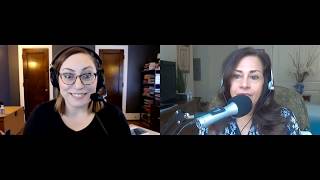
Recorded March 31, 2020 (aired mid-April 2020), this Finding Brave episode features Kathy Caprino interviewing Laura Khalil about finding opportunity and one’s highest self during crises. Laura shares a personal origin-story discovery (23andMe testing beginning in 2013) that revealed she is the eldest (born 1980) of a group of children fathered by a single sperm donor — she later connected with nine half-siblings — and reframed that shock as an opening to a new family. The conversation then generalizes into practical and spiritual guidance for crisis: choosing mindset (victim vs. master of destiny), performing an exercise listing 25–50 benefits of a crisis, daily small actions toward purpose, and finding ways to be of service. The episode weaves storytelling, resilience coaching, and spiritual perspectives (fate vs. destiny, past lives) and points listeners to Laura’s Brave by Design podcast and an NPR piece about her story.
Questions this video answers
March 31, 2020.
2013.
1980.
Nine half-siblings.
Brave by Design.
Chapters
Hello, everybody. Welcome to this episode of Finding Brave with oh, I'm so. Well, first of all, before I talk about how excited I am, which is a little tone deaf about, I think I want to tell you I'm hugging you up and sending so many prayers and thoughts. It's coming from my heart about how you're holding up, how you're surviving it and maybe even thriving. You know, I heard from one person who said. I said, how are you doing? She goes, fantastic. I said, okay. Wow. What? And she said, finally, I can control my life. I'm working from home, but it's my life now, my time, and I can construct it the way I want. And I said, wow. Fantastic is a word you don't hear right now. So I want to tell you all it is March 31, when we're recording this. So you're seeing this, I think two weeks later. And you know, it's the first time in my entire 59 year life that I don't know what's coming in two weeks. That two weeks we might be. We might have found a cure or a treatment or we might be slipping down into a scarier situation. So wherever we are when this airs, I hope you're doing well, as well as can be expected. And I want to talk to you about who my amazing guest is today and how I learned of Laura. But I want to tell you that the theme is today finding your opportunity and your highest self in times of crisis. There we are. And here is Laura Khalil, who I just met. Kind of not in person even, but on Zoom. But it feels.
Not yet, Kathy.
Not yet drinks dinner. When can we have it? Just a few weeks ago when I was on Laura's amazing Brave by Design podcast. And why I wanted Laura to scoot in here right now is she has a story that. I mean, you can. Well, we don't have a video of me on your podcast. It's just audio, right, Laura?
I do have the video, Kathy.
Oh, good. And yeah, it's on my LinkedIn profile and I'll share it again, but my eyes bugged. Fell out of my eye sockets, I think several times.
They did. They did. We almost had to call 911.
In their spare time.
Kathy had a life alert moment.
I had a what?
A life Alert moment.
No. Oh, no. We're gonna laugh all day here. I did. Because Laura's story. And so let me just say one more thing to build context. We are all inundated by how we survive this, how we stay healthy. Is it a Mask? Is it not a mask? What is social distance? Do we mean physical distance? I don't want to do that right now. What I want to do is give you content that's uplifting but relevant for how do we overcome this and be better for it? Better our highest selves, our most powerful, most confident, most giving, most generous and balanced self. And so that's what we're doing today. And that's what Laura's personal story shares. Thank you for being here, Laura.
Kathy, it is such a pleasure. It's such a treat to talk to you. I mean, on all of our conversations. It's just like such a gift. It feels like a warm hug and it feels like that listening to the show as well.
What a lovely testament testimonial. Thank you, my dear. All right, let me read Laura's bio because you're not going to believe it. It's amazing. Laura Khalil is an award winning marketer, speaker and trainer helping companies build engaged, inclusive teams by strengthening their communication skills. You're going to be busy till the next millennium. I mean, with communication skill, checking a storyteller at heart. Isn't that the truth? Laura helps audience reimagine the story. Excuse me, the stories we tell ourselves to build resiliency and courage to thrive. She is the host of podcasts, the podcast Brave by Design. I so recommend it. Focused on helping ambitious women rise. She's the regular contributor to Media on Business and Technology. Laura has worked with so many organizations, but including Twitter, GE, Intel, Forbes, WeWork, and has told stories at the Moth Risk and the Detroit Women of Comedy Festival. So amazing. Can we see that moth? Can we see your moth?
Oh, Kathy, that is like R rated.
Bring it on, Max and Laura. Yeah, right.
That's a story for another episode, but.
Can I link to it in the show notes?
I'll have to see. I'll have to find it.
Okay.
Tbd.
Okay. All right. All right, Laura, let's dive in. That the story that you told on your podcast, can we start there? And it's your DNA story.
Yes.
So let us dig in.
All right, so I, for those of you who are watching this, you can see how incredibly pale I am. And I say that because I grew up in a family of Middle Eastern immigrants. My mother is Lebanese and my father is Egyptian and I'm the whitest Arab you'll ever meet. So, you know, I look very different from my community. I always grew up feeling very different from my community, receiving tons of love from family, but just being like, why am I this Blonde haired, Scandinavian looking kid running around with all these Egyptian kids. It was very odd to me, and it always struck me as odd, but such as that.
Can I just ask you, did anyone say, boy, you don't look like us? Did anybody say, oh, well, it's very.
Common, certainly in, I can say with the Egyptian community. When you have an individual who is part of your community who's very white, they. They like that. You know, we always like what isn't like us.
So it's like, you know, you're special.
Yeah, you're special. You know, I had my hand grabbed a lot as a kid and said, I can't believe how pale you are. This is amazing. And I just thought, I want to look like you. Yeah, yeah. No, I was, I was still part of the group, but I just felt different. I didn't really. It didn't feel like my place, and I never understood why. We went to Egypt when I was 26, for the first time, I met my family for the first time. And I remember I was with my dad in the hotel room after we met the family, and I was just crying because I was trying to find someone who looked like me. Oh, sad. I was really sad. I was like, dad, why don't I look like anyone? And he just said, you have a lot of your mom's DNA. And it's true, I look a lot like my mom. So back in 2013, I decided to do DNA testing through 23andMe. I really wanted to understand, like, my heritage. I thought maybe I picked up some weird European genes through, you know, when Lebanon was colonized by the French. And that's why I look so, look so different. And, you know, the results came back and it showed that I was half Middle Eastern and half European. And we just sort of like chalked it up to, okay, well, I guess that's what it is. I just, you know, I'm kind of the fluke. And five years went by, Kathy. Five years went by. I didn't think any more of it. And one day I received a message from a woman on 23andMe. And she said, laura, we share a surprising amount of DNA. Would you like to talk? And I thought, well, I don't understand what that means. So I looked at our results and our predicted relationship was half sisters. And that's a moment, you know, when we talk about crisis, that's a moment of major crisis, internal crisis, existential crisis. What is happening? What? Did my dad do something? Did my dad have an affair? What's going on here? And it's very, very upsetting. If you have ever been through this experience, you know what I'm talking about. And if you haven't, trust me, it's pretty upsetting. And so I really had to sit with that. And I didn't go to my parents right away. I instead went to go talk to my aunt, and I thought, well, maybe she'll know what's going on. And she had no idea. And she said, laura, your mother's sister. Yeah. Did not know. And so I thought, okay, well, this is really odd. So as I came to learn through this half sister, she was conceived through artificial insemination. And as the months went by and as I was processing my origin story and what had happened to me and you know, who was. I am at stall this. I discovered that I had nine half siblings.
And you were an only child in your.
I was an only child, yes. And we are all the children of a sperm donor. One person, one sperm donor. Yes. And as we learned, or as I learned, I should say all of my siblings, most of my siblings, the vast majority, are the children of lesbians. I was born in 1980. I am the eldest of our group so far. And what we learned is that in the 1980s, it was incredibly hard for 1 single women, 2 lesbians or gay people to get pregnant through artificial insemination. It was extremely frowned upon. There were a lot of rights issues around it. You could be fired for it. And so these women who lived in Ann Arbor, Michigan, were lesbians. They wanted to have a baby. And they happened to discover that there was one doctor in southeast Michigan who would help them. And as it so happened, it was just the doctor my parents used.
I want to ask this. Did they all. He wasn't the donor, was he?
We actually don't know. So I have interviewed the doctor, and he obviously will not admit to anything like that. And we don't have any of the records from that time to corroborate who could possibly be the donor. Also, the DNA testing does not currently show enough of a close enough link to the donor's family for us to even start making guesses about who the donor is. So the fact is, we don't really know who the sperm donor is. It could be the doctor, but, you know, it could be someone else.
Would you feel that he used you if it were the doctor not used you? Do you feel that that's a violation of your rights? If it were the doctor?
I don't feel that way because I'm really glad to be alive. I'm really glad to be alive.
I'm not even going to say anything. Keep going. How did you feel? Did you learn all this because each person that you connected with had more of the pieces of the puzzle?
I learned it because every time you get a new connection on 23andMe, it pops up as your predicted relationship. And so I started to see all these people appear, and I started to realize in talking to them that they, many of them, had actually grown up together because their mothers learned of this doctor through word of mouth within the gay community. And so because those moms didn't have support, you know, as a heterosexual couple would have support, they banded together. Their children grew up together, and they had no idea they were related.
Oh, they had no idea that this happened. Were they living near you? Could you. Could you have met one on the street or in school?
They lived about an hour away. So a little unlikely at that point, but, you know, as a storyteller by trade, you know, for me, the way that I think about life is I think about what are the stories I'm telling myself and how am I crafting a story that is resourceful? We all tell ourselves stories, right? Everyone has an opportunity in this moment, in any crisis, to say, this is the worst thing that's ever happened to me, or, this is the best thing that's ever happened to me. We can all make that choice. And so as I was grappling with the decisions around, what is this? What does this mean for my life? What does this mean for, you know, did my parents love me? What really happened? What the heck, you know, all this stuff. I had a choice to say I can live in anger and hatred and grief, or I can choose to see this as an opportunity, a beautiful blossoming, a beautiful opening. Because as my parents get older and I begin to watch as the inevitable, you know, walk home happens for them, what a huge, huge opportunity to be introduced to a whole new family.
That's so beautiful.
Yeah, it is. But that's my choice to see it that way.
You know, there's so much more in this story. And everyone go listen to the podcast we did together, your podcast that tells the the end and not the end. It's not the end, you know, the next step. And it was beautiful in how you processed it. But can I ask a few questions here?
Go for it.
And we're folks, if you don't want spiritual or you think this is woo woo, just press mute and move on. I don't mean that unkindly. I mean we're going to go there. We're just going to go there. There are people in my life who say, I don't believe this crap about there's something good that comes. And I've heard this all my life. And I have been an optimist all my life. Now, I would say it's not optimism, it's a choice that I choose. But I want to say one thing that I want your thoughts. Laura, if I could. There are people in my life that say, I don't believe that. So, for instance, we were talking earlier. I truly believe. And I speak to angels, call me crazy. And they say that, you know, everyone who's passing here, their soul has consented. And people say, who, you know, who don't believe. I believe in past lives and future lives. I've seen a few of my past lives and I'm writing a screenplay about it. So we believe what we believe. But when people go, I don't believe that, what I find very interesting is, how do you form your beliefs? Like a lot of people, I want to be informed. So I will read and study about anything I choose to have a belief on, and I will challenge my beliefs. I don't just say I believe it and let it go. But when someone says, what a bunch of hooey, that there is opportunity in this crisis, what is your thinking about why that's important to hold on to for you? That there's opportunity. And what did you say? That instead of, this is the worst thing that ever happened, I'm gonna look at this as the best thing, right?
So I know one thing to be true and. Well, I know many things. But let's. Let's talk about this one that's really important. We all grow at the border of support and challenge. So if I am in a situation where I perceive that I am only challenged and never supported, I will give up, right? It's too hard. Can't do it. There's no support. Opposite. If I am in a situation where I am totally supported and everything's great and there's never any problems, I won't try anymore. I won't strive for anything. I'll just sit on the couch and Netflix and chill or whatever, right? Because what do I need to do anything for? We all grow right at that border. So when I ask the question, why is this potentially the best thing that's ever happened? I am trying to help build that equilibrium between support and challenge in your mind because you are feeling so challenged in the moment that you are not recognizing the Gifts that you have built, learned, and are innately part of you that are supporting you here. How every experience that has occurred in your life up to this point has been placed beautifully to help you confront and give you the tools to deal with what is going on. So this is really about your mindset. Now, some people will say, I don't believe it. And I say, great peace be with you. You don't have to believe it. But for those who want to find the opportunity in the various crises that occur in their life, I want to give you one tool. Please do this. Grab a piece of paper and write down what are the 25 to 50 benefits of your crisis in your life and in the areas you value most in your life. And I guarantee you, I promise you, if you do this exercise, you will immediately begin to reduce stress, to reduce overwhelm, to reduce fatigue, and you will begin to calm the nervous system and begin to see how nothing is in your way. Everything has just been on your way to helping you fulfill your destiny and your greatest potential on this planet.
Do I feel. I just feel so. I'm like my. I'm humming, meaning. That just feels so right and so helpful. I love it. Can I throw some things back for you to respond to?
Throw them, Kathy.
Throw them. You know, you said, if you don't believe this, you know, peace be with you. I would say also, as a little bit of an angelic doge across the face, how's it working for you? Feel it's a goddamn disaster.
Well, it is.
The pandemic's a disaster. But can I dimensionalize a little bit about what you're saying and see if I'm on the right track in terms of what you're talking about? We were just sharing. My mom's 95 and a half and she's in Virginia, I'm in Connecticut. I will not see her and cannot see her. And if it hits in her assisted living facility, you know, I'm preparing myself for not being able to say goodbye or bury my mother. So my sister and I are talking, but if I forced my. And of course, I'm just racked with sadness at the idea of it and coming to terms. But if I were to do your exercise, what would be the benefit of this? Which is about as hard as you can come up with. I would say, you know, she. She doesn't really want to keep living. She misses my father, who passed away six years ago. You know, someone said maybe this is the angel of death for many people who are. Don't Want to live anymore. It has helped me be closer to her. You know, unbelievably, my book is in the phases of coming out, and I've written the acknowledgement, and she's prominently in there. And I got to read that to her, and isn't that beautiful? Tell her what her undying faith in me has done for my life. You know, we're saying things that we wouldn't have said before. We're bonding in a way that we wouldn't have. We're healing past pain that we wouldn't.
Have, you know, because we're all conscious of it now. We're conscious of those limitations.
It's been a reset. And, you know, the other thing I'd love to say and see what you think these things, like a pandemic, are nothing that a human consciousness would sign up for. Consciously, we get that this is nothing. Anybody raised their hand in the human form and said, I want this yahoo. There's going to be opportunity. I think we're saying we're acutely aware of the crisis part of it. What I think most people are not in touch with is how can I be my highest self? How can I be more of who I want to be? And how does this let me do that? Does that make sense?
It does. And I want to answer it a little bit by talking about the nuance between fate and destiny, because I believe, Kathy, as I think you do, that we are all here for a greater purpose. We are all here for a greater reason. I truly believe we are here to work towards our highest potential in this lifetime, whatever that may be for you. Now, destiny. What is that? I'm sorry? Let's. Let's start by saying we're all born with certain weight. Certain things happen to us. We're dealt a hand. So you're born a certain gender. You may choose to change that. You're born to look a certain way. You are born in a certain community, in a certain religious structure, social structure, cultural structure, financial structure. That's your fate, okay? You can't change it. That's what it is. Okay, here's where destiny comes into play. Because when I start talking about this, people start to get nervous, like, oh, are you telling me I don't have any free will? Are you telling me it's all predestined? No, I'm saying that you have a certain fate that you were born into, these things that cannot be changed. Destiny is what we consciously choose to do with our fate that is in service to our highest potential, which is Always in service to others, by the way. Always. So currently, globally, our community is sharing in a collective fate of this pandemic, which is bewildering. No doubt, it's bewildering to everyone. But you know what else can be bewildering? Miracles. So again, I go back to. You have a choice. Do you want to live as a victim of your history or a master of your destiny? And in order to do that, it is, yes, do the self care. If you need to sit in front of the TV and veg out for an hour each night, go do it. If you need to slam the bedroom door and sit in the dark, do it. Whatever you need. But this is a moment to slow down, to cut out the riff raff, to cut out the things that are not serving you any longer, and to say, okay, I. I have been given the time. I have been given a huge opportunity. I have been given a gift where I don't have to deal with all of the distractions that life has put in my way before. Yes, I may have kids at home. Yes, I may have responsibilities, but please do not use those as excuses for not being able to do the thing that you would love to do. We will always find excuses to, you know, if we don't want to do it, we'll always make up a reason. But if there's something you really want to do, start taking daily action. And daily action, it doesn't mean, you know, blow up your whole life. Take 20 minutes every single day. Carve it out towards writing that book. Carve it out towards doing that exercise. Carve it out towards learning to meditate, whatever it is for you, and see how it goes. Try it out. If you don't like it after a week, try something else. But this is a huge opportunity, It's a huge gift. And I know this is going to sound very controversial to say because we are in the midst of a lot of human loss right now, but I do believe we are witnessing a miracle.
I love it. I love it. I don't even want to respond, but I am going to respond. I love it. I want to, if I can share one more level to what you're talking about, that might take it in a different direction. We'll see. I read a book a few years ago and now, of course, I do believe in past lives, future lives, but it was called the Journey of Souls and it was written by Dr. Michael Newton Newtown. I think we'll link to it. And he is a doctor, psychiatrist, I think, and he was hypnotizing patients. And he dealt with chronic pain. And often he would go back to their childhood pain that wouldn't heal, and he would be able to find for them, with them antecedent for this. Well, one day someone begins talking about a life between the past life and the life they were going to. He said, what is this? What? What? And in the book, I think he was a non believer and be in what is this? But he decided, let me see if this can be. We can tap into this. And it's a case study. I think there's 20 or 30 case studies of people that in hypnosis begin to talk about life between the next one and after. It is so riveting. Read it, people. But the one thing that struck me that does speak to me is that it is not random, the life you were born into, that every person discussed why their soul chose that life. And one I remember it was a Viking, you know, warrior, masculine. He raped and pillaged. And it was all about his physicality and how, you know, dominant and incredible it was. And he, his soul, his soul chose the next life, which was, I think, a young girl, I think it was in England. We'll have to read it again. And he saw that she was going to fall out of a carriage and be crippled for life. And he wanted that challenge. The soul wanted that challenge. So I would even say, while it looks like faith, I personally believe you signed up for this, your soul, a hundred percent.
I completely agree with you. I agree. We have agreed to be here. Now, why? Everyone says, well, why did I agree to this?
Why would I want this? Why would I die in a tsunami? Because it's, it's something your soul understood and embraced at your development.
We're talking about the higher self. We're not talking about the ego. And the ego, when the ego says, why did you do this? That's your ego speaking. That's not your higher self speaking. So we have to accept sometimes we don't know the answers to those questions. All we have to say is, I've been given these ingredients, right? These ingredients for living. Now, what kind of recipe do I want to make with beautiful.
And I want to give one real life example, if I could, Laura, of how we can do this. My first book, Breakdown Breakthrough, launched. I didn't have a platform. It came out in 08. And what happened? It launched during the time of, you know, financial doom. Everything in the news was Obama, Sarah Palin. Nobody gave a rat's tush about professional women's crisis. Nobody. And I Realized something the other day. I lived in that constant feeling that it launched in a terrible time. Well, here's my new book coming out in July. And the minute the pandemic hit, of course I'm selfish like other people sometimes. I went, here we go. I can't believe it. Twelve years later, I'm launching into the. And then I. There's something that. I don't know if you feel this, but whenever I'm on the wrong path of a thought, I will almost get this little click. I don't know how to describe it, but it's like. And then I thought, wait a minute, wait a minute, wait a minute. How about you don't look at it as it launched into the worst time. How about you look, you look at it that it launched into the perfect time. Now, if it's the perfect time for this book, which is about the seven damaging power gaps professional women face, I.
Can'T imagine a better time.
Kathy, what the heck was I thinking? But to your point, Laura, we can choose to look at it any darn way. And you know, here's Shakespeare, who was a brilliant, everything right, psychiatrist, sociologist. He said, nothing is but thinking makes it so. Yeah, that's the theme. So you can hurt yourself and hit yourself against the wall and bloody your head about everything that's so wrong, but why don't we try to find the opportunities, the rightness.
That's. Yeah, that's the difference, Kathy, between people who are going to be resilient and thrive in these times and people who are not. And so that is your. It is your choice. It is everyone's choice for what they choose to think, how they choose to behave, what they choose to believe, or where they choose to put their head in the sand. Everyone has that choice.
Can I take it in one more direction here, Laura, because I have so much to say about this. I also believe that the happiest, most fulfilled, rewarded, successful people are consciously, every minute of the day, thinking about how to be of service to other people with their beautiful passions and gifts. Oh, yeah, I just interviewed Bombas, the Sox Bomba's co founder, David Heath. What a story. Read it on, I'll post it. Not only was that company founded because he sat and heard on TV that the most needed item for homeless people in homeless shelters was socks. So for every pair that's bought, they donate a pair. But wouldn't you know it? Of course, now he's donating so much socks for nurses and doctors and, you know, it's just incredible. I would also Implore everybody to sit down with that sheet of paper about the 25 benefits. Where can I be of service that I have never been before? My sister even said, gosh, I don't really know what to do, but one thing I'm going to do is put a little ziplock of wipes in the mailbox for the postman. I cried.
So great.
I'm so great. I mean, don't say, here's another thing. People that live thwarted and unhappy believe they have nothing to offer and it depresses them. I hear it constantly. Look what this one act is. I'm going to put them in the Ziploc bag. That's beautiful. Laura, any last words about. People are really interested in knowing. What did you end up with? What's the end of your DNA story as it's not an end, but where are you with it? You told me one huge opportunity.
Yeah. So as I said, I'm a storyteller at heart. And so I decided to take the story because I made sense of it through story and pitched that to npr and they took it and we did a whole story on it, which is a really, I think, a really great way to, you know, sort of wrap a bow around where we are right now with that whole adventure. The sisters and I, there's one brother, but we are in very frequent communication. Prior to all this coronavirus stuff, some of us were planning a road trip down to Dollywood. You know, it's fun.
And you know what you told me, which Jeff really did bring tears to my eyes. Before this, you were an only child, and now you have nine half siblings.
Yeah.
You have a brilliant new family.
I have a whole new family. And they're really awesome.
That's a beaut. Oh, Laura, thank you for. For joining. I'm thinking to myself, wow, we went. We took it in a direction here. We laid it all on you people. Everything from depression to spirituality. Did, to. Did you sign up for this life And. And what are your beliefs and how you construct your beliefs, which, you know, I was listening to Eckhart Tolle. Is that how. Wow. You know, I take a walk and I listen on my phone. I will even post that link he was talking about. When fear seizes you and it floods you, one simple physical act is to feel your hands. Simply feel, feel, feel. Now's the time we're going to find opportunity in this crisis. We're going to dig hard and we're going to come up with it. And I really believe we are going to be closer to our highest self through this. Laura, thank you for your amazing help. What a story. And you're gonna share. I hope we can share below. If you can find it. The moth. Your moth.
We'll look for it. Yeah.
And if we can, your NPR story.
Absolutely.
You're brilliant. Thank you. Thanks for having me, Kathy, for being here. Stay well. All right, people, we want to hear from you. Wherever you find this, we would love it. Lay it on us. What resonated, what helped, what didn't. We're thinking of you and holding you in our hearts. Have a brave, brave, brave week, and we will see you next time. Bye, now.
More from Kathy


Elevate Yourself, Elevate Others, and Amplify Good | Chris Cooper | Finding Brave Ep. 334

Finding Brave Epis #333: How Leaders Can Harness AI Without Losing Their Humanity, w/Bennett Borden

Finding Brave Epis 332- How to Stay Brave, Valuable and Visible in the Age of AI, with Raman Rai

Finding Brave Epis 331 - The Power of Positive Disruption, with Dr. Patrick Leddin


Finding Brave Epis 330 - Being 40: Letting Go and Embracing Who You Are, with Stacey Lindsay

Disrupt Career Reinvention with Kathy Caprino - via The Disruption Lab Podcast w/Patrick Leddin

Creating Neurodiversity-Friendly Work Cultures: Simple Workplace Adjustments Matter

Finding Brave Epis 329 - How To Create a Neurodiversity-Friendly Workplace, with Kristen Pressner

Finding Brave Epis. 328: Reclaiming the Power to Trust Your Own Voice, with Dr. Cindy McGovern