Finding Brave 121: Land Powerful Mentoring That Accelerates Success & Growth, Dr. Ravi Gundlapalli
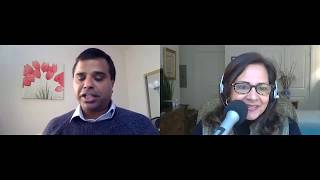
This is a transcript of a Finding Brave interview (host Kathy Caprino) with Dr. Ravi Gundlapalli, founder and CEO of MentorCloud. They discuss Ravi’s personal origin story for MentorCloud (a near-airplane accident and a mentoring success with a visually-challenged student), his supply-chain analogy of matching a ‘supply of wisdom’ to a ‘demand for wisdom,’ and practical mentorship advice (how to be a good mentee: give back, be grateful, do homework, ask for 10 minutes). The conversation explains MentorCloud’s vision to scale mentorship (workplace programs for companies like Marriott and community partners such as YPO/EO), its matching and onboarding process (selection, prep, live chat/video, surveys), and a new V platform focused on accelerating women entrepreneurs via a 4C framework (community, capacity, connections, competence). The transcript ends with contact details (mentorcloud.com, V platform page, Ravi’s book The Art of Mentoring on Amazon and his email ravigundlapalli.com) and calls to action to both give mentorship and seek it intentionally.
Chapters
Hello, everybody. Ooh, Craggily boys. Kathy Cabrino here. Welcome to another awesome episode of Finding Brave. Gosh, I love doing the show. What a ball. And today is no exception. I am so honored and thrilled to have Ravi Gundlapalli. Did I get it?
Absolutely.
I'm just like, how wonderful. My dad, who rest in peace, was brilliant. Phi Beta Kappa of seven patents, but he couldn't get a name right to save his life. Know what? What's that about? So I think I have that. Anyway, hello, everyone. We have Ravi here, who I. We just discovered or recognized that I have connected with you and known you. Now it's six years, right? Five years.
Time flies. Time flies. Yes. We spoke when we were just getting started on this big mission to really unleash the power of mentorship in the world. And here we are six years later.
Look how much you've done. And today we are talking about how to land powerful mentorship to accelerate your success and your growth. I am the biggest fan of this topic. I think that, you know, I say constantly, we cannot achieve our big dreams alone and in a vacuum. And you are the just the walking embodiment of this. So let us jump in and talk about mentorship. But before we do, I want you to know about Ravi. Ravi. Dr. Ravi is founder and CEO of Mentor Claire, a global mentoring technology platform for people within a company and now within the community or around the world, really right to learn from each other. Dr. Ravi is a globally recognized thought leader and keynote speaker on the topics of mentorship, entrepreneurship, and innovation, and is also the author of the art of mentoring. Dr. Ravi is on a mission to impact 100 million people and more. Why not with the power of mentoring? Prior to Mentor Cloud, Ravi led supply chain solutions for Boeing 787. I don't think I knew Dreamliner and other high tech companies. So welcome. Welcome to the show. Let's dive in. Robbie, can you tell us, first of all, what got you so passionately connected to the idea of mentorship that you created a platform for it? What's the story behind that?
Yeah, you know, I believe in human connections. And, you know, as a human race, we thrived because of people learning from each other. You know, and even before the technology came in, we all shared what we knew. We all asked others for help when we needed to. But over time, the technology has not really, you know, allowed us. We are connected but somewhat disconnected because we are in the world where you could connect with anyone. But then when it comes to really, you know, accessing A piece of knowledge or information from another human being. There is no technology platform that really says, here is, you know, Kathy in this part of the world, who has the piece of advice or wisdom that you are looking for. You know, she has been there, done that. You know, is there an easy way to get connected to her?
Never before you launched mentor cloud. There wasn't that. There was just no way.
There wasn't that if you go, if you went to Google, you could find a Starbucks much easily than a mentor who was out there wanting to help you. But then, you know, he or she did not know you were looking for it and you did not know who those people were. So it's almost like, you know, my background is in supply chain and I worked with 787 Dreamliner. And you know, sort of a life changing moment. You know, several years ago I was involved in a, in an accident that didn't happen. You know, my plane almost collided with another plane when I was in India on a speaking tour.
You were on the plane that almost collided?
Yes, I was on the plane. So what bugged me was that the plane we were going to hit had the President of India on it. So all the news release, all newspaper articles were all about the President of India saved and so on. But I was thinking, what about me? No mention of Ravi. Even though I have a PhD, I have, I have engineering patents and I worked for the 787 Dreamliner. So I kind of started to think and my supply chain background sort of, you know, set on me. I was still in the airport at that time waiting for the next plane. I said, look, I have done what I call the, you know, supply chain of products that is, you know, when basically matching people that had a product with the people that wanted it. I said, if I can match it with wisdom. There are people in the world who have built companies, who have built successful careers, if you call that as a supply of wisdom. And then there are people, the young entrepreneurs, young professionals who want to learn and grow. If you call it as the demand for wisdom, I said, what if I optimize that supply chain? What if I bring these two sides together? And then very quickly I realized that that supply chain is broken. It is very hard to know who in the world has the piece of sort of wisdom that I'm looking for. So I said, let me optimize this, you know, what I then called the supply chain of wisdom. And if you do that, we let wisdom flow more effectively in the world.
Oh, I love it. Now wait, I have two things to ask. How did the idea that everyone was talking about the President was being saved and you said, what about me? How did that connect to mentorship?
Yeah. So basically that, that incident sort of, you know, woke me up to think about impact.
Impact.
How do I create impact? That I become the, you know, the front page news, if that ever happened. You know, I believe when, when Mr. Alfred Nobel there's a story not many people know. I believe Alfred Nobel's brother actually got shot and the newspaper actually said Alfred died. When Alfred Nobel woke up in the morning, you know, having his cup of tea and opened the newspaper, it said that Alfred Nobel, the inventor of dynamite has died.
Oh my goodness.
Now most people don't even know that Alfred Nobel made all his fortune from actually inventing dynamite.
I didn't know that at all.
So he is probably the only human being who read his own.
What a story.
And that was a time I believe he said, I don't want the world to remember like this. And that to a small, arbitrary, in one piece, one corner of the newspaper. So he instituted the whole Nobel Prize and one thing led to another. So we have the opportunity to write our story. We have the opportunity to sort of leave a legacy that we want people to remember about us. So I said, you know, it was not enough. Whatever I have done by then wasn't enough. So I was thinking more about impact. So I made a pact that day that I will focus on how do I impact a lot of people. Because the best way to live is to live in the hearts of other people.
There's a tweetable. That's beautiful. Is that your phrase or mine?
Completely mine.
There you go. You just immortalized yourself.
I told them, guys, if you live in somebody's house, you pay mortgage, but if you live in somebody's hearts, it's free.
Oh, Robbie, now wait, I have to stop you because there's more. Didn't you also tell me there was a man who connected before you created Mentor Cloud?
I think absolutely.
So that story too.
Yes. So that's why I say, you know, universe always has a plan and we just have to kind of follow it and let, let it hear it. Right around that time, a 16 year old visually challenged student, visual India, after my keynote came up to me and said, sir, I really want to study math and science. Can you help me get into mit, you know, the world's number one university. And here I am in a small town in India and that audacity or such, such a big goal, really sort of you know, I was. I was really encouraged by someone having such a big goal. So I did my due diligence. He was very determined. And then we. And then I started mentoring him. And mit, he graduated, he did with. With full financial aid for friends. You know, helped him with his living expenses. And then he graduated from Sloan School with an undergraduate degree, and now he's running a very successful company back in India. So I saw the magic when the right people come together, but it was total serendipity. It told me that, why don't I choreograph serendipity? Why don't I make a technology platform? If it is easy to find a Starbucks, it should be easy to find a mentor, too. But I need to create a space where people that are willing to share are able to sort of put themselves out there, and people that are willing to learn are also looking in that area. So I needed to create this space for people to meet. And that's how Mental Cloud was born.
I so love it. I want to highlight something, too, that I think you're too humble to say, but what you did for that individual is the heart of mentorship. It's the heart of being of service. And I just want to say this. You know, I'm transparent and talk about all the nasty stuff, too. You know, a lot of us in the service profession are very beleaguered by the amount of people that we hear, especially on a platform like LinkedIn, where I'm hearing from people every single day who, you know, wouldn't have money to pay for coaching but are hoping for mentoring. And I just want to stay, stop and say, what you did was so emblematic of what it is to be a person of service in the world that if we only look at. And I try to be this as much as I can, if we only look at, I'm not making money if you don't pay me. You know, I can't mentor you. Or if you're a coach people or a, you know, a thought leader or a consultant, and you don't have anything free to offer people that can't pay you or you don't have a second to answer their question on LinkedIn. I think you got to rethink things because I feel like so many people in the world need help, and we've needed help. You have mentors, I have mentors. We just had a mentoring conversation a month ago where I'm trying to reach somebody and you connected me. Everyone needs them. So if you can be on not only the Giving end. But also understand that you need mentoring. I think the whole world changes. Would you agree with that whole.
Absolutely. You know, in one of. One of the talks I said, the only thing we do alone is, you know, entering the world and then leaving the world. Everything else, you should not do things alone because human beings are sort of, you know, inherently tribal. So there's no reason to, you know, do things on your own. Know, when you go to a movie, we do it together. But when you, when you actually build a startup or when you're building your career, why do it alone? You know, surround yourself with good people. You know, one of my, one of my good, you know, friends and mentors and advisors in a. Keith Farazi wrote this book, never Eat Alone. You know, and it's called who's Got yout Back? So all of you listening, I think you should think about, you know, definitely never eat alone. Make sure you have other people that are surround, that you're surrounding yourself with. Then always ask the question, who is looking over your shoulders and making sure you succeed? Because that's the kind of support network we need to build. And there is no reason to do things alone. It's perfectly okay to ask for help.
I absolutely love it. So can you tell us. And then we're going to talk about. You have a new development that's so important for women who. Everyone's going to love it. Can you do this? Because I am sure you do too. Get 100 questions a month about how do I get a mentor? But what they don't ask is how to be a great mentee. I think what people miss is it's such a mystery to them, how do you land a mentor? How do you even talk to a mentor? But what they don't ask is how do you be that person that someone else really wants to help? Can you talk a little bit about that and then we'll get into how your platform helps?
Yes, absolutely. Again, you know, I'm. I like to speak in analogies and I always ask people, you know, before you ask somebody to give you a right to the airport, you should have given a right to the airport to somebody in the first place, right? So otherwise you're not entitled to ask someone. So the best quality of a mentee is to be a mentor to somebody else. Because you can go to your high school and talk to, you know, students there. You can talk to your neighbors, you can talk to your, your friends, children. There's so many ways, because I always look for has this person given to others that means he or she recognizes that I am spending my valuable time. So there has to be a sense of gratitude, which I, which I always look for the mentee. And second is how much has this mentee invested, you know, how much has.
In their own growth, on their own, you mean? Right.
As well as understanding who I am. You know, when people come to me and say, hey, Ravi, I read your book, I was at your talk at this conference. I really like these two, three insights. Here's a picture. I took that when you said this. You know, I'm definitely more lean, leaning towards this person, spend some time to really know me. And so that means he will value my time. So I encourage mentees to invest the time of front. Like for example, in my book, I talk about if there is someone that you really admire whose wisdom is something that you can benefit from. And if that person is serving on a board for a nonprofit, you go volunteer at the nonprofit because you want to show that look, you are entering the universe of what the mentor really cares about. So being grateful and being a mentor to somebody else, sort of having that you're now entitled to ask somebody for help and then, you know, investing in the, in understanding the mentors sort of background. And I always, you know, encourage people to ask for 10 minutes first.
And you know what I also love? So many people come kind of with their hand out, will you help me? And they also don't understand that they have amazing talents and gifts to offer others. And people that don't understand that they fail to thrive if they come with their hand out and think, well, Ravi's gonna get me all the doors opened, you know, I don't have to do the work. You're missing some key traits of what true success really is. So do you understand what I'm getting at?
Yeah, because, you know, mentorship is, it has to be a two way street because the mentor also should feel that his or her time is being spent in sort of meaningfully. So it cannot be that I'm going to a class. That's why I also said mentorship is not a class. When you go to university, it's a one way street. The professor is telling something and you're listening. But in a mentorship, it's a conversation.
And the mentor learns and the mentor gains.
Exactly.
But not if, if the mentee just views it as, what can you give me?
Yeah, yeah, it never works. I mean, transactionally, once or twice it can work, but next time, you know, if the mentor says, I'm very busy. Right now they're actually not busy. They're basically saying, you know what? I don't see value in the relationship.
There you go. There you go. Oh, I love it. Now tell us. So you started Mentor Cloud when I first met you six years ago. And what was the vision then? What were you thinking of doing? What was the idea there?
Yeah, you know, on the day I missed that sort of, you know, near fatal accident, I said, if I can impact 100 million people to. To really unleash the power of mentorship on them so that they can build better careers, better startups. So the vision was to really reach a lot of people around the world. And we were thinking of if you go inside a company, when companies become really big employees all over the world, especially millennials, 75% of millennials are actually interested in finding a mentor because they want to find meaning in the workplace. And it's also proven that, you know, people who have a mentor in the workplace, they stay with the company five or more years, so it actually directly, you know, directly impacts retention. So we wanted to look at companies, and we work with Marriott International, we work with Seven West Media in Australia, where we are able to connect people within an organization. And then over time, we got a lot of requests from what I call communities, communities of CEOs, communities of alumni, communities of social entrepreneurs who are saying, look, can you help us connect better and really unleash the collective intelligence of our group? So we work with ypo, we work with EO and Summit in la. Some really good communities have come up. And so the vision has always been to collect people, but we go and look at a specific community because when it comes to sharing and learning, you don't want to learn from a stranger. So there has to be some commonality. We both work for the same company, same organization, same community, etc.
And you also said when we talked with my Forbes blog, that there's so much institutional knowledge that individuals have that without passing that down. Not just institutional knowledge, but let's say it's IBM or GE or Google. Why, why waste that? Why not make sure individuals who wish to do this are passing down everything they've learned? Isn't that right?
Absolutely. Because, see, it is humanly impossible to write down everything you know, right?
And who's going to do that?
Otherwise we'll be writing 5,000 books. Right? Because our human mind has so much accumulated experience and stories. And so. And these senior leaders in companies have what I call contextual wisdom.
Right?
Because if you want to learn marketing, I Can go online and take a, take a YouTube video, watch a YouTube video or take a class. But learning marketing in the context of my company, that wisdom exists with your senior leaders and experts. And that wisdom may not be in documents or it only comes out in conversations. So you got to let the senior leaders to engage in those conversations. I call them intentional conversations.
Yeah.
And mentoring is an intentional conversation. It's not a chit chat. You know, somebody's coming to the table to say, look, you want to learn about marketing, Let me tell you how marketing works in the organization. So when you have this intentional conversations, you pass on that. So what you call institutional wisdom.
And isn't it. Was it Noel Tishy? Is that how you pronounce it? Leadership expert. He talked about the teachable point of view, tpov and so many leaders have one, but haven't articulated it. But being a mentor allows you to articulate, you know, how you make decisions. What are the critical value points and priorities that help you say yes to this and no to this? This is not the stuff that, as you say, if you're not intentional, you may not even be aware of your teachable point of view. Oh, I love it in every way.
And it all comes out in conversations. Cathy. Yeah. You know, one of the key takeaways that, that I encourage people is make sure that you're engaged in good conversations because one conversations can change your destiny.
And you know, just even mentoring. Just yesterday a woman reached out. I said, sure, let's talk. Just the very act of her asking questions that I don't think about often. How did your podcast get to where it is or what were the it. It gives you learning just in the process of being intentional. It's just incredible. It's. I have another question for you here. And then I want to talk about mentor cloud. Did you yourself, when you were younger, have a pivotal mentor that you were aware as a young person, like this wonderful young man that you helped? Did it, did it change your life before you thought of mentor cloud? Is that why you knew this is something you had to do?
I mean, I've had the people along the way who have saw something in me and took active interest. In fact, if I go back to my elementary school and there was an English teacher who would actually, you know, use her own money, you know, get me more books to read and who encouraged me to write. And today when I write a blog or speak, I remember her every time because so we. There were people who took extra interest. You know, there was another teacher in my 10th grade, who said, hey, you have multiple talents. Don't neglect any of them. And he would make sure I got elected in the local Interact Club, which is a part of the Rotary Club, and I was in speech and debate. So as adults, you know, we also need to do the same thing to our children. And people younger than us is open, open doors for them and sort of recognize. Because sometimes we don't recognize what we have.
Well, that's the truth. We often don't. When they come easily to us, we think, so what? I can stand up on a stage in front of a thousand people.
So what? Right. My mentor used to say, ravi, you have a PhD, you should tell. You shouldn't tell people. Oh, I thought everybody does, you know, because most wisdom that we think we have, we think it's common sense. But your wisdom is actually gold for at least a billion people. I can guarantee it.
I love it. All right, now tell us about mentor cloud. You know, I'm really interested in the beginning, did you vet the people who were selected to be mentors or were you always just offering the technology and that was up to someone else? Or was it simply people who raised their hand to volunteer? Because let's be honest, there is a portion of, there are, is a portion of mentors who maybe shouldn't be. They just want to hear themselves talk. They're narcissists. They don't mentor. They tell and dictate. Let's face it, you know, and, and so you need to vet your mentors. Well, as well. It's not just a, you know, coming from the heart, it's other factors. But anyway, mentor cloud, how did you, let's say it was for who, what were the companies in the beginning that you work for? Marriott.
Yeah. So what we do is, you know, we don't just say, we are a technology and you, you handle it. We actually work with our organizations in helping them identify the right mentors and the right mentees. There is a selection process. And then because I wrote the book, we also use the book plus any materials that the customers have to make sure the mentors know why they are there. Because number one thing is if you go ask somebody, hey, can you be a mentor? The first response is, I don't have time now. So you have to make it clear why?
Because what you're going to get out of it, why is it important for you?
Why is it important for you? Right? You're establishing a legacy. You are becoming known in the organization. Your own knowledge is getting sort of, you Know the best of the best knowledge because you don't know what, what you know is valuable until somebody says something positive. So, so when you. So we make sure that this kind of communication happens and people are enthusiastic because when we match people, we want people who are enthusiastic about advancing in their own career by sharing with the people who are enthusiastic about learning to advance their career.
Wow.
So there is a lot of preparation, a lot of communication, little bit of learning that happens before you bring technology to bring them together. And then so we have a matching engine that matches people and then we give them live sort of live chat, live video tools and then we do surveys, we do check ins so that because we want to make sure this connection becomes a meaningful point for both of them.
I love it. You know, you're bringing to mind. I interviewed a wonderful guy, Garrett Mintz. Do you know him? He'd probably love to connect with him. He started Ambition in Motion, which is a mentoring community experience where there's matching. But he said something I'd never really thought of. He said there's a lot of young people that come out and say, I want to work at PwC, so I'm going to find a mentor at PwC. And what he's seen is that's the least effective indicator of success in the relationship. It's more about does that person view their career in the same way the mentee does? Is it a job, is it a career, is it a passion? What is it? Because if you've got a woman at PwC who views it as a job, they're not going to really match up. Well, if it's mentoring someone who doesn't have that view of the career, does that make sense to you?
Yeah, it does. You know, I remember I used to when I was mentoring students, you know, when they want to have like I want to join PwC and I would ask, always ask them to go read up their bios.
To go what could do what?
To basically go go read up their bios on LinkedIn. Right. Even though you are the CEO of Goldman Sachs, you wouldn't have studied investment banking in your undergraduate degree. Right. So it's not about where they are. You have to figure out where they have been. What is the journey like? Very right. Because people, people can study music and then become a head of investment banking. So don't be so transactional about these interactions.
Yeah, I just want this person with this job title.
Yeah, it never works that way.
And what should they, if they look at the bio, what are they looking for? Did they train in an area that I'm interested, or is that what they're looking for? When they're looking at the bio of the vice president of PwC, what is it that they're trying to find?
Basically, that bio gives you a sense of the journey to get to PwC. It's not a one stop.
I see. So the journey should speak to the mentee. It should say, wow, that's interesting.
So me as a mentee, I can ask those questions to the mentor. Hey, how did having a major in sociology, right, you know, is helping you to become a fantastic consultant today. How was it like to be in high tech industry and then aerospace industry? So I can ask intelligent questions if I know the journey because it's. It's those experiences from the journey that are more valuable than the destination where this mentor is. Oh, I love it.
I love every word. All right, now tell us about the new development for women you have for Mentor Cloud. Tell us about that.
Yes. So, you know, mentorship is so fundamental to what I speak about, what we do at Mentor Cloud. But a few years ago, we have been thinking about basically where the world is heading. And I see that there is a tremendous number of women who are sort of joining the corporate world. And Also more than 250 million women are considered entrepreneurs in the world, you know, according to Global Entrepreneurship Monitor. And then when I was looking at, because I told you my journey is about impact, and I have read that when a woman is successful, then the family becomes successful, then the community becomes successful, right? So the women have the natural sense of nourishment and sort of nurturing people around them. And I saw that the success rates for women entrepreneurs were not as high as men. So I happened to be at a gender intelligence sort of workshop with Dr. Barbara Arnis. And then she opened my eyes into what are some of the unique qualities as well as some of the pitfalls that women, why they don't succeed as often. They don't network strategically. They don't have access to mentors, they don't have access to funding. You know, they don't sort of brag about their successes. You know, they give up too quickly because they don't have the right support network. So I said, all of these are sort of ingredients to find the right mentors to fill those gaps. So we said, let's launch a platform that actually moves the needle for women entrepreneurs. So we started what is called as the V platform, the women Entrepreneurship platform, and we came up with sort of a 4C framework because these women entrepreneurs, we need to essentially provide them with the right community that they feel supported, sort of increase their capacity to execute, provide them access to connections to investors, to advisors as well as to talent, and then increase their competence through E learning and so on. So this 4C framework, we said we're not going to talk about it, we are going to actually move the needle. So the V platform, with advice from Susan Sabot, who you know, Barbara Anis, Celia Black was one of the, on the founding team of Singularity Yasmeen, the CEO of Voyage, we have brought some really cool, really good, strong women leaders and put together a technology platform and some content so that entrepreneurs who are women from around the world, we are able to match them. We want them to show the quarter over quarter growth of their business.
Wow, I love it. Now can corporate women also join this platform?
So corporate women can join as mentors. So we have an application process. You know, people can go to mentor cloud.com the V platform and corporate women can join as mentors. And then because to be a mentee on our platform, you have to have an existing business and at least have a product that you have launched in the last six months. And later on, maybe next year we will start, you know, people who want to be entrepreneurs. Right now there are enough people who are already running businesses. How do we, how do we identify where they need most help and you know, essentially give them access to the mentors and the competence they need so that they can move the needle.
Oh, it's fantastic. So not to, not to beat a dead horse, if you are a corporate woman listening to this, you want to be, you want to make sure you're a part of mentor cloud. Would it be that you go to your HR department and see if that company is, what would you call it, a subscriber to mentor cloud and start there.
I mean you can always do that. But even if your company is not a subscriber, you can still apply to be a mentor and we will invite you.
But I'm asking if they want to be mentees. So you've got, you know, someone who's not in your partner database is not those 20 companies. But they really would love to have mentor cloud be something that serves their company and they want to participate as mentees, what should they do then?
Yeah, so we don't have a platform where anybody can be a mentee. We don't have like an open network yet.
Right.
We are launching one later this year. Just.
You don't have that for CEOs I thought you did actually, that there were communities.
Yeah, all of them are belong to a community. For example, you have to be part of IPO to be part of the YPO mentor cloud. You have to be part of EO to be part of your mentor cloud. So if you're not part of any of this, you cannot. We don't have a platform to sign up. So in. The best thing you can do is let your company know to bring mentor cloud in house.
That's what I'm saying.
We are launching a sort of another B2C network where mentees can actually come in and find mentors just like women entrepreneurs. We're also doing one for women professionals.
When's that coming? Soon. Q3 wonder.
Wow, it's coming up.
You're touching every base here. You know, it's not you, not just enterprise to enterprise. You're saying it's now. Now we're talking communities. It might be CEOs across the world, it might be, you know, VP of marketing, you know, women across the world, whatever, at some point.
Absolutely. So there's. Because there is so much, so much that, so much underutilized wisdom in the world and an average person wants to share, but they don't know, they don't know where to do that. And the current platforms like Facebook or LinkedIn are not catered to that. And we are, we are moving to a world, to a world where we want to belong to sort of, you know, communities, the communities that we share. A common cause, something that we can speak and not be judged and we can share and learn easily. So we are actually focusing a lot more on which communities belong and how can we make your participation in the community more valuable? So mentor cloud communities is something that we are going to launch this year as well.
What a gift to the world. So if we were. I never asked this question this way, but I feel like asking it. If there were a call to action of the listeners here, what would you ask them to do about this? Let's say they're not a part of any kind of mentoring situation. Maybe going to their company and ask about mentor cloud, bringing it in. Might another call to action be anyone listening? Think about how you can give, how you can give to someone else, how you can get into the experience of being a mentor any way you can. What else should they do? What's a call to action?
They can still reach out. You know, we have, we have a contact Us form and if we can help them, we will. If there's someone that in our universe that is willing to be a mentor to them. We'll absolutely do that. Because, you know, even if the company is not. Not a subscriber, you find other ways. So. Because we are all about connecting people. And. But. But the most important thing is, you know, make mentorship sort of in a part of your. Your week or a month. Because mentorship is not emergency room where you wait till you fall sick and then run to the emergency room. I again say that in my talks, is that don't wait for a crisis. Mentorship is to avoid. To avoid those crises in your. In your careers. So I would encourage all listeners. In the last one week, in the last one month, have you had a conversation that is not related directly to your project that you're working on? Because it has to be sort of horizontal. You got to be talking to people. You got to be networking. Because one of the pitfalls for women is not strategic networking enough. So ask yourself, are you having good conversations? If all your conversations are related to your work or to your family, that's not good enough. You need to have a conversation that is beyond those two because that's where the world opens up.
I couldn't love that more. And I would just add to be generous. And the more generous you are, the more generosity will flow your way. It's an energy exchange. This is how the world works.
What you give is what you get.
That's it. I mean, it really couldn't be any simpler. Oh, I love it. Now tell us where we find out all about you, all about mentor cloud. Where do people go?
Yes. So thank you, Kathy. That was excellent conversation.
Thank you.
Like you said, it seems like we're having dinner and we could talk all night long.
I think we could. It's hard for me to end.
Yes. Thank you so much for having me on your show.
Thank you.
People can find more about mentor Cloud at, you know, mentor cloud.com and there is a separate page on the V platform. And if you want to watch a demo, just let us know. And for being a listener of your podcast, I will do a demo for them. Not a problem. And. And you know, my book is on Amazon, but if everybody, anybody wants an E copy, they can. They can fill out a form on our website and I'm happy to send them a copy of my book, the art of mentoring. All of my talks are on YouTube. They can also find me@ravigunlapalli.com It's R A V I my last name. Gunlapalli.com.
Yep. Link to that below. People oh, Robbie, what a wonderful giving spirit you are. You're just mentor, mentorship embodied in the world. And I know that in every time I've ever spoken with you or emailed you. Thank you. Thank you for taking the time and thank you for making the impact that you are, because you are impacting certainly your goal of 100 million, if not more. Thank you, I hope. Oh, my pleasure. We want to hear from you. You can tell Ravi wants to. He's giving you a demo if you want it. Definitely reach out on the contact page. Let me know how this impacts you. You know, we'd love. We don't just want to put this information out, we'd love to hear how it impacts you. So please write us wherever you see this on LinkedIn, Facebook, Instagram, Twitter. Did it motivate you to either reach out to be a mentor for someone or to have the courage to ask for help? Which it does take courage. To say, I want to be a mentee and I'm. I'm ready. Takes courage. It takes bravery. And we'd love to hear your success stories or your struggles, whatever you want to share, we'd love to, but let's just get out there and be more generous and also ask for help when we need it. And I think the world will transform for you when you do. All right, thank you, Robbie. Come back again.
Absolutely love to be on your show again. Thank you, Kathy, all the best for what you're doing and you're helping people find their. Find their brave, sort of find their inner bravery to achieve the full God given potential. So you're doing something extraordinary.
Thanks, my dear. All right, everybody, have a fantastic week and we'll see you next time.
Thank you.
Bye.
More from Kathy


Elevate Yourself, Elevate Others, and Amplify Good | Chris Cooper | Finding Brave Ep. 334

Finding Brave Epis #333: How Leaders Can Harness AI Without Losing Their Humanity, w/Bennett Borden

Finding Brave Epis 332- How to Stay Brave, Valuable and Visible in the Age of AI, with Raman Rai

Finding Brave Epis 331 - The Power of Positive Disruption, with Dr. Patrick Leddin


Finding Brave Epis 330 - Being 40: Letting Go and Embracing Who You Are, with Stacey Lindsay

Disrupt Career Reinvention with Kathy Caprino - via The Disruption Lab Podcast w/Patrick Leddin

Creating Neurodiversity-Friendly Work Cultures: Simple Workplace Adjustments Matter

Finding Brave Epis 329 - How To Create a Neurodiversity-Friendly Workplace, with Kristen Pressner

Finding Brave Epis. 328: Reclaiming the Power to Trust Your Own Voice, with Dr. Cindy McGovern