Finding Brave 131: Turn Up Your Authority, Warmth, and Energy For Exceptional Results, Steve Herz
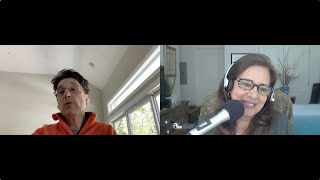
This is a recorded interview (Finding Brave episode) in which host Kathy Caprino speaks with Steve Herz — talent agent, coach, and author — about his AWE framework (Authority, Warmth, Energy) from his book Don't Take Yes for an Answer. Herz argues that technical mastery and credentials get people a seat at the table but influence — gained by demonstrating authority (presence, voice, body language), warmth (connection, empathy), and energy (inflection: pitch, pace, volume) — determines who advances. The conversation includes concrete behavioral examples (eye contact, filler words, posture), coaching tips (read the room, vary pitch/pace/volume, be genuinely engaged), personal background anecdotes, and a closing call-to-action with book purchase and free learning guides.
Questions this video answers
Don't Take Yes for an Answer
Harper Business
June 16 (mentioned in the episode; video uploaded July 9, 2020)
www.stevenherz.com
Chapters
Hello, everybody. Welcome to this episode of Finding Brave. I'm so excited. I'm always so excited for my guests, really. But honestly, I think you're gonna love this and you're gonna love what my wonderful guest Steve Herz has to say. And I think you might even like the interchange. We have probably some little bit of different perspectives, but also we're so right on the same page about what we're talking about. Turn up your authority, warmth and energy for exceptional results. And so let me tell you a little bit about Steve. It's an illustrious background, for sure. Steve Herz is the founder of IF Management, president of the Montauk. Is that right? Pronouncing Montag. Montag Group, not Montauk, Long Island Monk Tag. And a talent agent for some of the most successful broadcast journalists in the country at organizations such as cnn, msnbc, cbs. And his new book, which I think everybody needs to race out and get, is Don't Take yes for an answer. Using Authority, Warmth and Energy to Get Exceptional Results. And it's out from harper business on June 16th. So I just want to say this, Steve puts forth in his work and this book that the difference between a career that plateaus and one that skyrockets is these three things. Authority, warmth, and energy that you exude. And you know, I could not, no problem. I could not agree more. And I can't wait to dig in, Steve. So thank you for being here in the middle of your book launch phase, which I know is quite a lot. So, so let's start here. Tell us first of all how it came to you, how this framework came to you, that it's authority, energy and warmth that is missing. So you work with really illustrious, high powered, successful people. How did you start to see that it was those three things that were missing?
I think it's just a function of thinking about all those people in the world who, who work hard, who study hard, who go to the right schools, who do all the right things and are plateauing, as you said that I say in the book, versus that other group of people who seemingly are doing the same thing. They're working hard, they're studying hard, they're doing all the right things, they're showing up on time. And yet one group is soaring and the other one isn't right. And you're kind of saying to yourself, well, what's the difference? All the things we're told in life, if we go to get all straight A's, if we go to the right school, if we get the good job Then in that company or when we start a business, we'll soar because that's all it takes. And you realize that life is not just about coloring in the lines. And so my thesis is that all that line coloring in is great. It gets you a seat at the table, it gets you into medical school or law school or business school and. Or a job at XYZ company or whatever. But then that doesn't really have that much of an impact on your ultimate success. And you work really hard. You don't want to just be average with that seat at the table. You want to be great, and you're working hard enough to be great, but you're not getting those results. So it sort of dawned on me that it comes down to influence. It comes down to the influence you have in the room. And how do you have influence if you can't differentiate yourself with your substantive qualities? If everybody else went to good enough college, that's in the room with you at Company X and everybody else is working hard and everybody else knows how to do the job within the same bell curve of good enough. How do you gain influence? And the only way you gain influence is by making people like you, making people trust you, and making people want to go forward with your ideas and your thoughts. And that's what gives you influence. And, and you don't even necessarily have to have the best ideas, but if you have the most influence, then those are the ideas that are going to win the day. And that's a whole other argument, but let's put that aside for the moment.
Fascinating.
Just to finish the thought, just this one thing is that when you think about making people like you, making people trust you, making people want to go along with your ideas, that's what my premise of awe, authority, warmth and energy is. It's just a shorthand acronym that is easily teachable, easy to remember, easy, easy to access and apply, and it's basically just a hack. AWE is a hack. It's a simple little life hack, if you will.
Got you. So let's break it down because I couldn't agree more with you. And I'll just say this. Steve and I were talking too about my book coming out about power. And I do believe that along with influence, we also have to have the power, which often evolves, involves confidence and speaking up powerfully. We have to have that too. But here's what I would love to understand. I was just thinking as I was making coffee before this, about something I value. You know, we all have our own values. One of those things is mastery, expertise, mastery in something. So tell us how you think maybe mastery and authority are different. How does something. Somebody demonstrate Authority? In your 25 years of doing this work, how does someone demonstrate it? Get it, Give it.
Well, first of all, it's a really interesting point. You talk about mastery. So mastery and power, I think, relatively go hand in hand, or can go hand in hand, because those are substantive things.
I see.
Have you mastered the art of X? You're a brain surgeon. You've mastered it. You're now working at Mount Sinai Hospital, whatever it might be. You're a master at that. And then you have the white lab coat that can fade. And you have the title of chief surgeon at XYZ Hospital. That's power and mastery all in one. But in researching this book, I spoke to a lot of doctors, believe it or not, and a lot of them are referenced in the book. Because I find medicine to be a very interesting topic. And I've done some consulting in this space now, and. And it's fascinating that, for example, the Mayo Clinic does not have their doctors. They do not have their doctors wear the white lab coat anymore. Because that conveys power, right? That's a level of authority. That's a level of authority. And they already have such an internal sense of mastery and power. The patient perceives that already. It's the Mayo Clinic, for God's sakes. So that would overwhelm someone with too much power, too much mastery, too much authority. And so what is needed in that situation is a little bit more warmth, that ability to connect with someone. And the really great communicators and the great organizations like the Mayo Clinic, they understand. They may not use the exact same language I'm using, but they use something close enough that they're finding the right balance between power, mastery, authority, warmth, connection. And they're understanding that. But to go back to your original question, the idea of authority, again, it's a stylistic thing. You. And I'm just defining this for my own convenience. Somebody is an authority. They might be the dictator of a country because they have the power conveyed upon them by the army or by the. By the military junta, whatever it might be. But when I'm talking about authority, I'm talking about the presence that you have and the way that you carry yourself. Your voice, your body language, your sense of purpose in your words, your rate of speech, your lack of filler words. That is what I mean by authority. And I think a lot of people have power. They have mastery. They have all the things you're talking about, but they don't have authority because they give it up. They relinquish it at the front door when they walk in.
How, how do they do that? I'm really digging in. We didn't script this, people. I'm just fascinated. How do you feel someone relinquishes their authority?
Well, they might hunch over when they speak to you. They might cover their hand over their mouth when they talk to you. They might look away from you. They don't make eye contact when they're talking to you, which belies that they're not confident in what they're saying, even though what they may be saying might be brilliant and completely accurate. And they may have 20 years of substantive research behind whatever they're saying. So they've relinquished that authority. And look, you know it, you may not realize it, but if someone's talking to you and every third word is or like, or there's a vocal fry, what have you, and there's some speech impact defect in their speaking that's very obvious to you. You, the listener thinks, I don't want to listen this person anymore, irrespective of whatever their background might be. And that's how we have, I believe that's how we have or don't have the necessary authority in our life.
I just want to highlight something. You know, I work with thousands of women, you know, have in the past years. I think the way many people, men and women, can give up their authority is that they don't know how to speak confidently about their accomplishments. So they may have had brilliant accomplishments, but when it's time to give someone a two minute, you know, elevator pitch, hey, what do you do, Steve, I'm pretty sure you're going to say it in a way that communicates your authority. So a lot of it is the words we choose or don't choose to say. Would you agree with that?
I would, I would. Yet. If I may.
Yeah, please. No.
I still think so much of our perception of others is more about the style than the substance. So, for example, if you ask me what have I done over the last 25 years? And I say, well, you know, I've been a talent agent and, you know, I represented, you know, like, probably close to, you know, like 350, you know, like people like, I don't know, like maybe 400. And, you know, I've gotten every major award from every organization and, you know, I've made, you know, thousands and, I don't know, maybe thousands of deals, maybe I Don't know. Okay, now, I did that metaphorically, kind of bragging. Some of what I just said isn't even true, but just to try to hype myself up substantively versus I've been a talent agent for the last 25 years, probably represented dozens of different people in a multitude of different situations, and my career has been interesting. I've had a lot of great experiences. I think that second part sounds a lot more authoritative than the first one, even though it's much less substantively firm than the first one.
Getcha. Well, I think why I like the second is you're not regaling me with your awards. You're just speaking. And that goes to warmth and energy, I think, too. I love it. I love it. All right, let's talk about warmth. And I can't wait. I have questions for you because, you know, having been a former therapist, you know, I tend to look. Go deep as to why someone is not communicating or relating with warmth, and I think there's a ton of reasons for that. But I'd love to hear what. What you have observed. Well, what is warmth? So if someone. And how do you know? Like you even said, you know, before we clicked on record. Well, something like, well, Kathy, you have, you know, warmth or whatever. How do you assess it? And then when someone's lacking in it, what do you. What do you do with them? How do you help them?
So, first of all, I think you have warmth because you smile really easily. You have really good vocal variation in your voice. You will. You will. You'll bring your voice down. You'll whisper a little bit, and you're very expressive. Also, when you speak, you. You are very emotionally connected to your own message. So I feel your emotions are coming across in what you're saying, and I feel like you're so passionately committed to what you're saying that it makes me connect with you. You know what I mean?
And so, so love that. Thank you. Does anyone ever come across too passionate about their own message?
Absolutely.
Yeah. How. How do we not do that?
Well, I mean, I try to say this in the book, is that it's not enough just to read the room. You know, it's very important to read the room, but also read how the.
Room is reading you, you know, so emotional intelligence, awareness.
Exactly, exactly. And I think it's partly being able to have that presence of mind in the moment to know, wait a minute. I'm going crazy here talking to Kathy. I'm ramping up my energy because I'm so excited for this podcast, but she's kind of like, whoa, I got to read on your face, Steve. Take it down a little bit. Or, you know, Kathy's really been so kind to have me on today. She's excited for this and I'm just too mellow and I'm seeing in her face that she's just not that engaged. I got to ramp it up here. And it's that ability to do that in the moment that I think I'm trying to teach. And I think it's very teachable if you just are able to read these cues. And I do go through it in the book about how you can. How you can really have that real time ability to get the feedback and apply it in the moment. Because if you can't apply it in the moment, it's not that worthwhile.
You lost the chance. You know, I feel like you were a therapist, but did I hear that you were a lawyer in your. You are a lawyer, are you?
You heard that? It's a bad rumor. Yes.
I've got to ask this. You know, when you're training as a therapist, what you realize is exactly what you're talking about. If you don't somehow get on the same page with your client, match them, whether, let's say they swear like a truck driver. Well, you start swearing or, you know, whatever, you match them and because unconsciously they feel a trust there. Ah, she gets me. He gets me. I think you're talking about exactly that. How did you learn that? You sound like you've had therapeutic training. How did you. I'm interested also in the legal piece because I have a lot of, I think, I think it all friends who say it's.
I think it all. It all applies. First of all, I don't know, in terms of therapy, being the youngest boy, I have a little. I have a younger sister, but I'm the third boy of four. I definitely struggled a lot as a kid with school. You know, I was born in 1966, so there was no such thing as ADHD in 1973, when I started almost flunking out of kindergarten in first grade and getting sent to the principal. And I think there was just a lot of soul searching that I did as a young person. Just not really sure where I fit in in the world. I was overweight. I got my front tooth knocked out when I was two years old. In fact, just two days ago, I lost the same very tooth eating a piece of corn and had to have it fixed. Emergency dental surgery two days ago. But it's just funny because it leads into a point in the book where my wife has told me, and she's right, I don't smile enough and I sometimes don't exhibit enough warmth because I've been self conscious about that. And so I think being the underdog, or at least perceiving to be the outcast, if you will, it helps you sort of see other people that aren't necessarily in the in crowd. You start seeing them in a different way than maybe other people do. And I think it's actually a really huge benefit to your life if you can be in some ways the outcast and yet find your way in the world. And, you know, I also think that I remember being. I went to summer camp and, you know, kids made fun of me because I was the slowest kid in the bunk and they would run races and one kid would run backwards and I would run front and. And I'd still lose. And yet I never took it personally. It was fun. I played along with the joke and I was trying to be the comedian. I'm still friends with every single kid in that funk. Still, you know, we're all going to be 54 this year. Yep. And resilient. It's crazy.
So you're saying a few things and I use different language. That's okay. But I think what you're talking about is empathy and being aware more than just walking through life not looking at, why is this happening? How am I perceiving what's happening? Is it. Is that what you would call it? I think you have empathy because you struggled. People that struggled, they don't get it.
Right. I also think it's. It's a question of, you know, there's this mentality that maybe I adopted it subconsciously when I was younger, thinking, okay, I'm a B student and I am surrounded by siblings and friends who are a students. What am I going to do to make myself better? How am I going to succeed in this world? What am I going to do? And so when I got into high school, I became a writer. I was the editor of the school newspaper for the sports and then went to Michigan and continued that. And instead of dwelling on my shortcomings relative to others, what am I going to do about it? And what am I going to soar with? That's what I think I achieved. Because you can't sit there and worry or even think about comparing yourself to other people, especially in certain metrics where you're not going to win. What's the point? It doesn't matter. And so you can only control.
Say that again. People listen.
Well, I truly believe that. I think, you know, one of the things I always say, and I don't think I invented this, but I say it anyway. Keep your own scorecard. Keep your own scorecard, and who cares? Just get the best grade you can get for yourself. If everybody else is getting A's, metaphorically, and the best you can do is B's, well, damn it, be happy you got the B because you worked hard for that B. If that's the best you can do, but score yourself on your own thing. And I think to the extent that I've become a pretty good agent is because I figured out a way early on to really relate with people and connect with people. And I also think, honestly, just one other reason is that since I've been really little, I've always loved the game of chess, and I do think that that helped me in my legal training, too, is because, you think about it, what am I doing for a living? I'm selling and signing clients, and then I'm negotiating for a living on behalf of those clients. And I think the best people at that job are the ones that can always see it from the other person's perspective, because it does create, like you talk about this empathy, this ability to see the whole situation. And when somebody sees that you're seeing them and you're not invisible to them, and you're acknowledging them in many respects with your presence, your voice, your tone, your demeanor, your actions, your words, then they're going to respect you. There's going to be an automatic reciprocation. And if it's absent, you're just killing each other.
I love it. Steve, I want to add this. We. Everything is energy. And if you're coming at them, a lot of people will listen and go, all right, I'm going to be warm. I'm really going to work it. I'm going to be warm. And it's bs. Well, everything is energy. You can't come to the table to negotiate, pretending that you really care about a mutual win. Win. And you don't. Right. Don't you think that we sense BS so you in some way have to actually mean it? Would you agree with that?
Absolutely. I think that when you're in the kind of job that I'm in where I'm dealing with the same people day after day, week after week, month after month, year after year, for now, almost 30 years as an agent. You mean, Steve, as an agent in this new coaching business that's been only about four years. It's a little different. But. But in my prime career, you can't bullshit people and then come back to the table with them a week or a month later. I just. I mean, some people do it, by the way, and they try to keep up that level of bs, but ultimately they're found out. And I also just think it's a horrible way to go through life. I mean, who are you kidding? You're just kidding yourself. And I think those people are the ones that secretly are miserable. And lastly, I'll just say on that is I had two bosses very early on in my career that were brilliant, brilliant men, but I thought really not role models. Both very, very morbidly, gigantically, beyond anything obese, seemingly very miserable and not nice people. And I thought, like, okay, they made millions of dollars. They were very successful, but to what end? Who cares? I didn't want to end up that way at 50. That wasn't my goal.
I love it. I love what you're saying. We didn't talk about this, but I wonder what you think, too. Since I became a therapist, I noticed narcissism. Narcissistic personality disorder is pretty rampant. The research says about 10% of the population has either narcissistic personality disorder or borderline personality disorder or both. I think it's more than that, because those who are narcissists don't get diagnosed. They don't go for help. But even if it is 10%, think of all the millions of adult children of narcissists walking around. But what you were describing there sounds a little like narcissism. Lack of empathy, lack of accountability. Think they're better than. You know, they don't have to follow the rules. Did you see a lot of narcissism in. Do you see a lot of narcissism in. In the world you're in?
Yes and no. I think that there. There's definitely some of it. You know, when you. When you put yourself out there for public consumption, as many of our clients do, there's definitely an element to that. But I feel like we, as an agency, we are kind of like. I like to think of us as if your audience will know this word. The Hamish crowd, you know, the. Like, kind of a little nerdy, not. Not quite that slick, what have you. We're not driving Ferraris, you know, we're driving the minivan type of thing. And our clients are fine with the agent that drives the minivan, not the Ferrari. And I don't have Any bling, as you see. But, you know, and I think that type of person is more attracted to this kind of an agent that's not a narcissist. And so, but, but, but it's out there. It's definitely out there.
I love it. That, you know, obviously how we are is a filter for who's going to find us appealing, attractive to work with. Right. I love it. So we have the third element, energy. Give us some hacks about how you convey the right kind of energy. Because as you said, if you come in way over the top, I mean, I've even had to. I'm Greek and Italian, the arms are flying. You know, I've even had to tone it down to some friends who aren't like that because I can feel they. Or maybe they're extremely introverted and I'm not. I'm an extrovert or an amber bird. So I know when I have to tone it down because it's just a little much for them. But what would you say are some hacks for people to assess their energy to. What do we have to do?
Well, I think one thing about energy, and I talk about this in the book, it's just the way that you speak. So you, I think again, I'll just give you a compliment because I truly mean it, is that you could be very high energy or low energy. I'm talking about you specifically, Kathy. Whatever, right? Whatever mode you're in, right, Whatever mood you're in, whatever your audience is, whether it's calling for higher or lower energy, that's fine. But you are still going to be emotionally committed to your message. Right? And I think that when you communicate that way and when you show inflection, you're not. You're not, you know, monotone. You're not flat in your delivery. You're not just going through the paces of what you're saying. There's a deliberate unpredictability to your communication. Because of that, you're varying your pitch, you're varying your pace, you're varying your volume. And because you're doing that, whether it's high energy or low energy, you're still inflecting. And what I say in the book is inflection is infection. So if you inflect, you infect the listener with your enthusiasm for your message. And you can achieve that. Whether you're, listen to me, I'm telling you this, or I understand what you're going through. What is happening to you is as long as you still have those elements, you're Going to energize your audience. Right. How fascinating. Okay. And the other thing is, in terms of energy, is this. Again, these things go hand in hand. And, you know, you're a smart person. And I think most of the audience here, we've been trained to communicate in some way since we're both born. If you use warmth in the right way, for example, right now, you're a fantastic listener. If your audience can see I'm talking, you're acknowledging everything I'm saying with your body language, with your face, you're nodding, you're giving me all this positive feedback. You're just such a great, attentive listener. And that's energizing me because I want to tell you more, because I see how excited and interested you are just with your face. And if you didn't do that, then I should say, oh, my God. Jesus. Kathy just does not give a crap about what I'm saying right now. I better stop. Right? And it's that. That ability, like we talked about earlier, to be able to read this.
Thank you for the compliment. Means the world to me. You know, people have said, and I never really quite understood it. You, Kathy, you make me feel that I'm important, that I'm special when you. When you talk to me. And I thought, how do I do that? I wonder. Oh, that's nice, giving myself a compliment here. But back to inflection for people who don't know what that word is or how to do it. Can you tell us a little more, Steve?
So again, there's really only three things you need to know about when it. Regard. With regard to inflection. If. Think about it in terms of. Think about it in terms of music. If anybody here plays the piano, you know, you got a high C and then a low F, whatever it is, you know, you can see, you stop, there's a pause, think about, you know, I think it's Beethoven. Dun, dun, dun, dun.
Yeah.
Then there's a long pause. Dun, dun, dun, dun. And then it speeds up. There's. So what is. What's happening there? Right? Exactly what's happening there? There's a variation in pace. There's a variation in pace. If there was no variation, pace, it would be done right. So inflection is just very. Variation of three things. Your pitch, again, if it was a C note all the time, it would be da, da, da, da, da, da. You'd just be so bored with it after five notes, right? So you're varying your pitch, your pace, and your volume. That's It. That's it. That's all it is.
You know, I'm a singer. I wonder if that whole message has gotten into me just through osmosis. Don't know. Love it, but all right, so when people say, okay, I understand, I need to vary these things. When and how do I do that? I mean, I'm guessing you might say, you know, you've said to me twice, you can see that I'm engaged in what you're talking about. I can't fake that I really am engaged. I can't. And I'm not just waiting. What a lot of people do in conversation is they wait until there's an. As we know. Until there's a space where they can speak. But they're speaking was already what? Their ideas were already formed before you were speaking. So it's a mess. I'm actually listening to you, and I don't have a question in my mind yet. I'm really just listening. And I think when you really listen, not with the purpose of stuffing your idea at the person, you will have inflection. It'll be. It'll show curiosity. It'll show wow, or really, so just get more curious. People just get out of your. Your own. Your ego and just listen. But how would you say to someone who isn't. Doesn't want to artificially inflect, they just want. They want to connect in a deeper way that then unfolds as inflection. What would you say, you know, what's the deeper way we can really connect? I know you're not prepared for this question.
No, no.
The answer.
I'm not prepared at all. And it's a great question, and I'm just going to take a swing at it. Okay? So first of all, I would tell your listeners that they should go back and listen to the last 45 seconds of you speaking if they want a masterclass on inflection. And just watch. Just listen. And you should do it, too, by the way. Just listen back. Listen back for those last 45 seconds. How you varied your pitch, your pace, your volume, how you paused, how you went up, how you went down, how you got excited and. And then you kind of laid out a little bit, and it was like. It was like listening to a verbal symphony. Right?
Oh, my gosh, I feel good over here.
I'm completely serious. I think if you listen back to it, you will pick it up and you'll see. But to answer your question, you used a very important word in that sentence or that. That thought. Use the word Artificial, right?
Yeah.
So you said, how do I get more inflection without feeling artificial? So I'm going to turn that around on you, and I'm going to challenge you and your audience to think about it differently. To think that if I'm not inflecting, then I'm being artificial. That the current me, the non inflecting me, is the artificial person, that I'm afraid to do anything other than be this artificial facsimile of what I think I should be. And I'm afraid to show emotion. I'm afraid to be inflicted, to use inflection. I'm afraid to be emotionally committed to my words. So I'm playing this role of whatever it is, the person that can't get hurt, that can't reveal him or herself, and that's the artificial. But the real you is what we heard from you over the last 45 seconds.
I get choked up when you talk. Well, everyone knows I get choked up every episode. But what I hear you say is, you know, here's my book. The most powerful you, and I mean positively powerful power. Power to not power over. The most powerful you is you in all your richness. It's you feeling things, it's you emoting. It's you being who you really are. And gosh, Steve, I couldn't agree more. I think the vanilla version of us is often because we've been hurt by being the real us. Do you agree?
Maybe. But, you know, here's the good news for everybody, I think, and I think you'll agree, one of the things I learned early on, maybe like I said, from being made fun of as a kid or whatever, is that, and I mean this in the most positive sense, nobody really gives a crap about you. Nobody. I mean. I mean, no, I mean that sincerely.
Supposed to feel good about that.
Well, let me. Let me explain why I say that. Please explain in a liberating sense, I mean that. Kathy, if you screw up this podcast and it turns out to be the worst podcast ever and nobody listens, your friends aren't going to like you any less. They're not going to care. And if it's the best podcast and you make millions of dollars off of it, they can be, oh, great. For Kathy, that's awesome. I hope her book goes to number one. But nobody really cares. They care more about their own hangnail. Meaning that. Take that as a. Take that as a gift, that whatever you do, it doesn't matter. Just have fun with your life and just not. Don't worry about everybody judging you all the time, only to the extent that you want to get what you want to get out of life. And if you have these major blind spots, then deal with them. That's the only judging that's going on in those moments.
What a fantastic interview. Race and buy this book, people. I mean, to me, we had a little bit of a therapy session, but I love that you also, you, you critiqued me, which is really fascinating, I think. I mean, it was positive. You'll tell me later what I could have done better with authority, warmth and energy. But I think everybody needs this. And it, you know, if the ultimate of the ultimate lesson is be yourself, people, you know, you were talking, I just want to say this, you were talking earlier about, look, if everyone around you is getting A's at Harvard Law School and, and you can only get B's, embrace it. I was telling a family member the other day, grades are vanity metrics. I mean that, I mean, they're important, they're important, sure, but how many followers we have on LinkedIn, how if our book gets to number one, and of course we want it to, because we want impact, we want to help people. But if you're obsessed about the vanity metrics in life, it's an unhappy life. And I feel like this is some of what you're saying, am I right?
You're 100% right. In fact, I'll share more therapy with you for a moment in that I've been a person for the last 53 years who lived in the shadows in the world in the sense that I'm not a famous person. I never even had a Facebook page or Twitter or any of that stuff. And only in the last several months since the book is about to be launched, that I have all that stuff. And it's just this very strange form of self imposed narcissism, idolatry, whatever you want to call it. And it's very unhealthy. And so I'm trying really hard for myself to get the book out there, do well with it, and yet try not to get looped into this craziness. And you know, my son said to me recently, about two months ago, my son Jack, he's 11, I was talking on a show, whatever they said, you know, daddy, you're getting a little too braggy. And I thought like, wow, good for him for saying that to me. And then also I tried to defend myself by saying, well, Jack, I'm talking about an idea, not myself. He said, I'm not buying that, you know, but it's good you need people around you to keep you honest and keep you on the right path.
I have to say, I can't imagine you being braggy. I wonder if he just means you're different from how I know you.
Dad, Come to my house and spend some time here. You'll see all the. Say you're bragging. We'll never let your audience into that. But you know I'm on my very best behavior for you.
Okay, you're not braggy today. Oh, I love your little son. Perhaps. I love that you created a space where he could say that to you. You're not a narcissist.
Well, my book is called Don't Take yes for an Answer. So he's living. He's living the message.
And I want to leave everyone with this. We didn't have you answer this, but can you in a few sentences, Steve, what is the yes? You mean not to take for an answer? I know the answer to this question, but everyone needs to hear it. What is the yes?
We shouldn't accept that there's no more room for improvement in our lives in a basic sense. And I think if we surround ourselves in an echo chamber of yes, then I feel like we lose the purpose of why we're even here on Earth. I know that's very deep, but it's truly like. I think it was the poet W.H. auden who said, you know, grow or die. And like, to me, that that's. That really sums it all up. And if you aren't getting up in the morning and feeling a sense of purpose in your life and feeling that I want to be a better version of me than I was yesterday, and I want my family to be better and I want my world to be better. And what are you doing? Like, just mail it in, stay in bed. I don't know. At least for me, that makes it not worth it. And hopefully those people who like that message will want to read the book. And if it doesn't resonate with you, then don't buy it.
I love it. I love it. I think everyone hearing is going to race to get it. So where do they learn more about you? Where do they soak up this book? Where do we send them? What's the best place?
So this is one place. They just go to this website that I created. It's called www.stevenherz.s t e v e n herz.com and we have all the information on the book. One click to buy it. All the social media craziness. You can Follow me on everything but TikTok. And the other thing is just for your listeners, that if you don't want to buy the book, we even put out a free guide. It's an eight page guide if you just sign up for the email and then we give you an email every day, a teaching guide. And if you're really gung ho, there's a learning guide that goes along with the book that's free. So but that's it. Just go to www.stephenherz.com and everything's there.
Thank you so much. I learned so much. I cannot wait to read every word of your book and maybe your book and my book becomes the companion for powerful, authoritative warmth and energy all in one. I love it. Congratulations.
Thank you so much.
And come back again and critique again. I loved it. All best wishes to you people. We want to hear from you. We want to know, did this perturb your system? Do you feel like what are they talk about or wow, I needed this lesson. I hope that's how you feel. I hope it's inspiring to you. We'd love to hear. Wherever you hear this, send us a note. LinkedIn, Facebook. Now that you're Steve everywhere, let us know and ask any questions you have. I know we'll both be happy to answer whatever we can. Have a wonderful brave week, people, and we will see you next time. Thank you.
More from Kathy


Elevate Yourself, Elevate Others, and Amplify Good | Chris Cooper | Finding Brave Ep. 334

Finding Brave Epis #333: How Leaders Can Harness AI Without Losing Their Humanity, w/Bennett Borden

Finding Brave Epis 332- How to Stay Brave, Valuable and Visible in the Age of AI, with Raman Rai

Finding Brave Epis 331 - The Power of Positive Disruption, with Dr. Patrick Leddin


Finding Brave Epis 330 - Being 40: Letting Go and Embracing Who You Are, with Stacey Lindsay

Disrupt Career Reinvention with Kathy Caprino - via The Disruption Lab Podcast w/Patrick Leddin

Creating Neurodiversity-Friendly Work Cultures: Simple Workplace Adjustments Matter

Finding Brave Epis 329 - How To Create a Neurodiversity-Friendly Workplace, with Kristen Pressner

Finding Brave Epis. 328: Reclaiming the Power to Trust Your Own Voice, with Dr. Cindy McGovern