Finding Brave 134: Fix This Next In Your Business, with Mike Michalowicz
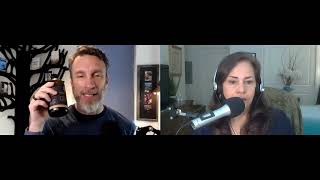
This content was created by Kathy Caprino. This content was uploaded by Kathy Caprino. This is a YouTube video titled "Finding Brave 134: Fix This Next In Your Business, with Mike Michalowicz" recorded in July 2020. It features a conversation between Kathy Caprino and Mike Michalowicz discussing business strategies, particularly focusing on Mike's book "Fix This Next" and the concept of the business hierarchy of needs. They explore topics such as sales, profit, and business efficiency, and Mike shares insights on how entrepreneurs can identify and address their business challenges.
Chapters
Hello, everybody. Welcome to Finding Brave this week. How you doing? We are recording this in May, actually in the middle of a lot of stuff. You're getting this in July. I hope we're on the end of a lot of stuff and life is looking good. Thank you for being here. And I'm so excited to have Mike Michalowitz on with us. Mike, we were just talking. I have been. I have a business crush on you. Can I admit?
Oh, that's kind.
And I think 12 years years ago, when you were. Look at this gorgeous thing behind Mike, which is all of your books.
You're so prolific. You gotta check this out. I don't know if I can show it. Maybe it won't fit in. I can't see those words there. You can't see it all.
Something entrepreneur.
Yes. It says, eradicate entrepreneurial poverty. It's my life's purpose. And it's made out of bicycle chain because I like to ride bikes. And it's just my reminder every time I come to office, like, why I'm doing the work I'm doing.
I love it so much. And I can learn and everyone can learn. Everyone who's listening. And you know what? I really believe that whether you're in a large business, small business, just starting out, you know, I hear from a lot of coaches who say, how do I get clients? And I just kind of want to cry because there's a lot that has to happen before we get a client, you know, and before we scale and all that. And we're going to hear all about Fix this next, your book that 4,000 orders in one hour. I read on the first day. Mike, I'm so thrilled to have you. But everyone, if you don't know Mike Michalowicz, let me tell you all about him. Mike is the author of Here They All Are in the back There. Profit First, Clockwork Surge, the Pumpkin Plan, which I really got so much out of all of them. And your newest release, Fix this Next. I didn't know this till I read this. By your 35th birthday, Mike had founded and sold two companies, one to private equity and another to Fortune 500. Today he's running his third multimillion dollar venture, Profit First Professionals. Mike is a former small business columnist for the Wall Street Journal and former business makeover specialist on msnbc. So, wow, you came before authoring. You came from a lot of experience on this, didn't you?
Yeah, yeah. You know, that's the CV that's like all the highlights. Like, oh, there was a lot of mess behind that, the stuff I conveniently leave off, the which honestly is actually more helpful and more relevant to my learnings, was the challenges as opposed to the couple check marks in the bottom.
The truth of life. Right, but let me finish here. Over the years, Mike has traveled the globe speaking with thousands of entrepreneurs, and is here today to share the best of what he's learned and what to fix first and next. But I do want to also say this. I remember when we first talked, Mike, you said that women entrepreneurs, it was like a sweet spot for you. Is that still the case?
That was. Now I'm speaking to such a broad community.
It's everybody.
When I first started out, that was. The community embraced me, which was shocking and surprising. You know, it's funny, when we start any kind of business and offering any kind of service or product, and authorship's no different. It's like cereal boxes. They're just books. You get to figure out who's the community that's going to buy us. And I thought it would be college students, especially male college students, because after college, I started my first business and had ever since. So, like, oh, that's who going to market to. But they weren't the ones who are receiving it well. I mean, they were. Some of them were buying my books, I think out of pity, after I spoke at a college event, because they were bringing them home and they were leaving at home. But their moms started to read these books, and I started to get calls from moms of college students saying, this is the first time I've read a book that doesn't pander to the female audience.
And that's the difference you feel?
Yeah. And the most interesting thing I heard was they told me you're one of the first male figures that's supportive. She goes, in fact, my significant other at home is verbally supportive but emotionally detractive. And I was like, oh. So there's this undercurrent that women entrepreneurs were facing. So I started to speak that community, and they carried me on their shoulders to a much broader audience. So I still speak to them, but I'm in a much broader audience that I'm trying to serve now.
Wow. And I do want to tell you people, if you don't mind me sharing your very first book on day one, how many orders did it have?
Zero. Yeah. So I told you offline, like, my mom didn't buy a book that day. It was a miserable day.
Mom, what were you doing? But I want to tell you that people, because this kind of success Success doesn't just happen. It comes from the mission and the passion that you had on your wall. So don't be discouraged if your book doesn't have 4,000 orders the first day. All right, let's dig in. Mike, what is fix this next? What's the focus? What do we need to understand?
Well, the thesis came out of an accident. I email my readership asking what their biggest challenge of the year is. It's a great way for me to get a sense of what my community of readers need to read about. And it takes me about five years to write a book. So five years ago, I sent out an email, but my technical savvy is questionable. I think I clicked three or four times because the same email went out multiple times in that same day. But, Kathy, the same people responded with their biggest challenge for the year with different answers throughout the day.
What?
Yeah. In the morning, this one guy said, the biggest problem we have facing this organization. Sales. We got the next email. He says, the biggest problem we face is management of our employees. And by the end of the afternoon, it was marketing. And I was like, oh, the biggest challenge business owners have is knowing what their biggest challenge is.
Oh, my gosh.
So that became the thesis of the book. How do we figure out what really our business needs from us next?
All right, I'm focusing. You know, I have a small business. It's. It's grown a little. Not as much as I would love to scale. So I'm listening with two heads what. What we hope our listeners are getting and what I'm going to get. So tell us, how do we figure this out? How do we know what the pain point is? That is the most important one. And I'm guessing how we have emotional pain around them is not the best way to choose.
Oh, very astute. Right? It's not around gut instinct or emotional pain. It's around what's called the business hierarchy of needs. So just to set the stage, as I was researching this out, I found that there's a common DNA, if you will, for all business on the outside, just like human. When you look at the outside, we can judge based upon gender or skin type or accent or whatever. But when you peel back the skin, humanity is made up the same. If I'm in cardiac arrest, the doctor, she doesn't go, hey, is your heart stored in your foot? They know where to go. So the same as with business, when we peel back the skin of business, the essence of it is identical. Well, Maslow created this hierarchy of needs for human Needs Foundationally says everyone has physiological needs. Breathe air, drink water, and it goes up to safety. The highest level is called self actualization. And at any time a base level needs not satisfied, we must revert to it. So while we're talking now, if I start drinking some water and it goes down the wrong pipe, I will start coughing out. That's a biological response to a physiological need. Now in business we have a five level foundation, five levels of needs for our organization. But the fundamental difference is we are not biologically wired into our business. Therefore, emotion, instinct, gut does not serve the business. We need it back with empirical data.
Interesting.
Just real quick, the 5 level needs for businesses is as follows. Foundationally, every business needs sales. Sales is the creation of cash. No cash, no oxygen for an organization. Once you have a degree of sales is then profit. And profit is safety. For an organization, it is the Runway. And as we experienced this Covid crisis that started back in March, the businesses in March that were walking with a profit had more Runway, more time to consider and be deliberate in their action. And everyone else had to be desperate. It was Warren Buffett who said, as the tide goes out, you see who's swimming naked. Well, as the recession goes on.
Wow, what a quote.
Yeah, as the recession goes out, you see who's not profitable. Well, the next level of that's order, it's the creation of efficiency throughout an organization. Then we have impact. That's the creation of transformation. This level is interesting because businesses realize they're no longer in the business of transactions, they're in the business of having that transaction impact someone's life in a permanent shift. And then the highest level is called legacy. Legacy is the creation of permanence. And what I loved about my research in this, I talked with the owners that achieved it. And consistently they said I came to realize as a business owner, I was never a business owner in the first place. I've always been a business steward. That my responsibility was to give life to an organization. And the success and ongoing continuity of the business is far more important than my involvement in the business. It's about it. So that was the five levels involved perspective.
Not many, I'm guessing not many people in the world get there. How did you, how did you come up with this? Was it interviews? Was it qualitative? And then quantitative research? How'd you do?
Yeah, it's a mix. So, so how? I write books as I go through first hypothesis ideas that it could be. And I had this other structure that wasn't working because I start Testing with businesses. The nice thing is I can host events in our office. I'm actually in our physical office. Above us. Next level up, we have a training center. And so we can bring in about 50 people. So we do this. So I brought in something like that, these entrepreneurs and show them the concept and idea and say, tell me what you think and then tell me what you do. So we start getting empirical data on their use. One of my favorites, actually, I just got a little sample from them, was a coffee company came in called Cottonwood Coffee. They're based out of South Dakota.
I think I just saw that at Fairway Market yesterday.
Did you really?
And I said, what is that? Tell us about it.
So they use the business hierarchy of needs. Well, this company, this is an iterative thing. You always ask yourself foundationally, do I have sales that are strong enough to support profit? Do I have enough profit to support order? You keep always looking at the foundation. Build your way up. So we will ping pong through this. You don't climb it like a ladder. You go around. So with the COVID crisis, their coffee shops in South Dakota were all shut down. And so the owner is. You can say, I'm out of business and duck your head in the sand, or you can go to the thing. He says, well, we have a sales issue. And within the business hierarchy, there's what's called core needs. Every level has five core needs. Starts making up the full DNA. Well, they had a. Basically a product innovation challenge. What they were serving customers with in the past, no longer serve them currently. So you have to inquire what to make. Well, they started making cold brew coffee, and you can see here, it says the word immune booster. They started infusing it with vitamin D and other immune boosters. And what their argument is, listen, this won't cure Covid, but what it will do is you can continue the habit of drinking coffee, but also do something that's positive for your health to start that.
Brilliant. They did that right in the middle of the COVID Yeah.
So this product, you can see that I got the first batch. It came out on April 16, 2020. Batch number one. I was a recipient of a 12 pack, and my oldest son devoured in half a second. Okay. Devoured all. So I got one. Tasted amazing. And he had the other 11.
Wow. All right, so tell us when. I still feel like with all the people I work with who are just starting out, even if they start at the sales level, they're very. They're stuck as to what to do. So to use sense when you, when you have these groups with you and they say, yeah, I'm at sales or no, I'm stuck at order, do they know what to do about that? Usually, yeah.
Well, rarely do they know where they're really stuck. So there's a series of questions that created to really pinpoint where you are. Many people instinctually go to a sales response in this concept that sales cures everything. And it doesn't. Many people try to sell their way out of it. So the problem with the sales response is sales translates to stress on an organization. And in small business it translates to stress on an owner. Because sales is obligation. Every sale, I have more responsibility. So many business owners are trying to say for me to be profitable, I need to take on more responsibility. That's not true. You need to extract cash from the transactions you have. So we just ask these inquiring questions. When someone says I'm struggling, I think it's a efficiency problem. We say, okay, it could be, but let's first start talking about the foundation. Do you have any sales or do you have adequate? And we always ask any are adequate. Do you have any sales? If the answer is no sales, well, then efficiency matters.
None of them. You're not anywhere. We're gonna start there.
But once you have some sales, we simply say is it adequate for any profit? And we start analyzing the link between the too. In many cases, when a business has some degree of sales coming in, it's actually a margin issue which is part of profit. And then we ask any adequate. Do we have any profit? Or do we have adequate profit? Do we have any order inadequate to keep going up? The other thing too is all elements are playing. This is simply where you apply your fix. You can't. You don't ignore efficiency. It's in, you know it's happening. That's part of order. But if your company's need is profit, when we need to concentrate our efforts there to resolve it. Once it's resolved, we look at the foundation and we start building our way up and say where's the next fix needed? Similar to Maslow's hierarchy, we're talking right now maybe considered self actualization or seem as the higher levels of the hierarchy. But you and I are both breathing. We don't think about it. It's automatic. So all the elements constantly play out. It's just where is the fix needed? Next?
All right, question you immediately went to if you have sales, we have to look at how much you're eking out. What is Profit. It's so obvious. But I think people are embarrassed to ask why is profit so important? What do you do with the profit? Tell us why we've got it and what margin should we be we be looking at?
Yeah. So profit provides two things. First of all, it's reward and recognition for the owner of the business. Many businesses owners, most that I interview, start a business for two reasons, personal freedom and financial freedom. And profit supports the financial freedom, order supports the personal freedom. Sales is the foundation. But we need profit in order to live the lifestyle we defined financially. And then order, which allows us to extract ourselves from the business and participate in the business in the way we choose to participate. So profit is necessary to reward ourselves. The second thing is it's ongoing continuity for the business. So I teach, I have a book called Profit first where I teach this. Where some goes to the shareholder on a regular basis to reward them, but also some is retained to build what's called cash equity. Runway. What's the appropriate margin? It's to be determined by your business. But we start slow and let it grow. Meaning, and I teach us some profit first. But what you do is if $1,000 of deposits comes in and we're targeting to ultimately have a 20% profit and on top of that, pay for ourselves and other things. What we do is we don't allocate 20% right away. Let's start slow, let's start at 5% and see how the business can handle it. The next quarter we increase the 5% to a 6%, we start ratcheting our way up. The mistake that most business owners make, Kathy, is money comes in, they say, I want 20% profit. They take out 20%, they hide it away, and then a week later they can't pay their bills. They take that profit, they spend the money and. And they undermine it. So this is just like building any other muscle. We don't go in full bore. You build your way to that discipline of what you want to achieve.
Well, and the profit have you done? Of course, you have a long look at how is that profit best invested? Is it to pay yourself? Is it to reinvest in the business?
Oh, yeah, it's a great question. So here's what you never do with it. You never do it. You never reinvested or plow back. Those are all terms that have become popular in the entrepreneurial vernacular to soften the real word, which is an expense, meaning if I take money and I push it back or plow back in the business, it never was a Profit. The true definition of profit is it serves two things. One is a distribution to the shareholder. Second is reserved money for a future distribution to the shareholder. That's the only definition of profit. You know, public companies, when they have a profit distribution, it goes out to the shareholders. When they spend money, it's an expense. Little companies use the soft terms of plow back, push back, reinvest, because we don't like to say I spent more money. But when we look at that candidly, then we have to face the facts that we're not running a profitable business. In fact, just a quick vignette. I teach profit first regularly. I met with an entrepreneur, and she came up to me and she goes, I love what you said about your system. I don't need it. I had a 28% profit this year. I'm like, that's amazing. You definitely don't need it. What'd you do with the money? And that's when she said, why plowed it back in the business? I said, okay, what do you do when the business hats well? We spend it on advertising. So I said, okay, that's not a plowback. That's an expense. I mean, you can call it plowback, but a plowback is with a soft accounting term saying it could have been a profit, but you didn't use it that way.
So where do you. What do you use to reinvest?
Oh, it's called opex. So in prop first system, I have five accounts we use, and we put money in there. It's effectively the envelope system for business. But you use the OPEX account for operations of the business. And we have to get what's called a quantified roi. ROI means return on investment. You have to know, if I put a dollar in, I'll get a $2 return. And most people don't do that. They simply say, I think there's an roi, which means they didn't look at the numbers at all Once, you know, then we start reserving money for an investment like that.
All right, now we're talking about fix this next. What to focus on. Can I ask you this question? You know, you know me well enough probably. I'm kind of like a career therapist. I was a therapist. I was a marketing person. Where people are stuck, I think, is where their blocks are, subterfuge for the right behavior. Okay, what do I mean, what do you think in terms of the people you meet? How many people embrace this as something they want to get involved with, that they want to measure results that they. In other words, let me cut to the chase. A lot of people I meet, and I have to say, a lot of women say, I don't do the numbers, else do the numbers. But when people hear this, like a woman saying, I don't need this. We all need this, people. We all need this. Even if you're rocking it at certain levels, there's some level you're not. But how many people, how many entrepreneurs are equipped do you find out of the gate that they want to do this kind of level of analysis?
Very few want to do deep analysis. That's why I simplify it so much. In the book, I even reference a technique called the 10-10-10. Something that you can do an analysis in about five to 10 seconds, maybe a little bit, maybe 30 seconds. Here's what the 10-10-10 is. Most of us make decisions around the immediate repercussions. We say, what's going to happen in the next 10 seconds? So maybe right now I'm considering maybe lay off an employee because I can't afford to keep them. Well, in the next 10 seconds, how I feel, I feel like crap. They're loyal employees. They're wonderful people. They don't deserve to be laid off. I'm the one running the business ineffectively. It's my problem. But then we look at the other tens ten months and ten years. What will happen in the next ten months? Well, if I lay this person off today, in the next 10 months, I'll still have a business because I've managed my costs. Maybe actually I can even hire them back as I sustain the crisis I'm experiencing. And how will I feel in 10 years? Well, 10 years from now, my plan was to have this be a source of retirement income. And because my business sustained, I can now sell the business and get a nice tranche of money. And by looking at not just the immediate, but the midterm and long term now we reflect holistically on the implications of a decision. We make much more thoughtful decisions.
Oh, Mike, you teach so much amazing stuff. Tell us two other things. You talk about survival trap. Tell us two other things that if we don't get this, we're really not going to grow this business or, you know, make it as healthy and reward.
Yeah. So, okay, so you set me up for one with the survival trap. That, that's perfect. The survival trap is an illustration of why we get stuck. Real quick, examples. If in your mind, you draw the letter A and put a circle around it, it represents point A where we are now As a second step, draw arrows away from A, like two or three in any direction you choose. What those arrows represent are ways to get out of the current challenge or crisis. We have the final step. Step three. Draw the letter B in the bottom left corner of that little picture. And what B represents is what your business actually needs from you, what needs to be fixed next. And what you'll see in this demonstration is if people do it on paper or even on your mind, chances are few or none of the arrows pointed to B. So the question is why? And they said, because I don't know where B was exactly. Most of us are making decisions based upon getting escaping crisis as opposed to pursuing improvement. And therefore we go from A to a new A, we can find a way to escape that to a new A. The the experience around this is putting out fires. If you feel you have to put out fires day after day after day, it's because you're in the survival trap. You don't know where B is within this hierarchy. And once you master the hierarchy and just understand it, many people just pin above their desk. It starts becoming second nature and you can pinpoint where you are. And then the other element I teach is called omen. It's an acronym for how to do what you need to do. So once you identify what B is, the business hierarchy of needs, then question is, how do you go about it? Well, you always set an objective. That's the O. You set measurements for the objective, then you set an evaluation frequency so you see how it's progressing. And the last thing is called nurture, where you give yourself the flexibility to change goals and settings. Many business owners set their goals and say, you know, I need more sales and I needed this year. And then the year comes around and they said, oh, I didn't, totally forgot about sales and they weren't nurturing it. The right way is once you set an objective and measurements, you start checking in periodically, weekly, sometimes daily, sometimes monthly, based upon the setting. And then you give yourself the flexibility to change and tweak as you get more data and information about how it's progressing.
It's so good. I have one more question, then I'm going to let you go. I know you're crashingly busy. It's from the author in me, you know, even when you say omen or A and B and that, you know, you have an amazing mind for frameworks or someone who's listening, who wants to make an impact through books like I do and you know, frameworks come for me but they don't seem to come like yours. Yours just come there, it seems. But what would you say for the person who wants to make an impact with thought leadership on their system like you have? How do you do it? Is it through research? How do you come up with these incredible sticky concepts?
Yeah, yeah, yeah. So first of all, authors rule. And I love that you're an author. And I love people pursue. It is them I think is the most needed and lacking talent out there is authorship. Because your books, my books, that's five years of work put in. It's the summary of the download of our minds. And so go for it with all you got. And this is for everyone that's listening. For me, I do it through sprints. So I write every morning actively when I'm. When I'm not actively writing a book, I spend about an hour a day writing from 6 to 7 with other authors and other authors. Yeah, it's called a sprint. So we start six in the morning and one of them just calls out, says, right time. We write for 20 to 25 minutes, then we take a break. We chit chat and go for 25 minutes. That collective writing is powerful. For me, that's been very inspirational. Even though it's just people on zoom. And when you're looking down and you're writing and they're looking down and writing, but you occasionally look up to see if everyone else is typing away or.
Did you go and get a cup of coffee?
For me, right. For me, it triggers this necessity to be creative. The second thing is I ask tons of questions. You know, answers come. Great answers come from great questions. And I. I'm just anyone I meet. I'm really curious about their challenges, what they're going through, what they found as solutions. And then I start processing it. So that's how I go about it.
It's brilliant. Mike. I can't. We're so grateful that you're on the planet doing this great work. You're such an inspiration. Where do people get your book? Where do they get your. All your stuff? Where do we send them?
So I got one site, it's called Fix this next dot com. Pretty easy. And what's cool there, you can get the book and more content on it. There's free stuff, but I have a free evaluation. So even without reading the book, you can evaluate your business. Right now, it takes five minutes, 25 questions. It'll pinpoint on what exactly you need to work on immediately to get your business moving forward to point B.
All right, everybody thank you, Mike. Thank you. Come back again with your next book two weeks from now. People, we want to hear from you. And you can see that, the generosity and genuineness that a word of. Mike, we want to hear from you. What are your challenges? It's so helpful for us, and it's helpful for us to be of help to you. So I hope you'll let us know wherever you see this, give us a rating, tell us what you learned, what you're more interested in. I can't thank you enough. And everyone, I hope in July when you get this, you're all celebrating outside. We're having drinks. We're having. What's it called, that wonderful product, Chocolate. Whatever you had there. What did you.
What was that? Oh, this is the Cottonwood Coffee Immune Booster.
There we go. Let's all have that, too. And send a boost their way as well.
Yeah.
All right, everyone, have a wonderful week, and we will see you next time. Bye, Mike. Bye.
More from Kathy


Elevate Yourself, Elevate Others, and Amplify Good | Chris Cooper | Finding Brave Ep. 334

Finding Brave Epis #333: How Leaders Can Harness AI Without Losing Their Humanity, w/Bennett Borden

Finding Brave Epis 332- How to Stay Brave, Valuable and Visible in the Age of AI, with Raman Rai

Finding Brave Epis 331 - The Power of Positive Disruption, with Dr. Patrick Leddin


Finding Brave Epis 330 - Being 40: Letting Go and Embracing Who You Are, with Stacey Lindsay

Disrupt Career Reinvention with Kathy Caprino - via The Disruption Lab Podcast w/Patrick Leddin

Creating Neurodiversity-Friendly Work Cultures: Simple Workplace Adjustments Matter

Finding Brave Epis 329 - How To Create a Neurodiversity-Friendly Workplace, with Kristen Pressner

Finding Brave Epis. 328: Reclaiming the Power to Trust Your Own Voice, with Dr. Cindy McGovern