Finding Brave 138: How to Grow and Pivot Your Business During The Pandemic and Beyond, Nell Merlino
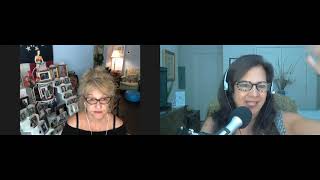
Nell Merlino relaunched Count Me In during COVID to support women entrepreneurs with a $250,000 grant initiative. She shares how to pivot: build online systems, protect cash flow, and create low-cost entry points that feed higher-tier services. She also talks about the importance of community and applying for available funding.
Questions this video answers
Created in 1993; 25 million people participated in the first two years.
Over 50,000 women from 180 countries attended.
Launched in 2000; described as the first online microlender in the world.
$250,000 total: four $25,000 grants and fifteen $10,000 grants.
19 winners were announced on July 31 (year implied 2020).
Chapters
Nice of you to say hello, everybody.
Kathy Carino here, and welcome to another episode of Finding Grave. You know how I always love to talk about how I know my guests, if I do know them. And sometimes the stories are so amazing that we've maybe connected years ago in a whole other life. And here we are, you know, in a different iteration, but still doing the stuff we love. Well, our guest today, who I'm so honored to have, Nel Merlino, is one of those. Thank you for your time. Thank you so much, Nell, for being here. So excited. So before I read you Nell's amazing bio, I just want to tell you the story of how I first saw you, Nell, if I could. So years ago, there was the More magazine convention. It was the More convention, I think it was called in the Javits Center, I think, in New York. And I had just started my business. I'd left corporate because become a therapist and just launched my business, Elliott Communication. And you were sitting on a panel discussing business growth. What we need to know, and I'll never forget, it was about the one sentence I remember of the whole convention. You said, okay, people, if you are running your own business and you're making $50,000, that is not a business. That's a job. And that's not a good job. Do you remember even saying that now?
I say it often.
Do you? And I remember being rocked because I was making less than that. And I remember being angry, but in that way that you know when you're angered, there's something there you're supposed to listen to. I was just so and so I signed up for all your stuff. And very soon after, I think, 2006. Yeah. You launched Count Me in for Women's Economic Independence. And I'm going to read you what this is. It's amazing. But it was the first microlender. What was it now?
First online microlender. You were the first online in the world, which still blows my mind.
Like, you were so ahead of your time.
Yes, yes.
And the crazy thing, in many ways, and you still are, and we have to talk about the shrine behind you, but I want to tell you people, it's kind of like Shark Tank meets whatever. So it came to Connecticut and I applied, and we had to go through a rigorous process. You had to submit your financials, your business plan, your marketing plan, and you had to get up in front of a panel and an audience and pitch your business and your vision for it. And there were six people in Connecticut.
And I was one of three that.
Won the micro to millions. And I will never forget how empowering that was to have to stand there and talk powerfully about your business and your vision before it had been hatched. So. And here we are, how many 14 years later? I'm so grateful for that opportunity now. All right, people, let me tell you about now what we're talking about, which is all about how we can grow and pivot and access capital. Women, business founders, what we need to understand. Right? So here's more about Nell. Nell created Take Our Daughters to Work Day with I can't even believe with the Ms. Foundation for Women in 1993. I mean, how many of us did that or participated? Was Incredible. In which 25 million people participated in the first two years. And Nell expanded her strategic communications consultancy to develop winning campaigns, strategies and events for dozens of clients, including the ywca, Amnesty International, Gay Men's Health Crisis, the Sierra Club, Calvert, the Sister Fund, and the NGO Forum on Women in Beijing. 95. Wow. And in 2000, you launched Count Me in for Women's Economic Independence Again, the first micro lender online microlender in the world. This grew to encompass the Women's Veterans, Veterans Entrepreneur Corp. And Make Mine a Million Dollar Business program with founding sponsor American Express and champions including Hillary Clinton, Susie Orman, Valerie Morris, and Janet Napolitano. Holy cow. Recently, really recently, you've revived Count Me In. So it's the Count Me in revival to help female entrepreneurs in the wake of COVID 19 by offering $250,000 in grants, including four $25,000 grants and 15, $10,000 grants. Wow. Thank you again for being here. So can we launch right in here? Why the revival now? What's on your mind? Why is that so critical right now?
You know, it was early September, it was early April. We'd all been inside for like two, three weeks a month. I had gone to El Paso to be with my boyfriend who lives there, and because I didn't feel comfortable being in New York. And I am working on a book and I was doing some art and I was. I was good. It was. It was weird just because we couldn't go outside and all those things. We've all experienced that. And I got a phone call from two women who had been through a Count Me in competition, like you, who were looking at doing something new around the food supply chain and how it was getting disrupted in certain parts of the country. And they wrote a guide with a couple of restaurateurs about how to pivot your restaurant in a time of COVID how to do the takeout differently, how to, how to figure out selling boxes of produce with the takeout meals, all kinds of very cool things. And the next day I get a call from a wonderful woman who I've become friendly with, who was a sponsor of Count Me in at different points in our development. And she said, what are you doing? And I said, you know, I just got this guide yesterday from these two women who were part of Count Me In. What do you think? So I sent it to her and 24 hours later she called me and said she wanted to put up a quarter million dollars to get grants, business grants going to women, because this was such a good idea. And she could see that there was a lot percolating. And as an entrepreneur herself, she started her company. Her name is Ariella Eskenazi. She runs, she has a brand called Smart and Sexy. And she is smart and sexy. And so she said that there was no one she could think of that she'd rather give the money to, to distribute it because she knew our system really worked. And I sat there, it took me five minutes to say yes because I could see the need. I was watching other friends doing like webinars, helping people apply for ppp. So I knew that there was a real need because small businesses were getting clobbered and still are. And so that's why, why we did it and how we did it. And we literally revived all these relationships. And people who had spoken at our events before talked to hundreds and hundreds and hundreds of women who had been part of Count Me In. You know, we scrubbed lists, we did all the things you do when you revive an organization. And I moved from El Paso to Santa Fe because my doctor said the only thing I shouldn't do is, is get on a plane. And my sister in law lives in Santa Fe. She has great experience in the not for profit and the small business world. So I got to do it with her and my niece. And that was also beautiful. Wonderful. Yeah. So it was my springtime of really sort of rebirth. Revival of an organization who I think once again is really needed.
What a story. Can I go back to even way before, when you launched Count Me in the first time you, you in. In our talk right before we went live, you mentioned that women sometimes, did you say, betray themselves. What led you to say, I've got to do something here? I've, you know, way back then, what, what, in 2000?
Yeah, it's a combination of things. I had been the communications director for the NGO Forum on Women that was held in Beijing in 1995. And it was an extraordinary, extraordinary experience. It's the largest single gathering of women ever held in the world before the demonstration, before the women's demonstration in 2017. But in Beijing 1995, there were over 50,000 women from 180 countries. And I ran the communications with 20 women from around the world. And what I saw were women who got there because their local micro enterprise organization had helped them get plane tickets or whatever. After a speaking program, they would be out before the rest of us and throw down these beautiful claws and all the things that had been made in their village so that they could buy their airplane ticket. Going back, it was just this wonderful, practical, we can pay our own way kind of thing. And I really did start to wonder why there wasn't a micro enterprise opportunity like this in the United States. They had been developed in Bangladesh and India and other places like that. And clearly I saw a need because I already had a business. I had created Taker Daughters to Work Day through my own business and it was growing and I really couldn't find someone to help me figure out what to do next. So it was a combination of my own needs, which I think is the reason why we all start businesses because we have an unmet need. And seeing how women around the world were doing this and the Internet had just become extremely. It was new and interesting and we didn't know enough about it. And I thought what better way to start it because the whole basis of micro enterprise had been based on geography, where you lived, as opposed to being a women business owner anywhere and needing funds. And if you didn't have an organization in your town, you didn't get any. So we made it so that you can get it anywhere. And so that was the motivation. It was a combination of an extraordinary opportunity because of Take Our Daughters to Work Day to work on this NGO forum in China, meet women from all over the world and see both what the needs and also what was working, what was helping and created something here that I think has gone on to have a huge ripple effect just in terms of how women start and grow businesses.
I love it. So, you know, you're obviously a staunch supporter of women, you're a feminist. Can I. And we were talking about, you know, my latest book, the Most Powerful youl in the Sex seven Damaging Power Gaps that I think, you know, the research shows 98% of women have one of these gaps and 75% have over three. Can I ask you your honest, candid take about what you see, holds a majority of women back from thriving at the highest level in their businesses. Do you see trends? Do you see?
The first thing that comes to my mind is, is that we don't listen to ourselves.
We don't believe.
I think it is one. I don't think it's even a question of belief. I think it is the voice is knocking and we don't even open the door. I mean, we all know, we all know from the moment we meet him or her that this is a bad boyfriend or girlfriend. We know. And sometimes we go, we get into it and we find out later what we knew the moment we met them. And sometimes we meet somebody like that, we go, ah, no, not doing that again. So I think it is a listening to yourself, a listening to yourself and because I don't think we're always right, by the way, but I think it is the most valuable piece of information that we have. And, and it is not about what we know. It's how we feel. How do these situations make us feel? And sometimes they are feelings we need to overcome. Other times they are feelings we need to act on. And that is where I think we continue to be challenged. I think men are challenged in this way as well. But I think we particularly don't first and foremost sit with ourselves and say, see, how does this feel? Do we want to do this? Do we want to make this deal? Do we want to, do we want to go down this road with this person? Because business is all about relationships. And even now when we can't see anybody, it's still all about relationships.
I couldn't.
Listen to your best friend, which is you.
I love it. I tend to say women make themselves wrong, not right. So I think sometimes we listen, but we think we don't know enough. Let me listen to that outside marketing guru. Let me, let me get more help. I don't think I know enough. And I think we tend to just second guess ourselves right out of the.
My favorite story. My favorite story.
What is it?
Favorite story, there's a job application or a contract or an opportunity, whatever it is, and a guy looks at it. And if they, they want eight things, they're looking for eight things. Experiences and competencies that you have. If a guy has two, I'm ready for the job, sign me up. A woman looks at the same application, if she has eight, she thinks she has to go back to school or to do something to get the other two before she says yes. And that has still not changed enough. It has still not changed Enough. It's a story told to me by a woman who teaches people how to fly. Women are still only 10% of all pilots in the world. And what she says is, when she teaches men, she has to get their skill level up to their confidence level. And with women, she has to get their confidence level up to their skill level.
You're nailing it. That's it.
That continues to be something that I am very aware of and attempt to make women that I work with and talk with aware of it in themselves. Because we think we have to know everything. And there's a lot in the culture that told us that. It's not like we're responding to this notion that she's not smart enough. And we're watching now with all the talk about the vice presidential pick, you know, that she's too much of this, not enough of that. Blah, blah, blah, blah, blah. You better be sure who you are and what you got, because nobody else is going to remind you of that.
Except you love it. All right, now let's talk about what you're seeing, about how women and all businesses. But let's talk, you know, let's focus on women here. How do we grow and pivot in these times? What you're seeing, a lot of businesses that have died, a lot of them are reshaping themselves. A lot of them will never be the same again. What, what are some tips for? How do we stay alive? How do we pivot? How do we make this work in these terribly trying times?
Well, I think you got to see every trying time as an opportunity. You cannot spend a lot of time lamenting the fact that we're in this, because we are. And you need to reevaluate everything. Your mission, your goals, your employees, your. You know, if you're in bricks and mortar, if you're not, how are you doing business? Because a lot of the businesses that are going out of business now are because they put off creating a robust online systems in their business so they could sell things, whether it's services or products or whatever. Everybody thought, I'll do that. Oh, the end of a lot of restaurants has to do with it. They can't. They can't. They can't sell online. They can't change their menus. They can't communicate with their customers. The restaurants that have done well had lists of 10, 20,000 customers who they could keep informed about where the pickup is, asking them, what kind of stuff do they really want. We found out that people, all these people who are eating health food now Wanted more comfort food. You know, you have to have. You were dependent on people walking in your door. Now they're not walking in your door. So how are you talking to them? So an online strategy if you didn't do one. So it's putting. So it's understanding how you're going to get customers back and how you're going to get new customers. And it's not doing anything physical. It is all online and in communication and figuring out how you communicate in this medium. I mean, we all watched something that, you know, everybody was. Was holding their breath, wondering what it would be like. That online convention last night was fabulous. There was no distraction. You got to see all the speakers. They didn't talk for too long. They didn't talk for too long because it just is not allowed in this medium. Right. It's just not allowed.
I know. I was riveted. I was. And I did. And there wasn't room for the talking heads to talk to me about. I don't need your talking head.
Right. It was beautiful. I thought it was beautiful.
I thought it was beautiful.
I liked it as much as what LeBron James did, that great high school graduation show. Similar. So beautiful. So beautiful. So I think we are at a moment where one of the women who won the competition, she's from Florida, she runs a speech therapy business for children. Her clientele was limited to a certain part. She's from Miami, certain part of town, blah, blah, blah. She has put everything that she's doing online because she had to. She now can have clients across the country.
Can I say something about that? Having left corporate, then I became a therapist, then I became a coach. You know, therapy has been. So if you ask me behind in that, you have to be licensed in your state. You can't do it remotely. Now that's changing. That is behind. Why do we have to be limited to the geographic area? I do a lot of in depth, deep work with people in career coaching and we do it on zoom. So I think to your point, we have to understand how to expand what we're doing to address today's issues. And if we don't, we're just going to die on the vine. Right.
I mean, there are half a million businesses, probably a million businesses that have already closed.
Yeah.
And it is tragic for those families and those owners on the one hand. On the other hand, we all have to understand why that happened. And I think it is a combination of a set of calamities we never could have predicted, but also that, you know, when one all the companies that depend on Facebook for their communication with their customers. What happens if Facebook goes down? Whose plan for that?
And that's. I really want to highlight that people. I've learned this. I have a very big following on LinkedIn. And, you know, I built kind of a name as a writer on Forbes. But what we have to understand is anything that you don't own, anything that you don't control could Vary. Look at TikTok. So many people are like, I have 40 million followers on TikTok. What do you mean it's going to go away? You know, if things happen, if you really rely only on an external platform, you are really handing over control. Would you agree with that?
Absolutely. You've got to have. You've got to have. Clearly, those platforms are awesome, right?
But they're going to have reach that maybe you can't on your own. All right.
But you need to keep a core set of customers close. And if, you know, depending on the size of your business. Is that 10,000? Is it 100,000? What is it? And to understand the technology that helps you manage that.
Oh, so true. Can I offer another thing to get your thoughts on, Nelson?
Sure.
There's a restaurant right where I live in Stanford that has done such an amazing job in staying vibrant, and they're doing everything you're suggesting. But one thing that I've seen, I live in an apartment building, and one day it was Taco Daddy Appreciation Day, and you could sign up for a free meal delivered to your door.
How smart.
Don't you know that they just got 100 more customers? So is there something you can talk about, about not just hunkering down and looking at, you know, what, what do I do? But also how can I be of service in a way that attracts people? Can you talk about that?
Absolutely. South LA Cafe. One of the women that applied for the Count Me In, Grant, she spoke at an event. She was not one of the finalists, but has a brilliant business going. And they had a list of 10,000 customers. They reached out to them, they let them know how to get meals delivered and all that stuff. They then turned around and started making meals and delivering them to seniors. And they came to the attention of a lot of the agencies that are responsible for seniors. So they now have a better bottom line than they've ever had because not only are they dealing with their existing customers, they now have this whole new group of customers that they pay special attention to and keep them safe and keep them fed, you know, so there are lots of opportunities to be generous and to build business.
And I feel in my heart that's how we stay vibrant. That's how we get loyalty. Not just thinking about, yes, we're in dire times, but not just thinking about yourself, but what can I do different? Differently. That's going to address a need that maybe I hadn't even thought of addressing.
Right, right. There is so much of that. All these people that are waiting and hoping for things to go back the way they were. I don't think that's happening.
I don't either.
I think we're all going to be different. It's all going to be different. I'm back in New York now. I haven't been here for five months and just looking at how dependent we are on elevators, I'm not sure how that's going to work. I luckily live on the third floor, so I walk up and down. But it's an interesting set of challenges that I think we all can solve. I think we all can solve. This is not these business challenges. While we need the PPP and whatever else the government is going to offer just to keep our employees and to do all those things, but we also need to really think through what, as humans do we want and need and how do we make that available to other humans and.
Oh, no, I love it. I'm gonna ask, you know, I love to have my guests on because I get free help.
Sure.
So I want to ask you something because I think it's relevant. Over the years I have struggled and I think some of this is not listening to myself over pricing of things. And I want to give the conundrum and I want to. Oh, good. And I want to hear. And then I want to talk about your shrine in the back in a minute.
No worries, no worries.
But I've seen something that's really helpful to me and I'd love your thoughts. For a long time, you know, I have one on one coaching. I have courses that are a little more affordable. But I would get all tangled up in what I never just wanted to work with wealthy people. I wanted to have free materials, low cost materials, higher cost. And then the premium of working together. One thing I stopped myself from doing was making one thing really available at a very low cost. And that was the visual component of my course. I finally got over myself and said, look, I already have that video. It's already passive. It's already been created and now it's available on the Udemy course platform for $13. Now the course with me, one on one for 16 weeks is much more expensive, but I adore having that one because there's a lot of five star ratings now, 150 people have taken it. But, but what I want to throw out and ask you about is do you ever see the problem where people are so fixated on well, I'm worth this an hour, or this is what the high cost has to be, or the high price that they lose amazing opportunities to make more money and be of service in a bigger way. Does that resonate with you at all?
Yes. Yes.
Any ideas about that?
It's an unending conundrum in that I know a handful of women who charge an enormous amount and they've done really well because people understand pricing and value. But it limits who is there.
Right. Who you can serve.
Right. And I go back and forth about this. I think it's very important to have some access point for people to see what's possible because particularly in the business that we are in, which is helping women grow businesses, they have to associate the advice and the stuff that they get with the money that they're making. It has to go together. You have to get that you can have these things, you know, as you, as you act on the lessons that you're learning.
Right.
I mean, that's the other side of this. I mean, people need to build coaching into their annual budgets. It's not just something that you do when you're in trouble. I talk to a business coach all the time because it's, you know, as anybody who plays a sport, I mean, you need accountability, you need somebody to sort of mirror you. You need all kinds of things. So I think it's a combination. I think it's great that you offer that course. I think you could probably get a lot of leads from that course. Think you should do a combination of things because you're not going to give everybody everything in a video that you would get in a conversation and get in regular reaction. I think there's a way to explain it.
It's working for me now because it's an access point that almost everybody can afford. But also it leads into the more in depth work. So I guess what I'm suggesting people is look at your pricing. Sometimes we have some ego attached to, well, I need to make, be making this for it to be worth my while. Take a look, take a look and.
See if you can take a look at. The other thing I take a look at is five months ago everybody was getting a lot different money for a lot of things. And I think it's also figuring out what the market will bear. Now, if you were doing live events and you're not doing live events anymore, what actually are you charging? Because it's gonna be less. But you're also not traveling, you're not getting hotel space, you're not doing a lot of things. So I think that's a hang up for a lot of people. Also, people used to get X amount for a keynote. It's now you're lucky if it's half that.
I love that you're saying that now. A lot of the experts say, no, I'm giving the same content. I'm going to charge that 20,000. Well, you're not going to probably get it right. So what are you going to do to make it worth your while? Maybe they buy a hundred copies of your new book. Maybe it's flexibility. It's not overly attaching to a particular outcome.
Oh, I would say the name of this game right now is cash flow. Cash flow. It's two words, cash flow. Do you have any really?
I love it. And you know, there's a, there's.
How are you cutting your expenses, keeping your cash flow going and paying attention to the trends in your business and pivoting and moving into whatever's hot and new? Can we New, better, different. New better, different.
And can you give us. Because you've pivoted, you yourself have pivoted.
Yes.
Can you tell us some tips about. All right, I know what I do well. People tell me, but I don't know how to do this differently. So, for instance, let me give an example. You know, I've been on zoom a long time, so it's very comfortable for me. It's not this big gorilla, right? But what people are asking is how do I interview? Virtually, for instance. So I'm doing all sorts of things. I did a Forbes virtual interview about virtual interviewing. I'm going to create new materials that address those burning questions. I'm going to look it up. So in a way that's pivoting for me. What do you suggest to women who say, I don't know how to pivot, I don't know what to do. What's the first few steps they could, they could take to. Maybe it's research, maybe it's, as you said, asking your 10,000 loyal people, what do you need most now? What. What do you think? What's a good way to help people learn to pivot in ways that they can't even imagine they need?
The question even annoys me. It's Very interesting. It's very interesting. What do you mean?
Did I ask it in the wrong way?
No, I don't think it's that you asked it in the wrong way. What do you mean? You can't pivot. You're wearing a mask. You're doing all these things differently because the circumstances insist that you behave differently to save your life. So pivoting in your business really shouldn't be that hard because you may have a system set up. If people are not buying it or they're not buying it in the way that you were packaging it, how do you do it differently? This is where you really find out your value in the marketplace. What have you attached your value to that is no longer serving you? And how do you continue to express your value and show your capabilities in a way that people are going to want to avail themselves of it? This notion that I can't pivot means you are stuck.
I mean, really, people are going to have a come to split moment listening to that, as I did when you said, if you're making 50,000, that's not a business, that's a job. And it's a crappy job, you know.
Because however you were making it, I think some of it may come back, some of it not right. And I think it's a time in our lives where. Is there something else you always wanted to do because maybe this would be the time to do that, or do you have the strength and the stamina to change what you're doing? Can you get out of your lease? Can you consolidate? Can you partner with somebody you've always wanted to partner with? When I say reevaluate everything, I am serious. Mission, goals, product, services, lay it all out. Because there isn't a business owner out there that has wanted to change half of that. Now is the time. So pivot, shmoove it. Yeah, Everybody knows how to. Everybody knows how. It's the will.
I love it. You know, when this, as a career coach, when the pandemic hit, I thought, there goes my business. Nobody cares. Nobody's going to care about career growth now. I swear I had to institute a waiting list that I hadn't had to use in a while and. But I'm not, I would say the difference is I'm listening to what their challenges are that sound different to what they were before and doing my best to address those with a book, with, you know, whatever it is. So, yeah, I think what I'm getting from your point is look at where you're attaching to things Needing to be the same.
Yes.
And that's your fears. That's not, you know, the world outside. That's you thinking that you don't have what it takes to be flexible. And you do. We know you do. We're human. We're humans. We're always adjusting, aren't we?
Or somehow that you shouldn't have to be. I'm being more of a hard ass on this because I think it is also, why should I change?
Yeah, well.
Oh, well, because you don't have to.
But.
But I would say there are a lot of those people in the morgue. Straight up. Straight up. We gotta change. This virus is bigger than all of us.
There's a very powerful statement right there. Oh, all right. We're close to the end of our time. Tell us more about how women could get funding through your count me in revival. Where do we go? What do we need to know? Tell us. Tell us.
On the countmeinrevival.org website, there is a list of current resources that are available. There are grants that other institutions and organizations are offering. So that's important. Count me in is all about everybody knowing what we know. We know that there is quite a bit of money out there. And I would say to every business owner, if you are having trouble pivoting, one of the ways to sort of start to deal with that is start filling out these applications, because it makes you sort of think through new way of doing business. So there's millions available. You got to start applying and start thinking about yourself in these contexts. I would say that there are funds for all women. There are funds for black women. There are funds for women of color. There are funds for everybody. So that's on our website. We're updating the list right now, but there's a lot of it that is still highly valuable. We are finished. We are in the middle of coaching the 19 winners that were announced July 31st. And we will be doing a program starting in October that is based on what we're learning from this 19 and how they are pivoting and what they're doing and what's working and what's not working. Some stuff doesn't work in this. And so we'll be going on. And my hope is to do some kind of a. A grant program that starts, like, January 1st so that we can start off the new year by rethinking, if we haven't already done that, rethinking our businesses so that we can apply for more grants. So that's this. This fall is all about coaching and learning and learning from the people that have gone before us. In terms of those that have already made some pretty dramatic changes in their business and seeing how this goes, I think the most important thing that Kathleen offers is, is a community of women who are regularly getting together to talk about these things. That includes how they feel, what's working, what isn't working, and what they need. Because we all got to lift each other up. This is not easy. It's not a time for complaining so much as it is a time for problem solving. And how do we solve those problems? So I would say if you want to solve problems, come to count me in. Revival.org oh, I love it.
Love it. And I can tell you people, in doing this in 2006, it was a life changing experience to be able to say, I can do this and have the confidence that you can do it and having the support that's so critical. Let's uplift each other. Let's do it. Finally, speaking of uplifting, can you talk about your shrine behind you? Tell us about that.
Sure, sure. I don't know how much of this you can see. Okay, so this is. It's a shrine. This is my Italian grandmother, my Irish grandmother over there. And I did this to honor them as the first women in my family who voted because they were. My Italian grandmother was born in 1894, so. And the other was born in the later 1890s, and they were the first people in my family to vote. And all of this, this is not all. All of the women in Congress now, but it is a good representation of. I mean, there's the first Chinese American, first Vietnamese American, the two first native American women congressmen. And I have a. I had a photo of Kamala Harris in here, and I'm doing a whole new work about her. But I do this to remind us of how much we've accomplished, how much we've accomplished in 100 years in terms of having a female speaker of the House. My favorite two pictures were the one of my grandmother. She was known as Kate Merlino and Representative Omar from Minneapolis because. Let me see.
We can't see them. Let's see.
Okay, I'm going to move this. Oh, thank you.
Oh, wow.
This. This is my Italian grandmother.
Come on.
Yeah, yeah, yeah. Beautiful picture. And look at this one of Omar, who's a recent immigrant. I think she came here when she was 12. My grandmother came when she was 13 with three. She was three years old. I love the positions of their hands.
Look at that.
And that they both have hats on. I have another one. My Irish grandmother has on a great hat. And there's a representative from North Carolina. See if I can reach it. Who wears a hat.
This is incredible.
This is my Irish grandmother, Helen McGoogan, and my mother, Molly. This is in the late 20s. And this is a current congresswoman. Her name is Alma Adams from North Carolina. Can you see this picture?
Yes.
And she has on a very similar sort of cloche hat. And she was an art teacher, and my mother was an artist. So I love the progress and the different. And I have a picture of a painting of Anita Hill here because I think she was so responsible for driving the first wave of women into.
Whoa.
First wave of women. No worries. And the last thing I want to say about this, because it cracks me up, and I think it will crack you up. When I was growing up, I went to the polls. My family was involved in politics. And you went to the polls. And there was always a bake sale, which is one of the reasons we loved going. Cause we got cookies or cake or whatever. This is a cake stand.
Oh, my God.
That's holding Nancy Pelosi and Kamala Harris and Susan Collins and all those people. And this is a cupcake stand that I had built by a vendor on Etsy because I couldn't figure out how to get enough pictures in here.
Oh, my gosh. No.
So it's. It's. It's me true to.
You know, it's so holistically, and it has so much power. I can feel power pulsing out of it along with Wonder Woman there at the top. Is that Wonder Woman.
Wonder Woman's at the top. Wonder Woman's at the top. And above her is the statue that is on top of the Capitol, which is an unnamed Native American woman.
Wow.
That is on the top of the U.S. capitol. I didn't know this, and I saw the picture, and I had to have her up there because, you know, it's. It's. It's what I have always believed is what I've always believed. The more we can see our image and ourselves, women, other women, doing great things, the more we can do great things.
And on that note, what a tweetable on Now Sophie, talk to you. Count me in again.
Found it.
So inspirational. Everyone go to this. You will link to it below. Go do it. Apply. Take advantage of this circle that's so powerful of lifting us.
We all have these circles in our.
Families, even though we don't know it. Right? It's time to figure it out. And outside of our families, there are angels waiting in the wings. Like.
Yes, I hope.
Oh, no. Thank you so much. I hope you're inspired, people. Please, please, reach out wherever you see this. Ask a question I know Nell will, or I will be happy to answer and point you in the right direction. And I really hope this inspires you. The biggest takeaway for me is we can pivot. We're human beings. Let's stop saying we can't. Let's stop breaking ourselves against. I can't make these changes. You certainly can, and you will. And it's our time to thrive now.
No better time for a woman to be a leader. No better time.
Love it. I love it. Thank you, everyone. Have a wonderful week. Thanks, now.
Bye. Bye. Bye. Next time, okay? Fun.
More from Kathy


Elevate Yourself, Elevate Others, and Amplify Good | Chris Cooper | Finding Brave Ep. 334

Finding Brave Epis #333: How Leaders Can Harness AI Without Losing Their Humanity, w/Bennett Borden

Finding Brave Epis 332- How to Stay Brave, Valuable and Visible in the Age of AI, with Raman Rai

Finding Brave Epis 331 - The Power of Positive Disruption, with Dr. Patrick Leddin


Finding Brave Epis 330 - Being 40: Letting Go and Embracing Who You Are, with Stacey Lindsay

Disrupt Career Reinvention with Kathy Caprino - via The Disruption Lab Podcast w/Patrick Leddin

Creating Neurodiversity-Friendly Work Cultures: Simple Workplace Adjustments Matter

Finding Brave Epis 329 - How To Create a Neurodiversity-Friendly Workplace, with Kristen Pressner

Finding Brave Epis. 328: Reclaiming the Power to Trust Your Own Voice, with Dr. Cindy McGovern