Finding Brave 140: Building Trust and Unity In The Workplace During Difficult Times, Laura Gallaher
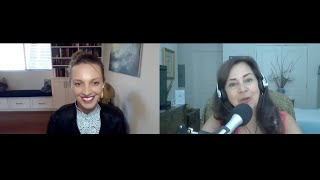
Dr. Laura Gallaher, an organizational psychologist who worked with NASA, explains how leaders can build trust when teams are fractured by fear. She focuses on self-awareness, deep listening, and paraphrasing to bridge divides, with specific tactics for remote teams in crisis.
Chapters
Hello, everybody. Kathy Caprino here, and welcome to another riveting episode of Finding Brave. We're on a roll. I've recorded quite a few in the past two days. And the joy. You've heard me say this a million times, is to have guests that I actually can learn from. It's like I'm getting consulting help and coaching help and teaching help right here while we're having a blast of a conversation. I hope you feel that, too. And today is no exception, I have the wonderful, inspiring Laura Gallagher. Oh, good grief. I blew it. Gallagher with me today. From your. You're coming from Phoenix, Arizona, right now, right?
I am at the moment, yes.
At the moment, yeah. Oh, gorgeous.
Gorgeous.
And we are talking about such an important topic here, building unity and trust in workplaces during difficult times. And, you know, it's funny that we always have to add that. I mean, we need unity and trust every minute of every day. But I think what you're going to share with us, and I can't wait to dig in, is when we're in extreme times of fear, of uncertainty, it brings out things.
Absolutely right.
So I think one of the themes might be, and you're going to tell me, that we have to be even more mindful, even more emotionally regulating than we would. Would you agree with that statement?
Yes, for sure.
We're going to learn all about it from Laura. So let me tell you about Laura. Dr. Laura Gallagher has worked in the field of professional and personal development since 2005. She's an organizational psychologist, speaker, facilitator, and executive coach. Laura is the founder and CEO of Gallagher Edge, which you started in 2013 and rebranded in 2018. This is an incredible part of your bio. Laura began her career at NASA after the Columbia exploded upon reentry in 2003. I can't believe it was so long ago.
I know. Wow. Yeah.
Where Laura and a team of organizational psychologists were hired to change the cultural influences that played a role in the accident. Wow. She worked there for eight years to positively influence culture, develop leadership capacity, and improve organizational performance at Kennedy Space Center. Wow. After then working as a talent management consultant at Walt Disney Parks and Resorts, she founded Gallaher Edge, a management consulting firm that creates transformational changes in business through meaningful and impactful human experiences. Holy crow. All right. Can I ask, you know, I'm a career coach, so I've got to. I gotta dig. Can I ask that? Those are illustrious positions. How did you. How did you even get into this? Can I ask you that? How did you get. What Was, were you interested when you were a child in psychology? And how did you land these amazing roles? Can I ask that?
Of course. So. So in high school, I think I really enjoyed playing what I thought was high school shrink to my friends, you know?
Did you? But I wasn't aware I was doing it. Were you aware?
Yeah, I mean, kind of. I really enjoyed that experience when my friends would come to me and they would be looking for help or guidance or advice and I would offer them something and then they would actually find it helpful. I found that so rewarding. So I think it was in high school that I decided I really want to understand psychology because I was given advice based on I don't even know what right at that point, high school.
Just your intuition maybe?
Intuition, maybe. So I started studying psychology. I thought I wanted to be pre med. And then. This sounds so foolish now. Then I realized, oh, wait, that's medicine.
I get sick, I have blood, forget it.
Yes. Oh. And that's true. I don't think I could stomach actual medical school. But I realized that I would much rather understand the science behind human behavior. That was really what fascinated me. And so that's more psychology versus psychiatry. And then it was about specializing. And I was very into social psychology. Like teams of people, groups of people. What happens when you bring people together? What are the variables we pay attention to? How do we prejudge one another? And I actually. My roots. I was so interested in understanding discrimination and prejudice and stereotyping. So I chose my graduate school. I was applying for organizational psychology PhD programs because I thought at the time that I would go in and really learn employment law and understand selection processes and understand diversity in organizations. That's where I started in my studies. And I was a couple years into the PhD program when I found out from one of my roommates. At the time I was, you know, I was a grad student, so I had plenty of roommates at the time that NASA Kennedy Space center was looking for organizational psychologists. And I was like, wait, what? Really? Like they actually want to hire us? So I had him as an introduction and a fellow classmate who had been. Who is this?
Can you. Can I?
Yes. I was attending the University of Central Florida, which is in Orlando, so relatively close to the Space Center.
What a gift.
Yeah, it was an amazing opportunity. And it's so funny because I was in the PhD program, they did not want me to have a full time job and NASA wanted me to work full time. And I don't think you're gonna say that I chose NASA. Yeah, sorry, I said yes to that.
Did you come in. I'm sorry, this is the career person in me. Did you come in for a short term project and then they hired you full time or they were looking for full time people and then you just interviewed for that.
So they were looking for full time people. So. Dr. Philip Mead is currently my business partner with Gallaher Edge. He still works for NASA. And he was working for NASA. He was the person that was originally asked to lead the primary culture change at Kennedy Space center following the accident and the investigation that came out. And then they said, we need this to be an ongoing function. I mean, this is something that's important for people to know about culture. It's not one and done. You don't buy a ping pong table and set. Right valleys on the wall. Ping pong table. We're good, right? We've got culture. Culture is something that leaders will want to work on constantly and actively. So Dr. Philip Mead wanted to start a function where this was the primary focus and it was called organization development. And so then he was looking to build out that team and I got to be a part of that team. It was an amazing opportunity.
Incredible. Can I ask you this? And then we're going to dig into today and culture and what, you know, was there one thing that emerged that you saw that did contribute to the accident occurring? That has to do with culture.
So culture is an emergent property. Right. And organizations are complex adaptive systems. And it's funny, you know, having worked at NASA for eight years, I noticed that I can feel almost a sense of wanting to defend the people there. Right. And the culture there by my.
You don't want the world to be blaming. Oh, you missed it.
Yeah. Well, I don't want to oversimplify. Anytime something's oversimplified, we look at that and go, what's wrong with those people? And that's one of the biggest mistakes we can make, right? I mean, psychology is meant to actually teach us how similar we all are. And so as soon as it becomes that feeling of like, us versus them or oh, those people did that, then we're really missing an opportunity to learn. So I will tell you the thing that stood out the most to me as a psychologist. What I found fascinating and what I focus on so much now in my work, as long as I had all that caveating out there first, that it's. There are so many factors at play. So for me as a psychologist, understanding that even, you know, rocket scientists, some of the literal smartest people in the world still have intrapersonal fear, not even interpersonal like between humans, but intra within themselves. They had enough fear to stop them at a certain point from speaking up as much as they would have wanted to otherwise. That blew my mind because it just speaks to how strong fear is in humans. And I know you know this look at the name of the show, right?
What, what that. Let me ask you this, and we'll tie it to today too. What I find is, and my lens is women, that our fears are. You don't pop out of the gate with these sets of fears. They're. I mean some are neurobiologically right program, but it's, it's living in a patriarchal world. It's what we had in our family. It's culture. So women, for instance, have one of the seven damaging power gaps is communicating from fear, not strength. Those gaps are what my research has shown. Would you agree with this statement? Again, we're not blaming. What, what is the point of blaming? But people will have a level of intrapersonal fear, but culture will either exacerbate that or mitigate that or treatment that.
Most definitely. Just this morning actually I was doing a session, we were talking about why transformation efforts fail. And we were speaking about this element of maturity that's part of our culture model. We work to elevate the maturity of the organization, which is all focused on self. And I got a question from a gentleman who wanted to know, but once these people are already inside your organization, you know, if they don't have that maturity, then what can you do about it? And my response was, actually there's a lot you can do about it. I want leaders to understand that, yes, you would like to select people who bring a certain level of maturity. Self awareness for sure. In fact, my dissertation focused on selection. So I'm a big believer in being intentional there. And the environment that you create for somebody can absolutely change the relationship they have with themselves, which is what this intrapersonal fear is. So yes, and I want leaders to take that responsibility very seriously.
All right, we're going to dig in, but one more question. Can I ask you this as a feminist, as someone who focuses on women? You know, these are big roles and you're also, I'm guessing at NASA, was it more male dominated in the engineering? And did you experience anything about what does this woman have to say here? Or did you experience any gender bias?
You know, maybe a one off, sort of a strange situation where somebody was commenting on my shoes? You know, there's just Kind of like the weird. Like that was an unnecessary comment. Right. But it was extremely rare for me. Yeah. The culture, I thought so it is male dominated. NASA at Kennedy Space center in particular, I think it was pretty close to 70, 30.
How do you think you managed that? You were able to feel respected and powerful and impactful and not biased against. That isn't my experience after 18 years of corporate life.
Yeah, well, so it could be misattribution on my part. So when I started working for NASA, I was 24 years old and I was told, hey, you are going to be the consultant, the internal consultant to the senior executive Service Director of engineering, which by the way is about a third of the Space Center. Go ahead. Right. And so most of my fears and my complexes I think had more to do with how young I was and I wasn't thinking quite so much about the fact that I was female.
And did the young, did the age come up, like, what do you know?
Oh, I'm quite sure that it did. And at that time too, I was, I would lean very heavily on my education and you know, the credentials that around. Absolutely. I also think that. And I'm sure you're very familiar with this masculine and feminine energies. Right. I believe that I presented with a lot of masculine energy, which can be a double edged sword for a woman in the workplace. But I feel like I came in sort of bringing as much of that masculine energy as I had and leading with that. So I would focus a ton on here's the logic and the data and the science behind the things I'm asking you to do. And at the same time, any element of what I was doing that was seen as touchy feely. It almost seemed like it helped me that I was female in that regard.
You worked it so well.
Perhaps I did, yeah.
And how do you think you even must. I think some of my, our listeners would say I don't even know how to muster masculine energy. Were you an athlete? Did you. My son and I were talking about, you know, I was a competitive tennis player and, and he said do you think that made it that you were more comfortable with that, with masculine energy? And that's hard to tease out, but I competed with against boys. I was competitive, I had no problem toughen it out. And I think it did for. I don't know if it's chicken or egg, but I was comfortable in that energy.
Yeah, that makes a lot of sense. I actually.
Are you a competitive player?
Oh, I played tennis in high school, so that was. Yeah, that's Funny.
All right.
So I think my education actually, so, you know, for me getting a PhD, there's so much focus on the science and the research. It's funny, you know, the, the program that I attended definitely talked about the program being practitioner and academia both, but it had a very, very strong academic lean. And so there was so much focus on the data and the science and actually a minimization around ideas like gut and intuition. I mean, that was almost a bad word in my educational program. So I feel like I was surrounded by. If you think about brains. Right. We used to use an instrument called the Hermann Brain Dominance Instrument.
Oh my goodness.
You know that one my clients just.
Gave me, you know, the training, I mean, assessed, assess. Oh, hbdi.
Hpdi. Right. And I was very heavy in the blue, which for anybody that's not familiar is data analysis, facts. And I really think that was my, my program. I mean they drilled it in and, and they're right. I mean, data, when you have a lot of data, it's amazing the things that you can predict now. I mean, I graduated with my PhD 10 years ago, so there are so many things now that I'm unlearning from that, which is data and science are amazing and intuition and gut are incredibly powerful and I want to learn to hone those things rather than suppress them all.
So you're moving into the red quadrant maybe?
Oh my gosh. I think so. I haven't taken the assessment since 2006. Yeah. So I feel like I have shifted. But I think that that was a piece of that more masculine energy that I brought. And I was able to communicate with these engineers and scientists at NASA using language that they understood and appreciated because I had that educational background. So I feel like that all played a role.
Fantastic. All right, now let us bring it forward to today. Can you first set a context for us about what is going wrong in cultures that you see, when you see really broken cultures that are hurting people, that are confusing people, that people don't feel included, what's going wrong? What are we seeing here?
Culture is from the inside out, like everything is. And so it's always going to start with the self. So in cultures where there's a tremendous amount of dysfunction, what you likely have is the leaders at the top of the organization have failed to do enough self awareness work and they have failed to grow in maturity. So when we talk about maturity, we're largely talking about our ability to regulate our emotions, our ability to not over identify with our work, our ability to not make Somebody else's behavior about us, that type of thing. So it's three things. Self awareness, self accountability, and then my absolute favorite thing in the world to talk about is self acceptance. That's foundational in our minds. So the ability for leaders to be able to look at themselves right now exactly as they are today, with all of their flaws and all of their imperfections and be okay with it. So not just feel confident when they're winning and doing well, but being okay with everything about how they are right now without changing a thing that is foundational to developing the maturity and everything moves forward from there. When we have maturity, it's easier for us to be respectful of people with different ideas. And that can be a different idea about how to run the project, or that can be a different idea about racism. Right. Or the pandemic. Just any sort of different opinion. If I lack that maturity, then I will be defensive in the face of a dissenting opinion. I'm going to over identify with that. I'm going to take it personally. And that conflict's not going to go well. It's either going to become hostile and personal or to avoid that because that's painful. Conversation just shuts down. And that's probably what we see more often is conversation shuts down. Those channels close up. And that was one of the problems that happened before the Columbia accident.
And you would say, because it's inside out, it's also probably top down that if you have a leader disseminating a certain kind of energy, we're all going to shut down. All right. You know, you probably don't know, but before I became a therapist, I didn't realize this, but so many of the leaders that I experienced were true. Narcissistic personality disorder. If you don't know what that people. If you don't know what that is, it's a thing. And you know, they say that 10% of the population has either narcissistic personality disorder or borderline or both. Both of those are very serious personality disorders. But with narcissism in particular. And this is not a maturity issue. This is a personality formation issue, right? Where you. They aren't accountable. And this is not to blame and you know, throw people under the bus, but this is a thing that people have to be aware of, right? Zero accountability cannot be challenged. Zero empathy. And part of that is there is no self acceptance. But it doesn't come across like that.
Right.
It comes across as 100% self aggrandizement.
Yes.
But really it's a Very fragile, broken personality system. So I do want to know from your experience when you haven't. And the crazy thing is narcissism masks as other things. It's charismatic, often it's powerful. And narcissists tend to surround themselves with people who are sycophantic and say yes, yes, yes. What? Have you seen organizations that have had a narcissist at the top or, or integral in the culture. And I'm wondering what you do when you see that.
So one of the things that I love about the work that I do is that there are really certain types of leaders who tend to hire me. Right. And so I think especially if you look at narcissism on a spectrum. Right.
Which it is. It's a spectrum disorder.
Absolutely. Anybody who's really extreme is not going to likely to want my help. Right.
So it's self selecting. You're already a filter.
Yes. I get to work with some of the coolest leaders and some of the coolest companies out there because they are the leaders who are already forward thinking. They are the leaders who understand, they understand how important culture is and they know how much the people matter. But it just starts to get away from their expertise. They just don't know how to do it anymore at a certain point and, and they choose to invest in it. So I haven't had a ton of experience with a leader at the very top who is a narcissist because normally it's the leader at the very top who's made the choice to bring me in in the first place. But I have had the experience of having people who have at least narcissistic tendencies. Right. I haven't diagnosed them myself. That's not what I do. But those tendencies on a leadership team. And what do you do? So it's always a combination of things. The first thing is how can we inspire in them a desire to create a shift. So that's not usually going to come from somebody like me. Most of the time that's going to come from the team that's around that person. If the team around that person continues to let them get away with the same behavior over and over again, then that person has very little reason to change. When that team starts to speak their truth. We call it openness or green line openness. When they are open and honest about their thoughts and feelings with that person, what's okay, what's not okay, what they would like to see differently from that person, and they all continue to do that. This person's going to eventually want to make a change. It might be that they choose to leave the team and the organization, which I've seen celebrated before, actually, or celebrate. Sometimes they actually lean in and they're able to build enough trust together that they want to make that shift. It's become uncomfortable enough for them to continue as they've been continuing. And so they're ready. They're ready to learn and grow.
I love it. All right, now let's get into. Can you tell us what. Why is there so much divisiveness? And if you want to talk about our country as a culture, have at it. But you know, clearly fear brings out so much in us. Why, from your perspective, have we become so hateful and divisive to each other? Whether you want to talk about that in an organizational, you know, in a company or our culture. Why do you think this is happening? Why do you know this is happening?
It feels like it's evolutionary tendencies that are working against us now. Right. So we have evolved to be fearful creatures. Fear is a useful emotion when it's applied in the appropriate context. You know, back in the day, fear was the thing that kept me.
Lion in the cage.
Tiger. Yeah. Like, you know, I'm not gonna pet that guy. You go ahead. I'm gonna hide behind this rock. Fear used to, you know, signal to us that there was danger. And so that survival mode, that survival mechanism is deep within us. And. And the majority of the time, we're not in environments where we're actually facing life and death. The majority of the time that's not the case. We still have this level of protective energy and it starts to get misdirected. So we start to use these survival strategies when really what we'd rather be using is a strategy to thrive. And it takes a higher order thinking. So I talk about it a lot as evolutionary autopilot override. And so there has to be a desire, there has to be intention, and then we have to know how to do it. And a lot of people don't want to lead with that. They want to stay comfortable in feeling right. And almost like my fear is my warm blanket around me. And fear does tend to bring out the worst in us. It creates an us versus them mentality. It also creates a place where we. We can be angry, and that feels powerful. There's a lot that's really scary right now in our country and acknowledging fear and having that vulnerability, I think it's exactly what we need right now. But for a lot of people, they would much rather sit in their anger or sit in their certainty. And that becomes then so divisive, because when we get rigid, all collaboration stops, Communication starts to break down, and then we have just greater and greater division.
So can I echo? What if I took the gem of what you just said? Could this be it? So I think of Brene Brown saying something like, we blame to discharge our own anxiety. If there's somebody to be mad at, I don't have to sit with how scared I am.
Absolutely.
So is that a kernel of it?
Yes, for sure.
And secondly, there's something about, you know, I'm going to use the word hatred because to me, it's been uncorked. But if, I guess if you look at history, look at the Civil War, look at. There's been a lot of divisiveness. I mean, this is not new. But do you believe that when that is encouraged at higher levels, putting other people down, demeaning other people, does it, like, uncork what's lived there and perhaps has been consciously or unconsciously pushed down? In other words, another way to say, seems to me that we evolve, but there's that ever present caveman who is still inside. I mean, that's the reptilian brain, isn't it? Right.
Yes, absolutely.
And is it that when we get scared, we just, as you said, default to that brain that's less evolved? Yes, millennial wise. I mean, we're going so far backwards.
Yeah, you know, it's. It's definitely crazy. I agree. And. But the thing is, we do have other pieces of our brain that we can lean on.
Okay, what are those?
Well, it means the prefrontal cortex. Right, Right. It's that part that gives you pause. I mean, whether it's, you know, the pause principle or everybody's generally aware, I think taking a breath, even a single breath, can be so immensely powerful because you're immediately telling your brain you're not about to die. You're not facing a growling bear right now. It's okay. And you're slowing down. And in that pause, things can start to happen up here in our prefrontal cortex. Right. That lizard brain, that's just immediate. I mean, that's the kind of thing where you're pulling your finger back from the stove before you even registered there's pain. Right. That's it. It was saving us. But the prefrontal cortex, that's what's going to get us out of survive mode, into thrive mode. So being able to pause, being able to catch your breath, being able to ask yourself, what am I telling myself right now that's getting me so worked up. Because that's the other thing that blows our minds. We're never responding to the world around us, ever. We're only responding to the story that we're telling ourselves about. What that means Always. Always, always. Which means we have a tremendous truth.
Is there?
Exactly.
No. Wasn't it Shakespeare? Nothing is. But thinking makes it so. That guy knew everything. It's the threat that you have, whether co created, created, imagined or. Yeah. All right, now let me ask this. You bring up this fantastic question. The hot topics that are on everybody's mind. Black Lives Matter. Whether it's me too or all of it. Do you believe that bringing those up, having an openness to discuss those in the workplace is a helpful thing? And how do we do it?
If it is, I do think it's really important to talk about those things. The way that I could draw an analogy is to say, let's imagine it's just you and me having a conversation and you tell me about something incredibly sad that's just happened in your life. And I decide that the best thing that I can do is be neutral and stay quiet. What would you feel in that moment?
She's not listening. Yeah, hello.
Right.
Don't you have anything to say? After I just poured out my heart.
Right. It creates a lot of negative emotion. You know, do I, do I matter what's happening here? So neutral is not neutral and. Yeah. Do I matter?
Neutral is not neutral. Tell me neutral's not neutral. What is it? It's making a judgment that I don't want to empathize with you.
It's that or so I could flip it around the other way. Imagine I'm sharing with you something I'm really excited about and I'm so happy and I'm so excited. Maybe I'm really proud of myself for something. And your response to me is neutral. Neutral facial expression. And that's also going to bring about like what? So there's just an element of disconnect. When we choose to be neutral on things where people have deep emotional responses, then we are not creating that kind of connection and community that we want to have in our culture. So to ask the question, do we want to talk about this or not? I say yes, have the conversation.
All right. We're going to get some guidance from you. How can I give a specific life example that I think illustrates this? My 96 year old mother overcame Covid but now is so weak because she's in an assisted living and hasn't moved in for. She can't really, you know, take care of herself. But when I was telling people that my 96 year old mom has Covid, do you know what they all said? Take a guess.
Oh, gosh. Something about her age.
How old is she?
Yeah.
And you know, that infuriates me. And it's to your point. And I want to explain why that infuriates me. I don't give a rat's ass what you feel I should feel.
Right.
I only want to share with you what I do feel. And I don't care if she's 148. Nobody wants to lose their amazing mother. So the fact that you insert well, you know, she had a good long life. It's so wrong. Does that sound make sense when I explain it like that? Number one, you're validating what I feel, which is I don't want to lose my mother at any point and I don't want her to suffer. Number two, your thoughts about my feelings are not relevant right now. Do you feel that's kind of the same thing we're talking about?
Absolutely. And it comes back to this idea of vulnerability. Right. Am I willing to let myself be vulnerable enough to be in touch with the emotions that you probably experience, or am I trying to help it away?
Fix it. Fix it away.
Right.
When I was in my first, you know, internship as a therapist, when I first had to do therapy in front of a team of people in a two way mirror, do you know what the biggest mistake I made was? The woman domestic violence had been really, really abused. She was crying and I got up and handed her the tissue box. The tissue box was right there between us. It didn't even occur to me. And later, that's what my supervisor said. Listen, you interrupted her crying and the only reason for that is you're not comfortable with it. And I was like, how can that be a big deal that I handed her? It's a huge deal.
It's huge. We actually talk about that with our clients too. We use that specific thing.
Really?
Yeah.
Interruption of here's a tissue or something.
Yeah. So if somebody says, does anybody have a tissue? Or can I please have a tissue? Absolutely. Help them out. But if they have not made a request, if they're not looking for you to help or guide them and you're, you know, with the best intentions, like pushing that tissue in their face, it's. It's probably that we call it a helper defense. You're trying to defend against your own discomfort. Of the feelings that are coming up for you and you mask it by saying, here, I'm helping you. Here, take the tissue.
I mean, I've lived that as a way of being for, you know, before I became a therapist. Oh my God, so much more. More. If you can stay a few minutes more, can you tell us how we can have, how we can have these discussions? Let's say Black Lives Matter or let's say someone wants to. I just interviewed a woman who's, you know, a staunch feminist and she has a shrine to the suffrage movement. And you know, everyone who's prominent today, whether that's Michelle Obama or Kamala Harris, other people, you know, have a reaction to that. What is the best way to have these conversations so people feel heard and we move forward as in unity, even if we don't agree at all.
Yes.
What do we do? What do we do?
So we talk about listening in levels. We break down this idea, and there are a lot of levels of listening, as we call them, that are rooted in our own defenses.
Defenses, yes.
Where I'm actually defending against the discomfort in me that we don't agree. And that means I'm not actually listening. It means that I'm listening to respond. So, you know, level one is, no, you're wrong. Level two is you shouldn't feel that way. Level three is let me tell you how it is. And that even that just like with the tissue example, sometimes those are done with the best of intentions. People are thinking, oh, I just need to correct this person's perceptions and that will solve everything so they won't feel.
So bad and then I don't have to watch them feel so bad.
Right. So the way to have these conversations. I'm going to go back to something you said earlier, Kathy, which is there is no objective truth when it comes to our human experiences. And so if we're having these conversations because we want to better understand each other and we want to be able to connect, then it's easier for us to let go of the idea that there's right and wrong. And it becomes I, as a human being, would like to understand what your life experience is as a human being. Right. Like at the beginning of our conversation when you were asking about my experience being a woman in a male dominated organization. I didn't really. I didn't really experience much. But you didn't try to tell me that that wasn't my experience.
You weren't paying attention.
Right, right. And you had a different experience. And so for me to let you have Your experience and be open to you sharing that with me and vice versa. That's where we get that sense of connection and community. But we have to be able to. It comes back to, do I have maturity? I'm doing this because we're missing link culture, model. We have these strands. Do I have to your new book maturity to realize that your different perspective or different idea is not a threat to my existence on this planet? If so, then I can regard you with respect even if I don't agree with you, which means I'm opening myself up to listen to what you have to say. Level four and five, by the way, is tell me more. I want to understand. And level five would be. So what I'm hearing you say and feel is. So it's that classic paraphrasing. What stops us from doing this a lot of the time is, well, I don't agree with them, so I don't want to paraphrase back. And that's one of the biggest mistakes.
We make because we're afraid we're going to blow it and say something terrible.
If I paraphrase what what you are telling me, my fear might be, oh, gosh, she's going to think I agree with her.
Oh, that.
But actually, that's not the case. I'm allowed to paraphrase back what you're saying. And you know this moment when it happens, right. When you really hear somebody and they feel heard and you're paraphrasing back and you say, is that. Is that what you're saying? And they go, yes, right. And they have that energy like, ah, okay, yes. You hear me?
I'm getting tears in my eyes like I always do. I would even say, because this is what I do, the validating back, echoing back. Even if you get it wrong, you say, am I getting it right? They will say there's something inside them that appreciates that you're trying.
Absolutely.
And they'll say, actually that part, no.
Right.
I didn't mean that. But there's not an anger if there's a legitimate trying.
Right.
But you said something I gotta hit on. You said, I can listen to you no matter how. This is what I heard you say, no matter how different your life experience, if I don't perceive a threat to my existence. I think you've just helped us nail why we're so divisive right now. I think whether you're on, you know, Republican, Democrat, conservative, liberal, I feel like we've gotten so afraid that your very belief, if it's on the Opposite side of the aisle is a threat to my existence. So, for instance, if I believe in protecting the planet, that's a literal feeling of threat. If we don't. So you can explain all you want why you don't think we need that. I can't hear. Not. I. I truly can't, because I believe in, you know, protecting the planet. But I think you've nailed it. I think we all feel our existence feels threatened. Whether that's. I want to believe in economic growth for me and you, you liberal, are taking that away from. Is that right? Am I getting it? Do we feel so threatened, our very existence?
It can be that. And it can also be on the level of, if I admit that you have a good point about this, what does that say about me? Have I been wrong all this time? Like, there's an ego sense that all of us, I think all of us have that to a degree without even being diagnosed with narcissistic personality disorder. We don't love to be wrong. In fact, we actually love to be right. Our brains reward us when we're right. So it could even just be around my own ego. Is my ego stopping me from hearing a perspective that challenges what I've been telling myself is true for, you know, two decades or however long it may be.
Can you help us? So we've talked about crises tending to bring out the extremes in a culture. Is there anything else you want to talk about and how leaders can really do the work to build a positive culture. Can you give us more tips?
I want to come back to this idea of self at the core, because I really don't think there's anything more important for a leader to be able to do. And so self care is something that's always important and especially in terms of crisis. If you're in a position of leadership and you are not managing your own stress, if you are not eating well, if you are not sleeping well, you will not be as well equipped to handle the difficult decisions, the difficult conversations. So I always want to start with that. And then the other thing that I like to say here, and this may feel like very, very conventional wisdom, is communicate, communicate, communicate. My favorite example of this. So I know we're not traveling a lot right now, but, Kathy, do you know the experience of sitting on a plane waiting, and there's some kind of delay and you're just waiting and you're not told anything? Yes, and you're not told anything. And even if the flight deck comes over, the PA system and the. They just give you an update. Even if there's not much more information, don't you still have a sense of like. All right, thank you.
Okay, I know what's going on here.
Yeah. And so too often I think that leaders lean on. Well, I told them that there's nothing new to tell, so I won't say anything. But the absence of information means that people start to make up all kinds of things. And unfortunately, fear starts to really rise up. So the other story I bring in here, the example is of that, you know, man and woman that have been married for 50 years, and she says to him, I just, I just want to know if you love me. And he says, I told you 50 years ago on our wedding day that I loved you. I'll let you know if anything changes. Right. Like, that's not. We don't work like that as humans and so continuously communicate about what's happening. And when I say communicate, I don't just mean talk at people. Listen as well. Make sure that you're giving them that chance.
And I know you had more points, but I do want to say, you know why this is what I think when the pilot won't come on and tell you the bad news? It's because they don't have the internal fortitude to deal with the feedback. I think that is what is happening. I'm not going to keep giving you bad news. I'd rather say nothing because I can't take what you bring back at me. Would you agree with that?
It absolutely can be that. Yeah. The fear of. I don't want to face that. I don't want. Mm, absolutely. Wow.
So we're at the end of our time here. Is there one more thing you want us, let's say individuals, contributors who are on teams, who. We're all leaders. I mean, I always say you can't lead anything if you don't lead your own life in these. These ways. Healthy, empowered, open, mature, self regulating, self aware. Is there anything else you can offer us all where we're struggling in a remote situations where, you know, someone asked me, can you give us some. It was a media person. Some thoughts on how do you connect with your team remotely when you've just joined the job remotely. And like to me, because I've been remote, so I've been doing this for years. It's not that different. I don't see like what I'm doing with you is not that different, as if you were sitting here, but for a lot of people it is. This creates a barrier, I guess. Can you talk about in a remote world, what we can do to each of us to build a richer, more inclusive, more safe environment. What do we do?
It has to do with intentionality. So proximity is a huge variable for amount of interaction and also our tendency to like one another. Proximity is actually a big variable in life.
If you're sitting here, I'm gonna like you more than if I'm just zooming you once every two weeks.
Yeah. And. Or be more motivated to like me. Right.
And so intentionality, neurobiology. That's something in the brain.
Yeah, yeah, absolutely. Because, you know, proximity, especially when you go back, it has to do with our tribe. Right. Who's right?
These are my people.
This.
These people are going to save me from the saber tooth. I better like them.
And the other thing, too, in the remote world, what we lose a lot of the time is the walk to the conference room before the meeting or the, you know, water cooler chat. If there's so much that happens unintentionally in the environment, people are used to being together in a space, and so it becomes a matter of I have to actually think about picking up the phone and calling somebody or what happens. I think in a lot of organizations that I would advise against is everything becomes a scheduled meeting. And usually that scheduled meeting is far longer than it needs to be. So without just passing by somebody in the hall, walking by them, or overhearing a conversation like we do in person, a lot of information generally gets passed that way, and especially the more informal kind of what's going on with you in your life and, you know, getting a feel of people. And so it's really just about intentionality. But I actually think that can be a good thing, because I don't. I think it's a mistake when organizations are relying on water cooler chat for critical information to get from one department to another. Like, wait, we're changing that process. Oh, that's good for me to know. That's gonna have. You don't want that to be water cooler chat. You want that to be the kind of thing that you've thought through when you're making decisions. Who do need to inform about this. We have a new employee coming on board. What relationships are really important for this person to build, and let's just be intentional about it. So I actually see it as a silver lining to the remote world. Let's be intentional about our communication.
Oh, I love it. And can I throw in one other tip? I have a team of four, and we do everything on slack. And what I was sharing with someone else is there are clues that come out if you want to pick them up about what the person is going through. Like, my daughter just visited from Maine and I haven't visited, seen her since Christmas. And I said, I'm gonna be off tomorrow. You know, my daughter's coming.
Yay.
When you see that kind of thing, follow up on it. Oh, how long has it been? Don't let tidbit just drop.
Right, right. Would you agree?
Because.
Absolutely.
It's text, it's Slack, it's a sauna. Stop and do what you normally would do on the way to the water cooler. Oh, you mean Julia. Wow. You know, pick up on it.
Yes.
Is that. Is that a good tip?
Oh, it's a great tip. And I'll just go one step further. If you dropped one, go back. Right. Like you said. Let's say you said that yesterday in the Slack channel and I missed it. Anybody listening right now, they might have an example. Like, oh, shoot, I did kind of let that go. Go back now. Go. Hey, you said your daughter's coming to town. How long you can pick it up. You know, recovery, I think is so important in this work. Instead of saying, shoot, I missed, I screwed up, it's too late for me. Recovery.
Oh, Laura, I could talk to you all day now. Tell us, you know, who you work with, who should reach out to you, where they reach out for more information. Tell us everything.
Well, we work with all different industries. It's a lot of stage two growth companies or really any leaders that are excited about creating the kind of culture where people love to be there. And it helps you execute your strategy. And people can find out more if they'd like, at our website, which is gallaher edge.com and it is Gallaher instead of Gallagher. You caught that earlier, before we started.
Did I say it right?
You did. So Gallaher Edge. And we also have a free membership site right now that people can join. We do like five minute videos. We know how busy everybody is, but we take these concepts like listening, defensiveness, communication, and teams. We did a whole bunch of things about virtual teamwork when Covid first hit. So we have a lot of free resources. People can join via the website as well.
You are doing such good work in the world. And you know what? I love people. This is an example of how I feel. Tell me if I'm wrong. You've connected the dots of who you really are. What interested you at 16, what you saw in the world that you were this therapist for your friends, but yet you shaped it to something that. Look at the difference that you're making. And what I love is you make a difference there in that organization and it ripples to around the world.
Oh, yeah. Thank you.
Bravo to you. It's beautiful work and I'm so happy that I've had this time with you. Thank you for being here.
Thank you for having me, Kathy.
So great people, we want to hear from you. You're going to have questions. If you don't have questions. I don't think we're doing our jobs here. So wherever you see this, LinkedIn, Twitter, Instagram, follow me on Instagram. Post your question, will you? We'll both do our best to answer it in any way we can or point you to resources. Now's the time. Now is the time, right? To build our ability, our strength, our maturity, our self awareness, our self acceptance. Because the world needs us to be that. And we need that. And our families need that. Thank you, everybody. I hope you loved it and have a wonderful week and we'll see you next time.
More from Kathy


Elevate Yourself, Elevate Others, and Amplify Good | Chris Cooper | Finding Brave Ep. 334

Finding Brave Epis #333: How Leaders Can Harness AI Without Losing Their Humanity, w/Bennett Borden

Finding Brave Epis 332- How to Stay Brave, Valuable and Visible in the Age of AI, with Raman Rai

Finding Brave Epis 331 - The Power of Positive Disruption, with Dr. Patrick Leddin


Finding Brave Epis 330 - Being 40: Letting Go and Embracing Who You Are, with Stacey Lindsay

Disrupt Career Reinvention with Kathy Caprino - via The Disruption Lab Podcast w/Patrick Leddin

Creating Neurodiversity-Friendly Work Cultures: Simple Workplace Adjustments Matter

Finding Brave Epis 329 - How To Create a Neurodiversity-Friendly Workplace, with Kristen Pressner

Finding Brave Epis. 328: Reclaiming the Power to Trust Your Own Voice, with Dr. Cindy McGovern