Finding Brave 141: So, You'd Like To Record Your Own Audiobook? Here's What To Know, with Gabe Wicks
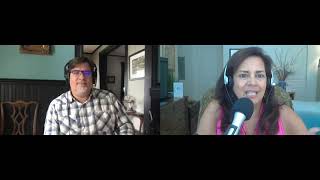
Gabe Wicks, VP of Creative Services at HarperCollins Christian Publishing, walks through what authors need to know about recording their own audiobooks. He covers the physical demands of narration, home versus studio recording, basic equipment, when to hire a professional instead, and how to protect your voice during long sessions.
Questions this video answers
September 17, 2020.
Nashville-based producer; VP of Creative Services for HarperCollins Christian Publishing.
Over 500 audiobooks per year.
About two to two-and-a-half days of studio time (with 5–6 hour sessions per day).
A four- to five-hour reading day is common for professional audiobook narrators.
Chapters
Hello everybody. Welcome to Finding Brave, the next episode. And you know, I say this every time and it sounded like a broken record, but I so love talking to my guests. Mostly because I'm learning every time, you know, I'm taking notes, I'm going back and re listening and if I am, I'm praying you are too. And today is no exception. I'm so excited and happy to have gifts. Gabe Wicks here, who was the genius behind the audiobook that I recorded with incredible help of the most powerful you. And it was such a delight and such a rewarding experience, especially as someone who's used her voice. You know, I'm a singer on the side that I had to have Gabe on the show to learn. And frankly, as I was saying, I should have done this interview with you before I did the audiobook because I'm reading the prep notes going, whoops. I didn't know how to do it. But we are talking all about, so you want to record an audiobook and what, what you need to know because it isn't just showing up at the microphone, is it, Gabe? There's a little more behind it. So thank you for being here. I'm so excited.
Thank you. Happy to be with you, Caddy.
Oh, thank you. Listen to that voice. Oh, you're a bass, aren't you? That's a bass voice.
I can't escape that. I'm a redneck bass. I don't know. That's a bluegrass that is.
But, but we women tend to not to put everybody, every woman in the same basket. But I know a lot of women just swoon over that bass. Voice over. It's just so resonant. Oh, but let me tell you about Gabe. Gabe is a Nashville based producer for over 20 years, most of that in the book industry. Currently VP of creative services for HarperCollins Christian Publishing. And currently you produce over 500 audiobooks annually. So Ann, you are a musician and a performer on the side from Nashville. Apparently you know, everybody, you know, everyone you meet is a performer or a musician of sorts. Right. Nashville is just the hub of that. I gotta get there, I gotta get there. But you know, I, I guess I probably feel like everybody's better than me, you know, even the person in the grocery store or right next to or whatever. Right.
That's the reality down here, I'm afraid.
I gotta get there. When the pandemic's over, there I am. Alright, come on, come on, come on down. All right, now talk to us about audiobooks. Now I've explained to Gabe, that a lot of listeners have thought, leadership, have a book or have a book in their mind. And, you know, an audiobook is, you know, we were talking about. Because of the pandemic, audiobooks are flying. You know, it's just. And podcasts, too. It's the way people are consuming for a lot of reasons. Gabe was talking about perhaps even escapism. How do I escape these new challenges of having my children home or caring for my elders that, you know, I'm afraid I'm never even gonna see again? And worrying about that. It is an escape, isn't it, to listen?
It is, yeah.
So tell us. Let's start first by the idea. Should I read my own audiobook? Start there for us, will you? Sure.
And I'll have to start by saying that you are more the exception to the rule than what we normally get with authors.
What do you normally do?
Well, most people that write a book think that because they wrote it, they're the ones who ought to read it. And sometimes that's true. Sometimes there is. There's no substitute for that person's voice, but they have to be good at it for it to be effective. And I think that's the thing a lot of folks don't quite understand up front is there's a whole industry out there of professional readers who might do a better job than you on that book.
What do you hear when it. When you've got a novice at this and you think, oh, oh, no, what are we doing wrong?
Well, it's more of a time thing than anything else. It's time and fatigue. So to spell it out a little bit, if I were to hire most voiced actors to read an audio book, typical book is going to take two to two and a half days to read. When I say days, I'm talking about five to six hour sessions in the studio. Had authors that got into it and realized they were in over their head pretty quickly, but at that point, they're committed. So we got to get this thing finished. And we've had seven days of sessions. We've had 10 days of sessions. It's taken sometimes three or four times what we had as a production budget initially to get it done. And what's interesting to me, every time, and I've been producing audiobooks now since about 2005, every time I've had one of those situations happen, every time at the end of it, the author usually says, man, I wish I hadn't done this, or I wish somebody had told me not to do this, or I Wish my agent hadn't talked me into doing this. You know, you get that kind of thing. And often I find, you know, they. They were a little unsure going into it if they should do it. And I. You know, what I try to tell them is if you don't have any experience behind the microphone, and if you're unsure about doing this, maybe you shouldn't do it. It's different. Someone like you who is behind a microphone every day, if you're actively doing a podcast, if you're actively doing public speaking, if you're a pastor, if you're a teacher who's behind a lectern all the time, you're going to have a more natural inclination to doing as well. And a lot of it has to do with stamina, because most of us don't think how much energy it actually takes to read and to do. To do it accurately for a very long period of time. You know, if you've never done it before, try reading a book aloud for four hours and see how you feel afterwards. It's a workout. It is a workout.
Now I have questions already. It took me, and I really want to get to the nitty gritty people. So, you know, I remember Sarah, my editor, said, and I think that I'm interested. Do you think if it weren't the pandemic, the opportunity for me to audition to do it wouldn't have even been in it. It wouldn't have happened because, you know, there are no studios that I, at that moment, I could go to.
I think it still would have happened. We are. We're doing an awful lot more with authors right now who have their own podcasts.
I see.
That's a very natural thing. You're used to doing it already, and so there's not as many surprises. I mean, I don't. It didn't take you any longer to do it than we expected. You know, in fact, I think you were a little faster, even on some of the deadlines, if I remember correctly.
I whipped it up. But I did want to say it took me two hours to do one chapter, and they were, you know, seven chapters plus the introduction. But what I don't think I could have done, Gabe, is to go in and do it for five hours like I did it on Zoom. I. If I found myself fatiguing, I could hit pause on the recording. Sure. And go, you know, have a glass of water and snap out of it. And then, you know, and then. So. So it's got to be hard for a beginner to just Power through that for five hours.
And. And just because you can. Just because you like to read personally doesn't mean you can read out loud. That's the thing.
Can you talk about that? What. What are the mistakes people are making? They can't get through a sentence without flubbing. So to say one thing before. It's one thing to know what the words are. It's another thing to have your lips do it. That's why even public speakers, or if you're about to go present, I tell people, do it out loud. Don't think it's enough to do it in here. But is that what's happening? People lips aren't making the words, or they're.
And even people who have mild dyslexia read well in their own heads, but the major. Have to do it out loud. You know, things change. I had a celebrity years ago, great guy, wrote a really touching memoir. And frankly, he's the only one that should have been reading that book. It's such a personal story. We got into the studio, and after about three hours, we'd made it about 10 pages, and it was literally every sentence. We'd stop and do every sentence two or three times.
That makes me want to cry for him.
Me too. And he was so defeated at the end of that. And, you know, four hours in, he looks at me and says, man, I just suck at this. And he did. That's the reality. He did. And I wish I could have saved him the pain of even going in there and doing that, because he left that day feeling like he just totally messed up.
Did he do it? Did he make it happen?
No. We ended up bringing somebody else in to read it, and it was fine. It worked out, and the book did well, and, you know, everybody's happy in the end, but that's one of those things that. Because he'd never done it, he had no idea what to expect. And he. He told me afterwards he does have some mild dyslexia. And I think that's what.
That's what.
That's what did it to him. And you can. You know, you can read in your. And you're reading perfectly, but the minute you have to read that out loud, word for word, all it takes is one word. All it takes is one inflection that you've kind of flubbed, and then you gotta start over and do it again.
I know it's.
It is hard work.
The other thing I think people should think about. Tell me what you think, because I'm such the novice, but when you're reading out loud. It's. It's also like you're speaking to someone, so you need the emotion that goes with the words, and you need the pauses that go with those sentences and phrases. Right, right.
And there's a timing to it. Most of us tend to want to rush it, and it's hard to make yourself step back and say, no, take a breath. Do this as if I was having a conversation with a friend. The minute that someone starts thinking they're performing to an audience and not sitting across the table from a friend, they start making mistakes.
I really should have known this before I did it. Oh, my goodness. All right.
But you did great. So, you know, you're the exception to you.
Thank you. I appreciate that. So let's talk about. And again, I do want to tell people, you know, audiobooks are really the way to go if you can do that format as well as your printed book. So seriously consider it. I know some people are kicking themselves that they don't have that format now, you know, but I guess it's not too late. We could always do it. So right now, in the pandemic, we're not zipping along, going to studios, but there'll be a time where the choice would be home or studio. Can you talk about that?
Sure. And, you know, and really, like you said, the pandemic is kind of opened this up a little bit more. We've had, you know, we've had more home recordings make their way into an audiobook in the last six months than ever. I mean, usually it's something we just. We just don't do.
Do you hear such an enormous difference?
You can. The way we've tried to mitigate it, I have the benefit of. I live about two miles from Music Row, so I'm in the middle of some of the best engineering, sonically, there is on the planet. And so I've had the benefit of being able to take raw files that are coming from people's home studios and podcast setups, that kind of thing, and then turning it over to an engineer who their day job is working with some country music artists, and they.
Can I have that. Did I have someone who is.
You got some retouching from an engineer? Yeah, yeah, absolutely. Pretty much everyone does. Everyone.
All right, okay. I'm not special in that way. All right.
But that's. That's the way to do it right now. There. There's. There are a lot of tricks right now that you can. You can do in your post production that still sweeten the Sound up that make it sound much more like you're in the studio. You still have to start with something good. You have to start with a good performance. And you have to start with something that is at least relatively quiet and is not distorted. And, you know, it doesn't sound like you've got your head under a pillow, that kind of thing. But if it's basically good, we can make it sound a lot better. And I think we'll probably be doing more of that going forward. It's the, you know, the fact that you can buy a decent USB microphone now, cheap, that can sit on your desktop and you can kind of sort of dampen your office so that you get, you know, a decent room sound, you know, that actually allows you to do this from home in a way that, you know, really no one was doing that.
See, there are some silver linings, aren't there? Maybe you can let us know and I can link to it below the equipment that you would say is absolutely essential. I mean, do you have any. Not that you have sponsors like audio, Technic, whatever it's called. Do you have, you know, you need a microphone like this. You need a pop filter. Right.
I would say don't ever buy the cheapest thing on Amazon. Yeah, that's the main thing. There are a lot of brands that are making good gear right now and you don't, you know, you don't need anything more than a good laptop and a good microphone. And the rest of it is where you put it. It's how you set that room up. It's. It's making sure it's not, you know, frankly, you don't want it sounding like I'm sounding right now. You know, I mean, I'm.
I wasn't gonna say no, I'm teasing. My dining room maybe a little echoey.
Yeah. I mean, I'm sitting in an old Victorian house with plaster walls and wood floors and, you know, got wood wainscoting on the walls. In this room, there's nothing absorbing sounding.
I see.
It's boomy, it's loud, it's echoey. You know, ideally, yeah, I'd be in a space that didn't have so many hard surfaces that had, you know, some fabric. There's a lot smaller. You know, you need to be, you know, if you can do it in something that's a decent sized closet, frankly, that's, that's ideal. Right? Yeah. I mean, if you went into a studio and you were in an isolation booth, you'd be in a space that you know rarely are they larger than 10 foot by 10 foot. Usually a lot smaller than that. And they'll have.
Is that to really protect the sound and have nothing? Yes, that's what that's about.
It's true.
Isolation rental property. It's so expensive.
Depends on where the studio is. Yeah, it's for isolation. It's so that, so that you don't hear anything outside of that space.
Wow. Interesting. Didn't know that. All right, now for again tips. So we're going through who should really do the book now. You know, as I think I didn't finish the sentence but Sarah had said my editor, you know, it's grueling. Are you prepared and you know, yes. I've been a singer and done some studio work but we all think we can do anything. I think sure. We're all like, it's not going to be grueling for me. So we're hearing about yes, it's difficult physically, it's difficult. It's just also like singing. It's exhausting. Like you've done a lap around the neighborhood in a run. It's physically tiring. Are there any other things that someone should be thinking? Why should I not do my own?
I think you need to be aware of where your fatigue level is with your voice and it's different for everybody. There are probably the best I'm going to brag on. I just got through recording a book with him a few weeks ago. Andy Andrews is one of our authors. He's. Andy was a stand up comedian for years. Now he's a motivational speaker. He's used to being up and speaking for hours and because of that he's got fantastic stamina and so we can, we can record him. We've had eight hour session days with him before where he read for eight hours, maybe a lunch break and that was about it. Very few people can do that. Most even, even your high end professional audiobook narrators. It's a four or five hour reading day.
Wow.
And at that point and what they have learned is that there's a point at which you stop sounding like yourself.
It's not like it would be okay except it's different from four hours ago. It doesn't sound like the same person.
Right. And because we're recording this long form audio that's going to go for, you know, it's going to be an 8 or 9 or 10 hour audiobook. When it's all said and done. It needs to, it needs to be consistent through the course of the three different people. Exactly. And we all do a little bit. You know, you can tell when someone has ended the recording in an afternoon and picks it up the next morning that their voice sounds a little different the next morning. As long as it's a little bit, that's okay, you know. But if you pushed yourself so hard your first session day that you started getting slurry and raspy and you're getting distorted the next morning, you're gonna sound like a different person.
Oh, wow.
It's gonna sound so different that it doesn't match up at all, which did the day before. And now you've got a day that's pretty much useless. Anything you record that day sounds so off that, you know, when you are.
In the studio with them, can you hear that and say, look, Fred, we gotta call it a day here?
Yeah, absolutely. And. And it's not uncommon when someone's kind of crossed that line that we go ahead and call it and we say, we're going to back up to wherever that chapter was we started, and we're going to start that over tomorrow or wherever the next session day is.
Can I offer a few tips, people, from a singing perspective, which is, I think, completely relevant. I have throat issues and I have to be careful. So if I have a night on the town with the girls and I have two mojitos, the next day, it is not the same voice. So if you are going to do this, avoid alcohol. Avoid. You know, I used to have a little throat reflux as well. And I remember the doctor said, here's what you got to do. No chocolate, no alcohol, no carbonation, no ginger, no chai tea. I'm like, what? What? How am I going to get through weeks doing that? So you do have to understand this is actually an instrument. So hydrate and, you know, take care of it during this period. Of course, take care of it all the time. But it's stressing. It's just. It's stressful for the poor vocal cords. And so try not to overdo it. Get enough rest too. Right.
Those are excellent tips to that. You need to not drink coffee in the morning before you do a session. It dries your mouth out. And then you get that sound that happens over and over again. And you're. Your engineer is going to keep stopping you and saying, take a drink of water because you sound like your mouth's full of cotton. One of the biggest mistakes that people make. And it's funny because we give authors lists of do's and don'ts before they do this. And one of them is, if you're going to do a morning session, don't eat a big breakfast. You eat enough that you're full. Don't eat a big breakfast, don't eat a greasy breakfast. Don't eat something that's going to haunt you for a couple hours. You'd be amazed how often, you know, people are editing around noise of breakfast.
You know, as a singer, I'm always amazed. Often I sing in a little group and right before the concert they bring in pizza and people, my colleagues are scarfing down pizza. I cannot eat five hours before I sing. So yeah, some people have a different kind of constitution and they can, but don't. Just don't do it. You know, it's just. And I'm sure they say avoid dairy as well. Isn't that right?
Yeah, it'll build up phlegm in your throat.
Right.
And so it's usually the. Honestly, the best thing you can drink anytime you're recording is hot tea.
I remember reading that and I tried, but I went back to coffee. All right, me too. Honestly, I can't get through this without coffee. Come on now. All right, now studios, you know, a lot of us, whenever we hire out help or get a new partner or whatever, we are not 100% sure what to look for. And we get kind of rooked. What are we looking for in a good studio? And maybe you can talk, even financial investment that it might be to do. Would you mind?
Yeah, there are several and I have to search up new studios frequently because often you will have an author who can't travel to Nashville or to one of the other places where we have partner studios in major markets that we use regularly. And they're all big markets. You know, it's la, New York, Nashville has several Atlanta couple out in Dallas. But you know, it's not at all uncommon. I had to find one this week in Salt Lake City, which I never had a session in Salt Lake City before, but it had these authors who for different reasons could not travel. And so when you're trying to do research on a studio, most people will just make a mistake in saying in studio is a studio. And it's not. If a studio is primarily doing music, that doesn't mean they know the first thing about doing long form audio.
Okay.
If a studio does nothing but commercials, they do a lot of. They say, oh yeah, we do voiceover, we do commercials, we do radio spots also. Not the same, completely different animal. The problem is that most studios, even if they haven't Done an audiobook, they assume it's easy. They assume that, well, yeah, we know how to, you know, we know how to do that, sure. And then you get in trouble, because if they haven't been through it before, there's an awful lot of pitfalls. You know, from a technical standpoint, there are a lot of things to this that people don't just inherently get.
Like, what would one of them be?
Well, and I'm not an engineer, but there are. There are aspects for how you have to set up a session, how you physically set up your microphone in your room, and you position your speaker so that you can come back and do it the same way again the next day so that you're not having to, you know, start from scratch. There are definitely a lot of recording techniques. There's, you know, because everybody makes mistakes as they're reading. And so there are different techniques as far as how you note those mistakes as the engineer, you know, and being able to read your talent, you know, does it make more sense if I can. If I just keep on recording that session, you've made a mistake. Does it make more sense that I just keep on going and we pick that back up later? Or do I stop you in the middle of your sentence and break your flow and say, no, go back. Go back to this sentence, start over again. And a lot of that's just having the experience and being able to read that person that you're right and knowing what's going to really disrupt them and what's going to get the best performance. So you want to look for a studio that has audiobook experience. And these days, audiobooks are becoming so prolific. If a studio has done audiobooks, they're going to advertise they've done audiobooks because they know there's a niche there. So, you know, go to their website, see if they. You know, a lot of times studios don't do a great job with websites. They put stuff on a Facebook page instead. So always look for that, too. But you want someone that's actually done audio books and not. Not just music, not just shorts, not just commercials.
Wow. And on an average book, let's say, like mine was 240 pages. Can I ask you, just so people know, what would be the price range that makes sense that a studio would charge you to do that.
It varies wildly by market. General rule of thumb is if you're in a market that's extremely large, extremely small, you're gonna pay more. You know, if it's. If you're kind of In a mid range sized market, you're gonna be in a little better place as far as pricing is concerned. You also have to look at, There can be union issues. There are towns that are much more. They go union scale on everything and you're.
It's more expensive for you.
It's more expensive. You're gonna pay more in New York, you're gonna pay more in Chicago, you're gonna pay considerably more on the west coast, particularly. You go LA and Portland and Seattle, you get into the Southeast and Texas, it gets a little cheaper. So. Yeah. But as far as, as far as how much you're gonna have to budget for it.
Yeah.
If you are a competent reader and you're gonna be able to knock this out in two or three days, your, your actual, what we call the tracking, the, the recording part of it, you should be able to do that for less than $2,000.
Wow. Okay. Writing it down.
And then if you, you know, then you add to that the editing and the mastering, all the things that go on the back end of the actual production process.
How interesting. I love it. All right, let, let us. I'm aware of our time here. Can you just tell us again? Well, here's a question people have said to me. When I say that I have an audiobook, it's you doing it, right?
They.
The feedback that you get makes you think that they will be disappointed if it's not you, the author. And that could be because I have a podcast. So many of these people are used to hearing my voice.
Right.
Here it goes. My voice is going. But what do you think about that? That here's this book you've killed yourself to write, and it's your story and you've got Sally reading it. How much of a deterrent is that, do you think?
The rule of thumb to me is how likely is your fan base to know what you sound like? If, if you are someone who is in the public eye a lot, you're on the radio, you do a podcast, you know, if people know you that way, then yeah, you should probably read it because there's gonna be expectation and they know what that voice sounds like. If they only know you through your writing, and chances are your fans don't have a clue what you sound like. There's not a whole lot of detriment, you know, for you not reading it. There's really not.
Didn't even occur to me.
In fact, it can backfire on you. You can go on audible and you can find reviews where authors pick up bad reviews. Because it turns out they're not a great reader.
That voice is horrible.
Oh, no.
What a raspy. Oh, no. I hope that doesn't happen. You know what that reminds me of is there is a very cool app called Listle. And they reached out to me, do you know it, about, I don't know, eight months ago, and said, we are now offering narrated, you know, audio versions of articles. And they said, we've done three of your articles and there's three different voices and we'd love, you know, I. It's not. They weren't good voices, but how do I want to even say didn't sound like. I don't mean it sound like me. It didn't sound like even the words I had in my mind.
Yeah, yeah. And that.
Does that make sense? It's not like I needed that voice to sound like me, so I said, I'll do it.
Well, that's why even, Even if you don't read the book yourself, you should be involved in the casting of it. Your. Your publisher should be willing to send you samples of people they're thinking about. And, and if they do it well, they're gonna find someone that kind of feels like you, you know, not. Not an impersonation. You know, we don't want people just to mimic somebody else.
No, but the warmth or the, you know, or the lilt of the. That's similar. Right.
You would never let me read one of your books.
Somebody said, you didn't have a man do it, did you? That would be absurd. You know, all about women.
But similarly, you know, you would never cast a 25 year old to read the book of, you know, a 70 year old. Yeah. And those kind of things happen. You know, it is casting it this. They are voice actors at the end of the day, and you want them to kind of be in that same lane, at least that the author would be in. But sometimes, you know, sometimes the narrator actually has their own following. I'll give you a good example. Max Lucado is still the number one inspirational author on the planet. And we've had the fortune of publishing him for a long time. And Max has not read one of his audiobooks since back when we were putting them on cassette tape. So it's been a long time.
Didn't want to do it or frankly just.
I think it's a combination of not having the time to do it.
Yeah.
And, and, and, and Max is the kind of guy who is very honest with himself and everybody else, and I think he knows that there, it might not be. He. He has a great gift for being a public speaker, but he probably doesn't enjoy being stuck in an isolation tedium.
It's tedious.
And so we've had a narrator named Ben Holland who's here in Nashville, who has been voicing Max's books now for 20 years almost. And people know Ben as the voice of Max. If they.
And they know it's not Max. They just.
And they know that. And we've even gotten a playoff that. Where there have been. We've even had interviews between the two of them that we've put on things.
Do they sound anything alike?
They both sound very kind. They both sound like, you know, that the, you know, Max gets called America's pastor. And what's funny is Ben sounds like he could be America's pastor. You know, they just. They have that same kind of wisdom and softness and warmth to their voices. Yeah.
You know what comes to mind? These people who've done this before, we all had mics in our home. They're voice actors. They're actors, and I'm sure they're being displaced. And tell me if I'm wrong, but it's very much like when people like me began writing. Well, let's say even 15 years ago, when people who were not professional writers began writing blogs, professional writers were like, what is this now? You got millions of people that, you know, I'm a professional, and they're taking business from me. And I get it. I get that point. But that's what voice actors must feel like when people like me scoop in and do our audiobooks.
Yeah, well, but they, you know, they shouldn't take it that seriously either. I mean, it's. I think there. There's a. There's healthy room for a bunch of people to be doing this. And. And, you know, I don't want to sound negative about this. There are a lot of authors who should be reading their books, and there. If they do it well, it absolutely helps that book. It absolutely helps the experience. One thing we haven't touched on is additional content, bonus material, kind of things that tell us that enrich an audiobook. And really, the author can do that unlike anyone else. You know, I try to encourage authors to go off script.
You know, I did that once. I know. I read a whole. I made up a whole phrase, and I thought, there goes that. And you said, love it.
Keep it. Keep it. Absolutely. Because that's you. That's authentic. I mean, you as an author, you've been through this process. You know, you. You Put this manuscript in front of an editor and it goes through several rounds of editorial work.
You know, that's why you almost feel afraid to go off script. But sure, I think for people like me, you're in a zone when you're doing this, just like when you're teaching or. And out comes things. Out come things. So.
And chances are the something about that manuscript now is written in a way that doesn't flow off your tongue easily. You know, it may not be the way you'd say it if you were reading it out loud. And so it's fine to make those changes. It's fine to change that language up so that it's more natural coming out of you than off the written page. And you know, fans love to hear asides. They love to hear something that.
A little special it is. That's between you and me. Yeah.
And some authors will even kind of. Kind of star that, you know, and they'll say, by the way, for my audio listeners, this is blah, blah, blah. And that. That's usually pretty robust.
Great tip. Darn it, Gabe. I should have known that.
For your next one. For your next one, we'll do this.
Bless you. Let me rest a little before the next one. Yeah, I have two more questions and I'll let you go when I know that I had to do a little audition tape. Can you. Are you so skilled at this that you can hear that and you're hundred percent right that, yeah, this person can do it, or are you.
No, I get. I get fooled. Not infrequently. I can tell if you. If you have a pleasant voice. I can tell if the pacing is natural to you. I can tell if you've got a bad lisp or if you have a problem with dyslexia or, you know, those basic things. What I can't tell is can you read for more than an hour? You know, and really you don't know that either unless you've tried.
Well, isn't that another good tip? If you people want to do it, don't say you can till you try. And even sitting down to try is, in a way, it was for me, like sitting down and writing the book. Like I was like, let me go wash the floor. Let me do another load of laundry. Like, I couldn't sit myself down in the beginning because I was creating a structure and a pace for it, which I think is very similar yourself down. Take an article, something that you've written, not, not some other, and do it. Get zoom, get your audio going and make Yourself, do it. And if it's miserable, two things. If it doesn't come out, well, yes, try again. Try three times. But if it's too hard, just, you know, let someone else do it. I'm thinking. And if it's a miserable experience, you know, like that one fellow who said, I just can't. I'm not good at it. Don't beat yourself up. We all have gifts. Does that sound right?
Absolutely. And you know, you'd be hard pressed to find many voice actors who could write a book.
Aw, that's a nice way to end it. I like it. Now we're going to hear from five of them that say, I do both. Don't put me down.
I haven't met many of them.
That's a happy note to end on. Anything else you need to tell us about? Okay, you're considering doing this. Anything else we did touch on?
I just think it's worth noting that the trend is right now for more authors to be reading, and I think that's a good thing. Not to take business away from our audiobook reading community. There's room for both because there's such an explosion of content right now. There's plenty of work out there for voice actors and there's plenty of works that should be read by the authors. I don't think that people should be afraid to try it out. Be honest with yourself. Let other people listen to what you're reading. You know, get some honest critique from people in your life who will give it to you. And if it works, great, move forward. And if not, then be active in helping find the person who should read your words for you.
I love it. Can I say one other thing? You know, as a singer, we've all. We're super spreaders, so we haven't been able to sing live with each other. So I've been a part of some virtual choirs. One of them was Eric Whitaker's 17,252 singers. And all of us who are not soloists, you know, actively, it's, can I swear my editor will bleep it out. It's hell to do a virtual. To sit there on the video and you're listening in here and you're singing. Most of us think, what am I even doing? Calling myself a singer? That is God awful. But part of it is because in that way, you're not with the others. You know, when you sing together, you're really blending. Something changes. Anyway, the point is, all of us who participated went, I had to do 10 takes. It was hideous. And then just as you get it right, the dog barks or, you know, the. And you're like. What I would say is love yourself and don't be too hard on yourself. Try this. Maybe get someone to critique it after you've given it, you know, an hour try. Maybe you can be a consultant, Gabe. And you're gonna hear from a million people. Charge something for that.
Don't post my phone number.
How do I sound on the phone? But love yourself. You know, when I listened back on some of what I did, I was like, oh, boy, that's not what I thought it sounded like. So be kind, give it a try.
Absolutely.
But get some critique too. All right, Gabe, So helpful. Where do we learn more about you?
Oh, goodness, you're so humble.
I found you on LinkedIn and you're a performer. Where can we. You're guitarist, right?
Yeah. Nothing professional.
It's, you know, can we hear something? No clips of you available.
There's probably not much out there. The one thing you could find with me, I've. I do sit on the other side of the microphone for audiobooks occasionally because it makes you a better producer. So if you want to really listen to some painful things, you can look me up on Audible. There's some things out there I've read.
And you're gonna give us a link where we can find some of that. I mean, your voice is glorious. Who wouldn't want to listen to you for hours?
Kathy, you're too kind.
Alright, so we're gonna send those links out and, you know, I'm gonna put a little plug for HarperCollins.
Thank you.
HarperCollins leadership was my publisher. You're in a different division, but you work with. Yes, it's a fantastic publisher. And you know that there's another podcast for you. You know, should I self publish or go with a publisher? And I was in publishing and I happen to adore how you get elevated by a wonderful team. Like, for me, what I thought was going to happen and how it turned out, they're just worlds apart and it's so much better. And so I'm so grateful for your help.
Thank you so much.
Thank you for being here and everybody, we hope you're inspired. Reach out, you know, you know, wherever you see this. LinkedIn, Twitter, Instagram, Facebook, Pinterest. Now, you know, write your question and we'll do our best to answer it. I'm no expert in this, Gabe is. But we encourage you to give it a try. It might be just another gift that you had that you didn't know. All right, people, hope you found this helpful and you're ready to find brave and do your own audiobook. And I will see you next time. And thanks so much, Gabe. Come back again.
My pleasure. Thank you, Kathy.
Bye.
More from Kathy


Elevate Yourself, Elevate Others, and Amplify Good | Chris Cooper | Finding Brave Ep. 334

Finding Brave Epis #333: How Leaders Can Harness AI Without Losing Their Humanity, w/Bennett Borden

Finding Brave Epis 332- How to Stay Brave, Valuable and Visible in the Age of AI, with Raman Rai

Finding Brave Epis 331 - The Power of Positive Disruption, with Dr. Patrick Leddin


Finding Brave Epis 330 - Being 40: Letting Go and Embracing Who You Are, with Stacey Lindsay

Disrupt Career Reinvention with Kathy Caprino - via The Disruption Lab Podcast w/Patrick Leddin

Creating Neurodiversity-Friendly Work Cultures: Simple Workplace Adjustments Matter

Finding Brave Epis 329 - How To Create a Neurodiversity-Friendly Workplace, with Kristen Pressner

Finding Brave Epis. 328: Reclaiming the Power to Trust Your Own Voice, with Dr. Cindy McGovern