Finding Brave 143: Are You Hungry For Happiness? Stop Emotional Eating For Good, Samantha Skelly
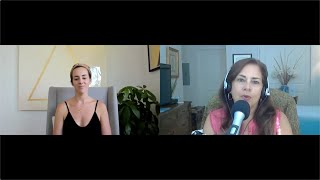
Episode of the Finding Brave podcast (host Kathy Caprino) interviewing Samantha Skelly about overcoming disordered eating and body-image issues. Samantha recounts a childhood and performance background that led to extreme dieting and an eating disorder, describes a transformative three-hour breathwork session in Bali that allowed her to tell emotional hunger from physical hunger, and explains her healing approach (reparenting, embodiment, breathwork). She founded Hungry for Happiness (2014) and Pause Breathwork (2018), runs multi-month certification programs (breathwork certification ~7 months), and released a revised book Hungry for Happiness (new edition released September 29). Practical links and a 21-day meditation bonus are offered at hungryforhappiness.com and pausebreathwork.com.
Questions this video answers
2014
2018
September 29 (new edition release date stated in interview).
Seven months long (described as the longest on the market).
Book is available at hungryforhappiness.com; preorderers receive immediate access to a 21-day food and body meditation.
Chapters
Hello, everybody. Kathy Caprino here and welcome to another episode of Finding Brave. Every week I'm just beyond pinching myself about what fun this is to talk to people that are rocking it in their own niche in a way that moves people forward. And the cool thing is I get to learn from you, you know, from each of the guests. I literally ask questions that I want to understand. And you're in for an amazing treat with Samantha Skelly today. I'm so grateful that you are here as you're about to venture off to an amazing trip and you've just made time to join me. Thank you so much for being here.
You're so welcome. Thank you so much for having me.
Can't wait. All right. 30 minutes is going to be hard for me. I'm going to go and go and.
Go and not stop.
But I want you all to know about Samantha. So let me read her amazing bio. Samantha Skelly is a seven figure entrepreneur, sought after international speaker, best selling author and wellness coaching expert. As a leading authority on disordered eating and body image issues, Samantha has made it her life's mission to empower women to overcome their struggles with food and body so they can live happy, authentic and fulfilling lives. I mean, who isn't raising their hand to want to learn more about this? Samantha's mission was realized in 2014. That's not so long ago, is it? When she founded Hungry for Happiness, a movement that helps people experience true transformation and happiness. Through trained certified coaches who utilize emotional and energetic coaching techniques, Hungry for Happiness has provided unique and accessible discovery research, pardon me, recovery resources to those suffering in silence. And in 2018, Samantha launched her second company, Pause Breathwork, with a mission to unite humanity. Makes me want to breathe. To help people breathe, feel and thrive. And your new book, which is out September 29, revised and revamped a brand new version of Hungry for Happiness. Stop emotional eating and start loving yourself. Alright girl, here we go. Can I start with this quote I saw on Amazon? I want to hear everything you want to tell us about your journey, why you did this. You know, I'm sure you've experienced everything you write about and train and speak about. But here's the quote. You know it in your heart. It's time to break free of the cycle of emotional eating from calorie restriction and binging to become who you were designed to be. It's time to stop using food to numb your pain and begin listening inward to your body's wisdom and to your highest self. All right, tell us first of all, can I hear a little bit about what you've been through and how that's informed what you're doing, Samantha?
Definitely. So I grew up as a child actress and a dancer. So my whole life I was either on a stage in front of a camera, and I can remember being 12 years old, lying in the bathtub and looking down at my body and thinking to myself like, ugh, I hate my body at 12 years old. And that was a byproduct of just having so much pressure put on my body at such a young age. You know, with being a dancer and being an actress, there is always a really intense pressure, pressure to be a certain size. And so that manifested into extreme body image issues at a very young age, which then created a really bad eating disorder at about 18 years old.
Can I ask you this? You didn't like your body because you thought it was too big?
I thought it was too fat, yeah.
I probably weighed 98 pounds or something. Right.
I remember going to school and never wearing shorts. Like, I refused to wear shorts. It would be like the hottest day of the year, 30 degrees out, and I would refuse to wear shorts because I hated my legs. I hated my legs. I just felt like I was. And I was a normal sized kid, but I was like, I looked in the mirror and I was like, I'm fat, I hate my body. I would wear sweaters over my waist and cover up my hips and I was constantly trying to cover up my body. 18 years old, I moved to Australia and I remember being on the beach in Australia and thinking to myself, I need to start dieting. I had just stopped dancing, so I need to start start dieting. So the first diet that I ever went on was the cabbage soup diet. I don't know if you're familiar with that, where you basically just eat cabbage soup in forever and you just don't. And so I ate cabbage soup for weeks and weeks and weeks and weeks on end. And I actually ended up getting in the. Being in the hospital. I was hospitalized because I was malnourished.
There's no nutrition in cabbage, is there? Just.
Just a bit of, maybe a little bit of fiber. Yeah. I think it's like fiber and then the idea is then you'll like crap it out. That's my idea. But I remember my mom doing it. And this is a common thing, right? Our daughters, we see our moms doing, whether it's the cabbage soup diet or it's Weight Watchers or it's the lemon and cayenne pepper drinking Thing, whatever it is we look at, we look to our mothers. And so my mom was on diets all the time. So I thought to myself, well, I'm terrified of getting fat, so I'm going to go on a diet. So that moment when I did the cabbage soup diet, that was the start of a four year journey which I call my diet depression years where I was on over 50 diets in less than four years. And every I didn't know how to eat like a normal person. I had no idea how to eat like a normal person. I would wake up in the morning and already be calculating calories and exercise and how much do I need to work out in order to have a. What's it called? Caloric, what's that word? Calorie deficit. And I just, there it is like tripping over my words. And so I would become. My whole life was run by numbers and body hatred and self sabotage. And I was feeling fueled by fear every single day because the worst thing in the world in my mind at the time was if I gain weight, I'm not going to be loved. So that drove me into this deep obsession which was the excessive dieting and then the addiction to food and then the addiction to restriction and then the addiction to exercise. I then became a fitness competitor because I thought, well, if I train for all these shows and I go up on a stage, then I'm going to be structured and then I'm going to be fine and all that kind of stuff. It was all coming from this place of I'm not good enough as I am. Which you know, is perpetuated in the weight loss industry. The weight loss industry is an $80 billion a year industry that is marketing to our insecurities. And so this is something that, you know, 91% of women don't like their bodies. And so because of that we fall a victim to being in this diet. Binge diet, binge diet, binge cycle. And so after I healed from that, I just made a commitment to myself like I am going to help as many people as possible with this issue.
I have questions. Can I ask a question?
Jump in.
So you know, I have been a therapist, a marriage and family therapist for some time. I don't do therapy any longer. But can I ask you what you think of this? Sometimes, you know, in my latest book I talk about you are what your childhood taught you to be unless you unlearned it and healed it. And what, what I would notice even in working with 50, 60 year olds is when you have a Wound of some sort, it seeks to fill itself and it'll fill itself in any way that, that presents itself through what you're learning by looking at your parents or your peers or whatever. Do you think that what you went through there. So I'm talking chicken or the egg here, that really there was a wound of feeling worthy and it manifested.
Oh, yeah.
So when you said when I healed it or got over it, you, you're clearly. You went inside and healed that. That had nothing to do with, I mean, it manifested itself through food. But you went back to the childhood thing, right?
Yeah, yeah, absolutely. So long I was putting band aids on bullet wounds. So for so long I was trying to heal this wound through dieting, right. If I just do it this way. I was externalizing an internal issue. I was putting a band aid on a bullet wound and I wasn't getting to the core issue. So I was staying stuck in this cycle over and over and over again. And, you know, break it.
How'd you.
Yeah, I'll share. It's like very, It's a very. It's a juicy. I broke it in three hours. And I'll share the story. So I was living in Vancouver at the time, where I'm from, up in Canada. And I was, I was seeing all sorts of, sorts of people for this issue. I was seeing nutritionists and personal trainers and everything. And every single person was using an external tool to try and fix the problem. And so I was spending thousands of dollars on coaches and therapists and blah, blah, blah, doing all of the things and nothing felt right and nothing was working truly. And I was spending more time thinking about the food, thinking about all these things. And I wasn't actually getting to the root of the issue. So not only was I not getting better, I was getting more obsess. And so at the time of this, I was reading the book Eat, Pray, Love by Elizabeth Gilbert. And she's great. And the chapter that I was reading was when she was going to Bali and she had this, she went to go see this healer. So I go to my mom and I'm like, mom, none of this stuff is working. I'm going to Bali, I'm going to go figure this out. So I booked, the next day I booked a one way ticket to Bali and I researched healing centers and meditation and all of these kind of things. And I actually researched the exact healer that Elizabeth Gilbert went to in this book. And so I jumped on the back of the scooter and we went to his house and he poked Me with sticks. And he did all these things, and he just. He said to me, he goes, your brain's broken in his broken, beautiful accent. And I was like, okay, you calm down, brain. You need to calm down your brain. I was like, you're right. I do need to calm down my brain, because I had obsessive thoughts all day long. And so I hopped back on the scooter and I went back to where I was staying in Bali. And everyone and their dog at the time was telling me to meditate, and I need to meditate. I need to go within, blah, blah, blah. And the thought of meditation and actually the act of doing it was highly uncomfortable for me. Like, it drove me into. I just felt so uncomfortable being in my body and feeling my emotions. Like, I had so much protection. So I ended up thinking to myself, you know what? I'm just going to try it again. I'm going to do a meditation class in Bali. So I search out this class and I go to this studio to take a meditation class. I end up missing the meditation class, but the next thing that's on the list is a breathwork class. And so I was like, okay, I'm going to. I'm going to just try this breathwork class. And it was a three hour class. Like, are you kidding me? Who breathes for three hours? This is crazy. So I was like, this is insane. But I'm like, you know what? I'm here. I'm at this exact place at this exact time. I'm gonna do this. So I go into the class and this guy comes up to me who. He's dressed all in white. He looks like Jesus. I'm like, he goes, are you ready to go on the ride of your life? And I was like, the ride of my life? Like, what? Like, what are you talking about?
Hey, I thought I was breathing, all right?
I thought I was breathing. And he goes, he says, just breathe in this pattern and allow yourself to feel your emotions. And I thought to myself, I have not felt anything other than numbness and anxiety for years. I don't know what you're talking about.
I'm about to cry. I have a feeling.
Yeah. So I lie down on this mat, and he tells me to breathe in this pattern. And as I'm breathing in this pattern, I start. My body starts to feel alive again. I start to feel this beautiful sense of like, oh, my God. Like this. This visceral feeling of just, like, self love. And like, this type of self love that is just completely marinates your entire body. And completely allows yourself to. I'm sorry. Can you hear those chickens?
I can't. You got chickens?
Okay, I'm gonna. I'm just gonna close, though. They're my neighbors and I swear to God, I'm gonna make chicken strips one of these days. They're so annoying.
You're going to breathe and then you're going to go. Go chop off their heads. No.
You can't hear them?
No.
Okay, great. Okay. As long as you can't hear them, then that's fine.
I can't. My editor will say, why didn't you say you can't hear him? They're so obvious.
So. So I began to feel. My body was completely marinated in this. In this life force energy. You know what people talk about of, like, feel your intuition. Feel that, like, visceral. Yes and no. Feel the aliveness in your body. Like, none of that resonated with me because all I felt was numbness and anxiety. And so I began breathing and I woke up. I say woke up because you kind of go into, like an altered state of consciousness. I had felt every single emotion that I could possibly feel. It started off with, like, this sobbing sadness, releasing all of this tension in my body. Then it went into, like, anger and rage. But I wasn't mad and angry at anything. It was just in my body that need to be released. And then once I created that clearing, I then felt excitement and a lot. And like this activation, this aliveness, this love, this joy, this bliss. And then I. Then I came back into this place of just complete, like, silence and stillness and just like, oh, my God, this feels so amazing. And so the three hours felt like 15 minutes. But in that three hours, I honestly could feel the difference between what is an emotional hunger cue and what is a physical hunger cue.
I have to understand this, but I am hearing the chickens now. Samantha, can you close the window? I don't want the chickens to interfere with your beautiful talking. Shut up.
I wonder if yelling at them helps. Can you throw like, a piece of chicken over there so they.
Oh, my gosh, that's loud.
Oh, my gosh, Kathy, you have no idea.
That's hard.
I've gone to my neighbor's house and I'm like, you guys, like, we gotta do something about the chicken.
That's loud. All right.
Better now?
Yes, please. So in what you. You said you completely viscerally understood the difference between what an emotional cue and what is it?
Yeah. So when I. When I came, when I woke up from that session, I could. I could Specifically feel the difference between what is an emotional hunger cue and what is a physical hunger cue. And so for so much of my life, I was confusing these things. I was emotionally hungry for comfort and love and validation and just. Just belonging. But I confused it with I need to eat. I need to use food as a drug in order to feel this feeling. And so with that level of visceral intelligence, we can make. We can make decisions based on what is truly meant for us. And it's just. It's so. It's such a beautiful inward journey. It's such a beautiful inward journey when we can do that.
Can you do this for me? For people listening? I do want to dimensionalize what you're saying. I've mentioned this before. I find that chocolate is that numbing thing. And because I grew up not being able to speak truth to power, I couldn't challenge my authority figures. To this day, at age 60, if something makes me mad and I don't feel I can address it, I could be in the kitchen eating chocolate in half a second without knowing. And every time now I put a piece of chocolate in, I try to stop and say, what are you really eating here? And it's usually, I'm so angry, and I feel so boxed into a corner. So I think I know what you mean. But can you give words to how the listeners can differentiate that?
How.
How do we do it?
One question I love asking is just taking a beat at the verge of a binge and asking ourselves, what am I actually hungry for? This starts with us really, truly understanding our emotional needs. So what I'm hearing from your share is you are craving expression. You are craving to be heard. You know, it's like, I just want to be heard. And if we look at the spectrum, we've got expression. And now the other side of the spectrum, we have depression. So when we suppress our expression, it creates a depression in our body, which is a suffocation, which is like, ugh. And then in order to feel a little bit of that expression, we use food as a drug. Food is the most socially acceptable drug there is. So when we're disconnected from our bodies, we don't have the knowing to understand what we're actually hungry for.
Yeah, I have a question. Actually. I think I do it when I'm angry and don't feel I can let it out because I'll be punished. I mean, it's deep because I was punished. It's so deep. I want to ask you this. Since you've studied this. I often wondered Is there something metabolic that when you eat, you actually feel more gravitas? Like it's so evolutionarily hardwired. Is it possible that we are eating actually in a way that makes our bodies feel stronger or the energy feel stronger? Is there anything about that?
So there's a lot of. In our limbic system, it's the house of memory and emotion. So if there's a really solid link between a piece of chocolate and a happy memory, we're going to go to that piece of chocolate to get the happy memory, because we haven't yet figured out, how can I create this happy memory now without any stimulus or anything from the external world? What I know to be true about breathwork and a lot of the techniques that I share in the book is we have the ability to absolutely create those visceral states in our system throughout the day. And so through, with breathwork, with intention, and really focusing on our energy, we're able to tap into the things that we're actually hungry for without using food. And so my whole philosophy on weight loss, or I like to say, weight release, is we get to understand what we're truly hungry for. We get to meet those needs at a visceral level. Therefore, weight loss or weight release becomes a result of doing that work because we're not constantly going to the food. So when we don't constantly go for the food, and we use food for health and hunger and nourish, you know, like nourishment and pleasure, when we decide, then we allow ourselves to release the weight that's on our body, because oftentimes physical weight on our body can be a manifestation of the emotional weight that we haven't yet released. And so the reason why people get stuck in the diet, binge diet, binge cycle is because we're not addressing the emotional side of this entire conversation. And so, so we're putting band aids on bullet wounds with the next diet and the next diet and the next diet while we're not addressing the core need of the body. And so when we do that, then we get to just use food for health and hunger, because food should not be complicated, but it is because we make it that way.
We make it so complicated. All right, let me ask another thing here. Did you feel like part of your journey also had to go back and look at what you didn't get as a child and find a way so, you know, what you're describing in my therapeutic way of thinking is first you have to. Greater awareness equals greater choice. You have to understand how you are using food to either hijack the unhappiness or numb yourself or feel strong. Whatever the heck you're trying to do with it, it's not working. Food is meant to, you know, fuel your body from an energetic perspective. It's not meant to be all this ye making it try to do too much.
Totally.
But I do feel that like when women come with a problem, I always attract a toxic boss. No matter what happens, I get passed over. I know it's a root. It's a root thing. And if you don't heal the root, even if you change your external behavior, you're going to have it again and again in some other way. Maybe your diet, but then you're a gambling addict or a sex addict or whatever. Do you agree with that? And did you go back and heal the wound there from childhood? Can I ask?
Absolutely. I. So my parents got a divorce when I was three and a half, four, which is a very important phase of a child's development. And so my felt sense of safety and security was compromised at a very young age. In addition to that, I internalized my dad leaving. As I'm abandoned, I'm not good enough for him to stay, stay. So there was like a belonging and abandonment wound, which, you know, I can't blame on my parents for that, but that was what happened. It's like I needed. I needed a certain type of medicine and nourishment at a very vulnerable age that I didn't get. So my needs were not met. And so I got to really understand, okay, what was it that I was missing in my development and how can I Now, as a 31 year old, reparent myself so that I could give myself the nourishment that I missed out on when I was a child? And you know, I think for people who go through this process, this is so much of what I talk about in the book and share in my teachings and my meditation is this whole idea of reparenting ourselves and giving ourselves what we need and not to blame, but take full emotional responsibility. You know, this was our path. This is what we are doing. This is, this is, you know, our soul came here at this very specific time and chose these two parents. Now we're going on this journey and however that looks, you know, and so how can we just be so. Be so honoring of the journey and know that it's not our fault, but it's our responsibility to heal it.
Oh God, Samantha. I love every word. Can I give a really quick story how I think that illustrates quickly. Yeah, you know, my mom was a stoic kind of person. And I broke my leg speaking up because I have this knee injury 40 years later from it. But it was rough for me because I was in a cast and when the cast came off it was. The leg was all shriveled and black. And I started to weep because I was an athlete. And mom, because her boundaries weren't so great, got mad at me and said, what are you crying about? It'll be fine. And my little 16 year old mind realized then, I can't really tell mom what I think. It's not safe. Now, I've never really told her that story, but she knows, you know, certain things. So here's the story I want to share. How many years later is it? At age 60 last year I was telling my sister the story and I think I've probably told her that story 20 times, but I didn't know I did. And she said to me, listen, I'm your sister, I'll listen to whatever you want to tell me. But it hurts my heart that you keep telling this story over and over. And this is what I want to tell you people. You can have an instantaneous healing. I don't know what the hell happened. That's going to be edited out. I don't know what the heck happened. But it was like a switch was flicked. It just fell out of my body. I was like, I am so sick of telling this story. I'm so sick of being that 16 year old. I'm not that 16 year old. And how much do you want to blame mom for that one half a second? And now we know. Research shows we're not even remembering it the way it probably really happened. We're remembering the last telling of it. I literally was healed done. So we can. I always say that insight doesn't tend to change your life. It's action that does, but the action that healed it is. I don't want to tell that story anymore.
So beautiful.
Although I just did. Does that resonate with anything you teach in your 100%?
So those moments for us become frozen in time. So there is a part of your system where your 16 year old was frozen in time and you were operating from her in certain situations. Not always, but in certain situations. And when we get triggered, we would go right into that frozen in time piece and then we would operate from that place. And so it's so important for us to really acknowledge the parts of us that are still immature and frozen in time and undernourished so that we can then go, let's go back to those moments and give ourselves what we really needed at that time. So yeah, this is exactly it. And you know, I, I always tell my clients this is ever evolving. Like I don't think we will ever get to a place where all of our parts are healed and we're living in complete like alignment and you know, be operating 100% from our enlightened evolved cells. I just don't, I just don't think that's, I don't think we're.
If, you know, we'd go somewhere else then.
Right? Yeah, exactly, exactly. Let's go hang out the aliens now. Yeah, but I, but, but, but this is part of the journey and the more that we do this work, the easier it gets. So one of my good friends, Chris Winfield, always says that I work hard to make my life easy. And so when we go into these parts and we heal them, it just allows everything to have more ease. You're detached from that narrative now. You're detached from that frequency. It doesn't live in you anymore. So you're not going to be thrown into your 16 year old self anymore because it's like, oh, so good, Samantha.
And also you said it. And it's part of my world. Bravery and power. Let's stop blaming poor mom. She did the best she could. It upset her to see me upset. So what, you know, okay, at 16, it was a hole, a wound. All right, 40 or whatever it is. Can you let her off the hook? And you know, I read an amazing book by Fred Luskin on forgive for good. He's a forgiveness expert. The book is amazing. But he talks about how we often take something that's done to us and make it personal when really it's not personal, it's impersonal. Mom would have done that to anyone. You know, she just, that's how she would have operated. So am I really gonna hold that in as if it's a personal thing? Let's take accountability.
What do you think? Well, we're meaning making machines and so we can make meaning around sensations that we have. So I can, if I'm experiencing a sensation of anxiety, my meaning making machine in my mind can be like, oh, you've got an anxiety because you're not good enough and you're behind and you should have done this and you should have done that and blah, blah, blah, blah, blah. Yeah, just like, you know, my partner Eric can turn his back and walk out of the room and I'm like, he's leaving because he doesn't care what I have to say or if he leaves his, you know, something on the floor. I'm like, he did that because he doesn't respect me. Right. So all day long, we're making meaning. We're making meaning around things that happen. So if we know we have the ability to create a meaning around the sensations in our system and the things that happen, why don't we create meanings in our favor? So to allow ourselves to experience more happiness and joy and bliss and ease and grace. Right. If we. If we. Yeah.
Do you find there are people in my life, whether they're clients or family members, they resist what you're saying.
Oh.
And, you know, sometimes there's personality disorders. You know, we're not all mentally ordered. You know, there's disorder. But sometimes it's. They want to blame. Because if they. If they say we're making meaning, and I can change that meaning in a way, they feel like they're letting things off the hook, that they're making a mean universe. Nice. That they're making that mean boss. And we so don't mean that, do we? When we're saying that we're not letting people off the hook, we're letting ourselves off the hook.
Really? Yeah. We're letting ourselves off the hook. Just like forgiveness, it doesn't. We're not making what that person did necessarily right. But we're freeing ourselves from, like, the hook and the grudge and the heaviness. We also are. A lot of us can be very addicted to suffering and addicted to, like, the self deprecating. Yeah. And so my body used to vibrate to the frequency of suffering and chaos. So when I did not experience suffering and chaos, guess what?
I would create it. Yeah. Uncomfortable. It's what gay Hendrix calls the, you know, the upper limit problem. Too much love, too much ease, too much wealth, too much abundance. Health. Uh, something's not wrong.
I love him. He wrote. He wrote the forward to my book.
Oh, I love him. And what a prolific writer. I have one more question, Samantha, A little off the track if. If I could ask you. I see that you certify coaches your breath work. Yeah. And your other hungry for happiness work. I would love your secret to how you really impart what you're gifted at because you've had a special journey that makes you live this in your cells. How do you certify? How do you. How do you impart? That I would love for myself. Yeah. Certification program for coaches who want to learn the amazing career project Methodology. Can you tell us how do you do that?
So people often ask me, sam, why are your certifications so long? So our brathwork certification is seven months long. It's the longest one on the market. And it's the most intense as far as like the requirements for the students. And that is because I teach embodiment for 80% of it.
You mean you have to, you have to live this in your cells?
Yes.
It can't just be spewing stuff.
Yeah. If we breath work, it's such a beautiful and intense practice that there's no way somebody can regurgitate something that they learned in my trainings and be successful. It would be. It would do a disservice to them. It would do a disservice to the work, and I would do a disservice to the kids client. So much of. We just started a new class in August and what we're doing now is just pure embodiment, like really using the breath and allowing the breath to open up our systems and heal these parts and remove the protectors. And they work with a coach, one of my mentors in the program, and they really get so detailed with the embodiment practice. And then after that, then we learn the science of breath work, how to facilitate the benefits of breathwork and all of the elements that are more tangible and external. But so much of the journey is really embodying. And same thing with the hungry for happiness, food and body coaching certification. It's the majority of the women who do the coaching certification have had a history of disordered eating. And so for the first part of that program, again, embodiment, getting them getting the work to live on their heart, not in their mind.
What I just sending you hugs and thanks because you're, you're not just keeping all this richness to yourself, you're spreading it so others can help others. I so love it. I want to take it. Oh, I want to take it. So where can. I don't want to stop talking. So come back soon. But where can people learn about you? Where can they get your book? Yeah, you know, apply to be a certified trainer. Will you tell us everything?
So the book lives@hungryforhappiness.com book and when you pre order, you will have access, immediate access to my 21 day food and body meditation. So that's your little bonus gift.
I'm going there.
And that meditation takes you through 21 different concepts of how to heal your relationship to food in your body. And it's, it's yeah, Brilliant. I love it.
I already feel so much more relaxed, and I'm not going near the chocolate. Anything else you want to leave us with?
And then everything Breathwork related is@pausebreathwork.com everything hungry for happiness related is that hungryforhappiness.com and then I'm super active on. What's that platform?
Instagram. You are. You are rocking it. I'm gonna use what you're doing and see how can I emulate. I can't thank you enough. You're such. The energy is so beautiful, so at peace.
Thank you.
You have a lot to teach at your brilliantly young age. Thank you for joining me and have an amazing trip coming up.
Oh, my gosh. I will. Thank you so much for having me on. Pleasure.
We'll see you again soon. All right, people, will you let us know? You know, you see this everywhere on all the platforms. Write us a question we'll both do our best to answer, and I'm sure Samantha will, too. We'd love to hear from you, and we'd love to be of help. All right, my friends, have a wonderful week and see you next time. Bye. Bye.
More from Kathy


Elevate Yourself, Elevate Others, and Amplify Good | Chris Cooper | Finding Brave Ep. 334

Finding Brave Epis #333: How Leaders Can Harness AI Without Losing Their Humanity, w/Bennett Borden

Finding Brave Epis 332- How to Stay Brave, Valuable and Visible in the Age of AI, with Raman Rai

Finding Brave Epis 331 - The Power of Positive Disruption, with Dr. Patrick Leddin


Finding Brave Epis 330 - Being 40: Letting Go and Embracing Who You Are, with Stacey Lindsay

Disrupt Career Reinvention with Kathy Caprino - via The Disruption Lab Podcast w/Patrick Leddin

Creating Neurodiversity-Friendly Work Cultures: Simple Workplace Adjustments Matter

Finding Brave Epis 329 - How To Create a Neurodiversity-Friendly Workplace, with Kristen Pressner

Finding Brave Epis. 328: Reclaiming the Power to Trust Your Own Voice, with Dr. Cindy McGovern