Finding Brave 145: Avoid Burnout And Create Your Own Light At The End of the Tunnel, Mitch Shepard
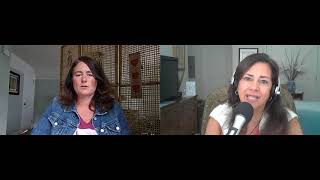
Kathy Caprino talks with Mitch Shepard about burnout and how to avoid it. Shepard took a year-long sabbatical traveling the world with her family and learned how to set boundaries and find lasting motivation instead of chasing the next finish line.
Chapters
Hello, everybody. Welcome to another episode of Finding Brave. Kathy Caprino here. So excited today to reconnect with a friend. We were just sharing how long have we known each other and how did we meet? And it's always, I think, a fascinating story. But we have today, Mitch Shepherd. And, Mitch, thank you so much for taking the time. I know it's a whirlwind time for you writing your book, and thank you.
Thanks. I was so excited to come on your show. I've wanted to come on your show for a while.
Well, here we are. All right, my friends, let me tell you about Mitch. But what we're talking about today is something Mitch and I hear about a lot, we all do, about burnout. You know, there's all sorts of kinds of different burnout now, especially, you know, in the pandemic from Zoom burnout, which is really a thing. We can Google it and find it to the other ways we're burning out. And, you know, Mitch and I are going to talk about what are the key hallmarks of it, what. What is contributing to it. And I love what Mitch has to talk about in terms of create your own light at the end of the tunnel. Just saying that makes me feel calmer. And we're going to talk about how to do that and also share with you. Mitch has done something absolutely amazing that I think so many people aspire to do, fantasize about doing. And we're going to talk all about that in a minute. But let me share Mitch's bio with you. Okay. Mitch Shepherd. And it's Michelle, isn't it? That's your. I never really knew what your full name was.
Yeah, I always like to say that Michelle is long for Mitch instead of Mitch is short for Michelle, because my parents named me Mitch and then thought, no way. After someone named Barbara Mitchell, who was a good friend of theirs, who was always called Mitch. And they thought, that's a really cool name. We want to name our daughter Mitch. But then they said just before they left the hospital, this is how they tell the story. They said, what if she resents us someday for giving her a boy name? And so they said, what could Mitch be short for? And then they proceeded to always call me Mitch, but put Michelle on my birth certificate.
My gosh, what a story. They were progressive, I think, weren't they? Even from the get go, popped out in a progressive way. I love it. All right. Mitch shepherd is an entrepreneur, mother, wife, passionate world traveler, which we're going to hear more about. An executive leader as the CEO and Chief truth teller at Human Inc. Mitch has spent nearly 20 years coaching and training some of the world's top leaders across companies such as Amazon, Microsoft, Intuit, Boeing and more. And her specialties lie in leader and manager effectiveness and inclusion. Mitch is known for her straight talk, candor, I know this to be true. And realism in the way that she approaches business challenges. There we go. That's Mitch for you. All right, let us dig in. Mitch, you are an expert at burnout, I think, and you're expert in helping leaders and managers deal with it. Tell us, what does it look like? First of all, some people, and you know, you and I work with women and men. I think a lot of people are warriors. They soldier through the tough stuff. How can they recognize that burnout is happening to them, first of all?
Oh, yeah, well, and there are some clear signs, but sometimes we're in it so much that we don't realize we're in it. So some of the signs are maybe what used to make you feel excited and energized just doesn't anymore. Maybe you're usually a pretty positive person, but you're feeling cynical or negative or maybe more easily triggered, more emotional. It can also be for those who don't emote a lot, it can be that you just withdraw, you get more quiet. You aren't feeling as social. It can feel like it just overwhelm anxiety. It can feel like heightened worry and guilt, which I think has been off the charts lately. The worry and the guilt piece from everything going on in the world with COVID with a lot of the companies we work with, I know that in some sectors there's actually a financial crisis going on, an economic crisis, but in others, they've got. They're as busy or busier. And yet all these compounding factors are happening. For those who are parents with kids, being home, you know, not having the same level of support, and it can feel like burnout, can feel like hopelessness, like it's just gonna continue to be this way. It's just the way it is. Like you said, I just have to soldier through. I just have to pull myself up on my bootstraps, put on my big girl britches and keep. Keep going. And really, that's not sustainable.
I love that description. I'd also say, as a former therapist, you know, sometimes we're going through depression. It's. It's a clinical depression. So, you know, I'm not an expert in this. You know, I no longer practice therapy. But I would say if those symptoms that you talked about hopelessness, helplessness, zero interest in what you used to be interested in. If, in fact, getting through your day parenting your children is a real chore, then it's probably time to see a therapist. Even if we want to call it burnout, and we don't want to call it depression, but. But depression does impact your ability to function at a healthy level. So what we're saying is it's very common. There's no shame in this. I mean, I don't have the latest statistics, but an enormous percentage of people feel burnt out in a way that their functioning has been impacted.
Oh, yeah.
If you feel this is you and we're speaking to you, there's no shame in reaching out to a great therapist and just having a talk or two and seeing, you know, is this something I really have to address in more proactive ways? So let's talk about if we do have that experience. And have you seen. You know, there's so much talk about the Zoom burnout, And I was just on Zoom with my friend Steve Keith in England, and I want to ask your thoughts on this, But I do feel that part of what's going on with when we say zoom burnout is that, you know, we used to be at work where when we were tired, we'd automatically get up and go get coffee. We'd go to the bathroom. We'd maybe even look out the window. We'd maybe step outside. We'd almost always do something for lunch. I mean, a lot of people have worked through lunch, but I know even as busy as I was as a vp, I would walk around the property. The problem now is we've lost those routines, and it's just like what you're talking about. Create your own life at the end, you know, create your own light at the end of the tunnel. We now have to actually artificially create them. But can you talk about what you think Zoom burnout is and what can we start doing when we feel all these things you just described?
Oh, yeah. I mean, there is a real thing, number one. And you're right, what I've been talking to people about. I've been doing countless burnout prevention talks and encouraging people to get creative about, like, before, like you said, if you were tired, you'd walk down the hall, and there were lots of little unexpected moments in our day that could kind of give us a little pop of energy. Like, maybe you have a really fun conversation with someone while you're grabbing coffee, or you run into someone in the restroom even, or, you know, someone Pops.
In your office, hey, how you doing? And tells you about their life.
Yeah, that's right. Those little interactions. So there's a couple things, and I've actually curated ideas from hearing what other people are doing, so I know I'll share an example of what I've been doing. One thing is I have built in. One thing I noticed is that there was no separation between my work day and my home day, and that before I might have a car ride home or, like, a chance to call my sister or one of my friends. I'm an extrovert. So the conversation on the way home from work energizes me. And then I'd be kind of fresh when I walked in the door. Now it's like, go from my home office right out the door to my two kids and my husband and my golden retriever, who's like, when are you going to take me for a walk? So I've had to actually get explicit with my family and say, I'm going to build in like 20 or 30 minutes. At the end of my day, it's me time. It might be that I go for a walk. It might be that I take a bath. I love to read, so for me, it's like reading something away from work. Well, another creative idea I heard recently, which I thought was very clever. A client of mine drives herself to work and drives herself home. And what that means, since she's working from home, is she literally just goes and listens to her favorite podcast or music in the morning, drives around kidless like nobody else in the car for 20 minutes. So smart. It just gives her that feeling like it marks the beginning and the end of her day. I also saw a friend of mine on posted that she walks her kids to school even though they don't really have school. They put their backpacks on, they walked around the block. I thought that was so cute and clever. And, you know, the research says that when you. In fact, when I have a big presentation my whole life, like, even though it's hard to fit it in, I try to exercise in the mornings before a big presentation because it gets your endorphins going and it gets you in a different mindset. And so I think, you know, the whole. The sitting all day long, in and out of Zoom meetings. One last thing I would just say is try walking and talking. You know, Zoom works everywhere. You could either. You can even be on video. Like, I've had some great Zoom calls where I'm like, check out, you know, I'm walking along Seattle, right now, here's the view of the Olympic mountains. Check it out, you know.
Wow.
Yeah.
Love it.
You just have to get creative. Like you can't wait for the world to go back the way that it was.
And you know what I think you're pointing out here? We humans tend not to change till we're made to change. We resist it. Right. Homeostasis. So I'm thinking about when you're talking about walking. I share custody of our beagle, our 14 year old beagle with my ex. And sometimes, you know, she's very needy. Not sometimes, she's always very needy, but she's looking at me the minute I get up in the morning. When are you going to feed me? When are you going to take me out? And there are the eyes, you know, so sometimes I even feel like I can't take a shower, you know, like she's waiting for me. But the point is, when she is here, I am a happier person because I have to go out. I have to put on clothes that are for outside. I have to be in the sun, I have to be in the rain.
So.
So the truth is, when she's not here, would you think I would do that as much? I don't. So I think what we're asking of people tell me if this language makes sense is. Yes. Create your own light. Create that. It takes discipline. And you know what you were saying about the bubble between your work life and your home life, it also takes a boundary.
Yeah, it really does.
A lot of women that I work with are perfectionistic over functioners, you know, doing more than is necessary, appropriate and healthy, trying to get an A. And their boundaries are not sufficient to say, I know you're standing here waiting for me to play with you. I so know that mom needs a little bit of a break so I can really be there for you.
That's right.
It's a boundary.
That's right.
Closing your power gaps, it takes power. It takes strength. Right, Mitch? Anything about that you want to share? How do we have that boundary? When your kids are staring at you.
Like mom, it is so hard. It's so hard. But even pre Covid our kids, when they were little, they used to say, why do you have to go for a run? Why do you have to go to the gym? Or why do we have to go to the gym once they got big enough to take them to the gym daycare, and we've just drilled into them from a very young age that we are better when we are healthy and that health Takes time. And I think the same is true even with work. I think a lot of people forget to share with the people or the pets. Maybe your pet won't have a cognitive understanding of this, but this works well with humans. Say, you know, I love my work, or maybe you don't love your work, but you can at a minimum say, it's important for me to work because it provides X, Y and Z for our family. Right? But Kathy, you hit on something which was there's this short game which is like how through this time, on a daily basis do we recharge and do we create some time like a buffer or some boundaries for us to build in things for ourselves. But I think lately I've also been talking to people about build in the longer term light at the end of the tunnel. Like, what's your bigger why, you know, what's in it for you? Working Besides the usual things, we all need to pay our rent, pay for our vehicles, pay for our food, support our families, if you've got a family, et cetera. But sometimes, like I remember when my kids were really little, the very first time I should have probably visited a financial advisor sooner than this, but I didn't. The very first time we went to a financial advisor, she was like, okay, you're not going to like this, but for this next year or two, you're going to have to do a lot of like really unfun, unsexy things. You're going to have to like get life insurance, start saving for this, get disability insurance. Maybe you want to look at elder care insurance that won't hopefully kick in for 50 more years or whatever. And it was like we were working so hard to put our money into all this boring stuff, right? It was so boring, right? And we had to create because I was just like sinking slowly, like, ugh, I'm not even getting to the fruits of my labor. And I think there's a lot of people right now feeling that through Covid and through this confinement that we're in is like, I don't even get to enjoy the fruits of my labor. I'm just working, working, working. What's it all for?
Oh, that's so right. So how can people. We're going to talk about your year long sabbatical, which is so incredible and what that gave. But how can people. I mean, I think what you're talking about is finding a way to process what's happening in our world that in, in no way would anyone invite or want, right? We're probably gonna Go back on some lockdowns in some parts of the world. And so we don't want this. We don't want to watch our elder, my mother, recovered from COVID but is now so weak she can't really take care of herself. I mean, who would have. 96 years old, can't say it without crying. Who wants this? But I think what you're talking about is building internal fuel to keep us going through this because there's something at the end that's meaningful. Is that what you're talking about?
Yeah. I think there needs to be everyday things that you can find meaning and gratitude in and then the longer term piece.
Right.
So for us, talk about the longer term, can you?
Yeah. So when I do burnout prevention workshops, I'll tell you what mine was and, and what it is now. And I'm actually readjusting. But in the burnout prevention workshops, one of the things that I do is I use that Stephen Covey quote, begin with the end in mind. And I Simply give people five to 10 minutes, depending how long the workshop is. And I say I want you to write as if it's you're writing in your journal a year from now and that it's already a year from now, and you're simply looking back at what you've accomplished, what you feel proud of, what you've learned, what in hindsight you may have done differently. If you could rewind time, which is a really interesting question. And then I have them do another exercise where I say, now I want you to look all the way forward and create your why or your what's in it for you. If on your hardest days at work you could say, you could really glom onto, this is why I'm doing this.
Right?
And there's this is why I'm doing this. That is, like, I work with companies that are in biotech, curing cancer or creating heart valve technology so people can live longer lives or creating technology so people can be more educated. Right? So there's that why, But I'm talking about the deeply personal why. And so when I usually will give a few people an opportunity to, you know, raise their hand and say, like, what's that longer why? And I hear some of the most inspiring things I hear came from poverty. I want to buy my mother a house. I hear I, you know, I was the first to graduate from college. I want to put all four of my children through college. There's the I want a boat or the nicer house on the water, or I want to Take a big trip, or I want to be able to give half my income to charity or whatever it is, but whatever is in alignment with your values. I think right now all of us need to be able to have something that we see beyond today, right? Like, it's enough to just get through today and build in that half hour for a walk or a bath or something to fill your fuel tank. But I'm talking bigger than that, you know? And for me, as you said, For 14 years, I had a dream with my husband when we were first dating. We had this what we now refer to as dream day, where we were sitting on a beach watching the sunset in December in cold Seattle, all bundled up in down jackets and sleeping bags. And it was just one of these what if, what if someday? Kind of conversations. And that conversation was, what if someday when we have kids, these kids that weren't even conceived yet, what if someday we could travel the world, right? And for 14 years, that never left us. And it acted as my light at the end of the tunnel when I was going through really rough patches at work. I have shed more tears than I could ever tell you when I created Whirl. I worked so hard, like your type A, hard driving people that you serve. Like, that's me, right? And so having that bigger dream that I had, really no idea how I was going to achieve when we dreamed.
It, I really had.
When you were dreaming it, were you thinking, it's absolutely going to happen, or were you thinking. I was thinking it's just have a fantasy.
I was thinking, it's absolutely going to happen. But I was also like, mitch. Another little voice was like, mitch, are you crazy? Why do you think this is gonna happen? How do you have the audacity to think that you're gonna be able to build a business, save enough money to go travel for a year? Like, come on. I mean, literally, my husband and I were both living paycheck to paycheck. We were both these kind of young 30s, like, Footloose and fancy free. Neither of us had saved money. We'd lived pretty adventurous lives before we met. We were not thinking about retirement. Hence the financial advisor story about, like, guess what, guys, you're gonna have to do some kind of unsexy things for the next couple years with your money. But, yeah, like, I don't know why I thought it was possible. I just. I just refused to believe that it wasn't, you know?
And what did. All right, we're gonna dig in deep. What did traveling the world with your kids say? Mean to you? What. What did it represent to you?
Well, okay, a lot of things. But one of the things that it represented to me is that I see the world as the whole world, not just like the country that we live in. And I'm very aware that we live a relatively privileged life and in a safe neighborhood, and we're around similar types of people. And Brad, my husband, and I both had done quite a bit of traveling before we met. And one of the things that I love about traveling and that he does, too, is this sense of adventure. Like, you never quite know what's going to happen. And I think that having times in your life where you never quite know what's going to happen and getting through those times builds a tremendous amount of grit and resilience and spontaneity and flexibility. And these are the things that I know make me partly what make me successful today.
Right.
And I wanted my kids, we both did, to experience the world outside the world they live in every day. I wanted. We intentionally didn't plan every bit of the trip. We intentionally went to some places, like, pretty off the grid. We did some massive backpacking trips and pushed ourselves physically to the limit, went into some, like, third world countries. And we just really pushed it because I was like, I have this quote actually over here on my board that says. I forget who said it might have been Gandhi. It says the most human thing we can do is comfort the afflicted and afflict the comfortable.
Oh, I just got a big chill.
Yeah. Like, I wanted to afflict myself and my kids and comfort the afflicted. And it was a beautiful, beautiful experience to do that.
Where did you go? Tell. Now I'm way into it here.
I'm glad I gave you.
That's always a good idea. I mean, I would follow you on Instagram and elsewhere. And there she is. And how old are your kids? Just so people can understand what you're.
Yeah. So Ben, my son, was seven when we left. He turned eight in Ireland, which I know is one of your, like, love. I saw your trip to Ireland before we left, and I was like, I'm so glad we're going there. So Ben was 7, turned 8 shortly after we left, and Addie was 11, turned 12 halfway through the trip. And so. And now they're 10 and 13. But in terms of kind of the.
Interested in hearing how they talk about it.
Oh, yeah.
Oh, my gosh. To their friends. We'll get there. All right.
So, yeah.
And actually talking about creating the thing that is going to make you Remember why you're here on this planet, that, that it's manifested in the most exciting way. And can I say one thing, Mitch, before you continue to talk?
Yeah.
I wanted to stuff this in. One of my favorite quotes in the world is from Maria Nemeth in her book the Energy of Money. And she says this. People are happiest when we're demonstrating in physical reality what we know to be true about ourselves. When we're giving form to our life intentions in ways that contribute to others.
Oh, beautiful.
Is that, is that it? I mean, that is the bible for life. Not the Bible, the guidebook. And to me, what you did is that you demonstrated who you know to be true, even though maybe you forgot it in a few years of your hard pressing corporate life. You had a life intention and you gave form to a life intention. So I just. People as a practical step, your, your exercise, Mitch, you know, what are you really doing this for? I would also frame it as when you're 96, looking back, like my mother, what do you say you have done? And if it's vague, I don't know, I want to be a nice. No, let's get more specific. And then in what ways can it contribute to others? Because that's when we're happy, when we're not just all narcissists.
No, that's right. That's especially true.
Stuff that in there because I feel like what you did is just an emblem of that.
It's true, Kathy.
Do you think so?
Well, yeah. And on that note, I mean, I'm looking right here to my side where I just read you that quote. And one thing practice we do in our house is we create. I have my six core values together as a family. We have a set of values. And ours together collectively in this trip was the ultimate manifestation of these things. Because you originally asked me what was this trip about? Like, why did you go. And our values in order are family, health, fun and adventure are kind of like on the same priority level. Helping others, gratitude team. So we really pride ourselves on like always working as a team and building wealth. And we don't just consider wealth money, we consider wealth like experiences and like life. So yeah, this is what I've got up here. Right. And when we left, before we left, what we didn't know is exactly every country we would go to, we had a pretty good sense. But what we. And we had a few flights booked, but what we knew is what we wanted the trip to be about. We wanted the trip to be about quality time As a family, giving back and helping others, we had a mantra that was, we will leave every place better than we found it in ways big and small. Like, whether that's just being kind and friendly and curious about everyone we meet or actually giving supplies to a school in a town that we go to. Or, you know. But ways big and small. We just said, like, we are visitors here. Like, how can we make every place better than we found it? So we. And it felt so good, you know, and we just. We lived that value around helping others and learning and growing and being a team. And, you know, we wouldn't have been able to have as many opportunities to be a team or to build grit had we not signed on for some pretty intense kind of backpacking experience. Experiences, for instance.
Right.
Give us some countries that you went to.
Yeah. So I like the mama and me, like, and this is good. I think this is good analogy for leaders, too, is that I kind of know the psychology of my kids, and I specifically did not want to push them too hard too fast. So the country order was very thought through, like, which continent we were going to go to when it would have been much easier and much cheaper to go one direction around the world. But I will tell you, we intentionally went to Europe first so that it could just feel fun and pretty easy. Not too many challenges. We went to Ireland, Italy, Belgium, France and Greece. Then spent like three. The first three months felt like a vacation. I call it the vacation before our travels. Then we went to Egypt and just like, whoa. Like, completely blown away. Everything about Egypt was different. Like, the first thing my son said was, we arrived at two in the morning after no sleep. You know, he's like, looking around, just kind of stunned, and he's like, do people sleep here? I mean, the innocence of it, right? It might as well have been noon or 5pm in Cairo. It was just buzzing. Anyway, so then we went Egypt and then we went Nepal. Did backpacking trip in Nepal, went to India, which was a real, like, low, high point for us. We hit a wall. Then we went from India. We took a break in the Maldives for my husband's 50th birthday.
Oh, wow.
Yeah. Then we went to China for three weeks. Winged it in China, which, by the way, I do not recommend. I could write a whole bloopers reel on China alone. Then Thailand, Bali, Australia, New Zealand. Then we went up to Africa and just got our minds blown. South Africa, Botswana, Rwanda, Zimbabwe. And then we ended the trip in South America and Chile, Peru. We did some more hiking in Peru. And then we had like a two week kind of debrief, reflection, just like, whoa. Let's just let it all sink in in Costa Rica before coming home.
What a trip.
Yeah, it was nuts.
You know what runs through my mind? A lot of things. But any I wish you could listeners could raise their hand. Maybe you'll just give me a hand raised when you where you see this on social media. I think there are so many parents that when they hear what you just said, that they were with their children and their husband for an entire year, that they don't think that they would want it or could do it. Does this make sense to you, what I'm saying?
Oh, my gosh, yes. It's the number one thing we talked about before we left, my husband and I. I mean, I'm not even kidding. I'm not even kidding. We talked at length about how we were going to manage it when we were making each other crazy. Because the last thing I wanted as a gift from this trip was a divorce.
Right.
I mean, honestly, like, I adore my husband. I'm sure many of you adore your partners. But living together 247 and the kids, I mean, yes, there were moments. I mean, we had a couple, like, epic. Like, they all turned out to be like, good building up of the relationship in the end. But like, man, we hit a couple pinnacles of like, we're facing some stuff. But we had some advice. A couple that we know had traveled with their kids to Spain or Mexico for a whole year and they said this was such good advice. They said, whatever issues you have in your relationships, they will be like in a petri dish when you travel. So do your work. So you were a therapist. You know what this means, right? Like, it's like, so Brad and I sat down and we were like, what are our issues?
Oh, my God.
And like, we need to just know.
Pre travel therapy.
It was pre travel therapy. And like, one of them, just to give you one example, one of them is, I am more on the side of like, oh, why would I get to an airport early? I'm gonna push it to the final minute. I'm all about, like, efficiency and like, why would I spend an hour sitting in an airport when I could spend one more hour doing something else? Well, he's, he, he, he's like, I feel anxious when we are pushing the limit. So that was a place where I gave. I said, you know what? What I don't want. We're gonna fly a lot. I don't want to put you In a position to feel anxious all the time. So what, what do you need? He's like, I would like when we're doing international flights to be at the airport three hours early. Which sounded like complete overkill to me. But we learned quite quickly it's not because, yeah, sometimes international situations, it's like all sorts of things. So now that's a simple example. That one was an easy fix. Some things not as easy to fix, but no, we did great. You know what? We were all worried about making each other crazy. But we fell more deeply in love, all of us. Like we were a unit. We were a unit. You just get used to it. You just get used to it. Like, in fact, one of my saddest things coming home was like, I missed my kids.
Like they would.
They're back with their neighbor friends, they're running down the street playing. I would go three or four hours without seeing my son and I'd be like, it's so good. I'm so happy he's back with his friends. But I was also sad.
I mean, who can't relate to this? Even Covid wise, I'm living next door in the bedroom next door to my son, who is going to move out with his friend soon. But it was a Covid related, let me live with here with mom. I'm going to miss that person so much. I mean, but. And this is where there are silver linings to things. I mean, having that chance to be in really the fabric of his life as an adult. Whenever would we do that? I know you created that. You purposely created that something that others would say. It sounds really good, but I think I would have a nervous breakdown.
That's what everybody says. It's so funny. You nailed it. That's what everybody says. But what we took to calling it. About halfway through the trip, I had this realization. I looked at Brad. I said, you know, this is almost like our year of pre tirement. We called it our year of pre tirement but this time. And we don't. When we retire, we won't get to retire with our kids. This is like our year of pre tirement with our kids. It's like, it's like I feel like I stole time with them in the best of ways, you know, and they.
They dematriculated from school. They. So they didn't. Were you homeschooling them too, or the trip was the school. I mean, were you trying to.
Mostly the trip was the school. We do not claim to be great homeschool teachers. Don't Nobody email me and be like, I could really use some homeschool tips, because I'm gonna tell you, like, so could I.
Did you try? Was there?
Yes, yes, we tried. And it's sort of like what a lot of people are probably experiencing now. Kids don't really want to be taught by their own parents. And so what we discovered was what we could keep up on really pretty easily was we had them journal about all the experiences they were on. So they kept up with their writing, spelling, things like that. And they read like crazy because we'd be on long road trips and airplanes and hostels and things like that. So reading and writing was easy to keep up. Math, we tried to do, you know, Khan Academy, which I'm sure many of your listeners know about, but we had spotty service. We'd get in the groove for, like, a week, and then we'd be somewhere completely away from any kind of signal. And so at some point, about halfway through the year, we just. We had a conversation because it was causing me in particular, a lot of stress. I was very worried about the kids falling behind. And I said, you know what? I don't want to fight with the kids about homeschooling. I don't want this to be a center point of this trip. We are learning so much. It feels like a shame to me to feel worried about this, you know? And I said, can we just promise each other so that I can let this go? Can we just promise each other that we will do whatever it takes to get our kids caught up when we get home this next summer? And if we can promise each other that no matter how much money it takes, no matter how many tutoring hours it takes, no matter how much of our own time sitting with Ben or Addie it takes, we will make it right. And guess what? This might be a good message for everybody. Ben did about six weeks, seven hour and a half of math tutoring per week. Killed it in fourth grade. He was not behind. Like I said, sadly, kids don't learn as much in school as we think they do. They can miss a year. Yeah. They can catch up.
There's so much I want to pull back for a minute, and I'm sure of our time, but there's so much I want to, from a deeper perspective, highlight Mitch, if I could.
Sure.
I want to roll back to when you said, as a. As a family, here are our values. We could stop this recording there. And people are going to learn a lot. I think that the people that I know and I work with Thousands. And I was one of them. We're working so hard and spending so much time that I think it's very infrequent that most of us pull the viewfinder back and say, let us look at what we're doing here. What matters to us, but what matters to me, Elliot, What? My son. What matters to you? And then talk about it and dimensionalize it and create a team unity feeling around that. I mean, I think leaders need to understand this. Everyone on the planet needs to understand this, because you are going to live out your values in some way, but if you don't do it consciously, you're going to betray your values. I feel so. I think that's absolutely incredible. The second thing is, who's ever sat down with their husband before a trip and said, let's. Let's talk about where we know this is going to get hung up. Like it's about the travel. That's funny. My ex was. Let's get there two minutes before. I mean, I would. I'd run through the airport with him as they're closing the gate. And my high blood pressure. I would have to recover, you know, for three days. But I don't think we ever said, this is not going to work unless we meet each other halfway. We just bumped up against each other with that constantly.
That's right.
So that's number two. Look, I get you. You get me. I'm not going to make you wrong. I'm going to say that if we don't meet halfway, it's going to be really not happy. So let's. Can we meet halfway? That's another amazing takeaway. Can I also emphasize a third thing that you haven't brought up? But I know it's in your cells.
Sure.
Who was it? I interviewed. Oh, my gosh. Famous actor from. What's the movie? Pretty in pink. Andrew McCarthy.
Okay.
Gorgeous. You know, I had the biggest crush on him when I was 18 and he became a travel writer, and I went to see him speak in my town, and. And what he said there was basically, if you look at the percentage, I don't know if this is true now, but I think so. Percentage of Americans who have passports versus any other, you know, industrialized country. We were out of it.
Yeah.
Americans are insular in general. And of course, now nobody's traveling. But what I have found in traveling in a lot of places, Europe, the Caribbean, Malaysia. Your mind is blown.
Yeah.
Unless you're going to McDonald's for dinner, unless you're only bringing, like, I know people that I don't want anything different. So I'm gonna seek out Starbucks and McDonald's. But if you immerse yourself in a culture, your mind is gonna be blown. That's all. I don't even know how to describe it. Every thought you had, every impression you had, every judgment you had. And I think that's the gift of travel, that we truly become empathic for the plight of others or the life of others that we get out of. Our dumb ass editor will cut that out, you know, our little limiting beliefs. And we'll also see. You know, as a therapist, I used to come home and say, I don't have problems. I just sat through rape, incest, pedophilia, suicidality, drug addiction, attempted murder. What is my problem in life?
Yeah.
You see things that are so important to see as a human.
That's right.
Do you agree with that?
Oh, my gosh, yes. I mean, we called it, like, you know, raising global citizens. And I can't even tell you, like, it'll bring me to tears. Like, just some of the stuff that we saw. And seeing how my kids reacted. And when we came home, like, I'll never forget this moment when we came home. We'd probably been home, like, one or two weeks, and we were. We left the house, that's another thing, untethered. We had sold everything we owned, so we didn't have a house to come back to right away. So we're staying down the street with the neighbor who was gone for a couple weeks. And we were in their backyard, and my son looked up at their house, and he's eight, right? Or I guess he. Yeah, he was eight still. He hadn't turned nine yet. And he looked up and he goes, mom, we look at this house, he's like, look at the wood.
Look at this glass.
Look at this. Look at the brick. Look at that kitchen. He's like, that kitchen, mom, is the same size as the houses we went into in Rwanda. Just their kitchen. And it's like I just gave him the biggest hug. And in that moment, I mean, there's a hundred other moments similar to this, but that was a moment where I thought, absolutely, like, the gratitude, the perspective. My kids don't have the same view of the world. Neither do I. I can't go into a grocery store and not feel, one, overwhelmed and two, immensely grateful, like people. I had a friend complain that a certain grocery store. I won't use the name because I don't like to diss public brands on a podcast, but it's this Big, well known grocery store chain. And we came home and she was like, oh, I hate that store. It's so dirty. And I had this moment of. I didn't say it. I just was like, are you kidding me? Like, do you know how much we have? Do you know how much we have? How many choices we have? How clean and big and wide everything is? Like, not everywhere. I know there's people right here in our own country that are suffering, but yeah, it gave us just the most empathetic perspective.
And I do think that once the bell has rung, it can't be unwrong, which is a good thing. Once you see what you saw, I think you'll forever be grateful, you know, in a way that we never could have before. So I know everyone's gonna have questions here. And, you know, not everyone can take a year off. Frankly, not everyone is as brave as you. That's bravery, that's power, that's impact. That's also self trust. Look, I don't know that we're going way out of our comfort zone, but I trust in us. A lot of people don't have that. So I'm wondering if even, okay, you can't go away for a year. You're not going to sell your house. I know that there are small things we can do that can give us a little jolt of that can. Do you have any tips about that? Let's say you can take your kids for four days or five days somewhere, and maybe it's not even international. What do you suggest when people say, look what you did, I bow to you, but I'm scared to death. Give me a little boost of that. What do I do? What do you think?
Even I would even bump it out.
To outside of travel. I think again, back to that concept of the light at the end of the tunnel. Because travel is not everybody's jam. You know, it's my jam. And so that was my light at the end of the tunnel that had me buzzing. That got me through my roughest days. But I would say, I think you said, you know, like, really ask yourself, what are my core values? And burnout is as much about doing too much of certain things as it is not enough of other things, you know? And so if your values, like, I've had moments in my life where I look at the fun and adventure value, and I'm like, whoa, the fun factor is low. What can I do to make fun go up? And I mean, it could be as.
Simple as, like going on a walk.
To a new Park. It truly can be that simple. But I think the bigger advice is just know your values. Ask yourself how happy, content, fulfilled am I today, even within these circumstances. And is there some adjustment I can make? Is there some goal I can set? If health is a goal, like, I know for me health's been a big one.
And if.
And I haven't had a healthy goal.
Like, oh, I'm going to run this.
Race, or I'm going to do that triathlon, or I'm going to do this thing, a goal used to help me stay fit, right? So you can have goals around fun. You can have goals around quality time with family. Maybe your biggest big light at the end of the tunnel is, oh, you know, in a couple years or five years, I want to have saved enough money to take six months off work and go sit in a treehouse in the woods and write that book I've always wanted to write. Or I want to take my daughter.
Or son on a really special trip.
When they graduate high school. I've got six years to save for that. Or, you know, or like you said, or, whoa. Let's start with something small. You know, we did start with small things. We used to call it the 5Ks before the marathon because we knew for a while that we wanted to do this trip. And so we started with like, let's get the kids camping when they're little. My daughter went on our first camping trip at six months old, and it was like tsunami like conditions. It's crazy. It was freaky. We scared ourselves to death. We barely slept.
But, you know, it's all building the muscle.
I love that you said that because I don't think it would be smart for a family who's never traveled to go then do what you did. I'm so glad to know that. I also want to say, you know, it can be a small thing, a seemingly small. Like, here's one for me. I'm a nonfiction writer. I got that, you know, second book done. What I don't have is a novel, a story. I don't know how to do it. So I started with a screenplay. Very big goal. Worked with AN LA coach Bruce Gelfin, who's been on the show. And then I was starting to write this book, so I put it off. That is a bucket list thing for me. Let me write this story of a past life of mine that I've seen. I mean, that's it. So I can do that over a year. I can work with him every three weeks. So what I want people to do is not listen to you and say, oh, I can't be like Mitch. Forget it. You can do the littlest thing, the tiniest micro step that makes you feel more alive and more joyful and more hopeful and more purposeful and have meaning. It truly is the simplest thing.
That's right.
This thing, it doesn't have to be, go away for a year. But I think there's so much to learn when we listen to how brave you have been and how life changing it is for your children and you and Kathy.
It might sound like I'm always aware.
Of this when I hear other people that have done things that I admire. You know, I'm always aware, like I always have this wrongful assumption that it was easy for them or that they just had this and I don't have that or whatever. And what I would say, like you brought up therapy in the beginning of this. You know, like, I've gone through some times in my life. I have utilized therapists to work through issues around fear and obstacles in my life. I've done hypnotherapy. When I started both my businesses to overcome like really extreme, like imposter and self doubt and like confidence issues, it was miraculous. I've utilized all sorts of different, like, strategies. And so I would say to people, if you're hitting a limitation around dreaming, it's okay. It's just a limitation right now. You just, just try something new. If you're depressed, try therapy. If you've never tried it, if try exercise. If you've never tried it, try, you know, just like I just am a big believer that like we all deserve to go after what we want and.
That we all will hit a stumbling.
Block somewhere and many of them. And that it's not a matter of that means I'm not supposed to do it. It's a matter of it's kind of like that story as a kid. Like, can't go over it, can't go under it, gotta go through it.
You know, it's like, you know, it's okay.
Big things are big things. They aren't easy.
I so love it. That's. Let's leave it there. That when you see someone doing it, it doesn't mean they're better than you, smarter than you, braver than you. It means they did it. It means they committed to doing it.
That's it.
Bingo.
Bingo.
So inspiring. Now, where can we learn about you, Mitch? Where do we make your workshop on burnout prevention? Where do we learn? Send us.
Yeah.
So we.
So I Have my book will be coming out. I'm writing a book called Follow the Sun. It will be coming out. And if you want to know when it comes out, go sign up for our mailing list@www.mitchshepherd.com. that's kind of my personal website.
Okay.
And that's M I T C H S H E P A R D.
We'll link to that below.
Yep. And if you work for a company and you're intrigued by some of the burnout conversations that I've had here and want to do a workshop around Burnout Mitch at Human Inc. Which is hum. I n. And I do burnout prevention workshops for company audiences all the time. I do a values exercise in those workshops that and you know, the begin with the end in mind and you know, and then also some real practical tactical stuff around what. What can kind of tend to cause burnout in the corporate environment and how do you set better boundaries? Right. So I would kind of, my approach is kind of half kind of really about you kind of getting clear about your values in half. Like, yeah, there's some real stuff that goes down in the corporate environment that is difficult. Like how do you deal with that?
So yeah.
Mitch at Human Inc. If you're interested in that piece and go to my website and sign up for my list if you want to hear about my free calls and book.
Oh, I. What a blast. I could talk to you for hours. I feel so zen. Like after talking to you, I don't know, I had a little energy healing.
Oh, thanks.
And you definitely have given me a boost about. Let's be a little more intentional now that my book is out. First I was birthing a baby. Now what? Now what do I want to do for me, you know? But yeah, you definitely inspired me. People listen, we're hoping here in every podcast episode that we inspire. But also there are questions that we have when we listen to something like this. I would hope. I always say if I'm running my class or whatever, you don't. If you don't have questions, I'm not doing my job. I hope this perturbs your system in a good way. And if you have questions, Mitch is so open to answering them. Wherever you see this, post it. Post your question on LinkedIn, Facebook, Twitter, Instagram.
Perfect.
Mitch is there and I know she'll help. And so we really want to hear from you. What has this inspired you to do? What is the light at the end of your tunnel that you want to make bright and start heading towards Mitch, thanks so much. Come again soon when your book is out.
Thank you. Thank you so much, Kathy, I love talking to you. You just brighten my day. Thanks every dear.
All right, everybody, see you next time.
Bye.
Did we stop it? No.
Here we go.
More from Kathy


Elevate Yourself, Elevate Others, and Amplify Good | Chris Cooper | Finding Brave Ep. 334

Finding Brave Epis #333: How Leaders Can Harness AI Without Losing Their Humanity, w/Bennett Borden

Finding Brave Epis 332- How to Stay Brave, Valuable and Visible in the Age of AI, with Raman Rai

Finding Brave Epis 331 - The Power of Positive Disruption, with Dr. Patrick Leddin


Finding Brave Epis 330 - Being 40: Letting Go and Embracing Who You Are, with Stacey Lindsay

Disrupt Career Reinvention with Kathy Caprino - via The Disruption Lab Podcast w/Patrick Leddin

Creating Neurodiversity-Friendly Work Cultures: Simple Workplace Adjustments Matter

Finding Brave Epis 329 - How To Create a Neurodiversity-Friendly Workplace, with Kristen Pressner

Finding Brave Epis. 328: Reclaiming the Power to Trust Your Own Voice, with Dr. Cindy McGovern