Finding Brave 146: How To Experience Financial Freedom and Peace In The Blue-Collar World, Ken Rusk
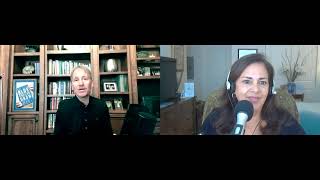
Ken Rusk argues that trades offer financial security and life satisfaction without college debt, countering cultural stigma that pushed shop class out of schools. He shares practical tools like visual life-design, goal-chunking, and a 4,000-hour skill framework to help people transition into blue-collar work.
Chapters
Hello, everybody. Welcome to another episode of Finding Brave. How are you? Kathy Caprino here. And I am so excited to have our guest today. You know, I was thinking about this, and I hope listeners feel you all feel this way, too. I love to cover topics that are not just the mainstream. And if they are in the mainstream, we're going a little deeper and we're uncovering some rich ideas that maybe you're not hearing over and over wherever you're reading or listening to podcasts. And I also love to cover topics that I don't think are covered enough or understood well enough. And I think today's with our amazing guest Ken Rusk is one of those. And just I do want to tell you about Ken a little bit, but I had the pleasure of connecting with Ken a while ago just as his new book Blue Collar Love youe Work, Secure youe Future, and Find Happiness for your Life. There we see it in the back there that had just come out and we did a Forbes interview and I loved your thoughts. And you know, Ken, you tell me, but I don't feel we're hearing enough about this topic of what blue collar work can be, what it can give to your life, the peace, the freedom, the joy, the financial security. Would you agree? I am going to tell you all everything about Ken, but I would love the answer to that. Ken, do you think we. We just don't understand that well enough in our world today?
Well, first off, thank you so much for having me. It's an honor to be on your show.
Pleasure.
I think it's just been like a default mechanism that's happened in, let's say the past 15 or 20 years where what happens is we started to get rid of shop class in high school and we replaced those rooms with computers. And computers are fine, Obviously we all had to learn those. But I never really thought it needed to be a binary choice, one or the other one substituting the other. And what that kind of did is it eliminated millions of kids from discovering things like blue collar trades, whether it's carpentry, plumbing, welding, baking, anything in the home, whatever. And I think that was a real shame because that movement kind of coupled itself with now that you're seeing kids being raised on iPads and cell phones and, you know, they don't build tree forts in the backyard anymore. They build them on their little screens. And I think that just kind of became a default mechanism where we dec decided, let's put everybody through school, everyone through college. And that created this whole lack of supply, this whole Supply and demand issue on the blue collar side, which is where all the opportunity is today.
How fascinating. Goodness. Oh, I've got 42 questions. But before we ask those, I want you to understand everything Ken's done, which is quite amazing. Founder of Toledo, Ohio based Rusk Industries, Ken is a self made millionaire. He skipped college and started out digging ditches, then working his way up to buying a business, the business and becoming a successful entrepreneur. Passionate about helping other people achieve their dreams, regardless of their educational background or past experience. Ruska has coached hundreds of people without college degrees. And again, I was so excited and honored to catch up with you in Forbes to talk about tackling that myth that career success requires a college degree and college debt, which is so crippling for so many. So I would love to dig into a few questions, Ken, but can I ask you this? And you know, it's a sensitive question and I'd love your thoughts. But along with this move away from shop class and even in my day it was called home economics where you learned. Right. Do you think there's been a stigma away from working with your hands and blue collar work? Has there been a growing stigma aside from the fact that now it's all everything's tech and computers and do you think there has been a growing stigma away from that and parents pushing their kids to get a college education because they think that's the only way to be successful?
Well, yes. And with every issue, obviously there becomes opportunity. I mean, I look at it this way, so if you're somebody that maybe you're a little more tactile, you like to explore, you like to work with your hands, you like to do those kinds of things, I think the path of college, and again, I have to tell you from the beginning, I'm not an anti college guy. If you're going to operate on my shoulder or if you're going to teach people or if you're going to build a building or manage people's money, you should probably know all that you can to know. It's just those that were kind of arbitrarily just kind of corralled into college that maybe wouldn't have gone otherwise. And I think what happens is anytime the whole crowd is moving in one direction, if you're a contrarian thinker, you're automatically going to get looked at upon as like, well wait a minute, why is he thinking or she thinking that way? And is there some stigma applied with going that direction? The beautiful secret of that is whether you're a man or a Woman and you're thinking about a blue collar career that is literally where all that, all the demand is and there's very little supply as we have overproduced these non specific college graduates and way under produced people who can build things, create things, fix things with their hands. That has created an amazing opportunity. Stigma or no stigma. I've always said it doesn't really matter how you get to where you want your life to be, as long as you get there. And people don't ever ask when they look at me and what I've created and what I've accomplished. And I'm very blessed in my life to have done some of those things. Because people never say wow, look at what he's done. Where did he go to school? They typically say wow, look at what he's done. How did he grind that out? How did he figure that out? What did he do for a living? What did he make happen? And that's just a whole nother direction that I think people should look at.
I love it. You know, I want to add something in terms of my family. I think you can also have a hybrid where I'm seeing, for instance my daughter, she's 26, she went to a great small liberal arts school, studied politics and everyone said, are you gonna go to Washington? And she was like, that's the last thing I'm gonna do. But it helped her because she studied environmental education and sustainability and food justice. It was all speaking to her heart. But now she doesn't wanna pursue what people think she should pursue. Become a lawyer for environmental law. She's like, I don't want any of that. She really likes to work with her hands. And I see her owning in the future, you know, a small farm of vegetables and flowers and herbs and having events there and education. And I can tell truthfully speaking, people where she grew up, they don't quite get it. What do you mean she's going to do that? You know, they don't say it, but you can see it in their eyes. Do you know what I'm talking about?
I've actually heard people, Kathy, at parties where they talk about well, my son is going here or my daughter is going there. And there's this almost this, almost like there, this proud moment between people who are talking about what their kids are doing, almost as if that was the parents accomplishment to make that happen. And I actually heard one time one of them say, well yeah, his son is, you know, he's not really the college type. He's only going to be a Plumber. And it just blew my mind because I happen to know who that person is. And that person now has 15 employees and about four or five vans. And he's making a really awesome living working for himself, owning his own company, and he's only a plumber. So it's one of those things where again, I don't think so much it matters what you do for a living, as it does what you do with what you do for a living. And I know that sounds controversial, but there's this sense of gratification of what I call a stand back moment, where when you're building that beautiful outdoor kitchen, or you're building the landscape for a building or a home, or you're creating beautiful cakes or flowers for a wedding or something, there's that moment where you get to stand back and say, I did these things, I built this. These things will stand the test of time. They'll create memories that, that lasts forever. And I don't think you always get that when you're in some of the white collar jobs where you're in a cubicle and you never get to see A to Z, you only get to see your little piece of the cog in the wheel, if you will.
You're so right. You're so right.
There just needs to be a lot more awareness of the opportunities and the lucrative ones that are on that side.
And you know, can we say this? And then I have more questions, you know, I think it's not just and they will make great money. We have to look at our own unconscious biases around, you know, he's just a plumber. Not all of us are meant to be, to run a business with 2,000 employees. Not all of us want to manage 500 people. Not all of us want the stress and strain of working for. I had an 18 year corporate career and it was successful on the outside, not on the inside. I mean, literally 80% of the time I thought, I don't understand why I'm sitting here listening to these fools. I mean, I'm going to see it. So I don't think it's just a matter of, listen, if my son becomes a plumber or my daughter, there'll be great money in it. There's also such value of being of service in ways that light you up. Would you agree with that statement?
Well, yeah. I mean, one of the things you have to remember is that when you're working for yourself and you're working, you know, you're actually controlling your own input and therefore you're Controlling your own output. So you get to figure out how hard am I going to work? What's my quality going to look like? What kind of feedback am I after? Am I doing this because I want to help other people along the way with and through my company? There's lots of benefits that are kind of unseen when it comes to doing one of these types of positions. And again, you know, I always talk about, you know, you want to. Sometimes people gravitate towards the money, as you just said, but it's what you do with what you earn that matters. I mean, if you're talking about creating a really awesome life for yourself. And again, Kathy, we're not all going to be, you know, mega yachts and McMansions and 15 cars. I know people that are very successful and they're miserable, okay? And they look back and they say, what did I do? I chased dollars for 30 years and what have I really accomplished? You know, they don't have great relationships with their families or their kids or their neighbors or whatever. So I think there's a heck of a lot more that you really have to consider besides just the dollar when it comes to something like this. And there is that certain amount of gratification that you get when you do something for yourself that I just think it's unbeatable. It needs to be explored more.
Oh, I love it. I so love it. You know, what you're talking about, I think has to do with regret, what we spend our life with and then. Or on and then we look back. And I interviewed Bronnie Ware. I believe she's from Australia, I should remember that. And she wrote a best selling book, the Top, the Dying. And you can imagine what they are. I didn't spend time with my family. I worked too hard. I worked on the wrong things. It's exactly what you touched on. So people, anyone listening who's starting on a path or knee deep in the path of, let's say, corporate life, thinking, there's gotta be something different here for me, I hope this lights you up and gets you going. So let's talk about. You have some incredible ideas about what you wish people understood about their daily lives. Can you talk more about that?
Yeah. I think in the age of where everything is kind of done for you and everything is more getting more automatic by the moment, you know, and also the expectations of society, you know, if your kid's gonna play soccer, he's gotta be Pele. Or if he's gonna play football, he's got to be Tom Brady or You know, if she's going to ski or do something, she's got to be, you know, this, this perfect downhiller. And I think that's, that's the whole thing where we kind of lose it for a second. Because I would rather people spend less time in their minivans carting their families around the country and spend more time around their homes. And if there's anything that the pandemic taught us, Kathy, there's a heck of a lot of value to being at home, being with your neighbors, walking your dog, riding your bike, playing in the backyard, getting a relationship with your son or daughter again, I mean, how about that one? And I think what happens is people come to recognize I have a lot more say in my life than I think I do. I have a lot more control over my life than I think I do. And it all begins with how you look at what you want the rest of your life to look like. So that's why I spend the first three or four chapters in the book talking about, okay, you need to know exactly what your life is going to look like. You need to really design it in a way that you can say, now if I obtain that picture, that's kind of like my nirvana. That's my comfort, peace and freedom. And it's not all about necessarily, whether it's a white collar or a blue collar job, but if I can create the life that I want, doing what I want. You know, you're, you're head and shoulders above 99% of the other people on this planet because people just live every week to week and they just feel like they're so out of control all the time. And I just want to put the brakes on and say, wait a minute, there's a better way to do it. Let's just start thinking better.
I so love it. You know, I talk a little bit in this podcast about something I call vanity metrics. And we talk about it as authors. You know, we're, we're looking on Amazon every five minutes. Where is it ranking the book? And I, you know, somebody slap me, please. I mean, I get, I go down that rabbit hole a little bit. Thank goodness I'm a few months out of launching my book and I can pull back from that obsessive. But I think there's all sorts of vanity metrics. I mean, I've even called grades vanity metrics a little bit. You know, should it be the A plus? Does it have to be the A plus? Or, you know, is B good enough really for studying? Whatever. But But I think it's also how many views you get, how many followers you have. I think we've become obsessed with the little device in our hands. And to your point, if, you know, I would encourage people to think about where am I pursuing vanity measures that really are making me miserable? They're not really generating any kind of happiness. Does that make sense to you?
Yeah. I don't think the goal of our lives is to live by comparison, you know, and also, you have to remember that you're usually seeing all of your friends at their absolute best.
Right, Right.
They're not going to go on Facebook and say, wow, you know, look at what happened to me. Or look at how depressing this is, or here's my bills that I can't pay. I mean, you're never going to get that. You're going to get the perfect thing at the perfect time, wearing the perfect clothes at the perfect moment. And it only can serve to, like, let you down when you think about it. So I would rather you compare yourself to who you want to be, because at the end of the day, I love it. You and only you know what you're good at. You and only you know what you could be. You and only you know what you enjoy as far as spending your time and with whom and how you're going to give back to society, because that's really important. And, you know, we're all creatures put on this earth to help each other. And I just think that some of this comparison just. It just takes us down. Like you said, the rabbit hole. It can't be good because you're hanging up the phone or you turn off the computer and you're like, wow, man, my life is really bad news compared to him or her. And I just don't think that's the way to work our world these days.
Goodness gracious, you're right. And, you know, I think just comparing yourself to who you want to be and who you in your mind know you could be, that is enough to build an incredible life. I mean, I did that, you know, after 18 years of misery in my corporate life and then laid off after 911 and reinventing, saying, I don't want to hurt people and be hurt anymore. I'm done with it. That's really. That's the comparison you need. Who can I be? Who do I dream to be? So, like, I love it. I love it. Now tell us about. You have an idea about kindergarten level imagination and visualization, don't you? Can you talk about that? What is that?
Well, I think in order to. And one of the things that I've been blessed with is I've had to hire a lot of people in my contracting company over the years. And a lot of them were, let's say, 19, 20, 21 years old, and they were coming out of high school. And, you know, it's almost like the parents hand them an ax and they say, there's the woods, start chopping, and they try to work their way into the forest. And then after a few minutes, they turn around, they look at their mom and dad and where am I going and why am I doing this? And the best answer they get is just keep chopping. Which makes no sense.
And this is the analogy of chopping is going to college and pursuing something they don't care about and they don't know why they're doing it.
It's life. It's just life. There's your path. Figure it out. Okay? And for me, I kept coming back to the same thing. What if we could build a mechanism by which people could design their life the way they wanted it or the way they saw it in their own minds and. And then had them go after that one piece at a time. So I started to get big pieces of poster board and good old fashioned boxes of 64 Crayola crayons. And I would hand these crayons out to them and I would say, draw your life the way you see it. And Kathy, you can't even imagine the wide disparity there was in pictures of people that would say, well, if my life was like this, I think I would be in great shape. And it is not about the. That, like monetary things or.
What would they draw, Ken? What would they draw? Like two children and a beautiful partner.
Yeah, they would draw what they want their family look like. They would draw what type of transportation they were into, whether it was a car, a truck, a scooter, a bus, an electric vehicle. They would draw their hobbies, whether they were a kayaker or a golfer or maybe doing a craft. They would draw giving back to community. Like, what would be their way to give back? They might draw the perfect little house they wanted, or the apartment or the condo or whatever they wanted to do. And they would just draw, you know, a cat or a dog, and if so, what kind, what would they name it? And we just made them get really detailed. Almost like when you were putting a puzzle together at your kitchen table and, you know, you keep coming back to it and you build the square and then you do the corners and then you get the center filled and you just keep coming back to it until you say, you know what? I think that would be a really cool way to live. So then we take those pieces metaphorically and we chop them up into little pieces and we start going after those goals one at a time. And that's why I think some of the best things you can do is to think about the rest of your life is to go backwards and become a kid again and say, if I had the chance to draw what I wanted my life to look like, what would that picture frame end up being? And I think it has so much impact and it's just so easy to do.
Okay, wait a minute. You know, I run a course and I have a lot of clients. I've never had them draw it. I think I'm going to start this minute. But what do you feel that drawing. And I have an idea of what your answer is. What does the drawing allow that the writing can't? Like, you know, I'd like two kids and live in a tiny home in Montana. What does the drawing do?
Well, I think first off, when you have a, when you have a piece of paper and a bunch of lines on it and a pen, that's kind of too mechanical for me, I would rather have them start with a white poster board that's just blank. And because it's blank, they know they can go anywhere with it, they can go any direction they want. And then they end up picking out their favorite colors. And when they pick out their favorite colors, you know, my favorite color was blue, his was green, whatever. But they get these crayons out and they create this almost painting of what their life could be. And it's visual and it's colorful and it's emotional and it's detailed and yet they get very proud of it. And that just burns it right into their mental hard drive. And the more that they do that, the more they can say to themselves, wow, you know what? I can start with this small goal and then I can get the two year one and then the three and the five and the ten year one. And then pretty soon I become this goal oriented machine. So much so that I can tell Ken, hey, thanks for the training. Now get out of my way and let me do it. And, and it's so much fun, Kathy, to watch them get these little mini wins and living a life anticipation. It's just for me, it's why I go to work every day. So it's kind of.
Now wait a minute. Questions. How did you learn that what I'm dying to know is when you were a kid. Different question, but related. Did you have a vision of who you were going to be when you were young? Did you have all this baked in or how'd this happen?
This is so funny. Do you remember the show Heart to Heart?
Yeah.
Okay. Those two people were just. They just had a really cool way of living. I don't know what it was. They were just very calm. And it wasn't about.
Was it Robert Wagner? Who was it? Who was it?
Yeah, Robert Wagner. And I forget her name, but they just had this really comfortable, calm, cool way of living. And I remember watching that show saying, if I can grow up to be, you know, mildly successful, but very calm like that, that's kind of what I thought would be a cool way to live.
So was there not calm around you, Ken? Was there not calm around him being the therapist now?
Well, I have four brothers and we lived in about a 1200 square foot house, so. But. But we had a blast. I mean, the best part about us was we didn't know that we didn't have anything. So it was. It was great to just be each other's best friends and to live how we wanted to live. But to me, I just felt like I always wanted to be in control of what that destiny ended up looking like. So I always thought, well, the best way to do this is to just to really visualize it in a way where I own it. And it's not. It's not like a wish or a dream or a maybe it's a. It's crystal clear, it's detailed and it's today or in it. So that was the difference.
It's fantastic. And do you bring everybody, everybody you bring into the company? Do you do this with?
It's hard because there are some people that are outgoing, expressive type people, and there's others that aren't. So one of the ways that we get around that part is we have this huge black glass board, and it's kind of like a board that you would see in front of a bar where they write the margarita specials on it and bright colored markers. So we'll have them come up with at least one goal. If they're not willing to like, do the whole life drawing thing, they come up with just one goal and they have to put it on the board and they have to have a start date and an end date and a specific path to getting there. And everyone sees it. And so, you know, there's power in sharing, obviously, as you know, so we start out that way and then they quietly kind of build their puzzle themselves. And, you know, some people do it at home and don't share it with us. And that's fine. As long as they're going after something, that's what's important.
Now I want to highlight something and see if this resonates with you. You know, in my book the Most Powerful youl, I talk about the seven damaging power gaps that professional women face, but men face them too. And one of them is, and this is the one that resonates most with people. It's gap number six, losing sight of your thrilling dream for your life. And one thing I suggest to leaders of any culture, any organization, is to help your people identify what would be the first step on a path to something thrilling. And the truth is it may not have anything to do with their current job at Microsoft or whatever. So I think you're already doing exactly that. But I do have to ask you, when they're doing these goals, it's not necessarily related to the work they're doing for Rusk Industries, right?
No. In fact, I insist it has nothing to do with that.
Oh my God.
It's everything about what they were. I mean, we have them take these drawings home and put them in a very prevalent place in their house, whether it's, you know, their bathroom or their kitchen or their, you know, wherever they go to drop their keys or whatever. Because we want to make sure that the first and last thing that they see is how they're building their own life irregardless of what we want them to do. It has nothing. We don't have them put anything tool wise or work wise or goal wise from an office perspective on there. And the reason is simple. I believe that if I can surround myself with as many people as possible that are kind of self managed, self goal oriented, self driven, and then they see themselves making these mini wins with and through my company, then my company is going to just sail forward with or without my pushing it, you know, and that's one of the greatest things that we've discovered is the company and its productivity has gone higher than I ever thought I could push it because they're all taking it along with me. And it's just been a really great ride.
You're just an inspirational mentor and many other things. Wow. I love it. All right, now talk to us about. You mentioned 4,000 hours to master something, right? And somebody has said 10,000. Was it Seth Godin who said 10,000 hours to master it?
Was the gentleman that wrote the outlier.
Oh, Malcolm Gladwell.
Yeah.
Okay. Yeah, yeah. And. And I'm sure we all have different. I feel like it's taken me 10,000 hours.
Yeah.
Do what I do. But talk about that and transitioning and what are we really aspiring to do in terms of mastery? Can you talk about that?
Yeah, I looked at it from the perspective of learning a trade or a skill. I mean, I know what it takes. I mean, I've spent a lot of years on the business end of a digging shovel, so I kind of know what it takes to learn some of these things. And you know, they talk about in Malcolm's book you can take 10,000 hours to master anything. Well, if you think about that, if you do it for, you know, 2,000 hours a year, that's five years. So I looked at it from the perspective of whether or not you decide to go to college and what that can create. So let's assume just from a financial perspective, you're spending 40 or $50,000 a year in college. You know, you're going to have four years of that or anywhere from four to 6,000 hours doing that, maybe a little more. So, and that's 160 to $200,000. You could also make the decision that you're going to learn to trade or a skill and you're going to master it in that same 4,000 hour period of time. The only difference is you're making 40 or $50,000 a year versus spending it. So there's literally a $400,000 potential swing in your asset base from the time you're 18 and a half to the time you're 22. So you really have to consider the importance of that and the choices there. Because that swing could be a house, it could be a 401k start, it could be money to give back to a charity of your. It could be a lot of things to get your life going. And I just wanted people to recognize that, you know, a good carpenter, a good welder, a good plumber, a good person that works in a bakery or whatever. In this day and age, with the technology that you have and the fact that good people are so rare that bosses tend to like cling on to them and give them everything they have, you can get anything done in 4,000 hours, which is pretty short period of time considering some of the alternatives.
Wow, I love this. So in our remaining time, Ken, can I ask you this question? I talk about that there are five steps to making a career transition. Step back for an empowered Perspective. Let go of the thinking patterns and behaviors that keep you stuck. Say yes to your most compelling visions. Number four, explore it and try it on. Don't just leap because it looks like it's exciting. I want to be a sound engineer.
Yeah.
And you know nothing about it. And number five, create it smart with goals, with milestones, with accountability. Can you give us some tips? And I really don't know the answer to this question, but I'm guessing some people young and older are listening, saying, yeah, it's time. It's time that I do what. What my heart is calling me to do. And they. I'm guessing, and you know much more than I do about this. They might know they love working with their hands. They might know they love farming. They might know that they have a little interest in welding, but they don't really. They haven't tried it on because they haven't had the opportunity, so they're not sure. I always say, don't, you know, understand the essence of what you want before you leap to the form of it. So they might want their own independent life, but they don't know if it's plumbing or welding or, you know, electrician. How do people try it on to know what is the avenue in the blue collar world that they should pursue? Do you have ideas for that?
Yeah, there's. There's two things I want to say. One of them is about. About side hustles. But the first thing is I need to get back to the vision, because your vision has to be strong enough that it will drive you through the tribulations of making that transition. And that's what I'm saying. That's why I said it before. You know, if you create. If you can create the life that you want through welding, the. Then I think at the end of the day, the life that you want is more important than the welding piece. And the thing is, there's so much demand for that side that you could literally job shop yourself through all different types of trades and try them all in an apprentice level, either on weekends or whatever, and just see what interests you. I love it.
How did they find those apprenticeships?
Well, I can tell you between. Between my office and the freeway, which is only a mile, there's 25 signs that say, help want it. So because there's such a crisis in the blue collar side there, everybody on that side is hiring because they can't find people willing to do. To do work with their hands. The other way that you can do this is, you know, it used to be that running your own business was like, you know, accountants and spreadsheets and bookkeepers and all. Now you, you know, you can run a whole business with one of these things and your pickup truck. And so technology has made it a lot easier to go off on your own and do your own side hustle. And I've seen a lot of people who wanted to build furniture or they wanted to build crafts or they wanted to do things, and they create a really awesome website, and they build these things on the weekends, and they start selling them on the Internet, and they slowly transition away from their day job and into that side hustle. And. And that's happening a lot. And it's never been easier to do that with the onset of technology. So you just got to be like you say, you got to be brave. You know, you got to move to the money. You got to know where it's at. You have to be willing to maybe do something that other people aren't. Because, again, contrary thinking is lucrative thinking. And you'll find your way there. If your vision is strong enough, you'll find the way there.
I love it. What else do we need people to understand? And of course, everyone should read your book, and we're going to tell people how to do that. But what else do we need to do to facilitate busting the myth about blue collar work and to help crack people open to the idea that, you know, I have been in the wrong place. I've pursued this career in blip, blip, blip accounting, hr. I can't do it. I hate it. And I know there's another way, but. And I'm thinking it's in working with my hands or having my own endeavor. What do we need to do to bust the myth? Get people going. Anything we haven't talked about yet?
Yeah. I would just say this. You know, I'm not one that is big to talk about. Studies show. You know, studies show, although when we did this project, we had to do a lot of that, and that's okay. But if you think about it this way, 79% of people that have a blue collar job are happy with their life, compared to only 37% who are white collar workers are happy with their life. Now, I don't know why all that is. It just seems to me to be that there's a certain amount of automatic control when you are controlling, and I said this before, when you are controlling your input, your output, and the quality of your day and the quantity of your day, and to be able to control your own time and to be able to control, you know, the feedback that you get from your customers. There's just something innately important about having the ability to just really feel like you're in control of your own life versus being on the 15th floor of a 50 floor building and there's people below you and people above you and there's just all that, you know, all that noise. Okay. So I just think to be able to go after that, that calm, that comfort, peace and freedom, I think that's really the end game. And a lot of people just have to take a shot and go get it.
Let me ask this though, final question. When you speak about blue collar work like that, it strikes me that you're talking about people who are running their own endeavor. But there's a lot of people that aren't and hate their bosses and don't have control over their day, right?
Well, yes and no. Because whether or not at the end of the day, you're still in control of what you produce and the quality of that. And I can tell you this, that in this day and age, all you have to do is show up, show up on time, firm handshake and a good smile, and do quality work. And you're not going to be held down. It's not possible because it used to be the norm and now it's a rarity. So to find people like that, if you have that much passion that you're willing to leave comfortable position and go there, you're probably going to be one of those people who's just going to excel. And it doesn't necessarily have. You don't necessarily have to own your own company, but you do have to own your own productivity. And I think at the end of the day, bosses just love that and they kind of like put that special place out there for you to make that happen. I see that we didn't have enough time to talk about this, but I've seen it with women in blue collar jobs. I've had so many great opportunities to interview people who have gone crazy in blue collar jobs who never even considered it before. And now they're doing really, really great things and I'm just thrilled for them.
Oh gosh. There's so many tweetables from our talk. Anything else you need us to know and let us know. Where do we find you? Where do we read your book? Where can we learn more? Ken, tell us.
We've got a pretty good blog going@kenrusk.com and it talks about a lot of the different jobs and what's hiring and how much they're paying and the top jobs you can go after. We have a lot of articles on Ken Rusk official on Facebook, and there's a lot of great stuff on there about just the way you think about blue collar work and again, the opportunities that are out there for men and women and developing your own life. And there's a whole lot of great material there. And one thing I do want to mention is that I've been a big fan of giving back. I feel to whom much is given, much is expected. And I've been a big fan of Make a wish for 20 years and we've done a bunch of wishes there. And my goal this year is instead of do one wish, I'm giving all the proceeds away from my book to support Make a Wish wishes. So if you do get the book, you'll help someone who's suffering. And again, Amazon, Apple Books, Barnes and Nobles, indie books. That's where you can find it at.
That is so beautiful. Thank you for joining us. I love to me, let me cry. I always cry on the show. You're such a leader, such a bright light. You know, just speaking to you gives people hope.
Thank you so much for having me, Kathy. It's been an honor. It's been fun getting to know you a little bit and I hope you can work again in the future.
I hope so. Come back again soon, anytime. And all the best, best selling book to you people. If you're not inspired by this, I don't know I am. And you know, there's one other thing. I think some of what you talk about, Ken, is about creativity. It's about digging deep and letting out that creativity that we have inside that. I think for so many people that I work with, it's been deadened. So if this is spurring you, I hope you'll reach out wherever you see this podcast. I know, you know, join everything that Ken has mentioned and I know you'll find great inspiration there and we'd love to hear. What'd you get out of this show? Let us know. Let us know your questions. I'm pretty sure Ken will be hopping right on and answering your questions.
Absolutely.
Thank you again, Ken. All right, everyone, have a fantastic week and we will see you next time.
More from Kathy


Elevate Yourself, Elevate Others, and Amplify Good | Chris Cooper | Finding Brave Ep. 334

Finding Brave Epis #333: How Leaders Can Harness AI Without Losing Their Humanity, w/Bennett Borden

Finding Brave Epis 332- How to Stay Brave, Valuable and Visible in the Age of AI, with Raman Rai

Finding Brave Epis 331 - The Power of Positive Disruption, with Dr. Patrick Leddin


Finding Brave Epis 330 - Being 40: Letting Go and Embracing Who You Are, with Stacey Lindsay

Disrupt Career Reinvention with Kathy Caprino - via The Disruption Lab Podcast w/Patrick Leddin

Creating Neurodiversity-Friendly Work Cultures: Simple Workplace Adjustments Matter

Finding Brave Epis 329 - How To Create a Neurodiversity-Friendly Workplace, with Kristen Pressner

Finding Brave Epis. 328: Reclaiming the Power to Trust Your Own Voice, with Dr. Cindy McGovern