Finding Brave 148: Focus Your Business on Doing Good to Increase Profit, with Ursula Jorch
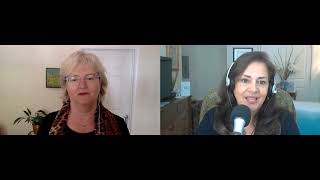
This YouTube interview (Finding Brave #148, Nov 5, 2020) features host Kathy "Gabby" Caprino interviewing Ursula York (business coach, podcast host of Work Alchemy) about how entrepreneurs—especially women—can align business with impact to increase revenue and profit. Key claims: impact is the intersection of your unique business and contribution to the world; impact-focused companies often outperform profit-only peers (citations in-episode claim: 12–14x more revenue and 2–50x more profit); impactful leadership requires skills such as self-awareness, vision, focus, resilience, loving-kindness, and commitment to growth. The conversation also covers founders’ values alignment, common profit mistakes (not tracking finances, overspending, failure to delegate/scale), gender gaps in VC (episode cites 2% of U.S. VC to women/minorities, 2018), and resources at workalchemy.com (podcast and business impact assessment).
Chapters
Hello, everybody. Gabby Cabrino here, and welcome to another episode of Finding Brave yet again. I can't even. I have to pinch myself. I'm so excited to have our guest today, Ursula York, who I had the pleasure of joining on your amazing podcast. And I think we had so much fun. We couldn't wait to just continue it somehow. Right. Well, I did anyway.
Absolutely true. For me, too. I loved hearing about your book and we had such a good conversation.
Thank you. We did. I so enjoyed it. And today we're talking about something that is so near and dear both of our hearts. But Ursula truly is the expert here on Focus your business on doing good to increase profit, which, you know, we're going to talk all about the myths in our world that push against that. Right. The biases. I think you're going to share a lot of that, but let me tell us. Just dive right in. Let me tell you all about Ursula. Ursula York is a business coach, speaker, and podcast host who shows women leaders how to turn their businesses into profitable agents for lasting change, global impact, and a force for good in the world. Find ursula@workalchemy.com along with free resources for you and your business. Do not miss this and listen to her. It's a fantastic podcast. Truly Work Alchemy. The impact interviews with guests as diverse as Seth Godin and Marianne Williamson. Wow. And Kathy Cabrino.
Wow.
I'm in good company there. All right, let us, you know, let us dig in. Ursula, I have to tell you, guests fill out this prep sheet of mine and they always put in some bullet points they want to make sure people understand. And for the first time last week, I said, why don't I read these bullet points? So we make sure those takeaways are really going to be taken away and then we're going to riff on those. If I could do that.
Sounds good.
So, number one, impact is where you and your unique business meet the world and contribute to making it better for all of us. Number two, when you focus on impact throughout. Throughout your business, your revenue and profit grow. And number three, impactful leadership is necessary for impact. Wow, I gotta love that. Now, let's talk about, first of all, how did you get into this, Ursula, that you are focused on impact? I have a feeling that maybe there wasn't impact in your life before, and there you wanted to turn that around. Is that right or no?
Yeah, well, I think I've always leaned that way. I've always had an interest in that way right from the beginning of the. I've been an entrepreneur for 25 years now. So from. From the start, even before that, when I had a corporate job, I was in academia prior to that. I've always been looking towards how can I help, how can I do some good in the world? And my focus got very refined, I guess, into this realm about 10 years ago when I'd been operating my business for about 15 years and I was really kind of. Things were humming along, going well, and I just was feeling very restless. And what I ended up doing through a whole series of explorations, I started exhibiting my photography. I was doing some music performance, and it still kind of wasn't so satisfying. So what I ended up doing was I thought, well, I'll take some time off. And most entrepreneurs, two weeks is like a huge timeframe and. Exactly. Yeah, you're afraid that your clients won't be there when you get back or something will happen. But that kept growing. It was. Then it was three weeks and then a month, six weeks. Well, what I ended up doing was selling my house and everything I owned and I went on the road for a year and traveled. And my plan was just, I'll travel as long as that makes sense. And then I'll. I thought I would just pick up and carry on after that. But what happened during that year was really that I got very clear about the fact that something I'd been doing all along, which was coaching people, because my clients would say, oh, I'd go into a corporate setting and they'd say, oh, I love that your business is doing so well. How do I do that? How do I mean?
They wanted to leave corporate.
Yes. Yeah. So I realized that that was really where I wanted to focus. And this focus on impact got more and more central to what I was doing because it was. It became really important to me to do good with business rather than just churning out profits. And lovely as that is, and necessary as that is, because a business without profit is a hobby, essentially, I was. I really developed more of an interest starting getting involved in B corpse and conscious capitalism and those as movements, and just really got clear on the fact that that is what I wanted to contribute to because there's so many things that are. We're called on to affect in the world we can affect as entrepreneurs and leaders. And I really wanted to be part of. Part of that and helping people to do that.
What an inspiring story, Ursula. So as I'm sitting here listening, can you do this for us? Can you define what impact is? Because I think people are listening saying, yeah, I want that and maybe I'm even doing that, or maybe I'm not doing that. How do you define impact?
Well, that really was one of the key points, the bullet points that you read. To me, impact is where you and your unique business meet the world and contribute to making it better for all of us. So to me, there's a real interplay, a harmony between those. So you and your business on one hand and. And the contribution you're making on the other, and you can't have one without the other in terms of impact. So if you're always focused on you and your business, you can get very insular, very profit only focused, but you're not contributing that much. And if you're focusing only on contribution, you get burned out.
I can relate to that. Can I ask you this? I'm guessing, and you know more about this than I, but I'm guessing that almost every single business that's created the founder, thinks they're making an impact of sorts, like this new, you know, what comes to mind is bumbas with the socks. And I do, I've interviewed them. They are making an enormous impact. And, you know, the reason was the founder saw an ad, I think, on television that the most needed item was socks in homeless shelters. Wow. And he said, I'm doing it. The founder. Co founder. But don't you think that probably every business, even Pepsi, Coke, Campbell's Soup, whatever it is, thinks I'm helping in some way? So can you give us the real scoop on what you think the difference is? Not. Maybe not every organization is making impact that they dream to make. What is it? What does impact look like?
Well, it's a great question, Kathy, and I think you'd be surprised. I mean, there's really a very broad spectrum. I think there are people that start companies because they want to make money in some way, and they see an opportunity to do that and they don't really think about it beyond.
They don't really care what the outcome is. Like, let me sell widgets. And I don't give a hoot about widgets. Yeah, but there's a need for widgets.
Yeah, I think there's a. Folks who see a business opportunity and don't necessarily look at it in the context of what they could be contributing with. And that's not necessarily an indictment of. I know, I know. It's not necessarily an indictment of them as people. I think that we've gotten into this habit of looking at business as a profit machine, and then that becomes a way to do other things. So they're using their business in order to do some other things they want to do in the world. And I think people further along the spectrum, I think there are people who. Well, I'm giving people jobs or I'm helping other companies do whatever. Whatever they do. And then as you move further along the spectrum, at the opposite end of. I only care about profits. The opposite end of that is I want to really make a difference in the world. And those are more the social enterprises. But even there, there's a spectrum of companies don't have to be social enterprises in order to make an impact. They really can be focused on doing good in the world that exceeds, you know, simply, I'm going to give some money to charity. They can. There's a whole spectrum of things you can do before you, you know, go the whole. The whole ramp route.
Fascinating line of work you're in. You know, I keep harping on this one thing because it really bothers me. I'd love to know your thoughts. There's. I can't use his name, but there's a huge, you know, multi. Multimillionaire entrepreneur who has said. I saw a video of him saying this. If you really want to be wealthy or be successful, forget passion.
Yes.
And he said, do what you're good at. And literally, like, my head exploded. I so don't agree with that. And can I talk about it and hear your thoughts? Because I'm desperate to. I think that in our culture, in the American culture, there's this myth that if you pursue something you're passionate about, you're gonna go broke and live on a van on the side of the road. As Saturn starving artist skit has. I don't understand this myth. But to me, to do only what you're good at when there's no connection in your heart and soul to it, zero connection. And I don't mean that, you know, for instance, my son is a financial analyst. There's passion, therefore he loves it. He loves the numbers he loves. So I don't mean we all have to be moving mountains and changing, you know, the world in an. Excuse me, an enormous way. But I don't understand this idea that it's one or the other, that if you're passionate, you're going to go broke, your company's going to go broke. Where did we get it? And why do people have. I need to say one other thing. In working with so many women who are in the corporate world just doing what they're good at. The problem is many of them in A patriarchal world are not advancing the way they deserve. So, you know, they're not getting that benefit of. I'm just doing what I'm good at. Can you talk about that? Do you see this constant strain between, you know, you're just gonna. That thing is just gonna make you go broke in two. Is this. Do you feel there's a myth in our world about this?
Yeah. Well, I love to talk to you about that. It's really. I think that that whole thing about do what you love, the money will follow. There is an essence of truth in it. And in order to run a business, to be an entrepreneur, there's work involved. There are a lot of practical things that you have to do, and it's not necessarily that you're not inspired to do it, but it still has to get done. So I think the very extreme end of that is I'm just going to sit back here in my Barca lounger and, you know, awesome things.
My bonbons on my couch. Yeah. I mean, people, I do want to say, I've often said, do what you love and the money will follow is a really dangerous thought because often it doesn't.
Yeah.
So the idea that I'm going to make a lot of money because I love what I do is erroneous.
I agree.
You got to be a good business person. You've got to fill a need in the market and you have to know how to fill that need and produce. Right. So I am not, you know, Pollyanna, woohoo, do what you love. You've got to be smart and be a business person and a very savvy in. In every way.
I completely agree. I mean, I think that whole passion element that you started off really important in the sense that you have to feel good about what you're doing, you have to have energy about what you're offering people in a business setting. Or you just don't have the stamina and the sustainability to be able to move forward with it. There has to be some element of passion in it. But I agree that sort of all or nothing, have passion and just sit and wait for things to happen isn't.
Going to work or have passion and you'll go broke.
Right, right, exactly. Yeah. And I mean, I think too that it's folks that go into something because it seems like the practical thing to do. I always feel a bit sad about it. I talked to someone recently who'd been a professional his entire life and we were talking about what I do and I talked about how much I loved it and why I found it so energizing. And he said, you know, I've always really hated what I've done. And he's had a successful career, career doing this work and he was just dying to retire. Like the moment he could, he was out the door. And I. That to me feels very, it feels so unfortunate because we spend so much time in work. How can we make it something where we can do multiple things, we can make some money, be passionate about it, contribute in some way. To me, that's the tremendous dynamic combination that I always go for.
You know, my. Just let me say this. My world is helping people, you know, who come and in some way their career is not what they want it to be. They want more different or better. And often they don't know which one. But you know, having had my own corporate career for 18 years and I do want to highlight this. I never felt in the last two years, it was horrific. I felt so misaligned value wise with what we were doing. And one reason was we were selling membership programs, you know, auto, like an AAA kind of thing or a family entertainment thing. And I was head of the product and so I oversaw marketing and they sent me to the telemarketing center where we were back then. You know, the marketing teams were pitching it on the phone to people and I remember somebody saying, I'm listening in. I don't have the money for this program. But because you're having a sweepstakes, I'm going to sign up and I can' even afford the electricity. They were living in a, you know, I guess you'd call it a trailer park, you know, but they couldn't afford their electricity. But they said they were going to sign up for this thing to get the sweepstakes. I hung up from, I took up the earphone and went, I can't do this one minute more. But I'd look around and everyone else was perfectly fine. They didn't even register that comment. They thought babing another sale. So I think part of this is also what you're focused on needs to align with your values.
I completely agree.
This poor fellow who's. I mean there's functionally not liking what you do and then there's I like finance or I like marketing, but not this, not for this cause. Does that resonate with you?
Yeah, I completely agree. And in fact a chunk of the work that I do with people is really getting very clear about what their values are. And a lot of, a lot of people have done this in Their own sort of professional development. But I think we have to take that a step further. That I completely agree with you, that if it's not aligned with your values, you're not going to feel good about it. You're going to have this constant dissonance, which interferes with your ability to focus and move through challenges and really get things done. But I think there's also another level of examination, and this is something that I do with clients. I think sometimes we grow up in a culture or we are educated in a culture where we adopt certain values that are part of the larger culture, but we ourselves haven't really thought about. Is this really what I believe? Is this really what I am willing to take action on even when things get challenging? And I think that's where people can run into trouble. They've kind of adopted things that aren't their own. Sort of. What I think is really important is to go into what is it that you are actually willing to take action on and willing to go through whatever fire there is around taking action on that. So you can say, well, I value integrity. But if you come to a point where, take your example of the telemarketer of hearing, I can't afford this. I can't even pay my electricity, but I will buy this. It's a moment of decision. And if you can hold those values really high, you can remain aligned. And you can say things like, I don't think this is right for you. Come back to us when you're ready to move forward, or how can I help you in your situation? Or any number of things. But I think I call those pole priorities, those values that really come from within that draw you forward.
And that's so beautiful, Ursula. And I, I think that those change sometimes over time. I think at age 28, if I had heard the telemarketer pitching that, I don't know that I would have felt so. You know, I think age changes things. Experience behind the eyeballs, wisdom behind the eyeballs.
And, yeah, when you start to think about your legacy and what are you behind and what kind of effect are you having? Right.
All right, now tell us. People came here because they're also interested in the profit piece. Can you talk about. All right, here's the question. I. My business, it matters to me. I think I'm making a difference, but I'm. I'm not making a living. We're not making a living. How do people increase their profit when they're doing good? What do you look at first? Ursula? I'm sure. You do a whole diagnosis on a business, don't you?
Yeah, absolutely. I mean, the same principles that apply to any business apply to, in fact, impactful business ones that want to do good in the world. So having a solid business model, being able to have offerings that you know your audience wants, being really clear about your offerings and talking to them, and then being able to close a sale, I mean, those basic sort of business skills are all part of having a business that has impact. And it's also true that that focus on profit that we touched on earlier is not necessarily going to drive you to doing in a business if you have clarity about the impact you want to have. Studies have shown comparing businesses that are only profit focused versus those that are impact focused, the ones that are impact focused actually make 12 to 14 times more revenue and depending on the study, between 2 and 50 times 5, 0 times more profit, which I find kind of shocking. I mean, I read it and I thought, okay, this is an outlier scenario. But there's some really solid evidence for that, that when you are motivated by having impact, making a difference in the lives of your customers and clients and those affected by them, then you can really, it really ramps up your revenue as well. And when you think about it, it kind of makes sense in the sense that if you're focused on impact, if you're focused on doing good, then you're going to look at your customers a little differently. You're going about it in terms of what can I do to help them instead of having something that you know will sell and then just blinker, hammering it down.
Right, right. All right, questions. You know, we didn't prep this, so if, if you know, this is difficult to answer, let me know. What do you think the, the top three things that are going wrong in businesses, you know, profit wise, what do you think the top three mistakes are? Let me, let me start this off. You know, I remember when I was managing a $30 million budget and this was a job I didn't like and the products I didn't like, but I remember I was a vice president, the senior vice president said to his team, look, people, we're going over this P and L, and what I need you to do is act like it's your own money and you're not. When I ask you, you know, this list, line item, what goes into that? Why are we, you know, over 30% over last year? And I'm looking at them, like, not knowing. And I remember hearing those words, act like it's your own money. But I didn't. I didn't know what that meant. Now, for instance, I am scrutinizing every expense.
Right, you're an entrepreneur.
So I'm an entrepreneur. It used to be, okay, sure, let's spend that. Let's spend, you know, massive amounts on my hosting for my three websites, et cetera. Now, I mean, one might call it nickel and diming, but, you know, and I even see that among the people that work with me very closely, they don't have that same feeling that I'm not going to waste a penny because every penny that I waste is less money I can turn into a product or service. So you need to manage it like your life depends on it. So that's one thing I see that a lot of entrepreneurs don'. Know how to do. Would you agree with that? And can you give us three more things that. That entrepreneurs are not doing, which is sucking the profit out?
I think there's a learning curve. I think that when you first start, you're so energized by the idea. And if you don't have a business background or an extensive one, and I found even my corporate background was helpful, although the attitude is very different. Right?
It's helpful to a point, but it ain't the same, is it?
Exactly. Yeah. So I think you definitely. There's a learning cur about when you have some months where you suddenly see, oh, wow, you know, my profit has really gone down here. I think keeping on top of that, tracking it on a regular basis is so crucial. It's sometimes something that people don't even want to look at. It's like finances. I don't want to do it, but you're really doing your business and your impact a disservice if you're not keeping an eye on the profit margin and really making sure that you're not spending money where it doesn't need to be spent. And sometimes you don't know the answer to, does it need to be spent here until you try it out. So it's good to be experimental rather than going whole hog. Just go into it with the attitude of, well, this seems reasonable to do right now. Let's try it out and see, and track data and keep analyzing what it is that's happening. And it's not my favorite thing to do. I mean, I have some math in my background, but even I don't enjoy it that much. But if you don't do it, your business can really falter and it just collapses under the weight of bad money management. The Other thing, too is if you're not managing your finances in that way, your impact decreases, because as things start to go downhill, your focus is taken away from impact and larger issues, and it gets more and more focused on money because you have to in order to survive. Yeah, exactly.
Love it. You know, there's another thing, the flip side of it. So they're spending too much or not looking at. And you know, one thing I'd love to add, we might not. I'm not a mathematician. I don't enjoy math, but I enjoy research. I've been a researcher. So if you can look at your numbers as what is the story that's being told? I think it. It makes it more palatable, less intimidating a lot.
That's a great attitude.
I hate numbers. Okay. Look at it as research. But the flip side of that, and I'd love your thoughts, I think that the women I've worked with, and I do want to say I interviewed Susan. I think her name is pronounced Sabbat, and she was the head of Amex Open, you know, for entrepreneurs. And I asked her, this is quite some time ago, what are the difference between male and female entrepreneurs? And she whipped it off. Number one, that women tend to be very uncomfortable with the numbers. So if you ask them and they're running the business, they'll say, you know, I have someone else do that. Whereas the man will typically fire off the numbers. Number two, when you ask a woman, do you think you can scale this? They often say, I'm not sure. Yeah. The guy says, yeah, 100%. Right. And the third thing I remember clearly is, why did you start this business? The man says, to make money. The female says, to make a difference. To do something I'm passionate about. And. Yeah, fascinating. But one thing I see with the women I work with, there's an incredible. I call it perfectionistic over functioning more than is appropriate, necessary, and healthy. And what it also means is you will not delegate.
Yeah.
You won't hire. Do you see that?
I do. And I. That one, I think, applies to men as well. And I agree with you the way you describe perfectionistic over functioning in your book, which I thought was a great thing to look at, and I certainly recognize myself in that. In that. In that. But I think that issue of scaling requires you to delegate. There's no way that you can scale and increase the size of your business beyond a certain point if you're not willing to allow responsibility and creativity and innovation from other people to influence you as you're developing your business. And in some ways, I think there's different aspects of that. I think it depends somewhat on personality. But I think also a founder is someone who has the idea, they nurture it along, and it's difficult to let it go. Yeah, I think to some extent, men and women have a similar issue in that regard. But I think also men tend to. There have been studies done. They tend to overestimate or be able to really see themselves in a much more positive light than women sometimes do. So women are more cautious and less likely to sort of say, I want to start a $10 million company if it happens, and they start to see opportunity and they develop more confidence in being able to talk that way. But, yeah, in my experience, male entrepreneurs are more likely to say, yeah, that's my goal. And I think there's some cultural pressure on them. It's like, well, I just want to have a lifestyle business where I make a couple of hundred thousand dollars a year and my family's comfortable. And it's not a corporate cool thing for a guy to say. And I think women, it's more acceptable to say, well, I just want to, you know, bring in this income. And it, it may be supplemental or something that they're doing solo.
But I, I think you're so right. You know, I, as, as I was interviewing entrepreneurs, and Mike Michalowicz is someone who I've interviewed many times, and I think the world of him. I think I was speaking with him. I don't think he said it, but. But I started to see that among the world of entrepreneurs. And I think it's still a male, especially in the tech world, but it's still, you know, patriarchal, male dominated. I started getting the feeling that if you weren't. Your business wasn't making over a million dollars, it's a nothing in people's minds.
There's certainly that attitude. There's that attitude, but something to keep in mind. And this is something that I'm saying, so interested in shifting is that venture capital money, which is the source of a lot of scaling funding. Women and minorities get 2% of all venture capital provided in the United States. 2%. And I find that this is not an ancient statistic. This is a 2018 number.
2%.
I find that profoundly shocking.
And I think there are so many influences. I think not to blame the victim, but I think many women find it extremely hard to make a pitch, to ask for what they've. They're questioning if they deserve. Number two, they're not in the right ecosystem, meaning we can't get into that ecosystem often.
You know, I think that's actually a big player in it in the sense of, I mean, I've been involved in some venture capitalism, venture capital work and seeing how startups get funding and I've done a lot of mentoring in that realm. And what I keep seeing over and over again is that there's a collegiality which you know, from your corporate setting, it's like, I know this person, they're like me, therefore I'm more likely to give them the leeway. That would mean that I'm willing to fund a. And part of that gender still goes along with that, unfortunately. So most venture capitalists are male and I think that's why it's really important. And we're seeing this more and more, that we're seeing more and more women getting involved in venture capital groups and angel funding and really being part of being able to bring more funding to women and minority businesses.
I love your perspective. I do want to suggest my friend and a high level sponsor of mine, Judy Robinette, has written an incredible book, Crack the Funding Code. And it's all about for women, you know, how you get that funding that you deserve. So we'll link to that. Let me. I'm aware of our time, but can I ask you one other question?
Yeah, please.
Do you talk about impact, starts with impactful leadership. I don't know if you put it that way, but can you describe what we have to do? Someone's listening here and they're like, yes, I want to be that. What do I have to do differently? What is an impactful leader, do you think?
Yeah, I mean, the way I break this down is really into six skills that are developed by impactful leaders. And the first one is self awareness. They've got to be able to know themselves, know how they're going to respond and therefore make actual conscious decisions about how they're going to show up. That's super important. The second one is vision. And that won't surprise anyone to have the I have the idea and be able to put energy behind it and make it become vision vivid for the people that they work with, whether it's their team or even clients and their partners. This is a really important aspect. The third is focus. You've got to be able to stay with it, stay the course, have the tenacity to stay with it. And that brings me to the fourth one, which is resilience and perseverance. So you're going to inevitably bump up again, challenges and Difficulties, things are going to happen that you wish hadn't. And to be able to bounce back from that and be able to have the clarity around if you're getting pushback is important and the perseverance to stay with it and to really work through things. The fifth one and this one maybe we don't think about very often around leadership. And that is loving kindness, I think is super important. I think that it's a word from Buddhist philosophy, also appears in some biblical texts. So it's kind of a universal spiritual tenet. But I think treating people with compassion and kindness is incredibly important to being an impactful leader. As a leader, you have to be able to bring people along with you and to have impact as a leader. No one has impact alone. And you really need to be able to deal with people in a way where they're willing to be part of what you're offering. And being caring in that is a big part of it. And the final one is a commitment to growth. I think that impactful leaders are deeply committed to growing themselves. They're always into personal development and doing that in a way that's really going to allow them to contribute more and to be more present. Servant leadership is something that often comes up as something that's a part of that. Being able to understand how you can serve and contribute. And learning is a huge part of that and learning from mistakes as well. Because inevitably you do something that you realize in retrospect was not ideal.
Not my best moment, right?
Exactly.
Wow. I love these. Do you know that they really marry up with. I just wrote a piece 9 Essential Behaviors of people who positively impact the world. And so much of them we'll link to that. So much of them line up. I want to highlight two things that I want to ask where people can learn about you. You know, one blind spot that I've lived or one issue about self awareness. We're blind in some ways to in on the one hand, some of our amazing gifts where someone else can say, wow, you really have this gift. But we're also somewhat blind to our own blind spots of how we think it has to be. And I'm happy to get into that if anyone's interested later. You know, I've had blind spots in my own business that have. Has. Has kept it not scaling well.
We all do.
Yeah. And so this self awareness is also help getting help to be more self aware. You know, Einstein said you can't solve a problem on the level of consciousness that created it gets right. And the final thing I want to say is loving kindness. You know, there's narcissists, a plenty who are making a lot of money. Right. The thing is, it won't last. It never can last. That kind of tearing people down and eroding people's self esteem and confidence and mental health, you might make some inroads, but it won't. It can't be sustainable. It won't be Agreeing that all around us right now.
Absolutely. Yeah. It narrows the impact you can have in a very specific way. And it's only with that broader perspective of we're all connected, we're all part of something bigger. I think that's where I know that's where the maximum impact lies.
What a way to end this. That's so beautiful, Ursula. Thank you. Now, where do people get everything they can from you? Where do we send them?
My pleasure, Kathy. Well, you can find me@workalchemy.com. there's some resources there. The podcast link is there. There's over 200 conversations, including my conversation with you. So there's many resources. And if you're interested in doing a business impact assessment, there's a link that I'll. That Kathy has that you can work on your impact and get a sense of what that could be for you.
Oh, my gosh. I love it. All right, people. You okay, Ursula, if you're not inspired, you know, my hands throw up in the air, but here's what I'd say. If you have a. You're starting a business, you have a small business, you want to be an entrepreneur, any of it, reach out to Ursula. Take advantage. Listen to this podcast and take advantage of all her free resources. And this business assessment. Sounds like a fantastic idea. Thank you again. Thank you.
It's my pleasure. Thanks so much for inviting me. It's been great talking with you.
Come back again soon.
Well, I'd love to.
All right, everybody, I hope you're inspired and motivated. I know it's. It can be a rough road, but it's an amazingly rewarding one. Have a wonderful week, and we'll see you next time.
More from Kathy


Elevate Yourself, Elevate Others, and Amplify Good | Chris Cooper | Finding Brave Ep. 334

Finding Brave Epis #333: How Leaders Can Harness AI Without Losing Their Humanity, w/Bennett Borden

Finding Brave Epis 332- How to Stay Brave, Valuable and Visible in the Age of AI, with Raman Rai

Finding Brave Epis 331 - The Power of Positive Disruption, with Dr. Patrick Leddin


Finding Brave Epis 330 - Being 40: Letting Go and Embracing Who You Are, with Stacey Lindsay

Disrupt Career Reinvention with Kathy Caprino - via The Disruption Lab Podcast w/Patrick Leddin

Creating Neurodiversity-Friendly Work Cultures: Simple Workplace Adjustments Matter

Finding Brave Epis 329 - How To Create a Neurodiversity-Friendly Workplace, with Kristen Pressner

Finding Brave Epis. 328: Reclaiming the Power to Trust Your Own Voice, with Dr. Cindy McGovern