Finding Brave 150: How to Manage Stress During a Pandemic and Beyond (Part 1), with Jordan Friedman
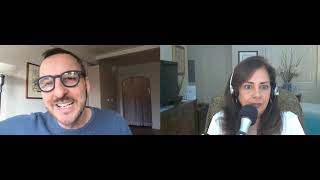
Jordan Friedman, a stress-management expert who lost his sight to a childhood brain tumor, shares practical strategies for managing stress during the pandemic. He discusses recognizing chronic stress, parenting through anxiety, social media's amplifying effect, and offers a free guided breathing exercise and access to his Calmcast app.
Chapters
Hello, everybody. Welcome to this week's episode of Finding Brave. I am bouncing out of my chair. I'm so excited to have the inspiring Jordan Freedman with me. I want to tell you this is about managing stress during a pandemic and beyond. But I think that what you hear today from Jordan is actually going to be a, and I'm not saying this in a hyperbolic way, it's truly going to be a life changer in so many ways because we're not always going to be in a pandemic. Right. Life is going to. No, it's not going to return to normal. No. But we're going to bounce forward and this is going to not bounce back, bounce forward. As my friend Cheryl Hunter says. I really know that these tips and strategies and what you hear today can truly transform your life. So I hope you'll listen up and pay close attention. So, Jordan, thank you for taking time. I so appreciate it.
Thank you, Kathy. My stress is already reduced. You are the stress coach.
Oh, you're hilarious. If you'd seen me a few weeks ago, you would have not said that. You know, I can have a lot of stress and I do. I have questions for you, so many questions about what I struggle with and I do want to share with everyone when this comes out, it's a few weeks later from when we record it. I was telling Jordan I went away with my daughter to the woods in Maine, to a cabin with an outhouse, wood burning stove. And we get there and there's no service on the phone and there's no service about 15 minute drive either. You know, you gotta. And I want to say that I literally went through as if I were detoxing from a drug and the anxiety I had to rein in. And really it was about I'm a mom and I think moms and dads will relate that the idea was what if my children, my other son was traveling, what if they needed to reach me? Life and death, I mean, I had to rein it in and I felt the effects of the detox like it was rough. And then the next day I literally felt changed. So this is how one small thing, not being, it's not small. Not being addicted to the device and what the device does can truly change your life. But you're going to hear so many tips. So let me tell you about Jordan first. I learned of the amazing Jordan through my dear friend William Arruda. William is a million things, but he's the father of personal branding. But I just read his Forbes post today about how to make. I forget the title. How to make Zoom less exhausting and less draining and less boring. You too, you know, you have a lot of amazing stuff coming out. Gotta say, but here's Jordan. Every day, Jordan helps thousands of stressed and anxious people worldwide work, sleep and feel better. He's a pioneer of stress management and wellness promotion. First as director of Columbia University's health education program and now as president of the Stud Coach, a New York based chill factory that produces acclaimed stress reduction training programs and resources. Motivated by his own stress to success story, Jordan has helped everyone from CEOs and college students to police officers and incarcerated adults and career coaches and writers too. Thank you again, Jordan. All right, can we dig in? Can we start with Tell us the story. And you have an amazing backstory of what you've been through. Can we hear that? And your journey to doing this work. Can we hear about it?
Yes. And thank you, Kathy, for having me on.
Such a pleasure.
It really is like, like being in summer camp and getting to hang out with you. So. And everyone else listening and watching fellow campers here. It's stress reduction camp, stress reduction. I already feel better, so. Yeah, and you should hit the buzzer. If I go on too long, I'll cut you off with anything. The hook will come in, including the story. So, yeah, you know what, maybe I should save this till after the story. But I think a lot of us end up doing what we need. And that did not become clear to me until years after I experienced what I experienced. So the story is that I was a really precocious, smart kid, little kid. And I used to read a lot. They would sit me on a stool in front of the fifth graders when I was in kindergarten and I'd read a book like a trained seal because it was so like, oh my God, this kid can read so well. And so reading was a big thing. And, and I did really well in school. And then I got to fifth grade and one day I was doing my homework and my mother saw my homework and she said, jordan, why are you writing off of the lines of your paper? For those of you who are too young to remember, Loose sleep notebook paper, it's paper with lines that we used to write using a pencil or pen. So she said, what's up with that? And I said, well, it was a little hard for me to see in school today, and it's hard for me to see the lines on the paper. So my mother is a jump into action woman. So she got the ophthalmologist on the phone right away. And I was in the chair the next morning at 7:30am and they put the occluder, that thing they put over one eye. And I couldn't see anything of my left eye. I was totally blind in my left eye. Literally overnight. I did not have any clue that this was happening. And then I went right to the hospital and they did head X rays. And this was back in the 70s, so they didn't have the sophisticated equipment that they have today. So they sent me to a more sophisticated hospital, Children's Hospital of Philadelphia, where I'm from, and University of Pennsylvania, and they did more X rays, and they discovered that I had the largest brain tumor ever found in a human being.
Oh, my gosh. And how old were you?
10. 10. And so they pretty much told my parents that I had a month to live.
Oh, my gosh.
Jordan. They were sure it was cancer because, you know, when things are that big, when growths are that big in our bodies, they're almost always cancer. But my mother said, you know what? You gotta. You gotta operate. You gotta, you know, at least try to save his life. And they did exploratory procedures and surgeries, and they got samples of the brain tumor, and lo and behold, they discovered that it was not malignant, but that it was benign and that it had been growing since conception.
Wow.
So for 11 years, it had been growing and was never detected. No symptoms and at all. So then, days later, I had my first brain surgery. So big, the tumor, it was here mostly like a mass connected to my brain and to my head. And then it grew completely through. Around my brain, around my optic nerves, which is what caused the vision loss through my sinuses, cheekbones, down the back of my neck. So it was really. It was like a tree, and the main part was up here. So the first surgery, they removed the main part. They said, we're going to have to do another surgery to try and get the rest of it. They did the second surgery, couldn't get the rest of it because it was just so big and intertwined. They hoped it would start to disappear when I reached puberty, which was characteristic of tumors like this, Although they never really identified what kind of tumor this was. Strange thing happened. After the second surgery, which was successful in terms of what they removed. I started to lose the sight in my right eye.
Did the sight return in the other eye or no?
Well, it took several years. So I was nearly blind for a few years. Between the time I was 10 and 13, I was scheduled for a third brain surgery at NIH outside of Washington because they couldn't figure out why I was losing my sight. Then just before that third surgery, my sight started to stabilize. They put off the surgery and then my sight started to come back slowly over a three to four year period did not return to normal vision. I still don't have normal vision. I'm still mostly blind to my left eye, but my right eye came back a fair amount. So I can sort of do the things I can do. Although I'm legally blind and reading is the big thing that's difficult for me, reading.
And you were such an avid reader.
That's the thing. It was like the thing that I held onto and loved was taken away from me. The rug was pulled out from under me. So you know what happened? I promise I will finish this story.
Oh, it's fascinating is that I, you.
Know, so fifth grade, six. I missed the rest of fifth grade. I started somewhere, you know, during sixth grade. And remember when we were kids, this still, I'm sure, happens. The teacher goes around and each kid reads a paragraph, the next paragraph in the story or in the textbook. And I would be, you know, in the second row of the class. I didn't want anyone to know what had happened to me. I didn't want anyone to know that I wasn't normal, that I couldn't see or read just like they could. So I would count and say, okay, they're starting with Joey. And then 1, 2, 3, 4, 5. I'm the sixth person they're going to get to. They're doing one paragraph each student. I'm going to memorize the sixth paragraph.
Right here in class.
Right here before it got to me.
What a prodigious brain.
And you did that when that didn't work? Sometimes it did. When it didn't work, my plan B was that I would excuse myself to go to the bathroom.
And that was because your sight was. It wasn't that your brain couldn't read, it was your sight.
Yeah, I just visually couldn't see it. When I. When I look at words on a page or a word like you or somebody with quote unquote, normal vision looks at the word house. You see the H, the O, the U, the S and the E. I see the H. A third of the o. The other 2/3 of the O are blurry. And then I don't see the other letters of house at all. So it takes me much longer to go across a word and a sentence. That's still the case today. And we can talk later about how I deal with that, but. So I spent years sort of trying to pretend I was normal, could do everything everyone else could do. And then I somehow managed to make it. I had support and I had things put on tape for me. So I wasn't without any support. But I got to college and my usual supports. I was away from home. I went out of state. I didn't get the help I needed because I needed to initiate that help myself. I still wanted to be normal. My gosh, you go to college, you want to be cool like everyone else. And Kathy, I just reached a point during my first year and I just crashed. It was too much work. I couldn't keep up with it. This wasn't high school anymore. College is a lot tougher. And I wound up in the doctor's office at the student health service. And the doctor said, jordan, all of the indigestion and the pains around eating and all of that stuff connected to that, it's real and I can give you medication for that. I think you should also take a stress management course because I think your stress level is causing you these symptoms. Well, at 18, yeah, I thought that's bonkers. And you didn't believe that.
You didn't believe.
I didn't believe it. What does stress got to do? I didn't understand the connection between stress and how we feel and how our bodies operate, but I took the stress management course.
Okay, you listened, you were open, and.
It changed my life. The first day in class, we learned how to do a technique which I use now. It's still the most popular technique I teach.
Can you do it now? Is it just a few minutes?
Yeah, we can do it. But I'll also just finish by saying that immediately. It helped me feel better and I sort of was opened up to the possibility that life didn't have to be nonstop stress, which it turns out is what I had been experiencing for eight non stop years from when the tumor happened. So that's what launched my career. And I said at the beginning, we end up doing a lot of us, we do what we need. And I so needed stress reduction.
All right, we're going to. I need you on for an hour, Jordan. How's that? Can I ask this for people listening now? I'm always listening with two brains. What I want to know. I'm stressed. I want to know. And what I hope the listeners would want. You didn't recognize you were living with eight years of stress. Can you tell us, can we start here with Once you've Released it. It's kind of like my cabin in the woods thing. Once I didn't look at that phone. Once I reined in the fear that something's going to happen with my child, there was this shift, like, oh, this is what that feels like. Can you tell us what eight years of stress actually felt like and how people can listen, how people can learn. You are holding that stress and you don't even know you are. Is that something you can answer?
Yeah. I mean, I think that for me, it was like there was always somebody else there. So it's the voices we have in our head, right? That it was like another person. And it was constantly saying, do this, do this. Oh, you know, make sure nobody realizes you're really this. It's got to be perfect because you can't show any of your mistakes because of, you know, your visual impairment. And you gotta, you know, mom expects you to, you know, do everything high quality and show that you're just as good as everyone else. I'm bringing in some of my family psychology to this, but I think we all appreciate how other people impact the way we think. So I just never was able to. I didn't know that there were other ways of living. Right.
When you think that you were. Felt pressure. This is not to blame, mom. But, you know, I talk about perfectionistic, over functioning, doing more than is appropriate, necessary and healthy, and trying to get an A plus. And we. And that is a crushing way to live. And we get depressed and anxious and sick and miserable, but we don't pop out of the womb with that. We're trained to be that. And women, I think, have more of it often. But do you think that. Not mom intended? And no parents are out waking up saying, I'm gonna blow it today, but do you think you felt like you couldn't say to Mom, I can't do what you're expecting of me?
Oh, I. It took me years. You know, Kathy, what happened was I didn't get. I got the support of, okay, we'll get people to put stuff to record stuff for you so that you can.
Read it so that you can be at everyone's level.
What I didn't get at all, certainly I didn't get nearly enough of it, was Jordan, this really sucks. You have every right to not want to do this, to not want to run a marathon 24 hours a day or 18 hours a day when you're not sleeping. I get why you just want to give up. I get why you might not want to be a doctor or, you know, a lawyer or an anchor person, which are all three things I wanted to be, or an architect.
That didn't come from them. That was what you thought you wanted?
No, I didn't. No, it. Well, I mean, some of it probably came from a high achieving family. Yes. But just I didn't get the emotional support or the chance to let my hair down and take a deep breath. And for someone to sort of support me in a way that a lot of people interpret as giving up or failing or being weak, that's a big term these days. And so I just, I didn't realize that, that those were options. I just kept going and going and trying to, you know, overcome everything and often didn't share my feelings about any of this stuff with anyone. Often I almost never did. So. Yeah, it's like a building volcano right inside. And then eventually it just erupted because none of us, none of us are built to withstand that. And you talked about going to, you know, to a cabin where you didn't have the phone and the news or.
Any device at all. Here I am with the teapot and the wood stove, you know.
Yeah. So there is a parallel here, and that is that you and me and probably everybody watching and listening know that we use these devices all the time and we. And we have come to rely on them. And in many cases they're fantastic. But. And you get used to them. But then when they're not there, all of a sudden, it's sort of like you become aware of a lot of other things, not only physical things in our environment, but you're aware of different ways of thinking about things. And it's almost like a leash is taken off of you and you can, you know, go to other places. So, I mean, for me, when I went into this first stress management class in college, it was like the first time. I mean, it's so simple, it sounds ridiculous to say this is the first time in my life that someone had said, okay, just stop what you're doing and let's take some deep breaths for a few minutes. Just that, just that was like the door, the prison door swung open. And I was able to see that there were all of these other possible ways of existing and of thinking and of feeling. But for so long, I only knew one way.
Oh, Jordan. Holy cow. So powerful. I want to highlight a few things, if I can, for people listening. You know, I was a marriage and family therapist, dealt with a lot of parents with kids who are struggling. I think one thing that your story highlights and I'D love your thoughts. We are not typically trained as children to stop, breathe, and hear what we're thinking. And one thing I learned in therapy was to be the physical container for people's feelings. Let them be able to say what they cannot say anywhere else. I got choked up. You're really the container. And I think if parents, any of you who have children of any age can have a way regularly of saying, you know what. What's going on in that mind of yours? What are you feeling? How is this for you? You know, but the key is, like my dad who passed away, but he used to say every. Every dinner.
How about that?
Let me hear the highlights and the low lights. And the interesting thing is he was a brilliant scientist, did not do well in psychology, but. But he wouldn't judge. That was the key thing, you could say, the high. The low light. And there was no negative judgment. That's what holding the container is. And a lot of us are not good at that. Like the kid says, frankly, I'm really struggling in English and I'm really stressed. Well, hover mother or hover father is going to be all over that. Well, let's fix that. Yeah, wait a minute. Let's get you a tutor. No, listen, we'll deal with it in a minute. Well, you'll fix it in a minute. But listen to me.
Do you.
Do you agree with what I'm saying here?
Absolutely. And I'm glad you. You said it and brought that up because, listen, we're helpful people.
Most of us, we don't seem.
Yeah, listen, it's good to fix things. It's good to solve problems. But, yes, there is that other part of just listening and, you know, not always feeling that you need to have the answers for someone sometimes just saying, wow, that must be really difficult. I didn't realize you were feeling this way. Just that, in a way, is a fix because you're allowing someone to realize they're being heard. And I would venture to say that you're paving the way for that person, your child or a friend or someone else, to feel more comfortable with you coming forth in the future with more things that are on your mind and that you need help with. You're creating a safe space, of course, for those people. And. Yeah, so.
And it's. It's boundaries, too. I mean, I get choked up hearing you because I didn't have that, because my mom would get really upset if I were upset. So it also requires boundaries that I'm going to hold that you are upset. And I Love you. And it's not going to be. You're not going to see that I'm upset that you can't share. I'm here for you, you know. Important, important. Wow, what a story. Now let's move, move on. How did you from that, that stress management experience, did you say, oh my gosh, I got to be a stress management coach. What happened from there?
Well, I was so wonderfully bitten by the stress management bug thanks to that experience in that.
Was that at the university? It was right there.
Maryland. Yeah. And at the time, bravo to them. Yeah, well, at the time it was one of the only places that had academic coursework in stress management, physiology and stress management.
And you happened to be there.
I happened to be there. I happened to be there. Seriously. One of just a few schools. And so I took more courses and became a teaching assistant to the original professor whose first class I was in. It was like a dream for me and I got the opportunity to teach as a senior. First year students who were coming into that first class that I took.
What a miracle.
It was amazing. And my professor had confidence in me that I could get up there and teach. And so then I was bitten by the teaching bug, by the passing information on to others and seeing light bulbs go on over their heads just as the bulbs had gone on over my head a few years earlier. So it's never, it never left me. And now I moved to New York because I wanted to move to a peaceful, calm place.
Oh yeah.
And I did some other things, a lot of them health related. So I was definitely interested in the health field. But then eventually I just wanted to get back into stress more. So I went to grad school at NYU and studied public health and health education and then wound up at Columbia and directed their health education program, as you had mentioned. So I just got to have this lab of stress management toys and audiences and developed a lot of programming and classes and courses and technology and. Yeah, so I've just kept doing that and I love it. And it's, you know, great to know that just some of what I'm talking about, other people are doing. It's like dropping the pebble in the pond and starts out with a little circle and then gets bigger and bigger and bigger and I wake up with that image and I try and go to bed with that image because, oh, that's. We all have a lot, we all have a lot of pressure to be successful and influence and yes, I'm making little faces and be as beautiful as everyone on social media. And be as rich as, you know, celebrities are and some politicians are. But we can make huge differences with little pebbles. You know, we can be really big pebbles in a way, not so much in size, but the impact that we have on others. So that keeps me going.
What a story. Now, I want to move to some practical tips, but I do want to highlight another thing. You know, I work with a lot of people who want more meaning in their work. And one thing I say is, you know, the most fulfilled people I've ever met in. In their work have often taken some aspect of their mess and turned it into a message. And I wish I had created that sentence. I didn't really good. But it is really good when we struggle with something we have. So everyone, if you want more meaning in your life, think of this. We have so much empathy for others who are struggling with some version of that. And, you know, it's not just that you have to work with people who have had brain tumors. It's when you feel you're not enough, you know, and women have that in space. I'm not smart enough, pretty enough, thin enough, accomplished enough, strong enough. Then you are living in a constant state of stress. You're not enough. And you're going to be found out. So think about what mess have I had in my life that I have overcome or, you know, for me, I knew I wanted to help people. I remember saying to a friend right after we both got laid off in a brutal way from corporate life. I can't. I want to be inspiring, but first I've got to do something inspiring. And for. I don't know why we laugh for five minutes because I knew I wanted to help, but what the heck was I going to help with? I mean, I was a mess. So you turned your mess into a message. You got anything to say about that?
Yeah, just what you said at the end is what I was going to respond with. It's. You first said, oh, how can I inspire people? I want to inspire people. That's great. I think the key is help. So I said it before, help people. Yeah, I think I said it in some way before that most people want to help. And many, many people appreciate help. And help can come in. So many better reframe help.
Inspiring is like, how can I be a thought leader? I can't stand when people call themselves a thought leader or how can I be an influencer? Forget it. How can you help?
And it can be holding the door for someone can help them. It's true, you know, so I'M using like a basic common example. And of course, you can do things that are bigger, but you can help all day if you want. I think for somebody trying to find meaning, just going down that road, maybe you'll end up on other roads. But what do I do? Who am I? What are my experiences that can be helpful to other people? What are actual things I can do to help other people? For us to be very selfish about it for a moment. It really feels good to help people. It really feels good.
It's so generative. That's not the word. It gives so much. It gives so much.
It's a boomerang, right? We feel good. The people we help feel good. And Carly Simon has an amazing quote. It's, it's very close to people are tremendously helpful. You just have to give them an opportunity.
How beautiful, right? So what a nice way to look at humanity right now. That doesn't quite feel accurate.
No, no, no, I know. And we live in this world where we're supposed to be able to do everything for ourselves. We're supposed to be super men and.
Wonder Woman, individualistic hacking it out warrior. Right?
I love that idea of helping to help us find our meaning and our purpose. And keeping in mind that small things make a huge difference. And by the way, we never know sometimes the little things we do to help people, where that's going to end up. Right? Maybe the person you helped two days later is going to help someone with your information and it will save that person's life.
I agree with you. Here's what I want to do. Jordan, if you're up for it, I would love to make this. This is part one. There'll be a part two. And we're going to talk more about really specific strategies for stress management. Why we're so stressed right now. And I think we know. But I'd love to hear from you. But before we end this part, well, there's two things I want to say. A lot of us are so, so darn busy. A lot of parents. I know moms, you know. Sadly, the negative impact of COVID is hitting women in, in many ways harder. Domestic violence. They're trapped. But I think so many of us are so busy that when the call for help comes, sometimes we don't feel we have it in. In us. And I'll be honest, I get a lot of requests for help. Can you help? Can you look at this? Can you look at my LinkedIn profile? You know, stranger, strangers. Or maybe it's a course member and the Courses of mine and it's ended. But they still want help and they might. Just the other day someone wanted me to look at something and I, I'll be honest, I groaned like, oh, I don't have time. And I snapped myself out of it. You don't have time Because I'm a writer. I can look at this thing in 10 minutes and make it better. And it was a fundraising for something, a beautiful cause blurb I did. It took 10 minutes. And the amount of gratitude and how that impacts this person is so big compared to the 10 minutes I spent. So one thing I'd ask people is, are we really that busy that we aren't going to respond to that call for some assistance? Let's think about it. Because I think what are we really doing here if we're really that busy that we can't do that? What do you think?
Yeah, I'm just going to add something. It's not a pushback to that, it's just an add on. I would never add. No, I would just say that it's true that sometimes we just don't have any more bandwidth. Right. And we do need to have some self preservation. And I would just say maybe we could all think about some other resources that we could pass on to the person asking us for help. You know, I get those questions too. And I have my list of, you know, hotlines. I'm thinking more about mental health things as opposed to writing hotlines or other people they may talk to or apps that they could use or websites that they could go to not to leave people hanging. Right. So you are perfect. You are still helping them. Right. But you're also helping yourself with the same time.
Yes. And get, don't get me wrong, if someone writes, how do you become a thought leader?
Oh boy.
Well, I've written about 52 posts on that and here's three podcasts. So of course I'm going to give them that. I'm not going to talk for an hour about how to be a thought leader, but this was really. Can you edit this?
Yeah, yeah, yeah, I get it.
So no. Very good. Because perfectionistic over functioners do too much. Now, before we end part one of this, can I have you do two things?
Of course.
What do you think is the biggest reason we're also stressed out with the pandemic. I mean, I could list 10, I'm watching my mother fade and I can't be there all of it. But what do you think is the biggest reason? And then I would love us to have you do that strategy that was just a few minutes, if you wouldn't.
Yeah, yeah.
That's the biggest thing we're all fallen apart about.
Yeah. I don't know if I can limit it to one thing, but I'll limit it to one or two. You know what, it's, it's tough to have a tea party during an earthquake. And I think that we are experiencing something that none of us has ever experienced. You know, 100 years, maybe somebody who's 100 and it has to be like 110 to really Spanish flu or. Exactly. So. So we're in this thing, we don't know where it's going. It has completely upended the lives of many of us. There's fear connected to it. So I do, when I talk about stress management or I do online trainings or communicate in other ways, I really remind people that, you know, give yourself a little bit of a break too, because this is unprecedented. So I think that's a big, it's a big earthquake. It's a big shock and it's not surprising that we are all so stressed out. And you know, under all of that, whoever thought that we would be home all day and whoever thought that our kids would be living with us for months on end or that, you know, we wouldn't be able to go to a damn bar, you know, or all.
Those social ways we connect or have.
Thanksgiving dinner, I mean, that's the next thing that's coming up that's going to be, you know, another tremor that we have to deal with. So I just think that it's completely natural. And I would say that because there's such a, an earthquake happening because there's so much, please, please, please, everyone do even more to reduce your stress. Because the more stress there is, the more we need to reduce it. When we're thirsty and when we're really thirsty, we drink a lot of water. We don't just have a little thimbleful of water. So don't just take a thimble full of stress reduction, you know, figure out and we can talk about, you know, more stuff in part two that you.
Could actually do that.
But it's really important to, to do as much stress reducing and not pretend.
Don't pretend. I want to. I want to end part one with this. I just watched the Netflix doc the social Dilemma. And one thing that is so frightening, that these are founders, designers of the top tech companies, Google, Instagram, Facebook, you know, Pinterest, whatever. No, not Pinterest whatever, but one Thing they said, which is so scary, is the algorithm is built to keep you hooked. But my son shared that what he had heard was also, we respond more compellingly to negative things. So the algorithm, one of the geniuses on this said that if we keep going, there will be a Civil War in 20 years. Because the divisiveness is not just leadership today. It's what social media is doing to pull us in and keep us. So we're not even seeing. The feed that we're seeing is not random news. It's tailored to keep you listening and watching. And I'm just going to leave you with part of why the pandemic is so stressful for me. Because I live. It's fine. I do zoom. I'm okay. I'm social. I'm still singing. I'm playing. Not live, but virtually. I'm playing tennis. It's the divisiveness. It's the rage, it's the hatred, it's the judging, and it's horrible. And that is what. And it's the divisiveness around Covid and how we're dealing with it. That's what stresses me out.
Yeah.
That you're hearing it.
It's bad enough that we have to deal with a disease, we also have to deal with another disease on top of it, which is this anger and rage. And it's true that these. That social media and other types of technology, they're designed to stimulate us. They're. They're. And part of that stimulation is often it throws us into a stress response and a fight or flight response. That's right. So, yes, it's. It's a version of what you're saying, but it's absolutely true.
I'm going to be ever vigilant. I'm. They say, turn off your notifications. And these are people that founded things in Facebook. Facebook monetization Director. Turn off your notifications. Leave it in another room. You know, this is not just nice to have. You need to do it. Watch that. All right, Jordan, leave us with part one. Can we do it? Can we do it? I need it. Please. Give it.
Yeah. Let's do. Let's do a quick calm. So if you want. And everyone watching and listening. If you'd like to close your eyes.
I'm gonna do it.
You may. And just breathe normally for a moment or two. I don't have to do anything else except breathe. And what I will ask you to do in a moment is to take a deep breath in. I'll ask you to hold the Breath for a few seconds. I'll ask you to think to yourself, I am warm. And then I'll have you exhale and think, I am calm. That's it. You don't have to remember anything because I'm going to lead you through it.
Great.
Three, two, one. Take a deep breath in. Good. And hold and think to yourself, I am warm. And exhale nice and easy. And think to yourself, I am calm. And now with your eyes closed, just breathe normally again for a little bit. And one more time. 3, 2, 1. Take a deep breath in and hold and think, I am warm. And exhale, Think I am calm and relaxed. And when you're ready, you can open your eyes. So that was just a couple of reps of quick calm. You can do three or four. And I describe quick calm as like texting your heart and your brain and your lungs to slow down. And the physiological.
Right, there's a parasympathetic. What's it called? It's actually doing something physiologically.
Yeah. You're stimulating nerves. When you do that, nerves are sending signals to your heart. It's telling your heart to slow down as far as science can tell. And of course, the heart slows down and your breathing rate slows down. Sweating slows down, Racing thoughts get slower, your ability to focus increases. So quick calm is designed to calm you down quickly when you're feeling suddenly stressed. I hope everyone was not feeling suddenly stressed when we started.
This podcast is really stressing me out.
If it did make you feel at least a little better. I'm just doing it now. Imagine how it might help if you were really in fight or flight mode. So quick calm is simple, fast acting, easy to remember, and I don't know if you want to talk this time or next time about the resource that people can use right now.
Let's talk about the resource. Then we'll talk for a few more.
Yeah. So we thought it would be fun if we gave a bunch of you use of the Comcast app that my chill factory produces. So there's a free part of it anyone can use. You can go beyond that, but the free part of it does have that quick calm exercise. So it's like you just have a button that you push and it's me.
Is it you speak to me. You had a beautiful.
You hated my voice. Then delivery. Forget it. But if you were okay with it, you just push the button and for this, a quick calm express. And there's a. There's a regular quick calm. It's just me guiding you. So it's like a. It's like a panic button or an anti panic button or just a feel good button that you can use. So why don't we say like, what did we say? 50 people would be amazing.
50 people can.
The app is called Calmcast. C a L, M, C a S, T. One word. And it's in the App Store and Google Play. You can download it for free and up will come the option to put in a password. And why don't we use. Should we use Caprino?
How about Finding Brave?
Finding Brave, even better. So finding Brave, all lowercase one word. Put finding finding brave in as the password and you'll be good to go first. 50 people. So if you get there and you can't do it, it's probably because you're the first person, but you can still, at least for a couple of weeks, try it out if you want or as I said, go beyond. So.
Oh, my gosh, Jordan, thank you. So I literally. And it works for me. It does. I feel different. I feel so different. Thank you so much. Thank you. And I can't wait to do part two with you. Are you ready?
Thank you for helping me help you and others. That's really great. And keep doing what you're doing. And yes, when we do a part two, we should focus on, yes, more strategies, more actual things that not only you can do for yourself, but that you can teach other people.
Love it. All right, people, I always say, I hope you're inspired. Now I'm gonna say I hope you feel the difference of what it is not to carry that agitation and fear, whatever it is, but you just feel more yourself, like the best version of yourself. I hope that's what you feel. Thank you, Jordan. All right, people, stay tuned for part two. Coming now. Have a great week. Bye. All right, my friend, you up for doing another 20 minutes?
Oh, yeah.
Do you want to do it now?
Sure. I mean, does that work for you?
It does. You want to take a break to.
What's your. What's your afternoon like? Like, could you come back at. I could three.
I could. I could do that. Let's do it. You know what I like, this is coming out, I believe Thanksgiving. Let me look. Yeah, it's coming out Thursday. Well, we'll do it. We'll do. I'll send it out Friday, but it'll be the Thanksgiving week. Won't that be good?
Yeah, maybe we should also. Yeah, it'll be great. Maybe we should also then throw in just a little talk about holiday stress.
Let's do that.
Different holiday stress. Right.
I'm going to do put. That would be December 3rd. The next part. Let's do it.
Oh, I see what you're saying. Okay. Yeah, that's great.
Can we do that?
Yes.
All right. I'll see you at 3.
Okay, great. Bye.
That was really fun. Bye.
More from Kathy


Elevate Yourself, Elevate Others, and Amplify Good | Chris Cooper | Finding Brave Ep. 334

Finding Brave Epis #333: How Leaders Can Harness AI Without Losing Their Humanity, w/Bennett Borden

Finding Brave Epis 332- How to Stay Brave, Valuable and Visible in the Age of AI, with Raman Rai

Finding Brave Epis 331 - The Power of Positive Disruption, with Dr. Patrick Leddin


Finding Brave Epis 330 - Being 40: Letting Go and Embracing Who You Are, with Stacey Lindsay

Disrupt Career Reinvention with Kathy Caprino - via The Disruption Lab Podcast w/Patrick Leddin

Creating Neurodiversity-Friendly Work Cultures: Simple Workplace Adjustments Matter

Finding Brave Epis 329 - How To Create a Neurodiversity-Friendly Workplace, with Kristen Pressner

Finding Brave Epis. 328: Reclaiming the Power to Trust Your Own Voice, with Dr. Cindy McGovern