Finding Brave 151: How to Manage Stress During a Pandemic and Beyond (Part 2), with Jordan Friedman
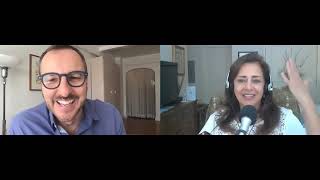
A recorded conversation (YouTube video) between host Kathy Caprino and stress-reduction expert Jordan Friedman offering practical strategies to manage stress during the pandemic and beyond. The episode covers common resistance to stress-management practices, the physiological science behind techniques (breathing, exercise, meditation), a short guided mantra meditation, and promotional information about Friedman's CalmCast app and a Stress Coach training course.
Chapters
Thanks for doing it with me.
Hello, everybody. Kathy Caprino here. Finding brave. Today we're going to find a little more brave. And we are on part two with Jordan Friedman on how to manage our stress in a pandemic and beyond. Jordan, thank you for coming to part two with me. You're my first part two.
I am honored to be a part two.
I've never, never been a part two.
Oh, you probably have in other ways.
I don't know what I didn't know.
I was part two. But thank you. It's really fun.
I'm glad to be back.
It's so fun. So for those of you, let me just state this. We I'm hoping this is coming to you right during the Thanksgiving holidays, getting ready for the other holidays coming up. And if you are like the vast majority of human beings getting together with family, sometimes seeing old friends, now we're not traveling as much, who knows where we're going to be. But it can still be a very stressful time. I know I'm going through a little bit of stress with my own family, health, all of it. So we're hoping this is going to be really juicy for you and Jordan. Let me just tell you again, I'm not going to reread the bio, but Jordan's a stranger. Stress management stress reduction expert has helped thousands of people from all walks of life. You can listen to his bio on part one and last time we talked about why is it we're feeling so much stress? How does that impact us? And you know what, we need to really understand that we don't about stress. And Jordan, you did such a quickie exercise that, you know, I really felt changed from and I so I want to begin there. And today we're really going to give you strategies that you can use. We also made a special offer that was so generous. We'll repeat that for you. But you know what, I want to start with Jordan. In my world in coaching, you know, I find that when people, we all have strengths and we all have some blind spots and challenges, that's life. The strengths I don't tend to focus on because you're already flying in those areas. It's the areas where you got some blind spots. You've got some programming from the past that's keeping you. You've got some resistance. I had one person in my amazing career project course, she basically for it's 16 weeks, for four or five weeks, she was like, what's this going to do for me? I'm not deserving of her it's not going to be cut out for me. It's not in the cards to have a great career. That's. And I finally said, what is this that we got here? What are you resisting? So I do want to start there. Jordan, do you see that some people resist. What is this stress reduction stuff? Or I don't need it or I don't need to sound judgy or how's it going to help me? Do you have, do you see that in the CEOs or the high driving people or anyone else? Do you see that for sure?
For sure. And I think it's normal, especially with.
People who are on the go all.
Of the time and they already feel like they have so much to do and maybe they have so much stress, what the heck is sitting quietly going to do for them?
Or do they even resist making time for it?
Yeah, it's. That's always, well, almost the first excuses. I don't have time to manage my stress. I don't have time to manage my time. And it's for all sorts of different reasons. It could be that they do have a lot going on and they can't figure out how to really prioritize is what it is. Right. We always have time for more things. And the kind of techniques that I teach, many of them are often just a few minutes long or 15 or 20 minutes long. Even in such a short time, that can make a huge difference. So I think that most of us can find 5 or 10 or 15 minutes to put these things in our calendars. Sometimes I'll do the talk, the little coaching pep talk of the priorities that you or anyone might have who's resisting could be, I have a meeting, meetings all afternoon. I have to pick my kids up after school. I travel a lot in the days when we used to travel. I need to work out and go to the gym. That's good for health.
So what I encourage people to do.
Is to take something that's in the stress management world. Let's say they decide to, they want to start meditating or they think that might be interesting to make that a priority. Just like it is, just like these other things are, put it in your calendar, set a reminder, have other people check in with you that you did it.
And in my opinion, and I know.
I'm coming from a certain place, stress management, meditating, exercising, whatever it is you're.
Going to do is not only as.
Important as picking your kids up at soccer practice. It's more important in the big picture. I'm not saying you should leave your kids at soccer practice and let them bend for themselves. But if you or any of us, if we're so stressed and exhausted all of the time and can't focus, we're not going to be there not only for ourselves, but for other people, for our kids, for our partners.
We're going to be a hairy, nervous, neurotic mess.
Yeah.
And it builds up, right? We can go along for a period of time, but then a lot of us just get to a boiling point where we can't deal with it anymore. So I talk about making things a priority. I also, frankly, Kathy, talk about the science and the data behind a lot of these techniques. This is not, oh, I don't want to get myself in trouble here. This is not about wearing a funny hat because we think that's going to help you reduce your stress. This is about breathing in a deep way diaphragmatically. This is about listening to environmental tracks. This is about exercise. We know that these things have a physiological and psychological impact that support stress reduction. We know that these things lower heart rate, reduce anxiety levels, reduce cortisol, which is the primary stress hormone in our bloodstream. We know that these things help people sleep better, sleep longer if they need it, and the list goes on and on.
So I'll come in with the science.
As well because, you know, for people who, you know, think along those lines, it's really important to talk about those things. And frankly, it is important. We, we've come a long way over the years in studying these techniques. And now, of course, what we didn't have when I started out was brain imaging technology where you put a, you.
Know, a helmet over a meditator with.
Electrodes attached and you see the brain calming down. You can actually watch it happen. And it's. It's amazing.
I love it. I want to say right before we started recording, I said to Jordan, after I did the exit, the breathing exercise that you shared, what happens to me is I often feel exhausted. The perception I have is what I am feeling, feels exhausted. So I asked Jordan. I'm pretty sure I'm not any more exhausted than I was two minutes ago having three deep breaths, two deep breaths, and I guessed. And I want you to hear his answer. My guess was I am so habitually used to what my body feels like revved at a high level, that when that shift in the cortisol in the brain waves happens, it feels so different that the only thing I'm equating it to is I feel like I can go take a nap. It's kind of like when you go to the Caribbean, you know, or you go on a long. When we did you go on a vacation. And for me, the first three days, two days, I'd sleep. I just sleep like in ways I never could sleep before. So I want to tell you that I would used to resist doing this kind of breath work because I would say to myself, it impedes my ability to get a lot done and that is erroneous. But do you. Do you hear. Can you talk about. Because some people are going to do this through two minute breathing and they're going to say, why do I feel so tired? Can you explain what that is? And then we're going to give you exercises, people.
Yeah, you used the metaphor of shifting gears and it really is like that, right? You are driving along the highway at 65 or 75 miles per hour, which is a normal speed that many of us live our lives in, right? And then you downshift because you're going onto the off ramp. So you. The engine quiets down, less energy is being used and you're just slower. So in a sense, that's what's happening. We have an incredible ability as human machines to just keep going. And the stress hormones are like fuel.
That enable that to happen.
So when we pull back on that, there can be a dramatic change and that can be felt as being tired or exhausted. You know how sometimes you, you know.
A whole day goes by, you're doing.
This, that and the other thing, and then you just sit down or maybe you lay down on the sofa and you're asleep in a second?
Me?
Yeah. It's very.
So what do you say to people who go, I don't want to feel that it's going to stop me from producing all this wonderful stuff I produce.
Oh, you know, doing a stress management technique daily or meditating every day, it's not going to all of a sudden make you a blob of jello.
And in fact, I think other things happen. You're in touch with your intuition and your creative muse, and it's different. It's not just being overly revved up.
It's exactly right.
If you clear your head with a stress management technique, maybe you'll be able to hear a solution or a problem.
That you wouldn't have been able to.
Hear before because you got so much going on in your head and you're running from one thing to the other. I can say for myself, I talked about it in part one as a kid. I was go, go, go, go, go. I didn't know what it meant not to do that. And then I started meditating and it didn't slow me down. It opened me up, if perfectly.
Yeah. And I definitely just have a more.
Calm demeanor than I used to have. And one thing that we know that meditation does a lot of meditators report this is that it reduces stress reactivity. And, and that means that we just don't get as stressed about little things as we used to, which is so important. Imagine if you plow all of that stuff out of the way, what's possible for you?
I love it. All right, I promised and I'm going to. We're going to deliver. Let's give. Can we do three small stress management and you know, you talk about meditation, Jordan. A lot of people I know know they should do it, but they have no idea how. And meditation for a lot of people sounds like I need to go on a mountain. And you know, what is it?
I don't even know.
I don't do it.
Yeah, do this.
That's right. And sit cross legged and wear. Because I have a, you know, post traumatic arthritis in my knee and wear robes and.
Yeah, that's it.
And the incense and the. Can you give us a meditation that we can do?
Yeah, you know, you know what I'll do? That's a really great question.
I will. Yeah.
Let's do a little meditation as much to show people what meditation means.
Be amazing.
As. As. And it may relax you at the same time because meditation and mindfulness are terms that are about all the time today and they are just. They're often not used.
Accurately.
I don't want to say correctly, but they're used very broadly. And don't you say that meditation means focusing on something repetitive or unchanging.
Oh, there you go.
Layman's.
We can do that. Let's do it.
Okay, so.
Why don't we. I'm going to use the classic mantra of om. Okay. Sometimes spelled ohm. Sometimes spelled just O M. And we're going to focus on the om. And maybe we'll just do it.
I'll guide everyone through it and then.
I'll do a little explanation afterwards of what's happening. Does that sound good?
Perfect.
Okay.
Can't wait. If I nod off, just hit the microphone. I'm delirious already.
I'm delirious already. You haven't even meditated.
Okay.
Okay. So if you'd like, everyone, you can close your eyes. I always invite people to close their eyes. Rather than saying you should. But if you feel comfortable doing that, please do so.
And I must say, people, if you're listening while you're driving, of course, if you're listening in a place where you can't be doing this, wait till you get home.
Thank you, Kathy, you're stealing my jokes.
I'm sorry. I just don't want to be liable for anything.
Okay, so with your eyes closed, just sit. It's always really important not to just jump right in or out of meditation. So just sit and you can take a couple of deep breaths. If you remember from last week's episode or part one, you could do a couple quick, calm breaths, breathing in and holding and releasing. And you can even imagine darkness or imagine your stress dissolving each time you exhale. So just sit quietly for a few moments, and then I'll take us through a little meditation. And what I'll ask everyone to do.
Is to, very slowly, when I guide you, bring in to your mind's eye, to your thoughts, that mantra. A mantra is something that we focus on an object to focus during meditation. So we talked about using Om, the sound Ohm, and let's just slowly bring it in to ourselves. Think Om, Om.
Om.
Om. And I'll have you for just a minute or so. Recite to yourself in a very easy, rhythmic way, Omn. Oh. And if you find yourself thinking about other things, other thoughts come into your head. That's completely fine and normal. Just gently let them go and bring your attention back to Om, Om.
Oh.
And as you continue to recite Om, I'd like you to slowly let it go. Let your mantra drift away, and just replace it with whatever comes into your mind. And just be still, keeping your eyes closed for a few moments. Maybe think about what you'll see when you open your eyes, and maybe count down from 15 or 10 to yourself. And when you get down to zero, you can slowly open your eyes. And if it feels better to just keep your eyes closed for a little bit, there's.
There's nothing to see here.
You can just listen to me and Kathy. It's a beauty of podcasts, although I.
Know this is on video as well. So, Kathy, how are you feeling?
Wonderful. And I think I'm a perfect example of the overly wet, the individual who initially finds this difficult and how the body and mind can resist the slowing down. So what do I mean by that? I mean I feel wonderful. And I don't want to give the impression that, you know, this is the first time I've ever engaged in these types of activities. But what happens to me is sometimes I get more agitated in the beginning. Like the heart starts to beat faster. Have you ever heard of such a thing?
Sure.
It's, you know, you're changing gears, right?
So there's, there's just a change, the stress response.
So I'm, you know, people look at me. I am the walking example of why we might find it a little challenging in the beginning or why we might resist it. You know, when I've done kind of visualization exercises with people, you know, I'm one that sees a video in my mind. Sometimes I. Even when I'm working with someone, I will see a video maybe of even their life. I see things other people hear things. Auditory intuition. But, oh, what's the point? Oh, when you're shifting gears, I mean, often there's this sense of what's happening here. This is different. Do you understand what I mean? And I think that, as you said, I mean, I've always said change, even incredibly positive change, can be stress inducing because it's. It's just like what you were saying in part one. You really never experienced yourself the way you actually would naturally normally be without trying so hard to be someone. Am I making sense?
Yeah. And you said it is different.
Right. It is just a completely different way of being.
So, so what is it that we.
Just did for four minutes, was it? Or five minutes? I wasn't keeping time. And, you know, you can meditate for a short time like that. A lot of people do it for 10 minutes or 20 minutes or 30 minutes. The, the, the thing that's so difficult for a lot of people is that part about other thoughts coming into there.
It's not working for me is. Well, that's what the point I was making. People will say, come on. I, I had a million thoughts. I'm doing it wrong. Can you talk about that?
Right. Yes. That is the key. The key.
Oh, we're not hearing you, Jordan, Because.
I accidentally hit mute. Sorry, my mic started to meditate. Yes, because meditation is not a contest to see how long you can focus.
On your mantra for.
That's what people often make that mistake.
Right.
And when we talk about mindfulness, being in the present moment, thinking about what's happening right here, right now, focusing on what's right in front of you. You know what? Our brains are beautiful, very complex machines, and we have a lot going on in there. And we're supposed to be paying attention to other things. It helps protect us. So meditation or mindfulness training really is asking us to do the opposite. So it's really important to not get too frustrated. Listen, I've been meditating for a long time and I can't. It's not a matter of can I sit down and I focus on my mantra and before I know it I'm thinking about a friend in junior high. What's up with that? Haven't thought about them in a long time. So the beauty of meditation and where the benefit and the training for life seems to come in is that we recognize we're not focusing on our mantra. We easily let it go. That was part of the directions I gave. We bring our mantra back into focus until it happens again, which it will happen again. We'll be thinking about something else. We recognize that we're totally chill about it. We let it go.
We bring in our mantra.
I call it the meditation cycle. It's just, it comes and goes. And that's what meditation is. And what we believe happens. And what a lot of people meditators report is that that translates into waking life, into non meditative life. That we are able to not only be more aware of what's happening around us, but think about things that would stress us out. Normally this is what this reduction in stress reactivity is. Things that would stress us out. Traffic, loud noises, rude people, high prices, whatever. Come up with your list of things. Just, it seems to roll off a lot more easily. We just let it go more and don't get as stressed about it and just that reduces our overall stress level. Does meditating mean that you're going to get rid of all your stress and you're just going to again just sail along and no problem and you're totally cool? No, you're not going to turn into somebody who sits on a mountaintop in Tibet and just meditates all day and doesn't get stressed. But it really can plow a lot of existing stress out of the way. There are 50 other benefits to meditation also better sleep and less sleep required, which is definitely something that I have experienced. So I went from needing eight, eight and a half to pretty much being able to get away with six and.
A half or seven.
Is that because your body's already restoring itself in waking hours?
You know, I don't know that we really know why that happens. It could be that meditation, it's a form of rest combined with reducing overall stress, which taxes us, means that we're taxed less. We need less recovery time through sleep. But meditation is an awesome thing. You know what you mentioned in the beginning before we started this about, you know, people like, how are they going to meditate? They don't have time for this on the app, which we can talk about at the end because I'll renew that offer. We have two tracks. One is called meditation coach 10, 10 minutes. And the other is Medicaid meditation coach 20, 20 minutes. So they're designed to, so to be training wheels for anyone who's interested in maybe trying meditation. You can learn it that way and you can use it as a guide every time you meditate if you want because it takes you into the meditation and it brings you out so you don't find yourself sitting there. Three hours later, I lost myself.
What happened? Oh my gosh. We are about to wrap up, but I want to share this with you, Jordan, and hear your thoughts. When I was first in therapy 20 years ago, quickly, I want to tell you that the spiritual psychotherapist said to me, you know, I noticed Kathy, you, you have a lot of judgments. He didn't mean I'm a mean judgmental person. That just the way of thinking was judging. This is good, this is bad, this is stupid. You know, this is wrong. And he said, judging like that is stress inducing. It's unhappy making. What I'd like you to do this week before I see you next time is every time you have one of those judging thoughts, I want you to do this. Make a mental check mark and say there goes one of those judging thoughts. Then let it go. And what we're doing here is separating you from your thoughts. You are not your thoughts. But until you recognize, and apparently we have, what do we have? A hundred thousand thoughts, whatever, something, you can't recognize them all. But once you begin to make a space, there go. And not to be judging of them, but there goes one of those blip thoughts. It's life changing. So I come back the next week and I said I think I did it wrong. Which is hilarious. I mean, there goes one of those judges he judged.
The judge laughed.
I go, oh, that's ridiculous. And he goes, why do you think you did it wrong? I said, literally, I think I got to 1321 mental check marks. And I couldn't do it anymore because I don't even think I have a non judging thought. The whole it, it all worked out well. But the whole point is I think what we're trying also to do is separate yourself from your thoughts so that you're not instantly knee jerking reacting to that thought. And to me, that's what your meditation allows Am I getting it?
Yeah, it certainly can.
I mean, that.
That ability to just step back middle school, right. To see it from a different point of view, not react immediately. And often, you know, with ang. People who are angry a lot, you know, it's.
It's.
It can certainly be related to judging what you just talked about. It also. Yeah. Gives a valve release. It translates the meditating into a valve release in real life that you just. Okay, you know, maybe that person said that because they had a terrible morning or, you know, I'm not going to react because there's a better way to respond to this. Whatever. Yeah. So meditation is. It does reprogram you, I could say it can reprogram the way you think and certainly the way you feel. I'm a big, big, big fan of meditation. And let me just also say maybe this has come through that, you know, you. Depending on who you go to or what article you read about meditation, you'll find different opinions about how you should.
Do it or if you're not going.
To do it for more than 20 minutes or at least 20 minutes, don't waste your time. I'm very liberal about stress management.
A minute is better than no minute.
Yeah, just. You know what? Try it. You can build up from there. Dip your toe in, you know, to see if the temperature is right for you. And if you like it or if you love it, keep going if you don't. Because for some people, what we just did for a few minutes, they would be running around the room.
Right.
Just not being able to. They feel so confining. There are other things you can do then you don't have to meditate. You don't have to be mindful. There are other more active stress reduction techniques.
Oh, Jordan. And also you can learn if you love it and have already developed a practice and you want to be a stress coach, you have materials all about this. So I would go on for hours, but I'm conscious of your time. Can you tell us where we can learn all about you, where we get your app, where we learn how to maybe become our own stress coach for other people through you? What do we do? Where do we go?
Yeah. So first on the app, you can go to the App Store or Google Play and download Comcast. C A L M C A S T. One word. And you can do a couple of things. You can download it and try it for a couple of weeks, the whole thing for free. You can subscribe and I'll extend the offer from last week. What we said was last Time. I keep saying week, but maybe it's last time. Part one. Part one. We gave a gift of 50 full access passes to the app for a year using.
Finding Brave.
Finding Brave as the password. Thank you. Finding Brave as the password. I'll throw in another 50 because it's part two.
Oh, how.
If you get there and Finding Brave as the password, all lowercase, one word, doesn't work, then sorry you didn't get there in time. But you can still use the app. There's also a free version that has quick, calm and other things on it that you can enjoy. So that's one thing. Have fun with that. And then the second thing, Stress Coach you. Yeah, I just launched a training course that I used to do in person, but that sort of gone out the window now. Stress Coach you trains coaches and psychotherapists and parents and teachers and HR professionals, anyone who helps other people. It trains you how to teach simple stress reduction techniques and trains you how to use them yourself if that's what you'd like to do. They're very concise lessons. It's all video based in their exercises. You get the app as part of it, so that's a bonus. Plus a lot of other goodies. And if you know what, since it's the holiday season coming up, it's right now the course is 40% off as the introductory launch offer. But how about for the first, oh, I don't know, 10 of your fans who get there and want to do the course, I'll throw in another 10% off, so it'll be 50% off and use as also a password, use Finding Brave so you don't have to remember.
That is so generous, Jordan. Thank you. I swear, I feel changed. I feel wonderful. It's such a reminder, everything you've shared about and you know, we're after the election now, don't know how it's turned out interestingly, but I'm sure some people will be incredibly stressed whatever way it goes. I hope you find this so helpful in your life and we would love to hear from you, wouldn't we, Jordan? Wherever you see this, please, please give us a question. Give us, wow, I did it and this happened. Or boy, I'm struggling with this. We'd love to help. We'd love to be in the fabric of your experience, of this, your new experience, and let us know how we can help you. Thank you again, Jordan.
Oh, thank you. Thanks again. I said this last time, but thanks for letting me help. Hopefully help others and everyone help other people too. It feels good.
It's good for all of us.
Thanks, Kathy.
Thank you. Thanks, everybody. Have a wonderful week, wonderful holiday, and I'll see you next time.
More from Kathy


Elevate Yourself, Elevate Others, and Amplify Good | Chris Cooper | Finding Brave Ep. 334

Finding Brave Epis #333: How Leaders Can Harness AI Without Losing Their Humanity, w/Bennett Borden

Finding Brave Epis 332- How to Stay Brave, Valuable and Visible in the Age of AI, with Raman Rai

Finding Brave Epis 331 - The Power of Positive Disruption, with Dr. Patrick Leddin


Finding Brave Epis 330 - Being 40: Letting Go and Embracing Who You Are, with Stacey Lindsay

Disrupt Career Reinvention with Kathy Caprino - via The Disruption Lab Podcast w/Patrick Leddin

Creating Neurodiversity-Friendly Work Cultures: Simple Workplace Adjustments Matter

Finding Brave Epis 329 - How To Create a Neurodiversity-Friendly Workplace, with Kristen Pressner

Finding Brave Epis. 328: Reclaiming the Power to Trust Your Own Voice, with Dr. Cindy McGovern