Finding Brave 161 & 162: How to Course Correct Your Life Now (Before a Crash), with Antonio Neves
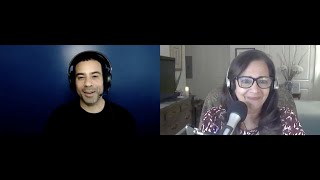
Interview (Finding Brave podcast) with Antonio Neves about his book Stop Living on Autopilot, recorded in early 2021. Conversation covers Neves's Publishers Weekly op‑ed on race and readership, the experience of living on 'autopilot' despite external success, metaphors for identity ('uniforms') and career (Ferrari, open apps), strategies to course‑correct (close nonessential 'apps', be your own benefactor, act before windows close), a pivotal personal turning point (smoking in an LA alley and an encounter that prompted change), and book availability (print and Audible). The tone is candid, practical and motivational.
Questions this video answers
Stop Living on Autopilot: Take Responsibility for Your Life and Rediscover a Bolder, Happier You.
AntonioNeves.com
Yes — an audio version is available on Audible; Antonio Neves narrated (he recorded/read the book).
Chapters
Hello everybody. Welcome to another episode of Finding Brave. We are in February. Now when this comes to you, how's it going? New Year's already happening. Hope you're having a good, good winter. And I just can't tell you how excited I am to have Antonio Nems with us today. Antonio, how long have we known each other?
Now here we are in the year 2021. It must be at least 2010, 2009. Media Bistro Events.
Media Bistro. Are they still around?
They're back. They're doing events again. I just saw recently. So they're back.
Let's don't, let's speak for them. I love them. That's how we met. Oh my gosh. I have been the biggest fan of what you do in every iteration that you do it and people we are talking about so much today. Hold on to your hats, but I'm not going to be able to get this done by in a half hour. I hope, I hope you don't have a hard stop then because I have lots to ask you.
I'm here.
You have your amazing new book out. Here's the book. All right, people, let me, let me, let me. First things first, let me tell you about Antonio. And we are talking about how to course correct your life and a million other things. But here is Antonio. Antonio Neves is the author of Stop the new book, Stop living on Autopilot. Take responsibility for your life and rediscover a bolder, happier you. Oh my goodness. Host of the Best Thing podcast, which is so fantastic and an internationally recognized speaker, a top success coach, Antonio regularly delivers keynotes and trainings to top organizations worldwide. An award winning journalist. My God, how much you got going on here? For over 10 years, Antonio worked as a business correspondent, host and producer with top television networks, NBC, pbs, BET and more. During his career, he has spent hundreds of hours interviewing and profiling prominent CEOs, startup founders, politicians. That's been an interesting year for that, eh? Entertainers, athletes and beyond. Antonio earned his master's degree from Columbia University. Thank you for taking the time.
Thank you for having me. And by the way, on my podcast, one of my most listened to episodes is with you where we talk about how you get to choose who and what you want to be in this world Continuously is always one of the most downloaded episodes each week.
Oh, I'm so happy to hear it. Well, I know yours is too. You've been on this show before and everything you say is so riveting. And we are going to talk about how to get off of autopilot, and how you. How you were heading towards a kind of. I call it a crash breakdown, whatever it is, and how you course corrected. But before we do that, you know, anyone who's listened to this knows that I can't kind of lobotomize the therapist in me. Right. So what I'm more interested in than anything else is the deeper underlying picture of the person, of the landscape of their life. And I read, and literally I was. I read a lot. And I was so riveted by Antonio's Publishers Weekly op ed, which came out Where Are We Now? December. And this is what the title said. An Author Wonders Will White People Read a Black Writer's Self help Book. I found so much in this piece that literally rocked me. Antonio rocked me. It rocked me about your life. It rocked me about my life. It rocked me about my own biases that I, you know, there was a layer of bias that I have that I wasn't even aware of, and I'm trying to be aware of a lot. So would you mind just starting there where you talk a little bit about what this article is about and what prompted you?
Yeah, well, first, you know, one thing I'm great at is connecting with people. And I've been able to do that over the course of my career as a journalist, as a guy who delivers keynotes on stages, sometimes to thousands of people, to hundreds of people, as a coach, you name it. But the question begs, like, when I'm not in the same room with these folks, can I still connect with them? And I was listening to a podcast, and they're talking about their bookshelves, and during all that's going on in 2020, they're talking about how quote unquote white their bookshelves were. And for the first time, I thought for a quick second, Kathy, if someone doesn't connect with me one on one, will they consider reading my book? And then I looked at my own bookshelf, and my bookshelf, probably like yours, is full of so many self development book, self development books, personal development books, psychology books, et cetera. And I said, let me see, how many of these books are written by people of color? There were so few. There were so few, if at all. And then I reached out to dear friends of mine, a diverse group of friends, and I said, hey, can you name. Name some self help personal development authors who. Who are black. But I said, here's the rule. You can't. They couldn't have been famous before their book came out. So you can't include Oprah. Okay?
And that's who came to my mind.
That's what comes to people's mind. But when people had to name a black self help or personal development author, they couldn't come up with anyone. And so I was thinking, I started creating this fear in my head. I was like, wow, I wonder if someone one day is going to see my book. Stop living on autopilot in a bookstore. They're at an airport, they're in the Amazon books or Barnes and Noble or the local independent store. And they read the COVID of the book and they're like, oh, this is pretty fascinating. They turn around and they see the amazing testimonials that are written for the book. And then this white person happens to open up the book, and then they see me, a photo of me and my brown skin. I'm like, wow, are they gonna think all of a sudden, oh, this isn't for me? So that was like the existential question, the existential angst that I had as I thought about my book. Like, how much will color consciously or subconsciously tell someone if something is for them or not for them?
Have you ever done a poll? Has anyone ever done research on this? I mean, I think. I mean, I really believe if I saw a white woman on the COVID or the back cover of a book, a black woman, I wouldn't be. I believe I wouldn't be deterred. But I think that what we consciously believe is not the issue, is it. It's what we unconsciously believe. Wow, that is so brave of you to say. And it also, we were sharing earlier, it made me realize there have been times when I'm doing a list of best of, and if I'm looking at best of leaders, it's mostly white men.
It's mostly white men, very few women. And of course, what we're talking about can go so many different directions. Not just with African American authors. We can go Latino authors, Asian offers, et cetera. And it just makes you think about the decisions that we make in the marketplace. I mean, if you see a movie poster and every actor on that movie poster is black, will a white consumer think that's for them or not? I mean, you can even forget about stuff in the public sphere. Doctors, right? Are people unconsciously saying, I'm not going to go to a doctor of color? It goes so many different directions. And, you know, so that's a fear that I've had as I thought about this. And my hope is no, like, I hope they read that cover. Hope they read the descriptions. Actually let me push pause. It actually got to the point, Kathy, where I considered for a moment not even having my photo on the book because I didn't want anything to distract from someone reading this book. Now, of course I'm going to have my photo on the book. It's going absolutely nowhere. But that's where my brain went to. You know, I write books that are for. For everyone, but it. You know, I don't think it's controversial to say that, you know, folks of color have had a challenging time due to systematic things in our country's history, et cetera, even to this day, professionally, et cetera. I mean, it's no wonder. Even when I'm at these events, when I speak on these large stages, I'm talking about hundreds, sometimes thousands of people in the room. I'm like, wow, I'm one of the few people of color in this room, and I'm the person on the stage. So these aren't things that I normally would talk about. But as this book came out for the first time, I was like, when I'm not connecting with someone in person, when I can't smile and I can't shake their hand and impress them with the story or something like that, and it's just left in my book in the description, will they pick it up?
All right, I want to ask two other questions, and I. And I want to offer a suggestion, if I could, to people. But do you think Black Lives Matter helped you even have this question?
I would say the year of 2020 and the events helped me have that conversation. I wouldn't say that specifically Black Lives Matter. I mean, I think all the activism that has happened that brought about this. Would I have talked about this if all the things didn't happen in 2020? All. All of the atrocities, all of the things that were allowed that shouldn't have been allowed? Absolutely not. You know, this gave me, frankly, some courage to talk about some things. And let's be real. As a person that speaks on stages at major corporations, sometimes I'm afraid to talk about politics, because sometimes, last thing they want is someone coming on into their organization, into their campus who's talking about politics or activism. I think the great thing about this year is that kind of the separation between church and state went away. And we can say we are human beings, we have feelings. These things physically have affected me, affected my career, and it's okay to talk about them.
One more. Wow. One more question. It's interesting to me, and I think everyone listening needs to understand how they are doing the same thing that we're talking about here. But I find it interesting that you would think let me remove my picture and I know that was just a knee jerk thought rather than let me use my race as something I would weave into my book.
Yeah, I never thought about it like that. And it's funny as I read the book and it's funny I'm talking about this subject right now but as I look at my book I think I only address race like one time over the course of 200 plus pages wasn't something that I weaved in. I think now with work moving forward, specifically talking about the work that I do and that's important to me, I think that's going to naturally fall in. I'm going to talk about those things. I will have the courage to say some things out loud that I otherwise wouldn't. And look at the core, I'm a journalist so we're really good at doing our best not to have opinions, being unwilling to stand for something. And there's been a journey for me in my life even as you talk about this book, if it's me talking specifically about this op ed the willingness to stand for something has been something I've been challenged with my whole life. Saying outwardly this is the rock I'm going to stand on. I'm going to say this out loud whether you agree or disagree with me. That's been a journey for me and I'm guessing it's probably been a journey for a lot of your listeners and viewers as well.
You're so inspirational. It is. And you know I've lived with that challenge my entire life. I mean really growing up not being able to spend speak because of Greek mom, you know, shut up, don't challenge. I'm your mother. Anyone with a Greek mom knows what I mean. But it took me till age 40 and becoming a therapist and getting therapy training and energy healing work that I finally am able to say the stuff that I know is going to perturb and upset and piss people off. I'm good at saying the other stuff. I know what to tell anyone if I want to make them feel good. I'm good at that. It's the scary stuff. So bravo to you. And here's the suggestion. Tell me what you think you know. I, I'm, I have a big following on LinkedIn as everyone knows because I say it a lot. But what happens is I hear from hund it's probably hundreds a month who want to connect So I have something like 556 unanswered invite invites now in this minute. But what I want you all to do is when someone asks you to connect, I want you to look at what you're looking at that tells you you will connect or not. And I promise you, you're gonna have. You're gonna see your own biases. And it breaks my heart, but I still have them, and I'm fighting them. I mean, greater awareness equals greater choice. Become aware. Why am I saying no to this person? And if it's gender, race, fat shaming, all your biases, are they tall? Are they thin? Do they look well healed? Do they look rich? I promise you, the way you look at people on LinkedIn, you will see what your biases are. What do you think, Antonia?
Oh, you are 100% spot on. I mean, as you say that, I'm thinking about some of the unanswered invitations that I have that are in the hundreds of. Well, and I'm like, wow. Have any biases of mine? Whether this person is from a foreign country, whether it's their job title, headline, country they're from? You know, how much is that influencing whether I'm accepting them into my network as well? Yeah, you just woke me up a little bit there. Thank you.
Oh, my God. I can't thank you enough for talking about this, Antonio. Now, let's talk about Autopilot. Why'd you write this book? What happened here?
The short story, I think, just to break it down, I think a lot of you folks listening to this will relate to it. Kathy is. I think we all, and I'm speaking for myself as well, can reach a point in life. And I know you can relate to this. We can reach a point in life where we've checked off all the boxes that society told us that we were supposed to check off. You get your education. Check. Right. You get in that loving relationship. What you think is a loving relationship. Check. Maybe you purchase your home. Check. You get that good job everybody talks about. Check. You have kids. Check. You take those two vacations a year. Check. You do everything that society told you to do to be happy, living the quote, unquote, American dream. But then at some point, you find yourself living on autopilot. You find yourself going through the motions. I found myself living really on cruise control in some regards. I had stopped thriving. Where on paper, everything looked good. Instagram, this guy's happy. LinkedIn, this guy is successful. But inside, I was withering a lot. And when I talk about this on Stages, people would come up to me and say, you know what? I'm not nearly as happy as I look on Facebook. Or I'm not nearly as successful as I looked on LinkedIn. And I think what I found is that at some point, after we check all those boxes off that society created for us, let's not confuse the American dream, which I think in theory is good, but a lot of it has to do with consumerism and keeping us, I think, really in line and staying adhering to some rules. I think what happens is at some point we lose our way and we stop being bold and we stop being courageous. I found that a lot of the things that I did that got me to where I was. I had stopped doing, I think, about moving to New York City with less than $1,000 in my bank account with the goal of breaking in the television industry. I about making an abrupt term similar to you and leaving the television behind when everybody told me I was crazy to move to LA to pursue doing leadership and development work. And so I think a lot of people right now are in, quote unquote, good lives. Things on paper look good, but they realize they are living on autopilot. And if the pandemic has done anything for a lot of us right now, it has awakened us to like, whoa, this relationship is not working for me. This job that I was kind of distracted by is not working for me. These boundaries that I didn't set, I need to create some. So that's where I found myself, like on cruise control, forgetting that I had a say in my life.
I love it. And I'm trying to think about the metaphor of that. So here's my. Here's my underlying question, but I want to use the metaphor. I think that for most people, this autopilot is a numbing, Is. Is a deadening, numbing depressive state. So if we even take it to the metaphor, okay, if you're on autopilot or cruise control, what are you not doing? You're not speeding up when you need to. You're not maybe taking the turn you should have. You're not slowing down to look at something. You're not taking a risky move. You're going the status quo. Right? Well, I mean, to some people listening, if you don't feel pain when you hear this, maybe you're not farther enough along on the autopilot trail. Usually it's painful when you wake up and go, it's not. I don't think it's just that we've checked the boxes. It's that the boxes in the end weren't right.
Ooh, preach. The boxes weren't right. We were checking off boxes. We never stopped to ask ourselves, do I want these boxes and do I want them now? Nothing breaks my heart more than years ago. I used to last speaking on college campuses and I would talk to a student. So many students not always ask, hey, so what are you majoring in? And they would tell me their major, Cassie, and I would say, oh, so when did you. When did you get fired up about that? Major in? 90% of the time I would hear, well, I'm not. My parents want me to major in that. Or I would hear, well, U.S. news and world Report says that the year that I graduate, there will be jobs open in that field. And we wonder why workplace engagement numbers are so low. It's kind of like, you know, not to be corny, but it's like getting into a car and you start driving, but you don't identify where you're going. You could end up anywhere if you don't identify where you want to go first. You mentioned the driving example, and I love it. I like to think about it like this. Imagine if you had a Ferrari, like an amazing piece of Italian engineering. Whether you like sports cars or not. Just go along with me on this. Imagine. Imagine you own a Ferrari and you only drove it, Kathy, at 35 miles per hour. That's not what a Ferrari is made for. There are multiple gears, I think, early in our life, as we're growing, as we're exploring. We shift through a lot of different gears early in our life. But then something happens towards the middle, and let's say the middle will relate it to the career. When you're nowhere near the beginning of your career and you're nowhere near the end of your career, that could be 28 and that could be 52. We have found ourselves. We have stopped shifting gears. We forgot we've taken our foot off of the pedal. And so that's what it's all about. And you mentioned something else. So many of us have got to the point where we're sedating, so we're feeling that something isn't right. Something is off in my career, something is off maybe in my relationship. And there's a tap on the shoulder, but we ignore that tap on the shoulder sometimes by binge watching different series on Amazon or Amazon prime or Netflix. Been there, done that. All it takes for me, if I'm feeling that nudge, to get curious about something, all it takes is half a sip of wine for me to get that to go away. Not even a full glass.
Chocolate. Chocolate's my numbing chocolate.
Emotional eating chocolate, spending time with the wrong people. We're doing anything to distract us from feeling what we most need to feel. And I think unfortunately if we're unwilling to do that, we're going to end up somewhere. We're going to end up with maybe a lot of anger, pain and sadness a little bit later than we would hope to.
Good grief, you're so right. And you know, there's another thing that we just need to say it so people can have greater awareness. We might be checking off the boxes. Like if I look at my life, I did want a good career. I wanted to be married to someone I loved and I wanted children. Those are where the right boxes, the challenge I think for so many women in particular, but men too for sure. Those boxes require so much giving of yourself that if you don't know how to self manage, you'll lose. We're just gonna go, we're gonna beat this metaphor into, into the ground. You're gonna lose traction.
Yes.
You're gonna hydroplane, you're gonna, you know, I mean we all have these goals. You have twins now four year old twins, you know, mine are now 23 and 26. And I knew I didn't want to blow it, I didn't want to chunk it, I didn't want to, I didn't want to get to this age and feel like I regretted how I parented. The problem with that is it became all consuming and I didn't know how to balance that with being a contributive professional. So I think that we might also check the right boxes. But we get so lost and drained and debilitated trying to fully, fully, you know, mark up the box. What do you think?
I agree with you 100%. As you were talking about that, it made me think about the uniform. In the book I talk about wearing the uniform that we all can wear. And I bet you're going to relate to this. Kathy. When I was a kid, I grew up on. I remember as a kid I would see these men on the other side of town, the nice side of town that I didn't live on. These are the folks that had homes, they had two car garages, they went on vacations. And I viewed these folks as successful. And I always thought, what from a young kid, I thought success was the guy that wore khaki pants, a white button down shirt, a blue blazer with gold buttons on it, maybe with an anchor and some loafers with tassels on them. I was like, oh, you know, do you know that guy I'm talking about by the way?
I sure do. And what were these guys doing? Finding lawyer?
These were just. I didn't. I mean, I just knew.
I just want to look like that because that means success.
I thought they were successful. I knew they weren't. Like my dad who came home dirty from working a factory job. I knew they weren't the administrative assistant that my mom was. I thought that that guy was successful. And I still remember the day that I got an internship in Detroit, Michigan. And I was so excited, Kathy, to put on those khaki pants. I got the white button down shirt. I wore my stepfather's blazer which is like three sizes too big. I put on the loafers with the tassels and I looked in the mirror like just I made it, I made it. I got the internship. And I was like, oh, this does not feel good. Something is just isn't right in this. But I wore some version.
Did you feel that you do?
Oh, early on I felt like an actor, like in a B movie. Like early on I felt like this just doesn't feel right. I wore some version of that uniform for many, many years. Even as I moved into my speaking career and you've been to so many different events. I became the speaker guy with a nice crisp pair of blue jeans, another button up shirt, a slim fitting blazer and a nice pair of shoes. I wore this uniform and then at some point I realized I'm trying to be what I view as successful and view what society told me was successful. And just a few years ago, I stopped wearing that uniform. Now when I'm on the stage, I'm wearing jeans, a pair of sneakers, and maybe even just a really nice T shirt. Remember I was so afraid the first day I did that because I thought the client was going to like, who is this guy showing up or paying him a nice check and he's a.
Slouch in his little jeans.
I found that I felt more alive. I found like the audience connected to me more because I was actually me who I was. I wasn't trying to be someone else. So I just asked the listeners to think about what uniform are they wearing in their life. It can be clothes, it can be the car that you drive, it can be the home that you purchase. It could be the church that you attend that espouses views that you no longer agree with. But everyone else goes to that church. So I Think when we're cognizant of what different types of uniforms we wear in our life, and then we can slowly start to strip those back. Oh, it's scary. It was scary for me. But what a powerful, powerful moment.
No one's ever said that. When you're talking, I want to tell you my uniform. Well, first of all, talking about this success. My very first job was on Park Avenue 1 Park Avenue. And I wrote home to my parents. Look at me. It was the worst darn ass job ever. I was so miserable. And you, it's. Your point is so good, it smacks you. It's such a juxtaposition of what? Wait a minute. This is supposed to feel good, right? And I remember wearing. I was a vice president in the end of my corporate career, the same old suit that you had to wear. And my hair was short. I always wanted longer hair because I never could have it when I was a kid, but it was cropped and. And you know, finally, usually it's a breakdown moment where you say, I can't do this one more minute. I can't do this one more minute. And then when you shed it, you realize who you really are.
Oh, yeah.
But until you shed it, you don't see who you really are. I think.
No. And it's heavy. It's like carrying around a backpack. I mean, the TV guy, that was me. You've seen reporters on TV and all of a sudden they're like, hey, everyone, welcome to the Channel 10 news. They have his weird voice.
Look at him sound right?
And I had that voice for the longest time. It followed me on.
Let me hear more of that.
Followed me onto my stage when I was. I can do the anchor voice.
Let me hear it. Do it for two seconds.
I had to shed that uniform. If I had to go back to 2009, I mean, it'd be one of those, like. Good evening, everyone. Welcome to the 10 O' Clock News. I'm Antonio Neves. Coming up, we have an amazing. You know that amazing. That radio voice, right?
You're awesome, but it's not you.
Be careful. That didn't. It's not me. By the way, any reporter you see on television or hear on the radio, they talk nothing like that in real life. None of my friends who are very successful these major networks, they talk nothing like they sound on tv. In some ways, it is a uniform that society told reporters that they have to wear. And I had to shed that even when I got on stages to accept that. You know what? I have a Little bit of a twang when I speak. And that's okay. And that's me. You know what? I curse every now and then. And that's okay. That's me. But again, it's all part of the uniform. And if you're willing to get curious and unpack it some, it can be extremely freeing.
Wow. I can't wait for everyone to read your book. So let's do this. You know, you and I hear from literally thousands of people who would resonate and do resonate. You know, I'm on autopilot. I don't know how to change it. What do I do? And you know my book on the seven damaging power gaps. The way we all intervene differently. The way I intervene is not looking at your strengths, because you already have those. It's amplifying those strengths, but looking at where you don't feel brave enough to use those strengths. Where you're afraid to say, I'm great, where you're afraid to speak up, where you're afraid to say, no, you will not treat me like this. It's gonna end. And if it doesn't end, I see a lawyer, or, you know, that's my way of intervening. Right? Intervening in your book. Antonio, give us. Give us three strategies. When you wake up and you think, I'm on. I'm on autopilot. Now, some people are going to say, but I have to be because I have children and I need the big house. I mean, this is. Was my experience. Some people say, I don't want to be. I don't have to be, but I don't even know where to turn. Left.
Yeah, let's start here. Well, one, I think too many of us are trying to do too much. I don't know. Have you ever had the drink called the Long Island Iced Tea?
Yeah.
I'm sorry if you've had. I've had it, too. And so right now, I want to talk about people figuring out what they want, because a lot of people say, antonio, I don't know what I want. And I think the reason why people don't know what they want is because they're living a Long Island Iced Tea kind of life, which is the Long Island Iced Tea, and I was a bartender at once. Is the drink that is trying to be everything. Gin, rum, whiskey, vodka. It has everything in it. Yes. And a little splash of soda, maybe some lime juice. And that's why nine times out of 10, if you ever hear someone order a Long Island Iced Tea at the bar, run away. They're Trying to get hammered. They have one goal. So I think in many times in life, what people are doing, they're trying to do the Long island iced tea. They're trying to do too many different things. I like to think about this when trying to figure out what you want to do is a computer and what happens. Kathy, you're going to laugh, but if you have too many apps running on your computer at the same time, what happens?
Nothing happens.
It slows down, your processing speed slows down. Worst case scenario, it can lead to, to a crash. And I find that so many people are struggling to figure out what they want to do is because they're trying to do too many different things when grass.
You mean they're trying to be a parent and a child and then a caregiver and a VP of marketing and. Is that what you mean though?
Yes, we have. Yes, well, some things now. Yes, there are some apps, of course, that we can't close. Some apps are always going to have.
To stay part of our operating system.
They're keep up. But what I invite you to do though, is to identify what are all of the open apps in your life. When people get a piece of paper out and they write down what the open apps are, it could, yes, it can be parenting. Yes, it can be the job. It can be caregiving for an older parent. It can be volunteering. It can be going to church. It can be meeting your friends every Wednesday at 7pm Even though you no longer like meeting with them because the next day you have a headache. It can be book club. I mean, people end up with so many apps open they're not even aware of. Just track your day. Then. What I invite people to do is to spend some time analyzing, you know, let's be real. What apps need to stay open and what apps need to be closed for this season. What apps need to be minimized. Give you an example of this as you gear up for the year in a brand new year right now, if there is a New Year's resolution on your list that has been on there for the past five years straight, take it off. Because if you're putting the same New Year's resolution on there for the past five years, but it's not happening, odds are you need to close that because it's not a priority for you right now. I think that's a great idea to do that. If you have 13 books on your bookstand that you haven't opened up next to your bed, just, just put them on the shelf when it's time to read them. It's okay, you'll get to them. When grad school was winding down for me, I had a professor say something to me that I'll never forget, Kathy, and I'm sure you'll appreciate this. I wanted to do everything when I was finishing grad school. He said, antonio, you can do anything you want, but you can't do everything. And I believe that a lot of people right now are trying to do everything and it's because they're trying to keep all of their options open. The question I have for you is what is actually keeping all of your options open costing you? It means that you're not making decisions right as it relates to your career, as it relates to your life, as it relates to your relationships, as to it relates, et cetera. So that's one thing I'd recommend is identifying what are those quote unquote open apps and seeing which ones they could benefit by closing a little bit.
Can I highlight something before you move on to the next strategy?
Yeah, please.
It's crazy how you and I are like the same person sometimes. I wrote a post and this is in December on your Covid year in review and the top 10 things to let go of.
That's perfect.
I think what you're really also talking about here is if you look closely, a lot of the apps that are open are not serving. You are not even doing what you have opened them to do.
Exactly.
And also, like your opera, don't you love these metaphors? The operating system also needs to be purged and cleansed. Right. Or your storage, whatever. So maybe they worked in the past. Maybe your friend group that you went out drinking with every month got you through a hard time. So part of this is, am I still engaging in behaviors, thoughts, habits that served at a certain point but no longer serve?
Absolutely. I can't wait to read that article, first and foremost. But that this year, for many, if they've treated it correctly, there's still time, even if you're already into 2021, is to have that reboot, to have that reset and only open those quote unquote essential, those essential apps that are important.
To us and life affirming. All right, I love it.
Life affirming. They energize us. They don't take energy away.
That's it.
They energize us. The second thing I'll say, Kathy is back in the day. And even to this day I like to think about great artists, whether we're talking about Michelangelo, talking about Shakespeare, Picasso, Harper Lee. We can go on and on and on. One thing many amazing artists over the years have had are benefactors. And even nowadays, I mean, there are so many different ways artists and podcasters have their benefactors as well, people that donate through different ways, et cetera. And then there's things like the crowdfunding platforms, the indiegogos, the Kickstarters, et cetera. So what I want to invite people to do is to be willing to be their own benefactor. I feel like we've reached a point in life where we feel like we need all of the external support from everyone else, but we're unwilling to sometimes to support ourselves. So the way I like to think about this, being your own benefactor is I'm sure people are probably saying, well, it'd be great if I had a trust fund or had somebody, some organization, give me money to finish my book. Antonio. But people don't realize this. You do have a benefactor. If you're employed, you have a benefactor. I think with the reframe of our mind, we can look at our job totally different. A dream job is one of two things. I think it's a job that you absolutely love or a job that allows you to do what you love. I don't talk about this a lot. I bring it up in the book, Kathy. But for many years after I left the television industry behind and moved to Los Angeles to pursue leadership and development work and coaching, though I was busy speaking and I had coaching clients, group coaching programs, etc. I didn't always have it to the point, Cathy, where I could pay all of my bills and take care of my responsibilities. There were times over the past 10 years that I essentially held full time jobs. I had a full time job working with About Me an international personal branding platform where I commuted to San Francisco almost every single week for a couple of years. I had a job with a big E commerce agency where I was the head of their narrative branding and strategy. But unfortunately I didn't talk about it. I wanted to give this impression to the world that Antonio was solely making it as a speaker and as a coach. And I think I did a disservice to myself and others as well because sometimes as you're pursuing your dreams, you have to invest in yourself at the same time. So I was being my own benefactor. I had major responsibilities. I had two young kids I had to take care of. I'm not doing that anymore. I'm fortunate now that the work that I do sustains myself and my family. But I had to Be my own benefactor for some time. So I want to invite your listeners to be willing to do that for themselves as well, to reframe what their job is that they dislike.
I love it. So one way I talk about that is we have to do what we must to stay afloat, but always plant the seeds for your future self. If you do one without the other, it's a recipe for misery. If all you do is stay, stay afloat. 10 years is going to come. And who are you? Who's the future vision of you, which you might very well not fit the role you're in right now. And if only you, if you, all you do is plant the seeds for your future self, you can go broke, you can lose your house. I almost lost our house because I was like, it's going to work, it's going to work. You know, one on one coaching many years ago, it's going to work. It wasn't going to work. So I love what you're saying. Be your own benefactor. Use your job as you know, always show up and do your best, of course, but your job can fund your own growth.
There you go.
Or even ask, hey, listen, I had my very first set of clients years ago. The woman said, I was in marketing and I wanted to get into hr. I went and it was a company we all know. I went to HR and said, would you help me fund my education, my master's degree in HR for me to transition so I can. And they did. I was like, that's brave. I never would have asked something like that. That's so brave. I love it. I love it.
Yeah, I love you talking right there about being bold. So if there's anything I invite you to bring into your life is to find that bold and courageous person that you were. Just, just think about. Now I have another one I want to share in terms of things they can do. But I just want you to think about that person. You remember that whatever job you're in right now, I invite people to think back to when they were first interviewing for that job and how excited they were. Like, oh, I hope I get this job. And then you get the second interview, like, oh, I'm close to getting this job. Then you find out you're one of the finalists. Remember that day that you got the phone call saying you got the job and how fired up you were? Remember how excited you were to go to your current job and to tell your employer you're going to give that two week notice? Yeah, you did that. Remember that dinner you had with your spouse, significant other to celebrate. You told all your friends, I got this new job. Remember how you showed up that first week on the new job, that first month, that first year? The question I have to ask you now, no matter where you are in your career, is how much of that man or woman still exists. My hunch is that you were bolder and more courageous when you first began and you were so fired up to be in that job. And I invite you to find a way to activate that person again, the way you were bold, Kathy, to go ask for that there are things right now at your current job that there are blessings that can be bestowed upon you if you are willing to ask. I have to always remind people that people are willing to help you. Even organizations are willing to help you. And, and this is a very big. And you must be willing to ask for the help.
I know it's so important.
People don't know what you want, people don't know what you need. They always say, oh, it's not what you know, it's who you know. No, it's who knows what you want. Different things, right? The last thing I'll share if this is okay, is this is a heavy one, but I think it's important. And the one thing about this book that's different, Kathy, is I wouldn't call it a pat on the back. It's a. It's a firm conversation. It's a firm conversation. There's some friction involved that we have. I think we've been. Not that pats on the back are bad, are bad things, but it's definitely a lot more direct and raw. And what I've been telling people and remind them is that their dreams have an expiration date. Whatever you're dreaming about right now, I know this is going to be. Might hit you hard right now, but your dreams have an expiration date if you don't act on them, if you're unwilling to be your own benefactor. In the book, I tell you story about then Senator Barack obama back in 2004 at the Democratic National Convention. He just killed it on that stage and people were starting to talk about him as a future presidential candidate, et cetera. And so he started talking to all these big politicians about should he run for president or not. And a lot of these politicians told him, no, you're too young, it's too early, or it's not your turn. But one politician, Tom Daschell, told Senator Barack Obama, just so you know, in politics, sometimes the window stays open only for so Long. Don't count on this window staying open.
Wow.
Oh, that right there was a pivotal conversation for Senator, then Senator Obama to run for president, and he ended up winning. So I'm going to invite you to do the same. Some windows only stay open for so long. And when the wind is at your back, like we feel sometimes, when we have momentum, when the world is working in our favor, I believe in that. Sometimes there are times I'm like, oh, things are. I feel the wind at my back right now. You can't avoid those moments. You have to lean into them. Right. And by the way, we create those moments of the wind being at our back by our due diligence and our work and our commitment every single. I think, unfortunately, as friends, we've been telling people things that are nice, but we need to add on to them. So, for example, we'll tell people things like, it's never too late. It's never too late, and we need to add something to the end of that. It's never too late. And the longer you wait, the harder it gets. Right? We need to be honest with our friends in a loving way. Not call them out, but call them up. It's never too late, but the longer you wait, my friend who I love, the harder it's going to get. And we always hear people say the refrain of when something doesn't work out. Right? How many times have somebody. You've heard somebody tell someone, well, maybe it wasn't meant to be.
What's your take?
Was it not meant to be or did you give up or did you throw in the towel or did you not get up 30 minutes earlier every single day to work on that project that you tell me is important. Was it not meant to be or did you give up? Did you not commit? I think I want my friends to be honest with me. I want my friends to love me, but I want them to be honest with me. I want them to encourage me, but I also want them to hold me accountable. We've reached a place in society. Kathy, you are. I think in many ways we're pointing the finger at everyone else except for ourself. And that's what this book is.
I love it.
It's like, well, okay, yes, I get that all this out there isn't perfect, but you ask yourself that powerful question, but what role have I played in this and what decisions can I make to make a powerful shift moving forward? Right now, everyone who may not love where they are in life right now, I guarantee they probably know what the next step they could take to make things better in their career. They probably know what the next step they can take to make things better in their fitness. They probably know the next step they can take to improve their personal finances. So we can go on and on and on in all these different categories. And that's the key thing, the next step. Not the next 15 steps, the next 20 steps, but the next step. The next step could be hiring a coach. It could be joining a group coaching program where you have to show up every single week where you're making a proclamation to the universe that I care because I'm writing a check that scares me. I'm making a transaction that scares me right now to bet on me, to invest in me. And that's what I think society, what life wants to see that we're willing to do the work. Our dreams need encouragement. And that encouragement is the decisions that we make every single day.
There's so much I adore in every word that you shared. Let me highlight one thing or amplify one thing and then you have a pivotal moment. Los Angeles Street Alley. Right. That I want people to hear. But can I just amplify something you said here, Antonio? You know, when I write, I feel like people in the helping professions like you and like me, we, we can interview on a number of levels. Inter, individual, institutional, organizational, cultural, societal. My joy is individual. So that's, that's where I like to, to intervene. And so what I will say is I want you to figure out how you are co creating what is happening to you. And it hasn't happened a ton. But I've gotten, especially with this second book, questions like, are you blaming the victim here? And this is my answer. And I think it really hooks into what you're saying. I am not blaming the victim. I'm asking you to rise above being a victim. Ooh, let's cut the shit out. Excuse me. That's going to be bleeped. Bleep. There's so much more we can control than we want to believe. And I say it that way because let's be, let's do a little slap. There's so many people who are like, yeah, I want that. But, but, but, but, but stop it. Just stop, stop. What do you think?
Oh, you just bring up a question that most people are unwilling to ask themselves. A question that I was unwilling to ask myself. And that is, what role have I played in this? Life is like a Hollywood casting department. It will cast in people and experiences over and over again until you learn what you most need to learn, it will call in that person that cheats on you in a relationship. Until you learn what you most need to learn, it will call in that boss that you have friction with. Like, you ever notice that person who moves on from one job to another job, but they have friction. They have a friction with their boss at each job.
That was me, right?
Is it about the boss or is it about you? And again, it's not calling that person a victim. It's asking you just to get curious. And you just said something right there that I talk about in this book as well. And we have to ask ourselves, in this life, are we doing things that allow us to expand? Are we doing things that allow us to contract? Right. Asking yourself that question, what role have I played in. This is an expansion question. Not taking responsibility is contraction.
That's a perfect way to look at it.
Oh, my goodness. It's approaching life from a. I learned this from Gaty and Gay and Katie Hendrix. Gay Hendrix wrote the Big Leap. And Katie, who's been a teacher of mine, they wrote Conscious Loving, Conscious Living. But they said, are you approaching life from a curious perspective or from a. Hmm. You know, people who approach it from. But when you. When you. When you approach it from hmm. Even something really crappy happens to you, but you go, hmm, Whoa. That's even just you moving your body like that changes everything.
And what's the. What is the defining thing under. Hmm.
The dying thing is it's putting arms across your chest.
Here it goes again with the crap that I get in life.
It's being as playing the role of, I guess, victim that this has happened to me. But when you go, hmm, you're being an active, persistent participant, too.
Great. I want to say one more thing, then I want to hear what happened in the street alley. But you know how you said, I want friends who are. And I call it kind of an angelic doosh. Doesn't hurt. But you're like, wow, okay. I had a friend say exactly what you're talking about years ago. She was over spending the night at my house, and I was complaining yet again about the 10th boss who was awful to me. And this is what she said, Mary Lynn. She said, you know, I love you, Kathy. I love you with all my heart. But it is really curious that no matter what boss you have that you feel they're terrible or they're terrible to you. And then she said, I think maybe therapy would be helpful.
Wow.
So hurt. Antonio. I was. I was like, ow. What kind of friend Is this the best friend who loves you? And I went and got therapy, spiritual psychotherapy. Two years freaking changed my life and led me to become a therapist because she was that kind of friend.
You know what's amazing about that, too. And this is critical, right? You have to pick your moments. Because there probably were previous moments when you shared things with Mary Lynn that she probably knew. Like, you know what? This isn't the best time to share this with Cashy.
She may not be open, stressed out right now.
She might not be open right now. And I think giving advice like that is really important when you give it. As a friend of mine described giving advice like that, it's kind of like double Dutch. You got to know when to jump in or you get tangled up. And she knew right then and there.
She, this is it. This is my chance. I got a sliver of a time.
I can jump in. I got the balance. So she was perfect in that.
She was. And I'm so grateful to her. All right, my dear, tell me. Look how long I've kept you. One more minute. Street alley, Los Angeles. What happened there?
Yeah, we talk about stop living on. Living on autopilot. I was living on autopilot to the point where I was playing the major victim in my life. Everything was happening to me. I was hiding from the world, hiding so much, I pick up a vice, a vice that I thought I would never pick up. And that vice was smoking cigarettes. Smoking cigarettes is something that I thought, no, I'm glad I didn't say anything else. But I was smoking cigarettes. And a lot of people may think, big deal, but I grew up in a family where my family were smokers. And I just said, I'm never going to be a smoker. I lost a grandmother to emphysema. But yet for me to deal with the stress that I was feeling and to escape, I would go to alleys and I would smoke cigarettes. And it got so I was like a whole other character. You talk about uniforms. I donned a bright green glove, and I had extra shirts in the car and had a lot of chewing gum. So when I smoked, when I got home, my wife wouldn't smell it. That's why I wore the glove. That's why I had multiple shirts, so I could change and she wouldn't smell it one day. Talk about people showing up at the right time. One day, while I was smoking one of those cigarettes, what I assumed was a homeless man came up to me and asked to borrow a couple of cigarettes. And I was like, yeah, Absolutely. I light a cigarette, we talk a little bit as smokers do, and he asked me about the bright green gargling glove. And I said, oh, my wife doesn't know I smoke. I wear this so she can't smell it. He looked at me like I committed a crime, as if something was wrong, as if he felt sorry for me. And he said something that you're about to bleep Kathy. And he said, man, you got to figure that shit out. Like, what a powerful moment. An angel for this man who had seen better days from where I was standing, looked at me and was like, wow, man, you are in a tough situation if you are smoking in an alley wearing a glove because your wife doesn't know, you got to figure that out. And that moment was pivotal in helping me turn the corner. And my hope for everyone listening right now is that it doesn't come to you smoking cigarettes. It doesn't come to you abusing any type of substance. It doesn't come to you spending time with people you shouldn't spend time with, all to distract yourself from feeling what you need most need to feel. I had a lot of tears that were just deep inside of me that needed to come out. I had a lot of anger. I had some carnal yells that needed to come out that I just didn't allow to come out. And thankfully, through therapy, through coaching, through friends who were honest with me even when I didn't want to hear, set me on a journey to, you know, getting back in that, that, that metaphorical Ferrari Lamborghini, to shifting gears again because I was stuck in. I was stuck in one gear, realizing that I had a lot of different gears that I could play with, and I had a long life ahead of me and that the best was ahead. At that point, I thought the best was behind me, but I thank goodness I realized now the best is ahead.
Oh, wow. I could talk to you for hours. I want to leave people with a remembrance of some. I just have to say this. You know, we look at someone, he looked, maybe he was homeless, whatever. He needed to bum a cigarette from you, but he had a life changing message for you. That, that's. That's what I call an angel from this dimension or another. And you know what, people? If you really lost, start listening. Start listening. The universe meets you halfway when you need a douche and it's going to give it to you. And you know, you were in the point in your life where you could listen to that Antonia, there'd be another day. Would you. Where You, I'm guessing, would be like, what does he have to tell me? But you listened, which is. Shows your humility that, wow. I got a message from a source that I'm surprised I got, but I needed it. That's why you're brave. That's why you made the changes. We have to listen. And it's sometimes in here and it's sometimes out there. What an inspiring story, Antonio. All right, I gotta let you go, sadly. Where do we learn about you? Where do we get your information? Where do we buy your book? Where, where, Where?
Yeah, that central for me is the AntonioNews.com on social media. It's all the Antonio Nevs. The book is available at all of your favorite booksellers, from booksellers from indie book shops to Barnes and Nobles, to Amazon, you name it.
Do we have an audio version, too?
There's an audio version on audible.
Did you make. Did you record it? Where?
I absolutely read the book. It was great.
You're twang and all, I hope.
I had to audition to read my own book. That's nice to do.
I did, too. I had to send in my clip. I passed the test, though. I will buy that one, because we absolutely need to read this over and over, but two, just to hear you.
Oh, thank you. It was fun to read.
Thank you for being here, Antonio.
Thank you for having me. Thank you for all the gems that you always share. And I walk away from our time together always just with a smile on my face, and I feel taller. So thank you.
Oh, I'm gonna cry, people. Same right back at you, Antonio, with your adorable little ones and everything you're doing and. And your bravery. That's what I. You know, I'm so grateful for. Even this op ed your book where you're really being honest and real. We're so tired of the veneered Instagram crap. We. We need real. I hope you're inspired people to stop living on autopilot to, you know, course correct any way you want it. Drive the car, do the any metaphor that works. It's time now. This is the new year, and thank goodness for it. We hope this inspires you. Please leave us a comment wherever you see this, and we'll both connect with you. And thank you for listening, everyone. Have a fantastic week. And, Antonio, come back again soon, will you, my friend?
Of course.
Thank you for being here. All right, everybody, have a fantastic, brave week and see you next time. Oh, wowie. Wait. Gotta.
More from Kathy


Elevate Yourself, Elevate Others, and Amplify Good | Chris Cooper | Finding Brave Ep. 334

Finding Brave Epis #333: How Leaders Can Harness AI Without Losing Their Humanity, w/Bennett Borden

Finding Brave Epis 332- How to Stay Brave, Valuable and Visible in the Age of AI, with Raman Rai

Finding Brave Epis 331 - The Power of Positive Disruption, with Dr. Patrick Leddin


Finding Brave Epis 330 - Being 40: Letting Go and Embracing Who You Are, with Stacey Lindsay

Disrupt Career Reinvention with Kathy Caprino - via The Disruption Lab Podcast w/Patrick Leddin

Creating Neurodiversity-Friendly Work Cultures: Simple Workplace Adjustments Matter

Finding Brave Epis 329 - How To Create a Neurodiversity-Friendly Workplace, with Kristen Pressner

Finding Brave Epis. 328: Reclaiming the Power to Trust Your Own Voice, with Dr. Cindy McGovern