Finding Brave 164: Power Moms: How Executive Mothers Navigate Work and Life, with Joann Lublin
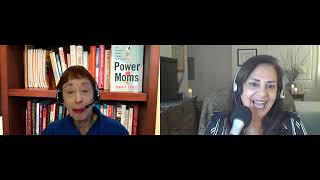
Joann Lublin interviewed 86 executive mothers at $100M+ companies for her book Power Moms. She found working-mother guilt is pervasive, "work-life balance" is a myth, and fathers' roles are shifting. The book offers both structural fixes and personal strategies like asking for help and ditching guilt.
Questions this video answers
86 executive mothers (required to have worked for a company with at least $100 million in revenue at some point).
25 adult daughters (mostly in their 20s).
February 16, 2021 (pre-order mentioned; episode dated Feb 25, 2021).
She shared the Wall Street Journal's 2003 Pulitzer Prize for stories about corporate scandals.
The Gerald Loeb Lifetime Achievement Award in 2018.
Chapters
Hello, everybody. Kathy Caprino here. Welcome to another episode of Finding Brave. I want to tell you, you know, I'm always thrilled every time I do this podcast, but there's another level of thrill, which is being so, so honored to spend time with my guests because of who they are and what they've done in the world and, and the contributions they're making. Well, that's everybody. But in this case, I have Joanne S. Lublin with us. And when you read what Joanne has done in her world, in her work, it's so inspiring. So, Joanne, thank you for your time. I know you're crashingly busy right now with your new Power Moms book, so thank you for joining me. I'm so grateful.
I'm very thrilled to be part of your broadcast.
Thank you. Thank you. All right, everyone, we're going to dive in, but what we're going to talk about is, everybody, everything Joanne is writing about now and her new book, Power Moms. Let me get the title right. How Executive Mothers Navigate Work and Life. And it's out in February. But let me tell you a little more about Joanne. And, you know, I have to say, because I'm in this world of people who are influencers, a lot of people will write bios this long, and your bio was one line, and it barely shared your Pulitzer Prize. Your, you know, and I just, I respect that, that you're at a place where you don't need to share your long, long bio. Your work just stands for yourself. But I'm going to share a little bit of it.
Okay?
Joanne Lublin is a longtime Wall Street Journal career columnist and the author of, as we said, Power Moms, your new book. But you're also an author of another book that was a leading leadership book called Earning It Hard Won Lessons from Trailblazing Women at the Top of the Business World. And you are also the former management news editor of the Wall Street Journal. You created Joanne, Holy Cow, its first career column. Career advice column.
Wow. That's right.
What a remarkable. I can't even imagine there was a time that there wasn't a career advice column. I don't want to ask how long ago that was, but 27 years. Was it your idea to start it?
Actually, it was. Look at that. Only because I saw other publications were doing it.
Okay. We got to get competitive here.
Exactly.
And you wrote that until May 2020, Joanne shared the Journal's 2003 Pulitzer Prize for stories about corporate scandals. And in 2018, Joanne run the Gerald Loeb. Am I pronouncing that correctly? Lifetime achievement award, the highest accolade you can achieve in business journal. And I read on your website, I forget who said it, but you know, Joanne may know more about women's careers than anyone on the planet. And I thought, okay, that may be true, I might be number two. But I think it's so fun, Joanne, that you are coming from a completely different angle in that you cover it for years. Women's, women's issues, women's challenges in the workplace. You know, CEO women, Fortune 500 CEOs. I'm coming from having been a corporate VP, then a therapist, and now a career coach for women for 15 years and in the trenches with their challenges and helping them overcome it. But I have a feeling that no matter how far we are different, from our perspective, we're seeing exactly the same things, right? So I can't imagine we wouldn't. But I'm so interested to hear, first of all, why did you choose this book? Now, of all the things you've ever written about, of all the things you're driven to write about, why this?
Well, the idea actually came from that first book that you were mentioning, earning it. I interviewed 52 high ranking executive women of whom most had become public company CEOs. And I had one chapter in there about being a working mom. The chapter was called Manager Moms are not Acrobats, which was a quote from one of the 52. And when I looked more closely, the proportion who actually had kids was higher among those who became public company CEOs than the group as a whole. Which made me wonder, you know, this seems kind of incredibly difficult to become public company CEO and also have children. And as it turned out, some of them did this while they were single moms. So it made me wonder, given that all but one of those 52 women were baby boomers, what is different and what has changed for the women who were under 45 at the time that I did these interviews and had become corporate executives and also had kids. And So I interviewed 86 executive mothers. They had to have worked for a company with at least $100 million in revenue at some point in their careers. I didn't care what they were doing now. Which enabled me then to interview a lot of entrepreneurs and female founders of smaller companies who were highly represented for the most part in that younger millennial and Gen Xers.
Wow.
And then on top of the 86 moms, I wondered, what was it like to be the daughter of one of those boomers, one of those trailblazers. So I interviewed 25 daughters who are adults, mostly in their 20s, to say, was it fun growing up having. Fill in the blank. Mindy Grossman, as your mom, who is now the WW International, formally Weight Watchers CEO, as your mother, and I got a very interesting perspective obviously on how they viewed their moms.
Can I start there? Can I? I have a 26 year old daughter and a 23 year old son. And, you know, they've gotten a big earful of a lot of stuff from the therapy, you know, whatever. What do they say overall? And I'm sure everyone is different and there's different dynamics that aren't all involved with what mom does for a living. There's also what dad does for a living. But what do they say, Joanne?
All right. I think overall, when they were teenagers, they really did not like the fact that their mother was larger than life. And the fact also that mom was trying to give them the benefit of her experience, her travails, her trailblazing. And yet then when they get to college and then particularly when they enter the workforce, they suddenly discover that they have this secret weapon, which is Mom.
And it's because she knows so many people and knows so much, so many things.
Exactly, exactly. She's the door opener, she's the networker, she's the person they come to when they are having trouble on the job. There's this wonderful anecdote in the book where she basically summons her mom, who's the CEO of a major business unit at a big advertising company, out of a meeting, you know, because the woman's, the daughter's in her 20s and she has to fire somebody or discipline somebody for the first time. And she's never done this, and she's terrified. And her mother, of course, will take her call, you know, or the daughter wants to leave one industry and go into another and she has no idea, you know, what industry to go into. And in this case, the woman was an HR compensation executive and she knew executive recruiters. And she said to her daughter, why don't you try executive search again, you know, arrange some introductions. And so time and time again, these daughters were like, not only is my mom my secret weapon in terms of being my informal career coach, but she does this for my friends because they also have friends who need help navigating their world, their way in the world. And so there's a great chapter in the book, you know, called My Mother My Coach.
Wow. Now can you tell me? I'm very interested in the influences when we're young because, you know, As a marriage and family therapist, I was dealing, seeing that a lot. I did. Did they talk about the dynamic between men and women that they saw in the home and how that impacted them? In other words, I have a powerful, powerful mother. How my father dealt with that?
Well, there was, there was one example like that. So the woman, the mother, is a boomer mom and she initially was working with her husband in his management consulting business. And then she goes off on her own and becomes one of the first female V of a major bank. But now the dynamic has changed in terms of who gets home from work first because the dad owns the management consultancy, so he can leave work anytime he wants. He gets home in time to, you know, basically feed the kids before mom gets home. Mom doesn't generally get home before 7 or 7:30 and she calls home and says, don't wait for me, you know, because they have two little kids at that point. And the father is so insistent and I'm not sure it's because he wants the family to eat together or he's trying to guilt trip his wife. No, no, no, we'll wait till you get here. And then, you know, as soon as she gets there, there's fireworks, you know. And so I heard the story, of course, through the eyes of the daughter and then replayed it through the eyes of the mother and the way the daughter, who herself is now a mother, has sort of coped with it in raising her own daughters, is basically being self employed. She's an independent filmmaker, so she sort of sets her own hours, but she travels a lot and really tries to be there, you know, for her kids. But the moral of the story here is, you know, why was the father so insistent on waiting for mom when you'd like to start dinner?
You'd like to believe it was respect, appreciation, togetherness, but it sounds like there were other things there too.
It caused some, some marital discord that indeed, I think influenced the daughter's choice of profession to not go work for a big bank, not go work for a big management consultancy, to be sort of her own boss. But nevertheless, you know, the daughter who, you know, has her own daughters now is guilt ridden when she has to be out of town for two weeks on a, you know, independent film shoot. She, she's a filmmaker. Even though the father, her husband is perfectly capable, you know, of dealing with, with the kids on his own, you know, which brings back, you know, this whole question of why, even though this younger wave of executive moms and even though the adult daughters are who are Even younger. Why are they all still experienc? Mother guilt.
And what did you come up with? I have my thoughts.
Okay, so I have a couple theories about this. One theory is it's a reflection of our larger society. We still live in a society in which we have different expectations for mothers than we do for fathers. And we have gender bias and we have unconscious bias. You know, we have the younger executive mom who when she returns to work after her first maternity leave about five years ago, the first question she's asked by male and female colleagues alike is how do you do it all? And she's like, why are you not asking that question of my husband? He is my complete and total partner in this parenting game. And in fact, she objected to the title I was giving to the book. And she's like, well, yeah, because you're essentially saying that we mothers still have to do it all by calling it power mom. So I said, no, there are a lot of power, they're going to be a lot, lot of power dads in this book. And I bet you your husband is a power dad. But then there's another issue here in terms of this working mother guilt. Others who choose to stay home with their children, they have stay at home mom guilt too. Because this, this became very evident when I talked to the adult daughter of one of these power moms who had, I think in part because she didn't see a lot of her mom growing up, chosen to stay at home and raise her family. But she takes an exercise class and you know, does this and that. And at the point when I interviewed her, she was pregnant with her second child and I think her first kid was a toddler and told me how guilty she felt about, you know, having at that point her grandmother come over and take care of the toddler when she would go off to the Y for her yoga class. And so I think at the end of the day a lot of this guilt is self imposed as well as imposed by our larger social norms. And that's why I devote an entire chapter to hacks for ditching working mother guilt. Because there are, there are ways to do it.
I love it. We all have to race and read this. Can I tell you quickly, just to amplify. When I was a therapist, I learned of a behavior, a dynamic called over functioning. And often in marriages there's an over functioning spouse. And along with that must be the under functioning coaching women. What I've added is perfectionistic. Over functioning.
Absolutely.
And I, you know, I love that you shared those of Us who are trying to help, you know, whether it's amplify or highlight an issue or coach or whatever it is, we intervene at a lot of different levels, whether the individual, which is what I do, working with women to overcome this, to overcome the guilt and the perfectionist over functioning and be braver and be more powerful, or we intervene at the cultural level or the institutional level or the organizational level. I think it's. You're miss. We're missing it if we're only looking at one thing. But I do think, and I know you know the work of, you know, the authors of the Confidence Code. Yes. Where.
Same publisher, by the way.
Oh, wonderful. HarperCollins. That's my publisher of my new book too. Yeah, they're fantastic. I think that, you know, as, as we, as we look at what goes on for women when, when we're 12 or 13, girls go underground and, and it's. We are, you know, less raising our hands, saying we can take that leadership assignment, we can work in stem, we can be an astronaut. And it's more about being then this is the patriarchal world. More, more about being pleasing, malleable, not putting yourself before for others. And that message gets in and permeates and we're not. It's not changed yet. Joanne, do you find that?
I think it is starting to change.
Do you see that?
Well, because I think, and this is one of the great beauties of doing a cross generational piece of work that this book is. You can see how things are evolving. And I think men are being raised differently than they were a generation ago. And this really came home in one anecdote that I talk about where one of these younger wave mothers, you know, a woman in her 30s is invited to a very important lunch at her company's headquarters. She has recently been made a VP. And they're all VPs at this lunch, okay. And they had the meeting and then they're waiting for the food to be brought in for the lunch break. She, of course, is the only female VP in the room. One of the older men says to her, hey, could you like go check and see where the food is? And of course she feels like that is totally. And it is of course sexist. And one of her female male colleagues, you know, there are no female colleagues in the room. But a man who's her age speaks up and says to this older guy, you know, if you really want to know where the food is, you should go check. It's not her responsibility to go bring the lunch. And I said, to her, you know, were you shocked that this younger guy spoke up? And she said, no, I wasn't, because I knew his mother was a working mom.
Wow.
So she had raised him right. And I did the same thing. I tried to raise my son and daughter both to be feminists, and my son ended up taking paternity leave twice. Not. They wasn't available when his first child was born. But for his second and his third child, he was miserable during his first paternity leave because no guy had ever done it. And that's half the problem here. Okay?
No guy in his company had ever done it.
So he worked for the government, state agency, but he was the first person in his particular part of the state government where he works, you know, to do this. And by the time his third child came along, you know, which was a couple years later, he was a lot more comfortable about doing this. Of course, by then, he had moved in a managerial role and was actually faced with some really tough choices about working parents as the boss.
Wow.
Because people with newborns and young infants wanted to bring them to work.
Oh, boy.
And he said to me, what do I do? And I was like, well, what does everybody else think? The ones who don't have kids or have grown kids, he says they're totally against it, but the ones with newborns and kids under a year want to be able to bring them to the office until they're a year old. Wow.
That's a tough question. Right.
But he was able to address a very important workplace issue that affects working parents every day. From a position of knowledge, of being a working dad himself, and from being Joanne Lublin's son.
He better figure it out. Wow. That's incredible. So tell us you're talking about one. A cultural shift that you're seeing from boomers and Gen Xers. And I want to hear everything more about that. But I also would love to hear what you think the biggest pervasive issue is for power moms. What is it? I mean, I think we all know that research shows that women are still doing 75% of the domestic responsibility, even when they're the primary breadwinner. So, you know, from my perspective, that's rigid gender roles that are still there. You know, my. My husband, I worked as a vp. He was a jazz percussionist. So he was home and would take my little kids to their play dates. Women didn't dig it. Women didn't dig seeing a man come with the child. They, you know, they looked at him oddly. Things have changed a lot. But what do you think still is the biggest, most pervasive, difficult challenge that power moms face? Joanne?
I think it's the same challenge that all working mothers face, and it's twofold. It's how you view yourself and your role in the world and whether you feel like you have to bear the mental load. And it's the other side of the coin, it's how society views who you are, and it's the unwillingness or the lack of ability on the part of women, frankly, to ask for help. And a number of these Gen Xers, when push came to shove, they were married to guys who were supposedly totally committed to co parenting, but it really wasn't happening. And so they called him on the carpet. There's this great anecdote where this woman is a high level corporate executive in the legal department and he's got a big job, and she says, we need to be sharing the load. And that includes making the pediatrician appointment and taking the kids to the pediatrician. And he's like, you're totally right. From now on, I will make the appointments and take the kids to the pediatrician. And by the way, what's the doctor's name again? Ding.
So the will is there. It's just the execution is where it falls down, it seems, in that case.
Yeah, yeah, but why does it fall down? It falls down in part because of our expectations for men. You know, we have to come to a society where we expect men to take parental leave as a matter of course, where we expect men to be involved parents not only at the birth or the arrival of the adopted child, but throughout a child's upbringing. And we don't criticize and we don't dis or get down on men for being. And there are surveys after surveys that show either it men are still penalized career wise or fear being penalized. And so that then I think, keeps the mother feeling guilty, and it feels still like she's bearing more of both the actual workload and that horrible mental load, which is essentially being the traffic cop.
I think you're so right. Can I add another dimension, Joanne, and get your view on this?
Sure.
My book that just came out, July, the Most Powerful, you, talks about the seven most damaging power gaps that professional women face.
I like the use of the word power on your title. Right, right. I love it.
But I did worry every once in a while someone will say, are you blaming the victim? And I say very clearly, I am not blaming the victim. I am trying to raise women above victimhood. And the way you do that is through these seven brave path, brave sight, speak, ask, connect, challenge, healing. So what you're talking about, I think is power gap number three for me. The reluctance to ask for what you deserve.
Exactly.
Recognize what you deserve. And so, you know, you're giving a story of this woman who asked her husband, you know, would you please be the partner that we signed us up, both up, to be exact. But can I tell you what I see as a corollary to. To this and see what you think?
Sure.
Can't do this without mental gyrations if you don't have strong boundaries. And this is a thing that I think women have been culturally trained not to have, which is this, I think if you ask your spouse, partner, listen, we have to have a talk here, you know, I need you to be more of an equal partner here. Often people aren't going to respond well to that. But getting what you deserve means you can sit with this, upsetting the loved one, your boss, whoever it is you're asking. I mean, for instance, asking for raises and promotions. Women are notoriously worse, period. Not every woman, but most. So I think part of this boundary problem is if you're my boss, Joanne, and I come in and say, I'd like to make, I'd like to discuss a promotion and make a case for it. You may not be happy to hear that news. You may not think that I'm deserving of that. I have to have the boundary to persevere even in the face of what may appear pushback. And I feel women fall down in this way. What do you think?
I think the better word is not boundary. I think the better word, Kathy, is backbone. Okay. Is having the guts to stand up for yourself. And for a long time, women have been afraid to stand up for themselves because they didn't think that anyone had their back.
Interesting.
And that's what's different about this younger generation. They're not afraid to assert their rights and they're not afraid to vote with their feet. And there are several examples in the book where women chose to leave employer who they thought had family friendly policies, but it turned out were more on paper than they were in reality, and go work someplace where they could feel they were supported in terms of their needs as a working parent. And the whole explosion of networking and online and social media in terms of finding outlets for not feeling so alone in what you're doing. And the baby boomers were the trailblazers. And to a certain extent, frankly, having been there myself, it was kind of exhilarating knowing that you're going down a path that hadn't happened before.
I'm glad that way. I found it hard as heck.
It was, of course, hard as heck. But at the same time, the women who settled the west in our country were pioneers, and they were putting their lives in danger. Not just their careers, but at the same time, it was exhilarating to know you were going someplace that nobody had ever gone before. When I announced my pregnancy with my son Dan, okay, At the Wall Street Journal, there had, as far as I know, never had been anyone in the news department, particularly reporters, to announce their pregnancy. And yet there were a half a dozen women within two weeks in January of 1979 who informed the managing editor that they were pregnant. And his reaction was, what the heck am I supposed to do? This is not in my job description.
Meaning how do I handle all these people out when I have a paper to run? I love this. Joanne, I know you're busy, but I need to ask a few more questions. Can I.
Sorry about that.
No problem. What helped you become the woman you are? Did you have a role model in your mother? How did you get the back. Really? What was. Tell us about that, William.
I definitely think I had a role model in my mother. My mother was very strong willed. My mother essentially stayed home and raised four children, but she never completely stopped. Stopped working. She was a substitute teacher and a Sunday school teacher. She always expected that I would go into teaching. And in fact, when I was pregnant again with Dan, she, you know, had a very successful journalism career. And she said, well, you're gonna, you know, now become a teacher, right? That now you're gonna become a mom. I was like, well, no, I kind of like journalism. She said, well, but you'll have the summers off. She could not understand why I wouldn't, like, take her career advice in my. In my late 20s. The irony is that in February, I shared with my mom what the dedication was going to be in the book, because I was going to dedicate it to her. And she. No. She then, unfortunately passed away in April, but she was still alive in February when I wrote the dedication. And she rewrote it, right? What do you mean she did? Can I read you the dedication and then I'll tell you what it originally said? Okay.
What did she say?
The dedication says, to my mother, Betty Lublin. She was always my biggest critic and biggest supporter of my role as a working mom. The original version of that was, she was always my biggest supporter of my role as a working mom. And she Pointed out, even though she was then already 94 years old. Well, that's not true. I didn't always approve of what you were doing. And I was like, okay, if I rewrite it to say this instead, she says, yeah, that's okay.
I really would have said. I would have guessed that the critic would have been what you wrote. And she took that out.
Oh, no, no, no. That's what she put in.
That's Mom.
But that's the other really neat thing about this book. HarperCollins insisted, Because I had a little bit about me and my career in my first book, they insisted that Empower Moms. Every chapter start out with a personal anecdote about my life as a working mother. So there are several chapters that begin with tales involving my mother.
Is that hard for you to talk about yourself? I've interviewed a lot of journalists who say, look, my world is to keep my opinion out of it. My. Is that hard?
It would have been, except for the fact that over the years, I've done about a dozen first person pieces for the op ed page for the Journal, starting back with my decision to not have children in the. About three, four years before my son was born, I wrote an op ed piece.
Wow.
And it was basically the first sentence was, you know, they're closing the school where my mother teaches because there's a baby shortage. And I'm sorry, Mom, but I'm not going to, you know, make it any easier for you to find another job. I really cannot see myself as someone who could have a career and children, too. And I wrote that. I wrote that. That was my first first person essay for the op ed base. And I did a number of others like that over the.
What did you hear back? I mean, what was the response? I'm sure if you were on Twitter, it would not have been pretty.
Yeah, in the late 70s, it was, you know, it got some interesting response. I got much more hate mail when I wrote a first person piece about why I came back to work after having the worst part. And again, I talk about it, of course, in one of the introductory anecdotes, one of the chapters. But what happened was the Wall Street Journal published an entire page of letters to the editor criticizing my decision. And I went away for four days when Dan was seven months old. It was the first time my husband and I had a long weekend away. And it came back on Monday after being away from my baby for four days. And not only was this full page of letters to the editor, but on my desk was the folder with the letters that were too nasty to print. Mostly from stay at home moms.
Yeah.
Saying things like, your son is lucky that he's not with you all day because you're obviously an unfit mother, et cetera, et cetera, et cetera. It's the only time I ever thought about giving up my job.
It's heartbreaking.
I feel it makes, it makes for a really nice, really good story. Anecdote to one of the chapters. The other thing that was helpful is I kept a diary all your life? More consistently when I was a teenager. Since adulthood, I've kept it very sporadically. I basically write in it when things are going well or badly. So it was helpful. One of the anecdotes that I found in my diary did not make it into the book, but it had to do with the fact that I had a three day experience as being a single mom when my husband had a tryout in New York and everything that could possibly go wrong went wrong that day. I mean, it started out with my then, you know, three and a half year old son emerging at the breakfast table, very proud of the fact that he had gotten dressed by himself. And I was blown away. Well, it turned out it was because he had wet the bed.
Oh, wow.
And he knew I would be upset and it just went downhill. And it totally filled me with admiration for the struggle that working moms go through who are single parents.
Wow.
And there are several of them in the book too.
What a powerful book. Two more things. Work life sway is something you talk about. Can you, you know, we all know and you've written 2 billion times. Work life balance, it's not a term I like anymore. Not that I don't believe we can be balanced as human beings, but it's, it's taken the wrong, you know, it's, it's absurd. What is work life sway to you?
It's a phrase I had never heard before I started reporting the book. I knew that work life balance was a myth and, you know, said so in my first book. That's why that chapter was called Manager Moms are Not Acrobats. Because work life balance is a shaky yoga pose. It's the pose that cannot be maintained. The idea of work life sway was brought up to me by one of these Gen Xer moms. And when I started reporting the book and I was like, well, what's that? And she said, it's the idea that you understand that there is no such thing as work life balance. Did you understand that sometimes you have to be all in for your family, and sometimes you have to be all in for your job. And sometimes families could intrude to your job and jobs can intrude into your family. And what better reality of that has become clear as, as we have seen when everyone or everyone who could has been working from home during the pandemic. And the idea is that you sway back and forth as need be without giving yourself a huge guilt trip about it. And you know that at some point you're gonna have to get some extra help from others, whether it's family members or spouses or supervisors to make it possible to not go crazy when you're doing work Life sway. And to also know that works like work Life sway means that there are places where you have to set boundaries. You know, where you say, particularly if you're working from home, you know, this is my time to be at work and I will be back later.
You know, that's beautiful. Reminds me of a dance. You know that sometimes you lead, sometimes you don't. Sometimes you leave the dance floor completely, sometimes you fall on your nose. Wow, that's beautiful.
And the mother who told me about this, I said, well, give me an example of what we're talking about. And so she did. She gave an example. So when her child, her eldest son took his, was about to take his first step, you know, she gets a text alert from the nanny at her apartment, which is not that far from her workplace, and, you know, basically watches on FaceTime as he takes his first step while she's at the office.
Oh, that's beautiful. That. That brings tears to my eyes. I remember those. Speaking of non works life sway, I remember quickly my son, when he was little, they did things, something called Turkey Trot around Thanksgiving. And. Right. Everyone knows a turkey trot. And I was a therapist at the time. And I moved a very depressed client so that I could see my son. I mean, I remember thinking, oh, my God, should I do this? But I'm not missing my kids Turkey Trot. I race there. Where's the kids? I ask a mother. She goes, oh, yeah, they moved it to an hour earlier. Joanne. I dropped my bags and I right there, I burst into.
You lost it.
I lost it because the sway was. It was in that moment I just felt, this is impossible. This is impossible.
But see, that's the other thing that's so much better for the younger working moms today. There are so many more women in senior level positions who not only can serve as mentors, as sponsors, as role models, but they can be their advocates around parenting issues. And again, there's an example in the book of a boomer mom who's the CEO. And as they're rushing into her, you know, top management team meeting, one of her direct reports, who's a working mom, says, you know, I'm sorry, I may have to jump up and leave early because my son just has been rushed to the er. He had an accident at school. Okay. And the CEO, who's the woman, the boomer, stands up in the middle of the meeting and addresses this woman in front of a predominantly male management team and says, sally, or whatever her name is, your son has just been rushed to the er. You need to leave the building now, and I don't want to see you back here until everything is taken care of.
Wow.
Now, that happened to have been Andrea Young, who is the. Then the CEO of Avon. But the point she made to me, that Andrea Jung made to me, is we can't call ourselves a company for women if we don't stand up for women when women need us to be there.
What an inspiration.
And Andrea herself became CEO at a very young age, in her 40s. The entire time she was CEO of Avon was a single mother. Walked her kids to school every day if she was in town.
Pretty remarkable, huh? Oh, it's. Oh, your book is so inspirational. Tell us one more thing that you were surprised to learn from the. This book. I mean, I'm guessing that most everything you heard wasn't a shock. Wasn't. That's the. That's the most remarkable thing I've ever heard. Was there something that really surprised you that we know? What was that?
It's how emotional women feel about being mothers, about being daughters, about being executives who care, who are empathetic. And after a while, I started keeping count of how many of these 86 mothers choked up or cried while I was interviewing them. And there were almost a dozen. And I have to tell you, in the 52 interviews I did for earning it, nobody cried that I could remember. I think I would have remembered it because the thing that stood out there was how many were tall. A lot of them were over 5 foot 7. And I started keeping track of that, but for this, I started counting how many were crying or choking up and why. And, you know, they were doing it for different reasons. They were doing it because of a sacrifice their own mother had made for their careers, success. They were doing it when their newborn ended up in the icu. They were. They were crying when they talked about losing their husband. You know, in his 40s or their own job loss or the people that they who were working for them, who had hugely horrible, tragic things happen to them.
I gotta ask you, could this be why that happened more? And I'm praying the answer is yes. I think that we're becoming a more self aware people.
Yes. Yes.
Like I don't get through a podcast and not choke on up. Really? Yeah, because we're talking very deep things. But everything you're saying is hitting me and it's making me think about me.
And one of these boomer moms had five miscarriages before she gave birth to her daughter. Do you think this daughter got over mother? Do you think she was giving her career advice when she was like, probably still in diapers? I would imagine. I mean, this daughter got so much attention. And, you know, another mom had multiple miscarriages and they tried to adopt and her husband was in his 40s and they were told, you know, he was too old. So, you know, when they would talk about events, life events like that, they would, they would choke up.
I think it's a good thing that's the therapist in me. I mean, we're emotional creatures. Why should we pretend? Okay.
But on the other hand, the younger moms were able to talk about things like miscarri with their colleagues, where the boomers would have never.
I didn't say a thing about anything.
They would confide to maybe one female colleague. Some of these Gen Xers would talk about it with their male colleagues and they got huge amounts of support.
That's the happiest news from your book that I've heard. You know, we are changing. It's small, but it's powerful. Power, power, power. Oh, Joanne, I could talk to you for hours. Come back again when this is a bestseller and you're onto your power. Mom number two, what the dads need to. Oh, my gosh. It's so fascinating. Thank you for joining. And where do we buy the book? Where do we learn more about you? Where do we send everyone?
Joanne, I think the best place to learn more about me is my website. Very easy to remember. It's just my name. Joannlublin.com no e at the end of the name. J-O-A-N N L U B L I N dot com. And if you want to pre order a copy of the book before it's published on February 16, I will send you a personalized autographed book plate.
Oh.
All you have to do is email me the info.
Do we give people your email address? Or is there a. You're going to be inundated.
It's my name, gmail.com.
My gosh, aren't you generous.
Just let me know you've pre ordered and I will send you your very own autographed book plate made out to your name.
Oh my gosh.
One for you, Kathy as well, you sweet thing.
Thank you. And I'll frame it. I love, I love what you're doing in the world. You're such an inspiration and this book is, I think, going to give us, you know, in these days, it's hard to have a revelation that we haven't in some way heard about women's issues, men's issues. But I have a feeling your book is, I know it is full of revelation and insight. Thank you for joining me.
And people, thank you for doing what you do, Kathy. You are a wonderful asset to our country.
Thank you. Thank you. I'm going to listen to that 10 times, going to replay that and listen. All right, people, men and women, I hope you're inspired by this. The idea that there's change, the idea that we're talking about equality in every way for men too, you know, that we can feel more deeply and experience things more deeply and be more equal in all that we do. So I hope you find this interesting. Wherever you find this, will you leave us a note? Look, Joanne's giving you her email address. Tell us what you got from this. Share an anecdote, share a story. We would love to hear from you and we hope this is helpful. Thank you again, Joanne. Happy 2021 to everyone and have a wonderful brave week. We will see you next time.
More from Kathy


Elevate Yourself, Elevate Others, and Amplify Good | Chris Cooper | Finding Brave Ep. 334

Finding Brave Epis #333: How Leaders Can Harness AI Without Losing Their Humanity, w/Bennett Borden

Finding Brave Epis 332- How to Stay Brave, Valuable and Visible in the Age of AI, with Raman Rai

Finding Brave Epis 331 - The Power of Positive Disruption, with Dr. Patrick Leddin


Finding Brave Epis 330 - Being 40: Letting Go and Embracing Who You Are, with Stacey Lindsay

Disrupt Career Reinvention with Kathy Caprino - via The Disruption Lab Podcast w/Patrick Leddin

Creating Neurodiversity-Friendly Work Cultures: Simple Workplace Adjustments Matter

Finding Brave Epis 329 - How To Create a Neurodiversity-Friendly Workplace, with Kristen Pressner

Finding Brave Epis. 328: Reclaiming the Power to Trust Your Own Voice, with Dr. Cindy McGovern