Finding Brave 169: How To Win the Job You Want When You've Lost the Job You Need with Fawn Germer.
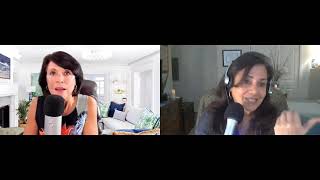
A recorded April 1, 2021 Finding Brave episode (host Kathy Caprino) interviewing Fawn Germer about Germer's book Coming Back: How to Win the Job You Want When You've Lost the Job You Need (published January 12). Germer argues careers are perishable and emphasizes relevance—adding skills, innovating, and rebranding—to overcome sidelining and age bias (she reports many experience discrimination after about age 45). The episode mixes practical steps (take free online courses such as Coursera/edX, study industry trends, consult/contract as a route back), personal anecdotes (Caprino's layoff; Germer's 'information superhighway' anecdote), and promotional details (host's 16-week course with early-bird deadline March 25, course starts April 5; Germer's giveaways and website).
Questions this video answers
January 12 (year implicit in transcript context).
April 1, 2021.
About 300 interviews with CEOs, executives, academics, workplace consultants, lawyers, and professionals.
After about age 45.
A 16-week online course; early-bird bonuses available before March 25; course starts April 5; early-bird includes $500 off.
Chapters
Hello, Kathy Caprino here and I'm so excited to share that my amazing career project 16 week online course is now open for enrollment. And if you act fast before March 25, there are some really great early bird bonuses, including $500 off the price and five other great gifts that will move you forward. So this course is 16 weeks that teach the most essential steps that women need to take to build amazing, rewarding, happy careers they love. I've been through, as you know, if you follow my work a lot in the years that I've been working and I didn't know this information when I was in my 18 year corporate career and it really showed because I struggled in so many ways. So I teach in this course everything I've learned in reinventing my own career and working with thousands of women around the world to help them build happier, more joyful and fulfilling and impactful careers and professional lives they love. So there's 16 weeks of video homework assignments, calls with me, 90 minute calls with me, an incredible Facebook group of wonderful support, and so, so much more. So I hope to see you again register as an early bird before March 25. The course starts April 5, and I can't wait to work with you this spring and help you build a career that you will love and be proud of. See you there. Hello, everybody. Welcome to another episode of Finding Brave. So excited to be with you. It is April 1st as I understand it. We are recording this a little earlier than that, but thank you for being here. I hope you're having a great Brave week. And I am once again beyond honored and thrilled to have our guest, honorable Fawn Germer, here today. Vaughn, you're such an inspiration. Just chatting with you about everything you've done and everything you've been through to achieve what you've done. Just thank you for taking the time.
Well, it's my pleasure.
Thrilled. Thrilled. All right, everybody. We are talking about how to win the job you want when you've lost the job you need. Is that right, Vaughn? We're really.
So the main name of the book is Coming Back and that's the subhead. So it's really about comebacks whether you're still employed or you're not employed and your career has started to sputter out.
I loved it. I love this. I mean, you know, I'm a career coach and a lot of people come in various stages of where they are, but in what I'm reading in your book, I think we need to be more forward thinking about our career than most of Us ever are. Would you, would you agree with that? All right, before we get into that, we're going to dive in, but I want everyone to know about Fawn. Millions of professionals have no idea their careers are dying. And once it slaps them hard in the face, they don't know how to stage or state a comeback. Best selling author and Pulitzer nominee. I mean, it's amazing. Fon Germer shows how to stop blaming everything from millennials to the pace of change to age discrimination. I love it. I love the hard take you're making here. And take doable steps to get back in the game and win. This acclaimed leadership speaker asks, what if your greatest success hasn't even happened yet? Ah, I love it, but I want to read this. That Fawn shared three key bullets that I want to make sure we touch on. Virtually every career is perishable and will die if you don't add skills, innovate, and brand yourself as the face of change. You know, I work with a lot of mid career professionals and midlife professionals. I think many groan at that statement. But we're gonna, we're gonna talk about how not to groan about it. That it isn't, it isn't as exacting and stressful and scary as I think we're led to believe. You're going to tell us about this. And the good news is it's not as hard as you think. Right. But how about this? Nobody cares what you've done. They care about what you are going to do. Wow. So let's start talking about coming back. Which, what's the pub date of coming back?
It was January 12th.
January 12th. All right, congrats. Why are you writing this? What, what is the pressing thing you're, you're seeing that you felt, I've got to tell people how to do this.
Well, I have to tell you, when I started it, I was thinking it was a completely different book because I started seeing super accomplished people that were in very, very senior, visible roles start telling me about how they were hitting the wall, getting sidetracked, getting pushed out. And the things they told me were the exact same things that I was hearing from my neighbors and my friends. So I thought, I'm going to write a book about age discrimination. And then being a former journalist, I wound up doing 300 interviews with CEOs, executives, academics, workplace consultants, lawyers and professionals to find out what was really going on. And yeah, there is a lot of age discrimination out there after the age of. Are you ready? 45.
That's old.
And that's not the issue. It's the what causes that discrimination that's the issue and that's what we can control. And then so I wrote this book that's very contrarian to what we would expect for people who are kind of trying to climb out of something and feeling bad. And my editor said, but isn't that the same thing that people who take time outs to raise their children or travel the world or care for a loved one might experience? And it really is the same thing. So they're very hard to place professions. If you're still working, this is still very valid with it because you very likely are going to experience some degree of being sidelined unless you've changed your game and the word of the moment. And the most important thing you can do for yourself is relevance. You, you've got to be relevant. So you brand yourself with relevance by taking certain classes and I'll tell you more about that after and studying certain things so that you're not the voice of the past, you're the voice of the future.
I love it. So I know that you're contrarian. That's one thing I adore about you. I do want to say this. You and I are 100% on the same page. You know, I've just written a book, the Most Powerful Youl about the seven most damaging power gaps that professional women face. 98%, oh, I was looking at of the women I've interviewed and 90% of the men have one of these gaps at least. And 75% have three or more. And it's similar to what you're saying. When you have these gaps, you just cannot thrive at the highest level. But every once in a while, not so much frequently, recently, but someone will say to me, aren't you blaming the victim? Which I'm guessing someone might have said to you about the age issue. And I will say no. What I'm trying desperately to do is rise you up higher than victimization, stop you from being victimized. That said, you know, I work with people from every field, digital marketing for instance, which is highly age. I mean when you're 50, you're considered out of it. Part of it is how they want you to work in a lot of these organizations that it's non stop. There's no flexibility, there's no time off, it's constant. So this is what I want to say and I love your thoughts. Yes, there is age discrimination in some fields. You just show up and you're 50, you're not going to be you're not going to be taken, you're not going to be accepted. But in the vast majority of other situations, we can rise above that discrimination. Would you, would you agree with how I just articulated?
And I would agree. And the other thing is, I don't want people to make themselves victim. And I am. I'm not blaming them. But there comes a point where we have to look in the mirror and own what we haven't done that may have contributed to this. And I love all of you. I know when you get sidelined and it's insulting, it's insulting, it's frustrating, it's infuriating, all of those things. And your confidence gets shot and you feel terrible about yourself, but you have to really look at what you could have done that may have made you stronger in your position to insulate you better. And generationally, a lot of the more senior workers have been in denial because the tech wave came and then it wasn't a wave, it was a tsunami. And people thought, well, I'll just keep my head down and this will pass, this fad will end. And nothing ended. It just got more and more and more. Well, if you've got the highest salary in the room because you've been there the longest and you're delivering less, that's a value than a fresh graduate or a millennial who will work for half of what you're getting, you've got a problem. And as much as I want to sugarcoat it and make you feel good about it, you've got to do the few things you have to do to, to make yourself relevant. Because once you get over that barrier, then the opportunities come back to you.
Oh, I love it. And you're speaking right directly to me. You're hitting me between the eyes because my very last job in my corporate life, 18 year corporate life, was a vice presidency. And it ended after 9, 11. And they laid off a lot of people, and I was one of them. Part of the reason, I suspect, is I was one of the most highly paid and one of the oldest VPs. And so where I really resonate with you, I think they were going to let me go no matter how stellar I was, because they were cutting and they put someone, a guy 15 years my junior who had no experience in this, in my place. So I could have made myself as relevant as possible. I think the issue was how do we save money. However, I hated the ecosystem and they didn't like me too much either. So part of what you're also sharing, I'm Guessing is if you don't like your job and you have been vocal about some of the toxicity, some of the leadership, if you've complained, look, I'm not saying don't do or see a lawyer or get a settlement, but you have to understand that it's an ecosystem and the ecosystem will eject out of it what is no longer serving the ecosystem. Would you agree with that?
Yeah, absolutely. It is so insulting. The good news is that some people do break through that and you always see this is that they don't fire every old person because then that's a definite class action suit. Correct. So you have to figure out what is it that keeps people on the hot list, and that's relevance. So you figure out the skills that are going to drive your company forward. And that starts with studying your industry. And it's easy to do that. You Google trends in the insurance industry and then see how artificial intelligence and robotics and blockchain and big data and machine learning, how all of these things will impact your industry, then your company, and then your specific job. And then you start offering ideas that will lead the change instead of react to it. Because a lot of people think I am the best person for my job today, and they don't care. They want the person who's going to be the best person for your job five years from now. So what are you doing to make sure that's you?
Oh, I love it. I would love a few more concrete strategies, Fawn, But I also want to ask you, you know, the people I speak to who, let's say, are 40 and 50 and have given a lot for their careers, given up a lot, they might be listening to you and they understand you're right. But internally, they might be thinking, really, I got to do this, I've got to keep doing this. And I think that, you know, I went back to school to become a therapist at 40. I was sick to my stomach the first day I walked in and I thought to myself, and I had done school quite well. Why was I nervous? But I honestly thought to myself, you're going to fail. You don't know how to study, and you're old and you're going to be laughed out. Well, I walk in and it's all corporate refugees wanting to be in the helping professions. But the point is, I was initially really insecure. And I'm guessing that a lot of people listening might say, sure, I know I have to do this, but I'm nervous, I'm scared. I don't even know I can If I can do what Fawn just said, what do you think?
I say, you can. So good. Tell us to be a news person. And years ago, they were getting these new machines in the newsroom that were going to help us access something called the information superhighway. As all we heard out was this information, information superhighway. And then one day the machines show up, and then you heard more information superhighway. And then I went on vacation and they had the training and I wasn't there. So I come back and everybody knows how to do it, and there is no makeup training. And I just kept looking at those computers, knowing what a disaster I was. And my career was going down, and I really didn't know if I was ever going to catch up because I kept seeing everybody doing it more and more and more. Three weeks in, I said to the person who sat across from me, I don't know how to use the information superhighway. And she goes, oh, come here. So she drags me across the newsroom, sits me down, calls up a search engine on the information superhighway and says, what are you working on? I said, casino gambling in Colorado. So she types that in, hits search, a bunch of articles come up. She goes, pick one. And she click the link, clicked it. She goes, now you know how to use the information superhighway. And of course, that was the Internet. And to think that I thought this huge thing was so insurmountable and it was so easy, and really, you need to at least just start. And there's so much free learning out there that'll get you ready. So I always say, take classes@coursera.org or edx.org and things like artificial intelligence, machine learning, whatever. And you can take these classes through Harvard and Yale and Berkeley, and they're great schools with great professors teaching you the latest things. And the classes are free. And the best thing is I learned this when I studied innovation with mit. I didn't have to study and get ready for those tests. I have my degrees. I. I needed the knowledge. So I just went in, did the learning, moved on to the next thing. Sometimes something's really hard. Like there's this concept of blockchain, and I couldn't understand it. And it's really the idea that you get one bit of data that travels cryptocurrency. And I don't need to go into that because, believe me, you have to look at the video to get it. So I kept looking at YouTubes and not understanding blockchain but then I saw a video, how to teach blockchain to a five year old, and it was four minutes long. So I watched the video. I was like, oh, I get it. And the best part of that, my brother called me the other day. He goes, janine. And I didn't know what blockchain was either. And it's like, but it doesn't take that much to understand it. And then look and see how the different technology will impact your career. So you read the Wall Street Journal and the Harvard Business Review and Inc. And Fast Company and just not everything. Read what interests you. And then if something seems important, read that. And that builds your currency, if you're current and relevant, makes them want you. So, yeah, there will be times when a company's going to give up on you, but if they see that you're coming in there day in, day out with ideas that will make them more successful, you are of value. And the other thing is you have to up your game with how you look so you don't like, look like some tired old person. You know, you can't be frumpy or sloppy or any of that. And they were. These CEOs were telling me this. They wouldn't let me quote on this on the record. And some of the things they said were downright judgmental and made me not like them very much. But that's what we're up against.
Can you tell me a few of those, Vaughn?
Yeah, and I'm sorry, can you tell.
Me a few of those?
Well, you know, just commenting on, you know, somebody's weight or something. But when they got done and I thought how horrible it was, I went and I looked in the mirror and I thought, you look a little frumpy too. So I got some. It's. You have to be responsible to project an image that says you're still on top of your game.
Wow, there's a lot packed into that sentence. I mean, often, because I work with so many people around the world, I think almost in the way they think, and I bet some people, and we're talking women, probably. I mean, men as they age, our society thinks they're distinguished. When women age, it's something else. We know this. So I would ask you if you're listening to this and resisting. We get it. I mean, there's, there's implicit discrimination in this.
But remember who's saying it. I mean, I've made my living for the last 20 years as a women's leadership speaker. So for me to say that it's it's true. But the other thing is, they don't like sloppy men either.
Yeah, that's true.
If somebody's got a beer belly that's just rolling over the belt and. And it's not a clean, snazzy suit, there's an issue.
I love it. I want to highlight something else you've said. Remember when you missed the information superhighway lesson and your wonderful colleague said, come over here, first of all, there are so many people waiting in the wings to help you. And it reminded me of, you know, now I'm on every social platform and LinkedIn is the big one for me. But when I was starting Twitter years ago, I had no idea what to say. What do I do? How do I follow people? And I had a friend, she's like, I'll show you. And I even ran by her my first 10 tweets instrumental. Then you get, and now I'm on Instagram, you know, growing that following. And of course, it's very different. I'm 60 now, I'm happy to admit. And, you know, it's. It's a lot of younger people, but darn it, it's not, you know, it's not brain science. It's Instagram. You can figure it out. You can understand. No, it shouldn't be incredibly long posts. It should be this, it should be visual. It's not as hard as we think. But when you have a friend who says, sure, come over here, I'll show you, it can make all the difference. Do you agree with that?
Oh, absolutely. And the other thing is that younger people are happy to teach you. They are. They like is when you act like a know it all with them. But if you ask them something, they'll show you.
I love it. So give us a few more tips on how to be relevant on, will you? What do we not understand?
We have to understand that a lot of times us going on about how experienced we are and the wonderful things we've accomplished in the past just tags us as outdated. They don't care. The only time that comes to play is if all things are equal and you've proven that you are the person to take them into the future, then it's a bonus. But that's not a selling point. Your relevance comes by your ability to say, hey, did you read about this? That's happening. And I was thinking if we apply that to that, then they see you have something to offer. You definitely have something to offer, and because of your experience, you can find the place to apply this. But don't be afraid and don't be discouraged. It's really a couple of months of study and then you're there and it's just like the information superhighway. Sit down, take a minute, get caught up, and don't be in denial that you do or don't know something. I know someone who took, I think, a 15 year time out to raise her son. And when she was trying to find a job, I said, so how are you with technology? And she goes, well, the son was out of school actually at this point, and she hadn't been at work for 15 years. I said, how are you with technology? She goes, my son's a millennial. That doesn't make you good at technology. They need to know that you actually know what's going on, that you've done the homework, that you are insatiably curious so that you know how to lead them forward and that you justify the higher salary that you're getting at this point in your career.
Oh, wow. What would you say? So you've interviewed so many people now for your book and in your work. What do you think? You know, I love to go deep and try to give people breakthrough strategies, not just talk at them, which of course you're not and I'm not, but real breakthrough. And one of those ways is to look at where you're resisting this. So people listening, what did in all these interviews, what do you feel are the one or two top things that make professionals resist this advice?
That's scary.
And are they tired too? Do they feel like, why do I have to do this?
Well, because we grew up at a time where you got out of school with one set of skills that was going to take you from the beginning of your career to your retirement. And we saw our parents work at one company, and then the further along they advanced, the nicer and more respectful people got. And then at the end they could rest on their laurels a little and things were just nice and easy. And then things got to be not so nice and it feels very personal. And the one thing I can tell people is it's not personal. It's not personal. You are not the only one suffering this. And it is sad, and I understand that, but it's real. So we can sit here and commiserate. And I say it's very important that you don't be a commiserator. You don't spend time in misery. You don't think that there's no opportunity. We can do the other option, which is figure it out and take action. And that's really the bravery that you're talking about.
Oh, I love it. You know, I want everyone to know this is not just pie in the sky. This is real world advice. I had a client who was 50 in a field where everyone is under 30 and it took quite a while for us to break through what was a book boulder of self defeat. I'm going to lose my apartment. I'm, you know, I'm never going to get hired. And interestingly, I do want to point this out. We have to be flexible. We have to be resilient. And one of those ways for this individual was to get consulting gigs because she had a lot of ins at fantastic companies. So I said, and she was really concerned about the security. She wanted a full time job. I said, let me do this with me for six weeks. Let's focus on getting a consulting gig. And she didn't want to. And I said, do it, do it because you're going to see things change. She did. She rocked it. They gave her a position of her choice, full time. And her boss is saying, you are so important and valuable here. What do you want? We'll give you what the next stage that you want.
That's an awesome story.
I know, it's so good.
Now that is a great advertisement. Everybody needs to hire you because that was brilliant.
Thank you. But what you have to get through is this insecurity that I'm not good enough, that it's not going to work. The fear, the fear. You're just, you're so right.
So what if something doesn't work? That's the other thing. It's. All of our success really comes by taking risks. And failure or near failure just pushes us closer to whatever it is that's going to work. So just do something. Don't say, sit there on your butt thinking that nothing's going to work and it's all going to be downhill from here. You have to hear that voice in your head. And I believe this is to say, what if my greatest success hasn't even happened yet? What if it's still in front of me now? That's awesome. I mean, that's, you know, I'm 60 years old too. And to have a good book at this point in my career, in my life and swing and hit and have a home run feels really good. And you know why? Because I'm willing to stand up there and take a chance. You can do that. You can keep going all the way. Why would you not want everything for yourself? I'm not done. The person who wins is the one who says, f this, I'm not done. Because even if the universe is telling you that you're a. Has been, you're not. Only if you give up.
Oh, I love it so much. You know, we were talking earlier, before we recorded. I wanted your thoughts on this. I think part of having this mentality, I have so much to give and I have so much to get, still is not overly attaching to staying in your job. You know, I stayed at a job how many years? 11 years. It was probably too long, because what happens is they know you as the person that began, and even though you've grown, I think sometimes it's a mistake. And you were talking about some people, you know, who've been in a job for 30 years. I do think that part of this is building your own strength by building your personal brand. So, for instance, get out on LinkedIn, share your thought leadership. You know, I like to say I can look at someone on LinkedIn, honest to goodness, in three minutes. I can tell more about their career than they know about their career.
They perhaps scary.
I'm gonna head over to yours. No, I know you're rocking it, but, you know, they're either hiding or they don't know how to talk about themselves, or their story doesn't make sense, or their title is just their job title, their headline. You need to be more than your job. So can you talk a little bit about what you saw in your interviews about, you know, don't stay overly attached to a particular job, hating it, you know, being resentful? What would you say to people who are there for years and miserable? What would you say?
Well, I think I have to go back to some of my earlier books to talk about this, because I've been saying this a long time. You deserve a happy and fulfilling life. And if you're not happy and fulfilled in your work, that's a huge sacrifice of time you're giving. And. And I think you deserve to be as happy in what you're doing as I am now. There sometimes are issues, financial issues, family issues, that remove your ability to take a chance and do something different. But if you're not constrained by that, you have the right to seek fulfillment and not be beaten down by what you're doing. And if not now, when? What a sad thing it is that I left a job three decades ago and all of us were miserable. And some people are still there just as miserable because they were afraid to leave or didn't want to leave until they got appreciation from people who are never going to appreciate them.
They're staying to get appreciation. Yeah, forget it. Appreciate yourself and move on. Right. Oh, so inspiring. Give me one final thing that, you know, you've been in this field for years and years, Pulitzer nominee. Was there anything that emerged in your interviews and from the writing this book that was a big shock that you have to say, wow, that I didn't see coming?
Well, the thing that shocked me the most was that everybody was so shocked when it happened to them. They would see it happening to their coworkers and understand that. Oh, yeah, yeah. But when it happened to them, it was like, well, wait a minute. And nobody gets a pass on this. Nobody. So if we have to stay relevant, just do it. And you just do it by taking the first step toward relevance. Take a class in something. Just go on coursera.org or wait, they say coursera. Coursera.org edx.org find something in innovation or artificial intelligence, one of those and. Or even if it's leadership, to find out current leadership strategies. Do something. It's free. It's a step towards something bigger.
Oh my gosh. Can I give a personal example of what not to do that you're talking about?
Yeah, sure.
In this last VP job, you know, 20 years ago when 911 happened, they said, there's going to be a big reorg. Four days before it was announced, we had bought a new home. One month before, we had moved into this big new home and we were going to buy. I wanted to buy a big swing set for my little kids. And my husband said, I think why don't we wait a little to see what happens. And I said, not worried at all. And I actually said, I'm going to be transparent people. It's embarrassing. I'll always make a lot of money. It'll be fine. From that, I could just cry. So there's hubris here too. From the minute I said that word, I felt like the universe crack. I'm not kidding. I got laid off four days later and I was what you're talking about. How could this be me?
But something else happened that's even more significant. Look where you are now. So every bad thing that's ever happened to me always led to something better.
I think it's the biggest blessing that ever occurred. And I wouldn't be here, I wouldn't be who I literally am today without that. However, there are ways to go through these changes where you're not. I mean, I went through a breakdown, really which allowed me then to become a therapist. Three months, you know, study therapy. There are ways to go through these challenges without being flattened and crushed. It's better. It's better not to be flattened and crushed and have a proverbial breakdown. Right.
But we all have a moment where we either are flattened and crushed or think we are. No career does this. I wish. Wouldn't that be great if you knew that you'd arrived?
Be a little boring probably, wouldn't it?
But it doesn't work that way. It just.
That's right. And the failures, if you can reframe them and not hate yourself and beat yourself up, can be those blessings. That's. That make us say my greatest success is yet to come.
Right. It's still in front of me. That's my mantra.
You are so inspirational, Fawn. So where does everyone learn about where do we get your book? Where I think you have a free giveaway. Tell us all.
I do. I've got free giveaways on recharging your career during COVID and taking the next step. And my website is fawngirmer.com so that's f A W N G E R M E R dot com. And the book is coming back. How to Win the Job youb Want when youn've Lost the Job you Need. And that's available everywhere. So order five or ten copies. Leave five star reviews on Amazon.
Oh, you. I'm heading over there now and. Aren't you. Aren't you joining? Is it Newsweek?
Oh, no, Newsweek is doing a four page spread on this. Yeah, it's coming out soon.
Oh, bravo to you. It's so inspirational. I love your straight talk. It's straight talk, but it's so uplifting in the process. Thank you for joining.
Well, thank you so much for having me and I wish everybody good luck. Don't get discouraged. There's so much out there for you. Just one foot in front of the other.
I love it. What fantastic advice. All right, people, we want to hear from you. You know, I'm sure some have been very up. I'm sure some are a little confused. How do I become more relevant? Reach out to us wherever you see this. Please offer a question we're more than happy to answer in the best way we can. And I hope this inspires you to realize whatever's happening to you, if you can, reframe it and hold on to the fact that it's probably for your highest good, if you can embrace change and that resilience that Fawn is talking about, so I hope this inspires you. We'd love to hear from you. And, Fawn, come back again when you write your ninth book.
That's so fun to talk to.
Thank you. Is this your ninth book? Did I see.
Wow.
Keep them coming. We need it. We need your messages. All right, everybody, have a wonderful week, and we'll see you next time. Thank you.
More from Kathy


Elevate Yourself, Elevate Others, and Amplify Good | Chris Cooper | Finding Brave Ep. 334

Finding Brave Epis #333: How Leaders Can Harness AI Without Losing Their Humanity, w/Bennett Borden

Finding Brave Epis 332- How to Stay Brave, Valuable and Visible in the Age of AI, with Raman Rai

Finding Brave Epis 331 - The Power of Positive Disruption, with Dr. Patrick Leddin


Finding Brave Epis 330 - Being 40: Letting Go and Embracing Who You Are, with Stacey Lindsay

Disrupt Career Reinvention with Kathy Caprino - via The Disruption Lab Podcast w/Patrick Leddin

Creating Neurodiversity-Friendly Work Cultures: Simple Workplace Adjustments Matter

Finding Brave Epis 329 - How To Create a Neurodiversity-Friendly Workplace, with Kristen Pressner

Finding Brave Epis. 328: Reclaiming the Power to Trust Your Own Voice, with Dr. Cindy McGovern