Finding Brave 171: Thriving in Hollywood While Pursuing Your Passions with Jeremy Levy
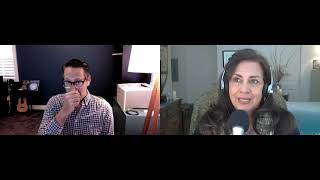
Jeremy Levy, a Grammy-nominated composer and former jazz trombonist from Hannibal, Missouri, talks about pivoting into orchestration at University of Miami and building an LA career through assistant work and relationships. He released The Planets Reimagined, a big-band jazz album based on Holst's classical suite, and emphasizes saying yes to opportunities and doing grunt work to get there.
Chapters
Okay.
Hello, everybody. Welcome to another episode of Finding Brave. How are you this week? This, I believe, is April 15 that you're seeing this and we are recording this well in, in advance of that. I kind of can't wait to see what's going on April 15th because we're in the middle of some interesting things in our country right now. But we're not going to talk about that. We are talking today about music. And I am so excited and honored today to have our guest, Jeremy Levy. And I'm laughing because I guess we have a lot of pronunciations of that Jeremy, don't we? But thank you so much for being here. I'm so grateful for your time.
Thanks for having me.
All right, so everyone, again, we are talking music and we're talking about how to thrive in Hollywood. How about that? While pursuing our biggest passions. So let me tell you about Jeremy and then you're going to hear why I'm so passionately connected to what you have to say. Jeremy. We're going to talk about that in a minute. But Jeremy is a Grammy nominated composer and orchestrator and has worked in nearly every medium in Los angeles for over 10 years. He recently received his first Grammy nomination and maybe when this comes out, we'll know the results. But congrats to you. That's amazing. For best arrangement instrumental or acapella for his track Uranus. Am I pronouncing that correctly? Uranus the magician.
No. No one seems to know.
Well, we're not gonna go with the other. With the other pronunciation. Off your album. The planets reimagined a modern big band jazz reinterpretation of the famous classical suite by Gucci. Gustav Holtz. Holtz. He's also a well known orchestrator for some of Hollywood's biggest films and TV series, including the most amazing, The Queen's Gambit, Frozen 2 and Ant Man. Thank you for being here again and congratulations on a nomination. Grammy nomination.
Ah.
So here's what I want to start with. Jeremy and I know we've talked a little bit before. You're going to be. You're going to share it like it is, right? We're not going to paint a veneered picture of what it is to. To have a life in music. You're going to tell us what it really is like. But why I'm so interested in this is. You know, I just had on Cheryl Porter, who's the number one vocal coach in the world right now. And she was talking about her, her journey, which has had a lot of bumps, you know, and, and then turned into kind of a beautiful journey right at this moment. But here's what I want to first ask you. And, and this comes from, as I was sharing with you earlier, my ex husband is Arthur Lipner, international renowned jazz percussionist. And I'm a singer on the side and have done some things of note, you know, Carnegie, Liza Minnelli singing back up, you know, in Sony Music Studios. And it's interesting to see the life of someone who's dedicated their life to making a living in music versus someone like me who needs it in her life, but doesn't want to, doesn't care to make money. Can you talk about, first of all, how you started this journey? Did you always know you were going to be a composer, orchestrator, musician? Number two? What do you think is the key to what I would say is incredible success? Where do we start?
Okay, so we'll start with number one. I did not always want to be a composer and arranger. I don't think I really even knew what that was until I probably hit my mid-20s. I was a trombonist to begin with. So from like a very young age, I just wanted to be a jazz trombonist, which as I grew up, it turns out that's not a very successful career.
Right. Jazz has some interesting, kind of an interesting trajectory here in the U.S. right?
Yeah, it's unfortunate, but yeah, jazz is my first real love. I was very lucky. I had an amazing jazz program in my high school. I'm from Hannibal, Missouri.
Hannibal, Missouri?
Yeah, Hannibal, Missouri. That's where Mark Twain grew up. So, yeah, it's like, it's the setting of Tom Sawyer, Huck Finn, all those stories. Yeah, it's this historic little town in the Mississippi river, like 20,000 people. I grew up there. My family came there from the Philadelphia area when they had us.
So was jazz a big thing? Was music a big thing in your childhood?
It was. My dad was just sort of a, like a hobbyist, I guess. He played guitar and organ. He started this on piano. We were like, me and my brother, we were both like 4 or 5. So there's pictures of us, you know, like on his lap while he's playing his guitar. We're like, you know, tinkering away on the piano, in the organ. And then we got into lessons and then I got into. Into playing trombone in middle school. And then I started playing. There was like a disco Land jazz band that I started to play in middle school. Even. So there was, there was people there, the educators that was Very important to them. And then my high school jazz band director was a jazz trombone as well. And he really kind of led me down this. This path.
And I'm just wondering, when you were that age, were you thinking, this is. This is the career I want. I just. This is.
I didn't know if it was. Yeah, I don't know if I thought that it was. I mean, I don't think I was thinking career, you know, like. But I was. I was definitely. I definitely knew. This was kind of. This is like, I. I was. I was like, I was good from the very. Like, I picked up trombone very, very quickly.
You got a gift, let's face it.
Yeah. It sounds like a silly thing to say, but, like, I sort of did. It came very easily me, which is very. Jerry. Very fortunate, but. Yeah, so that was definitely very much the early passion that was, like, literally all consuming. In high school, like, all I did was jazz trombone. Then I went to, like, you know, summer jazz camps and learned all the.
Adjudications and Allstate or whatever. Right?
Yeah, Allstate. Yeah. Then I was at, like, all national jazz band in New Orleans and, like, all this stuff. So I got all this great experience just even in high school, like, meeting all these people across the country, actually. Fun little side fact. Can. Harold, who we've been seeing, he's had the issue with his son having his phone accused by the woman in New York. Actually, we grew up. He was in St. Louis. I was in Hannibal. We were an Allstate jazz band together.
Oh, my gosh.
It's so funny because I had not been following his career. And then this is how I see his name back in the news.
That's horrible, right? Wow.
Yeah, it's sad, but it's also. It's so nice to see he's had such a wonderful career, too. So I'm super happy to see he's been so successful.
Right. That's the. That's the good thing. All right, now back to tell me how. And, you know, we were talking earlier. In fact, I have a new client who reached out, who's in a particular field, but really, it's music he wants to make a living at. And, you know, my ex, I know he hears from a lot of people that, you know, they see the success that folks like you have had and they dream of it for themselves. But. So I don't want to eclipse your story. When did you. When did you realize that composing and orchestration was something that you were great at or loved or wanted to work In.
Right. So it started to happen in college. I started studying a bit more and then kind of doing some early dabbling and enjoying it, but not really taking it too seriously.
And were you getting a degree in music then?
Yeah, I went to a conservatory in Kansas City. So I studied like classical trombone, played in jazz and orchestra and opera, and just really kind of expanded my. My musical horizons at that point. So that was pretty eye opening of itself.
Right.
That was like the first time we heard Stravinsky and, you know, the Important Things. And also. And also Gustav Holster the Planets, which is. We'll get to that in a little bit. But that was kind of where that initially came from. So, yeah, I started studying composition. Then I got into arranging with big band, because I've been playing in big bands my whole. So I first got into it kind of through that, and then the orchestra stuff kind of came from there. But then when I ended up in grad school, I was planning on doing a master's degree in jazz trombone. And then life has its funny ways where I look like everything was going to work out. And then the scholarship program that I thought I had lined up fell through, but they still had an availability in the raging program, so they really wanted me to go. This is a University of Miami. So I ended up in Gary Lindsay's arranging program at Universal Miami for my graduate program. So life sort of played its hand in some way. Yeah, so I was still playing in the big band and doing all that stuff, studying jazz trombone, but then I was studying arranging, orchestration. I learned production, mixing, like, all the things that I actually do now. So I learned all that in college. So life kind of steered me that way. And then I think I sort of saw the light at some point that, like, you know, I could be playing. My dream was to be. To move to Los Angeles and play on film sessions and radio sessions, pop music, that sort of stuff on trombone. And I started kind of just realizing that the guys that are doing that, they're still kind of playing corporate gigs on the side and doing all the little hustle stuff you're kind of having to do. So I started leaning more and more towards the writing side of things. And when I originally moved to Los Angeles, my goal was to get into orchestration and arranging and composition. And then obviously I continue to play for probably like six or seven years, but at this point, I've. I've pretty much retired.
You have? Yeah.
Trauma just sits in the closet comes out. Every now and then somebody asks me to play on something, but Is that because it's. It's a sad story. I mean, it's. It's sad.
I like to hear that. Is it because you're just so consumed with winning Grammys or. Or just the work you do?
It's. It's the work. I mean, the way things used to be is I would play in bands, rehearsal bands, people called to do things. And then as I got busier and busier doing orchestration, I would have to say no. When someone calls me, said, you know, can you come in at 10am and play in this band? I'm like, I can't. I'm working. And then, you know, after a while, people stop calling.
Interesting.
And then all of a sudden you're not playing. Well, maybe it happens.
It happens pretty quickly and you just get the bookings you want.
I do that. And even so, I was playing in my own band for the longest time, and then at this point, I'm literally not playing enough to keep up. Like, I would be getting too tired. So now I just.
And your chops are not what they. I'm sure.
Yeah. So now I stand in front of the band and conduct and I do that whole thing, which is interesting. Maybe. Maybe not more satisfying, but equally satisfying.
Well, good. Beautiful.
So, no, I actually. I plan on doing some more playing again once we get out of COVID restrictions and all that. It's something that.
You have a little child too, right?
I do, yeah. I have a three and a half year old.
Oh, well, there you go. You're busy. A little busy. All right, I have some questions now that. And my questions are always around what I'm particularly interested in, but in the hopes that people listening to this who have a passion of any kind, but let's say it's music or artistic or creative, that they're gonna glean some strategies and tips, real life advice, you know, that's what I'm going for. But I have a question. When your scholarships fell through and then this other direction came, orchestrating, composing, what was your emotion? Were you devastated at first and thought, I don't want this. I'm just interested?
I don't think. I wasn't devastated. I mean, I was interested in doing a range. I think. Here's what's, like. The interesting thing is, like, life ended up sort of like getting me to do what I probably wanted to, but didn't have, maybe the. The courage to apply for, because at that point it was something I think I wanted to do, but I didn't think I was ready to do It. You know what I mean?
And someone. The. The program reached out to you.
Right. So when. When I had. When I had applied, I also sent along some arrangements and other stuff that I'd done to sort of fill out my application. So they knew that I had already been doing that. And so I guess they were impressed with the right sent as well. Um, so, yeah, it's just. It's definitely. I wasn't devastated. It was more like, okay, I. I should probably do this. You know, Like, I shouldn't have been. I think I was just scared to switch up.
Okay, lesson number one. Even with all your gifts, you're, you know, national, you know, nationally ranked, and we don't rank in music, but you know what I mean?
Yeah.
You had a fear that you're not good enough, but then the. I think what happened is the universe stepped in for you, you know?
Yeah.
Okay, now flash forward here. You're working on some really huge movies, you know, and orchestrating, composing. How did you get those connections? If I'm sure you hear these questions the way I do, how did you get to this level? Tell us the.
It's. It's certainly been a long path, so I think I'm so old.
It's not that long.
Yeah. Oh, true, true. I'm 40 or 45. Sorry, I'm 41. I'm sorry. I just. I just turned 41 in December.
Oh, my gosh.
I kind of forgot.
Happy birthday.
Thank you. So I'll put it back to two things. One, it actually kind of comes from my tradition big band music, which is where I kind of made most of my early connections out here in Los Angeles. So big band jazz led me to a composer out here, Tim Davies. He's an Australian drummer. He was leading a big band out here, and he was just getting going as an orchestrator and conductor in Los Angeles. So this was in 2006. So he was one of the first people I got introduced to as someone that was doing and getting kind of started in what I wanted to be doing. So I reached out to him through some alumni from Miami. A guitar player, Andrew Sinewick, who I went to school with, who had been out here, I think maybe three or four years at this point. And he's also for the. For the listeners. He's this monster session guitarist that's had an amazing career and he's my age as well, so he's just done amazing things out here. But anyway, he introduced me to Tim, and I went out and saw his band. They were playing at this Little club in Culver City that no longer exists.
Yeah, I've been there.
Yeah. Yeah, I think it was on Washington, kind of. I think it was near the Helms Bakery area. It wasn't. It was like, just. Just away from the Helms Bakery district. Anyway, so I went and saw them there, and then we chatted afterwards, and I told him kind of, you know, essentially, I want to be doing kind of what you're doing. He's like, yeah, okay. People say that all the time.
Yeah, he's heard it a million times.
Yeah. Yeah. And then I think we had, like, another coffee or something afterwards, and I sent him some music I've been working on. And I think some other people that I'd also reached out to said, yeah, you guys should give this guy a shot. He's good, you know. So he called me up one time when he was. I think he was orchestrating a score for the composer, Jim Dooley, who is. He's most famous for the score for Pushing Daisies. He won a bunch of awards for that.
Wow.
And also, Jim was also just kind of getting started this time, but he was doing a film score that was recording, I think, in Bratislava. Like, it was probably like, the next day or something. So they were staying up late getting the music printed. Like, cues were still coming in, being orchestrated. He was also, like, making the sheet music, printing it, sending it overseas, like, the whole thing. So he had me come over to his house and watch Hollywood at, like. I think I probably came over mid afternoon, and then I think I left around, like, 6am Just to help him.
Just to help him.
Yeah. Just to help. Yeah. And it was, you know, it was everything from, like, you know, running out, picking up sushi for dinner, to just, like, printing parts, taping, collating, like, managerial, every little. Whatever they did, you know. So I was over there just doing the kind of.
And how did that come about? He remembered meeting you and said, hey, what the hell? You want to come over and help me?
Yeah.
Okay. Lesson number two. You say yes.
Yeah. You say exactly, yes.
Whatever you need, I'm here.
Yeah. So, I mean, looking back, I mean, my. My tips to everybody are like, if somebody asked me, like, you know, how you got to where you are, I can tell you how I did it, but that's not how you know someone else is going to do it, except.
That there are beautiful lessons. And I think that's all I'm getting at here, that you made connections. You. You weren't shy enough to reach out to all the people that were Doing what you wanted, and then when destiny struck, you went for it.
Yeah.
Would you say?
Yeah. And then also, I think, also reaching out to the right people.
Like, how do you determine that? How do we determine that?
I think reaching out to people that have sort of like a common background, I think that was the most important thing for me. Like, Tim and I, we worked together on all these. All the. All the scores now, like, Frozen 2, that his gig. I orchestrated the movie with him. So we've probably done, like, 100 films and TV shows at this point. We've done so much together. But, you know, when I started out, I was literally just doing grunt work. And at the time, he had, like, five or six other people also doing grunt work, you know, and then.
So how do we determine. Jim, how do we. How do we determine the right people? I mean, I'll give my thoughts, but I want to know yours.
I mean, my thoughts were finding people that had a similar mindset as far as what they're doing. So Tim, he was also a big band composer, which is what I was. So we have the same sort of musical background, the same shared experience in that world, so we weren't kind of coming at it from different angles. And I think I was pretty upfront with him as far as, like, what I wanted to do and that sort of stuff, and he was looking for help. And, you know, I've been through this multiple times with other people, too, where you're looking for people to come in and help and do assistant work. And it's always tricky finding someone that's the right fit. So, I mean, I was lucky that I. That people reached out to say, hey, you should talk to Tim. He's probably somebody you should get to know. And then it worked out because it doesn't work out for a lot of people, which I'm very well aware of. But, yeah, I mean, and some of.
It is a personality blending, some of it is mindset, some of it is positive. Are we uplifting? Are we a drag? Right. It's. It's a lot of personality, those. Those elements. Don't you think?
Yeah. And then, I mean, a lot of it is. It was also just. For me, it was just the fit of, like, our actual, like, workflow with, like, computers, like, we use all the same programs. I was very knowledgeable and everything that he was using already, so it wasn't like, he brought me in and, like, he had to, like, you know, bring me up to speed or teach me. Yeah, I get. I came in very quickly. He was Able to just kind of do everything he needed. And then, like, my first big break with Tim was actually right. I think was the night his daughter was born. This is 2007 or 2008, so he was orchestrating for pushing daisies for gym. And then his. His wife was in the hospital, like, her water broke, and they had to go. And of course, it was still recording the next morning. So he called me in, and I worked, like, you know, through the night with another guy. We worked straight the episode and kind of stepped in, and that was my first. I think, my first official orchestration credit.
Oh, my God, what a story. Now I want to. I want to go forward to a Grammy nomination. You know what? I remember a jazz legend, Dave Samuels, who my ex, you know, studied with and knows and worked with. And Spyrogyra, he kind of helped form. He. He said that winning a Grammy. How did he put it? I'm gonna butcher it. But basically, it's not the thing. People think that when you're at the level where you're up for a Grammy, you've already created a lot of success internally and externally. So, yes, it might open some new doors, but it's not necessarily what people who will never win a Grammy think. Do you understand what I'm getting at? What do you feel about. And I know you're on the cusp of knowing if you want it, right?
I do. So I did a big, bad album in 2012 with my first big band out here in Los Angeles, the Bug Me Levy Orchestra. It's a band that I shared with the saxophone, Alex Budman, and we put out this great record in 2012. I thought it was, you know, just like the best stuff was all my music, all my arrangements, all my original compositions. I was very proud of it. You know, we put it up on the. On the long last year nomination. Tried my best, hired a publicist, did the whole thing, you know, and then nothing, you know, and it's kind of. Kind of what you're saying. It was. It was too early, you know, Whereas, you know, since then, I've done a lot more. A lot. A lot more. People know me. I think this new record is even better, which obviously will help. Yeah. And then, you know, I've just. I've learned a lot more about how to kind of get it out there. Plus, I think social media makes it so much easier now to, you know, really share these projects and get people interested. And you can. You can kind of. You know, you go on Facebook and you find all these. These Groups where you have people with a shared love of certain things and you just kind of, you know, you make friends with people, tribes, your community. Yeah, it's very easy to find those tribes that otherwise it might be kind of hard to find for, you know, like a big band jazz album or something.
Wow. So I want to talk to you about your thoughts about this. When I hear from a lot of people who want to make it big, whether it's music, creative arts, or in my world, coaching or as a thought leader or an influencer. Don't even like that word. What I see is that they want the result before doing any of the hard stuff.
Right.
Like they're just starting out. Somebody wrote me, for instance, and I don't mean to cast dispersion, but this is an example. You know, I would like to be a LinkedIn. I would like to have a LinkedIn learning series. Can you help me get one? Because I happen I don't work for LinkedIn, but I have connections. And, you know, I was kind and said, no, I'm sorry, I can't. Can't help on that. But what I'd suggest you do is start doing your own videos. Do them on FaceTime Live, do them on YouTube and then promote them. Because she had no followers, no action, really.
Right.
When I see that a lot that I want to get this level, but they haven't done any of the work to get there. Do you see that in the music world?
I do. And I mean, my opinion of that is it's not that people want to take the shortcut, that they don't know how to get there. You know what I mean?
I think some people just want the shortcut too, frankly.
Yeah, well, possibly, possibly.
Like to me, do the work, be a great musician, be a great composer, Step in and do the grunt work. Do it.
Yeah.
And if you're.
I think the problem is a lot of people don't see the grunt work and the line process to get to what it is that they see as success. They just see the success and haven't been following along the whole time. I mean, my advice to most people, if they come out here and they tell me they want to be an orchestrator or composer or arranger, any sort of thing. And the first thing you tell them to do is like, whatever kind of music you want to be writing, just start writing it. Form a band, get out there, you know, make YouTube videos, just make content. You know, you start making stuff because, you know, you'll start, obviously the experience of doing all these things Is. Is very educational. It'll get better at whatever it is that you're doing. Plus, you know, you can start curating who sees it and try to find an audience. And then, you know, it's. You start propagating your own work just by creating things.
Love it. Now, can you answer this for me? I wouldn't think that, you know, 100 Hollywood films, the person in. In charge of hiring the orchestrator or composer, I wouldn't think they'd go to someone who had a big band background. So what that says to me is that decision is being made by someone who knows that your background is perfect. So in other words, that's a long way of asking who does hire the orchestrator? The composer. Whose response is that? The producer. Who hires that?
No, it's generally either the composer or the music contractor. And usually when it's the music contractor, it's because it's a new composer that's never hired somebody to record for an orchestra before and they need help with something like a team. At that point, the contractor is the person who hires the orchestra. So then the contractor might also suggest orchestrator to come in.
And who does the. Is the music contractor found by the producer? It's not the director. Who, who's the one who says, yeah, you handle the music?
It's usually found by the composer, I would imagine. It's usually found by the composer. I mean, there's. There's.
Who chooses the composer, who chooses that person.
That's usually. Usually the director. Although occasionally. Yeah, yeah, there's occasionally some input above.
So in all these Hollywood films. All these Hollywood films, have you known the directors?
Not usually. It's usually coming from the composer. So it's usually I get introduced to composers or I've come on a project. Like I said, working with Tim, he's introduced me to a lot of people as well. So, for instance, we mentioned the Queen's Gambit. So I got introduced to the composer of that, Carlos Rafael Rivera. Tim was. I think Tim orchestrated his first movie, which was A Walk Amongst the Tombstones. So he scored that. I can't remember what year that was now, but Tim was the orchestrator and I did some assisting and some additional orchestration, but Ed didn't do a whole lot on that one. But then when Carl's next project came around, I think Tim was busy scoring a Netflix series or something, so Tim suggested that I do it for him. So then that was for the Netflix series, Godless. Wow. Yeah, that was like, I think, I guess, seven or eight part Miniseries, which is sort of similar scope to what Queen's Gambit ended up being. But yeah, so I did that for Carlos and that worked really well. We had a great time working together. And then when Queen's Gambit came around, he called me up and asked me to. To leave it up. So it goes.
Isn't Queen's Gambit number one on Netflix today? Isn't it?
I'm not sure it still is, but it might be.
So when you get associated with that, does your phone start ringing off the hook?
You know, you'd be surprised. I don't. The people that hire me generally already know me.
Yeah, I understand what will be looking through the credits and. And finding that and saying, yeah, I'm doing my best.
Right. I'm doing my best to promote that, you know, that my name is attached to that project because I feel like I did good work. But certainly Carlos, the composer, his phone's blowing up and he's incredible. He's like a super talented guy who's really kind of at the beginning of his film career. He chieftains at the University of Miami. Right now he's the head of the music media program down there.
Oh, wow.
Yeah. So he's got his day job down there and then he's done these projects for what it's for. For Scott Frank. He's the director for Queen's Gambit and Godless. So they have this great working relationship and Carlos is kind of attached himself to him. But I have a feeling Carlos is going to be doing a lot of new things after Gambit, so.
Wonderful.
Yeah.
So now tell me. Oh, go ahead.
Oh, sorry. I would just say so, you know, generally the way it works, so as when you have your composer clients, as they get bigger, then it just creates more work. And then also if jobs come into them that they can't do it, then they recommend to other people, and then you also get recommended along. It's sort of this expanding world of clients. Most of it is really word of mouth.
I mean, these are the lessons everyone. You know, I remember I had a corporate career that was successful on the outside and not successful on the inside. I was a mess. But one of the most narcissistic leaders said, said the smartest thing ever, which is, you know, the success you have is less about the actual work you do and more about who loves you, who knows you, the people you know. And I was like, oh. Because I felt like I wanted it to be a meritocracy. But yes, you got to do great work. Of course, That's a given. But it is these relationships that you have.
The thing is, you know, almost everybody out here does great work. Right.
That's just the lowest barrier to entry. Right. You're doing great work. We know that now you've got to form these relationships and not, you know, as I said, I had this. I have a big following on LinkedIn. I'm amazed at how many people just reach with their hand out. Not trying. Meaning, you know, what? Can you give me Kathy, or I've got something to pitch you. That's not the way to build relationships. Yeah, not at all. So first we've got to understand what is relationship building. And usually it's just like you're saying, it's being of help, saying, yes, what can I do? It's not thinking you're better than. It's getting in there, rolling up your sleeves and being of help and demonstrating who you really are. Would you agree with that?
Yeah.
So tell us about. Your whole album is up for the. The Grammy, right? Your whole.
No, it's just the. It's one track that was nominated for Best management. Yeah.
But tell us how you did. It's a massive project, your whole album there, is it?
It was, yeah. So let me tell you a little background. Okay. So the. The album is called the Planets, Reimagined. Excuse me. So, as I mentioned at the beginning, it's based off of Gustav Holst's classical suite the Planets, which is this very, very well known piece of music. It was like this huge influence on John Williams for Star wars, for the music from Star Wars. It's one of these pieces was written in 1916, so it's the beginning of the 20th century. It's influenced film music from the beginning. You can. Yeah, I'm not going to go into it too much, but it's. It's something that every film composer is incredibly familiar with. You've heard it. Like, I was actually just playing a video game and there was like a techno version of Mars from it. Oh, my God. It's one of these things that it's kind of in pop culture, even though it's classical music.
And we don't. Many people don't know the name or the composer, but we know themes, you know, we know the theme. I was just listening on NPR the other day, One of the Planets.
Yeah, I think I heard that on Mr. Robot even a couple years ago.
Oh, my gosh.
Wow. Anyway, so it's this piece of music, like I said, I first discovered it in college or. Sorry, I Think I first heard it in high school through Star wars and then kind of made that connection that it was. There's a scene in the end of Star Wars Episode 4 where the death Star blows up and it's like a note for note, like, I don't want to say reproduction, but sort of loving, lovingly adapted from the end of Mars.
They didn't give Gustav credit. Oh, no. Okay.
Yeah. Anyway, it's a well known thing, but that's kind of how I came to it originally. And then, you know, from there then I built the whole thing and fell in love with it. And then I'd been studying it, you know, every few years or so in college, then graduate school, and then, you know, if I had like some time off, I might come back to it once I moved out here as well. But I got asked to write some additional music for the video game Star Wars Battlefront through my friend Gordy Hobbies, who has. He's gone on to it. I think he's done about like 15 or 16 hours of star wars games now. Like, he's done so much music. He's done, I think like five or six games now. But anyway, this was one of the first ones and he used some help at the end. So I did like an additional four or five minutes of score for him. And I went back, I started the Star wars scores again. Then I went back and studied the plans again because, you know, to kind of get in the mindset of John Williams, I kind of felt like I had to go back into, you know, what was in his head when he was thinking about writing the music.
Research.
I kind of did that. Yeah, yeah, it was a good suggestion. I think Wordy recommended that originally to kind of go back and do the planets again. So anyway, so that was already in my head. And then I went and saw the Hollywood Bowl Orchestra that summer. They performed the Planets at the Hollywood Bowl. And I just kind of had that, you know, sort of an epiphany that, like, this is something that might be really cool to adapt for big band jazz.
And how long did it take you to do this whole.
It took me about nine months from then. So I started. Actually, I wrote it in order, in planetary order, if you will, just like the original suite. So I started with Mars. I wrote it over a couple of weeks, and then I called on my band to rehearse it and see if it worked. And I was really happy with the results. And I tweaked a little bit. And then when I read any time off in between projects, I would just sit down and start hammering out these arrangements. Then you cover rehearsals, try them out. I just kind of kept wood chopping it. Workshopping. Excuse me. For, you know, about eight or nine months until it was finished. Wow.
Bravo.
So that's basically how it came to be then, from start to finish, it was about three years until it was released. So, yeah, it was about nine months of writing. And then the next year was fundraising and recording. So I did a Kickstarter project to raise recording budget for it.
Wow.
Which went really quite well. I raised about half the budget, which I was really happy about. Yeah. So that went really well. And then we recorded over about, like, four or five months, which is, you know, a big project of itself for that. So do, like, all the editing and all the Pro Tools work. And I was.
You had to do all that?
Yeah, well, I didn't have to, but it's something that I do, so it seems silly to pay somebody else to do it. So, yeah, so I did all that, and then eventually it was mixed and mastered right when Covid hit, actually. So thankfully, this all. All was done before everything went down that we haven't recorded, like a normal album with everybody in the room together.
Wow.
Yeah. And then it came out this summer eventually. So, yeah, it was about maybe two and a half to three years from start to finish.
See, this is another thing I think people aren't quite aware of, you know, in my world, for instance, writing books, they don't just fly out.
Yeah.
I mean, maybe some people have it that way, but, you know, my book was, I would say, three years from the original idea. And it morphs and changes, doesn't it, by, you know, just. I think what. Often what we think it's going to be is very different from what it becomes, and it's much better than what we ever thought. Right.
Yeah. Yeah.
So let me ask you one. You, of course, want to win the Grammy, but what's next for you? What. What's the big dream that you have that you're not quite there yet? What is it?
I mean, that is. That is kind of the question I've been asking myself for the next couple years. I'm hoping, even with the Grammy nomination, obviously, if I win, that would be nice, too, but I'm hoping to get a little bit more name recognition for what I'm doing. I want to be doing more in jazz just because that's kind of my. My first love, like I talked about. Although it's not really my career necessarily, but it's something I'm very glad I went back to and did this record because obviously people have enjoyed the record and it's getting some. Some critical acclaim here, which has been nice. So I would like to be doing more of that. And I want to get back into performing a bit again, but I want to continue building on my base of orchestration clients and doing really big projects. The thing I love about orchestration is just you get to work with an orchestra so often that's not something that most people get to do on a semi daily basis.
Are you conducting the orchestra?
Not recently.
That's. That's big. That's daunting.
Yeah. So that was. It's funny. Getting into doing more conducting was my original goal for 2020. And then Covid hit and then everything has been remote. So I had some projects lined up where I was going to be conducting. I orchestrated the score for the Phineas and Ferb movie with Annie Jacobs last year, and I was supposed to be doing the whole thing here in town conducting the. We did like, I think it was gonna be two or three days of recording with a small orchestra and it was gonna be a lot of fun.
And when you say virtual, are they submitting their parts? No.
So we end up having to record the orchestra overseas. Yeah. There's been multiple ways people have dealt with COVID Some stuff stays in town and we record. Literally people record their home in their home studios. Individual parts, and then it's all assembled later by the mixer. And then a lot of it has just been done by orchestras overseas that unfortunately seems like some countries have handled how to put an orchestra in the room better than others. So there's been a lot of work in Budapest and London.
Not now.
London is. Yeah, yeah. We've been doing a lot of stuff in Vienna lately too as well. So there's. There's a lot of music happening around the world, starting in Los Angeles, but we're. We're unable to record a lot of it right now, which is very sad because the musicians are out of work.
Well, now's the time you sit and write another. Amazing.
Yeah. So my goals are I want to be. I want to be doing more conducting, which was. That was my original goal that got kind of postponed. I would like to be doing more composing as well. It's not something that I've focused too heavily on because I really found orchestration to be sort of my niche. That has done very well for me, but I would like to be doing some more scoring projects as well. So that's Kind of where I'm headed for the next couple of years.
Absolutely amazing. So where do we learn about you? Where do we listen to your music? Where do we go?
Well, directly you can go to my website, which is jlevymusic.com so you can find pretty much everything about me, what I do, links to my other sites, social media. And then as far as listening, anything that I have available you can purchase on my website. And then also everything's on the general streaming, Spotify, Apple Music, YouTube, all that stuff. So it's all out there.
Wonderful.
Yeah. So the new album is called the Planets Reimagined and then the band name is the Jeremy Levy Jazz Orchestra. And I mentioned also the first album I did is called From There to Here, which is by the Budman Levy Orchestra, which is also a nice lesson if you enjoy jazz.
Fantastic. We'll link to every one of those people. And I hope you, I can't thank you enough, Jeremy, to me, you're giving me a real life look at what it is to have a life in the creative arts where we are of service with our talents. You know, that's the final thing I'd love to leave people with. I really believe we're here on the planet to use our. Our natural planet, to use our natural gifts. But also it's not just for our own joy. I think that the more we can be of service and give to others, to, you know, to organizations that we believe in, whatever, the more things take off for us. So it's not just a selfish endeavor. It's think about where you can be of service with your gifts. And I think that accelerates the process. Do you agree with me?
I think so. The nice thing about this year, and this is again amongst everything that's been so bad, but by putting out this album during such a harsh time for so many people, it's turned out it's been something that's really kind of people really enjoyed listening to. And I've been getting all sorts of really nice notes from my website. People writing me and saying thank you for putting this out there. It's something I really enjoyed listening to this year. So it's been nice just knowing that I probably just a little bit of happiness.
That's what we're here to do.
We sometimes forget that yeah, we write this music and initially it might be something that you want to do because it's something that you enjoy, but the end result is that people listen to it and they bring their own background to like in this case, since it's based on a piece of music that a lot of people are familiar with, and they have their own sort of little heartstrings attached to it, similar to how I do, but they're going to come out of their own direction. So it's been really, really nice to see that, you know, it's improved in people's lives this year.
Oh, what a way to end. Thank you so much, Jeremy. I wish you all the best. Can't wait to. To see what the outcome is. And we. We think the Grammys might be pushed a little farther, even maybe March.
As of now. Yeah, I believe it's March 14th.
I can't wait. And I'm wishing you all the best. Sending up prayers for. But I know that whatever the outcome, you're. You're incredibly successful in every measure we can think of. Thank you for joining me. All right, people, are we inspired? If you're creative, if you are a musician, you're an artist, you're an actor, we'd love to hear from you. We'd love to hear what insight you got from today. And it's all about using who you really are, but also in the betterment of others in the world, if we can do that. Thank you so much. Have a wonderful week, and we will see you next time. Bye.
More from Kathy


Elevate Yourself, Elevate Others, and Amplify Good | Chris Cooper | Finding Brave Ep. 334

Finding Brave Epis #333: How Leaders Can Harness AI Without Losing Their Humanity, w/Bennett Borden

Finding Brave Epis 332- How to Stay Brave, Valuable and Visible in the Age of AI, with Raman Rai

Finding Brave Epis 331 - The Power of Positive Disruption, with Dr. Patrick Leddin


Finding Brave Epis 330 - Being 40: Letting Go and Embracing Who You Are, with Stacey Lindsay

Disrupt Career Reinvention with Kathy Caprino - via The Disruption Lab Podcast w/Patrick Leddin

Creating Neurodiversity-Friendly Work Cultures: Simple Workplace Adjustments Matter

Finding Brave Epis 329 - How To Create a Neurodiversity-Friendly Workplace, with Kristen Pressner

Finding Brave Epis. 328: Reclaiming the Power to Trust Your Own Voice, with Dr. Cindy McGovern