Finding Brave 174: The Transformative Power Of Servant Leadership, with Howard Behar
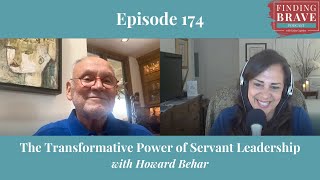
Howard Behar explains servant leadership as a life centered on serving others through empathy and intention. He outlines his framework of six P's: purpose, passion, persistence, patience, performance, and people. Behar also discusses what blocks this approach, from narcissism to lack of empathy, and how mentors can help by asking about core values and home life.
Questions this video answers
21 years
From 28 stores to 15,000 stores (five continents).
12 years
Purpose; Passion; Persistence; Patience; Performance; People
77 years old
Chapters
Hello, everybody. Welcome to another episode of Finding Brave. Kathy Caprino here. I want to tell you, I. I think you're in for the biggest treat you've had all maybe week, year, month, whatever, decade with our guest today, the amazing Howard Behar. Howard, I can't thank you enough for making time to join me. I'm so thrilled to have you.
You must be talking about some other Howard.
No, man, You. You and people. I want to tell you this. I was just telling Howard after. I don't think I would have known this 20 years ago when I wasn't really intersecting with anybody. Inspiring, frankly, including my bosses. But now after interviewing, it's. It's probably, I don't know, 500 people over the years. I'm no longer as jazzed or nervous or inspired to speak with someone about what they've done. It's more about who they are and not just who they are on TV or who they are in this one, you know, it's who they are every day. The work that it takes to be that person. And to me, Howard Behar is that so. That's why I'm kind of nervous to talk to you, Howard. But you'll walk me through it?
Yeah, I think you'll be just fine. I'm not worried, sweet thing.
All right, everyone, Let me tell you about Howard. If you don't already know. Howard Behar's career in business spans over 50 years in all, all in consumer oriented businesses covering several industries. He retired from Starbucks Coffee after 21 years, where he led both the domestic business as president of North America and was the founding president of Starbucks International during his tenure. You've heard this a million times, Howard. Good grief, you're so bored to hear it. During his tenure, he participated in the growth of the company from 28 stores to 15,000 stores spanning five continents. He served on the Starbucks board of directors for 12 years before retiring. Howard is also the author of the classic book It's not about the Coffee. I mean, I think millions of us have heard of this book. A guide to leading by putting people first first. And the Magic Cup, a parable about the power of personal values. And Howard now travels the world speaking to leaders, organizations and students. And you're a mentor as well. I've met so many people who say you're their mentor. You're an incredibly busy man. So what I'd love to do, Howard, is jump in to the, the concept of servant leadership, and we were talking for a second before this that this is what I see as a career Coach. As a leadership coach, we read about servant leadership. I think we grasp what it's supposed to be, but I think we don't really understand how to be it. Can you talk to us about what you think servant leadership is? Why? You know, you've obviously had tremendous success in every possible way, and I'm guessing it's because of your values and how you put people first. But can you tell us, what do we do? What do we do differently? How did you do it?
Well, it's. You know, I never really understood it myself till I was. I started to understand it when I was in my mid-20s, and somebody gave me this little pamphlet called the Servant as Leader or the Leader as Servant by Robert Greenleaf. And that put me on the journey to start to begin to understand. And look, at the end of the day, there's only one reason we're put on this earth. I don't care what your job title is. President, doctor, lawyer, fire chief, architect, nurse. Doesn't make any difference what your job title is or what you do. There's only one reason we're here, and that's to serve other human beings. And that's what keeps us alive. That's what energizes. You know, you always hear people say, well, I'm burned out. You know, I'm bored. You never get burned out or bored if you're focusing on helping somebody else. Right. That's the most energizing thing in the world because it not only helps others, it makes you feel better about yourself. Just the facts of life. And so servant leadership isn't a leadership model. It's a life model. It's how we're meant to live our lives. And, you know, if we think about it in our. In our marriages and our personal relationships, you know, if you're married to somebody, our job is to serve them to help. My job is to help my wife get what she wants out of her life in the journey of our marriage. And that's my. That's what I'm here to do. It's the same way with my kids now. You know, everybody thinks it's, well, this mushy skills. It's not that at all. These are the hard skills because, you know, like, just, you know, if you're married for 44 years, like I have been, you know, there's some blowups along the way, and you have to figure out how to get through those. And they really, the only way you get through those is by putting yourself to the side and understanding what the other person's needs or wants are or what the other person is saying. That was truly, listen, not easy to do. And I'm certainly not a perfectionist at it. I've made plenty of mistakes. I continue to make the same kind of mistakes. But at the end of the day, at the end of the day, this is not a leadership model. It's a life model.
All right, let me dimensionalize. Let, let, let me dig in here. But I love what you say. Excuse me. When I was a marriage and family therapist and, and you know, there were times where a particular spouse didn't dig it. A couple would come in, and it's often. I happened to practice in a very affluent area, Westport, Connecticut. Often it was the spouse who had this huge job. And over and over this. It's typically a man, but of course it can go either way. I remember one guy, he would want his wife to drive him to the train and pick him up from the train. Never fail. Well, if you're doing that, what is. She can't do other things.
Yeah, right.
I tried to explain. Okay, let me explain how she might see this. But then I said, listen, I'm putting my pen down. Here it is. I want to ask you this. Do you, as the spouse, want your partner to be all he or she can be in the world in the way he or she wants it?
There it is.
If you can't, I don't think there's any hope for this marriage. And they would be, huh. I thought this was just about driving me to. Anyway, would you agree with that idea?
Absolutely, 100%. My wife Lynn and I have been doing family retreats for almost 40 years.
You and your family would go on a retreat?
Well, we used to do with our kids, but now. But then it went to just doing it with our marriage. And we would, we would have headings across the top. We'd take white paper, you know, that sticky stuff that you put along, and we, we'd have. We agree on what the headings were. Spirituality, our families, our children, our marriage, our economics in a family, our. Our life goals, our career goals, whatever it happened to be. And we go our separate rooms, separate places, and we read out four to five things under each of those headings that we wanted. Then we have to come back and present to each other with only clarifying questions. And, you know, and so that helped us understand where the other person was. And we didn't always agree, but most of the time we worked it out inside of those sessions and, you know, we had, we had things that we wanted for our marriage. And she had things that she wanted for her career. Well, they had to work with inside of my career too. And so we figured out how to negotiate those things. But, but it was a, you know, it was a joint process and it really made a huge difference in our family life and our married life.
But to me, the key here is one thing that you had a deep, unrelenting, relenting on. What's the word?
Yeah.
Committed desire that this would work out.
Yes.
It's a mindset, isn't it?
It's a mindset even when the worst possible thing can happen. You have to come in with that attitude. Right. And you may be under big pain because something happened inside the marriage and you have to still come in with that feeling because otherwise you don't have any chance of making the marriage work.
Oh, that's so true. Now let's go to being a leader. I was just telling my 23 year old son, it's fun to be a career coach when your kids are young and they're learning and they're asking you all sorts of. Then they're like, I shut up. No, they won't ever do that.
I'm sure.
But I was talking about. He said, you're speaking to Mr. Bihar and servant leadership. Tell me more. He said 23. And I said that I think that some of the people he's working with are true servant leadership leaders. But this is what I'd love to know, Howard. You've mentored a lot of people. A lot of probably CEOs have come to you or senior leaders. What do you think is the one thing you see in their personality, in their values that's going to keep them from servant leadership?
Lack of empathy, Lack of empathy.
Do you see narcissism? Narcissism.
You see, you see a lot. You see narcissism. It's all about them. It's. They're about me, not we. And you see it all the time.
And how do you work with that? What if you had a audience here of a thousand people? I mean, when I think of my 18 years in corporate life, Howard, I was struggling so hard, feeling misunderstood, feeling not valued. I don't think I was a great leader. I was suffering. And so if you were talking to me, that 40 year old that had two little children that felt I was in a toxic environment with narcissistic bosses and toxic colleagues and I didn't find meaning in my work, but yet I wanted to be a better leader, I think it would have been. My cup wasn't full. My cup was empty. And I think it's very hard to be. To think of others when your cup is empty. Does this make sense?
Yeah, I understand. It's the challenge. It's the challenge of life, right? It's. I always came back and I focused on their families and them and their families. I wanted to know who they were at home. I wanted to know. I used to ask a question. I said, what does your wife love about you? What does she not like about you? What are your kids respecting you? What don't they respect in you?
How would you have this conversation?
I would. Just.
In a group or just individual.
Individual to individual, you know, and because I always felt that you go there first. I want to know who the person is. What. Because I'm not really curious about what their wife thinks of them. I want to. I want to know what they think their wife thinks of them. Because it tells me a lot about therapists. So.
Therapist.
Well, it is. That's exactly what it is. That's exactly what it is. It's therapy. And, you know, and. Because that's where you got to go. Because this is all personal stuff. This isn't about business. Right. When you have people that are narcissists and in the work world, you know, most of the time they're narcissists when they go home. Not always, but. And the ones that are different at home than they are at work always concern me the most, you know, because I'm looking for the. I always say, look, when you get up in the morning, you put on your hat. That is the hat that you should wear your whole day. I don't care where you are, who you're talking with, that's the hat you wear. And if you were wearing different hats throughout your day, you're not going to have a very fulfilling life. And you see that all the time. People that go to work at Starbucks and say, I got to put the Starbucks hat on, they better really think about whether Starbucks is the right place for them.
And by that they mean, I've got to put my values out there. I've got to be, you know, supporting of the customer. I got to kind of pretend. Is that what they.
Well, pretend, yeah, pretend. Or I have to be something other than who I am.
Wow.
You know, and if you have to do that at home or in work, you're in the wrong place. Either of those places. And you've got to come. You either have to come to the point where you're going to really adjust your values, which is not easy to do and, and, but doable or you have to find another place or another partner.
Can I ask you some other leadership questions? I was talking to my 26 year old daughter and we were talking about, I'm 60, she's 26. Right. I said that in my generation, particularly with a Greek mom and an Italian dad. You, you didn't disrespect them.
No.
For mom, you didn't challenge, you didn't say, I don't agree. Okay. That didn't work so well for me. I grew up not being able to speak. But if you did challenge, you picked your words very carefully. Right. And I believe that's a generational theme.
It's a generational thing.
So one thing I want to ask you, not for us to sound like Methuselah, but do you see that other generations, the idea of putting people first over you, is that a generational thing that comes more difficult, with more difficulty for you?
No, I don't see that. I think that it depends on the person. But I think there's today's world, there's more of thinking about other people first. There's a lot more inside organizations today. Young people want to be part of something that's bigger than themselves. Right. They want to feel good about what they're doing. They don't want to just be doing stuff. And you see that everywhere. Yeah. That's where, you know, you see some of the biggest companies in the world, the pushback from inside the company, and you see people speaking up and the companies don't know what to do with it. Right. Instead of just dealing with it and.
Saying, we hear, instead of listening and doing something about it, saying, I can't.
I hear what you're saying. Right. And we don't believe we should make that adjustment. And here's why. Or we, what you just said is a good idea. Let us see if we can work together to make the change. It's okay to disagree. Right. As long as it's done with respect and dignity. And you could say to somebody, you know, our values just don't match. Wow. You know, they don't match. So, you know, and that can be from. Let's just from somebody, employee side. My values just don't match with the organization and I need to find a place where my values do match. Or the organization says to the employee, you know, our values just don't match. And you talk about it. It's not. You're just saying our values don't match. The conversation much deeper than that. But. But that needs to be talked about. That's what makes organizations work, makes families work. Because when values match, trust gets built. And when trust gets built, then organizations work. Without trust, organizations do not work. They don't work in families. They don't work at work. So it's this whole servant leadership. These are the hard things to learn in life. They're not soft, they're not easy. And because it's not, you know, if you're a servant leader, you still have expectations of yourself and those that you're working with or in your family. We have expectations. You know, I have expectations of my spouse, my wife, Lynn, and she has expectations of me. And we each have to live up to those expectations as long as we've talked about it.
But it's the hard work. Because it's the hard work. A better human.
Yeah.
It's not how do I speak to my team or write this email. It's.
Yeah, wow.
I can even see in myself I'm not being the person that was the hardest thing for me when I really could feel I wasn't being the manager and leader I dreamt to be. It's.
Yeah, it hurts. And you go home and you're in pain and you're trying to figure out what to do. I always say, you got to be willing to bet your job every day and living up to your values, you have to be able to say, I, well, from. Of all, you got to have some money in the bank, right? Because you got to be able to. You got to be able to walk away if you need to. But if you're living in conflict with your values in the workplace, you're going to have an unhappy life. If you got a boss that cheats and lies to make numbers, right, you're not going to feel very good about yourself. Or if you do, you better watch out because the day of reckoning is coming. And so it's, you know, living up to those, to what your values are in all aspects of your life. At the end of the day, servant leadership, you know, like I said before, is really about helping others achieve what they want in their lives in the journey of helping you and your organization achieve what it wants. But it always has to be, I give before I get. I give trust before I get trust, I love before I get love.
Can we talk about love? Sure. You've actually said you have to love your.
You have to love your people. Absolutely.
Can you what that means?
Yeah, it's not, you know, I don't I don't love the person I'm working with the same way I love my children or my wife. It's not. It's not. But it's the. It's the love I have because they're a human being, and they are worthy of love. They're worthy of caring, and it's that respect that I have because just because they're alive and they have to discern that love and respect, they get it automatically.
They do not have to earn that love and respect. The numbers.
It's not how well they have to discern. It's not how well they perform. It's who they are. Yeah. Performance counts. And they have to perform. They have to live up to their commitments. But those are conversations we have along the way, you know?
So let me ask you this. How would I put it? You know, I really believe. All right, let me just state this. I've done some spiritual stuff. I've done a webinar on spirituality and business, and somebody wrote. I never would have thought someone, you know, Kathy, at your level, would some. Something like, be brave enough to talk about spirituality. Well, I. I'm gonna be honest. The whole thing is a spiritual endeavor. I don't mean religious. I don't mean religion. I mean, it's of our soul, if it's of our spirit. But to me, what you're talking about is a spiritual thing. Would you agree with that?
I agree totally. It is a spiritual label.
It that.
Yeah, Yeah, I talk about it like that. That's always a tough area, because the minute you say that word, somebody says, you're talking about Jesus, you're talking about Hamid, you're talking about whoever, and. And that's not what we're talking about here. We're talking about the spirit that we're born with, the human spirit that we have. It's not about God. It's about us.
Oh, Howard, that's beautiful. And, you know, you said you ask people, you know, what does your wife love about you? Et cetera. You talk about who they are and what their life is. I remember in my worst two years, no one asked a question about my life. No one.
Yeah, I know.
And I thought, what's happening here? And I think it's. It's. It's just isolation and disconnection of toxicity. But let me dimensionalize a little more. You're working with a thousand people listening to this, and they're all struggling. They want to be what you're talking about, but they know they're falling short. What are the Kinds of things you tell the mentees you have about. All right, Fred or Sally, here's what's got to change. What do you tell them?
Well, I usually don't tell them what has to change. I usually ask them, tell me your top three core values and what, how those values inform the actions and the decisions you make in your life. I'm really looking for the top 10 values because I can't tell them what their values are. All I can do is ask them if they haven't done this work, then the first thing I say to them, you know, here's some. If you want some advice from me, you know, permission to coach, and, and, and I say you need to go home over the next three to six months and work on your eight to 10 core values. These are the things that drive your life. These are the things that doesn't mean there aren't other words or other values that inform your decisions in your life or form your life or shape you. But there's. These are the 8 to 10 that are just core to you. My first core value is honesty. It's an absolute core value to me, and I have to live by that, you know, and when I don't, when I tell that white lie, which I do now, and then, you know, I really think about it. It just doesn't come work flowing out of my mouth or whatever. And so then once they've done that, then we can have a conversation.
Have you ever had someone come back with values that you think, oh, you're going to suffer? Like, I want to be the top. I want to sell a million books. That's what I value.
Well, that's not a core value. That's a metric. There's nothing wrong with having goals. The question I would ask you is, how do you want to achieve that goal? On the backs of people or with people honestly or dishonest?
So this is a, this is a lesson in leadership, I'm guessing. We all know terrible leaders, damaging, toxic leaders. Everyone listening. Half of you have one as a boss. If you had that person in your office, I don't believe that they're aware of the damage that they're doing. And they might give you values that they believe they hold true, but they don't enact them, they don't practice them. Is that true? Like, nobody. My value is to be a horrible, demeaning person that ruins lives.
No, I've never met any. I, I've met some people that are like that, but I've never met any that wants to Be like that.
So let's talk about that group, because this is who I want to talk to. I want. I want mediation here. I want change for people. Breakthrough.
Well, so let's say that I'm reporting to somebody that. That says, here's who I am. I'm a caring person. I love people, you know, and all those things, but all their actions point in a different direction. Then it's time to have a conversation. And that conversation goes something like this. You know, John, you know, you know, we've been working together for a long time, and I go home every night and, you know, I don't feel good about myself. And I want to talk to you about that. And here's what's going on with me. What I. What I feel is, is that, you know, you have always said that you really care about people, but I never feel like you care about me. Is there something I'm missing here right now? You know, like I said, you got to be willing to bet your job, you know, you might get a boss that says, yeah, well, you're right. I don't care about you. You're out of here. You know, but you better to know that right now than to just go on living this other kind of life where you're just having to suck it in and you just have so much pain and you hate where you are. You know, you got to be willing to have that conversation, and you got to do it in a loving way, non judgmental way. It's not you versus them. It's how you're feeling about it. And can you help me understand why you do what you do?
All right, I got a career coach comment. I did that, Howard. To a raging narcissist.
Yeah. And then he said goodbye.
He didn't. But I was laid off with a hundred people after nine. Eleven. And there were other reasons for it. But what I would say to people is, you know, I think that part of this is also trusting yourself.
Yeah.
And when someone is damaging to you, the question is, do you want to spend your energy trying to rehabilitate them, or is it best that you find another job?
Yeah, right. You know, it's best you find another job.
I think so.
And it's easy to say, and I understand how easy to say. I'm making. I'm making a ton of money. I'm making a couple hundred thousand a year. A hundred thousand dollars a year. And I got three kids, and one of them's in college or whatever it happens to be. You don't just go do that. You're right. You don't. You know that's right. But you get yourself ready to do that.
Beautiful.
And you put the resources away, you do what you can do to get there, but you got. If you stay there, you're going to have a miserable life. You're going to be one of those people at the end of the day that looks back on their life and their career and say, what the hell was I doing? You don't want that. You don't want to do that. Well, we all do it to some extent.
This is a precious life. Don't waste it.
Yeah. You have value. And look at. There's too many great places to work.
That's.
There are wonderful places to work. There are more great places than not. There are more great bosses than not. And, you know, you know, I really encourage people to think about moving on. And I know it's easy to say, I mean, look, Starbucks was a great place to work for some people. It wasn't for every. Wasn't a great place for everybody because we'd have people that would slip into the organization and leadership roles that were not. Were abusive to people, didn't respect people. And it took us a while to figure it out and either tried to help them change or move them on. But what we did was we gave our people permission to say when it wasn't working right. We didn't. We didn't say, well, you know, you have to move on. We. We did our work and said, yeah, you got a boss that's not caring about people. And we went in and tried to help that boss be better than they were. And sometimes we succeeded, sometimes we didn't. But you got to work in organizations that really do put people first. And unfortunately, there's a lot of them that are not. I can go down the list. You know, it's. I mean, we. Look what. It's the ones that Clyde cheat and steal. You know, Volkswagen went through that, Wells Fargo went through that, Uber went through that. You know, a bunch of them. Tycho, you know, you name.
Sometimes it's the breakdown moment that brings about breakthrough. Sometimes. Yeah, yeah, it's needed to be done. You know, slam it down and then it builds back up. So a few more things. Howard, if I could, you know, building from 28 stores to 15,000. I'm sure you hear from a million startup founders who say, howard, how did you, you know, what was a key to that kind of expansion? I know servant leadership is. Oh, do you have any other tips for people who have Tiny businesses or mid sized businesses and they want to expand. What other, you know, amazing things were you capable of doing because of who you are? I mean, that's.
Well, I wasn't me, to tell you the truth. The guy that had the big, the big appetite was Howard Schultz. Howard, right. And my appetite was never as big. Orange Smith, who was the other leg to this stool. They called us H20 and two Howards and an orange. But Howard was the driving force until Oren and I caught onto it because my, my appetite to be rich was, I never cared about that. It just money was never. And I like to make money and spend it, but when I had it, I spent it. When I didn't have it, I didn't, you know, and so, but Howard had this appetite to be have, you know, build a big dream. And he was really the driving force behind it. And that's what it takes. You know, I always say that, you know, the one thing that entrepreneur, all entrepreneurs have is persistence.
Yes, part of your six Ps, right? You want to talk about your six.
Ps out of my six Ps, we can do that too. But, but I, I just. So the way you get it done is with people. Yeah, that's the only way. You got to have a big dream. Other people have to sign on to your dream and your greater purpose. You have to treat them with respect and dignity. You have to give them the tools, you have to allow them to make mistakes. I always say the person who sweeps the floor should choose the broom. You make them part of the organization, you give them responsibility and, and they do it. And that's basically what happened at Starbucks. We set the tone, we set the values, the people aligned with it, you know, that believed in it. They understood the greater purpose to nurture. Our greater purpose was to be one of the most well known and respected organizations in the world. Known for nurturing, inspiring the human spirit. We didn't say how many stores we wanted at one time we did or how much profit we wanted to make. It was always who do we, how do we want to serve human beings? And that drove us. And so that made the difference in the company. So my six P's are this. So okay, the first P is purpose. Everything you do in life has to have a purpose greater than yourself. I, for some reason, internally, I, that was important to me from a very early age. I never defined it, I never understood it, but it had to have meaning to me. You know, it wasn't just opening a store, selling a cup of coffee. It was serving another human being. Those human beings we call customers.
By the way, you are what I call an advocator. Out of the six dominant action styles, you're going to get something done like a striver, but you need to advocate for something bigger than yourself.
It's got to be bigger because, yeah, I needed to attach to it. Right. Because otherwise.
Yeah.
Okay, then the second P is passion. If it's bigger than you, then you damn well better be passionate about it. Scream it from the highest mountaintops. Here's where we're going. Here's why we're going. When I. When I was the founder of Starbucks International, taking Starbucks outside of North America, and my pitch to everybody that joined my little team, you know, I went from responsibility for the North American business, you know, with about 10,000 people indirectly reporting to me, to zero people. And I was recruiting people with inside of Starbucks. And I said, well, we're going to want to. What we want to do is use Starbucks coffee to build bridges between people around the world. We weren't trying to open stores. And the people that signed on understood, we're going to use Starbucks coffee to build a bridge means, you know, how we treated each other around the world. So purpose greater than ourselves. Map be passionate about it. So the third P is persistence. Everything in life takes persistence. You know, there are rocks in every river we travel down. Sometimes we know where the rock is because we can just see it sticking out and we can maybe avoid it. Sometimes we see it and we hit it anyway. Sometimes the rock is us. Yeah, the rock is us. That's the one. And a lot of times a rock is underneath the water, we don't see it at all, and we go smack into it and it shocks us and what the hell happened here? And we got to learn to get around, over, around, through, right. Or blow up the rock. So persistence pays in life. Then the fourth P is patience. You'd say that patience is the opposite of persistence. It's not. You have to have patience. Not everybody comes along at the same rate that you'll come along. Nobody could keep up with Schultz, with Howard Schultz at the time he had this dream. Nobody. He saw something that nobody else saw, including myself. And so he had to have patience with me, and then I had to have patience with our people, with people. And the most important person you have to have patience with is yourself. Because things don't just come at the rate you want them to come. You don't always get it done in the timeframe. You want it to get you can set a goal. You can set a time frame for the goal. Sometimes it just doesn't get done in that timeframe. So you have to have patience. Then the fourth P is performance, or fifth P is performance. Performance matters. Look, when you make a commitment to another human being, you make a commitment to the people you're working with in an organization. You make a commitment to your family. You make a commitment to be at your son's baseball game or your daughter's soccer game or whatever. You better be there, or you better have a damn good reason. You better tell them why you're not going to be there early and own it. And it's the same way with your spouse. If you've made a commitment to be in a monogamous relationship, then that's your commitment. If you don't want to do that, don't be married. You know, but you got. So performance matters. And performance matters in the workplace. You know, you got to do with the job. And that's where people get confused with servant leadership. They don't understand the foundation of servant leadership is performance. So then the 6p is people. Everything you do in life is about serving another human being. And as long as you stay focused on that, you'll never burn out. You may get tired. We all get tired, Right? And you'll never bore out because you'll always understand that what you're here to do is help other people. And that is always energizing. So that's my six piece.
They're beautiful. And they're so rich. I have one final question that I'm going to let you go, Howard, Although I'd like to, you know, move in with you. What do you think is the biggest block to living these six p's? Maybe another way to look at it is you are an embodiment of it. And I have a feeling your childhood, you know, former therapist here. I believe we are what our childhood taught us to be. I'm. I'm. This is for another podcast. I'd love to hear about your childhood, but you've struggled with these, right?
Yeah, absolutely. Struggle with all.
We're not angelic beings.
I still struggle with them. I'm 77 years old. I'm still struggling. I still. Still takes me. I have to. I'm learning all the time. So the biggest block. The biggest block is, you know, I have a quote in my office wall that, you know. And you know this quote. If you don't know where you're going, any path will get you there. It's living Life with intention, right? Living life with intention. That's. And not living life with intention. That's the biggest block. If you live life with intention, then you figure out how to do these things or whatever the things are that matter to you. You know, your six. Your six P's, your successes, whatever they are, you know, love it, Howard. The.
There it is. I don't know. You make it so simple. You make it so simple. And I do want to say Starbucks is one of my favorite places wherever I go, and everyone is that way. I have more conversations that are so juicy with baristas at Starbucks. They're so fascinating, and they seem so interested in me. Want to go back? Oh, my God, I can't thank you enough. Now, Howard, I know you're talking all over the world. Speaking for organizations, what's the. What's next for you? What's the thing you want next?
I want to live a fulfilling life. I want to live a productive life. And so I plagiarized, you know, Starbucks bhag. And so my mission statement in life is, every day, I want to nurture and inspire the human spirit, beginning with myself first, and then for others. That's how I live my life. And that I do that in many forms. Forms, many shapes and sizes. Sometimes it's just picking up a piece of paper off the street, sometimes talking to people like you. Sometimes it's helping another human being with a problem they're having. Sometimes it's just cleaning the toilet, you.
Know, playing with your grandchildren, who I know. Huge teachers for you.
Doing something with my wife. You know, I mean, it's pretty simple.
Isn'T it, Howard, the way you.
Yeah. Yeah, it is.
I love it. So where can we learn of you? Where can people hire you? Where do we go? Where to? Well, look up everything.
It's. I have a website, you know, HB or HowardBeehar.com. you can look up there and, you know, you'll figure it out. You want to get a hold of me? You'll figure it out. It's. It's. My email address is hbhowardbehard.com. you can email me. I'll get back to everybody. And my Cell phone is 206-972-7776, and it may take me a while, but I'll always get back to you.
Oh, I'm so inspired just to be in community with you, just even speak with you for 30 minutes. Thank you for who you are, Howard.
Thanks, Kathy. Thanks for the opportunity. I appreciate it.
Blast. All right, everybody, please let us know what you get from this. The six P's. What is servant leadership? What's your block? Who's the rock? What's the rock in your river? Let us be of help to you. And Howard's giving you his information. You can see that just a half hour speed talk with Howard could be a life changing experience. I hope you'll take him up on it. Not too many people calling you on your cell phone. Thank you again, Howard. I wish you all the best. And everyone have a wonderful, inspiring Servant Leadership Week and we will see you next.
More from Kathy


Elevate Yourself, Elevate Others, and Amplify Good | Chris Cooper | Finding Brave Ep. 334

Finding Brave Epis #333: How Leaders Can Harness AI Without Losing Their Humanity, w/Bennett Borden

Finding Brave Epis 332- How to Stay Brave, Valuable and Visible in the Age of AI, with Raman Rai

Finding Brave Epis 331 - The Power of Positive Disruption, with Dr. Patrick Leddin


Finding Brave Epis 330 - Being 40: Letting Go and Embracing Who You Are, with Stacey Lindsay

Disrupt Career Reinvention with Kathy Caprino - via The Disruption Lab Podcast w/Patrick Leddin

Creating Neurodiversity-Friendly Work Cultures: Simple Workplace Adjustments Matter

Finding Brave Epis 329 - How To Create a Neurodiversity-Friendly Workplace, with Kristen Pressner

Finding Brave Epis. 328: Reclaiming the Power to Trust Your Own Voice, with Dr. Cindy McGovern