Finding Brave 321: How to Be a Likeable Badass, with Alison Fragale
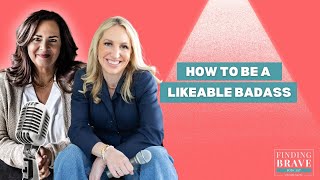
Organizational psychologist Allison Fragale breaks down respect into two parts: warmth and competence. Women often get stuck over-emphasizing warmth at the cost of status. One concrete tactic: talk other people up. It triggers reciprocity and boosts both their reputation and yours.
Chapters
Hello everyone, this is Kathy Caprino and welcome to my podcast, Finding Brave.
I've created this show for everyone who longs to create something bold and brave in their life, to rise up, speak up, and stand up for who they are and to reach their highest and biggest visions. Each week I'll be speaking with inspiring guests from all walks of business, leadership, entertainment, the creative arts, and the entrepreneurial world. And they'll be sharing their intimate stories of finding brave, and offer their best strategies for building your most rewarding, joyful, and meaningful life, business, and career.
Hello everybody, welcome to another episode of Finding Brave. Oh, I'm a little froggy here, sorry about that. There's a lot of singing going on right now. This is before you see it, which is— will be in early January, but I'm in the throes of holiday singing concerts all over the place. What a fun time. Good to be with you. And I'm so excited to have our beautiful, high-energy, generous, wonderful guest, Allison Fragale, with us today. Allison, what do you have, 6 podcasts, interviews like tomorrow, this week? You're so in demand. I'm so grateful for your time.
No, December is a busy month for all the things. Everyone wants to get all the things done before the end of the year.
So that's really true.
Look at this. This is about to get— oh, Amazing. I just got coffee delivery. Oh, look at that.
I love it. And that's beautiful, your background. Oh, we're so happy to be here. So we are talking about everything about Allison, but about her amazing book, "How to Be a Likeable Badass and Get the Success You Deserve." You know, I can't wait to share Allison's genius with you. And there's so much I wanna ask you truly that I really wanna understand about your work, about your trajectory. And also about how I adore that you're able to speak in front of so many audiences about issues that women have that, you know, I don't want to get political at all, but, you know, with DEI being rolled back a bit, I find it so inspiring that you're up there. It hasn't slowed down for you. You're talking about women's issues, but much more than that. Men have these issues as well, but I'm so grateful for you, but let me tell you all about Allison. And the list goes on and on. We just have an abbreviated version here. Allison is an organizational psychologist, professor at the University of North Carolina Business School, and the bestselling author of "Likable Badass: How Women Get the Success They Deserve." Her academic research on status, power, negotiation, and influence have been published in her field's top academic journals, as well as national media outlets. Including the Wall Street Journal, the New York Times. You're a bestselling author now.
Yay.
Sought-after keynote speaker who uses her behavioral science background to help individuals, especially women, excel. Prior to her academic career, Allison worked as a consultant at McKinsey and Company. So fascinating. Holds a BA in mathematics and economics from Dartmouth and a PhD in organizational behavior from Stanford University Graduate School of Business. Allison lives in Chicago with her husband and 3 kids. My goodness, you're busy. All named after professionals. National Athletes. So I'm guessing you are an athlete, right?
Yes, but also just a fan of sports as a spectator, even more so.
Yeah, love it.
You love it.
There's other things about Allison, check it out in the show notes. But here we are.
I—
it's going to be hard for me to, you know, cut this off after 2 hours even. No, we're not keeping you that long. But, um, if you know me a little bit, folks, you know I was a corporate VP, then a therapist, marriage and family therapist. And now doing coaching and leadership coaching for 18 years. But I love to understand what makes people tick and how they landed on the trajectory they did. And I read recently about you starting at McKinsey, and you said— you're funny as heck. I laugh, I laugh out loud when I read your stuff and watch you. But you said, as I read it, you know, people don't love it when the consultants are walking in the door. It's like, here we go. They're going to be telling— I've had it. I've been part of turnovers and all sorts of things. And here they come in asking, and you're like, oh, do I really have to do this? But you had a knack, it sounds like, for getting people to do what needed to be done. Is that correct? Can you tell us a little bit about this and how that shaped your trajectory?
Yeah. So McKinsey was one of my first— my first rodeo out of college. At that time, I had no knowledge or expectations or idea that I could become an academic. And I went into consulting thinking that was it. I was going to pick my perfect career the very first time, and I would just stay there for the rest of my life. And wouldn't that just be an easy career path? Like, the naivety of a 21-year-old. So I get into consulting.
Can I even ask you there? You had a BA in math and economics, it was?
Correct.
How did you even think— did you know, for the people listening who are just starting out, did you think you knew that management consulting was it? That's why you got those degrees?
I didn't get the degrees thinking that's going to set me up to be a management consultant. I got the degrees thinking that I wanted a career in business and I liked quantitative things. I liked math and I didn't— there was— my school didn't have a business major, so that seemed like math and economics seemed like the business kind of prep. Um, and I took the consulting job because it was in front of me. It was there, it was easy. And people said, that's a good firm, you should go work there, um, without much more than that, right? And so I said, okay, I'll try it. And, you know, I, as I tell people now, my students, I say the best job in life is one that you love. And actually the second best job in life is one that you hate. Because when you are unhappy in your work situation, it will motivate you like no nothing else to really understand yourself, know yourself, and figure out how you're gonna get out of this bad situation and into a better one. And so it really raises your self-awareness. So I didn't like it, but I also observed a couple things. So One is, if you work in any kind of advisory role, you realize two things very quickly. One, you have direct authority over no one, right? No one reports to you. So you cannot force anyone to do anything. And that was true, right? When my clients would look at me and McKinsey, they would think, you work for us. Like, we don't work for you. So that was interesting. And then—
Wow.
—the piece you referenced, which is perhaps a bit unique to consulting, external consulting, is that when you work in that role, no one likes you. They make movies about the fact that there are consultants. There's a couple, like Office Space, like the whole— its whole premise, right, is like everyone hates the consultants. That's accurate. That's why it's funny. So when people— when you start coming, people start like hiding under their desks. And so you put those two things together and you're like, wait a second, nobody likes me, nobody trusts me, no one knows me because I'm an outsider. And when I get really frustrated, I don't even get to yell at anyone and say, hey, this is your job, you need to do it, because it's not their job. So what that forced me to do, and I think I was better at this than some of my colleagues, was to figure out like the only way people are going to work with me is that they decide voluntarily that they want to work with me. Like they like me, they trust me, they think it's fun to work with me. And I had an advantage. A lot of times we think that experience and age is our advantage, but there is an advantage to youth and inexperience is that I wasn't threatening to anybody so I could show up and say, like, I'm here. Like, I come in peace. Like, let's figure out how to do this together. And I was good at that in ways that many of my older, more educated, experienced colleagues were not. But I didn't ultimately like the overall package of being a consultant. I didn't like the lifestyle. I didn't like the fact that we gave a lot of advice but didn't really do the work. So, I realized very quickly this was not where I was going to stay. But what I took from it and really shaped my career was the idea of, hey, I'm really good at thinking about how other people are going to see a situation and thinking about my audience in that regard and then trying to influence them. And I had always liked psychology, but I never could figure out how I could make a career out of it. And I was raised in a family that said, like, you know, the whole point of going to school is to educate yourself so that you can earn a living and pay your bills. So because I couldn't figure out how to make a career in psychology, I'd never done anything with it. So I was highly motivated because I didn't like my work situation. I wanted to get out. I could tell that I had this skill of thinking about my audience and being able to influence people. And then I came back to, well, what could I do with psychology where I could actually make a living? And so all those things came together. And I did a bit of research and I expanded my view of what was possible. And I realized, oh, organizational psychology might be a really great fit for me. It's human behavior. But it's applied to the workplace to help people understand their audience better, whether that's their clients, their boss, their colleagues, et cetera. And that's really what I like to do. So that was my turning point. And then that's when I went into academia, got my PhD, and started doing all of these things that like in this long and windy road lead us, you and I here talking together today.
Fascinating. And I'm interested because, you know, I did have a stint as a marriage and family therapist. When you say I couldn't make a living as a psychologist, did you know What did that mean to you? The money wasn't going to be there, or you weren't going to have the impact that you wanted, or the one-on-one work wasn't what you were— I'm interested.
Just, I, I, the only kind of psychology I really understood was clinical, and I didn't think that I wanted to be a therapist. And I liked the— I was really interested in social psychology when I listened to like the Milgram shock experiments and the Asch conformity experiments, but I was like, what do I do with that? And I didn't— hadn't really thought of what a career could be because there wasn't— no one was teaching me that. So it wasn't that it wasn't there. It was more that I just didn't understand what a career path could look like. So it wasn't that the income level wouldn't be good enough, but more like, what job would I even apply for if my expertise were social psychology or organizational psychology? And I hadn't— didn't understand business academia. I didn't understand interdisciplinary. Work in academia. Um, just none of it was, was known to me, but I, I understood that there was clinical, and I didn't think that I would be— and I think this is probably still true— I don't think I would be a good clinical psychologist. And so having taken that off the table, I didn't know what else to do.
Oh, oh, so fascinating. Okay, and one final question about who, who we are in the beginning before all this. What did your parents do for a living? Can I ask? Yeah.
So my dad, uh, was an electrical engineer by training. Had a 1-year stint working for IBM when he graduated college and then started his own companies and he's had small businesses ever since. So I, I only knew my dad as running small businesses of some, some succeeded. They've all had ups and downs. They were enough to provide a living for us, but they've had ups and downs. Um, and so. That was what I— and they were all in the— they were all at the beginning in like kind of the data, um, science, like engineering space. Okay. Wow. My mom was a nurse and then went to get her BA in nursing, but only after I was alive. She worked as a nurse for a while and then left nursing and became a real estate agent. Hey, look at that. Yeah. And then left real estate and went back into healthcare as a, um, as a teacher teaching what's called surgical technology, which are operating room technicians. So she had a long career doing that and also selling, um, ophthalmologic supplies. She had a business of like all these disgusting things like eye sutures and eye scalpels. I was like, oh, like the thought of someone cutting into your eye and watching. And then, so this is why I come home and there'd be videos of VHS tapes of eye surgeries that she's watching to understand how people use this equipment. And I was like, "Ooh." So, they had varied careers, but they were both entrepreneurial in their own way. And they both— I had a very, very nice life, but both of my parents had come from having parents themselves who hadn't gone to college, having no money. So, this whole idea of like being able to support yourself was the narrative that I was raised with. Kind of took me down the business route. How fascinating. Thank you for telling me that.
I, I just love to hear about what created you as an individual and a person. Thank you for sharing. Now let's, let's get to likable badass. And you know, I watched a number of your keynotes. You are so good at, so entertaining. What was it that you said somewhere? You're a mix of a comedian and— what was it? Your mother's best friend or so? No, what was it? What did I say? I don't remember it.
Maybe it was like your best friend and a comedian had a very fashionable baby. Is that what I said?
That's it. Yeah, that's it. So I'm so interested about likable badass and the entire premise that I get from this, which is slightly different from my book, The Most Powerful You. But I think we're saying a lot dovetails, that status is what is critical. Can you tell us, first of all, in your mind, what is a likable badass?
What is it? Yeah, so I'll answer the status piece as a way to answer that question. So that book and a lot of the work that I do is about the concept of status. Status is a word we use. Most people probably can't define it actually, but if you look in the dictionary, one of the definitions, which is the one that psychologists like myself use, is it's being the respect and regard you have from other people. So when we talk about a person being a high-status person, what we're saying is people highly regard them. And what that means is that your status is an opinion in other people's minds, but turns out to be a really important opinion for our own happiness and for our career success. And so that's what I shine a spotlight on in the book, because as important as that is, We don't talk about it that much, to the point that oftentimes people say, I know what you mean by status, but like, exactly what do you mean? Because it's a word we throw around without truly understanding the science of what it is.
Isn't it a word that when you say someone has status, it usually means power, money? Not in the way you're looking at it, but yeah. So we'll separate those.
So power is important as well, and I talk about that in the book. And power means you control a resource that has value. Money is the most liquid one. So when people have money, they have power because people want the money, right? They say, okay, well, if you have money and you could potentially give some of that to me, I will do what you say. I want you to like me. I'll be influenced by you because I want the resource. So power is very important. We talk about that, but status is equally important. We don't talk about it as much. So where does likable badass come in? I believe that books should have catchy titles because you want to entice somebody to pick it up. Uh, but it's not just catchy. It is a reference to how does one human being decide that they respect another human being? There's science to this, and that's a lot of the work that I do. And the science is this: there are two things that people pay attention to. You pay attention to these things when you're perceiving other people, and other people pay attention to these things when they're perceiving you. The two things we pay attention to are Do you care? And are you capable? So the first one, do you care? Meaning I want to be in relationships with people or interact with people that I think are going to make my life better, not worse. Well, how are you going to make my life better? You have good intentions toward me. You want to be helpful and honest and giving and likable and sincere. So that means I have a good experience, right, working with you. And the second thing we care about is that I can rely on you. So it's not just that you are— you have good intentions. That's the first step. But you have to be able to follow through on those intentions. So you are capable and competent and persistent and dedicated. And so I know that, hey, if I could— I can trust you, I can listen to you. I want to be in a relationship with you because you care and you're very capable. And in psychology, those are two very fundamental dimensions that we use to evaluate people. We all do this. And those two dimensions in psychology, we often talk about them as warmth and competence or warmth and assertiveness. But on the COVID of the book, just to make it a little more catchy, I call it likable and badass. But the underlying science is very robust, which is that the most surefire way to get this really valuable resource, which is another person's respect, is for you to show up to as many people as often as possible. In ways that signal to them, hey, Kathy's really cares and she's really capable. And if people believe those two things about you, they will respect you. And when they respect you, good things will happen for you. They will want to be in relationships. They'll be willing to be influenced by you. Um, they might often give you power because we like to give power to people that we respect and value. And you'll also live happier because Even if— take all those other things off the table— being respected is in itself a goal that we have in life that is, is very much tied to our life satisfaction, just like having friends. So when we talk about loneliness being an epidemic and that when people are lonely, we know that it reduces the quality of their life, their physical health, their mental health. Same thing with not being respected. When we are not respected in relationships, It hurts and it hurts in ways that make our life worse. It hurts our physical health. It hurts our mental health. So this variable, just being respected is so important, not just for what you can do in your career, but just being able to feel valued and, and, and live a happy life.
I've got so many questions. Okay. Give them to me. Yeah. So I know you talk a lot about this, uh, But when I hear that the research says we want, we want the person in front of us, we want to feel that they care. I feel like, all right, how do I want to say this very clearly? I feel like there's a gender perspective of this, that sometimes people look at women and said, I don't mean to paint everybody with the same brush, all women, all men, I'm not doing that. But you know, working with thousands of people as I have, I think sometimes when a woman is perceived as very caring, it can be a detriment because it can be perceived by others as you care too much, you're not gonna do the hard stuff. Does it come out ever that there are gender— another way to look at this is, I know a lot of men who have status, and, um, I'm not sure that them coming across as caring is the key thing that gave them status.
Are you following me? Um, yes, but I agree. Uh, so a couple of things. One is that either of these dimensions on their own can lead to status.
So Can lead to status.
They can, right? So we can respect people because they really care. We can also respect people because they're really capable. So it's possible that a human being simply by showing up and being just absolutely excellent at what they do, that that enough is alone to get them respected. That's true. However, the other dimension also matters. So if I were— if you would say, what's the, what's the best way to do it? The best way is always cover all your bases, be all the things. Because if you're all the things, then you're definitely going to be valued and respected. And that caring dimension also really matters. So a lot— some of the early work I did when I was starting out in this field was looking at when does caring matter more, when does capability matter more. And so as you go across contexts, sometimes one matters more than the other. But if you can think about, hey, why should I even make that choice? I should show up as both as much as I can, particularly if it's authentic because I am both of those things. So showing up that way is actually really truly showing myself. And if it's easy, if I can easily do it, why wouldn't I do it? Why would I ever only want to be one when I could be both? So I agree with you. Sometimes people, certainly men, can get a lot of status by really not excelling on the caring dimension and excelling on the capability dimension. Now, women don't always have that luxury. We expect women to be more caring. And women start off with lower status than men because gender affects status. So that's why I chose to write this book for women, even though the concept is not a gendered concept. Being respected is a universal goal. It's universally important. But why did I write it for women? Because of— there are several characteristics that we do not control. Gender is one, where the world has decided that this category is more respected than that category, and that's what's called bias. And gender is one of those. So if That's why when a man and a woman walk into a situation, if everything else about them is equal, there's a very high likelihood that the audience is gonna immediately give more status to the man than the woman. Okay? That's something we have to overcome. But, so I cannot fix that. Okay? But the good news is that the way we overcome it is actually not that hard and very aligned with who we wanna be anyway. And that's the part. So I say how we show up, and we see this in the research, how you show up in an interaction has a much bigger impact on how people think about you than any of those characteristics that you bring into the conversation with you.
How you show up. It's the Maya Angelou, you know, how you make people feel is what they will remember.
Yes, exactly. So, um, and so we don't have the— like, yes, can you be, particularly if you are, you know, a a straight, cisgender white man, could you show up and have the privilege of your demographics kind of like build your status for you? Yes, you can in some cases. But if you don't have that privilege, can you show up and be just as respected as that person by doing things that aren't very hard? Yes, you can. And the way to do it is to take all the things you do control, of which there are many, how you show up, and say, I'm gonna send every signal to your brain that I can that tells you that I'm both of these things. So I am of the opinion that there is no such thing as being too caring. I mean, would you ever really say about a person, "They should just be a little, like, meaner"? I think they would— they're not cruel enough. They just— they're too complimentary. That when people say you're too nice, because people do say that, but they're not actually saying that. Like, "I would really appreciate some meanness from you now again. What they're saying is, I see a lot on that dimension, but on this other dimension of how capable you are, I don't really see anything distinguishing. And so they're using language, the best language they have to describe something, and it's not accurate. So what I always tell people is, if someone tells you you're too nice— someone was asking their mentor once, should I stop saying please and thank you because people say I'm too nice? And the mentor said, don't do that. That's a terrible idea. No one wants somebody who doesn't say please and thank you. The key is how can you lean into the other dimension? Meaning if someone says you're too much of one thing, what they're really saying is I'm not seeing enough of the other dimension, which is also important. And then that's your cue to say, but I am also really capable. I'm not going to pull back on being nice. But I am going to show you that I know what I'm doing. You can rely on me. I'm results-oriented. I'm capable. So that's what I help people think about, because the logic is we often take the feedback really literally. Yeah. And then we do something that doesn't actually serve us when the person's trying to tell us a slightly different thing.
Holy crow. So, you know, having been a therapist, I will say, I think from my perspective and working with a lot of women, who are leaders or emerging leaders or seasoned leaders, often when someone says you're too caring, it means you have big feels and they're showing, you're crying in a meeting, you aren't tough enough to do the hard thing, your boundaries aren't strong enough. There's a litany of what you're too caring means to men. That's right.
It's like you're not badass enough. You're not.
Yeah, you're— and you're right. I mean, of course you're right. But I see what you mean, that what they mean by that is if you're going to be soft, if you're going to be malleable in a way, you need better boundaries. If you're not going to be able to say the things that need to be said, you're not as capable. That's right.
So, and so you might have to shift your signals. So for example, like, um, you know, let's— I'll take crying for example. Like, yes, if somebody every time they got feedback and they broke down into a puddle and you were having to console them every time, you'd be like, that's kind of annoying. Like, I don't really enjoy that. Now they say you're being too warm. You might say, well, that signal is not really working for me, but it doesn't mean that I should stop showing up as warm. I just need to shift the behavior that I'm doing so that— because lots of things like smiling is a warm behavior. Apologizing is a warm behavior. Giving somebody a compliment is a warm behavior. Putting yourself down is actually a warm behavior because it shows you're humble. But some of these behaviors are better than others at showing how capable you are. So complimenting another person, for example, is just as nice, if not nicer, as putting yourself down. But complimenting another person doesn't threaten your capabilities. Whereas putting yourself down does threaten your capabilities. You've just told somebody you're not good at stuff. So what I help people think about is sometimes, you're wanting to show that you care, but sometimes the signal that you're using is also sending off an unintentional message. And could we pick a different signal to show how much you care? One that doesn't come with a downside and still feels really true and authentic to you. And so that's the shift that sometimes needs to happen. But nobody, you know, Most people aren't psychologists, so they don't have the language you and I have. And so they say something. It's the best thing they know how to say. Like, you're too— you're, you know, you're too feeling, you're, you know, whatever.
Too nice.
Yeah, you're too nice. And it's like you have to unpack that a little bit to figure out what are they seeing, what are they really trying to communicate, and then how do I shift the package I'm giving them so that they can see the full and complete picture.
And would you recommend if someone says that to you, you would say Thank you for the feedback. Can I understand what that means to you? What is beneath that interpretation or understanding that I'm too nice? Would you suggest? Yes.
You have a couple of different ways you can do this. I always say to people, you can be annoyed and curious at the same time. Annoyed that someone has given you this feedback and curious as to what it means. You can ask them. Maybe they'll be able to tell you, maybe they won't. You can also ask other people like your mentors, people who have observed you. I've gotten this feedback, you know me, what do you think that could mean and how could we turn it into something actionable? And so you can figure out who you want to ask. But if you're going to ask the person who has given you the feedback, which is entirely legitimate, what I always tell people is it's easier to ask for feedback before things have happened rather than in retrospect. So oftentimes we ask people to give us their opinions about us after an event has already occurred. And then we say, what'd you think about that? Or how'd I do? The problem is people don't pay attention to other people as much as we think. They pay attention to themselves. So the person you're asking for feedback is like, doo doo doo doo, what am I having for dinner tonight? What is that email I have to send? And then you ask them for feedback and then They want to help you. They're going to say the best thing they can, but the feedback might be somewhat garbage because they weren't paying attention. You'll get better results if you say to somebody, I really want to understand this. Tell me an example if you have one. If you don't have an example, how about this? Will you promise that you will watch me closely in the next interactions we have together so that you can pick out the specific things you see me doing and offer them to me so that I'll be better informed to change them? And with that guidance, then when you act going forward, the person might actually turn their attention to you and like really study you and they'll have better things to say.
Oh goodness, I love it. And you know what? I saw that Adam Grant, who, you know, we love reading his stuff, you know, had the best quote in the world about your book. I just saw him speak at the World Business Forum in November. Oh yeah. And he had amazing tips, but one that really stuck out to me is so similar. It's about don't ask for feedback because that's gonna be retrospective. It's in the past. And it's gonna be more critical. That's what we think of feedback. It can't all be good. I think unconsciously, ask for advice. Yes. That's exactly what you're suggesting. You know, help me. It's like when you're presenting an idea, don't present it fully baked, half bake it so the person can feel like they're baking it with you and then they're more invested is how I talk about it. But if you're asking for their help in the future, you're going to have them as an ally. You're turning your critic into a coach.
Is that how you see it? Absolutely, 100%. And there's a lot of bias in the world toward women, toward all kinds of systemically marginalized groups. That is absolutely accurate. At the same time, not all feedback is rooted solely in bias. And I want to give an example from my own life that might be helpful for people. When I wrote the first draft of Likeable Badass and I submitted it to my editor, there was one big theme that came back in her feedback. Now, my editor believed in the book. She bought the book. She gave me money to write it. So in that sense, you know, she's on my side. However, we don't know each other well. We had one Zoom meeting. She— I wrote one proposal. She buys the book, and then I go into a coffee shop and write a whole book, and I send it to her, essentially. Wow. And so when she reads the first draft, her biggest piece of feedback was, oh my goodness, Allison, look how much you are cutting yourself down in the book. You are self-deprecating all over these pages, and you cannot do that, Allison. She said, people buy books from experts, which you are. That means you have to talk about yourself like an expert. When she said you're not doing it, When you cut yourself down, you're undermining your own credibility. These people are not your high school besties. They do not know you. You cannot talk like that. And here it is circled in red pen. Now, wow. I knew already that one of my bad habits from a status perspective was self-deprecating. However, I had absolutely no idea I had done it that much to that degree that it would make that kind of impression. On someone who didn't know me, particularly in this format. But when I saw it in writing, there was no denying it. And I always joke, it was so bad she even nixed my dedication page, which I thought was the one page in a book where you could literally say anything you wanted. Like, isn't that my one page? Yeah. She's like, you can't say that. So, so this was extremely helpful feedback. It was delivered very well because she was able to actually articulate the problem. And she, um, it was in writing so that once you circle it, there's really no dispute. You're like, that's, yeah, I did that. Right. Yeah. Subjective. Yeah, it is. Most people don't write books for a living. So think about all the self-deprecating I was doing. How would that show up if I had a more typical job where I was in a workplace? I would be going into meetings, talking about things. I would be writing emails. I would be having conversations in the hallway with people, and I'd probably be doing the same thing, but it would be verbal and it would be a little here and a little there. And then the person who is receiving it is not a trained editor. It is just another human being. And what might they say to somebody like me? They might just say, "You just don't seem like you have a lot of presence or like that people really, like, you know, trust you." And that would feel so biased, right? It would be so global and so awful. But the reality is they were picking up on something real that I was doing, a behavior that, although very nice, was sending a signal that I didn't know what I was doing. And they didn't have the language to articulate it. And the only way I would probably dig something like that out at work is I would take that global feedback that would feel so hurtful, and I would have to dig a little bit to say, what's this about? And if I could dig enough to say, this person is reacting to the fact that I use a lot of self-deprecating behaviors, then and only then would I be in a good position to say, hmm, do I like that about me and I want to keep it? Or do I want to change it? And in my case, as soon as it was pointed out, I was more than happy to drop it. I didn't consider it a great part of my, my style. I just didn't know enough that I was doing it to drop it. So that's, I think, is an example of how when you get something like it, your first reaction is to say, I'm judged, it's global, this is bias. And all that could be true. But the only way you're going to know is if you first do a little digging to see if there's anything there. And in my case, I felt really grateful because not only did I was able to revise my writing, it's made me more conscious in all my other interactions of the possible self-deprecating I'm doing. And I think that I'm catching myself more before I act in that natural tendency, and then able to redirect it into something else that feels equally authentic. What year was this that she gave you that feedback? Um, okay, so we're in 2025, 24, probably 2023.
I mean, uh, you being self-deprecating is absolutely the last thing in the world I would ever say about you. Watching your, your talks, you're funny as heck. But wow, um, I mean, if you really had an issue with that, it's evaporated, and bravo to you. I'm not evaporated. You've worked hard on it, I'm guessing, because it's the last thing I would ever say about you. You're funny.
And she will be happy to hear that.
Yes. Thank her. Thank her. All right. I know you only have a few more minutes. Can I keep you a few more?
Of course you can keep me. Thank you.
Power. I want— there's so much to talk about and I'm only touching the surface, people. You have to read the book. It's for everyone. Everyone. You know, I wrote a book, The Most Powerful You, and we talked about this, that what I didn't realize is later I did a big poll on LinkedIn and women told me, I don't want power. And I said, "What do you want?" "I want influence. I want impact. I wanna raise people up." I said, "I hate to break it to you, but you can't do that without power." Mother Teresa had power. But I understand why lots of people shun that word because power has often been, you know, we're under the thumb of it. It's abusive, harsh, critical. But you make a real distinction in your book about power versus status. Can we hear your view about that?
Love it. So psychologists, when we talk about power, we will talk about you control resources that other people value. So typical resources in a work context are going to be things like you control the budget, you have the authority to say yes or no, to make a decision, to hire and fire, to give somebody a reward or a punishment, to give them a good performance review or a bad one. You are in charge of things that other people want. I always say of my 3 kids, one's a teenager, he drives. If I'm holding the car keys, I am physically holding a resource that has value to him. And why is power so important? Because it's a source of influence. If I have the keys and you want the keys, are you gonna be more likely to do what I say? Of course, because you realize that's the only way I'm getting the keys. So when you control the budget and the, and the decision-making and all the stuff, it's a source of influence. Um, and a lot of that comes with, in organizations or jobs, it comes with your position. The position comes with the power. So when you go to this title, you all of a I can get these resources. And that's why people think about that. So sometimes when people say they don't want power, they might mean they don't wanna control the resources. They might mean they don't want that job that has the resources with them. That could be what they mean. But they do generally want influence. They want to be able to speak and have people listen. And influence can come from multiple sources. It can come from power, like I hold the keys, but it can also come from being respected, which is I'll do what you say, because I, I, I respect and value you. I want you to respect me back. And I also trust you that you know what you're doing, right? And you, you have my best interests at heart. And when we believe those two things, we'll be influential. So that's another path. And it doesn't have to be at the expense of power, but status is another path to influence. And what I always tell people is status is your most important path. If you have, if you're respected, generally can have influence even if you don't have power on top of it. If you're not respected, and let's say you have power, people will comply, but only to the bare minimum, just to not get in trouble. Power without status turns out to actually be a really unpleasant place for people to be because when they have control power and no one values them or respects them, people try to go around them. They try, they're not very nice to them. Again, they, they can't completely ignore them cuz the person has some, some resources, but they don't enjoy them and they don't treat them very well. And so that's one of the areas that I've studied a lot is power without status. And so that's the distinction of it. Sometimes that distinction is really important for people, sometimes it's not, but it's controlling resources and being respected. And those are two different paths to influence.
And I'd love to just share, I have a different view. When I talk about power, I mean self-agency, that you have the ability to do and say what you need to do and say. It's not about resources, the way I view it. It's about the power to, to uplift yourself, to uplift others. You know, it's the way I view it. Everyone would want it because it's the ability to move forward in life the way you want in your heart and your soul. And it's really the ability to lift others up as you lift yourself up. But yeah, and we talk about nuances, you know, words are— I see what you're talking about very clearly in an organizational aspect. For me, it's like powering up your motor, powering up your generator. It's, it's giving you that energy to do what you need to do in life, and you have enough of that energy to be able to move forward one foot in front of the other, where without it you can't. That's how I mean it.
And there's a distinction that we make between control over others and control over self. So control over self, we talk about as autonomy, so that you have free choice to be able to do what you will. And that is a form of power. I can control my own resources, how I choose to do things. And so that's why like wealth, personal wealth, can be a form of power in the sense that it gives me freedom to make choices that are aligned with me without having to worry that, you know, I don't have enough money to be able to do the things I need to do. So there, that, I think the way you're talking about it aligns very well with the freedom, um, sorry, power over self. The autonomy version. Um, and then you can also think about control over others because you control resources that they value.
Thank you so much. Finally, one last thing. Of everything you share here about negotiation, about how to build relationships, about how to speak up and ask for what you want, what's the one thing you feel that is the most impactful for people to get from this? I know it's hard.
No, it's actually not hard. I have one. Oh, good. Uh, and that is, if you did nothing else in your life, I would encourage people in the strongest possible terms to become an evangelical talker-upper of the great work that you see other people doing around you. And I say this from a basis of science. Um, when we talk other people up, when we go out in the world and we say good things about other people, First, it makes us feel really good. It makes life feel really happy. It's just a fun way to live, to be lifting up other people. But it's one of the most strategic things we can do to build our own status while we're building other people. So when I talk other people up, I'm helping to build their status. I'm telling the world, hey, this is a really caring, capable person, pay attention to them. And so I can vouch for them. But here's the part where it comes back to us, which is really important. Is one of the biggest rules that governs human relationships is reciprocity. So if you go into a building and you open a door for a stranger, that stranger will always stop and open the second door for you, right? That's how it works. You did for me, I do for you. When you go to lunch with a friend and the friend says, "No, let me get this one," you make a mental note, "I gotta make sure I pay the next check because that relationship has to stay in balance." So when we hear that other people are going around talking us up, What is our first thing that we want to do is, oh, I need to return the favor. I need to talk them up in exchange, right? And so when we talk other people up, and that is like the thing that we commit to first, we become great allies. And also when they hear about it, they're going to want to naturally return the favor doing the same thing for us. So one of the most surefire ways to build your status is to build someone else's first. So if people did only that, it would take them a really long way. I have all kinds of other tools and science-based strategies that people can use, but if you'd said, Do one thing. That's what I would want everyone to do because what an amazing world that is.
Well, and I know you live it. You did that for me, connecting me with, to a colleague, several colleagues. You live and breathe it. And, uh, I'm so grateful for your time. I know you have to go, another podcast. Thank you so much. I really literally could talk to you for 10 hours. Where do we send people? Where, to your website? Just give me one website. You don't have to spell it. We'll put it in the show notes. Where do you want people to go? Where can they soak up everything you have here?
A great one-stop shop is my website. It's my name, pretty easy to find. On it you can find fun facts about me, you can find details about the book, you can find all the media like this awesome podcast, all the things I've ever done. You can also find buttons where you can click and follow me in the other places I am, which is I'm on LinkedIn, I'm trying to be pretty active there, I'm on Instagram, and I have a free newsletter called The Upper Hand for women to excel. So from my website you can get to all those things.
Thanks so much, Allison. And I know you have a little cold. Thank you for joining me. I love everything you have to say. It's so uplifting. I take away that these are strategies that are going to help you thrive, but they're also going to help you live a happier life.
That's how I see it. That's right. Live authentically. Does that work? Yeah. Yeah, absolutely.
Thank you so much. Thank you, Allison. All right, people. My pleasure. I hope you're inspired by this. Read Allison's book. It's truly— it's a game changer, and I guarantee you, you'll come away with 50 things that you're going to do right away. Maybe, maybe not 50, maybe 25 right away, but I hope you'll check it out and leave us a comment where you find this. I hope you find it helpful and have a wonderful 2 Finding Brave weeks, and we will see you next time. Thank you again, Allison.
Oh my gosh, thank you.
Thanks so much for joining us today, and please don't forget to check out findingbrave.org for more programs, resources, and tips. And tune in next time for your weekly dose of Finding Brave.
More from Kathy


Elevate Yourself, Elevate Others, and Amplify Good | Chris Cooper | Finding Brave Ep. 334

Finding Brave Epis #333: How Leaders Can Harness AI Without Losing Their Humanity, w/Bennett Borden

Finding Brave Epis 332- How to Stay Brave, Valuable and Visible in the Age of AI, with Raman Rai

Finding Brave Epis 331 - The Power of Positive Disruption, with Dr. Patrick Leddin


Finding Brave Epis 330 - Being 40: Letting Go and Embracing Who You Are, with Stacey Lindsay

Disrupt Career Reinvention with Kathy Caprino - via The Disruption Lab Podcast w/Patrick Leddin

Creating Neurodiversity-Friendly Work Cultures: Simple Workplace Adjustments Matter

Finding Brave Epis 329 - How To Create a Neurodiversity-Friendly Workplace, with Kristen Pressner

Finding Brave Epis. 328: Reclaiming the Power to Trust Your Own Voice, with Dr. Cindy McGovern