Finding Brave #43: How To Ask Questions That Build Trust and Connection in Teams, Chad Littlefield
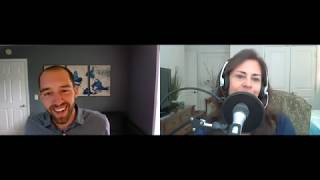
Chad Littlefield explains how to ask questions that build trust in teams. Start with genuine curiosity, use how and what instead of why, and listen as if you're willing to be changed by the answer. Small talk dies when you ask real questions.
Chapters
Hello, everybody. Kathy Caprino here. Welcome to Finding Brave. I ask you every week, but how is it going? Are you finding that listening to this on a regular basis gives you that extra dose of bravery? I'd love to hear and I'd also love to hear. One of my favorite comments I got was from my sister who said, you know, I don't know about this finding Brave stuff. I found brave and told a woman off who was really making me crazy and she got mad and I said, uh huh, that's how Finding Brave goes. It's, it's a journey. It's a journey and then you have to learn how to deal with the consequences of finding Brave. So if you're feeling a little rock that I found it and now I lost it again, don't worry. That's the journey of every day, mustering the courage you need to. And I'm so excited to have our guest, Chad Littlefield today. Chad, thank you for taking the time. I'm so excited. Our challenge is going to be shutting me up at 30 minutes. So you're going to. You said you're going to be on my team, which we're talking about, right? You're not going to let me ramble on and on with you for an hour, right?
You've got it. But I did know this was going to be a good conversation because before we linked up here, I had this little bubbling sense of joy of like, ooh, I get to talk with Kathy right now. So very grateful to be on. And yeah, we'll try to keep it 30 minutes.
Thank you. That makes me tear up. Thank you so much. All right, everybody, are you sitting down? I want to tell you about Chad, but before I give you the bio, you know, I maybe say this a few times a year, but I talk to a lot of people in the world and sometimes the conversation is interesting, but it kind of leaves you like, okay, that was good. But sometimes a conversation, you can't get it out of your head. You're so enlivened by it or perturbed maybe perturbed by it. You're something by it. And our conversation a few weeks ago, Chad did that to me. And we're going to talk about. There's a quote you shared that I've shared to about 30 people and maybe we'll be talking about it on 4 in Forbes. But Chad's the kind of person that when you, when you talk with him, it gets in, in a beautiful way. So I wanted y' all to know that. So here's Chad. Chad Littlefield is the co founder of we with an Exclamation Point and creator of We Connect cards, a tool to spark conversations that matter in 50 plus countries around the world. That's remarkable. He's spoken at TEDx and most recently, he and his partner Will Wise launched their new book, Ask Powerful Questions, Create Conversations that Matter, now a number one Amazon bestseller. Hey, congrats. That is amazing.
Yeah, it was a fun surprise.
Oh, gosh, good for you. I'll have to get some tips from you when my book comes out. All right, let us jump in. Let's not mess around. Chad, you are all about the asking of questions, and you also shared with me a phrase that my head exploded about gently eradicating small talk. I was like, I would just love that. So. Because I don't like small talk and everybody knows that about me, but sometimes it can be jarring. So you're going to talk all about what are the quantic, what are the questions? What are the kind of questions that we. It would be beneficial for us to move towards? And which are those that it would be great if we could kind of move away from? Tell us all.
Yeah. Well, in this, in the spirit of gently eradicating small talk, the first thing I'll invite for everybody listening is to. My invitation is to ruthlessly misinterpret everything I say from now until the end of the podcast and apply it to your own context. And the reason I think that mattering, that word mattering is relative. What matters to me does not necessarily matter as much or at all to you. And so again, invite you to ruthlessly misinterpret this conversation and apply it, Steve. Feel it and apply it.
Wait a minute. I even have to understand that, you know, I'm a writer. So do you mean you don't have to take everything incredibly literally as I say it? Listen to what speaks to you and use it? Is that what you mean by misinterpret?
I don't know that it's possible to literally take what somebody says because we all have our own connotation for words and filters, right? Right now we're all speaking English and people listening are hearing and processing in English. I don't think that we're speaking the same language. I think that our words and our culture and our context and the way our lens of how we see the world is different. And so when I use big words like connection to you, that means something else than it does to somebody else. Or trust. That word trust is really loaded for a Lot of people. And so when I just casually use that in a conversation of here's how to ask powerful questions to build relationships of trust.
Whoa. What?
I don't know that I even want to do that. I've got my trust broken. Like flag, flag, flag.
There's like 10 things within there that make my heart race. In other words. All right, so you're saying. You're saying misinterpret, meaning apply it as you will apply it.
Yeah. Because nobody knows. So you and I happen to have the microphones right now. But my perspective, anytime I go into work with a group or I'm sitting down with people, my perspective is that I am not the expert. Even if I think I know a lot about a particular topic that we're talking about, I'm not the expert. But everybody else in the room is the expert of their own experiences because nobody knows their world, their situation, their projects, their challenges, their questions better than in this case, you do. And so I want to lean on that expertise rather than misadvise or mis. Suggest something. So the ruthlessly misinterpreting is saying, you know your world best. And so you. When I share an idea tool, a tip, you'll know where that fits in your situation or where to apply that to.
You're a coach, Chad, in your work, right?
Yeah, sort of by accident. Not something that I signed up for.
That is such a coaching thing, what you just did. And it's crazy to me, when I enter, here I go, it's already 10 minutes and we haven't gotten to the heart of it. But I always say to my clients, you are the expert in your life. I might be an expert in a methodology that I have develop that we will apply to you, but you are the expert in your life, and that's what I need to come forward. It's so similar, isn't it?
Yeah. And doesn't mean that there's no expertise to be shared. It just means that it's going to be better if you choose where to put it.
I love it. All right, so tell us about questions. What's going on with questions today? And again, we're talking about how to build trust and connection in teams in your relationships. So tell us.
Yeah, that's an important differentiator because questions are used for lots of things. So if you want to know what time it is, tools are not going to help you. But if you want to build a relationship of trust with another human being and establish that rapport more quickly, those are the types of questions that me and my co founder will wise love to focus on. So at the very base and the foundation of a really great and powerful question. And this is what we share like no other tool. I can't teach you any trick, any layer, any use these start questions with these words, etc. Unless I share the fact that the root of the outcome of your questions, the responses to your questions, are laid in the foundation of intention. So if my intention in asking a question is to genuinely be curious, to understand you, to empathize with you, to really just hear and get you, then however I ask my question, whatever my question is, it will be much more powerful than if I just give you a list of 10 powerful questions to build trust. Like, that's not going to work. Because questions are this like, core element of human communication and human communication is messy. And so the laying that foundation of intention super important.
I get choked up. Like I'm getting teary eyed and I'm thinking, why are you getting teary eyed? I just want to punctuate what you said, I think. And right now I'm raw because of what's going on in the US I'm just so raw and about how we don't listen, really, and how we've bifurcated and we're so divisive and so vitriolic and we're not asking questions with a positive intention and you just hit the nail on the head. But I want to say as a therapist, you know, dealing with rape, incest, pedophilia, suicidality, I had to do so much work to try, and I think it's a tip of the iceberg thing, understand what my real intention is before I open my mouth, before I ask anything. So if I'm dealing with a pedophile or let's say a father who beats his teen daughter and says to me she deserved it, you know, I have, I had to unpack in 1 second flat everything I feel about that and then have an intention about every question. If we were to do that and if we were aware enough to go, you know what? The intention about what I'm about to ask is not a good one. It's, I mean, it's, it's to rip them down, we'd change what comes out of our mouth every minute, wouldn't we? Yeah.
Oh my gosh. Intentions are such a fuel to the types of conversations and the outcomes that actually come out in those. Cause I think so often, most often we have intentions that affect other people, but so rarely do we actually share those intentions. With the people that they affect.
I would go so far as to say I don't think most of us actually know consciously what our intention is. I think we're defensive, I think we're angry, I think we're insecure. So the first thing is start to understand yourself. Right? Start. Yeah.
Well, and I think if for those of us who are left brain, who like click on the listicle article, like give me the five tips for asking powerful questions. The practical nugget or the tip in this idea is be clear. Get clear about your intention and state it to the other person. Share it with the other person.
Oh my gosh, give me an example of this. And you're going to talk about when to do it.
Yeah.
If you were to walk up to someone in a cocktail party and lay it on them, they're your intention, it might be like, whoa, ooh, how about I share?
How about a story of complete failure where I just absolutely fell on my face doing this?
Yes.
So part of my work is going into organizations who do want to amplify a culture of connection, belonging and trust and to work with those teams over time to do that. And so part of that work includes workshops around teaching how to ask powerful questions. And you cannot teach that from a PowerPoint. It has to be experiential. And so I'm working with this group and as part of that, we're in a three hour session and we did a full pause. We had just learned this tool, which maybe we'll get into later, about the second layer up from intention of following your natural genuine curiosity by finding something if they're a stranger, if there's somebody you're just meeting for the first time, you don't have any rapport. Finding something that they're wearing, carrying or sharing that you're naturally curious about and asking an open question rooted in your own curiosity. And so we did a full pause and invited everybody to leave the room that we were in. And their task was to build rapport, build a relationship of trust with three strangers using this tool and come back and report. And so you can imagine when we give that assignment to the room, there's all sorts of responses and reactions. Lots of them are rooted in doubt and fear. And this is talking about finding brave. In that moment, everyone is faced with, whoa, how am I going to do this? Do I want to do this? And so I never, never am willing to preach or share something that I'm not willing to practice myself. And so like every other time that I had done this before, In a workshop. I went out and I was like, I might as well run an errand if I'm going to do this, to be a good facilitator and leader in this moment. And so I went down to this convenience store to run an errand, grab my item. And as I was checking out, there was a cashier who had bright colored tattoos. She had bright colored tattoos all over her chest with a lower cut shirt on. And I'm thinking, my mind, like brilliant colored tattoos, just like art. And I am so curious. And so I walked up and I was like, I have to ask, I'm so curious. What's the story behind all these tattoos? And she looked at me and she said, I like the colors. Which was a big metaphorical screw you get out of my face response. Like, I did not build a relationship of trust in that moment. She's like, so here's, here's, here's the fun thing. We get back to the room and all the students, all the participants are like, energy is totally different. Everybody's just had all these crazy experiences. And we're about to go unpack and debrief all of this. And this one student says, you have no idea. When you guys said that we're going to do this, all of my body said, no way, I am not interested. I'm going to go walk outside and sit on a bench for a while. I figured, fine, I'm going to find my. He didn't use this language, but he found his brave in that moment and he said, if I'm going to do it, I might as well run an errand. So I'm going to go down to this convenience store. I'm going to grab something. And as I was checking out, right those of you can't see, Kathy's leaning back in her chair right now. So he goes down to the convenience store and as he's checking out, he sees this cashier with bright colored tattoos all over her chest, lower cut shirt. And he looks at her and he goes, wow, I'm so curious. I just have to ask, how annoying does it get when people ask you about your tattoos? And she goes, oh my gosh, I have no idea. Like, totally opens up shares. There's this guy who was just in, asked me the story of my tattoos, like he was buying, just totally unloaded. He built a relationship of trust with her in that moment. And so my question to everybody who's processing those two stories is, what's the difference? What's the difference between my failure and his success? In that moment.
And I guess, yeah, yeah. He wasn't asking her to do a diatribe about her life. He just assumed, which couldn't backfire, but he assumed that that is going to elicit a lot of questions. And he got on the same page with her empathically, that that's got to be a pain in the ass.
Boom. So you said. You said it afterward. How did he assume that he was able to take off one of his own shoes and step into one of her shoes and say, what must it be like to be standing in this one place as hundreds of people go by you and you have this huge, like, glowing sign on your body that provokes curiosity, thought, stares, whatever it is. And he was able to empathize. And so the difference was empathy. I was like, oh, I teach this stuff. It's gonna be easy. I was like, yeah, you just gotta say the phrase, like, I'm just curious before you connect with somebody and it shares your intention in that moment. And that's a place where intention wasn't. It wasn't enough to have that impact because my intention was very positive. My intention wasn't to invite her to spill her soul on the conveyor belt. It wasn't to, you know, My intention was to just make a small connection as I passed by and ran my errand.
But that was a question that's even deeper here. Do you think it's possible? It would be really interesting. I have two colleagues, the behavioral science guys, Joseph Grenny, David Maxwell. They would research something like this. Do you think it's possible, Possible that there's also bias, that you could have said the same exact thing, but maybe this guy has a look that she would resonate with or an unconscious bias that would make her go, oh, yeah, this dude. You know, I think there's stuff going on that we're not all in control of. Wouldn't you agree?
Majorly, yes. And I think that in addition to that bias, there are some biases that may be so strong that no matter how we show up, that interaction is going to go differently. And so you could have somebody who had darker skin than both me and that student had go in, ask the same question, same positive intention, and if that woman had had really bad experiences with somebody with darker skin, that the response may be guarded already because the words don't matter. The words are being filtered. And another example of even though we're speaking English, we're not all speaking the same language because we have a filter, and all what we hear gets passed.
Through that filter, I'm even thinking, unfortunately, gender. If a woman came up and said that to me and a man said it, I would think he might be hitting on me. I don't know that I'd immediately go there. But, you know, so I think what's maybe a bullet here, bullet point is do your best, but what comes at you from another is more about them than you would. You agree with that? That's what we learned in therapy. Yeah.
Much more reflection and it's. I think it's probably helpful to look at and own your own contribution, but to not swim in it and feel guilty because of it.
You have a great way with words, man. Love it. Don't swim in it. Oh, it's so good. All right. What else do we know? Tell us more. When talk about the positive social risks you mentioned about.
Yeah.
Did we just talk about that? I don't think so.
Nope. No. So, yeah, this term positive social risk was so the way that I even got into the work that I'm up to now, six years ago, was invited to give a TEDx talk on this topic of positive social risks because of an organization I had started whose mission and focus was to challenge ourselves and others to take positive social risks. And so I was invited to give a talk to unpack this idea. And I think it's part of the reason that we love being in conversation with each other. Kathy, because there's at the heart of positive social risk is finding brave. It's the element of. And that what stuck out for me, I shared a story in the talk of being on a bus to go pick up a family member in Boston. And it was. Which is. I grew up an hour south of Boston, and my wife and I live in Asheville, North Carolina, now, but so south north, very, very different places. So I'm in Boston and it's just this, like, cold. It was packed. There were probably 50, 60 people crammed into this bus, and not a single person was interacting with each other, even though they were four inches away, which isn't necessarily a bad or good thing. It was just an observation that, like, this is kind of weird. Like, we all have these ungoogleable experience that we carry around. And we're in this setting, so close, so intimate, and there's zero interaction. And so I just kind of tested, like, if there's any place to test whether a positive social risk can have profound effects in your life, it would be here. And so I looked down at this guy who was wearing a hat that said the Jason project on it. And so following that tool that I briefly mentioned earlier, following my natural genuine curiosity by finding something that somebody's wearing, caring or sharing, and asking an open question about it. And so I turned down, I said, hey, this is a little bit odd, but I'm really curious, what's the Jason project all around about? And this dark, cold bus just turned into this like, bright, brilliant. Not for everybody else, but for me and Henry. For me and Henry in this moment, he just lit up and he just went on this whole diatribe about what the Jason project is and how he worked with Robert Ballard, the dude who discovered the Titanic, and this connection was made. And Henry still sends me a Christmas card every year. And I have a piece of artwork in my house from Henry that he created since a photographer. This connection was made because I took the social risk of being shut down and rejected in that moment because Henry very much could have said, I worked here once or I got it at Goodwill or whatever. And I think the risk part though, and the point, the reason that it's such a valuable concept or language to have in mind is is that the actual risk of a social interaction like that is almost always lower than the perceived risk of that social risk and gender and time of day and location. And there are all these factors and context that play into that. And so it's an oversimplification to say.
But my head is exploding. I mean, we need to do like a three hour workshop on this. Want to ask you two questions. I want to say something and ask something. You know, one thing I've noticed, I'm living in an apartment now and I haven't lived in an apartment for years, 30 years. But I have a dog and I have a dog. The experience of connecting with strangers when you have a dog is about as different as you can get when you're not walking a dog. And I think that what. What's interesting is I think that having the dog, the instant connection and maybe even the instant trust. Well, you got a dog and he looks pretty funny and you know instantly. So I think in some ways we bypass. We're already talking about. People share with me and I share with them. You know, I'm actually here. I've just recently divorced. Whatever. So number one, do you find that that connection and trust can be the process through it can be bypassed with something like that?
Yeah. And I think that's the reason that we actually teach and in the Will's book ask powerful questions that we talk about. The idea of finding something that you see in the current environment. Because I wouldn't say that it's necessarily only the commonality that oh, we both have dog dong owner share this like overlap of understanding the world. I think that in the same way that Henry who put on the hat that said Jason project when we wake up in the morning, most of us don't look like what we do at noon. We choose to put things on our body that in some way represent who we are. And so it's a safe pathway to a deeper conversation. Because Henry chose to put that on. I wasn't asking. And he chose to display it publicly. He knew that he was going to be on a bus in Boston. And so it's this. So with the same way the dog, I think it says, or at least dog owners and non dog owners make assumptions about a person, about who they are based on the type of dog they have, based on the way they're interacting with the dog, based on if they're sleepy and in their sweats walking the dog. All of these things play into this safety of like we're information sharing. We haven't said a word, but we've already had a whole conversation based on just seeing each other, which is, I mean bias falls into that conversation.
Of course, all dog dog people are dog lovers. You know, they're awesome. Gotcha. Good. Now let me ask you this. This might sound a little woo woo to folks, but also I would like to hear your thoughts on. Sometimes I get an urge to approach someone and talk to them where I'm like, well that's an interesting urge. Okay. And you know, if you take it to the most extreme degree, I think I mentioned to you I have met with and spent time with Lorna Byrne in Ireland who, you know, sees angels. She, she believes and I believe her that she sees and talks to angels and she says that the angels tell her go and talk to that person, sit down and have a conversation. So if you pull it back from that extreme that she really believes, she's getting divine guidance. Do you feel that we in your work that sometimes we are and we don't have to. It's not a religious thing, it's our intuition. Do you believe that our intuition can sometimes tell us go and make a connection there?
Yeah, I think that our sense and I can. If anybody who's listening tends to be left brain and is in this place right now like, whoa, whoa, whoa, whoa, whoa, whoa.
Just took it out, took it out of the realm of. I was just taking a social risk.
Yeah, well, I Think speaking to that, though, I tend to fall into that camp. But I also very much believe that there's intuition and also get like strong senses or urges or intuition to go talk to somebody or share something specifically that I'm like, I don't know where this is necessarily coming from. And so I love to talk with both right brain and left brain people because I think that there's an argument on both sides for this draw or this connection between somebody. But yeah, I mean, in terms of the woo thing, like, my wife and I just got back from camping in the Blue Ridge Mountains last weekend and looking up and seeing one of the arms of the Milky Way galaxy, like standing up there, I don't care how literal or scientific you are, go stand outside, look across the ocean. Like, look up. We do not understand everything on the planet in the universe. And so is it possible that as human beings, there's something that gives us a nudge to go talk to somebody? Totally. And I think I tend to people who are so sure that there's not brings about more questions for me in how that. How they came to that place of certainty in a world that we are surrounded by so much uncertainty. Which is part of the reason I like questions, because we get to fill in the blanks of that uncertainty.
Oh, I love it. And one more question, then I'm gonna let you talk more. You know, I've had. I'm an extrovert, and people know if they've read my Forbes post. My son is an introvert, and I was not aware of my bias towards extroverts until something happened to him in his college experience that was, to me, flat out bias against introverts. Guessing that a lot of what you talk about and suggest and teach, an introvert might go, wow, oh, gosh, no. And an extrovert might be. That's a little risky, but yeah, okay. Do you see a difference in what you teach and how you teach it with introverts and extroverts?
Ah, I should have been interviewing you. You asked all the good, powerful questions. It's such a good question. It's such important question to unpack. And I think the way that I can best answer it is 3 weeks ago I got back from speaking at a conference. And when I say speaking, it's always interactive. And so these, we connect card things like give everybody a card and invite everybody into conversation. And one of the first things that I do when I lead a question swap, conversation swap like that is invite people to or put a reframe Choice for people and the types of conversations they have. And so I acknowledge the fact that when I say we're gonna get into a conversation, half of you, like, energy up, you're ready, you just want me to stop talking so that you can start. And half of you are like, oh, this guy Chad. I see what's happening here, boy.
Fight or flight, you know, like, yeah, out of here, man. What happens?
Being able to acknowledge both of those and to say in what we're about to do, reminding people that you always have a choice in how you engage in conversation. And so when somebody asks you a question, like, I could ask you, what is life teaching you right now? And you could answer that with like, actually, the room's a little bit hot. I probably should have turned the thermostat down. Or, like, took off a jacket. And you could also say, you know, based on what's going on in the world right now, I'm feeling all this impact, and this is what life is teaching me. And both of those would be true. And I think reminding people that we have multiple sources of truth, we have multiple responses for any one question. And so that anyways, at this conference and I spoke and afterward, and this happens every single time that I go to work with a group is an introvert, or multiple introverts will actually come up to me afterward and said, the first thing they'll say is, first of all, I'm introverted and I never go up and talk to the speaker after a session. And so they're like taking a risk just to do this.
That's so great that they do that with you.
The second piece that he said is, I so appreciated what you brought and who you were on stage because you assumed the social risk for me to have conversations. Because it's not as an introvert. It's not that people just drain me, period. It's that small talk and talking out of obligation because I'm in front of somebody, that's draining. But my gosh, when I'm with a good friend and I get into a deep conversation that keeps us up until 2 in the morning, I'd gladly stay up till 3. And so it's that distinction between conversations that really matter to an introvert that are about ideas or unpacking things that are important to them in their life. So differently received than chit chat and small talk.
Gosh, I love it.
Part of my role when I am working with a group, I see actually I'm focused on and excited to create an opportunity for deeper connection for Introverts. The extroverts can handle themselves on their own. I'll set up a question swap.
And they're like sweet and you can't shut them up. Oh, I love it. So let's go into the small talk piece. Is that important for us to hit on? Can we. Because you mentioned eradicating gently small talk. Can you tell us about that?
Yeah. So the phrase. So I got clarity recently on a semi silent retreat to the middle of nowhere that really meditating and thinking on this question. Why am I on this planet? Not what's the mission of the organization that started? Not. But why are you on this planet? If there might be a higher purpose, why is there.
Did you get that question asked of you or you chose on your retreat to focus on that question?
No. A person who's facilitating the retreat had given us a handful of questions as it was kayaking.
How am I on the planet?
Why am I on the planet? And very, very much to my surprise, I got, I heard crystal clear language that I am here to gently eradicate small talk. And the word gently was bold and emphasized in my brain there because.
To.
Almost all people, when you say let's just get rid of small talk, they're kind of on board. But then when you're actually like at a bus stop and you need to connect with somebody or you're check me out, then reality hits and you're like, well, I'm also not gonna actually like hop into a deep, soul filled conversation with somebody that I have two minutes to spend with and I'm never gonna see again. So the gentle part is important to me. But I have been surveying and in general in people's own way of defining small talk generally, even asking an audience of 1,000 or 2,000 people, not more than 1% of any group I've asked this question to will raise their hand when I ask how many of you really enjoy and love small talk? And there are Some, there's that 1%. And so I usually say find each other and chat in that way. And that's not me.
Have a small conversation.
Yeah. So that's one level is recognizing that there's actually a gap in the types of conversations that fuel people and that people love and the ones that we're actually having on a daily basis because we all, myself included, find ourselves in conversations that we're like, you know, I'm having this conversation, but it's not necessarily like about something or the process is not in a. It doesn't matter to me in this moment And I think that that's okay to acknowledge, but part of the eradication is when you look at anybody that you look up to, any wise teacher, you look at Buddha, Gandhi, Jesus Christ. Like, pick any influential leader, spiritual or otherwise, philosopher in the world and try to find any instance of them going up and asking how the weather is. Try to find it like it just doesn't exist. Like these. These people that are known for changing and shaping the world, they have a gift in a way of creating conversations that really matter, cutting to. Moving from small talk to big talk and cutting to the heart of.
But don't we have to say we don't know what Lincoln and Gandhi and Martin Luther King did at the cocktail party or the dinner with family?
Totally. So it's possible that 15 minutes before Abraham Lincoln, most famous quote, or the Gettysburg Address or whatever, that's possible. Fifteen minutes, he was like, you know, shooting the breeze with the person that was leading him up to stage. Whatever.
All right. Who knows? Who knows? That's neither here nor there. All right, go ahead. I cut you off.
Totally possible. No, I appreciate that. Because I think what you're doing is infusing something that I also do and need to be reminded to do, which is give small talk some love, Even for the 99% of people that say, I don't love it. To acknowledge its place and its purpose in our own interactions and conversations. Because there are some times. And I would say, though. And this is where we get into nuance, I would say that small talk that helps us. Quote, small talk that helps us get to know somebody or builds that relationship of trust with somebody may actually be a conversation that matters because it's moving us toward that more real, more transparent, more open, more realistic.
And I need to. We're over, but I'm not letting you go. I need to say this, too. My group, Wilton Singers. I sing regularly in a group that means the world to me. 50 people, age, you know, 82 to 22. There's a lot of small talk. After rehearsal, we have drinks and snacks. But I want to say this. I love these people. And pretty much every one of them would take a bullet for me, even though I don't see them, most of them, except once a week on Tuesdays. But the small talk, I do think, keeps you in the fabric of their life. You knew that their child just went to college. Oh. How's Sally doing at school? Did it go okay? It's small, but it's keeping us tethered. Hmm. What do you think?
I wonder I might disagree with you that it's small. You're calling it small talk.
Okay, we do need to define that. I was starting to think, okay, what is small and what the word that you use, that. That is the opposite of that.
I think the way you just described it of, oh, just chatting about, you know, where kids are going off to school or what's going on with.
That's not small talk.
And I would say it's not small talk only because you just shared. It's really important, and it helps me stay connected and in the fabric with people. And so to me, that's like, huge value add in that conversation. And so we could unpack this further. But if a conversation adds value to both parties, then I would say that it matters quite a bit.
For the practical people, small talk is, what's the weather? A lot of wind today. What else?
You know, you said at the very beginning, you were very nice and affirming that we had this conversation that really stuck with you, and you were thinking about and you have other conversations that you're like, that was nice. And any conversation that you leave with, like a shrug and like, oh, that was nice. And in a year from now, you won't remember it. I wonder if that does matter. I wonder if that is small talk, if that conversation might be for number of reasons.
Okay, all right, I have more questions. But not many of you.
Is the beauty of nuance. We could talk about this.
Yes, nuance. All right, so where were we on. What were we talking about?
This. This is the perfect sign of a conversation that matters, is you lose. You. You get into a flow and everything that's bothering you outside of. And I think that's. It's part of the process of a conversation that really sticks or is important to somebody else, is if you forget where you were, what was happening, and you're totally focused on the other person, what they're saying, their ideas, who they are in the world. That's cool. And that happens pretty rarely in a world where we're so connected with our thumbs and yet much more disconnected than historically we have been face to face and with each other.
Right. I know where we went. I totally agree, though, with you. When I'm with friends, I could be in a hut. Like, I don't even remember what city I'm in. I'm like, where were we? But small talk, gently eradicating it. Do you have some tips for those practical people taking notes? What do we do if we want more meaningful, valuable conversation, which I think most people Want. What do we do?
Yeah. So the two quick ones in review are get clear about your intention and share it with the other. Second one is follow your own natural genuine curiosity. People know when you are not being curious, genuinely curious about something and asking questions, because, like, you read it in a book once or something. Right.
Or you're, you know, filling up time for you to go to someone else you want to talk to. Right? Yeah.
Oh, my goodness. How many times have you been in a conversation that kind of ends a little bit and then somebody says so and there's like this pause and this rekindling. Yeah. So genuine curiosity. Huge one. And then the second one for people who like really concrete stuff is. And this will hopefully make some people angry, is ask questions that only begin with the words how or what. And in particular, the angry part is, and when I'm teaching this in a workshop, I will write the word why on a piece of paper and I'll rip it in half and crumple it up and throw it in a corner. And I want to. And it's not because I don't like Simon Sinek. And the idea of start with why has nothing to do with finding your purpose and sharing your. And getting clear and sharing your purpose.
Can I guess why you don't like why?
I would love that.
In therapy training, we learned that why put someone on the defensive that they have to defend.
Yep.
That doesn't feel curious. It feels like, why the hell do you think that now I got to defend?
You could be really curious. Your intention could be curious. You could be totally present. But when I asked somebody, why are you late? And they've just showed up 5 minutes late, what were they already thinking about for 10 minutes on their way there? Rushing. They were thinking about their defense, why they were late in that moment. So that's one way. The second way that I love even more is for any of you listening that have kids or once were a kid and you're walking around the world, and you were three feet high walking around the world, what question were you asking? Why? Why? Why is the grass green? Why is the sky blue? Why? Why?
Why?
Why this deep curiosity? And so as we were growing up, our neural pathways of asking why are so well developed that on the flip side, we've also been asked so many why questions that we've just gotten really good at defending, justifying, giving the quick response to those questions. And so just by applying the tool, only ask questions that begin with how or what actually is just a little brain trick or hack to rewire your brain to ask more deliberate, intentional questions. Because you go to ask a why question and you say, dang it. I listen to that podcast with Chad Littlefield, and I need to reel it back and I need to rephrase it as a how or what question. Almost every why question.
Can I dimensionalize that? I think my kids, who my son's a senior in college, my daughter's out of college, but both of them hated questions when they were a senior in high school. What, you know, what are you choosing? They hated anything having to do with that. But if I said to someone, oh, why'd you choose University of Delaware? That sounds like a lot more than why. That's like a judgment. That's like. But could one say, if I was really concerned with how did they do it? Could I say, oh, I'm so interested in how you made your choice, given that there were five schools that you were interested in. Can I learn more about that?
Yeah. Oh, my gosh. Every single why question can be reframed as a how or what question that has a little bit less judgment and a little bit more opportunity to build a relationship of trust rather than invite the person to defend their choices or who they were, whatever, in that moment. It's a nugget, right?
It's so practical. I mean, I hope your head. Everyone is exploding with, oh, my gosh. Every question I ask is why. I mean, it takes work. I mean, it might even take you as a therapist. When they said, no whys, I'm like, what? How am I going to do that? It takes work to frame it differently. I mean, you might pause, you might, but it's okay because you'll. It'll be. Bring about amazing, amazing change in how people respond to you. What else? We're over our time. What's the final thing? Oh, please give me the quote about listening.
Yeah. So we talked about this whole thing of asking questions. But if you're. If you're good. I actually, I care about listening so much that I keep a giant ear next to me on a desk. On my desk. Because when I'm on a video conversation with somebody, so often it comes up that I think the root of just about every argument is that somebody doesn't feel heard. You can really hear. I also have yet to meet a person who doesn't have a desire at a very deep level to be heard and seen and understood in some capacity. Sometimes there's some fear around that, but in general, there's such a profound and so that quote that I Love from Alan Alda is listening is being able to be changed by what the person says.
Gosh darn it, it's a beautiful one. And you and I talked about it earlier, and I immediately went, but wait a minute. You know, I'm a political affiliation. I'm this, I'm that. No one's going to talk me into this or that. And you said, no, no, no. You know, let me, let me, let me clarify. It's not that I'm willing to have my, you know, deep ideals and values be changed in one conversation, but how did you instruct me about what it means? What, what do I need to be willing to be changed about?
I think you, if you're willing to be changed about your perception of that person, the other side, their perspective.
I mean, I think we've got to make that a billboard and put it in every highway and every city because we in this country, I feel, have lost that.
Oh, man. If you're listening and want to sponsor a billboard that has that quote on it, I'm in.
And Alan Alda, I featured him in Forbes and I have his great book. He trains on communication. Given his acting experience, you know, he'd be overjoyed to see us do that. Chad, where do we learn about you? Where do people who want to hire you and just tell us shamelessly promote what, what do you offer organizations, teams, individuals that, that they need to know about? Where do they find out?
Sure. Thanks for the generous question. So for those of you who also are like, wait, I listened to this podcast because I wanted a list of questions. You can go to weand me ideas and there you can get, if you want that list of questions that really build. Tend to build relationships of trust. You can fill information out there and I'll pop in your inbox in the video every once in a while with a hey, here's a tip on how to amplify connection, belonging and trust in your own organization. So we. And.
We'Ll link to that below. No worries. I just wanted to hear you talk about it.
Cool. Yeah. And then if you're a reader, I've got this book, Ask Powerful Questions, Create Conversations that Matter, which goes into way more depth and unpacks and has lots of rich stories of connection and 25 other tools and ways that beyond what we talked about today. So that's a big one.
Oh, Chad, thank you for the work you do. I feel like every organization needs you. You got my endorsement. I think we all need help. And, you know, if you've been a trained therapist. You'll learn a little of this, but we all need it and we all need to remember it and live it more. And I love your first tip. Let's just gain awareness of our intentions and be honest. That takes bravery because we don't want to look at how. Yeah, I really actually don't want to support that person and I pretended I did. Thank you. Come back again so we can unpack. One of your favorite words, I think. Let's unpack this more. Come back again, will you, please? Thank you so much. And everybody, I hope you're inspired. You know, this. This doesn't take a million steps. It takes one step first. Well, it takes a few more than that, but I am. I. We would chat. Isn't this true? We would love to hear when you try these tips. Can you write us under the podcast or where I posted on my Facebook Finding Braid page or on Instagram or Twitter? And we'll have your handles listed too. We'd love to hear, oh, my gosh, I did it and this is what happened. And if you're challenged by what came at you, then we'd love to help you through that too. Right?
Love that.
Thank you.
Tiny act can have profound effects. So if you take that tiny act, we would totally love to hear about.
We'd love to hear it. Thank you. Thank you for joining. So enlivening. And thanks, everybody for being here and finding Brave in your own life. And we'll see you next time. Bye.
More from Kathy


Elevate Yourself, Elevate Others, and Amplify Good | Chris Cooper | Finding Brave Ep. 334

Finding Brave Epis #333: How Leaders Can Harness AI Without Losing Their Humanity, w/Bennett Borden

Finding Brave Epis 332- How to Stay Brave, Valuable and Visible in the Age of AI, with Raman Rai

Finding Brave Epis 331 - The Power of Positive Disruption, with Dr. Patrick Leddin


Finding Brave Epis 330 - Being 40: Letting Go and Embracing Who You Are, with Stacey Lindsay

Disrupt Career Reinvention with Kathy Caprino - via The Disruption Lab Podcast w/Patrick Leddin

Creating Neurodiversity-Friendly Work Cultures: Simple Workplace Adjustments Matter

Finding Brave Epis 329 - How To Create a Neurodiversity-Friendly Workplace, with Kristen Pressner

Finding Brave Epis. 328: Reclaiming the Power to Trust Your Own Voice, with Dr. Cindy McGovern