Finding Brave #44: How To Live In Your Zone of Genius, with Gay Hendricks
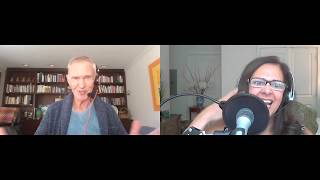
Gay Hendricks explains his Zone of Genius framework: four zones from incompetence to genius, where most people get stuck in excellence instead of pursuing what they love. Start with ten minutes daily to practice your genius, use meditation to hear your true voice, and transform fears into breakthroughs by letting go of control.
Questions this video answers
Incompetence, Competence, Excellence, Genius.
Start with a 10-minute daily practice devoted to your genius (put it in your calendar).
The Joy of Genius.
joyofgenius.com (book and free seminar) and hendricks.com (broader work).
Kindle and Audible (audiobook narrated by Gay Hendricks).
Chapters
Hello, everybody. Welcome to Finding Brave. I'm Kathy Caprino. Okay. I'm so excited to see you. I didn't ask if you can hear me. Well, can you?
I can. I can hear you very well, thank you.
Wonderful, wonderful. Everybody, I'm flipping my lid and I have to tell you, two people told me, I can't believe you're going to be speaking with Gay Hendrix. You know, they just, to them, you are so such a light and an inspiration. And you are to me, too. So, everybody, I'm so thrilled to have us invite as my guest, Gay Hendricks. Gay, thank you for taking the time.
Thank you very much, Kathy. It's really great to be with you. Right now. I'm having the time of my life going around talking about the new book the Joy of Genius. And I've been talking about the Big Leap now for nine years. Now I can talk about the Big Leap and its sequel that I've been kind of keeping under wraps for many years. So it's out as a this month and I can welcome both into the world.
Congratulations. And you know, everyone, you're going to hear about Gay, but you are the most prolific author I've ever spoken to. And I'm in phase two of my book Finding Brave, where we're talking to publishers right now. And I got to tell you, I so admire how your ideas and everyone. It's not just self help. We'll talk about that in a minute. But you really live in this, this joy of genius, don't you? It's your world.
Yes, well, 30 years ago, when I first started thinking about the ideas in the Big Leap, I realized I was only spending 10% of my time, my own time, on the genius spiral and I needed to do some work on myself. So over the past 30 years or so, I've gradually, every year expanded the amount of time that I spend doing my genius level work. And so now 90% of my waking hours are spent doing some version of what I'm doing right now, which is definitely on my genius spiral.
And even you mentioned you were just coming from golf. And your wonderful metaphysically minded friends help you do that, even when you're hitting the golf ball. Well, maybe not in that moment, but on the golf cart. So before we continue, everyone, I want to tell you about Gay because it's just amazing what you've done in your life. Gay Hendricks has been a leader in the fields of relationship and body mind transformation for more than 45 years. After earning his PhD from Stanford in 1974, Gay served as professor of counseling psychology at the University of Colorado. Gosh, that must have been fascinating. For 21 years, he has written more than 40 books people, including bestsellers such as Five Wishes, the Big Leap, Conscious Loving, Conscious Loving Ever after the Last, who co authored with his co author and mate for more than 35 years, Dr. Kathleen. Kathleen.
Kathleen.
Kathleen Hendricks. Love that name. You're also a mystery novelist. And that blows my mind with a series of five books featuring the Tibetan Buddhist private detective. Oh my goodness. And your latest book, the Joy of Genius, shows how to eliminate negative thinking and bring forth true creativity. So there you go. Everyone buckle up. Cause we're going to jump right in. So, you know, tell us immediately about what you talk about these zones, the Zone of Genius, the Zone of Excellence, and the Zone of Competence. And tell us why we need to know these.
Yes, that's from the Big Leap. And I described four different zones that people spend their time in. One is the zone of incompetence, where you're doing something you're not very good at. And most of us, after a while, learn not to spend too much time there. But surprisingly, I've asked roomfuls of very powerful executives about that. And even very powerful people often realize they spend a lot of time or quote, waste a lot of time doing things that they're just not any good at. And so the second zone is the zone of competence, where you're doing things that you're good at, but somebody else could do them better just as well, so it doesn't require you to do it a good. Many of us have learned to spend time in our zone of excellence, which is where you're getting a lot of rewards. You're making money, you're making friends, you're making your family happy. And yet don't get stuck there, because in the Zone of Excellence, you keep doing things you're excellent at over and over and over, and people keep wanting you to do more and more of them, and they gradually consume so much of your time that you don't have time for jumping out of those boxes and getting onto what I call the genius spiral in the Joy of Genius. And so think of a spiral as being like, well, I'll give you an example. My wife and I are just celebrating our 37th anniversary this month.
Wow. Congrats.
Thank you. Well, when we got married, we got married mountaintop in Colorado. And as we were up there making our vows to each other, Katie said. Katie goes by the name of Katie around the house. Her official name is Kathleen. Katie said Look, I looked up, and there were these two hawks circling around us in the sky, right over our heads. And they proceeded to go up in a spiral, riding the wind currents, so they didn't even have to hardly flap their wings. And that made that. That really inspired me to start thinking about spirals. And so in this new book, the Genius Spiral, I, instead of saying anything, is a zone that has a kind of a capsulation around it. I say soar free on the genius spiral. And as you learn to relax into it, more and more you get buoyed up and up and up on wind currents that you don't even need to effort to make happen.
Oh, I get it now. I get why you're talking about spiral. Hawks are my favorite. They're my totem. When I see hawks, I know I either need to pay more attention or emphasize more the thought I had right before I saw them. It's amazing that 35 years ago, 37 years ago, they. They inspired you. So can you. First, for people that don't know the big leap or don't know what you mean, what is. How do we know we're in the G on the genius spiral, what's it feel like? How do we know?
Yes. Well, if you think back through your life to the very beginning, what did you most love to do when you were a kid? For example, I could get lost in my play such that, you know, somebody would say, it's dinner time, and it would just, you know, I realized I'd spent an hour that went by like a minute because I was lost in doing something I was. I was loving doing. And so in my case, I like to build a lot of things when I was a kid, and so I could get lost. And like, I built a whole little boat one time and which promptly sank when I put it in the lake. But it was, you know, a noble effort for a kid who could hardly use a hammer. So. But when I would get involved in doing something like that, it was like this special feeling. And I bet everybody's had that kind of feeling doing something or other. So one thing to look for when you're doing your activities is does it have that timeless quality? Does it have that I can get lost in it quality? That's one way, you know, you're doing your genius in the world. Another way is to think of what you most love to do, either now or way back, anytime. You know, like, do you love to read a mystery or. You mentioned my mystery novels. I love to read mysteries. I love to write them. But I'm a great customer, too. I've read probably a thousand of them in my lifetime. And so my whole mystery writing career started one night when I was looking for something to do and I realized what kind I want to read the mystery novel. What kind of mystery novel would I most like to read? And then I wrote, I decided to write my own, which would be the kind I would most want to read. And so that's how the thing got started. And so I'm very happy now. There's various attempts being made to turn the books into a television show and that kind of thing. So one little idea like that has a nice way of mushrooming out into the world. So another way, you know, you're on the genius spiral is you're spending more and more time doing what you love most to do. As I said when I began, I realized, gosh, I'm only spending 10% of my time doing what I really love to do. So I set myself the goal first of doubling that. And then when I did that, I said, okay, well, I'd like to spend 50% of my time doing what I most love to do. Took me a couple of years to get there, but then I said, okay, how about 70% of the time? So I gradually work my way up now. So I've been at it for a long time. So probably for the last 20 years, I've been in the 90% zone of doing what I most love to do 90% of the time. Some of the time I'm doing things like tidying up our cat's kitty litter.
Or cleaning the toilet or something like that.
Yeah, I'm the designated dishwasher guy in my family. So I'm a great student of how to pack the absolute most into the dishwasher. And I'm also electric light cop. I go around turning off lights that everybody else has left on important tasks.
For sure. All right, I have questions. Gay. And we folks, we didn't script this, so this is just gay. You know, we're just having a conversation here. I just want to share this one thing that I know. A lot of my listeners know. I was in the zone of probably excellence or what's the first one? Incompetence.
Well, incompetence, competence and excellence.
All right, I think that I was in the zone of excellence for my 18 year corporate career. But there was one piece of it that you haven't mentioned, but I bet it fits in. You can be great at something you hate to do. So there's excellence, but miserable Excellence, quiet desperation excellence. And that was me for most of my corporate career. So what I want to say and when I want to ask you a question about is the only way, the move that I made and I want to hear about the genius move, what that means. I made a move out of corporate life and I became a therapist which, which was much more closer to my heart but still not in that genius zone. But finding, coaching and speaking and training and writing, that's my happy place. And I answers all that you've said. When I was a kid, that's who I was. Young kids would come to me and ask questions, what should I do with my life? Should I run away from home? And I'd be like, why are they asking me? I'm only 16, but I had that therapeutic ear then and I loved literature and I loved to write and I'm a singer and a tennis player and I marry all that up now. So I think I'm in that zone of genius most of the time. But here's what I know listeners are going to say. Gay. And what do you say to this? Oh, Kathy. Okay, sure. All well and good to. You know what I really love to do is paint. But I have to feed my family, I have to pay for my house, I'm a single mom or you know, we're putting our kids through college. How am I going to get to the zone of genius or the genius spiral? Given what I've got on my plate, that doesn't seem to allow me to do what I love. What do you say to people? How do you help them through that?
Yes, for, well, for one thing it's about commitment. And any important commitment must begin inside with your own commitment to yourself. So like in the Joy of Genius, I have actually laid out what some of the specific commitments are that help you get on the genius spiral. But let me give you one example. Yeah. So with, with folks who are really busy doing other things and tell me they don't have time for their genius, I say first, would you make a commitment to bringing your genius forth regardless of how it happens to show up? And so in other words, make an open hearted, open minded, open ended commitment to your genius. And then we go. So people can first say, okay, yeah, I commit to bringing forth my genius however it shows up. So that's an important thing because it's not like in a marriage ceremony. You can't make an outside commitment or vow with your voice if you don't feel it inside. There's a rattle there. And I know Sometimes that happens and it always causes a rattle because the important commitment starts with yourself inside. So step number one is make a commitment to your genius, however that shows up. Step number two is make that practical in a very limited way to start, and we start around here with giving people a 10 minute assignment just for 10 minutes a day to devote to their genius. And Everybody can find 10 minutes. You know, many people spend 10 minutes a day just looking through channels. And so, you know, finding 10 minutes isn't that hard. And we actually have them put it in their calendar. And so, because it needs to be treated with respect because your, your genius will show up to the extent that you woo it. I say woo in the book because it's like wooing a lover or wooing forth. You know, imagine sitting in the park and inviting a pigeon to come over and eat out of your hand. It's about that effortless that, you know, you don't want to chase the pigeon around the park because that will freak out the pigeon. Same thing with creativity. You don't want to chase your creativity and get desperate about it because that will chase it away. Fear doesn't drive creativity. A lot of times fear drives our resistance to our creativity. So one way of knowing that you're in the creative zone is the absence of fear. And so if you can look for those areas of life that scare you and cause problems, I say that's the quick ticket to your genius. Because if you can transform how you look at your problems and transform that into opportunities to jump into your genius, that's a big change in life about how you go through life.
Oh man, I need 10 hours with you. All right, let me ask a few more questions here. You know, I work with mid, pretty much mid career women over 28 to 55, and they're so beleaguered, so many of them. They would say to me if I said what you're saying, I've often found it really shocking that people say, I don't even know what I would want to do if I, if I won the lottery. I don't have a zone of genius. I don't even know what you're talking about. So when you say pursue, what shows up? Can you dimensionalize that when you have a person who's tired, beleaguered, have. I call them the striver. Their six dominant action styles, and one is the striver. And often strivers don't want to be strivers. They're just, they want to be seekers, they want to be advocators, they want to be challengers, but they're striving so hard that the striving has almost numbed their ability to feel that. That genius. If someone says to you, I don't even know what I would give 10 minutes to gay, what would you do then? What would you say to these folks?
We begin here with asking people to identify some one thing that they love to do. And we also ask them to think of one person in the world, living or dead, that they know for sure that they love. And when they thought of that person, we invite them to love themselves just like they love that person, because that's beautiful. Many people don't feel loving and accepting toward themselves. And, you know, like, a striver needs to also be open up to the joys of failure, you know, to get beyond the fear of failure, you know, like, I got here through a couple of really inspired failures early in my life.
What are inspired failures, you mean?
One was, I got a job running a halfway house. Right after I got my master's in counseling, I got a job running a halfway house. And the money was great. And immediately I was up against a problem called not having the slightest idea how to be a manager or a administrator of any kind. And it's like there's an old joke, a Hollywood joke where there's an actor out of work actor who has never been on a horse in his life. And one day he gets a call from his agent, and his agent says, hey, I might have a part for you, but you got to be able to ride a horse. Can you ride? And the actor says, of course I can ride. You know, and so I was like that, of course I can run a halfway house. And within a couple of months, I had achieved a level of incompetence that was hitherto for unknown in my life. And so I. Fortunately, I got fired, which was, in a way, the worst day of my life, because I didn't have any money or any other job to go to. But in a way, it was the most liberating thing to get fired from something I hated doing anyway. And so it sent me on an odyssey that then ended up I got my doctorate at Stanford, and then I realized that I love teaching. And so I did that for 21 years, teaching and training therapists at the University of Colorado. And then I decided to create my own university that only teaches courses that I think are important, like relationship and how to be at ease in your body, how to breathe, how to. How to access your genius. And so it's all been Steps though, toward doing more and more of what I love to do every day.
So back to the person who says, I don't even know where I begin, I begin. Interesting that you marry up self love to that.
Yes.
As a gateway.
Because if you can't love yourself enough to give yourself 10 minutes to focus on your genius, I can't help you.
Yeah.
You know, because it takes a certain amount of a person's love and appreciation to award themselves 10 minutes. I mean, it doesn't sound like much, but it's a huge breakthrough for many people.
Oh my gosh. And do we need to talk about the genius move? Is that helpful right now?
That would be great. Yes.
Let's drink.
In a way, I've touched on it because what you look for the genius move, let me just put it out simply. The genius move is when you come up against some problem or issue. And in the past you've tried to deal with it by maybe efforting more or trying to figure out a solution. But instead the genius move coaches you how to let go of that old pattern and let go of trying to control particularly things that you have no control over. And it'll take you probably, probably a good 45 minutes or an hour sitting down with the book to actually go through the processes. Because there's a difference between me telling you how to do it and you actually sitting down in a chair and doing the work. So I encourage people to. I've written the book so that it's just like sitting beside me in my office, you get exactly the same set of commitments and coaching moves that I use. And so, and with the audiobook in particular, I kind of talk you through it in your ear. And so there's no substitute for doing the work. I promise you it won't take you more than an hour to do the moves. But here's what the genius move really allows you to do. You come up against any issue in your life, some problem or some thing, like your fear of public speaking or whatever the thing is, in the past you've held it as some kind of a problem. I show you how to use it as a breakthrough to your genius. So you're already good at creating these problems and right underneath them is your genius trying to break through. And so the joy of genius shows you how to do that. And as, as the title suggests, you get actually a burst of joy from it.
Alright, do you want to do it with me for two minutes? Would you do this with me?
Sure.
Because I have something I'd love to Work with you on.
Oh, perfect.
What do you think? All right. One of my zones of genius is public speaking. You know, I've been a singer, I am a singer, I'm comfortable on stage and honestly. And I'm not going to be waste time being overly humble. When I get on stage, whether it's in a panel or it goes really well, I'm right there in the zone, in the flow. And I'm about to speak at the Pennsylvania Conference for Women on a panel and the 10,000 women coming to that conference. So there's a panel and then earlier, 150 senior level women. What I find that I make myself crazy about is over preparation. So of course, when you speak and you're doing a big event, you need to be prepared. But I'll go to the zone of hysteria about, you know, where are the. Where are the questions I'm supposed to be answering. And I'm making myself crazy. And I tend to go through that. And then finally I'm so sick of my own angst that I show up and I'm prepared and it flows. But I would love to get there without the intense kind of nervousness around am I prepared? And where are the questions? Am I making sense?
Absolutely, yes. Well, you know, that fear of public speaking is such a huge issue that in our institute we've actually taught whole classes on that with video and everything like that. So it's a huge thing. And I think to access your genius, which I appreciate you that you're doing, ultimately it needs to be brought forth in your genius voice. And so I want you to put a big poster on your wall. Yeah. Put a. Put something on your wall that says, find my genius voice. Because here's the thing, it's like something when my grandmother said a long time ago that if you always speak the truth, you don't ever have to remember what you said. And because you speak smart. Yeah. God bless her. Rebecca Dell Canaday. Ah, yes. I wouldn't be here without her. So if you think about that, what my grandmother was saying was that if you discover your authentic, true voice and you speak only in that voice, then you don't have to do a lot of excessive mentalizing about it. You're just focusing on, is this my authentic voice? And so I would recommend that instead of ideating about your speech, that you spend time speaking it, speaking key parts of it aloud in such a way that you feel like you're absolutely expressing the pure truth and authenticity of what you're saying.
That's so beautiful. And I think that's what's happening. The minute I open my mouth on stage, the ruminating goes away and I just speak what I know, which is enough. In that moment. It's the ruminating mind that cuts that process off right before the event occurs. So I'm gonna. I love that. Say it again. Find your.
Finding your genius voice.
Genius voice.
Finding your genius voice.
Beautiful. I love it. Now, did we articulate what the genius move is?
Did we say, oh, yes, it's when you come up against something that you don't know the solution to. Instead of efforting to find the solution or feeling anxiety or anything like that, I show you a way of letting go, of trying to control the aspects of it that you don't have any control over. And when you do that, there's this enormous base of burst of joy and freedom that comes out of that. It's kind of like a. I feel.
It in what you helped me with for coming up on Friday. You helped me. Now you know what we haven't done here. Gay and let's do it for people that don't know your books. If we do what you're saying in this book, if we do what we're talking about, what will happen to me? How will my life change? What will I see concretely that's different from what I'm going through right now?
You'll wake up one morning and realize you've been spending more and more of your life doing the things that you most love to do. And so much misery in life comes from people working overtime doing things that they don't really want to do anyway and trying to get things that they don't really want. And so the, the effort that goes into doing that is very stressful. I've had, I mean, I can't tell you, hundreds of high level executives or lawyers or doctors or professional people that have really big practices and big lives. They sit here and they tell me I'm very successful, but I feel like if I keep doing it, it's going to kill me. And I've had so many people, especially 38, 40, 42 year old people around in that zone say that. I vividly remember a lawyer sitting across from me saying, you know, I'm making $450,000 a year. My wife loves it, my kids love the country club. You know, we love having the three, three BMWs and all that kind of stuff. And I feel like I can't last another five years doing this. And the problem that many people do is they then think they have to get rid of the whole thing. But I'm saying that instead of doing that, just begin to incorporate 10 minutes more a day in your zone of genius, because I know that will be addictive, and it will want to grow to 20 minutes and then 30 minutes and 40 minutes. And I can promise you that time will expand to accommodate your genius. It comes from your commitment to your genius. Once you're committed to bringing forth your genius, time will expand to give you time to do that.
And tell us, because you've had so many experiences with this type of thing, that guy, if he were to really follow your program, which I hope he did, where does he net out? What does his life look like three years later?
Oh, that's a great question. Well, I can tell you with that specific guy, he realized that there were a whole bunch of things in his law practice that he didn't really like doing, doing, and yet they consumed a lot of time, because, as you well know, when you're doing something you don't want to do forever, it gets complicated, too, because you're not operating in your. On the genius spiral. So. But in his case, he was able to kind of do some creative hiring and focus his work, especially on the stuff that he most loved to do. And he found another thing he did was do some more public speaking and that kind of thing. He realized that he was spending all his time in the courtroom, but what he really wanted to be doing was having kind of an impact out in the community. And so he began speaking out in the community about how people can take more responsibility for their lives and things like that. And so he kind of distilled the essence of the things that he most told his lawyers, people, over the years, and kind of turned it into a motivational talk. And so he's probably given that talk a thousand times by now, but people seem to really enjoy it. So it's always, though, about starting modestly with just 10 minutes a day, and then letting that grow from there and making that inner commitment to your genius.
You know what I love about your work? So I think I help people do something similar, but of course, not with your framework, not with your language. What I love is. How do I say this? I might help someone do the same thing. But I would approach it first by, what is your fear? You know that you want to speak, you know that you want to do this. Something is holding you back from doing it. And so because I am a trained therapist and you're. You're a counselor, I tend to go for What I call the power gaps. Where is life sucking the energy and the confidence out of you? And sometimes that's childhood. Sometimes I wasn't allowed to speak up or be who I was. I wasn't loved. You know, there's, there's root causes, of course, of why we don't feel comfortable pursuing what we want. So I might close the power gap so that then they can do that. I love how your program, and maybe you do that in your work with people one on one, but I love how you bypass all of that by simply saying 10 minutes, just 10 minutes.
Start with 10 minutes. And if the only thing you do during that 10 minutes is sit there asking yourself, hmm, what is my genius? What is my genius? I mean, we've literally had people spend their whole 10 minutes just doing that. And I guarantee you, though, that there's hardly anything more powerful than doing that. There's a great philosopher, many hundreds of years ago, Blaise Pascal, that said all of humankind's troubles stem from the inability to sit in a room by ourselves for 10 minutes doing nothing. And so you have to have that 10 minute breakthrough sometime to really award yourself a few minutes to start inquiring into what your genius really is and hearing yourself.
I think that we don't listen to ourselves. We don't have a relationship with ourselves now because, you know, everybody talks about technology, etc. And there's good and there's bad about it. But I do think we distract ourselves from being quiet and listening. Don't you?
I think so. That nowadays a quiet meditation is one of the most beautiful things you can give yourself. My wife and I meditate together every day when we're both home. We sit together and meditate for about 20 minutes together. And it's a huge effect not only on our inner well being, but also in our relationship as well.
How beautiful. All right, we're getting to the end of our time, which I'm sad about. But what, what else do we need to know? What else? What are the nuggets from your book that you would be sad if you couldn't share with my, our listeners about, you know, here's what you need to know about the joy of genius and the genius spiral. What else?
Well, to awaken the joy of genius, start with a commitment. Start with a commitment. That's just giving yourself permission to discover more of what your genius is. And out of that commitment comes a whole new wealth of ideas that will come forth if you make a big commitment to something big that you have no idea how to pull it off. It pulls big stuff big out of you sometimes. You know, you mentioned fear. And what holds people back a lot of times what holds people back is a fear of what I call outshining other people. You know, they may have grown up in certain way that they were taught to kind of hold it down there.
Tone it down, you're upsetting your sibling or. Right.
Yeah. Yeah. And that's a lot of what the big leap was about, about identifying with those four or five specific fears were. But a lot of people get trapped inside that. Either the fear of outshining or a fear that there's something fundamentally wrong with them down inside, that they don't. They're not entitled or they don't deserve to be fully who they are. And so overcoming those fears, moving through those fears, breathing through those fears is an important part of life too, I bet.
Yeah, I love it. I bet you would agree or feel the same way. Gay. I really believe that every person on this planet is amazing. Every. And if they could only see what we see, if they could only see what's inside. And I feel it's because that special amalgam of everything they've ever been and learned and struggled with and their ancestry and their. All of it, that's what makes them like a fingerprint, so special. But I think that so many of us are raised that if we don't live up to a certain set of standards, standards or, you know, didn't get straight A's or aren't making 200 grand, were not special. But tell us, you know, let's leave our people with how special are they? Do you think what's waiting inside of them if they do this work down.
Inside yourself are, for one thing, a huge space of pure consciousness. Big space of pure consciousness that doesn't have any programming on it. It's just the you that you are in essence. And in that space, there are things that you know for sure that you love and things that you know for sure that you love to do. And so coming from that big space of pure consciousness, put more attention on doing the things that you most love to do. The things that you'll find also bring the most value to other people when you do them.
Oh, gosh, what a beautiful way to end. I feel so calm and so big after I talk to you. Ready to conquer all my fears. So where do people find your book? Where do they find all your courses? Do you tell us where we can find more of you? We need it.
Good. The joy of genius is out now in Kindle and Audible. And so a lot of people are buying the audiobook, which I just love. I mean, it's a great.
It's you narrating it.
Oh, yes. And I had so much fun narrating it. I put everything I had into narrating that book because I knew I was probably not going to ever do it again. And so, yeah, it was really a joy from beginning to the last word. But yes, one thing they can do is go to joyofgenius.com because there you can find out all the places you can buy the book, of course, but also sign up for things like we have a free seminar coming up that I'll take. People live through the different processes in the book. And so there's all sorts of good things at Joy of Genius. Then if you want to find out about the rest of our work, Katie and I have been at it now for 38 years together. And so we have hendricks.com, h e n d r I c k-s.com which is kind of a jumping off place to learn about all our other activities.
You really are a role model and a light for so many of us, Gay. Thank you for finding your zone of genius and teaching us about it. It's just such an honor and a pleasure to be in community and conversation with you.
Thank you very much. I appreciate your great questions and all the work you do too, Kathy.
Thank you, my dear. And everybody, I hope you feel what I do. Just. Just a burst of energy. And boy, is it liberating to know that deep inside you, it's waiting there, that pure consciousness that isn't all programmed and all tight and worried about succeeding. It's there. And you're amazing. And I hope that you know that and feel that and let us both know, Gay and I, how. How you find this material, how you're using it, let us know. Share it everywhere that you see this posted. Thank you everybody and thank you for finding brave and loving yourself to do this work. Thank you. And we'll see you next time.
Thank you. Bye.
Stay here with me, huh?
More from Kathy


Elevate Yourself, Elevate Others, and Amplify Good | Chris Cooper | Finding Brave Ep. 334

Finding Brave Epis #333: How Leaders Can Harness AI Without Losing Their Humanity, w/Bennett Borden

Finding Brave Epis 332- How to Stay Brave, Valuable and Visible in the Age of AI, with Raman Rai

Finding Brave Epis 331 - The Power of Positive Disruption, with Dr. Patrick Leddin


Finding Brave Epis 330 - Being 40: Letting Go and Embracing Who You Are, with Stacey Lindsay

Disrupt Career Reinvention with Kathy Caprino - via The Disruption Lab Podcast w/Patrick Leddin

Creating Neurodiversity-Friendly Work Cultures: Simple Workplace Adjustments Matter

Finding Brave Epis 329 - How To Create a Neurodiversity-Friendly Workplace, with Kristen Pressner

Finding Brave Epis. 328: Reclaiming the Power to Trust Your Own Voice, with Dr. Cindy McGovern