Finding Brave 54: Living Big - Overcoming Scarcity & Achieving Your Highest Visions, Ajit Nawalkha
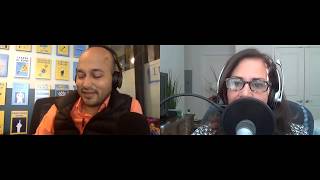
This is a recorded interview (Finding Brave podcast) where host Kathy Caprino speaks with Ajit Nawalkha about "living big": overcoming scarcity mindsets, preventing burnout, and creating a fulfilling, sustainable career/entrepreneurial life. Ajit shares his personal scarcity origins (growing up in Jaipur in a crowded household), explains scarcity as a perspective rather than purely material lack, and contrasts scarcity-driven behavior with operating from "I have enough / I am enough." They discuss practical steps: clarify your definition of a "big life," create and follow an action plan with small daily steps, and manage state (mindset) rather than reactively resisting. Other topics: generational influences on money beliefs, how anger/resistance deepens scarcity, burnout rooted in lost passion or overwork, choices about personal versus company branding, and Ajit’s book Live Big (book site: livebigthebook.com) which includes a 21-day program for buyers.
Chapters
Hello, everybody. Welcome to Finding Brave. This week we're into January, well into January. How's it all going for you? Are you finding that bravery is something that you've embraced for 2019 and you're ready for more? I hope so. I truly hope so. And I hope this podcast helps you tap into that bravery and confidence and self esteem and stretching out of your comfort zone. And we're going to talk all about that with our amazing guest, Ajit Nawalka. Did I get that right?
You did. You did. That was great.
I'm so good. I'm so glad. And we are talking about living big, overcoming scarcity, and achieving your biggest dreams. I mean, really, who doesn't want a little more of that, A little more of living a little bigger? And I want to talk to you about that because you're such an expert on overcoming scarcity and living a big life. But I do want to say something before I read your bio to everyone so they can be thoroughly impressed. I'm pretty sure you'd agree with this, but push back. If not. We're not saying that everyone needs to have a big sphere of influence or a big life. It's really got to be authentic. Like, for some people, they want an entrepreneurial venture that makes $10 million. For others, they want it to be, you know, six figures or less. So when I say living big, I mean it adheres to your highest visions of what joy and success is. Would you agree with that?
Absolutely. Living Big. And even our entire conversation and my perspective on living big is nothing to do with how we compare ourselves to the outside world, because that's what happens. It tends to happen as we start to go, okay, that person's living big, not me, because I am doing this thing. And that's not what living big or Live Big is all about. Living is all about saying, hey, what is it that you want your ideal life to look like? And that's a big life, right? Till the time you have the choice, you have the perspective of saying, hey, I can live the way I want. I can get whatever I want. And here is what I want from the inside out, which means you defining what you want. You can have it all. And that's really what live Big is all about.
Oh, I love it 100%. All right, everyone, let me tell you about Ajit. Ajit is a serial entrepreneur, global educator and consultant, and the co founder of Mindvalley, Teach Evercoach and Global Grit Institute, and also the author of the book of Coaching and the new book Live Big which just came out. He was born in Jaipur, living in a home with 23 other people. Wow. I'd love to hear a little about that experience. And has always pursued the dream of living big. Over the past decade has helped, excuse me, build training and coaching companies to inspire the coming generation, transform entrepreneurs to live on purpose, something we're going to talk about while enjoying their lives and increasing profits at the same time. That sounds pretty fantastic. All right, so let's jump in here and let me ask you about scarcity mentality you mentioned to me earlier. Sure. You grew up with that. I'd love to hear a little bit about your personal experience. But not everybody's scarcity mentality is the same or comes from the same influences. So tell us what you know about scarcity and how we overcome that, would you?
So I come from, like you mentioned, and really quickly, I come from a small town in India called Jaipur, and I grew up in a household where we were sharing space with about 23 other people. These were basically cousins, extended family, and all that kind of good stuff. So as much as we were living together, of course it was the smaller house. Everything was shared, everything was limited. I grew up in a setting where everything was cursed in a way, right? So I kind of got wired for always thinking that I don't have enough, right? Or always thinking that I have scarcity of everything, because that was the truth of my life for a great part, or at least that's how I perceived it to be. Now, how you see, scarcity is completely subject to the viewpoint and the perspective that you're looking at it from. So my perspective at the time was, I don't have enough, I don't have enough, I don't have enough. And that drove my behavior for a really, really long time. Because when you grow up in a setting like that. And again, you said it right, not everybody is to grow up in that way. You could be growing up in any other reality, but you could operate from a place of saying, you don't have enough, you don't have enough, you don't have enough. Especially if you see that in your household. And again, I had 23 people living with me. But you don't have to be in that reality. Sometimes parents are just like that because they are operating from scarcely. They unconsciously transfer those beliefs and those stories to you, right? Nothing is enough. Nobody is enough. Nothing is enough. We don't have enough, right? So that kind of became the truth of my life, or for a big part of my life where I always Thought I had to chase something more to finally feel abundant or finally feel like I've got it. Only until later in life when I finally realized that the chase of me wanting more had taken away from the present moment that I was living in my life, right? The present moment of our conversation right now. Present moment of me being present with my family, with my friends, with my parents, with so forth, with everybody that was around in my life, and. And because of me always being on a chase, I had kind of unconsciously taken away from the rest of my life to give everything to this chase of very specifically for money for me, because that's the background that I came from. So it wasn't only scarcity. Scarcity can be seen in feeling scarcity about love. And that would affect relationships or any dimension of living, right, which would affect your health. Of course, abundance, of course, which is the most common, scarce behavior that we tend to show as human beings, irrespective of the career, profession that you're in, that we tend to think that's never enough. Right? And that's kind of drove my behavior, which took away from the rest of my life and eventually I got past it. And that helped me create a lot more abundance in my life than I had previously experienced. Scarcity did help me a little bit, it did move me further in life, but nothing close to what abundance or the mindset of saying, I have enough and I am enough and I live enough. And then to operate from the creativity of saying, I am enough, I have enough. Now what is it that I would like to do with it? That creativity, that place saying, hey, I already have everything that I need and how do I enjoy this present moment and how do I get to pursue the greater joys of life? Created a lot more abundance for me. Created a lot more joy for me. Created a lot more fulfilling life for me. Create a big life for me.
Oh, I love it. I want to make a point and see what you think. I want to highlight something when people listen to, oh, do you have a scarcity mentality? I think that that mentality has many different manifestations and I'd love to just share one. I grew up with my beloved dad, who's now gone. But you know, he was born in 1920, so he lived through the Depression, World War II. So certain generations have a different view about. I think generations have themes. And his theme was you put food on the table, you do the secure thing. It wasn't about self actualization, it was about, you know, he lived through trauma and hell. So you know, I think he had a generous heart, but money, I think he was scared around money. And what happened to me, I just want to share quickly is I said to myself unconsciously, I'm always going to make a lot. But there was an anger about it. Like, I took jobs I didn't like, became a vice president, made a lot of money, but there was a resentment around it, which then set up a conflict around money. So even if you have a million in the bank, I know people have 5 million in the bank, and they act as if they don't have enough, and they'll never have enough. So that scarcity feeling can also be a negative relationship with money, that you're angry about it, even if you have a lot of it. So it's. We're not looking at the size of your checkbook or the size of your house. We're looking at how you feel internally. And is there joy and does it flow and does it expand around what you do for a living and how you negotiate that with money? Would you agree with that long.
I completely agree. Absolutely. I absolutely agree with that. And you're very right. There's no limit to how scarce you can feel, irrespective of your bank account, irrespective of a bond of love that you get from people, irrespective of anything. So it's completely subject to the perspective that you bring to the table or bring to your life versus the absolute truth. The absolute truth is that we are always abundant in some way or another. Right. But what's the relative truth or the perspective, the perspective that we walk in with through our walk through our life with is we are never enough. Right. Or nothing is.
Let me get to. I'm going to go deep here and, you know, former therapist in me, I'm going to ask you some hard questions. You know, I follow some wonderful spiritual gurus. Mike Dooley is one of them. And he sends out notes from the universe, and they're. They're beautiful. And often they're saying, you. You really have everything you need to create the life you want. You just need to understand that and leverage it. He says it much more eloquently than that. But I've had people say to me, bull. That's just bull. I don't have everything I want. I don't. If I can't afford health insurance, you know, my kid is sick and I can't whatever. What would you say to the person that wants, well, I'm kind of skipping two steps, but I'd love to Hear your specific strategies about how we overcome that mentality. But the first one is when you want to believe that but the reality of your checkbook is I can't pay my bills. What would you say the best step around that is?
So when the reality of life is, and I've been through that phase in my life, I'm grateful that right now I'm not at that place in current state of my life, but I've lived through that life in my early years where I couldn't pay for anything and I was living off of cans of beans. You know, like that type of situation, right? And while I was living through that life, the perspective that helped me and the perspective that will help anybody who's in that stage is know that the cycle of life, or life itself is more like a dance or like music, which means it has the high notes, it has the low notes, it has, it has the movement of one place to another place. If you see it as a dance, right? There is no endpoint, per se. It's not that today, if your checkbook is not able to support your health insurance today, it's not able to support the dinner that you want to have or a date night with your loved one. Doesn't mean that's the constant of your life. That just simply means that's the stage of your life. Now you can move through stages of your life faster and more effectively if you can manage your state. And the state is basically, are you operating from a place of. I can't afford that. Let me be pissed off at the world. That is a state and that will help you operate through that space. But that will be a slow movement because you're always pissed off at something. You're always feeling that you don't, you don't have it, right? So how can you be in a state of greater performance when you believe, and you constantly repeat it to yourself that you, you can't have it or you don't have it, right? What about we change the state to say I have every resource that I, that I need, right? I have every intelligence that I need. I have all the brains that I need. Now let me go out and add more value to the world till the time the world starts to reciprocate for it, right? It's a better attitude to go towards life, right? Because listen, I can tell you everything. But your checkbook's not going to change today, right? It's just not going to happen. You're not. Unless you win a lottery, there is no way that instantly after listening to this conversation, tomorrow your checkbook will be different. That's just not what happens, right? You work through it for the checkbook to look different. Now, you can work through it by cursing and being pissed off and being unhappy, or you can work through it being happy, being joyous, being fulfilled, being saved with the presence of saying, hey, I'll have a great time and I will build the life that I want to build. It will be painful at the sometimes and it will be stressful at some times. And that's okay because it's a part of life. I love it.
Suffer, I love it. Could I emphasize a few things? And this wonderful light here is my blinds. So forgive me for that. I look like woohoo. Two things I want to share in therapy training we learned that what you resist persists. So there's two essential reasons why being pissed off about it is actually going to get in your way. Number one, you're resisting it. So you can't change it if you're mad about it and feeling like it's unjust because you're not open to what could change. So it will persist. The second thing is, as you point out, we're going to talk about entrepreneurship and the journey of that, but when you're bringing a heavy negative mad energy to what you're doing, it isn't going to be received in the world in a way that is going to expand. Because you know, I really believe we're like a heat seeking missile. What we're thinking about is what we're going to get. So if you're angry as you put out your services, as you launch your new product, and if you're only thinking about how much money I can get, it's not going to be received with the right energy. Would you agree with that?
Absolutely. Think about it. If you are thinking about how much money you're going to make, how will you make a good product? You can. If you want to make a good product, you got to think about your client first. You got to think what's the experience your client is getting. And when you think about that, money might come back as a reciprocation of the good quality product that you create, good quality marketing that you create. But if you operate from a place of how can I check? Cash the biggest check, it's not going to create a good product. Maybe you'll get some temporary success and good on you for that, but it's going to not last. It's going to bomb sooner or later.
Can I give you a really Honest, transparent example of that.
Sure.
So I'm a coach, I paid a lot per hour. But one thing I have always believed, I don't want to only work with wealthy people. That's not my thing. I don't want to only be paid a million dollars like some coaches we know. That just doesn't feel right to me. So because of that, I make sure I have free resources and low cost resources. And at pivotal points in the year, I will heavily discount for a limited time access to me. I have so many high ticket closers reaching out, saying, you know, you shouldn't be doing that because you should know how to close well enough, sell well enough that you're filling it. And I fundamentally, fundamentally don't really agree. I'm joyful at reducing the cost for a given period, the holidays as a gift because there are some people that legitimately can't afford my fees. It's not that they have a scarcity mentality, they don't have the money. So I think that the key is choose what makes you feel joyful. Not everybody is right about every strategy and marketing and sales. Would you agree with that?
Absolutely. And every business subject to the entrepreneur's desire or what they want to build, there is no rights or wrongs. There are simply different strategies, different playbooks. For example, if you go to any of our website, most of our stuff is for free. You don't even have to pay a dollar. Like 90% of everything that we do, 95% of everything that we do is absolutely for free and only the material that we feel need a more structured approach. And of course we are a business, after all we do and a for profit business. So we do want to turn a profit. But most of our stuff is for absolutely free. It's like, hey listen, if I can add value, if I can move the needle, if I can move the line, I will do everything I possibly can to be able to do that. And where I do have to make the financials work, I will make the financials work. But that's a perspective we have. It doesn't mean everybody needs to have the same perspective. It's like the same for you. It's the perspective you have. Everybody doesn't need. But that's why I don't like any consultant or coach that tries to do catchalls. Catch all is like, hey, this is a blanket strategy everybody should follow. It doesn't work. Copying a strategy has never worked for any business. Even if they say, I found the system and I'll give it to you, the system only works to a certain degree. It helps you move your learning a little bit faster. But you have to customize that system for it to really work for you. Because otherwise somebody else, it's like wearing somebody else's clothes. It won't work. You're wearing somebody else's clothes, the colors aren't going to work, the size not going to work. It has to be custom tailored to you. And so you as a, even when we hire consultants and coaches, we got to be mindful that we are not hiring people who just give a catch all solution. They should be able to work with you to find a solution that is custom made with you. And that's what a really good coach or consultant would do anyways.
You're so right. And if they can't do it, they don't have the chops. They only are one size fits all model. All right, now let's talk about one thing you really love to chat about and dig deep in is burnout. And so let's talk about. And I think corporate professionals have this, I think beginning entrepreneurs have this, seasoned entrepreneurs have it, anybody has it. But what do you think is at the root of burnout? What do you think and how does that get in the way of us living our biggest dream?
Burnout happens because, I mean there are twofold, two reasons usually that we have found burnouts to happen. One is because we lose passion in the subject matter that we are working on. Professionals or entrepreneurs doesn't matter. Our second is because we forget what we are really doing and we tend to just work harder and we think that's the solution to everything. So let's talk about the first bet. What happens is when you're starting a career, when you are a new professional, when you just started doing sales, whatever the thing is that you do in the company, technology, whatever that is, you're very excited about the product, you're very excited about what you do and you're going at it. But there is some point in life where we start to take life as granted, right? We start to go, oh, it's the same thing. Like you go to the office the same time, you wear the same type of clothes, get the same job again and again and again and again. And that, that may seem right from the outside, but it's actually very over time it suppresses the passion. Yeah, it's like, it's like, it's, it's initially it looks okay, I have a system, I have a schedule. But eventually it becomes and takes a toll on you. Because you have lost all drive to show up. Because there is no variety at your work, right? And it's. And it's not. It's basically professionals do that to themselves because they can create variety at their work. They just choose to stick to the guns that they have been assigned to do, right? Or job roles that they've been assigned to do. Entrepreneurs the same. They had a really exciting idea, they run with all their power on the business, the business starts to stabilize and they go, all right, now I'm doing the same thing again again. It's like repeating cycle without finding why they started at the first place. So they lose the passion along the way, right? And they forget to recharge themselves to be able to keep. Keep finding that passion again or finding what's their alignment to the passion again, right? Second reason why burnout happens is over work is where people tend to go. The way I'll make more money is I can put in two extra hours or four extra hours, right? I will not shut down even if it's the weekend like a lot of people claim I have. Oh, I work the weekend because then I am ahead of everybody else. Not true. Your number of hours are not putting you ahead. Your quality of work is going to put you ahead. Right? But that differentiation, people don't understand and their bosses don't understand in a professional environment. And so the bosses expect more hours in the office even if they're unproductive hours, right? Which is why the future of work has a lot to do with not being in the office. Because people are starting to realize and wake up to the idea of saying, hey, I can create a better quality outcome in a much lesser time. If only I was not constantly pestered by something, right? Or if I was not just having chit chats on the water cooler chitchats. If I avoid all of that, I can deliver a better quality. I can create better quality work in much lesser time. And eventually, as our society is progressing towards the direction of intellectual workers, because we are becoming more and more intellectual workers. It's not about how many hours we spend on the computer. It's about what are you doing when you're on the computer. It's about the intelligence that you bring and the creativity that you bring. Because the mundanes are already done by AI or robots and they're coming, right? So you won't be required for the mundane. You will require for your creative potential, right? That's just the future of work. And if you realize that right now, you realize that it's not going to be how many hours you can plow through something. But what can you do in those hours? How are you investing your time in learning new things so that way you can show up at your work in a very different light, in a very different.
I love it. Can I just say this? What I love about doing this podcast, Many things, but we, you and I say so much of the same thing, but we come at it differently. So for instance, in my amazing career project course, people will say, I want to just chuck my entire career. Literally 70% of the time, they don't want to chuck that career. There's some one pivotal piece, a toxic boss, terrible work life balance. I didn't get that promotion. And in their mind, they think they're done with the whole thing. So when we take the steps that you're talking about, first of all, why are you in this job? Most of us, you know, I think you're so right. We get into a structure and then that kills us and we didn't realize the very way we set it up is deadening us. But don't you think this is also true? We often outgrow who we were when we started. So even, you know, I've been in my coaching business 13 years. I'm not the person at all that I was 13 years ago. What I'm capable of, what I'm passionate about, the niche, it's so changed. But if you don't take the risk to change and grow with those yearnings, you can't live big. Don't you agree?
Absolutely. And change is actually a very positive thing. People tend to think about changes in negative perspective, but I think change is progress.
Right?
Yeah. Change is progress. All progress is made because something changed good or a bad way. And that's why you make progress, is because, well, you made a different decision on the same thing that you did. Right. So completely agree that a lot of times burnout happened because like you said, it's because they outgrew the work and that's why they're passionate about a different thing, but they're just not recognizing it. Right. They're just not recognizing that they're not passionate about the same thing that they were passionate about at some point and that it's not so darn hard.
I'm so sorry to cut you off, but it's not so darn hard to actually pivot a little and get. Sink your teeth into something right there, even in that same career, if you can. I love it. So talk to us about, you know, if I If you had a room of a thousand people in front of you, and I think you do often, and you had to say, what are the three steps to living big, to reaching that dream, to overcoming burnout and scarcity? What are the practical things people need to know and do?
So some of the practical things that people should do and people try to do it but don't follow through strongly enough on it is firstly to have a clear idea of where you want to go. See, not knowing where you want to go is probably the biggest reason why people don't get there. It's like you have the compass, which is your abilities and skills, but you don't know the direction you want to go in. Right. Or the destination you want to go to. Right. And if you don't have that, it's very hard for you to actually get there. So what is living big for you even mean? Which was the first conversation that we had? Actually, it means different for different people. Right, but what does it even mean for you? To live big is the first question to ask and then to write it down and say, this is what I will create in my life. This is how my life should look like on a weekly basis, on a daily basis, whatever that is. Right. But that's the first step. Always. First step is always to self identify as to where are you even going. The second step is to create an action plan on it. That's one more big thing that people don't do is they go, all right, I'll write end of the year goals, right? A lot of people who are listening to this right now are like, all right, I have the 2019 goals. Guess what happens? It's found 70% of people fall off the radar or fall off their goals. I think the first two months, the first 60 days of the year, right? Their new year resolution, 70, 80% of people and maybe 90% by the time we are in the six month mark. And the reason why they fall off is not because they're not motivated to get the outcome. They want the thing for sure. They just either overestimated what they can get or second, or they just didn't make an action plan. They said, I won this and I hoped that it would happen. That never happens. You gotta have an action plan. You gotta follow through on that action plan. Which is the third step is make an action plan and then follow through on it. And follow through not for a big action item. No, that doesn't work. Take a small action item and make those small follow throughs every day. Because when It's a big thing that we have to move. It requires a lot of effort. It's like trying to move a table all by yourself, which weighs 100 kilos or something like that, versus saying, hey, I'll get one person at a time, or I'll get a lever that'll help me move the table or whatever that is. Right. But what you have to understand is you need to take those small, tiny steps because that's what you can measure on a daily basis, and that's what you can do on a daily basis. If you want to lose the £20, the £40, the £50, it's not about saying the most aggressive gym schedule you can do and going and getting that. No, it's about getting out of the house. It's about getting out of the couch when you're about to watch TV and saying, hey, let me instead of this, take a walk. Right? That's what it's about. It's not about the big actions, about the small daily actions.
Oh, I love it. I want to add some things. Tell me what you think. I work with people that say, kathy, I literally have no idea what I want. And I have started to say in this past month, yes, you do. And they look at me and they say, no, I do not. So I will say this. You wouldn't even know. How do I put this? You do have an idea, or you wouldn't even know that. You have no idea. In other words, what is the thing? So here's another way to look at it. If you have no idea what the big vision is, I would like to hear what is the one thing you want to heal or let go of? The one thing that you feel, if it could change, life would change. Start there. So for some people, they dream of a new career, but really all they need to do is get another job because their boss is ridiculous or toxic. All right, let's start there. So what I would say is, if you can't even think of what the biggest dream is, start with the littlest one. You know, start with the thing that's going to make you feel better next year. Right? So that's one thing. The second thing is the no plan piece. I think what so many people do not have, they might write down a plan, but they don't have anyone in their court keeping them accountable. I mean, don't you find, I know you work with coaches and consultants. Don't you find that if you've told someone that you are actually going to finish that book proposal, you know and you can't control who if a publisher takes it. But you can control if you've written a great book proposal. But, but once you tell someone now it's out there. So I think that so many people try to do it on their own and what they need is to be held accountable with someone else. What do you think about that?
So it depends on the personality types. It's. I do think that it's a variant of. And it's one of those things that can't be catch all for people because there are certain personality types who would not want to be held accountable because they are very internally driven. So they don't need an external accountability structure, they need internal accountability structure. Where else? There are a lot of people who would prefer an external accountability structure because that's how they are. Nature and nurture, it's a combination. And it's the same thing with the not knowing these. Sometimes you feel you don't know because you have not made the effort to know. Or you feel you need absolute clarity because that's your personality. You go, no, I need to know. Exactly.
This is what, forget it.
It's not about the clarity of where you want to go, it's about the direction you want to head into. Exactly right, okay, this is kind of where I want to go. And that piece moves you versus saying this is exactly how it looks like. If you can do that, exactly, great. But if you can't do it because you don't have the vision, the perspective, or you still don't want to write it down because you're scared of it, because that's sometimes the case, you're just scared of the vision that you're going to build because then you're going to feel dissatisfied with where you are today. And that's again a deeper conversation to be had with a coach or a consultant who can help you process all of that stuff. So you're very right. A lot of times people have resistance to these things, but there is a reason for it. And if you work on that reason, we can probably help you navigate. Because everybody has some version of their ideal life always in their mind. It's more for them to say, do they feel that, oh, they can never get it and so that's why they don't want to write it. Or sometimes external driven or sometimes they just don't have the didn't have the chance to actually write it down and that's all they have not done. And if they can do that, they can probably be able to really define.
It for themselves, I would say. There's one other thing. A lot of people come to me saying, here's my ideal vision. I'm living in a house on the beach and I'm not working. But really, that's not what they want. No, what that means is I'm so beleaguered and I'm so tired, and I can't be with my kids, and I'm just. I'm so tired. I don't even know. I don't. I can't even think. So when I hear that, and I know their personalities, that they'd be miserable if they had nothing to do but be on the beach, then we've got to get at what is beleaguering you so much. Because if you don't change that, no career, no dream is really possible. No happy big career. There we go.
And one thing is true for sure, and you said it, you kind of nailed it on the head, is there's absolutely nobody who doesn't want to do anything. You may want a vacation, but you don't want to be always on a vacation. Absolutely zero people. Even the gurus that are in presence 100% of that, they need to meditate, they need to do something. Nobody wants to do nothing. It's a thing that you get bored of. And I did. That is why I know and I have friends who did that, who is. Why we know is because we made the money that we needed to make it. We're like, all right, let's do that thing that we always said we are going to do. Go on the beach and not do anything. Day three, and we were like, I will kill myself if I continue to not do anything. This is the most boring life. Yeah. Why would I want to be living a life where I don't get to do anything? I want to do things. It just should be more fun for me. Everything that I do, and I should get the choice to be able to do it. And that's what the life that you create is. It's never about not doing anything.
I love it. Tell us something. You had an entrepreneurial turning point, didn't you? Something happens. Tell us about that and what we can learn from that.
So I had many. But I think the one that we're talking about here is the big one that happened recently. Much more recently, is I was leading a wonderful organization called Mindvalley. I was the CEO of the company, and I had started several companies on the side as my side hustle or side projects, however you want to call it. But in that phase of, I lost my passion, my drive. I sacrifice everything else in my life for having great career again. The place where I was coming from was scarcity and not enoughness. And that got me to challenge what everybody thought was the perfect life to really question and go, is that really the life that I want to live now? At that time, there was no vision of writing a book or anything like that. The vision was simply, how do I correct and course correct my own life? How do I course correct what I wanted to do and be able to create a life that is a lot more in alignment with who I truly am? And that sent me on a path to really figure out how to build businesses without or how to build careers without actually working so hard or sacrificing everything else in life. And that was the big breakthrough that first started the discovery for myself and then started a journey of me helping some of the other clients that I had to restructure their businesses and restructure their lives in a way where they got to not only build their companies, but also be able to build a life. And that really became the conversation that is also the leading to the conversation that we are having right now is to say, hey, you don't have to. This is a really popular dialogue right now, especially on social media is everybody seems to be working super hard and everybody seems to be talking about why you need to work hard. Work hard, work hard. And there's nothing wrong with working hard till the time it's in alignment with you. And that's what you really honestly want to do, not because of validation from the world, but you want to do it because you like doing it. And then that's okay if you want to do it, but otherwise you don't need to work hard to build companies. That's just not true. And you can ask that to people who are actually successful entrepreneurs and are not interested in making videos all the time because they have a life, right? So they have a different perspective to life. And they go, no, I build teams, I build companies, I build products. I shouldn't. I am not the product. I build products so I don't have to work that hard. I'm not the face always of my brand, right? And they build effective systems and strategies for them to be able to scale their companies. There is no reason for you to work 18 hours a day. You can work five hours and still create a great company and still change the world and still be able to grow yourself in the process and live a great life. I love it.
I want to keep you two more minutes. Could I and ask a question. We didn't script this, but I'm really interested and I'll just be transparent here. When I started my coaching company, it was called Elia Communications and I didn't want it to be about me. And Elia had a meaning to me. It's elle, the French word she, you know. So it was about the spirit of women around the world and also it's for my kids, Julia and Elliot. But as time went on, the brand I felt did become me and it was hiding from the reality that the brand was me. So I have Become Kathy Caprino.com but you really struck a chord when you said if you make that decision and the brand is you, that doesn't mean you have to give over your entire life to your entrepreneurial brand. Most people aren't happy when they're only doing one thing, work. But I am interested for the consultants and entrepreneurs. How do you decide if the brand is you or not you?
It depends on your vision of the brand. Right. So for example, I am never the brand. Even if people know I'm the, I'm the person behind and I'm making the videos and so forth. I'm always a company because I'm always a product. So if you are a product focused approach versus and I'm not trying to do a catch all here but most of the time when people use a personal brand, it's because they care for recognition more than the value or their value is subject to how much recognition that they get. Right. And that's why they choose to have a personal brand. It's not always true, so it's not a catch all. But often that's the case is they want to get people to love them, they want to get people to recognize them and they want to be the story. Right? That's usually when they create a personal brand. Where else? People who are like I want the outcome to be the story, they end up creating brands which are companies which are known in their own right. Like if you look at my companies, the companies you mentioned was mindvalley, mindvalley, Teach, Global Grid Institute, Evercoach. None of them said Ajit Nawalkha is Ajit Nawalka. I mean if you go to ajitnavellakha.com, you'll see my website. But that's not what I direct people to. I direct people to one of these companies depending on what they really want. And these companies are independent in their own nature, with their own teams with their own products and their own results that they drive with their clients. Right. But that's because that's the approach I have towards business. But it's not about. It's about my clients. Where else? When it's a personal brand, a lot of times it is about you. And that's okay. There's nothing wrong with that. It's just mostly to recognize the fact that, oh, as a consultant, I want to be known as the person xyz. And that's fine, go do that. Where else? If you are like, oh no, I want to be a product company, which means even if I don't make the video, somebody else makes the video. Even if I don't make the product, somebody else makes a product. That's absolutely okay. That's absolutely okay.
You know, I love it. I'm going to think long and hard about what made the decision for me. But, but what I will say is sometimes I'm going to uplift the idea of the personal brand a little more. Sometimes people like me feel that the products and services are delivered in a way that reach people more directly when the message of the brand there. So in other words, I feel I'm not a perfect example of what you shared in that it's not me that needs the recognition all the time. It's that that name has now become somewhat synonymous with the values of the brand and the products and services. So I think there's. In other words, I don't want, I don't want people to feel like, oh God, he's saying that it's only people that need recognition and needs need external validation that become their personal. Their brand.
No, that's why I said it's not a catch all. It depends 100% on, on the person themselves. And sometimes it's all brands are somebody's values. First of all, some personal value. Right? Or a group of persons value. Right. Every brand, irrespective their position as a company or a personal brand, is somebody's value. Then usually the founder of the company is the business biggest influence on the values of the company. Right? So that's always going to be the case. The reason why I said that way is because it becomes an easier distinction for people to be able to go, okay, when is it that I want to use my personal name versus when I want to use a company name? Because it's easier to dissociate that way as the same part of. I know that a lot of times we will choose our personal names because we just don't know Any more about branding and we're just like, hey, this is who I am, this is my product. And sorry, but that's what. What I am. And I don't want to put more brains into it because I'd rather create value for my clients. Right? And that's a way to just go into personal brand. I know friends who just didn't know. They were like, I didn't know. I didn't want to come up with the name of the company. It was just too much work. I was just like, screw it, this is what is the outcome that I want. And I'm the one right now who's the only person in the company, so what else am I going to do? Completely fair. You chose your own name as the domain and then it became famous and now you don't want to change it. Absolutely perfect. Doesn't have to do. It's not a comment to make someone feel like, oh, I need recognition. It's not a bad thing if you.
Want to recognize that that's my phone. That's right.
It's not a bad thing. So I don't want anybody to feel bad about this. It's like, if you need recognition, you need recognition. Accept it, it's a good thing.
And I love to end there. As we can see from this conversation, you can't apply a one size fits all to how to live a good life. You can't. In other words, for some it's this, for some it's that. It's small, it's big, it's their personal name. It's never their personal name. Anybody who's trying to overlay these rigid rules doesn't know shit, excuse my language, that's going to get bleeped out about what true growth is, because every one of us is different and every one of us has different longings. But I think where we want to leave this is become aware of your. What drives you and either own it or reverse it or change it if it doesn't feel right to you. But don't live unconsciously, live very consciously and embrace who you are. Is that. Would that be a message of your book, Live Big?
No. Absolutely. Absolutely 100%. That is the message of the book. That you can live a life that you want till the time you. You want to move towards the direction of what life you want. So just become conscious and aware of it and it's easier than you think. It's our own dialogues that's stopping it right now. And hopefully the book does that job for you. Clarifies that and gives you that progress that you need and then give you solutions to continue to make that progress greater for their life.
I love it. What a great book. Tell us where we can learn more. Where do we learn all about you? Where do we get your products, services, your book? Tell us.
So the easiest way to go about it is to go to livebigthebook.com livebigthebook.com and as you go to that domain you can, you will be redirected to page where you can order for your country or whatever you're listening in from. And that would show you how to also get connected with me personally because we give away a 21 day program for everybody that buys book to just help them actually go through certain exercises with me directly. And so you get that 21 day program and so forth as a part of the book. So yeah, wonderful, wonderful.
Oh, I thank you so much for inspiring us and giving us practical tips that we all can use right away in the new year to start heading towards your biggest dream or identifying it. Thank you so much and thanks everybody. I hope this gives you a big infusion of bravery and confidence and the courage to understand yourself and then leverage that fully. Thanks everybody. Thank you. I'll see you next time. Goodbye.
More from Kathy


Elevate Yourself, Elevate Others, and Amplify Good | Chris Cooper | Finding Brave Ep. 334

Finding Brave Epis #333: How Leaders Can Harness AI Without Losing Their Humanity, w/Bennett Borden

Finding Brave Epis 332- How to Stay Brave, Valuable and Visible in the Age of AI, with Raman Rai

Finding Brave Epis 331 - The Power of Positive Disruption, with Dr. Patrick Leddin


Finding Brave Epis 330 - Being 40: Letting Go and Embracing Who You Are, with Stacey Lindsay

Disrupt Career Reinvention with Kathy Caprino - via The Disruption Lab Podcast w/Patrick Leddin

Creating Neurodiversity-Friendly Work Cultures: Simple Workplace Adjustments Matter

Finding Brave Epis 329 - How To Create a Neurodiversity-Friendly Workplace, with Kristen Pressner

Finding Brave Epis. 328: Reclaiming the Power to Trust Your Own Voice, with Dr. Cindy McGovern