Finding Brave 55: Key Steps To Bringing Your Big Dreams To Life, with Ann Louden
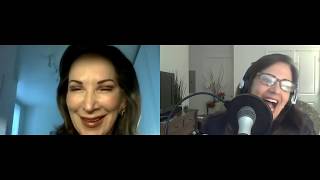
Ann Louden, a breast cancer survivor and philanthropy consultant, built a national cancer advocacy program from a pink-ribbon halftime tribute at TCU into large-scale music videos featuring Josh Groban. She shares how she recruited celebrity support through research and persistence, and the practical steps that turned a personal challenge into a movement.
Questions this video answers
January 24, 2019
She is a breast cancer survivor.
She said she created seven music videos over seven years.
Josh Grogan and the song 'Rave' (as referenced in the transcript).
At TCU (Texas Christian University), described as occurring '12 years ago' in the transcript.
Chapters
Hello, everybody. Welcome to Finding Brave this week. How are you doing? We're kind of well into perhaps even February at this point. How's your 2019 going? Are you feeling particularly brave? You know, I'd love to hear from you. Anything that you're going through about what you achieved that was brave, about your power gaps that are still keeping you from, from having the career and the life and the relationships and the impact that you want, please let me hear from you. I love that. And of course, always feel free to offer suggested ideas about what we can talk about here and new guests. And speaking of guests, I'm so excited to invite my friend and what an inspiration, Ann Loudon. Thank you for being here, Anne.
Thank you, Kathy.
So thrilled, so thrilled. So I, you know, I love to tell folks a little bit about how I get introduced or connected with people that inspire me. And I think it was our wonderful friend Mike Stallard, who is helping cultures and communities and workspaces and universities build connection cultures. And he sang your praises. And then we had a lunch together where hours went by and it seemed like a blink of an eye. And I think you all are going to be so inspired. We're going to be talking about keys to bringing your big dream to life. And Ann is the walking example of that. So thanks again for being here, Ann, and happy New Year. Hope it's all going great for you.
2019, it's an odd year. Those are the best years.
That's right. That's so right. All right, everyone, let me tell you about Ann. Let me read her amazing bio. Ann Loudoun is CEO and founder of the Ann Loudoun Company, consulting for nonprofits in higher education, the arts, social services and health care. With 30 years in higher education administration, Ann is recognized in the world of philanthropy as a seasoned fundraising expert, a strategic and innovative thinker, an engaging teacher, and a passionate representative for the causes she serves. A new resident of New York City. We're so happy to have you closer. Coming from Texas, CEOs, even now in the fields of higher education and adoption, retain Ann to help them think big as their consultant. So among Ann's proudest achievements, which we're going to talk about a little bit today, is the creation of a national cancer advocacy program for which she built the brand and was the spokesperson for 12 years. Well, here we go, Ann. Let's jump right in. Let's just get going first about what was the biggest or first motivation for you to bring into reality a very big dream. Can we hear how you got started.
With all this, absolutely. And I think of it as a response to initially personal challenges because big dreams don't come to us until we're a little more seasoned. Maybe we have unrealistic big dreams when we're. I remember as a teenager I wanted to be a singer and I wanted to be on stage and I wanted to be in a Broadway show. And so far even that I'm in New York, that hasn't happened yet have happened in my life. As I think about what spawned these big dreams have included personal challenges with respect to being a cancer survivor and infertility, my interest in adoption and surviving a 24 year marriage that was probably never quite of the century, that was probably never destined to be successful. And so I think about what those challenges were for me and whether I looked at them as problems or as opportunities, that was the beginning of thinking big and creating big, big dreams for myself. It was about really embracing change because had I wanted to stay with the status quo in any of those situations, situations with respect to the cancer, obviously that wouldn't have had a good outcome. The marriage would have meant that I would have stayed in a place where I wasn't growing. And then in terms of infertility, I would be childless and I had a child by adoption. So all those things came about because there was something personal in my life I needed to overcome.
Oh, wow. So in a way, you know, I use that term and I didn't make it up. I wish I did. Turning our mess into a message in a way, that's a little bit what you're talking about, isn't it?
I love that I hadn't thought of it that way. It's sort of thinking of where the possibilities exist when you're faced with the toughest situations. And so you say message. I've always thought too about we have a personal brand and it's built because we have a story. And the story, if we really think of that as our own elevator speech, the story becomes who we are. And so when you talk about these big dreams and I think about the opportunities that I had to build them, I'm grateful for those hard challenges because I wouldn't have probably been brave enough to have fought big without them. If my life had been good and perfect and wonderful and there was nothing that I needed to alter, then I wouldn't have done any of the things that I so happy to have had the chance to accomplish.
I love that. I couldn't agree more. I do want to say I want to leverage or build on something. You've said and make something clear and hear your thoughts. You know, you mentioned often it's when we're a little more seasoned and there's more wisdom and experience behind our eyeballs that the dreams solidify differently. And you mentioned, you know, you wanted to be a singer. You know, I am a singer on the side, not on Broadway. But I do want to say this and get your thoughts. I have heard from a lot of very young people who have the start of a dream or even a very well articulated dream. Like, I know people that want to go to Broadway and they're studying in New York, etc. So I do want to say this, and I'm just making this up as we go. Tell me what you think. I believe that we all have dreams and many of them are incredibly viable, even though they might seem like, oh, yeah, sure, she's never going to make that happen. So I would say that we don't have to be older to have viable dreams. I do think that, however, part of having your dream be realized is not overly attaching to a particular outcome. Like, I'm 18 and if I don't sing on Broadway, my life is over.
I absolutely agree with that. First of all, I know you're a singer and I'm jealous that you're. That music has changed your life and it does in so many ways. I represented an artist who was on American Idol as his manager for two and a half years.
Wow.
There was an example of a young man who had great talent and never even really considered the possibility of being on a national television show and advancing from 100,000 people in the queue to one of the top 12 male performers in the year that he was chosen. And I think about what you just said about he never said to himself, okay, if I don't become the American Idol for this particular year, my life is over. What he thought of it as was, was this chance to prove himself, to prove to himself that he could be stronger than he thought. And I look back in those two and a half years when we did together, we made it up as we went along. That's the other thing about being. Having a big dream is sometimes you don't have the roadmap. So you have the concept. And you know that you can see, you can visualize the future, but you don't know the pieces of getting there. I'll just say one other thing about visualization because I think it's so important. I recently read once that when you think about wanting that new car, I always said I Wanted a red BMW convertible. I don't know if they make red ones, but who knows? So I have to picture myself in the red car, but in my driveway. And since I live in New York City, I don't have a driveway anymore. But the idea of being actually physically present in this moment. So when I used to work with this young man, I'd say, see yourself on the stage, see what you're wearing, see what song you're going to be singing. And you can imagine that you're going to get there, you're going to backtrack on the steps, but you can actually see that the reality becomes the truth. And so when I look back at where I've come from and what I need to visualize came from a place of vulnerability. Really big dreams come from owning something that isn't correct or right or that even could be shameful. It could be painful. And yet when we say we're going to get past that by taking that pain or that shame or whatever is our Achilles heel at the moment and building something magical with it, then we've got the opportunity. I think back about my decision to move to New York City, which came about as a result of my marriage ending. But it wasn't just my marriage ending. I could have lived in Texas, where I'd been for three decades. Then I have the Texas accent to prove it. So I sit there and I have the colorful clothes, I'm wearing black. But it's taken me a while to get used to that. What I'm saying really is that I had choices to make in a moment of great vulnerability. And the choice was either to stay and accept what was status quo or to imagine what could be the biggest, hairiest, scariest thing I could do financially, logistically, emotionally, spiritually, in every other way. And what came to me was New York City or D.C. but New York City won out. And you know why? It's such a great place. So. But to get from there, Texas, being there to here, New York City was a leap of faith in so many ways in expressing my vulnerability. I knew my life was going to change after my very high profile marriage in a community where I was a big fish in a small pond. And all of a sudden now I'm a small fish in a big pond. And that was conscious of doing.
You have so much everything you say. I feel like I could unpack and do an hour training with you about it. So can I share a few things that I want to make sure we punctuate? Visualization is so important. And a lot of people think, what a bunch of woo woo crap. It isn't crap. And I think the reason is that we are like a heat seeking missile. And when we envision with all of our senses what this dream is, when we feel it, when we smell it, when we see what we're wearing in it, when we see ourselves. For instance, I'm writing a second book and I see it in the bookstore. I see it me speaking at book signing events. I think what happens is we marshal all our internal resources to make that possible and we. We bypass all of the negative gremlin thinking that, what do you mean, you can't do that? So I so wholeheartedly agree. Visualization is a critical tool. The other thing that I love that you said, and I really just want to hug you up about this, when you went through this big change and your marriage ended, you could have stayed in what was comfortable, which in this case is what was familiar. I don't think there was any comfort about it, really, but you could have stayed being the big fish in a little pond. But I love what you did, which was, what's the. What's the. Where am I? What's the pathway to allow myself to reach my highest potential? And that usually is nothing comfortable. That usually is a big shift in how you're operating. Right. So I always say when people say, God, I just want some inner confidence. What I say, screw that. It's doing the thing that would make you say, if I can do that, I can do anything. That that's what builds the confidence. Do you agree with that?
Agreed. And the song about if I can make it here, I can make it anywhere, that was. I thought if I could put this very significant challenge in front of myself and meet it, I would be building my own sense of, of who I am as a person. Not that I wanted to mark off something on an artificial scale of what I needed to achieve in my life, but more that I wanted to challenge myself. Because I think without challenging myself, I would have, as you say, I would have been in a familiar, not comfortable, but familiar place. But even that, that change that occurred in my life after a quarter of a century was unfamiliar. I didn't expect to go through a personal crisis in a way like that. And yet when I. When I was able to make the decision to make this big move, I ended up, without knowing it, telling my daughter something about courage, not speaking it, but showing it. And I want to be the person in my life. One of. If I think of my life as Being unique to yours. Everybody's got their own story. But for me, what motivates me beyond anything else is the ability to be a role model for others that I can help. And I've been in a university environment for years, and I've had students say to me, you've changed my life. And I would say, what did I do? How did I do that? I'm grateful to hear it every time I've ever heard it, but that is what motivates me. So without knowing that I was going to be making this giant leap because I couldn't tell my daughter, I was in process for more than a year and a half trying to figure out what the heck was I going to do in New York City and how was I going to get all my colorful clothes from Texas to New York and every other logistical question that you can imagine. And so it was a quiet period of planning, imagining, and visualizing as we talked about. And so when all that came into play, it really was the story of the moving truck coming and my car being put on a flatbed truck, and I'm leaving a place, a zip code that I've known for three decades, which is what my whole adult life really is. And then my daughter said, mom, I didn't really know you were going to until I. So all of that was a demonstration for her. It was not a statement of courage, but it meant to me that I could show her that in a challenging situation, you don't have to choose what's familiar. You can choose what's difficult. And then on the other side of the decision, you can be a different person. I am a different person than I used to be. And my accent's going away. Can you tell?
It's a lot less than our first conversation. I love that. And I want to say, you know, I learned as a marriage and family therapist, children do not what we say they should do, but they do as we do. So you are. It's so right on that they are watching. Even when they're 24, they're watching how mom and dad live life. And they're either going, I ain't doing it like that, or, hmm. Wow. Okay. That's something to learn.
I love it.
All right, now, let's. I want folks to know about your amazing experience getting celebrity support for your causes. And I think that's how I got to know your work. I watched your videos. Tell us about the cancer cause and the amazing celebrity support you got for that and how you do it. How do you get this high Level support.
I'm a breast cancer survivor. So when I was diagnosed and asked to write a testimonial for a university based program where I was part of the senior administration team, my first question was, what might you be doing with this testimonial? And all I really knew to write in that first week after I had the diagnosis was that I was terrified. But of course I didn't write that. I wrote about hope and being hopeful about my future and being grateful for the people that were going to be new part of my life. I was going to have a new team I needed to assemble to get me through and that I was going to rely on. And so when it became clear that there wasn't really much of a plan to use my testimonial and others that had been collected, I offered to put together a halftime show, the football game, the major college football game that would focus on breast cancer. And we built a program that was, that started with the first pink ribbon tribute at a halftime of a football game on that campus in Fort Worth, Texas at TCU 12 years ago. And since that time, since that first year when I did this sort of really half assed job because I had three weeks between my surgery and the start of my treatment, and that was the three weeks I used to put together this production. I got better at it. Still didn't know what I was doing. But I began producing full scale music videos, the full length of the song and full group of thousand to two thousand people in each video. Lots of survivors, lots of medical professionals, lots of university students. And the goal was to really empower survivors and to look and see that this whole community was rallying around them in their, in their journey. It was very meaningful in that sense. But we built an awareness too of the need for raising money for causes related to breast cancer. So I shot and created over seven years, seven music videos. And by shot, I don't mean I was behind the camera, but I found the song and the cameraman and the photographers and the DJs and the performers and got the costumes and the production company and made sure there was water there and every, every detail, from big to small. And so as we progressed, I decided that this video shouldn't just be Texas based. I should shoot a national video. And that meant I needed a celebrity, I needed a song by someone important. Not that the former performers hadn't been important, because they had been and they had wonderful talent. But I thought about what music could be inspiring. And one night, three in the morning, I'm Listening to music on my computer, which is I'm a 9L. And so I hear this heavy little song by Josh Grogan. It's called Rave. And the lyrics were inspiring. The melody was perfect, because in my head, I was already concocting this dance. All these music videos were dance videos. I was concocting this dance that involved four different forms of dance and pulling a giant pink ribbon through skylines of cities that we would recognize and involving people in every city and finding sites that would look like a memorable and recognizable place that we've all seen before. And so then I'm thinking, how do I get Josh Groban involved in this? And I. And he was one of many celebrities that got involved in these videos over the years. And so I thought, there's got to be three steps. The first is, I need to know everything I need to know about him. Does he have cancer in his family? Is there any chance that he has been involved in other philanthropic activities? Who I might know in my world that could get to him? Then? The third point was, once I had a message for him, how was I going to craft it so that he couldn't say no? And I shared this dream early on with several university students. And I said, if we get Josh Groban. And one of them, who was a business marketing major, stopped me and said, don't say if, say when. I truly, it changed my thinking. It was, okay, I am going to get Josh Groban. How am I going to do this? But now I know I'm going to. So there's got to be a process I can create. And it was a journey. It took a year, but I did absolutely do everything from chase him down at Bloomingdale's, where He was signing CDs after he opened the Blimy's Christmas windows one year, to working through three managers and meeting a woman who is executive producer Jimmy Kimmel. She. And pleading my case with her. And so it was a magnificent run. And he was involved in the video and opened it, and we had his endorsement. And there couldn't have been a better way to tell that story nationally than asking his girl, oh, my gosh.
And of course, we're going to link to all the videos below, folks, so you're going to see. I have to ask, did Josh have a personal connection to the cancer cause?
He's from Canada, and his father had died of cancer in Canada. And so there was. That was the obvious connection that I. That I needed to make sense of this. But there were other people in his life peripherally that also been impacted by cancer. And when I stood in that line at Blooming's to meet him and it actually cut the line off and I was past the cutoff point and I didn't have the CD that I needed for him to sign. And I ran to the lingerie department and they're selling them in the department and I bought the last one and cut back into line. And I got up to him and told him what. What I was doing. I'd already spoken to his manager, so we pretty much agreed this was gonna happen. But I hadn't met him. And he took my video, opened the case and drew a breast cancer ribbon on it. Sort of a first graders attempt. And he turned it around and said.
Okay, he's not a visual artist.
Okay, I'll. I love it. And he said, I'm so honored to have my song involved with this cause. And so that was everything to me. That's what I needed to know. And he is that kind of person. He's a thoughtful, charming, invested person who gives back. And so that's what I needed to have happen.
Holy. What a beautiful story. And wait till you see and hear these videos, folks.
They're.
Look at me crying. All right, I want to say a few things here to help other people have their big dream come true. Within that story, there is so much, I think, that you did that is remarkable and beautiful. One just in the five minute storytelling, you know, here's a student going, don't say if, say when. So here we are, illustrious in the world of whatever we're doing and we need a 20 year old to go douche. A little bit of a, you know, little bit of a loving whack so that we shift it like, okay, what am. I mean, if. Because I don't. I think if you hadn't made that change, this wouldn't have happened. Right. So number one, you're open to learning. Number two, you have faith, you know, whatever you believe, folks, whether it's a higher power, as I believe, or angels, which I believe in and you know, help from angels in the physical realm as well, you do have to have some faith that elevates you beyond the linear thinking of your mind. That I think that's my belief. And I think you had faith. You, you know, and it was flexible how that faith manifested itself. Am I right about that?
I agree with you. And I think a synonym for faith is hopefulness.
Yeah.
Believing that there is a way that what you dreamed could happen and we could put a Lot of roadblocks, roadblocks up in our own minds. We can say this isn't going to work because I don't have enough money. This isn't going to work because I don't have enough talent. This isn't going to work because I don't know the right people. And there is an answer for all of that. And the answer is building a group around you that can help you. You can't do, you can't accomplish your own big dream. Even going back to my wonderful relationship with the young man that was on American Idol, it was his talent that got him to the show, that there were countless people around him that made it possible for him to advance. His family, his friends, his colleagues, others who were on the show. Everybody that believed in him, helped him believe in himself. And this is a key part of it. If you don't believe in yourself, if you think you can't, you can't. You have to know that you've got the strength and where you get it. Everybody's different in terms of where we marshal our own strength, whether it's the spiritual strength as you reference, whether it's leaning on your friends who will listen to you, whether it's giving yourself self talk that's positive and encouraging, forgiving yourself for making mistakes along the way. Because if you don't, you're going to be stuck in that rut where that mistake occurred and you're not going to be able to go forward. So it's all of those things. Kathy, I think, and I think about your, your journey and all that you've done and there are places in your life as you described that you could stop, but you had somebody else helping you in this process. Yes, it could be somebody that you meet on the street. It could be, it could be somebody years younger than you, it could be somebody older that has wisdom that's encountered a lot of life that you haven't. When I was faced with a particular challenge this past spring, I just moved to New York and I had two wonderful positions that were created for me, as you mentioned earlier, the consulting role, two organizations that knew me and had faith in me. So I had launched these two incredible jobs in a sense, positions side by side. And one of those came to be a full time position that was offered to me last spring. And I, and I knew if I took it, I couldn't be, I couldn't give it what I needed to because part of my dream had been leaving Texas was being in New York City and the position was on Long Island. And so I worried about it and I thought about it and I wondered what I could do, how could I actualize my dream and do something that didn't give me the pathway to achieve the dream? So I asked 20 people for their feedback and noticed 15 of the 20 said, oh, take that position. You'll figure it out later. Only five supported me. So one fourth of my group, my survey group, were not in favor of my yet another Evel Knievel jump and big decision that I needed to make. But I only needed those five. I only needed a portion. I just needed to hear somebody say, you can do this. I thought I could, but it was so critical for me to have cheerleaders because I like to cheerlead for other people. So. And I was calling people that were necessarily that close to me. I wanted all kinds of opinions. And so I would say to those of us who have these dreams, not sure how to make them happen, find your sport team, find the people.
And you know, I write a lot about get the right kind of help, not the wrong kind of help. And I outline what the wrong kind of help is. And often it's well meaning. But the wrong kind of help doesn't see the future vision of you before it's hatched. They look at and the wrong kind of help uses their own values, their own agenda and puts that on you. Rather than these five who said, of course you can do what you want. Of course, I'm guessing they said that of course you should honor the thing that, you know, you're coming to New York for to immerse yourself. Of course you're going to find something else that's the right kind of help. But I love that you, you listened to all of it. You made the final decision. I love it. I love it. Beautiful.
Well, it's personal research, you know, we all have to do it.
Yeah. So true. I want to say one more thing that I'm hearing from the story about Josh Groban and what you did for cancer. I'm, you know, you've probably read the Secret because you're talking about, you know, visualization. I have a problem with that book. And there was a lot of backlash because somehow people assumed that if you just sit on your couch and pop bon bons and visualize yourself in a red car, it'll happen. The problem with that is it's not accurate because the most important ingredient is doing the work. So I love your story that you found him in Bloomingdale's and the lines almost cut off and you don't have the. You don't have the cd. You didn't stand there going, oh, it doesn't matter, it'll work. You ran and got the cd, you know, which is small. It's a small, seemingly small thing, but every step along the way, you. You showed up in the fullest way you could. I think a lot of people that try to build dreams don't show up in the biggest, juiciest, most committed, brave way they could. Does that make sense to you?
It makes absolute sense. And I'll tell you what the showing up really means. It means attending to the details and the plan and working many hours to get big dreams to happen and being fearless and being okay with the fact that there's some ambiguity in what will happen beyond today. I'm a organized person who doesn't like a routine, but I'm also very much out of the box thinker. And I think of creativity as being one of the parts of my life that gives me great joy and fun and even a chance to have some silliness that goes with big dreams, which you gives us an opportunity to be the child again. And so all that is to say that I think going back and what I've done with the planning and the details, that's where a lot of failure occurs. It's not just that people don't show up. It's that they don't attend to the details at the level they have to be attended to. And it's more minutiae that you could ever imagine to execute a big dream. You know that when you created this podcast and running your book, it's so much detail. People don't want to hear about that.
You're right.
They just want to hear about what is inspiring and what. What fires look under you. But you've got to get the rest of it accomplished.
Oh, that's so true.
The only other thing about that that I think is really important to mention today is that in order to get those things done, you have to build a very reliable team of people around you. You can't do it alone. You'll simply run out of energy and you'll run. You'll run out of resilience. Although we all think of ourselves as being most resilient in our. In our most difficult times, these dreams require so much of us that we have to find the friends and the allies to make them reality.
Oh, gosh, Ann, I'm so happy you teach this. And we're going to find out in a minute where people can learn more from you where they can take maybe online course that you're going to develop about how to do this. But before we do, can I ask you one question?
Certainly.
So many people who I work with would be on board with every word you and I just shared, except one. Internally, I don't really believe I in the worthiness of me to make this happen. I don't think that they put it that way. They might say I'm not confident enough, I'm not smart enough, connected enough, rich enough, whatever. But I think if you peel the onion for many people, there's a sense that they're not worthy enough for their big dream to come into fruition. If that were the case, Ann, and someone came to you and said that, what would be the one strategy tip, recommendation solution you would offer them? If truly they just didn't feel they had it in them to do it, what would you say?
I don't know if I've got one, but let me just share a quick insight.
Beautiful.
We didn't grow up as babies feeling shame. And you're describing an unworthiness. Really. I think it's on the sequel to shame. We learn shame from somebody blaming us. Blame came before the shame. And so if there's any way to unhook from or to know where that blame started in our lives, who gave it to us and why we accepted it, then I think we're stronger to be able to say that unworthiness can go away. I was such a shy kid. I was frightened to death. Go to school and for the first six weeks, every single day of first grade, I'd get physically sick and had to be removed from my classroom in the morning and be taken to the principal's office. And I look at that child, that inner child who was so frightened because I had. We have parents that either can enable us to be strong or they tell us to be fearful. And I'm very fearful parent that raised me and that fearful parent made me a fearful child. And so I'm not fearful anymore. I will walk through any door now. I don't. I don't care anymore because I think that I can trust myself. But it's that trusting yourself that eliminates the unworthiness and the concern that you don't measure up. And so the one tip maybe is find the person who trusts you, the one person in your life, and ask them to give you feedback about who they see you are. Tell me who I am.
I love it, Ann. I so love it. The blame came before the Shame. And I'm so with you. You know, we can talk to people till we're blue in the face, but what has to happen is we go back to the root of why we're feeling what we're feeling. And as you're pointing out, we don't come out of the chute feeling unworthy. It just doesn't happen. It's a learned experience. So all that's so beautiful and I think so practical. Now, where can we learn more about you, Ann? What are you doing now? How can we support you? And where do we learn more about what you do?
Thank you so much. Well, I'm in the process of working on the website, so as soon as that's available, I'll let you know. I'm in New York City. I am working with a number of projects for consulting for fundraising purposes. I'd be delighted to connect to anybody by email, either individuals or companies. And I assume that you'll post that. You know I will.
And how about LinkedIn? Can we get to you that way too?
LinkedIn. I'm on Instagram. My life is there. My life is on Facebook. And it's the adventures of my life. I'm actually posting for all those Texans that, that are curious how what the.
Heck is she done over there in New York?
I must say, it's a single person. A whole other topic is this world of being back in circulation. And I realized, well, I realized that. That my astrological sign, I'm a Libra, is the only sign in the zodiac actually welcomes first date. So I. Can you even imagine?
I can't. I have to. I'm a Gemini. And I'm pretty sure we don't welcome first dates.
So imagine that part of the dream is to figure out how successful you can be out there in midlife in your second chapter, finding a new life for yourself and a new mirror to look at yourself.
That'll be your next book and your next project in your next video series, which so many of us need. And I can't thank you enough. Everything you say resonates and is so deep and pure and helpful. Thank you for joining us.
Thank you for having me, Kathy. I loved it.
I'll see you again soon. And everyone, I hope you're. You're really feeling the dose of brave that you need to stop in your tracks and say, what is the dream I have? Why am I worthy to do it? And who can I get to support me? Who's going to uplift me all along the way? Thanks, everybody. Have a fantastic week. And, Ann, we'll see you again. Bye.
Bye. Thank you.
More from Kathy


Elevate Yourself, Elevate Others, and Amplify Good | Chris Cooper | Finding Brave Ep. 334

Finding Brave Epis #333: How Leaders Can Harness AI Without Losing Their Humanity, w/Bennett Borden

Finding Brave Epis 332- How to Stay Brave, Valuable and Visible in the Age of AI, with Raman Rai

Finding Brave Epis 331 - The Power of Positive Disruption, with Dr. Patrick Leddin


Finding Brave Epis 330 - Being 40: Letting Go and Embracing Who You Are, with Stacey Lindsay

Disrupt Career Reinvention with Kathy Caprino - via The Disruption Lab Podcast w/Patrick Leddin

Creating Neurodiversity-Friendly Work Cultures: Simple Workplace Adjustments Matter

Finding Brave Epis 329 - How To Create a Neurodiversity-Friendly Workplace, with Kristen Pressner

Finding Brave Epis. 328: Reclaiming the Power to Trust Your Own Voice, with Dr. Cindy McGovern