Finding Brave 56: 5 Ways To Live Fearlessly with Breakthrough and Purpose, with Jean Case
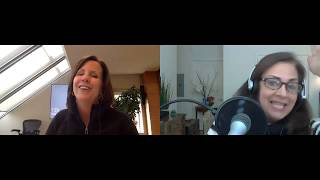
Transcript of a Finding Brave episode (host Kathy Caprino) interviewing Jean Case about her book Be Fearless (five principles for breakthrough and purpose). Jean Case—philanthropist, former AOL executive, chair of National Geographic Society and CEO/co‑founder of the Case Foundation—outlines five principles: make a big bet; be bold/take risks; make failure matter; reach beyond your bubble/build diverse partnerships; let urgency conquer fear/start where you are. She illustrates these with stories (PlayPumps public failure and pivot; Jose Andrés' disaster relief feeding millions; a sole mental‑health practitioner building a national network), emphasizes learning from failure, experimenting (R&D mindset), and empowering others, and closes with book and contact info (casefoundation.org/befearless, @Jeancase).
Questions this video answers
January 31, 2019
Chairman of the National Geographic Society; CEO and co‑founder of the Case Foundation; former senior executive at AOL
PlayPumps (a clean‑water merry‑go‑round initiative in sub‑Saharan Africa) — the Case Foundation publicly acknowledged shortcomings, published a blog admitting the failure, and later partnered with Water for People to pivot.
casefoundation.org (casefoundation.org/befearless) and social media handle @Jeancase
Chapters
Hello, everybody. Welcome to Finding Brave Today. I hope you're ready to take it up a notch. And we are going to be talking about becoming fearless and what that looks like and why that's so important. And I'm just so honored to have our guest today, Jeanne Case with us, who has literally written the book about being fearless. Welcome aboard, Jeanne.
So happy to have you. Thanks, Kathy. It's a delight to be with you today.
So fun, so wonderful. And you're in Washington, and I can see the beautiful cloudy weather and snow hitting you. How wonderful. I hope it hasn't shut down the town any more.
No, it hasn't. It's the best snow. It's beautiful to look at, but the streets are pretty clear.
Oh, good. So glad. Thank you for being here. All right, everyone, Jean has a lot to share with us about her new book about principles for a life of breakthrough and purpose, which is so what this show talks about every week.
Yeah.
So let me share with you Jean's bio, which is making me wonder what I'm doing with my life. Jean Case, the chairman of the National Geographic Society and CEO of the Case foundation, is a philanthropist, investor, and Internet and impact investing pioneer. Gosh, I can't wait to learn more about who advocates for the importance of embracing a fearless approach to innovate and bring about transformational breakthroughs. She's the author of the new book Be Five Principles of A Life of Breakthrough and Purpose. Her career in the private sector, including as a senior executive of AOL, spanned nearly two decades before co founding the Case foundation in 1997. Under her leadership, the Case foundation has been recognized for its innovative efforts to address significant social, social challenges, harnessing the best impulses of entrepreneurship, innovation, technology, and collaboration to drive exponential impact. Wow. And there's more that you will read under the podcast about what Jean does. But my goodness, thank you for being here. And the first question I have is, how do you do all this, Jean? How do you.
Well, you know, like anything, I have a really great team of people at the Case foundation who, you know, just have a remarkable role. We say we invest in people and ideas that can change the world. And so they play a critical role in helping to find and fund great ideas and innovators out there.
Wow. How wonderful. And was was the Case foundation your brainchild about? You know, there are words you say that hit me hard, like harnessing the best impulses. I mean, I. I think we're not getting political here, but I think if we look around us, sometimes it's the worst Impulses that drive behavior and drive entrepreneurship. Right. Would you agree with that?
Sometimes that can happen, but I will say yes, it was. My husband and I co founded the foundation in 1997 when I retired from my technology career. And what's really happened in the years since is I've been all around the United States and communities and around the world. And one thing I see in common everywhere I go, and that is people have great ideas about how to make a better world. But, you know, often what they're lacking is sort of a framework for how to get started. And sometimes they get caught up in the belief that it takes a superhuman quality like genius or wealth or connections. So the Case foundation undertook some research some number of years ago to look at the core qualities behind change makers, innovators, and entrepreneurs. And we were able to debunk the myth that it really takes one of these superhuman qualities. Instead, what we found was there are five simple principles present wherever transformational breakthroughs take place. So that's really the premise of the book, is to share those principles, but we do so through storytelling to really inspire the reader and see how others have applied these principles. Ordinary people who do extraordinary things.
Oh, man. All right, I can't wait to dive into the five traits, and I want to see how am I doing on those. And I'm sure our listeners do. But before we do that, can I ask a question that might be a little challenging, but maybe not. I actually believe that it's not fearlessness that that allows people to move forward. It's moving forward in the face of fear, moving forward in the cage of fear.
No question. Kathy and I make that clear right up front in the book that it is not the lack of fear, but the ability to stay fear in the eye and push past it. And, you know, I. If there's truly a fearless person out there who's never known fear, I want to meet him, because I haven't yet.
Maybe there's some narcissism there, right? Like there's nothing that can harm me. It's like, oh, boy. Okay.
Yeah. Or maybe they're not doing truth telling. What I. What I try to do in the book is take the reader behind the scenes of famous success stories and some success stories they will have never heard of before, to point out that in any successful trajectory through life, there's usually a road lined with failures along the way. It's just that sometimes the stories get sanitized and we don't know, you know, as much about the failure. So I actually have A failure resume I read, particularly when I'm on college campuses. I did a commencement address on this to point out that I've had a number of failures along the way. And the good news, which seems to be consistent across innovators, is that those were moments that set me up for future opportunity. But of course, I couldn't see it when I was down in the hole. Right. But I think when readers see the inspiring stories of people who face great fear and failure and pushed forward anyway, my hope is that it will inspire them to keep going as well.
I so love that. Thank you for explaining that. And you're so right. Especially with social media and the Internet now. Yeah, we see the sanitized view of all of us. And so that's such a good reminder. So can you jump into. You mentioned that you've received philanthropy.
I have. I have.
And can you tell us about that journey and why it's important to you to give back?
Sure. Well, I would say no one looking at my early life would have ever expected that I would have the opportunities that eventually emerged for me. I was born in a small town in Illinois called Normal, Illinois, with a cornfield in my backyard. And I was the youngest of four kids being raised by a single mom. And so, you know, that was at times a challenging, a challenging life. But yes, during those years, I was truly a recipient of the generosity of others, both their time and their resources. I was on full scholarship at a private school, and, you know, that opened up for me opportunities that were truly wonderful, all thanks to the generosity of others. So I, from a very early age, could see sort of the disparity in opportunities. You know, we like to say talent is universal, opportunity is not. And that's what I experienced. I was living in more of a working class neighborhood, going to this pretty elite private school. And I could see that, you know, folks in my neighborhood were just as smart and capable as anybody else. What they had often lacked was opportunity. So I think from a very early age, I committed that if I ever had the opportunity to have resources or help someone, that's what I wanted to do. And most of my career and the decisions I made through life were really with what I call my true north, which is how can I empower others? Wow, what a story.
I'm going to ask questions that help me, if you don't mind, and then I'll talk about your book. A lot of people say to me, because I'm a career coach, they say, I don't know what I would do even if I won the lottery. I don't have an idea. And part of my process with them is breaking that down.
Yeah.
How did you decide? You know, I don't under. I don't know your financial background or whatever, but I'm guessing there was money there later that you could put towards causes.
Yes.
How did you personally, with all the things that our world needs support in, how did you choose the directions you. You have chosen? Can I ask that?
Sure. It's a little bit like life, actually, Kathy. And I think a lot of people, you know, say, I'm not sure I have an idea. I really kind of know what I want to pursue. For me, when we started the foundation, we had come out of the success of aol, and that had provided, of course, the resources that we'd then use to create the foundation. And I remember in those earliest days, we would get as many as hundreds of requests every day from all over the country and all over the world. And I felt completely overwhelmed. And what I realized was I really had to figure out what we were going to say yes to, what we could uniquely do to make a difference. And then that empowered me to feel more comfortable telling people, you have a great idea or your cause is great, but we're not uniquely positioned to work with you. And often, even to this day, when folks come to us, we will say, that really isn't for us. But here's three other foundations or organizations that you might want to talk to, and life is a little bit like that. We all have to figure out what. What are we uniquely good at, and what are the implications of that in terms of the things we choose to do?
I love it. And the thing you. How would you put in one statement, the thing you've chosen to do?
Empower others.
Empower others. So there might have been a technology idea that came to you or something that wasn't about empowering others, but something else that you.
It was about empowering others. So my career trajectory, if you look at it, is very circuitous. I worked across all sectors, and it wasn't exactly planned that way. I thought I was going to end up being a lawyer in the public sector. I worked, interned, and then worked for a congressman, which brought me to D.C. where I worked for President Reapkin. I thought I was going to spend my career in the public sector empowering people, but life took a little turn. I found out one day that the funding for my position had been delayed. And they came in and said, look, you need to kind of go chill for a month or Two while we figure this out. And I said, what are you talking about? I have rent to pay and car payment. I can't go chill, gotta go find another job. So I heard about this startup down the road that was doing something innovative and had this temporary assignment available. So I jumped in and that turns out to be the nation's first online service, the Source. I didn't have a technology background, but I was able to apply the skills I had. And what was so exciting, Cathy, on this point of how do you decide? Once I was there, I realized, boy, the promise of the Internet, of democratizing access to ideas and information and communication could do so much more to potentially empower people than maybe I could working as a lawyer somewhere in an office or whatever. And so I stayed in technology for some number of years, went to GE and then landed at the startup that was going to become AOL, where eventually at its peak, more than 50% of the nation's Internet traffic went through AOL. So that was before the foundation. And you know, but in each one of those roles, I just kept pursuing the next opportunity that would let me do more to empower others.
What a beautiful story. And that does also go to making failure matter, which I want is one of your five pillars. Right. You know, when we're in the middle of. What do you mean, I don't have a job.
Yeah, right.
It's a disaster.
Yeah.
But so tell us about. Let's go right there to that, that pillar, but then let's hear about the others.
Sure.
How do we make failure matter? What do we.
Yeah, well, I share the story in the book about a very public failure we had at the Case foundation. And I had to really own it. I was chairman of the initiative. It was called Play Pumps. It was a clean water initiative across Africa targeted at 10 sub Saharan African countries. We were putting this clean water intervention in that was a merry go round. And as children played on it, it acted like a windmill on its side and brought clean water up from deep in the ground. And so we had very high profile partners and an announcement. President Bush, sorry, President Clinton was on my right, First Lady Laura Bush on my left. And we got it started and it was very ambitious. It was definitely a big bet, which is the first of our principles. And what we found as we pursued the execution on the ground was there were some challenges out in the field. So we spent about a year or two trying to course correct them. And it became clear the initiative was failing, that we weren't achieving the quality and kind of the scale that we had really set out to achieve. So as a board, we sat around the table and said, what do we do now? It's clearly a failure. And of course, I was sort of hoping there would be some way we could sweep it under the rug and maybe nobody would notice. But I knew that wasn't going to happen. We decided basically to come clean and tell the world that in this pretty high profile initiative, we had failed. And I wrote a blog called the Painful acknowledgement of Coming Up Short, and I told the story of our failure. And honestly, Kathy, that was maybe one of the most powerful moments of my career. Because what happened is peers and colleagues reached out and said, thank you for talking about failure. When we're out there trying to do really big things, we're not going to get it right all the time. And we wish there was more discussion of what doesn't work so we can learn from one another. So we started these fail fests, getting people together and talking about things they had pursued but perhaps failed at so that we could make failure matter by learning the lessons from each other and moving forward. So to finish that story, we pivoted. We partnered with the new water organization, Water for People, and eventually met the goals that we had set out for originally. But it took a failure for us to get on the right track.
Oh, that's a beautiful story. So inspirational. And it is in the failures that we learn how to do things better. So why hide that? And why keep that from our colleagues who are also striving to change the world?
That's right, Kathy. And you know, I write in the book about how in science and medicine, we accept RD as a process, and in technology we do, too. And the idea of R and D is you're trying new things, you're going to have trial and what error, Right. But for some reason, particularly in the public sector and nonprofits or philanthropies, there's sort of not an acknowledgement that it takes the error part to get it right, too. And so I think as individuals, if we can embrace that, the new path we're going to set out on is experimenting. It's R and D for ourselves, and we'll get some things right. But we're not going to be stopped by the few failures we might have along the way.
Do you think that's changed now? Do you think philanthropy is more open to acknowledging?
I do.
I mean, do you think it's because it's taking people's money and we don't want to admit we blew It.
Yeah, I do. I think that what those three sectors I talked about, philanthropy, public sector, government, and nonprofits, they all are shepherding somebody else's money, you know, and philanthropies might have been someone who died a hundred years ago. And now it's a good name. And everything else are going forward with public sector. It's taxpayer money. In fact, one of the most disappointing things to me is, you know, some of our greatest eras of innovation have come about because of risks our government took. So for instance, the moonshot, you know, we didn't have anything required to take a man to the moon when President Kennedy made that commitment. And the Internet, it was actually the government that really funded the first Internet, which then just unleashed this period of innovation in America. But today, if the government takes risks and it doesn't work out, it's called waste, fraud and abuse. And so I'm hoping we get to a point in these other sectors. And I think in philanthropy we've come so far. I see a lot of risk taking organizations in philanthropy now, which makes me feel really good.
Wow, this is fascinating, Jean. I love it. So important. All right, so we understand about making failure matter. What are the other principles or pillars of living? Yeah.
So we've sort of covered three of them. The first is, as I mentioned, make a big bet. The second is be bold, take risks. We've talked about the importance of risk taking. The third is make failure matters. The fourth is reach beyond your bubble. And that means build unlikely partnerships. And you know, I have a friend, Melody Hobson, and I write about her in the book. And she's the president of Ariel Investments. It's the largest minority owned investment firm in the world. And she talks about our need to be color brave. You know, we understand this role colorblind, but she thinks it takes more than being colorblind. We have to be color brave. We have to be intentional about bringing people around us and including them in what we're taking on who have different backgrounds, different pursuits, who don't look like us. And the good news is, and I bring out a lot of compelling data in the book, more and more, we're building a field of data that demonstrates diverse teams outperform non diverse teams. It's true in companies and their financial performance. It's true in market wins, if you will. And so what really a lot of people see as a have to do or a social justice reason to have a diverse team, there's data now to say no. It's really strategic and it's smart. Business.
Right. I love it. But I. Beth, I wonder what you think about this. I just did a Forbes post on career regrets and. And then we were able to look at the difference between. In gender.
Yeah.
And you know, basically what it shows is women are still less likely to take big risks, less likely to ask for what they deserve, less likely to do a lot of things, less likely to get that high level sponsorship that men tend to naturally do. More naturally. And my 21 year old son just sent me something about, you know, 5%. Only 5% of CEOs of Fortune 500 companies are women.
Oh, yeah.
So I think you and I and a million other people are beating that drum that it's good for business. Don't you find that when it comes to human behavior. How do I say this? That's not what people care about. They are stuck in their fear place. Really?
Yeah. Or maybe their biases. Yeah. So I do tell a story in the book about after I left and very sort of secure and, you know, positive trajectory of a career at ge to go over to this startup that was going to become aol. That was a really big leap for me. And everyone around me said I was crazy at the time, but I could see the startup had more potential than the big, more risk averse company I was working for. At that time, GE was the most valuable company in the world. So I jumped over to this startup and then I began the process of trying to bring more talent to the company and, you know, recruiting great people in the field that I knew. And what I found time and time again was people were unwilling to give up a good safe thing for an extraordinary thing. And what I will tell you, Kathy, is down the line through the years, many of those people who turned down a role with us came back and said, lived with that regret for the rest of my life, you know, that I had a chance to be on what Sheryl Sandberg calls a rocket ship and I didn't take it. And I think some of that, and it's another thing I talk about in the book, is the risk of not taking the risk. You know, really think about if you don't do what, you know, what you might hear a voice inside of you calling, make sure at the same time you're putting, you know, what is the risk? What is the risk of not taking the risk? And how will you feel down the line if you passed a big opportunity?
Can you talk about that for a minute? Excuse the light from these wonderful little.
Yeah, see that the sun is coming in. Yeah.
I'm going to change how this is a little bit. I have an answer based on, you know, the women I've worked with about why they don't take the risk. But what, what do you, when you're trying, when you're working with people and you, you want to talk them through these decisions, what do you think keeps people most stuck in not taking the risk?
The comfort zone. The comfort zone.
It's what they perceive as security.
Yes, absolutely.
I bet you would agree with this statement. I truly believe this with all my heart. Nothing is secure that's outside of yourself. It's what you possess, your talents, your gifts, your passions.
Yes.
The only secure thing. Would you agree with that?
I would. And, you know, I state in the book, I think the facts are nothing great comes from the comfort zone. And I really want to give women a break here because I think it's almost in our DNA to think about limiting risk. We raise the children mostly, and what are we called to do there? Make sure children aren't at risk, make sure we're not doing anything that would take us away or in a bad situation where others couldn't have us there to be caregivers as we are in life. So I think that plays, you know, some role. But generally speaking, I think it's at one level no different for men and women in that, you know, if you're in a comfortable place, sometimes it's hard to be willing to become uncomfortable. But if you want to do great things, it's going to take that through life.
Couldn't agree more.
Love it.
I love it. Did we hear all five principles? Is there?
We didn't. We didn't. I didn't go to the. Maybe my favorite, Let urgency conquer fear. Martin Luther King called it the fierce urgency of now. And, you know, we talked about this time a little bit. I think we do live in a period where people are a little gripped by fear, maybe disillusionment or discouragement. But for me, what I know, and I tried to tell some of the stories in the book, sometimes that's when people can dig the deepest and find that courage to really go out there, push themselves to do something extraordinary. Gosh, there are so many inspiring stories in that book. You know, my friend, celebrated chef Jose Andres, went down to Puerto Rico as Hurricane Maria was getting ready to hit, set up an emergency feeding system for the island and served almost 4 million meals during the devastation. I was just there this weekend with him and saw how his work continues to strengthen the food sector on the island. So that if another natural disaster hit, they'll be in a much better position to take care of one another on their own island. So that's letting urgency conquer fear. He didn't really have everything he needed to go and know that he could make a difference, but he did know about cooking. And it has a little bit to do with the first story I tell in the book, which is start right where you are. All of us have something we can bring to get started on making a difference or finding a breakthrough. And what I would say to anyone listening or watching is, you know, is there one thing you can do, maybe one thing a week to just move you a little closer to that process of beginning to break through with your idea? And I think any of us can. I tell the story of a sole practitioner in the mental health field who had a dream, dream of a national network of mental health workers who would help the veterans and their families during when the war was raging and there was so much need for mental health counseling. She was so successful. She got thousands and thousands of doctors around the country to join her. And she was named Times 100 Most Influential People in the world for what she did. She was one. One woman, one mental health worker working out of her sole office. She didn't even have a single staff. She'd never done organizational planning. And so all of us can do extraordinary things. It just really takes starting right where you are and figuring out maybe some small steps that lead you toward your big idea.
I love it. This echoes another interview I did here with Martin Root. I think we pronounce it on three critical questions that will allow you to change the world. Just you yourself, you know.
Oh, that's great. I'll have to look at that.
So echoes what you're talking about. But can. Can we make something practical here? Your chef friend, when we want to do that, something small, but we have an even bigger vision that's going to require a lot. Yeah. Do you have a tip or two for how we do get funding behind that? Like he must have. Was it 4 million meals? He. Yeah, you know, so there's money involved in that.
Americans everywhere respond to what he was doing on the ground, his fellow chefs. Yet he's created what the Washington Post calls the new face of disaster relief. Now, as he's been, you know, at wildfires, tsunamis, earthquakes all over the world. But again, the reason I opened the story with Dr. Barbara von Daelen, as I explained, is, you know, she had never fundraised for anything, but what she had was a Great idea and a burning passion that was infectious. When she told me about her idea in her office one day, I stood ready to be helpful. And I think a lot of people that she later introduced herself to and talked about her idea felt the same way. But you have to get uncomfortable. You got to make calls, have coffee, reach out, find others that will help you take your idea further and faster. That's really been the secret success of people who've broken through, no matter where they start from.
Oh, I love it. Let me ask you this, Jean. I work a lot with confidence and the absence of it, and I would love your thoughts. I'm sure you articulate it probably a little differently. But what I feel with people is they'll say, I don't have the confidence to do what you've just shared that your friend did. Share it with a passion. And I always say, do the thing that makes you say, if I can do that, I can do anything. That's what builds confidence. A lot of people are mistaken in their idea of what confidence is, and they think people just come out of the chute with confidence, and that's just not the way it works.
Right.
But in order for someone to share an idea in an infectious, passionate way, there does have to be confidence. So what. What do you tell people who say, I have this idea, I think it's important, but I'm not confident enough. How do you work with that?
Yeah, well, you know, I tell a story in the book about kind of an Outward Bound experience I had where I was called upon to climb a telephone pole to the top and then walk across a telephone pole 30ft in the air. And I was belayed so that if I'd fallen, I would be caught. That didn't really change how I looked at it when I was staring down 30ft in the air. So it was a moment of confidence, crisis of confidence for me. And there was a guide who was with our small group, and she said. And I was really fighting tears. I said, I don't think. I just don't think I can do this. And she said, okay, but you can try. And I know that sounds like a very simple thing, but for me, it was a very powerful thing. I stood there and I thought, she's right. I can try. What's the worst that can happen? If I try and I fall, I'm belayed. Okay. But it actually is like that through taking those first steps of any idea, too. I don't have the confidence to make that phone call or I don't have the confidence to try and set up that meeting or write this thing about what I'm doing. But the fact of the matter is, you can try. And Einstein said, failure is success in progress. And so if you try and if you have failure, it really could potentially set you up for an even stronger position down the road from the lessons that you learned from that. So I think it's hard for all of us. She also said when I came down, she asked me if I had always mostly stuck to things I knew I'd be good at. Kind of stopped me in my tracks. No one had ever brought that up before. But as I kind of examined my life, I realized, you know, that is true. And she said, well, what would your life look like if you made a list of things you really think you could never do and you went out and tried them? Wow, what a coach. And one of them was get a black belt in taekwondo. I had never done martial arts when I was in my early 40s, so, you know, there were just a number of things I took on with this new mantra that I can try. And that really is the message of be fearless is go out there and try. Anyone can. It's a playbook and almost a recipe for how to get started. Started with so many inspirational stories to keep it going in those low moments.
I love it. Let's do one other thing for folks, too. I think while you were telling that story and the guide said, you know, you can try. I think for so many people, they frame failure as that they are a loser that they are less than. And so I think that part of this whole loop that you're talking about is you. You are gonna fail. If you're not failing, you're not stretching enough. I mean, you're just staying exactly good at. So if you embrace it, that who. There was a lesson that's. That's interesting and not personalize it and demonize yourself. It truly. It's about managing your mind, isn't it? Any words on that about if you do fail miserably and publicly, how do you not, you know, just. What do you say?
Well, you know, I would refer people to two stories that I talk about in the book which have come up, and that is, you know, Oprah and her famous failing in her career. She was told she wasn't right for television, and then she did this hard Harvard's speech on failure. And I would say to anybody who really needs a little extra to get past a failure, that is so inspirational, she says something like, you know, those who never Tumble have never mounted the high wire, but it is a beautiful, like, give yourself time to mourn the failure, but then get up and keep going. And J.K. rowling did a similar thing at Harvard where she talked about, really, the only failure that matters in life is when you don't even try. And then she says, at which time then it's another kind of failure. So it's almost like failure will be with us one way or another. To have the kind of failure where you tried something audacious and it just didn't work out, versus shrinking back from, you know, even trying, that's so beautiful.
It reminds me, too, of Brene Brown, who's one of my favorite authors, and she talks about, basically, I'm gonna butcher it. I don't listen to the critics and the detractors who aren't even in the arena themselves.
That's right.
You know, part of this is that you're gonna be made fun of, that people are gonna criticize, and we have to have boundaries. We have to say, I get it, you think I'm, you know, a mess, but really, what have you tried?
Exactly? Yeah, thanks. It's actually Teddy Roosevelt speech that she is referring to. I reference that in the book as well. Yeah, and that's exactly it. We don't want to be the one that didn't even try.
I love it. Any other words that you can leave us with, Jean, about living purposefully and living, you know, creating your own breakthroughs, which is my favorite thing in the whole world. Anything else we need to know?
Yeah, well, you know, I just think many of us would say, say, that's not me. And if you read the book, what you'll discover is there are a thousand or more people like you that have been out there and have done extraordinary things. So my hope is that if someone is having doubts about whether she can take forward an idea between the principles that can be applied to get started and the stories, it'll maybe be enough to just push them right out of the comfort zone and get started.
How beautiful. I think you've done it. You're inspiring me to, even in 2019, think a little bigger even than what I already have. Why not?
Thanks, Kathy. Yeah, thanks.
Thank you so much. And where do we learn more? Where should we get the book? Where do we find out more about you? Where do we send people?
Well, the book can be found anywhere books are sold. So whether that's Amazon, your local bookstore, Barnes and Noble, whatever, and then you can follow me on Twitter. I'm Jeancase.
Great.
I'm on Instagram, LinkedIn. I'm kind of, you know, all over social media.
What's your favorite social platform?
I don't really have a favorite. What I've come to realize is they all have their own personalities and so and almost like a different sense of community. And so I've enjoyed the diversity of them, but also they can learn more about our work at the Case Foundation@casefoundation.org and there are a lot more resources for Be fearless. So it's casefoundation.org befearless.
Oh, I'm so, so happy that you've written this book. It sounds like a beautiful, real, authentic playbook for those of us who really want to show up in a bigger way and make a difference. Thank you for joining me, Jean.
All right, thanks, Kathy, for what you do.
Thank you. And everybody, we'd love to hear from you on those social media channels where we post this. Let us know what is your big dream and if you need help, share, share it. What kind of help? Asking for help is essential, as Jean's talking about. Let us hear from you. We'd love to be of help and check out the book and have an incredibly fearless brave week and we'll see you next time. Thank you.
Thanks, Kathy.
More from Kathy


Elevate Yourself, Elevate Others, and Amplify Good | Chris Cooper | Finding Brave Ep. 334

Finding Brave Epis #333: How Leaders Can Harness AI Without Losing Their Humanity, w/Bennett Borden

Finding Brave Epis 332- How to Stay Brave, Valuable and Visible in the Age of AI, with Raman Rai

Finding Brave Epis 331 - The Power of Positive Disruption, with Dr. Patrick Leddin


Finding Brave Epis 330 - Being 40: Letting Go and Embracing Who You Are, with Stacey Lindsay

Disrupt Career Reinvention with Kathy Caprino - via The Disruption Lab Podcast w/Patrick Leddin

Creating Neurodiversity-Friendly Work Cultures: Simple Workplace Adjustments Matter

Finding Brave Epis 329 - How To Create a Neurodiversity-Friendly Workplace, with Kristen Pressner

Finding Brave Epis. 328: Reclaiming the Power to Trust Your Own Voice, with Dr. Cindy McGovern