Finding Brave 57: Helping Women Over 50 Keep Their Jobs (and Love Themselves), with Bonnie Marcus
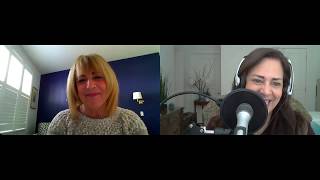
A Finding Brave episode (host Kathy Caprino with guest Bonnie Marcus) focused on ageism facing women over 50, how societal stereotypes and internalized beliefs marginalize experienced women in the workplace, and practical ways to resist and navigate those forces. Key themes: definition and examples of ageism (including myths about stamina, digital literacy, and ambition), the ‘‘double whammy’’ of sexism plus ageism for women, the importance of declaring ongoing ambition, staying marketable (training, visibility, cross-generational networking), self-care and reframing one’s personal narrative, documenting possible discrimination and consulting an attorney, and concrete outcomes from coaching (clients retaining jobs or earning promotions).
Chapters
Hello, everybody. Welcome to Finding Brave. Today we're going to give you a big dose of Brave with our wonderful guest, Bonnie Marcus. Bonnie, thank you for joining me today. I'm so excited about your topic. I cannot wait.
I'm so excited to be here because. And it's so great to see you. I'm used to seeing you in Starbucks in Wilton, and now that I've moved.
And you're in California where things are blooming. You're telling me we're not in the blooming phase here in Connecticut. It's cold. It's cold. Lucky you. Lucky you. So glad you're blooming. So, everyone, let me fill you in what we're going to be talking about and what Bonnie's going to share. We're talking about helping Women over 50 keep their jobs and love themselves. I'm over 50, Bonnie. Are you over 50?
I am over 50 and proud.
I wrote a post on that. I'm quite a bit over 50. And when I became 50, I felt like I had joined a club. And it was a good club. It was like, I'm not taking any more club. I loved it. Unlike what some people feel and some women, I felt there was power in it, there was clarity in it. But we're going to talk about what we may feel are the downside. We're going to talk about ageism, frankly, and what we need to understand. And this is not to be doom and gloom. This is to have our eyes wide open. So I always feel that the more aware you are of potential challenges, the more you can navigate around them. Although you know what came to mind. You know that book, what is it? Everything you need to know before you have a baby. I mean, that book gives you too much information. I think it's like it's every possible thing that can go wrong. We're not going there with ageism, but we're going to give you. Bonnie's going to share some critical things you need to understand and just how to navigate it. Because walking through life not loving who you are is not the way to live. I feel.
This just aligns so well with your topic, Finding Brave because aging is just such a scary thing for most people, but especially women. So I'm glad we're talking about it today. Me, too.
I'm so glad. So, everyone, I want to tell you about Bonnie because it's impressive as all get out. Bonnie Marcus empowers professional women to own their talent and ambition and step into their full potential. Her book the Politics of Promotion, which is so great don't miss it. I will link to that below. And her speaking and coaching and Forbes column. Bonnie helps women navigate the complexities of the workplace today to get ahead. She's done extensive research on women and ambition. Those are two words that a lot of people have a reaction to in the same sentence.
You know, we could talk about that for hours.
And I bet it it's connected to your ageism information. I can't wait. And you've co authored a white paper on the topic. Bonnie is a certified executive coach, Forbes columnist, popular keynote speaker, and has earned. I just learned this about you. Has earned the recognition of being a Global Gurus Top 30 coach in the world four years in a row. Wow, that sounds incredibly impressive. Congrats to you. No small feet. All right, Bonnie, lay it on us. Let us first start with what is ageism as you see it and experience it?
Ageism, quite simply, is discrimination based on age. It's when one group either marginalizes or makes demeaning comments or exploits another group based on their age. And it's not just older.
Right.
There can be ageism against younger people as well. And you know, you hear a lot of this in the workplace.
All millennials are lazy, selfish. Oh, really?
Yeah. So we put people in categories based on their age and then we make assumptions about them and we believe those assumptions to be real. So as you said, millennials have this sense of entitlement and this. And the other thing, we stick everybody in that stereotype. And then on the other end of the spectrum is as people age, there are a whole bunch of stereotypes about older people and especially older women.
Oh, I want to hear them. Bonnie. What? I didn't mean to cut you off. I'm dying to hear what those are from. From working in this. What are those that you hear? Can I offer one that I hear all the time?
Yeah.
Older people don't know anything about the digital world. And I, you know, I just want to slap them silly because, my gosh, I'm out there in a big way digitally. I'm sure you are, too. It's just incorrect. I mean, many older. Some older people aren't familiar with it. But don't.
There's research on that, Kathy, that shows that's absolutely incorrect. It's not based on any reality. But another one might be older people don't have the stamina. They don't have the energy, they don't have the ambition to keep working the great grit that they need more time off because of health reasons. And none of that, I mean, all the research shows that's just not true, that actually people over 50 take less time off for health reasons.
Wow. Is that right?
Yeah. So another assumption might be that, you know, we're not quick enough. We're not with it, we're not as articulate, all these things. That research has proven incorrect.
And then what? Something comes to mind. I did. I think it was msnbc, an interview about entrepreneurs, and that basically it was about our older people slowing down the entrepreneurial rate as if we're cows back to pasture. But I just didn't agree with any one of the assumptions that were bantered about. But it certainly depends on the niche you're in and the world you're exposing yourself to. Like Bonnie, in our world, I'm more entrepreneurial than I ever could have imagined being at, and passionate and committed and dedicated and focused. And I have so much more time to focus on my work than when my kids were little. I mean, it's just all.
Well, when I did that research on women and ambition, like, two years ago, I interviewed, like, 615 women from their mid-20s through their mid-60s. And it was so interesting to see how ambitious they were because I had them say, how ambitious are you? Self identify. Right. So there was this curve. It started really high where young women were very ambitious. Then it kind of waned a little bit. But then women over 50, it went really high again. So a lot of these myths, unfortunately, work against us in the workplace, because when companies believe these assumptions, it influences their hiring practices, their promotion practices, and we suffer because of it.
I need to make one point, though. I remember, I think it was Sheryl Sandberg, years ago, talked about women being less ambitious than men. And I got furious. Not at her, but just the idea. And so, you know, when you're just discussing that. That peak and valley, that valley in the foot, I don't feel that's an ambition issue. I think that's many women are having children, and it's a focus issue. And if you. For many women. I'm not even going to say most. Well, I have two kids, 21 and 24. When you go to the effort of delivering a baby and having a baby and planning a baby, you want to be in the fabric of that child's life. You don't want to just go, here it is, and off you go back in the same way that you were living without another life that you were caring for. So even if it's true that the focus shifts slightly, it's not an ambition problem. And as long as we see it that way, we are discriminating against women, frankly.
In fact, women would stay in the workplace if they had more flexibility. But I mean, we could talk about that for.
And childcare options. Yeah. All right, so now we understand ageism. Let me ask this. We've talked about the outer myths and stereotypes and misguided assumptions in the women you work with. What are they saying about themselves?
So now we're really digging in, because it's when we internalize these assumptions about ourselves as aging women and we start to believe them, we belittle ourselves, we diminish ourselves, we hold ourselves back. We become invisible in the workplace. Yeah, we, you know, the. The result of ageism for women in the workplace is they're marginalized, their workloads given away, their opinions aren't sought after anymore, they're not included in meetings, they're subjected to all these demeaning jokes and they take it right. But when we start to believe it ourselves, like, wow, I'm just not going to make it anymore because I'm too old. I'm too old to take a online course because I'm not going to be able to absorb it anymore. I'm too old to do that. Or I'm too old to wear this outfit to, you know, to have. I'm too old to have long hair.
Oh, my gosh. I said that, that it's not corporate. And for years, and it was finally when I said, you have your own business, you. You're really gonna still do that, that you're old to have the hair that you want.
The point I want to make is for women, ageism is a double whammy. And the double whammy is the combination of sexism and ageism. So ageism affects everybody, and men are subjected to it too. It's not like men aren't fired when they're as they get older or can't.
Get another job at 54. Yeah.
But because our society worships youthfulness and attractiveness, women get that double whammy as soon as they show any visible signs of aging. They are more the target in the workplace of the ageism than men. And research shows, and this just drives me crazy, that as men age, they are more valuable and seem to be more competent in the workplace. And as women show signs of aging, they lose their credibility. So women have this tremendous fear and pressure to look young and present themselves as being young to deny their age. And I've interviewed so many women for my upcoming book on this topic, and some women talk about Panic attacks. Somebody's going to find out that I'm 62, you know, and I'm, you know, I wrote about this in a recent Forbes article, and one of the women said she wakes up in a sweat. You know, she's just so worried that she's going to lose her job. Because the other part of that is you can't get another job. As a woman over 50, it's really hard. You don't even get interviews.
And I know that. And you know, I want to say that in all my courses and work, I say probably what you say, ageism is real. But how are we going to. Now you're going to talk about it, how are we going to navigate through it? We're not going to sit here at our desk and cry. That's not going to help us. We have to learn what to do specifically, because there are ways around it. Bonnie, you and I are working with vibrant, amazing women over 50, over 60. So we're telling you the truth. But it isn't going to be that you can't get a job. It's that there are obstacles that you're going to face and we're going to help you navigate. I want to ask you something. We didn't prep on this, but do you have any data? And I'm going to give you my hypothesis why men grow distinguished and compelling and valuable when they get older and women grow old. You know, that's how society. Old, throw her away. Do you believe that? And this is going deep. We might have to be trained therapists with, you know, society, you know, training, societal and cultural influences training.
No, it does go deep. It does.
My guess is we live in a. We know that we live in a patriarchal society. We all know. Terry Real, who I interviewed early on in the podcast, who's an amazing couples therapist, bestselling author, said, we all know what that means. We split ourselves in half. We know what the feminine is and we know what the masculine is in these terribly gender rigid ways. Masculine is strong and virulent and gets things done and not emotional and not weak. And women are soft and malleable and pleasing and weak. Do you believe that this dichotomy, that the man gets more, you know, dignified and valuable and the women less so, is straight from the patriarchal view that, that really women are sex objects, that their value comes from part of it.
I mean, it's definitely cultural. Cassie, if you think back to when you and I were young and people were reading fairy tales, to us, it was the evil Ugly old witch with the warts on her face. Yes. And so we kind. Instead of, as in, say, Chinese culture, where older women are revered and. And they have all generations are included in the family unit, we have pushed aside older women, cast them aside. And so I think that's part of it too. And that doesn't happen to men when we do that, right? As you say, with the patriarch and everything, the men have all the wisdom and the women are kind of like, see now, I mean, if you go to, say, CVS or any place to look at birthday cards and you go down the aisle and you look at the birthday cards about getting older, it is disgusting. There's an old woman like, you know, with a cane and, you know, over 50 or getting older or, you know, some of these things and these jokes about it. It's so demeaning. And it's all older women. And that's because of the emphasis of our society, I think, on youthfulness and beauty and men, it doesn't matter. You can get gray hair. Do you remember that Heineken ad that for Dose Equi beer would be the most.
Oh, the most something man in the world, the most interesting.
And I spoke with a woman who works at Heineken, and she said, you should see this guy. He's like a little old wrinkled guy with gray hair. And we were laughing and I said, can you imagine the most interesting woman in the world, 70 years old, selling something, you know, so we don't have the same respect.
I want to tell you, I noticed this. I'm going to use the name. I use istock photos for my Forbes and my other blogs. If you type in mature businesswoman, you won't believe it. There's maybe two pictures and it's coming in white hair.
I wrote a Forbes article this week on the double whammy. Ageism and sexism for women over 50. Tried to find a picture of an older woman working. I found one, but it's not the best, but it's just.
There's two pictures, you know. Oh, my gosh. All right, okay. We went on a little bit of a grumbling fest there. Now we've got to flip it because I'm already feeling more agitated than ever. So what? Let's just go quickly to what we have to do. What do women have to do to keep their jobs? And we'll talk about that first and love themselves and not fall prey to this. You are beautiful. You are potent and compelling and amazing and brilliant and experienced. What about how much we know now? Bonnie, from when we did 30 years ago, you know, the experience and wisdom behind these eyeballs now with the. With the wrinkles, with the bags, it's. If you can't even compare it. So how.
What workplaces don't realize is you get rid of women over 50, you're pushing all that experience out the door with them.
So true. So true. So what do we do to keep our jobs? And if somehow there's a downsize or a layoff and, you know, we can talk about. If you feel you've been discriminated against, maybe my first tip is go to a lawyer. A lot of people say, no, you don't need to do that. Yes, you do. It doesn't mean you're going to sue your company. It means you're going to have a discussion about what you and you should document.
And by the way, it's really hard.
To prove, very hard to win the court case, but you can win a settlement much more easily. I know, because I did.
Yeah. So I think to start out, you need to be really savvy about some of the workplace practices that you're observing that are ageist. You need to understand kind of who perhaps is more biased within the workplace than others and see how the ageism plays out. So you can't stick your head in the ground and say, and until you're 50, then say, oh, you know, I.
Think, let's just get clear. You mean if you're 38 and. Or 45 and you're in an ageist culture, you should plan perhaps to leave? Is that what you mean?
No, I'm not saying that. I just. You need to be savvy about it so you're not blindsided and do some of these things that I'm talking about. Really. Don't wait until you're like 65 and you get a pink slip, because there are things that you can do along the way. But you need to be cognizant of what your environment is and what the culture is, etc.
Excuse me, what do we do?
So part of that is understanding what assumptions are being made in the workplace.
Pardon me.
So take the assumption of that older people, older women lose their stamina and their energy and, you know, they're just collecting a paycheck and, you know, they're on their way out. I think it's really important for you to declare your ambition. It's what I call declare your ambition. And don't assume that your manager and the people in your team think that you are in it for the long run, that you want to keep your job because they're making assumptions, perhaps the other way. So let them know that you are, you have the intention of working, continuing to work to continuing to evolve and take on new responsibilities and challenges. I would have a face to face meeting with your manager at some point, talking about your ongoing career goals and that may seem like, oh, you know, that's trivial and yeah, yeah, yeah. But people are making assumptions as you reach a certain age that you're slowing down and if it's your intention not to, and if you are ambitious, you need to let people know, you need to let the people know, the decision makers, etc.
I love it. I think. Excuse me, got a frog in my throat. I think this goes also towards, you know, I do a lot of writing, I'm sure you do too, about how do you become more of a leader? How do you gain exposure and influence? Well, it isn't sitting at your desk hoping that it's going to come to you. It's claiming it. It's saying, I want to spearhead this, this cause, this project, this initiative. I want to start this, I want to be part of this team. It's about claiming it now and visibly not just muddling at your desk.
Right, Absolutely, yeah, it's important. And part of that is staying marketable, keeping your skills up.
Right.
And maybe not even something that is offered at your company, but ask your manager if there are courses that you can take in a certain, you know, in a certain area that would help you shine, that would help you do your job better, show that you're really interested and invested and ask for tuition, you know, if that's possible or a lot of large companies offer different courses.
I would definitely reimbursement for, you know, a master's, who knows, Right.
I would definitely put myself out there and be open to learning new things outside of the workplace. It's great to exercise your brain by learning something new, a new language, a new instrument, anything like that and just keep nurturing your growth mindset, I guess.
That's beautiful.
Showing that you're not close minded. Like, you know, if you're in a meeting and you have an opinion, that's fine, but don't like close off everybody else.
I think you, I mean, all of these tips are good for whatever age you are, but particularly essential I think, as you get older. But to that point, I think that, let's face it, human beings like to be with people who we think are like us. And I think if you want to Be appreciated and respected for who you are. You do have to. You have to give it forward. If you're, for instance, if you think millennials are all, you know, flighty, fidgety, you know, non focused people, you need to shift that because if you are coming out with energy, this is deeper, therapeutic stuff. But if you're coming out with rejection, then it's going to come flying back at you, you know, I think so.
You bring up a good point when you say about the different generations. Because I think it's also important to continue to network and to network, to build a cross generational network.
Oh, that's beautiful. That's smart.
And perhaps mentor younger people, seek out mentorship opportunities, but build your network not just with people that are like you, as you just said, but seek out people who are in different generations, who are younger, who maybe you could mentor. But certainly you can learn from and nurture those kinds of relationships.
Even though we're saying appreciate and value and respect who you are. I think, you know, humility is an interesting word. I think women are too humble in ways that hold them back. But I do believe in humility in that we can learn from everyone who crosses our path. We can learn and embrace that because you'll be more of the fabric of that organization. I have a question for you that maybe it's going to throw you, I don't mean it to. What should we do if in fact we are feeling a little more tired than you? If we are feeling 55, but yet we still want to be vibrant at work, but we do feel there's a slowing down? I mean, I'm guessing that sometimes when I talk to a guest, I hear in my mind what listeners might say and there are going to be women here going, well, the truth is I am 56 and I'm tired. I'm not really wanting to travel every week anymore. In my management consulting gig. What do you do if you are feeling that? What do you advise people on?
Well, I hear a couple of things. First of all, I think that it's important. Self care is really important. And we need to make sure that outside of work we find ways to nourish ourselves. And whether that's, you know, going to yoga, meditating, taking a walk, getting a facial. I mean, these are the kinds of things that nurture us and give us more energy, including, you know, what we're eating, how we're exercising, all those kinds of things. So, you know, that's outside of work. In the workplace, if you're, you know, you don't really want the heavy travel job anymore, then it's time to have a conversation with your manager about it if it's reached that point because you don't want to be. You don't want your performance to really show your lack of enthusiasm for your job at this point. To avoid the ageism, though, I would look for other opportunities where you can add value that you're excited about, that you can put forward to your manager and say, here's where I really think I can add value. And, you know, for whatever reason, that would be great for the company as well as for where you are at this point.
I love it. And I'm just going to reiterate something. Your boss, the leadership, the management of the company is going to be much more likely to do that when you've demonstrated all these other things that we're talking about, that you have been an indispensable part of this culture, that you have mentored other people. So your institutional knowledge has been shared, you've demonstrated it. If you've been quiet over there in the corner for seven years and then you come forward and say, I don't actually want to do this job anymore, that might be okay, well, we need you out of here then. You know, let's be real, folks. You're going to have to do the work of being a full contributor, right?
Yeah, but the foundation, Kathy, of all this, of how you face the workplace bias, how you face all these assumptions, the ones that you believe as well, you know, to your point earlier, it's how do you learn to love yourself no matter where you are, in, in the age spectrum? And as we internalize all of this stuff from the media, I mean, open up a magazine, try to find an older woman on tv, I mean, you know, it's just, it's. It's like we become invisible. And my counter to that is recognize first of all the assumptions that you're making about yourself. You know, write them out and then look at them and say, oh, my God, you know, are these really serving me at this point in my life? For instance, I, I'm a runner and I can't run. I, I might say something about, I, I can't do, I'll never be able to do this again. You know, when it comes to, to running a race or something, And I believe it. And then it actually happens. So I believe, and I know you do, too, that words are powerful and words matter. And so it starts with who you are. Write your story the way you are. Now, what is Your current story and look at that and say, well, what do I really want my story to be for this chapter in my life? Being very much aware of the words that I use and say it in first person and create a new, powerful story in my book. I call it a badass story. Because we need to. We need to get our mojo back. You know, we have it right, and we can't let other people and let ourselves become invisible at this point in our life. We have so much to give. So write a new story and read it to yourself, like, every day.
Can I offer a tip on that?
Yeah.
Sometimes we think we're too old to learn something. When I left corporate life after that brutal layoff, after nine, 11, two months later, the whole story is I wanted to study marriage and family therapy. I want to tell you, and I'm a confident person. I got sick to my stomach at the thought that I would be starting a master's program at age 41. And what went through my mind is I'm not going to be able. I forgot how to study. I'm not going to be able to keep up. I mean, I was literally sick to my stomach walking in, going, I'm going to be the Methuselah. I'm going to be the oldest old.
Crone in the corner.
I walk in, there's 30 people, and I'm smack in the middle of the median age. There were people 65, getting the masters, they were younger, but I. I was right in my little. My little tribe. And why I bring it up is I so believe we need to rewrite the story. But I believe, too, that we have to give ourselves evidence of what we're capable of. And for almost everybody on that planet, on this planet, you have to do the thing that makes you say, if I can do that, I can do anything. You're not going to have a new story if you don't stretch out of the zone that you're in. You can't even call it a comfort zone. It's no longer comfortable. It's an uncomfortable zone. But it's that little box you put yourself in. And so go out and stretch yourself. If you want to be vibrant, do what's required to be vibrant.
Yeah. As we age, we put ourselves in a really small box and we become ashamed of our age. And so we retreat. And it's all about finding your brave Kathy and stepping into your power, no matter what your age and everything that you have a value to contribute, all the lessons you've learned in your life. But Own it, Bonnie.
I tell everybody my age. I run into some people, men and women. The other day I was talking to a man, I said, how old are you? He couldn't remember. I'm like, wow. Like, I don't think that's a typical female behavior. I think we all women, I don't want to put all women in any of, any of the same box, but many women that I meet know acutely what their age is to the, to the minute, you know, But I tell everybody, why do I want to run around and hide that I am who I am?
I mean, part of ageism is that people put you in a box because of your age.
I get that.
And then they start to make assumptions about you based on your age. And so I think that's why a lot of women are fearful. And all these women I've interviewed for this book in the, who are in the workplace especially, we're not talking, you know, socially, are so frightened that their co workers are going to find out that they're over 50.
I don't want to sound like I'm making light of that. I don't work in the corporate. I don't have a full time corporate job. And in fact, as a consultant coming in on being a coach, wisdom is appreciated. So, so I don't, I don't live that daily existence that many of our listeners do. And I don't want to make light of that. But I am saying that it does start with how you feel about it. You know, if, if you, or if you yourself, listeners feel shame. I would, I would do everything in my power to shift that first.
Yeah, yeah, absolutely.
Ourselves is what is going to be reflected around us. Yeah. Now, Bonnie, one more thing. What if we are let go because of our age? How do we get a new job? And people do.
It really is tough. It was a study done by economists. They sent out 40,000 resumes and they had different genders and they had different dates, graduation dates and things on the resumes to track. And there was ageism across the board. But for women, it was such a big difference. They didn't get response letters at all. They don't get interviews. So it's really an issue. And I would say my advice would be, first of all, I agree with you. You should talk to an attorney. Unfortunately, ageism and sexism, it's really hard to prove because companies will say they're downsizing. It wasn't because of age. We're downsizing. Or I had a layoff. Yeah, yeah, yeah. So it's really difficult to prove, to fight it. A couple of cases, there have been some landmark cases where women have won, but it's, you know, it would be difficult even to find an attorney, I think, because that's how it plays out. But as far as getting a settlement, I would definitely document, document, document all the conversations, all the situations where you were pushed aside or overlooked or anything that was ageist. So that's one part of it. As far as getting another job, I would network, network, network.
I totally agree. I think for everyone, just applying online and submitting your resume into a black hole is not the way to go. But in this particular case, it's 100% not the way to go.
And as we've reached 50, Kathy and beyond, we know a lot of people, we've worked with, we've got former colleagues, we've got alumna. I mean, we've got a lot of people in our network that we can reach out to. And I think it's important to nurture and keep those relationships because sending in that resume to a black hole, as you just said, you know, it's really, really difficult. I mean, I've got younger clients who can't get responses.
So, so we're, I'm aware of our time here and I want to leave everybody in an uplifted state, Bonnie, with the people that you work with and you help them take all of these steps, you know, become more in the fabric of the culture, be more open minded, be a helper. Demonstrate your wisdom and your experience and your contribution. Say yes to exciting new projects and new training. Make your ambitions known, make it clear we have to say things, not just kind of hope that people assume.
Absolutely.
So in all the work that you do to help women uplift themselves in this way, what are you seeing happen? What are the great outcomes that you're seeing from this? Are they getting those plum jobs? Are they getting more kind of trust from their managers? What's happening? Let's leave people feeling what's happened with.
A few of my clients who have reached 50. For instance, I've got a 58 year old attorney who works for a large tech company and she finding herself marginalized and her boss was saying all these terrible things and she actually was able to keep her job and get a promotion. I think it's her default, Kathy, would have been to go into the shadows. People are pushing me out and she's an introvert. And so we talked about how to really continue to be authentic.
Right.
You're not going to pretend you're an extrovert and do all these things. But how can you position yourself successfully given what's going on, given who the players are? But it's really holding on to the value that you have to contribute to your organization and offering to help people, you know, what do they want and need and putting yourself out there.
Oh, Bonnie, I love it. You know what finally comes to mind? I had a course member, a former course member, write me an update of what's going on. And she was talking about it's not an age issue, but talking about recognizing what she's capable of. And I think it was her grandmother came to her in a dream and she saw a spine in the dream and what she knew it meant was get a spine. And what I want to say to people is this is also a boundary and a power issue. If you're sensing that your culture is pushing you out, what are you going to do about it? Are you just going to skulk away into the corner F. No, you're not. You know, it's time now. It's time that we muster the internal and external power and strength to show up in the world in the way you want to. Yes, the world may have an ageism filter, but what are we going to do? Lay down?
No, but the world needs our wisdom and experience now more than ever. So we can't fade into the woodwork. No.
No, we can't. Oh, on that note, Bonnie, where can everyone learn about you? Where can we read about your book and your Forbes blog? Just tell us the best place to go and we'll link to it below.
Okay, well, my website is womensuccesscoaching.com and Bonnie Marcus speaking.com and you can find my Forbes articles on my website, but also on Forbes.com wonderful.
I hope you all feel empowered. I hope the whole point of this is we help highlight what you are experiencing that maybe you weren't understanding it was ageism. That's another thing. We kind of sense that something's going on, but we're not sure what. And then our self esteem gets hit. We hope here that you really see what's potentially happening. But we've given you some tools that you can kind of take back your control and your influence as best you can and continue to be vibrant in the way we know you want to be. Thanks, Bonnie. So great.
Thanks, Kathy.
Great tips. Come back again, everybody. I hope this helps you have a Finding Braid year and a fine and great week for sure. And I'll see you next time. Thank you.
Thanks.
More from Kathy


Elevate Yourself, Elevate Others, and Amplify Good | Chris Cooper | Finding Brave Ep. 334

Finding Brave Epis #333: How Leaders Can Harness AI Without Losing Their Humanity, w/Bennett Borden

Finding Brave Epis 332- How to Stay Brave, Valuable and Visible in the Age of AI, with Raman Rai

Finding Brave Epis 331 - The Power of Positive Disruption, with Dr. Patrick Leddin


Finding Brave Epis 330 - Being 40: Letting Go and Embracing Who You Are, with Stacey Lindsay

Disrupt Career Reinvention with Kathy Caprino - via The Disruption Lab Podcast w/Patrick Leddin

Creating Neurodiversity-Friendly Work Cultures: Simple Workplace Adjustments Matter

Finding Brave Epis 329 - How To Create a Neurodiversity-Friendly Workplace, with Kristen Pressner

Finding Brave Epis. 328: Reclaiming the Power to Trust Your Own Voice, with Dr. Cindy McGovern