Finding Brave 59: 11 Essential Shifts Every Leader Must Embrace, with John C. Maxwell
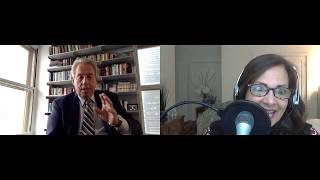
John C. Maxwell talks about his new book on 11 essential shifts leaders must make, from soloist to conductor and positional to moral authority. He started as a pastor and learned that leaders today need agility in a faster world and must focus on connecting with people, not just giving direction.
Chapters
Hello, everybody. Kathy Caprino here and welcome to another what I think is amazing episode of Finding Brave. I hope this has been a powerful week for you where you are really stepping into your confidence and stretching out of your comfort zone and doing what is required to shift. Speaking of shift, we have an amazing guest with you, but to shift so that you are operating at a higher and deeper level to achieve what you really want. So thank you for being here and I'm beyond thrilled and honored to have our guest, John C. Maxwell, here today. John, thank you for taking the time. I know this is a flurry of a whirlwind of an interview tour for you, right?
Oh, we've been busy. But I'm telling you, I look forward to being with you, Kathy, and with all those listen to you because you have such wonderful content and program and influence. And for me to be a part and have a little, just a little piece of it today is a real honor. So thanks for having me. So kind.
Thank you. All right, everybody, we are going to be blowing your mind here by what John shares. But let me tell you a little bit about John before we get into that. Whoa, here it is. Where's your bio? Right in front of me here. Here we go. This was so impressive to me. Our guest today is internationally recognized leadership author, coach and speaker John C. Maxwell. I a New York Times best selling author with over 30 million books sold. Holy cow. John. John has trained over 6 million leaders from every country in the world. He's the founder of the John Maxwell Company, the John Maxwell Team Equip, and the John Maxwell Leadership Foundation. And he's a recipient of the Mother Teresa Prize for global peace and leadership. That brings tears to my eyes. I want to hear a little bit about that. John. Every year he speaks to the world's top leaders, from presidents to Fortune 500 executives. He's been recognized as the number one leadership, number one leader in business by the American Management Association. And his latest book, which we're talking about today, leadership. Love it. 11 essential changes every leader Must Embrace. And it's available now. All right, John, so before we launch into the book and these shifts and why after all these books sold, why you're writing, why you've written this book, you know, when I watch you on YouTube, when I look at your post, I feel so much passion and so much joy in what you do. But I'm really dying to know, how did you get a start in this, in this field? How did it happen?
Well, I, I always wanted to add value to people and to make a difference. And I had a mentor. One day I was talking with him. His name was Les, and he wrote books. And I had no desire to write books. It wasn't even on my list. And I asked him, he'd written six books. I said, you know, Les, why do you write books? And he told me, kathy, he said, I write books to influence people beyond my personal touch.
How simple is that?
I said, I'm going to start writing books.
And when was this?
That next day I just started writing. I wasn't, trust me, I wasn't very good.
I don't believe that for a minute.
But I had this passion to really make a difference. And so I want to influence people. But now the question is, in what area do I want to influence them? Well, I sat down and I asked myself a very simple question. As I looked at people and successful people, I asked myself, what makes them successful? And I came to the conclusion that successful people do four things well. Relationships. They relate well with people. You know, people won't go along with you if they can't. If you can't. If they can't get along with you. Okay, People that are highly successful have an incredible attitude of tenacity and overcoming adversity in their life. And they, you know, they're down, but they get back up. So I said, okay, I want to write on relationships. I want to write on attitude and how to. How to be an overcomer. And then they know how to lead well. They know how to influence other people. They. They lead well, and they also equip people well, they train well, which compounds all of your energy, time, money, everything else. And so I said to myself, I was 27, I said, okay, I'm going to write books on relationships and help them get along with people. I'm going to write book on attitude and help them think the right way to overcome failures, et cetera. I'm going to write on leadership and help them to learn how to influence people. And I'm going to write on equipping and teach them how to build teams and get people to. To join them so they can compound themselves. And that was my track that I began my writing career on. I said, I'm going to work in those four areas. And I don't know, 80 some books later, I. Holy cow.
Now I have one more question. Then we got to talk about your book, because I'm writing my second book, and hopefully there'll be great news about that. How do you come up with the frameworks for that? Is that Just the way your mind works, like the 11, you know, shifts and leaders shift. Is that just the way you think? It just comes out like a framework.
Yeah. In fact, if there aren't numbers in it, it's probably not an actual book. I break all the rules of writing where they'd say, you know, don't you know, I got the 21 irrefutable laws of leadership, 17 laws of teamwork, the 15 laws of growth. Yeah. So, yeah, well, I'm in awe.
I'm in awe.
I'm a very much of a process person and a step by step person. So when somebody sits down, says, john, I like to get from A to Z. The next thing I know, I'm saying, okay, first step, second step, third step, maybe five steps. I don't know how many steps. But the point being, yes, that's how I and I write. Very simple, very simple, very practical.
That's why you sell so much. And one final question for anyone who's listening, who wants to be a thought leader or an author or share their knowledge. When you were 27 and you said, I want to write, did you believe in your heart you knew enough to write these books? Did you just say, I'm dying to know.
What did you say? I didn't feel that way at all. In fact, it was quite intimidating starting to write because who am I? Share my thoughts. I'm a kid still. And so no, I wasn't comfortable. And I'm not trying to be humble. I wasn't good at. Took me a year to write a 100 page book. Okay, now hang with me. And the book is still in print. It's called Think on these Things. Now hang on.
We're gonna link to that.
Yeah, don't do. You don't want that. So it's a. Get the picture. A year, a hundred pages. And there were little thoughts I wanted to write on. And so each chapter only has about three pages. So it's like 33 chapters, three pages. In fact, I had a lady recently bring the book to me. It's still a brand. And she said, oh, I love this book. She said, this was your first book. And I said, yeah, I'm kind of overwhelmed that she loved it. And I said, well, what did you love about the book? You're going to love this, Kathy. She said, I love the short chapters.
See, we need to write a hundred page book. The heck with.
She's kind of like, you're so brilliant. How'd you ever think of, you know, three page chapters? I said, lady, after three pages, I ran out of gas. In fact, some of those chapters are two pages too long. My goodness. You know, and I'm just dying, you know, wasn't any thinking to it, wasn't any planning to it ran out of gas. Oh yeah. And I'd write. I write, I still write with a four color pen on a legal pad. Literally.
Oh wow.
I can still remember I was in Indiana one day, I was getting ready to speak at a conference and I was in a hotel and I had the whole day to write and I thought, oh my gosh, this is great, I'll write all day. I filled up two waste paper baskets that day with wadded up legal pages of where I would start. And I'd look at it, I'd say back in there. And I say that to encourage people, really. Because, you know, one of the things that frustrates me is people see me now and they see the success and I look at them and say, I wish you could have seen me when I started. Because it would greatly encourage them. I think it's beautiful.
I'm crying over here, don't you think, Kathy?
It's a great discouragement to see somebody that has done well in their field. I mean, I'm 71, I've done this a whole bunch of times. You know, when people hear me speak, they say, oh my gosh, you're an incredible communicator. Well, I've done this 12,000 times. After 12,000 times, not good at it, wouldn't you think you need to get out? And wouldn't it be better if you got out after 1200 times instead of waiting to 12,000 times to find you're not as good. But the point being is, were never good the first time. So when people say, you know, I'd like to write a book, but they haven't started and they'll say, what's the secret? What's the. I said, start writing, start writing. But I know why they haven't started writing, because they start writing and it's not any good. And they say, oh crap, this is in the waste paper. And I just, I tell that story because I'm not a natural writer. It didn't come easily. In fact, I think it was, to be honest with you, it was about my seventh book when I caught on how to write a book. But it was okay. I was learning. And what I would say to you and everyone else is, you know, consistency compounds. It compounds. And so, you know, and so it's not a sexy word. So a lot of people, they don't look at it as a. But it's, I would say it's the most underestimated word in the English language. It's just pure consistency. Find something that, that you love, that adds value to people. I always tell people, if you love it and it helps people, whatever it is, it's a good thing.
I could speak to you for hours. Thank you for that. Thank you for that. Now let's talk about this book.
Talk about. Oh, leadership.
Yeah. Not number 41, this one.
You're such a good conversationalist, I can just talk to you all day.
Well, would you? Good. I live in Stanford. You can come on up anytime. All right, now tell us about these shifts, why you've written so much about leadership. Number one expert, why do you feel that it's urgently important for people to understand these shifts? And what are the. You have 11 here. We can't get into all of them, but unless you want to read them to me. But what are the top four or five that listeners have to say, holy cow, I got to learn this.
Well, yeah, let me just start off by saying why I wrote the book. Okay. I speak for companies. And so I was on a pre call getting acquainted with the people I was going to speak to at the conference and you know, what's your theme, etc. And their theme was fast forward. Okay. It's very simple thing, fast forward for the conference. And they said, what does that mean to you? And I said, well, fast means faster. In the day and age that we live, fast is only going to get increase in speed, it's not going to decrease in speed. I'm always amazed at people who say, well, you know, I'm just waiting things to kind of slow down so I can make some decisions. I look at it and say, you're going to die, you're going to die. It's not going to happen. Fast is faster. It's not going to be slower. So fast is faster. And I said, your word forward. Forward is shorter. Forward today is much shorter than it was 25, 30 years ago. Okay. When I started off as a leader, for example, we talked about plans like a team plan or a company plan. And a long range plan was 10 years and a mid range plan was five and a short range plan was two. Hello, that isn't going to work today. A two year plan which would have been a short range, that's like a.
Ridiculously long range and it's obsolete by the time you get out of the gate.
So see what happens Forward's getting condensed, it's getting shorter, it's tightening up. Now, if fast is faster and forward is shorter, then as a leader, you better be very agile. You better be flexible, you better be able to handle change, you better be able to adjust on the run. You don't have time to kind of pull back and say, I need a few weeks to figure this out. No, no, no. You have to be very FL in your movement. And when I started out, you became a leader. If you had a vision. And how did you have a vision? You saw more than others see. Okay, if I saw more than my group, what I became the leader. I saw the big picture. That word more, which was so prominent in leadership 40 years ago, has been changed to before today. If you're going to lead, you've got to see before others see. I mean, you've got to be quick, and as soon as you see it, you need to move. Now, I wrote the book Leadership because fast is faster and forward is shorter. And if you've got to be able to move on your feet and be flexible and be fluid and agile. If this is all true, then I said, what I want to do is I want to write a book and talk about not all the changes, but 11 of them, 11 shifts that I've gone through. Because here's what I've. Here's what I've discovered. People resist change. When it surprises them. Their natural reaction is to stop and say, oh, my gosh, what's happening? What's happening? And they begin to freeze. So I wrote the book to help them, so that when they're ready for that next change, that next shift, they say, oh, yeah, John said this was coming. Oh, oh, this makes sense. Oh, yeah, this works for me. And so all I did is I went inside myself as a leader for many, many years, and I began to say, okay, what were some of the shifts that I had to make? For example, the first one, the first shift is in the book, was my first shift. And it was from soloist, conductor. See, when I started off, I mean, everything was small. Just everything was. And it wasn't much. And it was all about me. I was kind of like the star of my little group. And I came up with the ideas and I came up with the answers. And my people, they're all around me going, good job. And I thought, oh, my gosh, what will I do for non chord? You know what I mean? So it's just, turn the light on. I'm here, you know, with the whole process. Well, in the Beginning, Kathy, I just made a difference. And then I began to realize I couldn't make a difference by myself. And if I was going to make a difference, I had to shift the light from off of me onto the people. And leadership was not about me. Leadership was about the people. Leadership wasn't about me receiving. Leadership was with me, giving and serving. And my job was to be a conductor and bring the best out of people. Now, let me tell you something. The conductor knows a lot about music, and the conductor knows a lot about the instruments. And the conductor knows a lot about the people. And that conductor is there to maximize the people. But now it's no longer the orchestra is playing for me. I'm conducting for the orchestra.
Let me ask this, John. When you knew that, oh, boy, I gotta go from soloist to conductor. Were you in your own business that you had started, or were you a leader in a corporation somewhere.
As a pastor?
No way.
I stood a pastor. I was. I was. I had a little country church in southern Indiana. Hillham, Indiana. Hey, hang on. The first Sunday, there were three of us. And my wife, Margaret and I were, too. She was the third person. And that's what I started as, just a pastor, really, again, wanting to help people. But I didn't start off as a leader. And what I discovered was my heart will let me help people, but my leadership will let me help more people.
Man, oh, man.
I became passionate about leadership so I could expand my. It's just like writing the books. I wanted to expand my influence. Well, I became passionate about leadership because I wanted to expand how many people I could really help in my life. And so, no, it all began in southern Indiana. And my little congregation just thought I was wonderful. I wasn't wonderful at all. I just had energy and, like, people, and the congregation really grew. Now, what's interesting is when I left it three years later, I mean, it went from like three to 350. Little country church and the whole deal. And when I left it, within six months, it went from over 300 back down to less than 100.
Okay, it needed your light.
I began to understand I had to learn how to lead people because I had done everything. It was all based on me and what I could do. And I realized all of a sudden, wow, I've got to learn how to. I got to learn how to equip people. I've got to learn how to train and develop people. And it was about that same time, Kathy, that I came to the conclusion also that everything rises and falls on leadership. That's why I'm in the leadership field so much. I'm passionate about adding value to leaders who get to multiply value to us.
Oh, that really resonates with me. I'm going off script, John. I've got a million questions. Let me ask this. What I find is my passion is intervening with individuals. You know, you can intervene at a lot of levels, right? Societal, organizational, institutional and individual. And I'm sure there are more. I happen to love to intervene at the individual level to help women become self leaders first. So here I want to ask you this. I truly believe with all my heart, if you can't lead your own life, if you can't lead your own emotions, if you can't lead, you know, being who you want to be in the world, you really can't lead others. Would you agree with that? And if not, lay it on me. You do it right, you do, you're right on.
In fact, when people ask me, they'll say, you know, okay, who do I start leading? I say start leading yourself. It begins with self leadership. In fact, let me put it this way. If I can't lead myself, why should anyone else follow me?
So I'm happy to hear, why would.
I want to transport that to someone else? You see, we can only give what we have. And so what I teach is leadership begins not with the masses out there. The leadership begins here. And it only begins with me, Kathy, but it begins with the inside of me. I want to teach people to be bigger on the inside than they are on the outside. This is all about values. This is all about heart. This is about doing things for the right reason. Because if I can become bigger on the inside, the outside is going to get automatically bigger. It's only a matter of time. But how many times I see people who never get their own act together and they're trying to build some kind of an organization or team and. And it goes up maybe a little bit and then it collapses. And it collapses because they never answered the hard questions to themselves before they ask the others. You see, it's much easier for me to give direction to others and tell them what to do than to do it myself. But the integrity of my leadership is that I do it first. So I say the leader's greatest words, Kathy, are follow me, just follow me. Leadership is highly people do what people see. So if I've got my act together and I'm bigger on the inside than the outside, and I'm leading myself, well, now I have the integrity to look around and say, hey, follow me. But guess what? When they follow me, they'll find that my words and my actions are consistent. And that begins to be that double empowerment of people. When what you say and what you do matches up, all of a sudden your leadership. Well, in fact, in one of the chapters in the book, I talk about going from positional authority to moral authority.
Oh, let's. Oh, let's hear about it. And I feel like we need your messages desperately right now in our country.
Yeah, we do. Don't worry. We really do. So many people, they rely on the title or the position to pull off what they want to accomplish. And people, you know, people don't follow titles, they follow courage. And so all of that begins. How do I encourage others? I, first of all, have courage in me. When I have courage in me, I can now encourage you, but I can't give you what I don't have. Kathy.
Oh, that's so sick.
Goes back to. You're right on. What your commitment and purpose is in your leadership is spot on. Stay right there. It's a sweet spot for you and it will help so many people. But, you know, leadership starts slow. Mass movements never begin with the mass.
So encouraging. Tell us about. I'm interested in. Okay. If we have to, as leaders, see before and move and take action. What if you're not that kind of person? What if all of that is hard? And you know, what does come to mind? I'm an extrovert. Ambivert, actually. And I've started to really advocate for extroverts. Not biasing, not being biased against introverts, because introverts operate differently and there's a whole movement. But what. And I think of introverts, my son is one. You know, some people don't appear that they are fast moving in terms of brainstorming and being on it and analyzing it in a minute, you know, without any prep time. What happens if you find that it's really a struggle for you to see things before they're there and act on them? What do you do? Is it. Do you surround yourself with people who can help? What do you do? In that case?
It's a great question, but let me just, let me. Let me cover something really quickly. It was very revealing to me in my leadership journey. You know, there are basically four different temperaments. Melancholy, choleric, sanguine and flag. Okay.
And phlegmatic.
Oh, wow. Four different kind of personality temperaments. Okay.
Yeah.
Well, a choleric is kind of bossy and pushes ahead and gets going. They're not having any problems starting the phlegmatic or introverted. Oh my gosh, you know, do I really have to do this? And the point being, I have proven that you can have any temperament and be a great leader.
I'm so happy to hear you say that.
So somebody that's kind of like maybe a flag, they're not a natural mover, shaker, initiator, they have a tendency sometimes to say oh my gosh, I don't think I could ever lead. But leadership is influence, so you can lead wherever you are. Now going back to your question, here's what I do believe. I believe for a choleric or a sanguine, it's a little bit easy, temperament wise to move forward faster with a melancholy. They're a little bit more anal, they want to study, a little bit more phlegmatic, they're just a little bit more laid back. Now that we all discussed this, here's the point. It really doesn't matter. In this fast paced society one of the things we have to do to be effective is do things that are not natural to us so that we can be effective. I think for a flag or for a melancholy, you just have to understand that the principle is the same regardless of your temperament. So I always suggest if you're not in your natural flow, bring somebody around you that complements you, that is, and allow them to help you be the initiator, let them go with you, take the journey together. And I know a lot of people, they won't maybe self start real well, but they start real well if they got them a buddy and they got somebody to just go along with them. And so that's why it's important to have people around you that make up for your weaknesses. They complete you, they complement you. So my suggestion for anybody, I mean my team, I don't even what it's like to lead without a team. I don't even have a clue. I cannot. Well first of all, I couldn't lead without my team. The things that we accomplish, I mean you said a little bit earlier about I equipped 6 million people or something like that in every country and I wanted to just raise my hand, said no, I really didn't equip 6 million people. I just equipped leaders to equip 6 million people. It's the other people around me that have made all the difference. And so I think for people, when they see their inadequacies and they see the things that they're weak in, don't worry about that. You've got to be aware of what they are. But then you bring people around you that are strong in those areas and you say, here, let me tell you why you're on the team. I'm not any good at this. I have to have you. I need you. And there's not a greater compliment, Kathy, to anybody on the team than to say, I need you. I got to have you. In fact, I can't do it without you. I mean, you talk about empowerment, they're ready to go. Why? Those are more than just words to me. They're facts, and my team knows it. And so they're always.
I just have to interrupt you and say that a while ago, I wrote a Forbes post on the seven behaviors of people who positively change the world.
That sounds great.
I think you would love it. But you are. I don't mean to blow smoke, but you are all of them. You teach what you know. You uplift. You are passionate about making the world better than it was before. I mean, oh, you're it, man. And anyone who wants to know what a leader looks like, I think, you know, they're looking at one. John, it's amazing. Now, let me ask just two more questions on the book.
That's very kind.
You deserve it. Pick a shift here that you think leaders have read a lot about how to be a good leader, but they're not getting this. This shift. They're really blowing it. You wouldn't even use those terms, but.
Well, no, no, here's what I know. I think a lot of people don't shift because they're not aware that they can.
Or that they need to, Right?
Yes. Or they need to. And this is an awareness book. This is kind of like these are shifts that you need to make. And I hope that I wrote it in such a way that they're also shifts that you can make. You know what I mean? I wanted to. I always want to be encouraging. I want to be empowering. But I talk in there here about shifting from direction to connection.
Oh, let's hear.
And when I started off as a young leader, this was a, you know, I made so many mistakes and I did so many things not right. But as a young leader, I was very passionate about what I wanted to accomplish. And so I was always casting vision and I was always giving directions. I was always pointing, let's go to that mountain. Get on the train, let's go. And I was not connecting with my people. Now, many of them joined my team because they love my vision, but I wasn't connecting with My people. And I had to make a shift from telling people where I wanted them to go to asking questions to find out where they are. And when I started asking questions, I started connecting with people. You have to find them before you can lead them.
Oh, there's a tweetable.
That's tweetable, is it? And by the way, assumptions is the mother of all mess ups for leaders. And why do we assume? Because we haven't taken the time to ask questions.
Because we think we know, right?
Yeah, we think we know. And can I tell you something? Many times I've made decisions based upon what I thought that where I thought the people were, and they weren't even there.
Do you mean just so we can make it practical? You mean what they're worried about, what they're focused on, what they want, all.
Of was all about? It was all about myself. See again, the quickest way to find out where a person is isn't to tell them, is to ask them where they are. The moment I ask you where you are, I start to discover you. And remember this. Managers lead everybody the same. Leaders lead everybody differently. And the greatest way to lead you is to find out where you are and what you want and what your strengths are and lead you from yourself. Lead you out of the true Kathy self, not lead you like I do with Joe over there or Susan over there. No, no, no, managers do that. They just basically put you in a box and say, 2, 3, 4. 2, 3, 4. Leaders, they take time to find the great ones they take. So when you talk, when people say, Kathy, when they say something like, you've heard this, like a leadership expression, I'd say, oh my gosh, it's lonely at the top. And whenever they tell me it's lonely at the top, that's not a leadership problem, that's a relationship problem. You're lonely because you don't get along with people. Learn to get some people skills. If you're all at the top, all alone, you're not leading anybody. You're a hiker, you're not a leader because leaders are with you. Leaders are connected to you. How do you define a leader? You define a leader by people are going along with the leader. Leaders aren't isolated and separated. People are going along here. And sometimes as a leader, you're walking a little bit in front of them. Not a lot, a lot of times, most times you're walking beside them, sometimes you're walking a little bit behind them and you're encouraging them and empowering them. But you're always with them. So whenever a leader is not with his or her people and quotes Lonely at the top, the first thing you do if you're low at the top is get off the top.
Oh, I gotta ask this. Then I'm gonna let you go. It's gonna be a weird question, but what you describe, I think you embody. And maybe because you were a preacher parson first. But what percentage? This is a tough question. What? I mean, an illustrative question. What percentage of the leaders that you work with do you think actually have all of these shifts going on are good leaders? Let's put it that way.
Not many.
No. You know, why would you agree with this?
But let me be clear on one thing. Yeah. I wrote the book because I think most leaders haven't been aware of shifts that they need to make.
Okay.
But let me just say this. I'm still making shifts. This isn't the final book on shifting. No, this is just where my journey is right now.
And wouldn't you agree that shifting is a circular thing? You don't go flying up the ladder and then off. You know, you'll have something that'll happen that'll humble you. I'm sure that'll will. Or you'll say, whoa, I failed that in a big way. I mean, I have these all the time. And then I'm shifting like, woohoo. I better learn from that. Would you agree with that?
I completely agree. And let me just say this. What I try to do in this book is help a leader not to stay where they are.
Yeah. Breakthrough.
My favorite word, if you want me to define disaster for any person is to not only stay where they are, but defend it.
But defend it.
Yes. I watch people who are not moving. When you're not moving, the first line of defense for you is to build a fence and then tell everybody why you have that fence and that you're not going. See, we don't need to protect ourselves, but you protect yourselves. When you're not growing, when you're not developing, when you're not expanding your life. But the moment that you began to shift and you began to accept life and the fact that it's coming at you from different angles and you begin to make those adjustments, what it does is it allows you not only to sees seiz the moment, but what it does allow you to also do is it allows you to be going first and give your team a great advantage. So leadership is all about seeing S E E I N G Seeing the shift and then seizing the moment to be the best leader possible.
Oh God, John. What a book. What I really. Please come back again. I just could listen for hours. I feel so inspired crazily to change, to shift. Most people don't feel inspired to be different from who they are. But you make. You make me inspired to be different.
I think the book is going to do that, Kathy.
I really think it is.
I think there are going to be a lot of people. It's going to be like a new fresh breath.
Oh boy, do we need that.
I can get going.
Oh, I can't thank you enough. And John, where can everybody read about you? Where do you want people to flock to? Obviously your link to the book, which I will have below anywhere else your website, johnmax.
It's just that simple. Just go to johnmaxel.com and you'll find more than you ever want to find.
Oh, I can't wait. And I know I'm featuring you in my Forbes blog soon. We're working on that. Thank you, my friend. I'm so inspired and enlivened all the best. Smashing success with your book and I hope to see you again soon.
Oh, you will because we're friends, Kathy. Oh, I love it.
Thank you so much. Take care. Stay safe in the snow, everybody. If you're not inspired here to shift, give me a call because there needs some work to be done. I hope you love this as much as I did and I will see you next time, my friends. Bye now.
More from Kathy


Elevate Yourself, Elevate Others, and Amplify Good | Chris Cooper | Finding Brave Ep. 334

Finding Brave Epis #333: How Leaders Can Harness AI Without Losing Their Humanity, w/Bennett Borden

Finding Brave Epis 332- How to Stay Brave, Valuable and Visible in the Age of AI, with Raman Rai

Finding Brave Epis 331 - The Power of Positive Disruption, with Dr. Patrick Leddin


Finding Brave Epis 330 - Being 40: Letting Go and Embracing Who You Are, with Stacey Lindsay

Disrupt Career Reinvention with Kathy Caprino - via The Disruption Lab Podcast w/Patrick Leddin

Creating Neurodiversity-Friendly Work Cultures: Simple Workplace Adjustments Matter

Finding Brave Epis 329 - How To Create a Neurodiversity-Friendly Workplace, with Kristen Pressner

Finding Brave Epis. 328: Reclaiming the Power to Trust Your Own Voice, with Dr. Cindy McGovern