Finding Brave 61: Hearing and Heeding Your Wake-Up Call, with Darren Virassammy
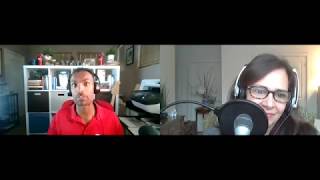
Darren Virassammy describes two wake-up calls in 2012: a near-miss on the Richmond-San Rafael bridge and watching his infant daughter laugh in Hawaii. Both pushed him to leave his job and cofound 34 strong, which uses strengths-based methods like the Grind/Greatness/Genius exercise to fix workplace culture.
Questions this video answers
July 2012 (birth of daughter Kira; near-accident occurred about one week after her birth).
Richmond–San Rafael Bridge.
Kira.
34 strong (34strong).
Gallup Q12 assessment (the 12-item engagement statements).
Chapters
Hello, everybody. Welcome to our episode of Finding Brave. This week it's been a doozy of a week for me. How about you all? I mean, a good doozy. Just juicy. Juicy and exciting and kind of mind stretching, which is I think what we want. Breakthrough. That's what we're going for here. And finding Brave, right? I hope it's been great for you too. And I'm so, so, so excited to share with you my awesome, inspiring guest today, Darren Verasami, who we are talking about the wake up call. In fact, many wake up calls. But the wake up call you actually say, oh, all right now I guess, I guess, I guess something has to change and Darren has a powerful story about that and I want you to hear about it and hear also about how he acted on it and how it transformed his life. And we're going to be talking all about that. Right, Darren, thank you for joining me. Thank you. Thank you so much.
Thank you for having me, Kathy. I cannot wait to chat.
So fun and I love your bright red. It's so gorgeous, so vibrant. But before we chat, let me tell you about Darren. He's so impressive. Darren is the co founder and chief operating officer of 34 strong comprised of a team that believes every. I'm going to slow down and read this because it's powerful. Everyone deserves a great place to work and that anyone workplace can be great. I bet you're already going.
Hmm.
Because we, a lot of us have worked in far less than great workplaces. Darren, right?
That's right.
And I can't wait to hear how you help these workplaces change. So you are a leading expert in the global employee engagement community and 34 strong team leverage the strengths based approach to human development to create massive shifts within organizations both culturally and on the bottom line. And he and his team have created sustainable change in small micro businesses all the way up to large organizational teams at the fda, the bank of America, the California Department of Public Health and more. And recently, Darren has keynoted for Hitachi Global Women's Conference. Hey, very cool. The Rotary World Peace Conference. Gosh, so inspiring. The professional Grounds Management Society and author Mike Michalowicz. I have to work hard to pronounce Mike's name right, but I love him. @ profitcon. And Darren's 34 strong business partner, Brandon Miller is the co author with wife, oh.
Annalyn Analyn.
All right. Miller of strengths strength based parenting book. Ooh. Play to their strengths. Which it was out July. No, it's coming out July 2019.
Whoo.
That's a mouthful for you, but thank you so much. And how impressive is this? So I can't wait to dig into how you the whole thing, even strengths based and I have to. I can't even say that. One thing I can't wait to hear more about, Darren, is I so believe in understanding what your natural talents are and a lot of people don't have any idea what their talents and gifts are. Right. But I love that you focus on strengths and it's interesting because I tend to focus on what is in the way of those strengths. So you know what I'm calling now? Power gaps and those crippling things that happen to us that suck away our confidence and suck away our energy and our self worth. So it's a cool kind of complementary mixture you and I have going on here, I think. Does that make sense?
I do, yeah. I think that makes a lot of sense.
All right, so let's jump into your wake up call. What happened? How did it lead up to it? Had you had wake up calls before? Tell me all about it. Tell us.
No problem. So it was really interesting. It's amazing. You go through different pockets in life and you have different changes that take place. So in the summer, it was July of 2012, my wife and I were blessed with the gift of our firstborn child, my daughter Kira. I had a pretty insane wake up call one week after she was born. And here's the interesting thing, Kathy. I didn't even realize it was a wake up call at the time. So what happened was a week after, I live in the Sacramento area of California. I used to commute down to the San Francisco Bay area. So for those that know the geography, it's nearly a hundred miles every day. Every day. It was about, well it was about three to four days a week. So it was my, I think it was my first day back to the office after Kira had been born. I took the week off and then I was going back to work and I have to cross a bridge going to work. And on this bridge, it's just a two lane bridge. It's called the Richmond San Rafael Bridge. I was crossing it. Now keep in mind it's about 6:30 in the morning. So I had gotten on the road pretty early, about 5 o' clock that morning, kiss my wife and my daughter and both of them were nice and sound asleep. So I'm going across the bridge, Kathy, just driving along, I'm literally seven, eight minutes away from my office and I'm in the left hand lane and all of A sudden, the tire on the right side of my truck blows out. And to my right, just behind me is a big rig. So I swerve right in front of this big rig, miss it by a few feet, don't end up clipping it. Somehow I end up getting off into the shoulder and regaining control of my vehicle and. And not get clipped by the big rig. And I had to basically make my way into the office with the tire fully shredded, blown out on this bridge. But a week before that, I had seen the gift of life. I had just met my daughter. That was amazing. And here I was staring down the barrel of death in many ways, and I just kind of rolled with it, Kathy. It was just like, okay, that happened. Thankfully, I'm here, I'm okay. Went to the office, just went to work.
I got to punctuate this. You actually kept driving to work on a shredded tire?
I had no choice. I had no choice.
Or couldn't you just go, I'm not coming in, buddy.
Well, stopping on the bridge was far less safe than getting to the parking lot. Literally when I got off the bridge, could get into the parking lot. And yeah, it wasn't that I had to get to work. Great question, though. It was more along the lines of, okay, let me get here. Stopping on the side of the bridge, narrow shoulder, is going to be far, far more risky than just shredding the tire in the wheel bay a little bit more. So I was able to get in and that's what happened. And I just took that in stride and just was thankful, thank God, that I was okay, Let my wife kind of know what had happened. I was okay, and I just kind of fell back into life. You know, you're a little sleep deprived, as you can imagine, a weekend of having your first kid as well. And what was fascinating, Kathy, the real complete polar opposite end of this was four and a half months later, my daughter, my wife and I took a trip to the big island of Hawaii. And we're sitting on the beach. I'm sorry, we're sitting on the balcony one morning and I'm sitting there having a papaya. I'm eating out on my right hand side. The Pacific Ocean is just roaring. We're being treated to the concert of nature, right? Just absolutely amazing. And I'm just relishing life because I'm finally pausing to enjoy the two most important people in my life, my wife and my daughter. And as I'm eating that papaya, Kathy, what happens? My daughter looks up at me and she just laughs out loud for the first time. And that was one of the most amazing and terrifying moments of my life. It was amazing in the fact that I'm thinking this girl has all potential. She's going to laugh, she's going to talk, she's going to walk, she's going to run, she's going to play soccer. Who knows what her life holds for her and how it will want to unfold. But as I looked into her eyes, into her soul in the mirror that was looking back at me, I had to ask myself, what happened to your own potential? What happened to you? You're not living to your potential. What happened to yours? You were once like that and you've just accepted this life of leaving way before she's awake, getting back and she's almost going to sleep. And Kathy, what really triggered for me in that moment was, and I didn't realize it at the time, it was actually a friend of mine that pointed out the juxtaposition of these two independent wake up calls that put it all together. But the juxtaposition here that was so powerful was in that moment I realized I have to live to my potential. Not for me only, it's for the next generation. What kind of dad am I going to be? What kind of spouse am I going to be? What kind of member of society am I going to be if I'm playing for mediocrity, if I am showing up, going to work, to a job that I don't love, to a company where there's high disengagement, where people aren't valued for being valuable, what kind of person am I going to show up as at home? What kind of dad am I going to be as a result? And we don't think of the ripple of those elements. We think of I'm collecting a paycheck, which is what I was doing. And at the same time, the other piece that I didn't talk about, I was in that job in the Bay in the San Francisco Bay Area were, it was highly, I was highly disengaged. There was a lot of issues with team dynamics and different elements. The same time, I was also teaching classes at a college here in Sacramento and I was helping my students start their own businesses, tap into their potential, watch them graduate, get into the workforce when they had had no hope before and seeing that turn. So I had all of these different juxtapositions in my life that was going on. So something had to change, Kathy. And it's amazing when you have these moments, how you start Changing the way that you look at things. And as a result, the things that you look at start to change. Within two months of that, I met my business partner in 34 strong because I was fired up about creating workplaces where people could be valued for being valuable. And we met through a mutual friend. And that wake up call was one of the. Both of those put together were two of the greatest gifts that I had in planting the seeds of being able to tap into my own potential, not for myself, but to give back to others and to really impact that daughter of mine and others.
Oh, my gosh, I want to. What a story. So can I tease it apart a little, Darren, and understand some things? So first you have this almost cataclysmic accident, right? And I would love to ask you, are you the kind of person that thinks of things as signs? Like, I mean, that's a spiritual thing, not a religious thing. I think it's a spiritual thing. Or listening to your higher intuition would. And I bring it up because I think that many of us are so beleaguered and tired and, you know, just beaten down that we don't recognize actual signs for what they are. Would you agree with that?
I would 100% agree with that. And, you know, in past shows and conversations that we've had, Kathy, I've known that you've said, the person that you were 13 years ago when you started your business is not the same person you are today. So if I answered this as 2012 me, when I was first getting into fatherhood, when I was going through this process, I was a task junkie. Just get the task done, get things done. Just so focused because our cultures and so many work environments that we're in are so execution centric. Just get it done. And I'm a get it done kind of person. But I don't think in the past that version of me, I don't think I appreciated the signs. Not because I didn't have the capacity to appreciate them, but because I didn't give myself the permission to pause long enough and say, what does this actually mean?
That's lesson number one, isn't it?
That's lesson number one. Call time out. Take a time out for yourself if something like that has happened and give yourself the freedom to just take it in. Now the version of me that I've become in every day, just trying to work on being a little bit better than I was yesterday so I can give a little bit more to others every day. And so we as a company can give a Little bit more to others. When I think of that, I definitely take that pause. Now I take those signs. I'm intentional about actually creating some free space within my day to just try and aggregate some of those dots that might be out there and just see what you're being told. Because it doesn't have to be like a four hour, you go climb on top of a mountain, meditate, anything like that. But if you give yourself three minutes, four minutes to give your mind a chance to just ask yourself, what have I seen today? Is there any deeper meaning that I can connect? Or is there somebody that maybe I should talk to that may have some perspective on this? Just giving yourself that permission doesn't even have to be five minutes, just a few minutes to ask yourself to stop doing and focus on being and investing in that time can be incredibly profound for us.
I love it and I want to say some things about that. Can I, When I'm just like you, as you had read I was not. And you know, when you talk about task junkie, I call that the striver. There are six dominant action styles I've researched. Not every striver is, you know, unconscious. But strivers tend to be striving out of driven fear. Fear of being a perfect, not being a perfectionist, fear of letting someone down, blah, blah, blah. But I think that fear drives us to the point where we actually don't want to ask the hard questions. In your situation, if you had stopped right then and said, okay, what's got to change? It would have been, you got to leave this job. And for many, absolutely. For many of us, we don't want that to be the answer because we've worked hard, we've moved our family to that place, or we've worked hard to be that vice president. So I think a corollary of what you're saying is, well, two things. Tell me what you think. I think this is a Buddhist philosophy. But if we cannot over attach to any outcome like this, wait a minute, this has to be the job I'm here for five years for. If we don't attach to like, my book has to come out in six months with this publisher. How about you throw it up to the universe and let the universe help you decide when is the right time, which you have no idea, and what is the right publisher, even though you've gotten 10 rejections. So I think part of it is don't over attach in your life. It's got to look like this because then you don't want to hear the wake up Call, would you?
I would agree with that. Yeah, I would agree with that. Very, very much so. And a little hack that I learned as a self proclaimed task junkie, somebody that actually really enjoys crossing things off of my list and getting things done. I still get that today, but I'm able to put down and frame that not as just a single task where you're staying down at a granular level, but some of the tasks that I might put down might be that big picture. One of the things that I can give yourself permission to do is have the free time to think. So thinking, relationship building and spending time with your family, these are the things that are easy for us to just creep. I can get one more thing done. I'll spend an extra 10 minutes and 10 minutes becomes 15, becomes 20 becomes 30. Next thing you know, that family dinner you were planning to go to, everybody's eating, you're eating by yourself. What does that do over the long term if we're going to create the future that we want to have? Kathy, it doesn't happen in one feral swoop. It is driven by the habits that we create every single day. And those habits can shift, but as they become into that space and we give ourselves that permission, like you talk about pausing, taking that in, or on your task list, putting that as one of your to dos, give yourself some free time to think. Have I had any wake up calls today? It gives you permission to say, hey, I like to cross things off my list. And this is actually doing something in your own mind. Because I actually, this is a true story. I actually had to go through that process for myself to give myself permission that this is actually something incredibly valuable to do with your life. To ask yourself, are there any wake up calls today?
Oh, I love it. And two other things I just want to punctuate. You know, it's pretty remarkable that you're holding your daughter. And I don't think most people would actually go this deep, but she lets out a laugh for the first time and you think about potential and then you think about your potential. Um, I think. Tell me what you think. I think when we've had a child or gone through an accident or we're exhausted or something has in a way, it's an alternate reality. I mean, I remember having my two children. I was in a different reality. Like, I can't believe this came out of me and I'm holding and rocking life and oh my God, I'm not prepared. But it is sometimes in those alternate reality moments where your reality has shifted so greatly that you are able to get some insights that wouldn't have come to you two minutes before. What do you think?
I couldn't agree with that more. I think your environment is everything. Sometimes, you know, you're not going to plant a cactus that would thrive in Arizona. You could take the most effective, just the strongest cactus that you have that's built to last, to live for a long time and take it and then transplant it to a rainforest in Brazil and then get upset that, hey, how come it's not thriving? How come it's dying? It's a matter of having the right environment and sometimes shaking up. Our environment actually creates that. It creates the clarity for us to see because we can pause long enough, we can see things differently. We've put on a different set of glasses in how we're viewing the world. That Hawaii experience for me was that moment. And as I looked at Kira in her and just being surrounded by her and my wife, I had to look at her and I had to ask the question, who's the human being that I can't afford not to be for her? Who is the person I can't afford not to be for her? Who is the person I can't afford not to be for others? Because if my cups overflowing, what can I give to others? If I can build a team and be a part of a team and support a team at 34 strong that can go out and make that impact. It's not about just making the impact on making an organization a great place to work and helping them to create the tools on their own as to how that's going to thrive for them, where they can sustain the cultures that they want, where they can be strengths Based on Kathy, the overarching why for myself and Brandon, I think it's tied right up in the book that him and his wife are publishing. It's what happens when we go to work and we're valued for being valuable. What happens to that next generation? What kind of parents are we? How do we serve our communities better? And Kira, my daughter, was just that milestone, that marker that I looked into that showed that to me and created that clarity with all of these different things in a completely different environment where I didn't have the monkey on my back of execution, execution, execution. It was executing, living the life that you've imagined being. And that doesn't happen in a single swoop. That's a quote that hangs above my desk. And I had to ask myself, how are you actually doing that? By just checking the box and going through life on autopilot. You're not going to do that.
There's so much you're sharing that that could be a book like, you know, another thing that strikes me is I think some of us who are strivers. I'm a recovering striver. We almost have to be hit over the head with a cosmic two by four.
We do it.
How do I put this? You and I were both motivated by. If I can't do this for me.
Yeah.
What am I gonna do for her?
Oh, yeah.
Because I think implicit in what you're saying, and I learned this as a therapist, children don't do as we say. They do as we do.
That's. That's what my dad always used to tell me. And his dad. His dad would tell him that.
The marriage and family therapist.
Yeah. No, no, my grandfather. Well, my grandfather's from British Guyatta. My family's from. From the West Indies. So, no, he didn't have much of an education, Kathy. He was a cane cutter in British Guyana with a machete. Not like machines. He used to cut in the field. Dad grew up just dirt poor in British Guyana. But that was a quote that they had that transcended a few generations, actually.
Wow. Brilliant. Oh, I love it. I love it. All right, now let's move this forward. For anyone who's listening, and I'm. Oh, no, there's another thing I want to just highlight. You know, I just spoke to John Maxwell as I. As I mentioned, whose podcast is coming out before this one. But you know what? I'm really inspired by both of you and so many of the people I speak with. It's not enough that they're building a name for themselves. That's just not it. They're wanting to spread what they know so that others who have influence on others, uplift others.
Yes.
That was a long winded way of saying, you know, that is, to me, true leadership, that we want to be the best we can be. But it isn't to just, you know, have a big name and be famous and have a lot of followers. It's that we want to shift the world for other people. And how is that, Is that kind of a motive for you?
It is, it is. And it's realizing, Kathy, that real change doesn't happen in the cultures, the society that we live in today. Everything is instant, right? You click a button, you, like, you're on social media, you got all these things, and we want that instant gratification. But the work that we're looking to do, to create that impact is not going to be seen necessarily in my lifetime fully. It's. It's reshaping the way that we approach how the work experience is going to be and we tackle that through the lens of what's going to mean for that next generation. The part that gets me fired up is not only right now of having employees, having managers say, hey, my team is engaged. They are showing up, they're feeling valued for being valuable. We've been able to realign some things. Our productivity has gone up. People are connecting a lot better. It's not just that that motivates me. It's looking at the children, it's looking at the next generation and seeing, hey, mom and dad go to work. And it's not this miserable place where they just come home and they hate everything and they're kind of mean to me. Or they're at my events, right? They're at my events, but they're not really present. They're just on their phone catching up on emails. They're just there, but not really in that space. Those are actually signs for us. That's just an example. Those are the many wake up calls that are around us all the time. If we're going to like a children's event or something like that. And taking the pause, ask how self aware am I right now? Am I actually present when present? If I can't even be present for my child because this job or the situation is all consuming, am I really giving them the best of me and don't they deserve that? That's just one example. But those are elements of wake up calls.
Oh gosh, that's so important. So important. So no, let's kind of move forward and connect the dots. And you've created this organization and would you say the primary goal is to help shift cultures where people can be valued and collaborative? Is that the key goal? Is it the organization you're trying to shift or the individuals and the managers?
It's the overall culture within the organization. Now sometimes in larger organizations that we work with, we're not going to go in and change 10,000 people right out of the gate. But it starts in small teams. Maybe there's a team of 50, 80, and they become the seeds of change that starts to ripple through the organizations because they're playing more effectively. Other teams sit and say, hey, we want to do that. So the long term focus of what we're working to do is, is create great places to work. And here's the thing, Kathy, we're Not the change agents. 34 strong is not the change agent. The leadership teams, those managers, they're the ones that are creating the real change. So what we do for one organization, it's not just prescriptive. It's out of a box. It's the same. We have this toolbox. But what we're going to do for each client is going to differ because they have their own unique culture that's already existing. Here's how it works. Whether you think you're focusing on culture, you can either do it. You know, you can either do it with intention, or you could do it accidentally. And if it's accidental, you're gonna lose employees, you're gonna lose the best talent that's out there because you can't recruit the right talent because your culture is actually your brand. That's what it is.
All right, I got a question for you that I want to learn probably even more than my listeners, but can I ask you this? I'm putting you on the.
Please, Absolutely.
So a few years ago, an organization that I can't name, but everybody's heard of them, wanted. Were interviewing me to speak at their leadership conference for their women. And three different people said to me, we're afraid that people who hear your. The corporate people, women who hear your message, are going to want to quit after they hear you. Because I talk about what we're talking about, feel alive and valuable and important and useful. And after, after the third person said this, I got annoyed instead of what I should have done, which was listen more, but I got annoyed and I said, okay, listen, the fact that you're worried about this, I know for a fact the following. Your culture is not good for women. Am I right? And they're, like, dead silent. And I said, answer me. You know, tell me. And they said, yeah, it's terrible for women. So I'm just giving that as an example. Now, if that happened to me, I didn't take the gig, actually, because I just didn't want to. Now, if that happened to me, I would say, not only do these women need to hear this message and how it's not just about quitting, because if you quit, you haven't done the internal work either, necessarily. Why not power up in this role and be the change you want to see and see what happens? But then I would talk to the managers and the leaders and try to work on both the individual and the culture. But I would love to ask you, if you come in to an organization and it's, for instance, really bad for Women, where would you go with that? What would you do? Like, what would be your next step? Would you diagnose? Would you talk to the leaders? What would you do? We.
It's a great question. So where we typically work on starting is with the leadership team. Right. And what we really focus on measuring, Cathy, is employee engagement and employee engagement. The strengths based culture helps create cultures of employee engagement where people are actually showing up, feeling valued for being valuable, getting to play to their strengths. So part of the process, when we're actually getting in, we measure engagement and there's going to be statements on there like, somebody at work seems to care about me. These are things. So whether it's male or female, there's going to be certain tells that are in there. So as we get these results, one of the things that we actually get into doing is we hold what's called a state of the team meeting. So we actually will review the results again. You have things like, you know, I know what's expected of me at work. I have the tools and resources to do my job. Somebody at work seems to care about me. I have a best friend at work.
These are statements they're checking off.
These are statements. There's 12 statements. So Gallup has the Q12 assessment. They spent 25 years studying why the best employees stay in their jobs. That's what they studied. And they had thousands of different statements and it all boiled down to these 12 statements. So what ends up happening from this is we get a lot of information and in our state of the team processes, we review the results on top with the leadership, but then in the state of the team, there's no leadership that's in the room. We actually go through and we look at their scores on certain things and say, okay, well, what is it that. Why do you feel like you're not cared about here? What is it that. What would a 5 look like in this environment? What would that look like for you?
A five out of.
They gave it a five out of one. Yeah. Maybe it's at a one or two. Right. So, yeah, thank you for clarifying. What would a five look like? And we ask those questions, we're able to take that in, but we create a safe space because leadership and management, they're not going to know who said it. We're disseminating it, we're starting to communicate, but it helps us to flesh out what's actually at play. And we've seen different elements play out, like just simple things. Ask me how my weekend's going. Give me the ability to go to a children's event, like we have flex time, a policy, these sorts of things. And those are the elements that become real for the managers. From that, Cathy, we have to get into communicating that with the managers and, and coaching them and working with them along the lines of this is what your environment is telling you. This not only has implications for how far your team will go now, but coming back to the statement I made earlier, your culture is your brand. Well, guess what? People aren't happy. They leave, they're disengaged. Guess what they're talking about, what the employee experience is like. So people are voting for companies that they want to, that they want to actually buy products from by seeing how they treat their employees. And you're also going to hamper your ability to attract the right talent because people talk about, hey, the experience here is terrible. It's terrible for moms, it's terrible for anybody that cares about their family. And these elements that'll start to diminish the talent because employee motivations have changed. People want more of that job to life. It's not the work life balance. It's more the work life integration. That's more of what people are wanting. So you're going to lose out over time and start really diminishing what you can even attack and attract. Will this happen? Will this happen in one single conversation? Absolutely not. But that's where the seeds of change start. It's actually, it's so funny we're talking about this because it's actually going through the wake up call with these leaders, basically getting them to pause long enough and say, okay, team, we're going to the stratosphere. Now you have a culture that you've designed accidentally. Do you want to continue this course? Because here's where it leads and here's what you're going to consistently get. Or do you want to be intentional? And it's going to take some work, it's going to take some grind, it's going to take some challenges, but you have the power to change that.
I love it. Erin. All right, let me ask this because. And then I'm going to let you go, but we, we need to hear a little more. I know the people who are listening to my podcast know what I mean when I say because almost every one of us has had a toxic, narcissistic boss.
Absolutely.
So what happens when you. I'm guessing and you're going to tell me the numbers? You know, 95% of the people listening to this have the capacity to do better. They have the self awareness, the emotional intelligence, the ability to learn and communicate. But maybe there's 5%. I'd love to know your thoughts that can. What do you do in a culture where you see the vortex of the problem is one individual? What do you do with that?
Yeah, well, are you talking about that on the management side or just on the management side? You know, in certain organizations we have seen that we've encountered that we've worked in government organizations in the process of turning it over. It doesn't happen very, very easily. What we hope to do in the process, Kathy, is you're not gonna, you're definitely not gonna hit a home run on every single one. It's never, it's never gonna be perfect. But even if we can take those bad managers and bad leaders and they get a little bit better, if they improve slightly, it's still better than where it was at two to your point. That full change, that full circle, it's not always going to happen. It's definitely not always going to happen. And there's going to be a certain amount of disengagement that's there, but it comes back to for your listeners, what are the things again? What's the life that you can't not live? What are the things? I think one of the exercises that we're giving to the listeners as well is going to be there's an exercise that that's going to be available in the show notes. It's something that we utilize as we're training our managers and even the teams that they lead. It's called grind Greatness Genius. And whether you've taken the CliftonStrengths Finder assessment, which is what we use or not, the way we've set it up is it gives you the chance to call time out on yourself, pause long enough and ask yourself, what are the things that I do on a day to day basis, on a weekly basis, on a monthly basis? They're in my grind zone. What are the things that are a grind where I'd actually rather consider breaking my ankle than doing these things? What are the things that are in my area of greatness that I am energized to do? I actually feel pretty strong doing them. I'm pretty good at them. I feel like I'm developing and growing. I'm not at a level of mastery, but I feel pretty good. Then what are the things that I get to be involved in that are truly in my area of genius where I am just really shining and part of this for our listeners is play all out. And remember that nobody can do you better than you can do you. There's only one version of you. So that ability to celebrate our strengths and what it is that we uniquely bring, maybe you are the one that executes to get things done. Maybe you're a really big picture, visionary thinker. Maybe you're really good at going, breaking the ice with people, making those connections. Those are all unique talents. And if you're in a place where you say anybody can do that, that's a tell that that's your talent zone, because anybody can't do that. There's certain things that you're going to do. They're so natural to you. They're a place of strength, and that might be your zone of brilliance. So I encourage your listeners to really take advantage of that exercise and celebrate yourself for a moment, pause long enough and identify this. But sometimes, seeing the connections, you can start making some shifts. You're never going to fully get rid of your grinds. We all have them. But what if you could minimize them? What if you could bring that down a little bit? What if there's a way that you could sub that out? Or maybe you can partner with somebody, sync up and come up with a better way so you could spend more time in that greatness and genius zone. What does that look like for your life?
You talk about the zone of genius. Do you love Gay Hendricks work, who's in California, the Big Leap, and his book, book of about the zone of genius. Do you know him?
No, actually I don't, but I'm making a note right now and I'll send.
You a link to our podcast interview. You'll adore him. And you know, I love it. He's so great. What did I want to say? Oh, I think so many of us who are trying to help people and have turn our. We're trying to turn our mess into a message. Those of us who've suffered and messed it up bad, not that we're beating ourselves up, are doing much of the same work, but we have different language, we have a different filter. But what I love and I'm so excited for everyone to discover their areas of grind, greatness and genius. You know, I have something called a career path assessment. That's a quantitative thing. 11 pages of questions I wish someone had asked me and they touch on these same things, but, you know, my language is different, your language is different. I don't think we can get enough of something that's going to crack open a New kind of thinking that we need in that moment and we're ready for it. Oh, Darren, I just love what you're doing. Where can people learn more about you? Where should we send them?
You can, you can send them to 34strong.com. They can find me there. They can find information on what we do. We've got lots of articles, blogs, case studies, how we've actually gone in and transformed and how this stuff actually works with organizations. They can actually get on there as well and take the strengthsfinder assessment. They'll be able to do that here in the next couple weeks. So if that's something that they want to do to really identify their own talents, that's gonna be something that they can do through us. So you can find me on all the traditional methods as well. LinkedIn, LinkedIn and Facebook as well. And feel free to connect with me there. I'd love to stay connected.
I can't. Thank you so much. So enough. I feel so. Just peaceful. More peaceful and calm and clear. Speaking to you. I'm sure you have that effect on a lot of people.
I don't know, but thank you very much. I was on, I don't know if any of your listeners have checked out Jeffrey Shaw and his podcast, but it's called Creative warriors and he called me the calm warrior. And you know what's funny about that was I said I don't know if my mom would actually agree with that statement, but my mom doesn't listen to podcasts.
There we go.
We don't have to worry about this warrior.
I think that works beautifully. Aw. Thank you for joining us. What beautiful, beautiful insights. And folks, I hope that your readiness to hear your wake up call is now because the signs are everywhere. And once you just breathe and say to yourself, I'm ready, I'm ready for the shift. You won't believe the doors that open and the information and the angels that come pouring in to help you. I mean, on this dimension and beyond. So I really. We'd love to hear what you think and share. Are you going through a wake up call moment and what has it done for you? We'd love to hear. So thank you and thank you, Darren. Come back again. Can't wait to hear.
I'd love to. I'd love that. Can I share an African proverb? Just, it's a quick statement. This is some words that I live by and this is some words that is really tied into culture, but it impacts on life. And it's simply this, if you want to go fast go alone. And if you want to go far, go with others. It's a simple African proverb, but in those wake up calls, sometimes we can realize it's not that we have to do everything. There's others that are out there that can help us. And that's so much of the work that you're doing, Kathy. And thank you so much for the work that you're doing.
Thank you, Darren. That's so beautiful. What a way to end. Thank you. Thank you so much. All right, everybody, have a brave, beautiful, wonderful week, and we'll see you next time. Bye.
More from Kathy


Elevate Yourself, Elevate Others, and Amplify Good | Chris Cooper | Finding Brave Ep. 334

Finding Brave Epis #333: How Leaders Can Harness AI Without Losing Their Humanity, w/Bennett Borden

Finding Brave Epis 332- How to Stay Brave, Valuable and Visible in the Age of AI, with Raman Rai

Finding Brave Epis 331 - The Power of Positive Disruption, with Dr. Patrick Leddin


Finding Brave Epis 330 - Being 40: Letting Go and Embracing Who You Are, with Stacey Lindsay

Disrupt Career Reinvention with Kathy Caprino - via The Disruption Lab Podcast w/Patrick Leddin

Creating Neurodiversity-Friendly Work Cultures: Simple Workplace Adjustments Matter

Finding Brave Epis 329 - How To Create a Neurodiversity-Friendly Workplace, with Kristen Pressner

Finding Brave Epis. 328: Reclaiming the Power to Trust Your Own Voice, with Dr. Cindy McGovern