Finding Brave 65: How To Be A True Connector, with Michelle Tillis Lederman
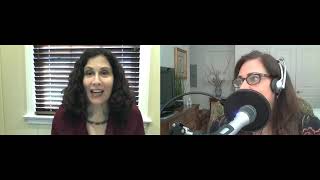
This content was created by Kathy Caprino. This content was uploaded by Kathy Caprino. This is a YouTube video titled "Finding Brave 65: How To Be A True Connector, with Michelle Tillis Lederman" created on April 4, 2019. It features a conversation between Kathy Caprino and Michelle Tillis Lederman discussing Michelle's new book, "The Connector's Advantage," and the importance of building connections. They explore topics such as the differences between networking and connecting, the advantages of being a connector, and strategies for effective relationship building.
Chapters
Hello, everybody. Welcome to Finding Brave. This is Kathy Caprino. How's your week going? I can honestly say you've been hearing me kind of winch and moan about my back sprain. And my guest today knows all about it, but it's finally better, thanks to a lot of inner exploration about what my back. I have to just share this. If you're having chronic pain, my writing coach, I have a fiction writing coach, said, why don't you write a letter from your back? And so it's, dear Kathy, this is your back speaking. Here's what I want to tell you. And I did it. And I want to tell you, it was so unbelievable. And I immediately felt relief in that back pain. But also physical therapy helped and three days of tennis with my son. So my few weeks of Finding Brave through pain have shifted to something else. And I hope you're having a lot of Finding Brave shifting as well. And today, talking about shifting and connecting, we have the wonderful Michelle Tillis Lederman with us. Hi, Michelle. Thank you so much for being here.
I'm so excited. I'm so excited.
And I know you've been on the on the path. Michelle has an amazing new book out that we're going to talk all about. And we're talking about. There it is, the Connector's Advantage. That's what we're talking about. What it is to be a true connector. And Michelle's, she has amazing framework where there are levels of connection and ways you can see yourself and ways you can leverage who you really are to be a true connector. Right, Michelle, we're gonna dig into all of it.
Yay.
But before we do, let me tell you about Michelle. She's blowing my mind here in terms of everything she's got going on. Michelle, one of Forbes top 25 networking experts. I gotta ask how that kind of happened. That's so interesting. Is the author of four books, including the internationally known the eleven Laws of Likability, and her latest, the Connector's Advantage, which we just saw. Michelle is a connection creator and CEO of Executive Essentials, which provides customized communication and leadership programs for Fortune 500 nonprofit university and government clients. A former finance executive and NYU professor, Michelle is a regular in the media, appearing on NBC, cbs, npr, the Wall Street Journal, New York Times, cnbc, and many others. So there you go, Michelle. Thank you again. I know I'm, like, number five on your podcast list today.
I'm number one on my list.
See, you're such a great connector. All right, let us dive. What I want to understand is first of all, and we're just going to chat, we don't even have questions, folks. But this is kind of what I want to understand about connection and what you've done. Why this book now? There's been a million books on connecting and networking. Tell us all about it. How are they different? Why did you think you needed this book? And what's the one most important thing people need to get out of it? If you can share that.
You know, there's two questions there. One is why now and why now? If we think about where we are, right? If you go all the way back to the agricultural age, you need land and the industrial age, you need machines. In the information age, you need technology and data. Well, we're in the network age and our best assets, our most important assets are our relationships. So that's the why now.
That's so true, isn't it?
And God, you know, I feel like right now even more that we're such a disconnected culture that if we start to focus on our similarities rather than our differences and create a connected culture within our homes, our communities, our world, it. Well, I won't get on my soapbox there, but that's a little bit about the why now?
You're so right. I just want to say, just highlight. I think in the past few years we've become so fractured and we're so looking at our differences which severs relationship. I think you're right.
So I always talk about appreciating the differences.
Right.
You know, but better yet, call out the similarities. We have to dig a little bit deeper to find them, but they're typically there. They're just not as visibly obvious at all times.
Oh, I love that. And so the other part of that question was there's so many books about this. What do you think we aren't getting? What does your book tell us that we're not hearing from other people?
The book that this follows is called the 11 laws of likability. So that was one of my first books and that was about relationship networking and what to do before, during and after a conversation to enable connection. My brother in law comes into my office and he says, well, same thing you asked. He says, what's the difference? What's networking versus connecting? And I said, networking is something that you do, but a connector. It's someone that you are.
Mm, Tell us more about that. I love it.
Yeah, well, I give him credit for the last line of the book because I'm like, that's it. Like that just I literally had to Answer him in that moment. And that answer has. Has really resonated for me as a way to help people understand the difference. Because a connector is somebody who is people focused in their approach to interactions, to life, to business, to everything. And if we prioritize our relationships and our people, whether they're professional or personal, we will get the advantage, which is simply faster, easier, better.
That's it.
Easier, better, faster, easier, better, whatever it is you're working on. And I have tons of stuff, and I'm sure you know all the stats in the book about whether it's a job, a promotion, a new client, growing a business, a referral, even health and happiness statistics will show that there's an impact to getting all of those things faster, easier, and better when you have those relationships at your disposal.
Gosh, I love it. I want to take this in an interesting direction. And again, I'm just curious. I'm sitting here wanting to learn from you. My son is home from college and he's an introvert, and I am an extrovert. I have my ambivert moments, but I'm an extrovert. So I want to ask you this, and I just. I'm starting to be so keenly interested in the differences and the biases we have in the corporate world against introversion that we don't understand it. But what I would say, you know, and shyness is not the same as introversion, but when we talk about how different we are in engaging with the world, I do feel like for some people, and that may not fall under extrovert, introvert lines, but for some people, connection is something they naturally do. They're curious people, they're open people. They love talking to strangers. Like, my kids will say, why does the AT&T guy have to tell you his life story? Mom, you know, can't we get out of here? And it just happens, right? Whereas maybe more shy people, more reserved people don't feel that it's a natural thing to make a true emotional connection in that way. Do you see this breaking in terms of extrovert introvert? Do you talk about that at all?
I actually do. And it's something I really want to emphasize. And one of the reasons I wrote the book was because I wanted people to understand that it is nurture over nature. Anybody can infuse these mindsets into their interactions to reap the same reward, but they don't have to do it in the same way. Having a mindset is not having a certain way of infusing that mindset into Your interactions. So I would actually tell you that there's actually a section of the book called the Introvert's Edge.
Wow.
I will tell you that introverts actually have some natural advantages when it comes to connection because they're better at the one on one. That's where their comfort zone is. But that's where connection happens. It doesn't happen when we're in a big group. It happens here. They're better listeners.
They're better listeners.
Oh God, they're so much better listeners. I'm an extrovert, like, right, we can talk about.
We can barely get a word in edwise. We're waiting. No, well, I don't know, but we're waiting to speak and ask and it's like, wow.
We just get so excited and our energy is all kind of bursting out at everybody else. Whereas the introverts have a calmer energy. They put people at ease, they're not off putting, they're not overwhelming. And so all of those things actually really enable connection, whether you're in a big formal setting or a casual setting. When I talk and you actually mentioned a couple of mindsets. Open and accepting is a mindset. Social and curious is a mindset. Social and curious is not social butterfly. It's not life of the party. It's not, you know, talk to everyone in TMI all the time. But extroverts have a great edge as well. They're different edges. And it's to understand how to leverage the strengths that you bring to the table to enable connection. So the fact that you make people feel like they can tell you anything is wonderful, beautiful strength. And you know, it's the idea of people like to talk about themselves and they like to feel that somebody's listening. And I'm looking at you right now and I'm watching your eyes and you show somebody that you are paying attention, that you are captivated and that you care. And I think that that skill can be both an introverted and an extroverted skill.
How wonderful. Everybody race out and read this book. Let me ask you this. You know, when I was in the corporate world and a lot of the people reading your books are corporate employees and leaders, right? Managers. When I was in the corporate world many years ago, so almost 20 years ago, I would hear, in fact, the narcissistic senior leader who said not one helpful thing to me ever, except this. This is what he said. Nothing you do, no amount of achievement is going to amount to anything. If you don't have good relationships with people. And he was a narcissist. So what a joke. Like, I don't know what he was talking. I don't. He wasn't coming from experience. But back to what I was saying when I was in the corporate world, I didn't understand that. I didn't understand what relationships actually do for you. And I think part of that was I was so unhappy and networking was so awful because I didn't like who I was or what I was doing. But can you also. For people that don't really understand what relationships can do for you, and you said, faster, better. What was the other one?
Faster, easier, better.
Faster, easier, better. But do you have any examples? I mean, even in what you're doing now, launching your book, can you give us a real life example about how a relationship made a huge difference?
Oh, my God. I don't even know where to start. There's just so many stories. And I would challenge everybody out there who's listening and watching to think about something that you're proud of, that you've accomplished, whether it's a new job or a new client or whatever it might be, or even getting into that school of your choice. And who would you. If you had to give your acceptance speech and your thank you speech, who would you be thanking? Because there's always a really long list of people along the way. I think about my book for veterans. I wrote a book to help veterans get back in the workplace.
It's completely free.
And the reason it's completely free is because I was able to get a sponsor. And the reason I was able to get it from idea to shelf. Well, technical shelf. It's an ebook in 14 months. Was because you're laughing.
This.
My sister ran into a boy she dated in middle school at a restaurant who happened to be the head of NBC Digital Publishing at the time.
My gosh.
And she said, my sister just wrote a book. And he said, get your sister in my office. I went to his office December 6, and by February, you know, 14 months later, the book was out for free and produced by NBC. So that's. That's a really real life example. But let's take the book launch. I'm part of this amazing community of female authors, and we share resources and we share ideas and we give advice. And I called upon many of them to contribute to the book. The book is an example of being a connector because somebody had the idea of including a millennial's perspective. I was like, oh, you know what? That's a good idea. He connected me to A millennial. And that millennial connected me to another millennial. And then I started thinking about, well, wait a minute, I know this person. And that would be an interesting angle. I have over 30, 30 experts in this book who've contributed their expertise, many of which are in my group of women authors.
Wow.
And so then when the book launched, I went out to all of the people who were contributors and said, thank you. And there was such a buzz on launch day because everybody was like, hey.
I'm in this book.
And, hey, I'm in this book. And it wasn't because I wanted them to do that. It was because I wanted to share their expertise.
What a great example.
But we hit number one.
Number one in a number of categories. And so excited for you. So, you know what? I'm going to punctuate a few things that you said. A lot of the women I work with do not know how to ask or help. Like, I'm in your wonderful author speaker group, and I'm so. I feel so grateful to be. But you're very clear about your ask asks. There's, there's nothing winchy and nervous about it. You know, here's what's happening on March Blip. Could you do this right?
Well, there's two mindsets here that I think are at play. One mindset is the generous spirit, and that's the spirit of our group. It's, it's. We all have a generous spirit towards everyone else in the group, and we want to help. And I've been part of the group for many years, and I am in constant support of all.
When I can see that even during your launch period, you're joining and make, you know, adding a comment. No, I think you should think about this.
If I can help, I'm happy. And there's times that I go quiet, but, you know, a lot of people will just email me directly and, you know, you do what you can. So when you have a generous spirit, it really enables you to ask. And so the other mindset I wanted to highlight was having a clear vision. Connectors know what they want and they're willing to ask for it. And one of the things I teach in the book is how to ask in a way that doesn't put a relationship at risk. And that will get you a yes or a no, but will never put the relationship at risk.
Oh, wow, Michelle, that's incredibly helpful. Incredibly helpful.
So, yeah, you need to know what you want, but if you don't ask for it, you're not getting it. There's no way to get the advantage if you don't ask.
No, that's so right. And to your point, and I see it, if you are generous in the giving without your hand out, without I'm giving. But you better, you know, you better give to me when my book comes out. If you just give, give naturally. First of all, it takes a lot less time than people think. Like, when I see Judy Robinette, who's in our group, who's one of my mentors, how generous she is and how generous you are, you realize how if you have the idea in your mind, who's got time to help all these people, you're really missing it. An instrumental gift to someone doesn't have to take hours. It can be a connection. Like my old boyfriend. I just saw him at the bagel shop. Right.
Don't you think a lot of people.
Think, oh, all this connecting relationship stuff takes too long. Wouldn't you agree?
This is a really critical point. I'm glad you brought it up because there's a lot of underutilized time in our life. And I don't mean downtime. I love my downtime. Don't like, leave me alone when I'm.
Sitting on the couch watching my soaps Netflix for me.
Binge watching, whatever I'm binge watching that week. But when we are thinking about underutilized time, I'm thinking about after I eat, my brain kind of goes to sleep. I'm thinking about 4 o' clock on a Friday. I'm thinking about commuting time. Yeah, I'm also thinking about you can find time to do things when you're already doing things. So for example, I have had business meetings walking my dogs with other people who have dogs. I have had.
What a great idea. And you know, I talk to people when I walk my dog. It allows the dog to have a better walk you to enjoy the time but also connect at a time you normally couldn't. It's brilliant.
And you find that common love or passion of something. I've done them at the gym, I've done them at the nail salon. I actually was meeting with one of my mentors who is the CEO of a company and he's like, I would like to get my afternoon walk. He's like, would you walk with me?
Oh, how fantastic.
And so we had our business meetings walking before the High Line was built in New York City. We tried to break in and we got grabbed by the police.
Oh, wow, that must have been a little while ago, right?
Weaned our way out of it. We were good talkers. But yes, it was a while back and then he's still a mentor of mine. But the idea of do the things that you do and invite somebody to do them with you and you will find time to connect. When you're on your commute, you can be on the phone. If you're in your car, you can be, you know, sending a few emails while you're sitting on the train or the bus or whatever it might be. So I'm not asking people to like strain themselves. And actually that's another mindset that I think is key here, conscientiousness. Because connectors do what they say they're gonna do. They follow up, they follow through. They have to be aware of what they're willing to say yes to and be comfortable saying no.
That's my bailiwick. In terms of boundaries. Do you call it that we. You know, I look a lot about how women are different from men and I do see. I wonder if you see this in connect. I think so many women are perfectionistic over functioners. They do more than is appropriate, necessary and healthy and try to get an A plus in all of it. And that mindset crushes us down. We're exhausted, we're drained. And I think when you're not, well, boundaried, you're either going to ask too much of yourself or of others, or never know how to say no. Would you agree with that?
My husband put a little purple sticky note on the corner of my computer. It lasted about a year until it fell off. And all it said was no. And I left it there because it gave me permission to say no. And I am with you on everything that you said. And I don't think it's just women, but I do think that we do have that perfectionist trap. It's something Sally Helgeson talks about in her book How Women Rise. Sally also endorsed my book, so I love it.
She's wonderful. Yeah.
But one of the things I talk about in the conscientiousness chapter is how to say no and how to say yes. Because those should never be one word answers. It's yes if and yes after, and yes when and yes with and it's no. However, it's no, but it's no when it's no if.
Right?
Like there's. It's just. I often will say no because I have learned how to say no because I've created a decision criteria in my head. And that can be very helpful for people who, when they're on the spot and they're not prepared and they're uncomfortable, and they say yes before they're ready to have two to three questions in your head that helps you decide if this should be yes or no.
Interesting.
And so my questions have changed over time to what's important to you and what's important to me. My questions now are, does this relate to my core mission and my message? Number two, is this a relationship that is important to me? And number three, is there some other reason I want to say yes? Is it a cause that I care about? You know, is it a huge paycheck? Is it a trip? What is it, Is there some other reason I want to say yes? And if I can't get a yes out of those three, then the answer is no. No, But. No, but here's how I could say yes, no, but here's when you should reach back out to me.
Oh, Michelle, these are fantastic tips. What did I want to say? There was something about that what you're sharing is a teachable point of view. How can we learn to. To make the right decisions for ourselves? It's decision making, isn't it? Oh, I know what the question was. So I'm guessing in your line of work is the same as what happens to me when you have a reach that's kind of big and when you're writing, people don't understand, for instance, for me, that my work is a career coach. So if you're coming to, you know, you're on LinkedIn and I have 900,000 followers and not literally. And if I hear from someone and I'll. I might. This might be ten times a week. Kathy, I saw your article on how to ask for promotion, and they'll write me a whole dossier of how they're trying to ask for a promotion. And I have gone through what you're talking about. My decision questions, am I going to help this person one on one? You know, either respond, not respond, point them to free materials, send them. What am I going to do with this person? And I would suggest everybody listening, make a decision from your core values. Who do you really want to help in the world and why? Like, for me. Let me just share quickly. I don't just want to help wealthy women or only CEOs or executives or, you know, I want to help anybody, but I can't help everybody with one on one work. Yes. So make those decisions for yourself. And I think that it takes so much of the burden of am I being who I want to be in the world away. Would you agree?
I feel all of the things that you just said because I get those all the time. Probably not as many as you get. And so I might have to start shifting how I am fielding them. Dorie Clark is actually one of the contributors to the book as well. And she talks about this challenge like at the beginning, as we're starting to come up in this and we get these, we're really excited and responding to everyone. And then she kind of has a way to sort of parse through people. So have they done their homework? Have they already looked at those resources? Where are they in that process and can they go back and do those things before they actually come to me?
Beautiful.
You know, I have a. And she gives a whole framework for that in the book and I think it's in the chapter on abundance. Right. My philosophy has been at this point, because there's a lot of types of work I don't necessarily want to take on, but people are constantly reaching out to me for.
Right.
Very limited one on one coaching work that I will or can do just because I feel that I have more impact in the one to many than in one to one. But every once in a while I do enjoy working directly with somebody. And so when somebody asked me for coaching, what I used to do is I used to publish really high rates, but then people started paying them, so that didn't work anymore. And so I took the rates off the website. But what I do instead is say, listen, if I can help you in 30 minutes for free, I will do that. I'm soon gonna probably have to move to 15 minutes and I'm soon probably gonna have to take that away too. But for somebody who's coming in through referrals from somebody I know, a connection, if I have it in my calendar, I will give somebody 30 minutes again. It could be while I'm driving, it could be while I'm on a train to another gate. It could be something like that.
But.
And then, and then, and then here's, here's what I advise you to do and go off and do your thing. I'm not always going to be able to do that when it comes to those long emails. What I've done and probably what makes sense for you as well is I will say, hey, thanks so much for this question. This is a great topic for future success, Shorty, which is my video series on YouTube or a future blog. And I'll say, here's a quick tip or quick answer. I'll give them one or Two sentences, and then I'll say, stay tuned. I will include this in a future articles so that everybody can benefit. And I'm sure you're not the only one who's struggling with this. So, I mean, for you as a Forbes contributor and a writer, it's a great way for you to say, hey, I heard you, and hey, you're in the queue.
Love it. And for literally everybody, I've done post on it, I've done a video on it, I've done a podcast on it. So I can say, you know, here's what I would tell you. Check out this, this, this, this, and check out the free and blip.
Yeah.
So I think we're on the same page. I love it. You know, it seems to me that your book could be called the Bible for a Life well Lived. You're not just talking about networking and connection, are you?
I'm not because there's actually research out there. We talked about the business aspects of, you know, 85% of jobs come from networking. 70% more likely to get a promotion if you have an active mentor. 92% of people trust referrals. You are four times more likely to close a deal when it is coming through a trusted source, a trusted referral partner. So that is all the business stats and those are on there. But the stats on health and happiness are the ones that really impact me. When you have close work relationships, you boost your productivity by 50% and it predicts your happiness on the job. When. When the research out of Brigham Young University came out, I was blown away. The health impacts of social isolation and loneliness are greater than that of obesity and I know equivalent to smoking 15 cigarettes a day for 10 years.
It's like a predictor of early death a little bit, isn't it?
Yes.
And we'll link to this study. I know this is not just a nice to have. It's nice to feel connected, nice to have friends. It's so much deeper than that.
You will be happier, you will be healthier, you will be more successful, faster, easier, better. It is all because of our connections. So get connected.
Oh, I love it. I love it. Is there anything else we need to know from this book? I would love you to touch on. You have being a global super connector versus a super connector. They're different, right? Is that right?
There's actually a spectrum. When you think about the. I call it leveling up. There's very few people that are really non connectors. They don't go out of their house. They don't Believe in the value of relationships. There are very few of those. Most people are at least emerging. They're starting to infuse these mindsets. They see the value, but they're not comfortable yet. And then they become responsive, where people will ask them for things or introduce themselves and they'll respond, but they're not initiating. So the first way to level up is to just initiate a little bit more. So it's not that you asked me to join the authoress group. It's I said, oh, my God, you'd be such a great addition to our group. I invited you to join. That's initiation.
I see, right. Thank you for that, by the way.
And you've been such a wonderful addition to the group. Right. Because the more people who we bring in that are having that generous spirit, the greater and the more rich the conversations are. So as we start to initiate more, we move from responsive to acting connectors. Now, that's a great level to stay at. If people are at an acting connector, they're both responding, they're initiating, they're infusing the mindsets, but they just haven't yet kind of developed that breadth and depth of connection. They're good. Once you kind of start to think about the next lever, the depth of your connections in a certain geography, in a certain industry, in a certain job function, you can become a niche connector, right? You know that person who you always say, like, oh, she knows everybody, right? That's a niche connector in whatever that area. They know everybody in niche connector. Love it when you start to broaden and you are now going across geographies, across job functions, across industries. Now you're a super connector. And if you go cross country borders, then you're a global super connector.
I want to be that.
Well, the funny thing is, you know, and each with, as we say, it's a spectrum. So there's people who are like really global superconnectors and then little global super connectors. I'm a little global super connector. You know, I know people on a few continents. And, you know, I was on the phone, I was reviewed by Forbes in the uk and the interviewer, John Welsh, wanted to have a conversation before he wrote his review. So we got on and we're chatting, and I asked him about him because that's what I do. I'm social and curious, and I wanted to understand a little bit about what he was working on and what he was trying to accomplish. And he started to share with me, and I said, hey, do you know so and so who Happens to have just done the same thing he was talking about and also happens to live in the UK near him. And he's like, no, I'm like, I'll put you guys together. And on that same day, that woman had emailed me, and I'm like, oh, my God, your ears must be burning. I just said this. I'm like, would you like to. Yes. Okay. Put you guys together. The fact that I knew somebody in the other country that I could make that connection with, that's the idea of a global super connector.
Wow, that's beautiful.
I can't always do that, but it was kind of cool that I could.
That's so fun and cool. And you bring up one more tip and then I know you have another show to do. Can I just make a tip for you people? When you reach out to a media person or they reach out to you and they interview, ask them about them as well. So many people who I. You know, when you write about a lot of people as you and I do, you know, you both do. We both do. On Forbes, for instance, people separate themselves by the size of their spirit. And you can see it like, I interviewed John Maxwell, number one, named number one leader, you know, in the US by the American Management Association. At the end of our talk like this, he said, we're pals now. Kathy, what can I do for you? I mean, I almost fell off my chair. And he was curious. He wasn't just racing, looking at his watch, you know, about who else was going to interview him. The man was present. So when someone's helping, you don't just see them as a way that you can rise up on your ladder. Think about them as a person. You know, I'm sad that we have to say this, but we do. Do you know what I'm talking about? Have you ever met people that it's so all about them?
I love that you're saying all this, and I think that I like to believe that people want to give, they want to add value. They don't always recognize how they can do it, and they don't always maybe have trust or faith in their own value to add.
Oh, that's beautiful way to look at it.
And that's one of the things I talk about. You know, there's a chapter on trust as well, and understanding that we need to trust ourselves and we need to ask the question. So I was on a show right before yours, and I kept on telling him, I'm like, you have to make sure I get off the phone because I'm going to keep talking to you. I got off the phone seven minutes before we got on because I'm like, I need a little bio break between. But before we recorded, I said, okay, so tell me about you. And he starts telling me all about his work history. I said, that's great. So now tell me about you.
Oh, interesting.
And he's like, oh, well, because I said, me.
You mean me as a person.
And then later when we were recording, I said, listen, you know, when we got on, we had a conversation beforehand and I kind of shared that experience. I said, but when you told me all about your work, that was great. That was really interesting. But it was when you told me about you that I learned that, you know, you coach soccer, my kid plays soccer, and that you have dogs and I have dogs, and that we're both. And so I'm like, that's where we found our connection. That's where we had to cut ourselves off from the conversation. It wasn't the work conversation that was easy to cut off.
That is so important. I remember in the times I felt most isolated in the corporate world, I would say, nobody knows about who I really am and nobody cares. And who I am, big, you know, big deal. They aren't that, you know, fascinating. But I sang, for instance, I sing on the side or this and that. When you, when you feel like no one really knows who you are, you feel very isolated or that no one cares to know who you are. He must have felt really wonderful that you even asked that.
He was surprised.
He was like, oh, oh, we have time for that.
You know, nobody asked about me. And this is why I do a course. It's both a keynote. I have a one hour, two and a half, half day, four day, two day version of this called the Relationship Driven Leader.
Oh, how beautiful.
And I do it all over. I've done it all over the world. Because when people feel like you care, the Relationship Driven Leader will directly impact the bottom line. From retention, to loyalty, to engagement, to productivity, to your valuation and to happiness, I'm guessing. Oh, yeah, that too.
Right.
Let's not forget about that part.
Oh, my gosh, you know, we were already over. We could talk another 10 hours. I love what you're doing. And can I say from my heart, what you're doing gets to the heart and soul of who we are in the world, you know, and that is the best business leadership stuff. That it helps us be, it helps us reach the highest potential of who we really are and want to be. And that is rich content. So I hope everyone will flop to your book. Now where can they go to you? Where can they find this? Where can they find all your stuff? It's so beautiful. I love it.
I had my nails painted. I don't know if they can see. They match the logo of the book, right?
Oh my gosh, it's fantastic. Where do we send people? What are the links we're sending to people?
So if you go to the connectorsadvantage.com, you can find out about our bogo, which is a buy one gift, one offer, great way to connect with somebody. Give them a gift and you will then get lots of free chapters of other things and you'll get a free audio training with Jordan Harbinger and you'll get lots of other stuff and discounts. If you go to my website, michelletillislederman, it's L E-E-R-M-A-N dot com. You will find my LinkedIn, my YouTube, my blog. So all of those free resources right before they come and ask for additional help, they're there. We want to help. We put that content out there. So I hope you'll go grab some of it. Connect with me and I also give some free gifts on that website. So if you just join the newsletter or just go to the gift pack page, you'll get lots of, you'll get a networking assessment to find out what.
Level you're on and what mindset and oh my gosh, I love it. I'm jumping on all of it. Thank you for being here. I'm so ready to connect in even a deeper way. And let's get going with the global super connector that I'm competitive. That's where I want to be.
It was so much fun to be on with you.
Thank you, Michelle. I'm so happy for the success of your book and it's so rich with life changing strategies if you ask me. Thank you for being here folks. I hope you feel this helps you be brave or find brave in connecting. It's, it's going to change everything for you. You're going to see what a friendly and warm universe it really is when you, when you trust it, trust yourself and trust others. I love it. All right, let us know. You know, I do publish these on every social platform that I'm on and Michelle will too. So maybe on our LinkedIn updates we're going to have this and we have it also as a video on my Elia communication page on Facebook and LinkedIn. Let us know what you think. Let us know that you used a strategy and how you felt and how it changed you. I know Michelle would love to hear, and so would I. All right, everybody, have an incredible week. See you next time. Michelle, thank you again so much.
Bye.
Thank you. Bye.
More from Kathy


Elevate Yourself, Elevate Others, and Amplify Good | Chris Cooper | Finding Brave Ep. 334

Finding Brave Epis #333: How Leaders Can Harness AI Without Losing Their Humanity, w/Bennett Borden

Finding Brave Epis 332- How to Stay Brave, Valuable and Visible in the Age of AI, with Raman Rai

Finding Brave Epis 331 - The Power of Positive Disruption, with Dr. Patrick Leddin


Finding Brave Epis 330 - Being 40: Letting Go and Embracing Who You Are, with Stacey Lindsay

Disrupt Career Reinvention with Kathy Caprino - via The Disruption Lab Podcast w/Patrick Leddin

Creating Neurodiversity-Friendly Work Cultures: Simple Workplace Adjustments Matter

Finding Brave Epis 329 - How To Create a Neurodiversity-Friendly Workplace, with Kristen Pressner

Finding Brave Epis. 328: Reclaiming the Power to Trust Your Own Voice, with Dr. Cindy McGovern