Finding Brave 66: How To Build Your Thought Leadership, with Robin Farmanfarmaian
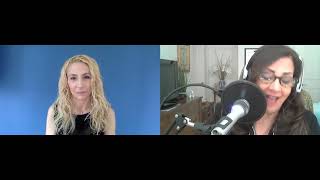
Robin Farmanfarmaian walks through building thought leadership from scratch. Start with your business model and revenue streams, define who your customers are, then find your core truth. She recommends writing a strategic book as a multi-product platform, budgeting for a 3-5 year build.
Chapters
We go. All right. Hello, everybody. Welcome to Finding Brave. This week. How are we doing? And I am so excited to welcome Robin Farmin. Farmian. Yay. Look at that background. So beautiful. We are gonna have a Finding Brave thrilling experience here and I hope this is gonna really help you. What we're talking about today is how to become a thought leader and get known for your ideas, which Robin is rocking it out of the park, expert at. And, you know, I think we're going to talk all about it, Robin. But almost everybody I know, whether they're an entrepreneur or a corporate person or have a small side gig, have some idea they want to share with the world in a bigger way than they are. So I feel like what we're going to talk about is really great for anyone who feels that way. Right.
Would you agree? Absolutely. I mean, being a thought leader in your particular area is incredibly beneficial whether you're working for a large corporation, you're an entrepreneur, you're a specialist, like a doctor or a lawyer or an accountant. I mean, if you are out there in the workforce, this is a good, good route for you to go.
All right, awesome. But before we do that, let me tell you all all about Robin, who's got an amazing personal story as well as professional story. But here we go. Robin Farm and Farmian is a professional speaker, entrepreneur and angel investor driving high level business development for a wide range of organizations in medical, biotech and other fields. Empowering professionals. Robin also works with executives, entrepreneurs, consultants, and other professionals who want to become thought leaders in order to accelerate their career and business goals. Her first book, the Patient as How Technology Empowers the Healthcare Consumer. I Gotta get that. Is number one best seller on Amazon. And your second book, the Thought Leader Formula, is out right now, so. So that's what we're going to be talking about. So let's dive in. Robin, why did you write the book? What was the most compelling motivating reason for that?
Well, it was actually a really tough decision to decide to write this book. Not because it was hard to write. It literally took a few weeks of me just sitting there and emptying out my brain. And I had about 20,000 words already to work with. The book came out to about 50,000.
Wow.
But I'm in healthcare. Right. I work on early stage pharmaceutical, medical device. My big professional speaking career is in the world of health technology. I did talk at things like the American Academy of Dermatologists, you know, with 3,000 doctors in the audience, and the American nurses association with 2000 nurses in the audience. So it's a huge departure for me. And I was thinking, and it was a really hard decision because I was going to bifurcate my brand. And that's what I was thinking to myself. But I realized I absolutely had to write this book now. And the reason is because of the Me Too movement. I know it sounds. It's a weird connection, but it really goes back to why I turned myself into a professional speaker. This was not an accident. I didn't just fall into making 10 to $20,000 a keynote in front of these big audiences. It was a extremely strategic, step by step project plan that I created for myself about five or six years ago because I was being bullied, harassed and abused in the workplace.
Oh no.
Yeah. And like most victims in these kinds of situations, I thought I was the only one. Right? You never realized just how widespread the problem is. And back then I tried to go the normal route like you would do, like HR and trying to get the scenarios to help you. And let me tell you, that's the worst way to go. Not only do women usually not win down that route, but they're re traumatized and sometimes traumatized even further. So I said, you know what? I don't think that works. I'm going to change the game. And that's what I did. So I sat down one weekend and I created a five year project plan for myself. Step by step, instructions on how to get on those big stages and charge those fees to turn myself to essentially give myself protection. Because I knew if I was known for my ideas, people couldn't steal my work anymore. No one could pretend that I was the EA instead of the Vice President because that needs to go on behind my back. And let me tell you, the day my first book launched, the Patient as CEO, about three and a half years ago, it was like a light switch. The way not only has nobody even remotely come here sexually harassing me or bullying me in the workplace, it just doesn't exist in my life anymore. But the way people acted with me, even my friends, dramatically changed overnight. It was their perception of me. And so I realized when the Me Too movement started about two years ago, it's like, wait a second. It's not just me and I have a solution, right? So. And my solution is a two step thing is a become known for your ideas and your brain so that people can't hurt you anymore. And then step two, send the elevator back down for other women.
Oh, Robin, what a story. I want to ask you this. I feel like I'VE been bullied and harassed in the whole mess too. And I think part of why it looks like there's a switch that's been flipped that all of a sudden nobody. I say, don't f with me. You know, don't, don't f with me. I think part of it is what we internally feel about ourselves. And I think in writing our book or writing a manifesto of what we'll never accept again or, you know, whatever it is, putting your idea out there before someone can steal it, I think we are internally telling the universe, I've had it now, no one's going to mess with me. Don't you think it's part of that is part of the equation, Robin?
It's a huge part of the equation. Absolutely. It gives more credibility, things like this. And I teach you hacks in the book on how to get a book out really quickly, like within a couple of weeks.
Oh my gosh, I'm writing my second book. It's not a couple of weeks, I can tell you that. Yeah, I want to hear those tips.
But it really is. That book gives you more credibility, I think, than an mba.
I believe that because an mba, you're learning other models, you're learning other people's information. This is you sharing your thought leadership that immediately elevates you. What a story. Wow. I'm dying to go in five different directions here about. Well, let me just ask this because we're talking. Me too. Do you think that you experience so much of that harassment, you know, discrimination being passed over because it's a male dominated field? Healthcare. Oh, is that a reason?
I was working in technology. So I'm in the heart of Silicon Valley where men outnumber women by. I don't even know. I would be the only woman in the room a lot of the time and therefore treated like the executive assistant or there were times where I'm an expert negotiator. I've taken negotiating seminars. I mean, you know, like I've done deep dive into this. I've personally closed and raised myself over 6 million for very early stage companies and selling my products and educational packages and fundraising. And I was told by two entrepreneurs who were male, about 15 years younger than I am, early in their careers, that I wasn't allowed to talk.
Oh my gosh.
In meetings that I had set up with my contacts who I had had for like five or six years. They'd never met and they had never done any negotiations and I was told I wasn't allowed to talk.
What did you say to that?
I smiled and kind of just basically wrote off that company permanently. I'm like, you don't change people's opinions like that because these were millennials. And they would say all the time how they thought women were equal and blah, blah, blah. Except for I was the only woman in the company at the time for a while. And I was also sexually abused by the attorney of that company in front of a team of nine males who are millennials. The entire time, the attorney kept touching things like my breasts and my butt in front of all of these millennials. And that was the day I met him. They kept saying how amazing that attorney was because he went out partying with them all night and went DJing and they were out dancing until 3am this was an attorney who was clearing 50 year goals.
Oh my gosh.
So I was just like, see ya. You know, you don't fight. You can't fight that. You can just turn around and live your life in a different direction.
Oh, that makes me just feel a million different emotions. I'm so glad you've risen above it. And this is. It's almost like you're not weapon, not secret weapon. I don't like that analogy. But your way of turning your mess into a message, right? That.
Exactly.
This is how you have decided to fight back, to be taken seriously, to not never be dismissed again. Wow.
Exactly. And it is that two step process. So don't forget about that other part. It's really raising up other women. Because as a single woman in the C suite or on the board of directors, it's really hard still. But if you can pull up a whole bunch of other women with you, you dramatically change the gender and power dynamic of any company.
Oh, wow. This is so deep. Now that I know the why behind the book, I'm even a bigger fan. Oh, I love it. All right, so let's put in mind we're talking to, let's say, corporate execs who have an idea or entrepreneurs who have an idea that they want to get known for. What are the very first steps they need to take? Robin, where do they begin?
So this is going to come as a surprise to most people, but the very first step of becoming a thought leader is, is to step back and figure out your business model and your revenue stream. Because those two things are going to then indicate your customer avatars, who you need to reach, and that those three major things are going to determine what is your why for that particular situation and what is your fundamental truth. Those two together are really the basis of your idea of your platform, but it really is. It starts with understanding where your revenue streams are coming in and who are you trying to reach. Because a lot of the time, if you're a corporate executive, your customer avatar are the people who work above you.
Oh, interesting, right? You talk fast, Robin. You got to slow it down. There's so many things I need to unpack in that. Can I ask you some questions? So why I love doing this show is I learn. I learn myself. So I'm going to ask you questions I Wish I'd known five years ago, 10 years ago. So let me have you repeat this. The very first thing you have to understand before you get an idea out there is the business model, how you're gonna make. Generate revenue from it. Is that what you said?
Exactly.
So can I just. Let me just talk to you about this so we can really understand. You know, if I look at my trajectory briefly, you know, corporate exec, ended up hating it, became a therapist and then becoming. Yeah. Marriage and family therapist. Rape, incest, pedophilia, suicide. Wow. Then becoming a coach and then thinking I had something to say, like, ever so meekly, you know, like, maybe let me write a blog post and then may. Maybe after working with enough career women and writing a book, maybe I can, you know, comment on this one Forbes, or submit a Forbes post through another blog. And then they wrote and said, hey, do you want your own blog? And I remember saying to myself, no, I don't know enough is what I said to myself. But why I'm sharing this is. I emerged, I think, as a thought leader from an intense desire to speak about and address career challenges that I saw all around me over and over that I didn't know were common until I saw that they were so common. So there was nothing about what's my business model for that. So for someone who. And I deal with a lot of professional women who want more meaning and impact. So for someone who. And we both now use a wonderful organization that helps us do marketing and admin, and they talk to me about. Think about what you're doing and how you're generating revenue. Because if. If you're saving time using an admin or a virtual assistant and it's not freeing you up to make money, what are you doing? And. And I think that so many women do not think like this.
Nope.
You know, not just women.
This is not a gender thing. That is actually. Human beings don't think this way. They don't think about the goal and then reverse Engineer it. For the most part. Most people just kind of go along through life.
All right, so if you're just coming out of your shell and think, I think I have something to say, and you're even too scared to even believe you do, can you take us even back a step so we can think about, okay, I think I have something to say. So someone just coming out of their shell, how could they think about making money without freaking them out? That I don't even know if I'm ready to be a thought leader, let alone have a business model around it. How do you walk them through that?
So the secret is with things. And I call this new Inc. So Robin Inc. Kathy Inc. Sam Inc. You know, Kelly Inc. Whatever. Whoever the person is, your business model you're already living, already exists. It's already revenue is coming into your checking account from somewhere.
Right.
You have revenue streams set up. So your business model, let's say, let's take someone who's a vice president of a corporation and they want to make it to the C suite, which is a couple of layers higher, and it's a big corporation, that's a pretty steep ladder. Right. Their business model is their full time salary right now.
So.
And that's one of their revenue streams. And they know they need to reach their superiors to get promoted and, or raises and, or negotiating power or they need to reach the C suite or senior vice president level of other similar companies.
Okay.
Who could take them and you know, headhunt, and maybe you also, your audience is also like headhunters, but your business model and your main revenue stream is that salary coming in and then any other individual revenue stream. Because I do have an entire chat chapter on building multiple revenue streams in your life. Focus on your salary one first, because that is your main business model. But then you can add in three or four other ones like keynote speaking, advising companies, sitting on board of directors, book sales sometimes maybe writing fees, maybe workshop fees, individual consulting projects, and you can add those on going forward. But you know what? For now, focus on that main revenue stream, your business model, which is a salary.
I see. And the idea of getting your. Becoming a thought leader means the business model would be you're going to either increase your salary or generate money these five different other ways or sitting on a board that you never thought you could because of. All right, beautiful.
Yep. So you're already living it.
All right? Living it.
You just have to identify it and write it down. This is all about just intentionally creating a project plan for yourself.
Oh, I love It. I love it. Now, what's the next step they have to take? What do you think?
Well, so that was your business model, your revenue streams. And I start a little bit touched into the avatars, the customer avatar attributes the top 15, you know, who are they? What are their sex, their socioeconomic status? It's a basic marketing exercise. I take it through, take you through it in the book. But the next step is to identify your why. Why you do what you do. And if you've heard of Simon Sinek, he wrote a book called the Golden Circles. And it's, you know, people do not buy what you do, they buy why you do it.
That's really true.
So identify your why as it relates to your business model and revenue streams.
So give us an example. Give us of somebody. Give us an example of someone who's struggling with that, that you've worked with and got over it. They got over it.
So let me think. Good one. Only tie that into the fundamental truth first, because then it'll get a clearer picture. So it's not just your why, but what I call your fundamental truth. What is that thing that you believe that the vast majority of people either don't even know about yet or don't believe themselves.
Oh, that's so good.
So it's those two things combined together as it relates to your revenue streams and business models. Because we all have 17 different whys we do anything, right. So right now, this is basically, I'm taking you through an exercise on creating good marketing language and positioning. All it is branding, positioning and marketing.
Can I. So let me get. Look at my how I'm way in the sun. Sorry, folks, not attractive. But I know you're looking at Robin here because you haven't seen her in my community before. So I want to give an example. I love to, you know, tell a story that helps people. So, you know, I wrote my first book, Breakdown Breakthrough. I have been working on what this second book should be for years, two years at least, and have a wonderful agent and have done some incredible work with other publishers to talk about. Yes, this is great. What about this part? How about bringing this part forward? But you know why this book, which is tentatively called Close youe Power Gaps, I think did move forward, is because I nailed the one fundamental truth I want to talk about, which is not easy to nail, frankly, but it is about the fact. I believe that when we feel powerful and when we feel confident and when we're clear about what we want to do, it all goes pretty darn well. It's when we're not clear, not confident and not powerful. So closing I, you know, identify the seven power gaps and what they are, how we get there and how we overcome them. But you're so right that finding that fundamental truth that you want to sink your teeth into, that you want to spend time and money, you know, expanding and enriching, that can be really hard for people because you have to dig down to the deepest level. Right. Wouldn't you agree with that?
Yes. Although some people, it's incredibly obvious, right. I can look at them and they'll be, I'll be like, that's your fundamental truth and here's your platform. Like, I was talking to a friend of mine who actually has a digital strategy at the main TED conferences and we were communicating back and forth and he's like, I don't even know what my business model would be. And literally in about, I think it took me 180 seconds. I wrote out his business model, I wrote out his revenue streams, I wrote out some of his customer avatars and I wrote the title of two different books for him and the subtitle of two different books. And it took me literally three minutes.
Wow.
It's just so, it's so obvious and so.
And it's so obvious to you. I think he was probably pretty floored, right?
He was floored. Like, I think he fell off his chair when he read my email and the fact that it took such a short period of time.
Yeah, all right, fantastic. Well, you got to read the book, folks, to learn how to do this. All right, so now you know your fundamental truth. So let's. Time is going by. Let's talk about folks maybe who are consultants and they want to be an entrepreneur and they want to be, they want to go out on their own, let's say. Yes, they don't have any money to do what, you know, some of us are doing in terms of marketing support or digital, digital marketing work or social media or launching that course that requires funding. What did they do, Robin?
So it is a long term vision, right? This being, becoming a thought leader is not something that's going to take you just a few months. This is a three to five year process to really start having a revenue generating business where you're bringing in massive amounts of money. Like, you know, it could be six figures or even potentially seven figures. Fantastic for consultants because once you're known as a thought leader and have a book out there, you can double, triple or even quadruple your prices. Whether you are just consulting for the C suite of companies or you're an attorney, like whatever it is, if you're an hourly consultant, you can go up to $1,000 an hour, two, $3,000 an hour once you get that thought leader status. So understand this is a process and I'd actually help you with a budget and a profit and loss statement. I give you a 10 tab spreadsheet that helps you map out everything. Your system, your conferences and your budget. Because if you think you can become a thought leader for $0, I am going to tell you right now, you will fail. This is a business and 100% of profitable businesses require some type of capital. Now it doesn't need to be all at once. So say you have no money whatsoever. Maybe for those six months you're setting up your platform and that's not going to cost you anything. Right. And going through my book, it's going to cost you $9 for the, you know, the ebook or the workbook is on my website for free and you can even start there. But know that you will need to invest money into this in order for it to actually gain huge acceptance. Like maybe you just want to be in a tiny niche and that's all you need. Maybe, you know, but most of us, if you want to get like $20,000 of keynote, it's going to require investing cash.
That's true.
It doesn't have to be that much. So I'll tell you my figures now. This is not the figures of all of Robin Inc. But for the first three years, turning myself into a thought leader between speaker coaches and high end designers and I've got editors and scriptwriters in the marketing department and I had a PR company for a couple months. So in three years I spent $70,000. And then for the patient as CEO. Sorry, that's the patient as CEO for the salt year formula. I started that last April. Ish. So it's been about a year. It just launched three weeks ago. So I spent all in about $50,000 developing the system, getting the marketing company, getting the online program filmed, edited on Kajabi, like everything all in, you can spread that out over a few years. So you know, you're only talking 10,000 to $15,000 maybe a year to start.
I think that you're right in the, you know, makes perfect sense. I do want to give a cautionary tale word. When my first book came out and I had zero platform, so it was a wonderful publisher that took a chance on me. But the implicit arrangement was you'll hire a PR firm. So it was $30,000. Five, you know, whatever, six months at 5,000. And it did get in Wall Street Journal, et cetera. But I have to say for anyone who's writing a book, be incredibly careful knowing this, that kind of investment, you're not going to see a return in book sales. Probably. Right? I mean some do, some I know.
A few people are making.0001%. The vast majority of us will never make that kind of money.
So you need a business model that is going to support a return on $30,000. Right. And don't think it's. And also don't think I learned this. I was looking at, you know how anyone who's a new author, they're looking at Amazon to see did I make the rank? Where am I in the ranking? It's obsessed. You can be in the Wall Street Journal and unbelievably that doesn't move any needle. You know it. So I think a lot of people wax poetic about what it is to be an author and what it will generate financially. So you know, what would you say to that, Robin? If someone's just coming out with their book and it's a great book, but they're thinking I'm gonna make money like I thought, all right, 30,000 is going to be paid back with you know, blip. Number of clients, 10 clients. But you don't. Book readers aren't necessarily going to be clients. That's another thing. So what do you advise people when they're like woohoo, I have a book and now I'm going to make a million dollars. What, what do you tell them? Robin?
First of all, it's going to take a while. You can do a million dollars from a book. Absolutely. It will take you years. Right. So this first year when you, when you launch, and we say this in Silicon Valley, I'm an early stage entrepreneur. If you launch and no one pays attention, keep launching until somebody does. Right. So this is your first. You don't want like my book published on March 5 and that was technically the launch, but I think of this entire year, 2019 is the launch.
Love that, Love it.
So it's a long term vision. But also I call your book because if you were to self publish without and you wanted to order a copy of your book on Amazon, it's $3. So I call your book a $3 business card. You do not care if anyone ever opens the pages. You care that they see your cover, the type title, the subtitle, the quote, your name and that you are in that industry because the vast majority of your clients probably are never going to read your book. But the fact that they know your book exists is what books you for keynote speaking or can get you a client.
I love it. I want to say one thing though, folks. Being a writer and you know, I've been an English major in college, I love ideas. There's one, my, one of my friends years ago was, was going to a retreat of a marketing guru and this is what she said to him. Just get the thing out. It doesn't have to be good, just write it. I don't like that idea, Robin. I don't like it. I don't like it. I don't like it. I don't like it. Why? Well, let's go down to the basic fundamentals of integrity. Just throwing shit out is not going to reflect well on you, I think.
Oh no, no, no.
Would you agree you would never throw.
So you need to write your book as if everyone is going to read it.
Thank you for saying that.
It needs to be solid because, and you'll see it's, I call a book is actually nine products in one.
Oh, wow. What are those products? What do you mean?
Because your book is basically your encyclopedia of thought leader knowledge. It is the entire set. It's your full on encyclopedia or dictionary. And so everything that you say for the next three years essentially is ripped from the pages. So these need to be solid ideas. The wording needs to be solid. Because here I'll list down the nine products coming from one book. And this could be even one 100 page book like that, you know, like a short little book. And so the first one, and I've done the first five, the first one is the free workbook or the assessment tool, the quiz. And that while it seems free to the customer, it actually does cost an email address which opens up the relationship for upsell.
Love that.
Your second product is the actual book, audio, paperback or ebook or hardcover. So you've got four versions there you can do. Third product is your online course which can sell for anywhere from $50 to 5,000 depending on your audience. Your fourth product is your consulting based on your systems and or knowledge that we found in the book. Your fifth product is keynotes or workshops, again all based 100% on that book.
Love it.
Sixth product is a conference or an event, right? And you can do an online event and charge people money. You can do an in person conference and charge people a lot of money. And then the last of those is seventh and eighth, and the ninth product is a hybrid conference calling Mastermind, which you can charge anywhere from 500 to 5,000, 25,000. And I've even seen a mastermind for $100,000 a year per participant. And that's in hybrid. Oh, I'm sorry, the ninth part. I must have skipped one, because the ninth one is community. So you can actually run a community. And again, that can be $1,000 of participants or what have you. And it can be an online forum.
Oh, Robin, I love it. So, folks, don't just throw it out there. Let everything you say be a reflection of who you are at the highest level you can be. Right? Oh, I love it.
Absolutely.
So what about people who say. People come to me and say, kathy, I see you're writing a second book. I'd love to write a book. And I'll say, oh, good. Are you writing anything? No. And I always say, look, folks, you can't write a book if you're not writing anything yet. So what do you say to people who say, oh, I'm so interested in writing a book. Where should they begin when they really don't know how to do that?
Robin. So they have to start at the beginning with their business model and revenue stream and all of that. So make sure they understand that, because all of that will determine the subject as well as how you write it. Because if you are writing only for physicians, you're going to use a lot different language than if you're writing for the average person who might not be in medicine. Right. And that's from my health care side.
Right.
So you need to understand your audience in order to understand what kind of language the book needs to be in.
Okay. So you really have to understand the ecosystem you're playing in and you have to kind of intervene at that Right level for them. Right.
It needs to be strategic. If you're just going to sit down and write a book and then expect things to fall into place, you're going to be wasting a lot of time and money.
I want to point out something else, too, that I bet you're going to say, I always talk about. We need a model for change. We need a well formulated, proven model. Well, I can tell in the way you talk. That comes really naturally to you, I'm guessing. And I used to, like, as a kid, used to think in like, outline form. Like my social studies notes would be one A, you know, B. But I can see you automatically do that. But for people that don't know how to have a model for Change. Like where do I even begin? How do I talk through what I wanna share with people? Do you have any tips? Cause I can see you're so good at that naturally.
Yes. And so I have all these exercises. I have a 10 page workbook that comes along with the book for free. And so one of the exercises, after doing your main goals, your business model, your fundamental truth, your why's your customer avatar is I have you write out catchphrases. I have you do say and catchphrase or tagline, whatever you'd like to call it. I have you do about 20 of them. And so for my first book, I did things like doctors and medical engineers, the patient as CEO sensors creating an Internet of you, you know, virtual reality, helping stroke patients. Right. Like, I mean, I would list out different things that I wanted to use over and over again and I kind of tested them out. But that really helps you focus your main messages because you can't write it on the back of the napkin. And I call this the back of the napkin method. Then you are putting in too many details. So just jot it down. It's a brainstorming session.
Oh my God, I love it. So I have to ask you a personal question. Can I. What? Were you this creative as a child? Like, clearly it just flows out of you. Were you?
I call this OCD cusp.
OCD what?
OCD cusp. So you know, obsessive compulsive disorder. But like I am not actually OCD clinically, but I'm like on the cusp.
On cusp. There you go. That was the word I didn't get.
Yes.
And things you retain a lot in your head. Like it seems like your head's exploding at all times. Is it?
I think in systems. I think in systems and I think in numbers. So I remember people by a number associated with them, whether it's their height, their age, the number of years I've known them. Like I took pre algebra when I was six years old. And the other funny thing is that at six years old, my dad said we used to go to Disney World once a year for spring break and I would be fully packed, perfectly packed, one week beforehand.
Oh my God.
Even at the age of six. And I didn't understand why no one else in the household was fully packed and they were running around like you're not prepared. So that's just who I am. I'm a number system, like massive advanced preparation person.
Wow, it's so helpful. And look at how you're turning that into helpful Strategies for people. It's beautiful. To me, you are a walking example of power gap number one that you've closed or you never had it open. But I know what I'm great at. I know what my talents are, and I know how to use those. And they make me feel valuable and helpful in the world. Oh, it's so good.
Oh, and you just sparked. So I. Actually, that is one of the other exercises I take you with. Basically, you just. If you read my book, you're going to be writing lots of stuff about yourself the whole time. It's a big introspection, but I have you list out your skills and how they relate to your business model and revenue streams. And then I also gave you a part where you have to write down what future skills you want to bring on. Oh, what a book.
And I know you have an online course and eight other products, because you're telling me you do. We're out of time, and I could speak to you for hundreds of hours more, I think, but tell us where we can get all of this great stuff. Where? Where? Where?
So I am the only Robin Farm and Farnian in the universe, and so are you. Really? Yeah. So you just Google my name and you'll find me, but my website has everything. Robinff.com.
Oh, wow. And of course, we're having it listed there and the book is there and you all and all your free materials. Right?
Yep.
Robin, what's the parting message we can leave people that so desperately want to share their idea with the world and yes, be known for it and recognized for it and valued for it. What can we leave them with that will inspire them?
I remember when I first started this journey and a CEO, male, very tall, looked at me and he scoffed and he goes, you can't ever be a thought leader. Good grief. I'm like, in your face. And so I wanted to call the book that My fundamental truth behind the Thought leader formula. Besides, the solution to me, too, is that 90% of people have the ability to be a thought leader. You just have to understand how to follow that path.
And I think the final thing I'll say is I think you have to find brave. I think. I mean, you seem to have been born with, you know, some bravery already cooked in there. But for many, many of us who haven't had our voices heard, who haven't been recognized, who've been scoffed at and belittled, just doing this takes a lot of bravery and a lot of power, internal power. But you can do it. You can do it. And there's communities and resources like Robin's and like mine that will help you do it. Oh, gosh, I'm so inspired. Thanks for sharing your amazing systematic way of thinking, Robin, and helping us become thought leaders. I hope. Folks, I really hope that this was going to inspire you. And I know Robin would love to hear, and I would, too. Wherever you see this shared, will you tell us what your idea is and that you read Robin's book and the first step that you're going to take? We'd love to hear it. We'd love to help you. We both have come. You know, you seem, Robin, very strong and confident, yet I know for a fact that when those things happen to you, it was pretty devastating, probably.
And so devastating.
And confusing. And confusing. When we know that we have so much to give and we're being treated like that. I remember the first time a boss looked at me as if and I was managing millions of dollars in the budget. He looked at me as if I should go clean the kitchen. Yep. And I remember being so confused. But we're not confused now. We know what this is. It's called gender bias. And we know how to get over it and overcome it and be strong in the face of it. Robin, and your work really helps us. Thank you. Hope you have a great week, people Finding Brave. And we'll see you next time.
Thanks for being with us.
Bye.
More from Kathy


Elevate Yourself, Elevate Others, and Amplify Good | Chris Cooper | Finding Brave Ep. 334

Finding Brave Epis #333: How Leaders Can Harness AI Without Losing Their Humanity, w/Bennett Borden

Finding Brave Epis 332- How to Stay Brave, Valuable and Visible in the Age of AI, with Raman Rai

Finding Brave Epis 331 - The Power of Positive Disruption, with Dr. Patrick Leddin


Finding Brave Epis 330 - Being 40: Letting Go and Embracing Who You Are, with Stacey Lindsay

Disrupt Career Reinvention with Kathy Caprino - via The Disruption Lab Podcast w/Patrick Leddin

Creating Neurodiversity-Friendly Work Cultures: Simple Workplace Adjustments Matter

Finding Brave Epis 329 - How To Create a Neurodiversity-Friendly Workplace, with Kristen Pressner

Finding Brave Epis. 328: Reclaiming the Power to Trust Your Own Voice, with Dr. Cindy McGovern