Finding Brave 79: Why So Many Small Business Owners Hate To Sell, with Stephen Woessner
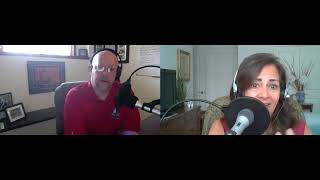
Stephen Woessner explains why small business owners hate selling and how to reframe it as teaching. He recommends building cornerstone content to warm prospects, having diagnostic conversations instead of pitches, and designing offers that match your strengths.
Chapters
Hello, everybody. Welcome to Finding Brave this week. How are you doing? I'm so. First of all, wait before I say how excited I am to have our amazing guest, Stephen Wessner. I am having a wacky day, and I think, Stephen, you are too. So maybe. Maybe. Well, you're gonna hear this all way after we record it, but if you ever have a wacky day, I want to come up with a tip. Maybe Stephen, you have one, too. I just want to. When things are frustrating, bad things are falling out of my headphones. I'm tripping, I'm bruising myself. Ooh. I think that there's always a lesson when you're having a really bad day. So maybe not. Maybe it's Mercury in retrograde, but I'm going to offer a Finding Brave tip. I think we have to stop and take three deep breaths and simply say, what is it that I am supposed to be getting today that I'm not getting? Why is everything so frustrating? Why am I angered at everything? Could be that I had a little too much coffee. It could be as simple as that. But I want you to think about a bad day doesn't have to go the whole 24 hours bad.
Amen.
What do you think? You had a tip of that? Steven, before I introduce you, I agree with you.
It certainly doesn't have to go for the entire day. When that happens to me, which certainly does, I try to then do the thing that I know that I'm best at. For example, if I'm stuck in the day and it's like administrative this or finance that, or slogging through a whole bunch of meetings or problem after problem after problem, which, hello, glamorous life of the business owner. Then what I like to do is, like, in my core, I'm a salesperson. That's it, right? I'm a salesperson. And I don't want to say that's it, like, that's trivial, but I mean that all ultimately is what I'm best at.
Goodness. We're having a podcast all about how why so many small business owners hate selling. I've never met a person who loves to sell. Like, I love.
Is the one thing that I do for predictive roi. I mean, it is my unique gift. Well, not unique to me, but it's the unique gift that I have within the business. And so when I'm stuck, I like to try and find, okay, who can I call? Who can I email? Who can I get in touch with? I need to have a sales conversation. I need to have a conversation With Kathy, I need to do something that is, like, in my area of, like, what I'm really good at. And then when I'm done, I feel completely different.
Oh, my God. All right, folks, I can't. This is going to be 100 hours, I think. No, it isn't. But before I introduce you, think about this. Steven, to answer it, what do you think? Not yet. Because I want to give everyone your bio. What do you think it is about sales that gives you that juice where for me and folks, I'm just going to be wackily transparent here. I don't like it. And we talked about under certain conditions, it feels like a conversation and I love that in certain other conditions, it doesn't feel like that. So please think about that while I'm reading your incredible bio. Okay, fair enough. And then we'll dive in. Stephen Wessner is here. Steven is the founder and CEO of Predictive roi, which of course means return on investment, I'm guessing, right?
Yes, it does.
And the host of Onward Nation, a top rated daily, but now it's five days a week you said, right? Not daily.
Yep, it is not daily. Actually, we've scaled that to one day a week. So I can do additional content stuff.
And you can do sales. And the podcast is for learning how today's top business owners think, act and achieve. Onward Nation. And I've been on it and it. It's fantastic. Is listened to in 120 countries. That's amazing. Around the world. Steven is the author of three books, including the number one bestseller, Profitable Podcasting. Love that. I need to read it again right away. His digital marketing insights have been featured in Forbes.com, entrepreneur.com, the Washington Post, and Inc. Magazine. Stephen, I cannot wait to hear more from you. And I have to tell you, folks, we both do a lot of podcasts. When I was on your show, just recording a few weeks ago, it was the most fun I'd had. Like, if you ask me what. What I need to do if I'm having a bad day, it's have a conversation like this and learn something just so fun. So thank you. Now you've got to tell me, first of all, what. What do you think sales is that you can say that's the thing that will make your day? Because I. You're talking gibberish to me. What are you talking.
I think. I don't know that it's necessarily about sales per se, like the topic of sales, but for me it is, because that's my. That's My area of, like, I know that that is my gift. I know that, you know, climbing a mountain, not my gift. 45 minute cardio session, not my gift. Doing other types of things in the business, I can do them, but they're not my gift. So I think sales juices me.
Is it just simply because you're good at it?
Because I'm good at it. But it's because I love it. I love the curiosity, I love the problem solving. I love investigating and figuring out what has that business owner askew and can we help solve that problem? I love it. From the victory of it, not from like a conquering the victory of it of, wow, we were helpful in that scenario. We did something for that business owner that he or she couldn't do on their own because we're bringing our smarts to bear and we solved a problem. That business is better for it because we were helpful in that scenario. I love that.
Let me stop you a minute because I am actually truly going to use you. I'm going to use your consulting for free here for me. Thank you. So. So what you just described, if I can be like a writer dissecting it, to me, you're talking about the outcome after you've done the sale, six months, after a year, after two weeks after where you've actually been of value. I'm talking about the sales conversation. And we do want to talk about. The whole point of this, folks, is, you know, raise your hand if you really can't stand selling. I want us to learn from Steven about how do we look at it differently? How do we approach it differently? How do we bring a new energy and a new confidence to it so that it's fun because we have to sell in our business. You can farm it out to someone else, but it won't. You're the owner. You got to do it. But what you just described is that you felt like you were of help to somebody. So. So do you equate that with the selling conversation?
Absolutely. So I know you talked about like the six months over here and totally get the timeline.
Yeah.
But that is taking place for me during the sales call too. So I think probably the reason why my approach doesn't feel like selling to me, although I do love selling. But why somebody else might look at that and say, well, actually he's not selling at all. He's diagnosing, he's prescribing. He's providing value by teaching, sometimes by uncovering, asking questions, being an advocate, being sometimes being just a very good listener. And in helping that person, you know, that other business owner wrestle with a problem, ask questions, well, how have you solved that in the past? Becoming a teammate, maybe in the trenches to fight the same fight and then coming out of that foxhole with a new friend. And so it isn't about like persuasion kind of delving behind corners and seeing where you can like trick somebody into a low ball offer, give somebody a high anchor and then go to a low anchor. Now your low anchor price feels that much more affordable because you set them psychologically at a high anchor. That's not what I'm talking about. I love sales because it's an opportunity for me to get on the conversation or get on a call with Kathy and understand her business, understand what makes her tick as a person, understand how I might be helpful in solving the biggest challenge, the biggest pain point in her business, or, you know, maybe sharing a few insights and experiences over, hear her light up on the phone, give her confidence through that webinar or whatever. And then the sale isn't a transaction. It's a how do we take this relationship forward? And it's a completely different paradigm shift.
I'm, I'm literally getting tears in my eyes. I can't believe it. You just, you just gave me this huge revelation. Can I share it and can you connect it for us?
Awesome.
So we were talking before. I see such a difference between someone calling me or someone reaching out on LinkedIn. Would I be able to speak with you? Your coaching programs look great. And when they call me, I am not selling. I am listening. I am doing. Everything you share, you shared. There's curiosity, there's. I think I am sensing what really is going on. I think here's what has to shift. I've been there, blah, blah, blah, blah. And people I get approached by high ticket closers, I think five times a day. It seems. I don't like that term anymore. I'm like, not closing a Ferrari, you know, I don't like the term, but I would say that probably 99% of the people I have that kind of conversation with end up booking something with me. And I think part of that is they're not coming in out of the blue. I have a coaching application now. They're seeing what's involved. But what you just said, that made the tears come a little. And I really, this is one of my biggest problems. Help me. I think that I'm very good one on one, Steven, but I'm trying to scale beyond that. And so my courses are ways to scale beyond that. But the truth is, if I'm on a webinar given free content and then I want to talk to people about my course, that 10 minutes feels excruciating. Yes. Now, why I love my course. My course has transformed many lives. There's no imposter syndrome. I really want these people to come into the course. But the sales conversation went from what I love, which is talking to you and listening. Okay, I'm sensing a power gap. Does it feel like you can't speak up for yourself to let me just talk at you for 10 minutes? But the tear part was, is it possible that I am more comfortable doing it when I'm the one who's going to be providing the services one on one versus join my course? Have you ever seen that someone can sell beautifully one thing in their business, but struggle with another thing? I'm really putting you on the spot.
Yeah, no, of course. And I think because what you excel at in the trenches is the relationship. Like you love the hand to hand combat of that dynamic. Right. You just do. And so I think perhaps the key is maybe in your model, and I'm speaking a little bit of ignorance here, because I don't know your business model entirely, but when somebody goes from webinar and they go into course. So do they have any exchange with you at all during the course piece? Yes.
So happily every week we have an hour call. So I'm doing that. Not as much as if I'm one hour with you alone. I'm one hour with 20 or 30 people. But I wonder if. I don't know. I don't. Maybe it's not that. Maybe it's simply talking at you, at the group. You know, I've used. I've had 1500 people on a webinar or 2000 people.
That's awesome.
Now it's much less, you know, how everything's imploded, metrics wise. But maybe it's just talking for 10 minutes about my thing makes me uncomfortable.
Yeah. So. So then don't do that.
What do we do instead?
Okay, so I think you keep the conversation more real that when you're, if you're, if you're on fire and lit up for the 30 minutes or whatever the time period is before you get to the quote unquote pitch.
Yes.
Which, you know, you read every, you know, best practice webinar structure, whatever. And it's teach for 30, pitch for 10, Q&A for 15, out five minutes early. And all of that is well and good.
I think it sucks out for out five minutes early.
So then you're adding five minutes back into somebody's day. So they're there for a 60 minute webinar, but you're out in 55. So then everybody's supposed to leave, you know, gleeful that they got five extra minutes back in their day.
What's wrong with all of that? What's wrong with everything? We're here.
I think what's wrong with it is, is this, is that, you know, it assumes, it assumes that the consumer who opted in for your webinar is dumb. And they don't know that it's a Rubbermaid party or Tupperware party, that they're going to get a pitch at the end. And the reality is that webinar attendance has gone down and so forth because the curtain has been lifted. And most people know that a webinar is just a polished up lipstick on the pig sales pitch. Instead if we're just lead with great stuff and we're teaching and when you're done teaching, you say, look, if you found that helpful, awesome. I'd love to work with you in the course. If you register for my course, we're going to spend time with each other, you know, in a group, you know, every single week. Lovely. And when you're done with the eight week course, ten week course, whatever the period of time is, if you want to work with me one on one after that, fine, happy to do that. And here's how you do it. You can go here and register and whatnot. I'm not going to spend a lot of time on that because I want to get to the Q and A and I want people to start asking me live questions. If you want to ask me questions about the course, I'm happy to answer those. But let's dive into the Q and A, start sending me your questions because I want to be helpful there and be done. When you stop there, it's no longer selling. You're still helping.
I love it and I'm happy to know that. I think I do that. But you know what you just said about the gurus with the formula? I've even years gone by, maybe five years. You know, they say it's minute 7:17. I'm like, ah, I'm going to puke. But I want to say something and hear what you have to say. I would love to chuck all of that formulaic crap. Yeah. But you know what's sad, Steven? What's your favorite retail store that if they had a discount you'd run to It.
I'm a bad one to ask.
Amazon.com all right, well, let's say you have three hours to get everything you want on Amazon, 20% off. You know darn well you're going to do it. So there are things that sadly do motivate people to buy. Like I have a timer on my website. I am not joking. Within 10 minutes of the end of the midnight timer is often when I get 30% of my sales.
Isn't it funny?
And I'm like, people, it's midnight. Why did you have to. Why, why do you wait?
Like, because people are. People are deadline oriented.
Right, Right. So there are things that work. Make sure it urgent and make it scarce.
Absolutely.
And I wish that there weren't these things that were true, but they are. And we know we operate on urgency and scarcity. You know, of course, gotta be quick and I can't have it forever. So some of this formulaic stuff is true about human nature. Would you agree with that?
I would agree with the time sensitivity. I would absolutely. Deadlines. I would absolutely agree with scarcity. As long as it's not false scarcity.
Right.
As some people do. Oh, I only have 100 seats in the webinar when really it's unlimited. Right. Hello. You know, so, so that, that kind of stuff are people, you know, deal focused, want to get a price. Of course, what I'm saying from the. You know, when you're asking me the question of how to make it less. I don't want to say awkward. You didn't use that word. But how to make this. How to make this. Write this. The pitch process easier during that is, I think, don't make it a pitch, simply make it a. If I was helpful in the first 30 minutes, I would love to work with you for the next 10 weeks. And we're not gonna. I'm not gonna spend a lot of time on that. You can go to this link, you can read all about it. That's fine. And the offer expires whenever it does and all of that. I want to get us over to the Q and A piece because I think there's probably a lot of questions out there. You got a lot of people dialed in and I want to answer those.
So tell me if you think I'm resisting, but I think I sell a lot more with a stronger pitch than that. Let me tell you about the course. Let me tell you what we do. Here's the modules. Here's what some people have said. Here's why I think it's the right thing for you. I think if I skip that, even though I have powerful Q&As. Q&As are my favorite part because the material comes to life by the questions asked. I think they're always pretty good. Great, whatever. I think that people need to be nudged a little. No. Am I wrong?
No, I don't think you're wrong. I think you're nudging them in the Q and A and that's what's doing it for you. And I think you're. Well, now, again, I'm speaking in ignorance. Right. Because I've not sat through one of your webinars, nor have I sat through one of your pitches. So I can only go on what you've said kind of feels awkward. But my guess is just in knowing you, in the experiences that we've had together, is that where you're actually closing and where you're actually selling is in.
The Q and A. Oh, I think you're right, 100%. Thank you for that.
Because that's where you're letting your genius shine, and that's where you've not made it a one way. I'm talking to 2,000 people and I'm actually interacting. I'm helping, I'm in the trenches and so forth. And somebody gets those answers from Kathy. You're like, oh, my gosh, the price for the 10 week thing. Or I can spend a week, I can spend time with her every single week. Why on the earth would I not do that?
Oh, that's lovely. I hope that's what's happening. Thank you for being my coach, therapist, consultant, mentor. What else do small business owners need to understand about how to do sales differently? Think about it differently. What do you tell us to do? Stop doing these five things and start doing these. What do we need to know?
Well, so let's go back to your earlier scenario when you said if somebody reaches out to you. Yep, that feels comfortable.
Love it. Right.
Because if we gave you a. If you had a list of. Call these five people today and sell.
Them something, I can't do it.
Okay. It feels awful. Right. All right. And I think it's been my experience that most business owners feel the same way. It's like if somebody calls us now, all of a sudden, our confidence goes up.
They want to hear from us. It's not an intrusion to call you and say, by the way, you want to join my course.
Right. And it's what they must think, that I have something to offer. Our confidence goes up. Maybe they think I'm an expert. Our confidence goes up. Wow. They're reaching out to me. What. What a gift. And then. And now we're on the home field. We have the benefit of the home field advantage, and then we feel confident.
Oh, wow.
Right.
But really, it's almost like the first thing about sales isn't necessary. They don't have to get to know me. They already know something that made them pick up the phone or reach out.
Right. And then when it's the five people on a sheet of paper, that pause is because we let the imposter syndrome sneak in and we start hearing about all the reasons why we're not this amazing, awesome, wonderful, incredible, beautiful business owner. Well, all of which is false. And so we do it to ourselves because now, now we're no longer on the home field. Now we're the visiting team. And that's.
And that's a what?
And that's intimidating.
Oh, God, you're right.
But it's ridiculous because the game is the same, but we're the ones who make it different.
Except that. Let's make a. Let's make a sports analogy. In the analogy where you're. I mean, in the situation where you're calling them, it's almost like you've just knocked on the door of Shea Stadium and they didn't invite you.
Right. So I would not suggest that people do cold calling. I would suggest that this is another reason why, you know, I know that. Okay, so the fact. This would be a great opportunity for your listeners to take a play out of your playbook.
Right?
You're active on Forbes, obviously, you're active in LinkedIn. Obviously, you've got a great podcast. So the fact is, is that you are very intentional about your thought leadership. So that, that way, when Kathy reaches out to somebody, there's a higher likelihood that it's going to be warm. There's the. Who the heck is Kathy Caprino? What? What? So you have all of this thought leadership because you have packaged up your smarts, and it sounds like I'm being pac, but this is the reality. You have packaged up your smarts in such a way that is easily consumable across a number of different platforms. So when you reach out to somebody, that person's like, wow, well, that's interesting. You know, I've heard her on here or seen her there or whatever, and. Or they may go to a link and that kind of stuff. So then that call, not 100% of the time, but that call is warmer than a cold call. Plus, you've already scheduled it in advance, so it's not like you're intruding and picking up the phone saying, hi, I'm Kathy Caprio. Do you need some coaching? That's not the scenario.
Gross, right?
Yeah, right? That would be icky. That would be icky for everybody. Right? So the whole point that I would suggest to business owners, too, is to one, don't forget about the amazing, awesome, wonderful, beautiful, incredible things that you do every single day. If somebody calls you, you have no problem in talking about value proposition and being helpful to that other person when the turf has changed. Stop it. Stop forgetting about what got you in the game in the first place. You're smart, you're awesome, you're an expert. That's why you have a business. So don't forget it just because you called somebody else. And the second thing is, take a play out of Kathy's playbook. Be active on social, get intentional about your thought leadership, share your smarts. Start teaching. Stop selling. Really? And start teaching and sharing and then you won't have cold calls ever again.
I love it. What great tips. Can I leverage something you said? I saw a video of yours on content creation and I wanted to do another podcast with you on another episode on how do we create? I think you called it cornerstone content. And I want to ask, I want to push it even, how do we create that cornerstone content that truly makes a difference? I mean, I'm guessing I get pitched also about five times a day. We want to write for Kathy Caprino.com blog.
Oh, okay.
Gosh. And you know, it's uniforms, you know, or whatever. Nothing, Nothing. That's within the sweet spot of it. And I don't take guest posts. Yes, that's right. But what would you say, do you feel this is relevant to the sales issue about what you're creating and how that becomes a sales funnel for you? Is this a relevant question?
Absolutely. The. So let me give that back to you. Make sure I'm tracking with you. I think what you're asking me is the cornerstone content you create, how you package your thought leadership, does that or can that become part of a sales funnel, part of a sales process downstream.
100% and when does it and when is in an abysmal failure. I'm sure you come into companies and they're trying their hardest and it's bad or not working.
What is working? Okay? When it doesn't work, it's because everything feels promotional, everything sounds pitchy, everything is deal, deal, deal, deal, deal. False scarcity deadlines, that don't exist or it's just sale, promotional, whatever, and we're talking about business to business or B2C doesn't matter. When there's nothing about the audience and being helpful to the audience and it's all bye bye, bye, bye, bye, bye bye. It doesn't work. All you're doing is screaming at your audience through social or email or whatever and they don't believe you.
I love that. Can I even highlight something and exaggerate it? It used to be on Forbes years ago when I first started. You could put a link within the post. So if I say this is about how you need to know yourself to have a great career. By the way, click here to download my career path assessment. I swear to you, I didn't think that was promotion. It's a free thing that people have to sign up for and some people, you know, something like 70,000 people have, have signed up for it and downloaded it. I didn't mean it as promotion. But as years went on, finally I heard from my editor. You can't have these links within your post. And if you keep doing it, we're going to have to have a conversation. And I'd be like, but they're not self promotional, they're tools. And they'd be rolling their eyes in New York, you know, like, oh, what a naive or what a crockup. But now that they're all removed, I can see that even one link that isn't screaming bye bye, bye. But by the way, if you want to do it, click here for my thing. It taints the whole thing. It sounds like a commercial.
Yes.
Would you agree with that?
I would, yes. That's a great example. Because at the top end of the funnel, which is what the Forbes.com piece is, it is all about trying to be helpful to a vast audience that doesn't have a face yet. And so if we're thinking about it kind of in a funnel, I think Drew McClellan, one of our clients, dear friend of mine, he runs Agency Management Institute. I think he says it best when he talks about this funneling, which is macro, micro and nano. Okay, so macro meaning super high level. You have no idea who the audience is. You're just putting stuff out there like a Forbes.com article, hoping to be helpful. They, they read it, they fall in love with Kathy and they're like, wow, like ideologically, philosophically, whatever. I feel some sort of connection to her. I'm gonna look her up and I'm gonna go to LinkedIn. Maybe I'm gonna, maybe I'm gonna try to connect with her. Maybe I'm gonna go to Kathy Caprino.com maybe I'm gonna download her free thing, whatever. And then once they download the thing or once they connect with you, it's like now they've moved into micro because they've said to you, your stuff is so cool, your stuff is so helpful to me. I'm going to give a little piece of me, which is my email address. I'm going to trust you enough to give you my actual email address. Not fuzzywhiteslippersmail.com but I'm going to actually give you stephenredictiveroi.com and because I'm trusting you that you're gonna treat that respectfully. And I want to get this other thing. So there's a value exchange, value and trust. Okay, now that that is done. And they may stay at micro for a day or a decade.
Oh, so true.
Right? And then you're going to offer up a webinar or a series of webinars or some white papers or podcast episodes or LinkedIn articles or whatever, whatever, whatever, whatever. And they're gonna be consuming that for a day or a decade until they get to the nano stage, which is like they raise their hand and say, yeah, I think I do wanna take a swing at that course or coaching or whatever. But I think that where people get it all screwed up in why sales becomes this burden is because we put so much pressure on us that, okay, I have a call at 3 o' clock with Kathy Caprino. Okay, Put on my game face. I'm gonna sell and I need it as part of my quota and I'm gonna get to third base and I' round home with Kathy before I ever buy her dinner. And I'm gonna win and I'm gonna close this sale.
It's ridiculous, it's horrible.
It doesn't happen. I mean, you know, your husband didn't walk up to you and say, hey, I know we're meeting for the first time. That movie was awesome. How's about you and I get married as you're walking out the theater? Does that happen? Of course. Does it typically happen? No. But yet from a sales process, we get so ramped up and we think that we got to go from, you know, first to home in 45 minutes. It's craziness.
Right? All right, I got. Oh my gosh, the time's going. Let me ask a question. Within macro, micro and nano, you said, right?
Yeah.
So I've never heard that term before and I love it. They're going to be with you for a day or a decade. I literally have people on my list for a decade that I can see open most of my stuff, but I've never heard from them. I have people say, I have been on your list six years and I'm finally ready. So this bit about I use infusionsoft and I love and hate but they'll throttle an email if too many unengaged people. And that infuriates me because some of my people are unengaged for six months, but then they've been laid off by a toxic narcissist, then gotta have Kathy or this. And so they were unengaged but now they're engaged. So I don't like that. I think let my people sit there and if they'll come when they need what I'm writing about.
Exactly.
Yes. I'm not infusionsoft, but what would you say to people who say I want to go from the micro to the nano quicker? Do you have tips for that? Meaning, okay, they're on it, they're digesting it. But now I would love it if they opted in a little more. Would you say that's all on the small business owner to finally offer something that's gonna make them raise their hand.
Or what would you say it is? Absolutely. So I love how Drew says a day or a decade as well.
By the way, we're him below and give a link to him.
But I do think to your point, if we're looking for to drive revenue at nano, I get it. And if we're looking to do that, then it's up to us to figure out how we can be more helpful to people in micro.
How can I ask you this? Wouldn't you say or I don't want to put words in your mouth. I used to think I knew everything about all the stuff I'm writing about. I don't have to do research and I'm launching a course close your power gaps, which I hope will help people want to read the book coming out next year. You know, it finally occurred to me and it always takes too long. Why don't you ask, why don't you do a survey? How many people? I mean, I feel I know it's millions and I do, but why don't you do a survey? Here are the gaps. Yes. No, you know, would you be interested in a course if you were? What was the format that you would like? And even for my amazing career project graduates, they want a Next level. And I'm sitting here going, well, what should it be? Why don't you ask them? You have a Facebook group, hundreds of them. Would you say that's one quick way of understanding how to go from macro Micro to Nano?
It's absolutely perfect. And I think you just gave a huge I think aha to your listeners by saying that it is not about coming up with persuasive pricing or better sales tactics or fancier coupons or better social or more videos. No, it's about how can you be more helpful to the people at Micro. You cannot push people from micro into Nano. No. And if you do, you will lose your audience. You'll make people resent you. You'll feel shawarmy. No, it's about going to your micros and saying, hey, I was thinking about doing this. Would that be helpful to you or would you prefer something else? How can I be of most service to you? And they will tell you.
And you know what I love about it? I learned this in therapy. When you present a fully baked idea to somebody, what are they going to do? Reject it. Hey, honey, we've been married 20 years. I want to go to Brazil for vacation. Really? Are we going to have a conversation? So half bake it. Hey, I'm thinking of a few ideas here and I'd love Right. When you ask someone, Steven, can you weigh in on this new idea? I've already hooked you and I don't mean that manipulatively. If you're going to say no, I don't really like that. And I don't think that title works. And actually I don't think it should be 12 modules. It should be six. I think you're going to be invested a little bit in what does Kathy end up doing and Right. And maybe give it a try. I told her to do that and she did it. I think maybe I should give it a try. Right?
Invested, complimented, honored that they were asked because most people are shouting at them in their inbox every single day.
You're really reminding me everything that is not working well.
And because small business owners, they may have an experience of, oh, well, I'm going to do the seven minutes and then I'm going to pitch. And then, you know, all of the webinar structure that we talked about before or they try some other, you know, digital marketing, blah, blah, or you know, whatever. It just reinforces the fear of I'm not any good at this, so therefore I'm not going to do it. When instead thinking like, okay, if we just, if we just think of it as like dating, when you met your spouse or significant other for that very first time, you didn't try to put a ring on his or her finger right away. There was a courting, there was an introduction, there was a learn their background. How can you be helpful to them on the next date or. And they probably reciprocated and there was just all of this back and forth, back and forth, you know, while somebody was at the micro level.
I love it. And for those of you listening who aren't married and haven't been successful dating, here's another way to look at it. When you go to a cocktail party with a hundred people that you're so excited about, do you walk up and say, hi, I'm Kathy Caprino, I'm a coach, how can I help you? You know what, how that's so rude and horrible. How about hi, who do you know here? Right?
Well, we've all seen this card. I know this is crude, but everybody, your listeners will get this. We've all seen that 18 year old kid with the red solo cup walk up to the attractive girl at the party and try to get to third base in the first five minutes. And that doesn't work, does it? No, that does not work is gross. Nobody likes it when that happens to them. And yet we as business owners are convinced that somehow a sales process that's architected that way works. It doesn't work. So instead. Stop it.
I'm going to go out on a limb. I think that a lot of these views are male. Steven. Like let me mention someone, Jeff Walker, very famous, very successful. Years ago we followed my marketing agency and I at the Jeff Walker formula. I want to tell you from the minute I did it, it was day one you say this, this is the subject line. Day three you're saying this. Day five, you're talking about a case study. Seven, you're giving a demonstration. It was literal. And I remember going, I, number one cannot stand this and number two, I'm killing my list. They don't want to hear a pitch like this. They're smart, they know I'm pitching. This is not a case study, this is, I'm pitching them. I hated it. But everyone was like, this is, he says it works. And maybe it worked for him, but it's, I do think it's. A lot of these gurus are males. I mean things are changing. There's Amy Porterfield and. But it's a male worldview and I hated it from the minute I Did it. And by gum, about two years later, my list dropped off dramatically.
I hate it too. It's yucky because it makes the recipient feel like a piece of meat.
Listening to me. And you don't care what I am going through. You're just pitching your program to make money.
Right. As opposed to. You know that that's not. Who Kathy is, is a business owner.
And I think that isn't you. It doesn't happen now, but during that phase they would be like, I don't even feel like you wrote this.
Right.
And that, you know, I learned. So another tip, I think. Stephen, tell me what you think. Yes. There are best practices. Everyone should go to Stephen and look at his materials and we're going to link to them below. But you also have to trust yourself. That's a theme for me. A lot of women in particular start their businesses and they think they don't know anything. Let me go to Jeff Walker or what? And I'm really not trying to trash him. There's many people and maybe he's changed over the years. But I do think if you feel sickening to you, listen to yourself.
Absolutely.
Although we don't want the power gap of I hate to sell mean that you're never going to have a sales conversation. Because you can't be a small business owner and not have a sales conversation. It's not going to. You're never going to get out of the gate. But listen to yourself. What feels right. Maybe you'll come up with the next best selling model. Do you agree with that?
I do. But there is a fine line. Right. So there's the. I think there's. Okay. So when you're talking about Jeff's stuff, my impression is that made you uncomfortable in a couple of ways. One, just because from a communication perspective, it wasn't congruent with your voice and who you were or who you are. Excuse me. And then strategically it just felt yucky because you knew you were burning your list.
Yes.
Okay.
That's it. What a good listener. I wonder. You're a great salesman.
So those are good business reasons to not do it. Now, if you had said to me, I'm uncomfortable because this is a real push for me because I've never done this before and it's new. That I think is different.
Yes. That fear of stretching out of your comfort zone to do anything. Let me just stay here and only do one thing a month and I'll rock it. No, you won't.
Exactly.
Yes. If you're just afraid because it's different. No, you got to look at what is congruent. I love it. So I just. What else can I leave people with? What's your biggest tip for loving sales, Stephen, and rocking your sales?
I think it's just to realizing that the word sales over the last several years, probably much longer than that, has gotten this kind of connotation or stereotype around it, that it's somehow dirty word when the reality is, to your point earlier a few minutes ago, that it is the lifeblood of any business. And so if we can think about, okay, me as a business owner, how can I get intentional about actually being helpful? How can I package up my smarts in such a way, whether it's a podcast, a video series, a blog, write a book, you know, be a contributor to Forbes, whatever. There's a litany of ways for a business owner today, because of social channels and publishing and all of that, where they can be helpful and build an audience. And recognizing that at a macro level, I need to be helpful, I need to start teaching at a macro level and putting it out there and then recognizing that I need to have a path that at the micro level, somebody can raise their hand and say, hey, Kathy, I trust you enough to here's my stephenredictiveroi.com not my pink fuzzyslippers.com or@gmail.com and so there's a value exchange. And then just recognizing that could be a day or a decade. And what a gift of an opportunity. Not because it might take years, but somebody might trust you enough for 10 years. You might be helpful to that person for 10 years. And that is a gift that is an opportunity for us as business owners to actually care about somebody. And then it's not selling at all. And so I think that I would want your listeners to realize that actually the new sales is not selling at all. It's actually caring about somebody and sharing something with them that is helpful to them. And then you've changed the game. It's not selling at all.
Oh, Stephen, I feel good. Who can I sell to? You made my day. I literally cannot wait to dive in and change how I'm doing things and feel happier to sell. I can't thank you enough. So where does everyone learn about you? I know you have that incredible video on Cornerstone content. Where do people go? And we'll link to it below.
So you can find all of our videos at our predictive ROI YouTube channel. And so if you go to YouTube and search on Stephen Wester, you'll find it you can find me at predictive ROI.com or on LinkedIn, whatever. And, but I mean, we put all of our stuff and then our podcast is linked to our website. So we put all that stuff out there, full transparency. It's not like we're hiding anything. I mean, I just, I love to teach.
So the most ideal client for you would be who A small business that.
Typically a business owner that is B2B, typically in the services space. So we work with a lot of marketing agency owners, CPAs, lawyers, so a lot of like professional services. We also work with a lot of real estate investors who are building communities. So essentially business owners who want to get more intentional about their thought leadership and then be able to use that content in such a way to drive their business, you know, monetize that content in the form of biz dev. So that, that's, that's what we do.
I hope you're ready to be flooded by finding brave subscribers who need your help.
Awesome.
Thank you. Enough, Steven. You made my day. You made my weird wacky Mercury in retrograde much better. Thank you. Come back again on. We'll come up with another topic to help small business owners anytime.
Lord knows we need it.
Thank you. And everybody, can you please tell us what you got from this? Give us some feedback. What can we do better? What can we learn from you about what your struggles are and what your joys are in small business ownership? It's certainly an amazing journey, isn't it? Thank you for being here and we will see you next time. Thank you, Stephen.
More from Kathy


Elevate Yourself, Elevate Others, and Amplify Good | Chris Cooper | Finding Brave Ep. 334

Finding Brave Epis #333: How Leaders Can Harness AI Without Losing Their Humanity, w/Bennett Borden

Finding Brave Epis 332- How to Stay Brave, Valuable and Visible in the Age of AI, with Raman Rai

Finding Brave Epis 331 - The Power of Positive Disruption, with Dr. Patrick Leddin


Finding Brave Epis 330 - Being 40: Letting Go and Embracing Who You Are, with Stacey Lindsay

Disrupt Career Reinvention with Kathy Caprino - via The Disruption Lab Podcast w/Patrick Leddin

Creating Neurodiversity-Friendly Work Cultures: Simple Workplace Adjustments Matter

Finding Brave Epis 329 - How To Create a Neurodiversity-Friendly Workplace, with Kristen Pressner

Finding Brave Epis. 328: Reclaiming the Power to Trust Your Own Voice, with Dr. Cindy McGovern