Finding Brave 80: What Entrepreneurs Need to Understand To Protect Their Intellectual Property
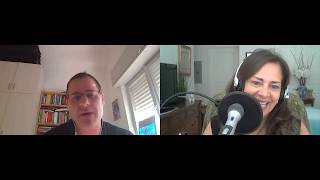
A recorded interview (Finding Brave) featuring Kathy Caprino and IP attorney David Postolski discussing how entrepreneurs and small businesses should identify and protect intellectual property. The conversation focuses on trademarks, naming strategy, when to file (first-to-file rule), distinctions among patents/trademarks/copyrights/trade secrets, and practical steps (searches, clearance, logos, classes, coexistence). The tone is instructional and advisory for creators deciding when and how to invest in IP protection.
Chapters
Hello, everybody. Welcome to Finding Brave this week. How are we doing? I am so excited about my guest today who has been so instrumental to me personally and I know to thousands of others. And I think you're gonna just, if you're a small business or an entrepreneur or you have intellectual property or you're a coach and you have a book that's coming out, I think you're gonna find this so helpful because. Because as David and I were sharing, it's almost a miasma of confusion. Is that a word? It's such a kind of black hole when it comes to someone who's had no legal training, no intellectual property training. So we hope that this 30 minutes is going to move you forward and at least point you to resources that are going to help you. And I think, you know, hang on, I think you're gonna love it. And so we have today, David Postolski. I got that right, David, right?
You did, you did. Thank you, Katie.
And he's calling in from Israel. Oh, how wonderful. I can't thank you enough. So everyone, we are talking about what you need to understand to protect your intellectual property. So let me tell you about David. What an illustrious bio. And I realized, even though I've worked with your law firm a long time, I'm not sure I'm pronouncing it correctly. Is it Gearhart?
Gearhart, that's right.
Okay. David, a partner at Gearhart Law, is a registered patent attorney and intellectual property attorney with over 17 years of experience. David specializes in assisting inventors. That's a cool thing. Creators, artists, startups, entrepreneurs, early stage companies and emerging companies with their US and intellectual international intellectual property strategy, protection, enforcement and monetization. Woo. That's a mouthful. But I think all that, that sentence for me, really. David is a frequent speaker and author on intellectual property issues surrounding emerging technologies, raising capital, business formation, licensing and reward, and equity based crowdfunding. David is also a professor at Temple University and Parsons School of Design. What an interesting combination. Where he teaches master level students about IP ethics and other regulatory considerations in starting business ventures and products around design. There's more and more and more about David, but we'll let you read the bio in the show notes. You're busy and you're international. Living in Israel half the year, right? New Jersey, Florida. I thought I was busy till about when I learned all that. Thank you for joining me, David.
Thank you, thank you. Pleasure to be here. Happy to talk about this subject always.
So it's such a big subject, David. I think where I want to Start is let's say you have an entrepreneur, a small business owner right in your office, and they have the biggest intellectual property issue that you see every day. What is that issue and what. Understand.
So it usually is. And this kind of. This kind of relates back to what you were just saying about the noise sometimes that's out there, the misinformation. I think people don't even understand the value of what they have and what they've created. So usually that first conversation with a potential client that's sitting in my office or someone that has a really great idea, it could be for a service or a product. It could be a new chemical formulation, it could be a new phone app, it could be a new phone case, whatever. It could be that they're a painter, they don't even know how and what and where and who to go to in order to protect it. And I think that it's definitely a failure of our educational system in the United States. These are intellectual property laws are about 250 years old. They're in our Constitution. So they're really like the basis of. Yeah, there's an intellectual property clause in our Constitution. And most people don't know that. And so over the years, I found that my mission to, like, you know, introduce this subject of, like, how to protect what you create to, you know, K through 12 students. They're the ones that really. They're like the future entrepreneurs. If they knew that our country was built on intellectual property laws, then they would have some, you know, awareness. Because usually the biggest issue is a client will come in and be like, I don't know how to protect. Do I? There are so many forms of intellectual property. Do I get a patent on this? Do I get a trademark on this? Do I get a copyright in this? Do I keep it a secret? As. Do I keep it a trade secret? And so strategizing that is always the first thing. What is a patent? What is a trademark? What is a copyright? You know, we're one of the oldest. We have the oldest intellectual property laws in the world, 250 years old. Every other civilized country has built it based on what we have in our. In our Constitution and federal laws around patents, trademarks and copyrights. So it's. So, as you can imagine, the definition of what's patentable, what's trademarkable, what's copyrightable, how do you keep something secret changes a lot. So that's usually the first issue is like, what do I have and how can I protect it? Do I get one of these? Do I get both of these. Do I get all three of these? Do I get a patent, a trademark, copyright, you know, and the process? Because it's. It's definitely a process. It doesn't just happen. You don't just. You don't just get protection because you create something. The idea not protectable. You must take the idea out of your intellect and physically embody it in something. In an invention, in a machine, in a brand, in a logo, in a song, right? Take the song out of your head and put it on a piece of paper and then take that physical embodiment of that idea, you know, the brand, the logo, the song, the machine, and visit an intellectual property attorney and have them file it with the government. And if you get awarded, I'm talking very 36,000 foot view. If you get awarded the patent, right, the trademark, right, the copyright, it's yours exclusively for a limited time. Which is amazing to understand that your idea could be protectable for any one of those things.
Oh, my gosh. Can I, for all of you listening, can I dimensionalize what this looks like for a person? So I bet this happens to you a lot. I'm going to make this brief. I met David through Jacqueline Greenberg, who recommended my wonderful love Jackie. She's so talented. JAG Studio, check her out. We'll link to it. But what had happened to me briefly was I write on Forbes, I got a lot of followers there on LinkedIn, and I started and did a TED Talk. Time to grave up. And at that time, that was the word. I kind of really wanted to make my own and build programs and courses. And, well, I wrote so much about it that if you looked at Brave up on Google, you'll see 20 things from me immediately. So somehow, not being a legal specialist, I thought, well, you know, I have. What do you call it? Prior use, right? Kathy Caprino, Brave UP all of a sudden, I'm building the website for Brave up for the podcast, this podcast. And I have this horrible, weird intuition feeling I better check that no one else is using this term. We do a trademark search in the database, we'll link to it. Someone had trademarked it. I was already in September, April, and she was just made a coach two months before. And I've been doing this a long time. I literally felt gutted, like I wanted to go puke on the street. I felt like she stole it from me. Poor girl. She didn't steal it from me. It was her idea. Or maybe she saw and saw that I hadn't trademarked it. She didn't steal it from me. I didn't do what was required.
Right, exactly. You were. You, you. The. We're. It's so important that we're what? We live in a first to file jurisdiction. Right. You want to be the first to file your trademark application, whether you are using it now or plan to use it in the future. Because if you were the first to file and then started to use it and build it and grow it, then if she filed after you this Brave up, then you, you would, you would, you would be priority to her. Right? You would cut. You would have come first, number one. And just back to that issue that the first question you said, that's the number one thing I say to people. Okay, you have this great idea for a name and a company and a logo and everything. Have you done a search? Like, we'll do one. But like you can easily do that yourself. Right.
The trademark database. Right.
That's free.
And we're going to link.
Totally, totally. It's free. You should do it. And if you see something, then maybe talk to an attorney. But like, like 30% of all ideas, whether it's a patent, trademark or copyright, usually maybe somebody has independently created it and filed before you.
That is one challenge. Like I'm, as we know, renaming my company. Every word you've ever thought of is trademark.
Agree.
And we're going to talk for a minute about, you know, certain vague terms can't be trademarked because they're right. But I do want to say this, people. In my case, I was gutted over. I was in Greece.
End of the story. The end of the story.
So, you know, I was in Greece co hosting a retreat and my friend Alvar MacDonald in the bathroom said, what about finding Brave? You know, some of the best conversations are in the bathroom.
I know, totally.
I love that even more because it's not like douche brave up one second. It's a process of life and then I hopped on it. But David, I want to talk about from my perspective as an entrepreneur, small business.
Yeah, sure.
Why we don't do what you're saying. If we're very creative, we are coming up with terms, ideas, about 100amonth.
I know.
So brave up came to me. I did the TED Talk, TEDx Talk. That went well. People loved it for me before I invest. And here's another issue. It ain't cheap to do what we're talking about.
Yeah, we can talk about that.
And I don't mean to discourage you, but one of my problems is I want to Live with an idea. I have to say it, I have to speak it, I have to do it in a talk. I have to give a webinar about it before I feel it's in my body and I like it. So I'm not going to go out and spend a thousand, two thousand, three thousand on the actual trademark, on the actual. So what do you say to people who go, yes, I feel the same way. I got a lot of ideas and I don't know how they're going to play out. What do you say to that?
It's a really good question. And it's not just for trademarks. You know, I have people that invent things. It's the same thing, right? They're like, I don't, you know, I'm sitting in my garage inventing. I haven't really, you know, figured out whether, you know, somebody has invented before me, because I don't even want to be bothered by that. I want to, like, create and do and make and build. And it's common. You know, I have learned. I've seen a lot of situations like this, a lot where people come to me after. Right. They come to me later, gutted with the problem.
I can't believe I lost that baby that I had.
Yeah. So I. And so I don't want. There are some critics that say intellectual property, the process of intellectual property kills creativity. Like you just said, you just want to. You don't want to spend the money or want to just do and go forward. But I have to say, make no mistake about it, if you want any ownership of any kind in any country in the United States or any country, on the ideas that you're creating, the hundreds of ideas you're creating, you must take this affirmative step. So whether you do, you can do it later, but no, that comes with risks. The earlier you do it, the less risk. And I often say to people, if you can come to me or any intellectual property attorney and you can spend with me a few hundred dollars to do a search, a clearance search, a trademark clearance search. Right. I realize you probably have a lot of ideas, but you're probably going to focus on one or two anyway. If you can do that, that probably be the best money you spend because it will either validate or invalidate your desire to move forward. Because you will likely, like, you may not want to spend money on an attorney, but you will likely have to spend money on developing the ideas as well. Right? So it's a give or take. So again, there's no right or wrong Here, at the end of the day, I want you to do it earlier than later. There are risks and rewards for doing it early and later. But I also have a massive appreciation for the creativity of entrepreneurs and inventors and people that create. And we know that it costs money. But luckily, there are firms, there are people out there like me, that care about that. And so if you came to me with, like, seven names and, like, each of them had, like, a slight variation, that's not seven searches, that's one search. And we'll search all the names for you. So there are ways to figure this out where you can. You can. You can probably still create and try to protect and get some validation to move forward without having to feel like, oh, my God, I just spent so much money, you know, And I want.
To tell you people, this is not a plug for David per se, but once I did this process and loved Finding Brave, and, you know, felt, am I going to love this for the long haul? Then we started with the US Protect, and then you came back around and said, how about Europe? So much of what I do is international. That I've done, you know, I've committed to that. I can tell you I sleep better at night. Yeah, I love this baby. Finding Brave. I'm in it for the long haul, and I love it that I don't have to worry that someone's gonna come at me. Look, I have Finding Brave. It's mine.
Right? Right.
It's mine. And I'm not infringing on anyone else's rights.
Correct.
There is this intangible. I can sleep well at night because I've done the right thing to protect this.
Yeah. And that's a great word. Intangible is a phenomenal word. It is. It's your. It's your property. It's not. It's not something physical. Right. But it's. It's. It's intellectual and it's intangible. And it. And it. And it brings so much value to your company and to who you are, and it's your platform and your website, and I can't stress the importance. Listen, I'm also the first patent attorney you'll meet that says not everything's patentable. Right. Everything is trademarkable.
Can you tell us what, you know, what you say over and over and over again about, I'm sorry, that's not trademarkable, people.
Yeah, excellent.
No, what do we need to know?
Really good question. So there's like, five basic tenants, right? One, you. If you come into my office and say, I Have an excellent brand. I want to. I'm selling phone cases and I want to call my company Google. I know there's. I know this. And the client says, I know there's already a Google. But Google doesn't sell phone cases in this hypothetical, because they do. They sell everything. But I want to call myself Google number one tenant. No, like, stay away from that. Like, you want, you don't want. You want to try to pick words that are not conflicting with others.
Right.
They're already there. There are plenty of trademark. There's plenty of examples, hundreds of examples, multiple examples of having the same word used for 40 or 50 different products and companies and everybody is coexisting peacefully. But where does that actually get you in this age of digital marketing and domain names and marketing and regular marketing? Where are you standing out? Exactly? And trademarks are all about distinction.
Can you say something about that?
Yeah, of course. Please.
I'm moving my company to an LLC and creating a name. And my original name, company name is Elia Communications. If I just took that and made it Elia Group. Well, just last night I searched. It's a real estate. Yeah, massive, you know, firm in Minnesota or Michigan. How is that going to benefit me that people are going to type it the wrong way and they're going to go to a real estate firm? It's not exactly, period.
It's not going to work. And it's tough. You said it. You said it before. You said it a few minutes ago. There's. How do you truly come up with a unique name and how do you really do this? People spend millions of dollars with ad agencies to, you know, name the perfect grape for a wine. You know, like, things like that. But if you can stick to maybe not going with a conflicting company that's worldwide, like Google. That's one. But also use, like, we call them, like, fanciful words. Like, make up your own word. Like, for God's sakes, make up your own word. Like, the more ridiculous it sounds, the likely nobody has seen it before. Or take a word and create a new meaning for it. Like, like, like Apple. Apple doesn't sell apples. Right. They sell computer electronics. Like, that's amazing.
With the apple with the bite out of it.
I mean, it's amazing when you think, like, I have a client who came into her office one day, true story. She's like, oh, we're selling this really cool, you know, backpack with, like, pockets and, you know, USB chargers and, you know, water bottles and they're yellow. And I said, great. What do you want to call. Want to call it the yellow backpack. I'm like, that's terrible. First of all, it's completely descriptive of what you are doing. So the trademark. All the. Is not going to give you protection over words that describe your product if they're also the trademark. So call yourself banana. Do what Apple did. Call yourself banana. You're not selling bananas. Do it. She didn't take my advice. She called it something else, but it doesn't make a difference. My point is use words that you can create. Use. Use a word. You can create an arbitrary meaning to it. Those are.
Can I ask you to clarify what you said? So she wanted to call it the yellow backpack, and you said, the trademark office will never allow that. Is that because it's described. No. I don't know.
Descriptive. Descriptive. That's it. That's it. Exactly.
Because there could be 4,000 yellow backpacks that.
And the trademark office was set up because they want to ensure that every brand has a distinctive character and will be recognized for selling something that they. That is not described by them. Like, think about all the products you use today. Think about what you used for. Think about what you did this morning to brush your teeth. Right. Crust. Crust is not toothpaste. Right. I mean, it's toothpaste, but it doesn't mean toothpaste. Right. Or like Listerine or like Colgate. Those are not describing products. So the trademark office wants distinction. They don't want consumers to be confused. It's all about preventing consumer confusion. So they believe that when you use a generic or a descriptive word in your brand, then you might be, you know, causing this confusion. And the trademark office is specifically run by. It's like a. It's like a federal agency. So it's the government, basically. And they want to protect the consumer from confusion. And they want to protect.
I thought I was going with one company and it's another company.
The same thing that you just said, Elia. Like, if somebody types in Elia and they go to the real estate agent, well, they didn't find you. Ellie's a unique word. So a little less.
I was surprised. And they spelled it differently. But, you know. No, people are gonna get confused. I see.
People are gonna get confused.
It's better to come up with a word. Nike, Tiffany's, whatever. Okay.
Exactly. Kodak. Airbus. Right. Airbus is a brilliant example of what we call suggestive Mark. Right. If a consumer has to think about, like you. Finding Brave is an excellent. Just like Airbus, if a consumer has to ask questions. Right. That's like, what, what's going on there when you Finding Brave am I, is something lost? I'm like, I'm finding my, my internal braveness. My, my braveness for somebody else. An Airbus. Is this, is this, is this something where planes don't fly in the air, they fly in the sky. They're not really, you know, buses carry people. So like, a consumer has to like, if they have to start asking questions about the suggestive meaning, that is a good type of trademark. That's already we're starting to get a good type of trademark.
I gotta tell you, the minute I put it on my LinkedIn profile after you help me trademark it and I said, finding Brave expert. I'm not kidding. Two days later, a woman wrote me. Can you explain what finding Brave is?
Yes.
I was like, oh, wow, all right.
But that's perfect. I'm not sure how that made you feel. Feel, because I know. You know, it's funny, we sometimes as people assume that our consumers, our clients, our customers understand. We almost have to write that they understand everything. And if they. So we really have to like spoon feed it to them. But in trademarks, we want you to resist that urge. Resist that urge Market. Teach people what your brand means. Teach people what your logo means. Right. Like the fact that she asked you what is finding Brave is brilliant. It means that your mark has this suggestive, distinct quality to it. It's not like yellow backpacks.
Would the average person who doesn't have legal training think this? No, they don't. I would think if you have a question, it's not clear enough. So, I mean, I was three thrilled because it gave me the chance to explain it, but I don't know that out of the gate. I would think that's a good thing that people are.
I think you're right.
What are you doing there? You know, what you got there? Wow.
Yeah.
That sparks engagement, sparks curiosity, sparks connection. Right?
Correct, correct. That, that, that starts the consumer like, but think. But these are, you know, I'm, I'm talking the obvious. But think about all the brands that we know and love. They're not descriptive of the products that we. That we probably just in your room around you like different things. Like, you can, you can just look for those signs of like, wow, that's a really. That's their name is not what they're selling. You know, like, how are my favorite.
Socks in the world? I don't even know what.
But exactly. Perfect.
Perfect. Now can I ask you because it's really top of mind you Help me with naming companies. Can you talk to me about I mentioned to you I had a fellow on the podcast who said people that name their companies their own name simply want attention. And I did not like that because I don't agree. But do you have any advice? I have a lot of people come to me. I'm going to start my own consulting firm. What should I name it? What should the URL be? Do you have an idea about when it is the right thing to use your personal name and when you should not?
Yeah, it's a really good question. I would say it's definitely the right idea to use your personal name to name your company, which is a separate process of branding and trademarking. Right. They don't have to necessarily be the same. Right. Your company could be named Kathy Caprino Enterprises, but your products are finding Brave. Right. They don't have to be, you know, Kathy Caprino, Finding Brave. So for company names, I think it's great for URLs, I think it's great if you can get your own personal URL. But I think the challenge becomes when you now want to take that company name or that URL name and you want to now file for a trademark and start selling products and services under that name name, that's a little bit more challenging. There has to be, you know, trademarks all about the like the source identifier of the product, right. So if the source identifier of the product or service you are creating is your name, then back to the question we just said before, that's kind of descriptive of who you are. It's also generic because there are a lot of people named Kathy or Caprino whatever.
Right.
It may not be a unique name that we know that the trademark office has never seen before. And so they might ding you for that. Unless you've created some commercial impression in a consumer that you are that you personally, your name is separate from the products that you create. Let's talk about give you some examples like Reba, like I'll just say Reba. We know where's Reba McEntire. But she has a whole lot line of clothing and hats and this and that and everything. And she has a, she has trademark registrations for it. It is, she is known for that separate and apart from her name. And so it's something you have to like that that may not happen overnight. Right. So for the future entrepreneurs that are listening, yeah, you may, you may be able to name your company and you and your in your URL something and there won't be scrutiny as to whether that's valid or not. But the moment you try to transition to, you know, creating products and services under your name, that's when that additional scrutiny comes in in the trademark process to have this commercial impression separate and apart from your name. So that can take time, right? That can take time. Like Weeb is able to do it because she's a celebrity in her own right and now was created. Her celebrity has used that has created the commercial impression for something else or like, or like Britney Spears or like Paris Hilton that have like perfumes and stuff like that. So like it's, it takes time. Takes time. Doesn't. That doesn't happen overnight.
I was ringing, I. I got you. I think it's so much more, how would I say it? Counterintuitive. I mean.
Agreed.
Reba McEntire. Of course she can trademark her name. I mean, yeah, there's other Reba McIntyre's, but wow. I mean it's just counterintuitive.
To me it is. But listen, it is at the same time in that same. The reason why I know about Reba's trademarks is because I had a client that was trying to trademark Rebe R E B E and was selling clothes and shoes very similar to Reba. And no, we won that argument. We got them the trademark because even though it's a one letter difference and there might be consumer control confusion, we were able to say, well, Reba McIntyre, we almost used her fame against her. We said, well, she's like a country thing. Like that's like country clothes, country belts. Like what we're doing is like, you know, not country, it's like, you know, contemporary and modern and hip and, and the words sound different and stuff like that.
So can I ask you, maybe you can't share this, but was it the US Trademark office that pushed back or was it the Reba?
It was the US Trademark office that pushed back and we pushed back. We argued and said it was not confusingly similar. Right. They're trying to protect the interest of Reba and of the trademark owner, which is Reba McIntyre. And we pushed back and we won the argument. That's not to say Reba McIntyre can't come along sometime in the future and say, well, you know, people were searching for Reba now Rebi's coming up and you know, like a reverse situation, but you know, at the end of the day, yeah, our duty is to convince the trademark office that our clients marks are not confusingly similar to someone else's.
Golly and tell me one more common, common problem where a small business owner entrepreneur is crying in your arms because they didn't do blip.
Yeah, this, it's really, it's. I hate to be the bearer of bad news. I mean everybody hates to be the bearer of bad news. And so when I have a, I have a client now just a brand new client was referred like is so like you know, has they have something patentable as well. But I'm going to talk about the trademark now because now they're naming what the patent is, right? They're branding what they, the product is and they're, you know, maybe two years into their journey and you know, created a website and created marketing materials and pitch jacks and business plans and business cards and swag to give out at conferences. And now they're coming to, you know, you know, to do the trademark search with me. And again, I hate to be the bearer of bad news. Like, you know, it's really, I can't, can't sugarcoat it, right. I don't want them to file for a trademark, you know, especially if I deceive them. Right. I'm not gonna do that. But like I'm sure, I'm sure that my people be out there who will be like, okay, let's just file. But there are clear, clear, you know, obstacles in your way and that through the search, just as correct that we.
All can do on our own in two seconds.
So here's.
I know you do more of an exhausted.
It's definitely, it's definitely a more exhaustive search and that's where the, some of the big risks come in. Actually if they did their own search. They did, they did and they deemed that there was no risk. But what they don't. It's very. Most people don't know how to work that, that, that trademark searching system.
One name, you have patience, right?
Yeah. Permutations, pluralizations, additional words like and so this was an exact match of what they're trying to. The same class, right. The same goods and services.
And by the way folks, there are classes like for categories, group categories. To be a book, do you want it to be a coaching product?
Do you want. Exactly.
It's not just here's my name, you have to put it in classification.
Exactly. So they searched and this was an additional word, but it was like an almost an inconsequential word which means added to it. Right? That somebody else had added to it. Which means it didn't come up on your search, but it came up on our Search. Because that inconsequential word is going to be what we're not even going to talk about. It's like inc. Or.com, like, no one cares about those inconsequential words. So they're left with this exact same match as you in the exact same class. So, you know, I'm the bear. Bad news. Listen, I'm not saying they can't file for a trademark, right? I mean, they need to understand what the risk and the process is. The process will be, we will file if you want. If you understand the risk. The risk will be we will file. And when the trademark office does their examination, because that's what they do. It's not. You don't just get it. They have to examine it in light of everything else that's come before it. And so they will find what we found. We need to build in right now enough differences, right? Hard to do when you have the similar word. Right? But maybe we can do differences in the. These, these of the product or the service. Right? That could be something. It could be in the same class. Right. It could be all be clothing, but one could be T shirts and one could be hats. You know, so we may have to limit your protection. Or maybe we add a logo. That was a big thing. Like, let's add a logo. That's why logos are so important in this country. Like, not just for brand awareness. And I say this to you, Kathy, too. I don't know if you have a logo. Like, it's so important because, you know, think of like Target. Like, people don't. They think of the Bullseye immediately. Like, immediately. Like, they can. You don't have to. You can. Like there are Target stores in the world that don't even have the word target on it anymore. It's just the bullseye. And so logos are key. So if we can add a logo to this, to this conflicting name that we found, then it gives us the ability to say to the trademark office, hey, we have. We do have a difference. Our words may be the same, but we have differences. We have color, we have design.
Let me ask you this. I'm guessing that in your 17 years of doing this, somebody has come up with this situation, but they've invested five years and they go, I don't care. I'm moving ahead with my business. Oh, yeah, do people do that?
They do you actually know somebody? You know somebody who's did that and.
What percentage of those. And I'm sure it depends on how visible it is, how much exposure yes.
How successful are they? Are they enduring?
You know, not on the radar. I'm guessing they're not come. What's the term?
Come back to haunt you? Right.
But what percentage say, you know what, I'm just doing it. What percentage get away with that?
Yeah, I would say about 20% actually go forward and do it anyway. I'd say about 70 or 80% usually come back with some like, cease and desist letter or like, oh my God, they get a letter from the owner of the trademark that we thought was conflicting, and they'll say, what do we do now? Which is not the end of the world. Right. There are trademark owners that will. With some sort of. You kind of pay them off a little bit. Yeah, you kind of like come up. We call it a coexistence agreement. You stay on your side, like you say, in the Western hemisphere, and we'll stay on the east coast coast. Right. You'll take the Mid Atlantic states and we'll take the Southern states. That's not such a bad trade off.
Right.
You get to continue to use your name. But there's that small percentage where these people go straight to court. And, you know, our clients are coming in with like, you know, federal district. Because it's federal. It's a federal offense, trademark infringement. It could also be a state offense as well. But. But they're coming in with a, with a complaint that's been filed against them, saying, what do I do now? Do I just give it up? Do I fight it? Do I now rebrand? Rebranding is so hard.
You know what I want to. I'm aware of our time, and I want to ask you one more question. But you know what? This points to me, David, tell me what you think. So many people who start a business came from another world, corporate, where they didn't. They probably weren't in the legal office. They were CFOs or, you know, HR people or whatever it was, marketing people. Once you have a business, I don't care if you're making 20,000 or 2 million or anywhere in between. You need to have different considerations than you did when you were employed by someone else.
100%. Yeah.
And I know for me, when money was tight, I didn't want to invest in this stuff. But what you're not understanding then is you're putting all this time and effort into intellectual property. Sharing your name, sharing your content, being of service. Well, you have to protect the wager of being of service. And so what does it mean? It means start socking away Your money for these essential expenditures. Would you agree with that?
Yeah, I would agree with that. I would also agree with that. If you. I hate to use fear as a motivator. Yeah. I'm not from that, but I'll use finances as the motivator. It may cost you triple in the future if you don't do this. Right. That's all. Some people may be okay with that. Some people are okay with taking.
Do you want desist letter? I would freak out 100%.
It's scary. It's definitely scary. You know, that's why now you maybe can understand a little bit why I want. Why it's been like a passion of mine to teach the young this. It's like, so important that they understand that the value of what you create should supersede the monetary price tag you give to it. Right. It's so much more than that. It transcends money. And I know we all need money and we all. Everything costs something. But I think it's like having insurance. You spend a little up now so you don't have to deal with it later. Right. So that when something happens later, I don't have to do anything. I don't have to pay this. I already paid my premium. Paid it. I paid it. You know, that's it.
I feel like you need to write, or we need to have you write a column for entrepreneur.com down. Have you ever done that?
I've written for a few online magazines. Not for entrepreneur.com but totally down.
Credible column.
Yeah, totally. We need it.
I know anybody? We know nothing. This is almost to me, like, you know, how you get to be an adult and you're like, why didn't I learn anything about the. The anatomy of the body and medically? What is going on? Why do I know nothing about living? Well, I mean, totally. There should be basic courses in high.
School and earlier, you know, at temple. It's actually a executive MBA program. And so these are like, you know, the movers and shakers at companies that are, you know, being sent. And, like, it blows them away. They're like, how did we not. Like, what. What's going on here? You know?
Yeah, maybe we'll help change that.
I hope so. That's my mission.
Schools. I love it. David. So where do people learn from you? Where. Where do they go to download your great stuff and find you where they go?
So I'm pretty public. I don't have my own website or anything like that. But you can go to gearheartlore.com. you can just type in davidpostalskiyearhartlaw.com I do a lot of writing, some books and articles and stuff like that. You can even type in Dave Pisalski articles on crowdfunding and IP and food and IP and stuff like that. And so you'll find me. And I also do a lot of public speaking. I try to. I really make it my mission to educate and empower not just entrepreneurs, but, like investors, like, who are investing in entrepreneurs, like, what do they should be looking for? Or like, like, say, kids and students and other lawyers, like from different disciplines, like real estate lawyers and family lawyers who like, you know, get questions and stuff like that, don't understand it. So I do a lot of speaking around the world and I have a list of, like, where I'm at my firm site, where I'm gonna be, where I'm going and see I'm pretty public. I'm on Facebook and LinkedIn and all that kind of stuff too.
So you can read all of those. Connect now. We don't want to bombard you, but can people reach out to you 100%?
100% anything? I. We talked about it before. Education and empowerment is free. We do not charge. That should not. You should never be. I don't know if I'm maybe offending some people here. We don't charge consultations. I'm not a believer of that. I'm a believer in, like, if I need to talk to you 20 times before you become a client, even if you never become a client, I'd rather that, because I will know that I have done my duty, that you know exactly what you're getting yourself into. Right? You're informed, you know what's happening. No surprises. I hate surprises. As a customer. As a customer, I hate surprises. I don't want to do that to my clients. So, yes, reach out to me again. We can talk for an hour even if you never become my client. It's cool. It's all good.
I want to tell you, David, when I knew I had to trademark finding Brave, I spoke to three different lawyers and you were the one who, number one, made the most sense. Sometimes they speak in such legalese and I don't even understand damn word you just said. I got a master's. I'm no dummy, but took the time to explain it just as you have here. And I said, yeah, I'm going with him. So thank you, Kathy, you are telling me the truth. David, I am so grateful. Thank you so much. And we're going to have. I'm going to feature this on Forbes because we, we need to know this before we get hurt, before we get gutted that the beloved thing we've created.
Yes.
That's our baby that we nursed into the world just got, you know, adopted by someone else.
Totally excellent analogy. I may use that.
Thank you, everybody. We'd love to hear from you. You know where this is? This is on the Finding Gray Facebook page, on LinkedIn, on every, every social media platform. Please share with us your questions and I will make sure that David sees them or he'll see them directly. Let us help you because I know what it's like to feel like you're completely lost and alone and you don't know where to turn. And it's already we're doing a lot as entrepreneurs. We don't need to feel that extra burden. There extra groups like David who are generous and wonderful. Hope this helps and have a wonderful week. And thanks again. David, come back.
Thank you. Thank you. Thank you. Thank you.
Bye.
More from Kathy


Elevate Yourself, Elevate Others, and Amplify Good | Chris Cooper | Finding Brave Ep. 334

Finding Brave Epis #333: How Leaders Can Harness AI Without Losing Their Humanity, w/Bennett Borden

Finding Brave Epis 332- How to Stay Brave, Valuable and Visible in the Age of AI, with Raman Rai

Finding Brave Epis 331 - The Power of Positive Disruption, with Dr. Patrick Leddin


Finding Brave Epis 330 - Being 40: Letting Go and Embracing Who You Are, with Stacey Lindsay

Disrupt Career Reinvention with Kathy Caprino - via The Disruption Lab Podcast w/Patrick Leddin

Creating Neurodiversity-Friendly Work Cultures: Simple Workplace Adjustments Matter

Finding Brave Epis 329 - How To Create a Neurodiversity-Friendly Workplace, with Kristen Pressner

Finding Brave Epis. 328: Reclaiming the Power to Trust Your Own Voice, with Dr. Cindy McGovern