Finding Brave 87: Conquer Your Self-Doubt and Stop Chasing Perfection, with Sue Hawkes
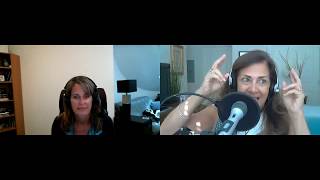
Sue Hawkes talks with Kathy Caprino about self-doubt and perfectionism. About 80% of successful people feel like frauds sometimes. Hawkes recommends asking for help, delegating, and saying no to commitments that don't align with your values.
Chapters
Hello, everybody. How are you doing? Welcome to Finding Brave. And this is the first new episode in a few episodes since we've been running the Editor Summer Pick series. So I'm so happy you're here. I hope you've been having an amazing summer and I'm so thrilled to share with you our guest today, Sue Hawks, who we were yakking up a storm right before we pressed record and we could probably talk for about five hours opposed to 30 minutes. That'll be the challenge, right, Sue? Oh, and we are talking about all things. How to stop chasing perfection, how to shatter the illusion, how to love ourselves in a very powerful way. And sue has this wonderful description of when you really hit that, what it feels like and what it looks like. And we're even going to do a little swearing. We're going the expletive route, the explicit route. But before we begin, let me share a little bit about sue with you. Oh, look, I see your beautiful dog. Sue, what's your dog's name?
That's Spanky back there.
Spanky. Hi, Spanky. Oh, I love it. All right, everybody, here is Sue. Sue Hawks helps CEOs and their leadership teams succeed as a best selling author, award winning leader, certified EOS implementer. And you're going to tell us what that means. Certified business business coach, WPO chapter chair. Too bad you're not busy at all. And globally recognized award winning seminar leader, sue brings over 30 years of business experience to her clients. A CEO of Yes, Y E S S exclamation point. Sue has designed and delivered dynamic transformational programs for thousands of people. Her most recent book, Chasing Perfection, Shatter the Illusion, Minimize self Doubt and Maximize Success, is available right now. And you got to read it. Sue is also a frequent contributor to publications including Forbes Inc. Entrepreneur, Fortune, Fast Company, Ladders, HR.com, thrive Global, and the New York Daily News. Sue, thank you for being here. What an illustrious buyer. You're so welcome. Now let's jump right in here. You just wrote a book, right? Shattering the illusion, Chasing perfection. Can you, in fact, I think you, you need to read this statement that you send me. Sent me when you're at the top of, of your game and I know we come in, we come out of it, it's a moment, it's a, it's not, you know, every minute of every day. But can you tell us what it looks like when you're really there, when you've really hit it?
I absolutely will. The way we define it is when you're truly at peace and in touch with yourself, and nothing anyone says or does bothers you, and no negativity or drama can touch you. It means being at the pinnacle of whatever you do. The ultimate leader you can be. This is it. You're at the top of your game. The desired space to be. You're fulfilled and also making a great big dent in this one world. You are unfuck withable.
Un. All right. My editor's gonna love it. Unfuck withable. Wow. And, you know, I'm kind of reeling just because in the past, I would say month there have. I would say that the moments that I feel this are fewer than the moments that I don't. And I've had some things rock, some personal things where I've had. In fact, I just this minute put up a quote, something like, don't get defensive. Get curious. So when something hits you, how about saying, wow, okay, what do I need to learn for my highest good here? But can you tell us? What do you think? And you work with a lot of female leaders as well, sue, right?
I do.
Can you tell us. Let's do the flip here. What do you think gets in the way of that, of being unfuck withable? What do you think is happening here?
You know, I think a lot of it is how people are raised. And as much as we'd like to downplay and think we've come a long way in this world, I think there's still some very strong gender stereotypes at play. So I think for women and for leaders, especially CEOs, women who have accomplished a lot, they don't receive well, they don't ask for help, they struggle through things, but they do it in not necessarily only a martyry way. But we aren't very good at surrounding ourselves with people who can compliment us. We have more to prove than that. And I think for most women, we struggle with a paradox of we have to work twice as hard to get half the credit. And I think that's valid, and I think the research proves it. And I think that from a perspective of where we can improve is to take some of the pressure off in all the ways we try and be so exceptional.
So when you talk about chasing the perfection, can you share a little bit about how you mentioned earlier in our private talk there, when we reach a certain level and we're talking women here, let's just be honest. I know that we can't paint all women with all women with the same brush, nor can we paint all men. There are men who have these experiences and Women. But if we're going to generalize a little, and I think both you and I work with enough women that we can do this because we're informed about what's coming to us. You talked about reaching a point where there's an impostorism feeling. Can you talk about that as well? What's going on there?
Absolutely. In chapter one, we talk about imposter syndrome, which is basically, and it's a legit thing that two female psychologists discovered in the 70s. And what they were commissioned to do was say and email thing, and then 20 years later went back and found out all leaders struggle from this in. Interestingly, men had just as much as the women. But basically it's that as you raise the bar to be successful and you succeed and then you raise the bar again, there's an equal amount of self doubt that accompanies that. And so you raise it and then you go, oh my gosh, what if they find out I'm making this up? I haven't been here before, I haven't done that before. And. And I said yes because I believe in myself. And yet what if they find out that's not true? So there's this imposter feeling like you're a fraud. And what the research showed is that 80% of successful people feel like a fraud periodically, 20% do not, and the 20% are the frauds. So it's a natural, normal thing that we have to get our arms around and recognize happens with success and that it's going to happen. So how do you combat that? To not erode your confidence in those critical moments becomes a different quest.
Now, in your work with both men and women who are leading companies, do you feel that men experience it as much as the women you're dealing with?
I think the ones who will talk about it, yeah. Think men don't talk about it. And I think in that gender stereotyping, because women tend to be more verbal often.
Right.
You and I will sit down, Kathy, and I'll go, oh my God, you wouldn't believe what's happening. And I don't think I can do it, and I'm afraid and blah, blah, blah, and you'll bolster me up and wrap your arms around me and be a great comrade, because that's who you are. On the flip side, I think men go, everything's great, bottom line looks good, team is strong, we're gonna figure this out. And I think they might go home and perhaps talk to their dearest friends or their significant other, perhaps. But I don't know if they articulate it unless they have, you know, been in peer learning and worked on vulnerability. Because again, societally we don't have the emotional bandwidth with men often that we do with women, which paints us in this picture of being weaker at times, but also more vulnerable. Because again, all the research would tell you female leaders are better leaders because they're more authentic.
Wow, I love your language. I couldn't agree more. And we were talking earlier about, and I'm covering this in my book coming out next year, you know, when you live in a patriarchal society, as Terry Real, the wonderful best selling author and couples therapist says, you know, patriarchy is the water we swim in and we're the fish. And what that really means, means is we split, each of us split ourselves in half. There's the masculine side and that means strong and invulnerable and non emotional and assertive and confident. And then there's the feminine side. And of course this is the stereotype. This is not what we're really, what we really believe. But we're the empathic, emotional, vulnerable, maybe weak, maybe unreliable. But what happens is I noticed that the senior level men that do admit this, there's almost a double whammy, they feel it, which makes them hate themselves. And then in admitting it, they feel doubly terrible. So what Terry says is patriarchy hurts everyone, that patriarchal, and we're seeing that. I mean, when you have this, I call it a dirty little secret in the book, when you have a dirty little secret that you are too afraid to share, that eats you alive and it does so much damage. So, you know, really, no one's better off from this patriarchal view of the, of things, of these rigid gender stereotypes. Would you agree with that?
I would agree. I think that's very powerful. Everything you just said, it makes me ready for your book. Get that thing printed.
Thank you, my dear. Thank you. Now, let's talk about. I know listeners will say, look, it's well and good to wait for those moments where you're really feeling like, don't mess with me and it's not going to work if you even think to. But there are steps that you talk about, about how to make sure we're on the path to that. You talk about, for instance, how to create space so that you can create. You offer a number of strategies, sue, can you teach us some of those? How do we get there where we are feeling really good about who we are and what we offer and we're not feeling like an imposter. And we're not worried that we're going to be found out. What do we have to do here?
You know, great question. And I'm all about actionable practices and we touched on a couple of them. One is learning how to ask for help. Yeah, it is perfectly okay. And this sounds very basic, but it's perfectly okay to not be good at everything.
Right.
And I think a lot of us who base our identity and our worth on what we do and what we're capable of. And I was raised by depression era parents who, you know, both my mom and dad were way ahead of the time as much as they were traditionalists and you can do anything. So I was changing the oil on the car and trimming the hedges at the house and doing lawn work with my dad and I was cooking and cleaning and ironing with my mom because they had very stereotypical roles.
Division of labor. Yeah, yeah.
But they both believed that we were equal opportunity participants. So my brothers were in the kitchen and I was in the car. So, you know, that mindset made me who I am and there's all of the wonderful parts that that makes me capable and a problem solver and an of course person on the other side. It makes me do things that really probably I don't need to or as I start to advance in life, am I the best person to be doing that? So learning to delegate those things that are not my strength or not my joy changes and impacts how I spend my time and money. And when you're younger you're voting on I've got time, I don't have money, so so go for it, that's great. But if you don't love it, if it doesn't increase the joy in your life, you will make far more money by having someone else do that. Now, creating the space in order to have the space to create most leaders, when they don't. When you get too in your business, when you're crusty and crabby and you know, I think we all get icky at times where you're doing too many things and you're over scheduled and you don't feel like you can breathe, I don't care who the leader is. You come in and out of that when you're there. The very best thing you can do, which is counterintuitive, is make space, take space. And whether it's clearing your head through a journal, I tell people to put it out on paper so they can just kind of mentally throw up, you.
Know, get it out get it out there. Yes.
And then you see patterns and you see things and it doesn't become overwhelming because our brain's job is to thrash on that like a computer. So we'll perseverate on things that we could easily solve if we could just not have all the noise around it. So getting it on paper and being able to journal is one of the things that most people are poor at, but they need to be better. And whether, you know, with no agenda, get it out, you don't have to have a structure. Practice doing something like that. Having mindfulness practices well beyond meditation, things like learning how to take a deep breath, things like stopping the tapping on your computer and standing and walking around the office and then coming back to sit down. Things like that are resets for your brain that we don't do enough of because we push through it and often are jamming more in when the best possible thing we could do is. Is when it's chaotic, it's counterintuitive, take a break. And that can be five minutes, that can be one minute, that can be 10 minutes, that can be an hour. It doesn't mean you have to go do a full blown workout and if you can, bless you, go for it. But it does mean interrupt the pattern of pushing because you're less and less effective and you're working harder and harder to get less done.
I love it. Can I build on that, Sue?
Yes.
And give a really concrete example we mentioned. I have just come from Italy on a performance tour with the Wilton Singers, the group. So thank you. So fun. And it was 10 days and I have two things I want to share about that. I agonized for days. Should I bring my laptop or not? Because it's heavy. And I was in the process of finishing a manuscript and I thought, well, I'll be in airports. I agonized, I took it, mistake. I didn't open it, didn't want to open it. And what I want to tell everybody is you're looking at a perfectionistic over functioner. You are recovering perfectionistic over functioner. You're looking at what sue is talking about doing more than is appropriate, more than is healthy, more than is necessary and trying to get an A plus in all of it. And you're going to crash and burn and you're not going to be effective. But here I am taking the laptop. Good thing I didn't open it. But what I want to say is I really unplugged for 10 days. And when I came back the first day, Sue I was downright depressed and I'll tell you why. I love my work with a passion, but reentry is often very hard when you've had a massive mind shift. But more than that, I sat down and I looked at what I typically do in a day and all I can tell you is oh no. That when I'm in that pushing mode, it can be the work of two people, I think sometimes even three people. And I know you know exactly what I mean. The thing is, when you've been away, your whole body and your soul and your spirit and your mind don't want to re engage in perfectionistic over functioning. They've had a break. And the crazy thing is I actually wrote better and more after having that break. It just came flying out. So there's five different ways, 100 different reasons why it's not just oh, take a break, it's, you need kind of a paradigm shift to actually see why am I doing the work of three people? I don't need to do that. And I'm not good at all of those things. Why am I not delegating more and more and finding, and we all know the reasons for that. I can't find the right person. They didn't work out. Well, those are excuses. I know you don't feel their excuses. They feel very legit in the moment. But if you are doing more than is appropriate, necessary and healthy, you've got to change it or you won't reach your highest potential. Would you agree with that?
I would totally agree. And can I add on to what you said, please? The, the power. I was sitting there and hopeful while you were telling your story that you left that laptop home unless you wanted weightlifting, but my arms got stronger. Saying no is another huge practice. And look, I talk about this because especially we're enculturated to say no. And I can't just say no, Kathy, no thank you, Kathy. I don't say that. I say, oh, Kathy, I can't. And here's why. My dog is sick, sick and my kids coming home and I've got four events and I'm over scheduled and da, da, da. And all of that stuff diminishes everything about it. It is perfectly okay to say yes and it's perfectly okay to say no. And I talk about it this way now. I say if it's a hell yes, it's a yes. If it's a hell no, it's a no. Anything in between is a hell no. Because if it's a maybe, it's it's just hell.
Oh, wow. I love it.
And this diagram has been done where hell yes is here and Hell no is here, and there's this little overlap, and that's hell because it's not one or the other. Shove it over to hell no, because honest to goodness, it's not forwarding you anything you should be doing. Like you said when you got back, I'm listening to you and I'm going, oh, my God. You come back with that zest going, I've got 25 things to write about because my mind is free. And Gino Wickman calls that a clarity break. Because you enter into this space of clarity where it's like, oh, my goodness. That's what I want to say. Not I'm searching for it amidst the noise. And so learning to say no based on, are you jumping out of your skin to do it? Then don't. Find another way. Outsource it, automate it. Give it to someone who does say, hell yes, but don't settle for maybe or sort of or kinda or I should. Those are all hell no, and your life will start to free up.
I want to share with you. I don't know. When was it? Three months ago? Three weeks ago, my son said he saw Mark Cuban saying something like, following your passion is the worst, most terrible idea if you want to be successful or want to make money. I forget what it was. And so I went and found the video. And I have to tell you, it perturbed me beyond belief, because, one, it's a very male view. What he's talking about is, instead of what you're passionate about, look at what you're good at, what you spend time being good at. That is so wrong for women because we're good at so much that that's going to be a million things, half of which we should not be doing. So forget good at. You know, how many times have we been good at something that we want to poke our eye out with a stick about, like, if I do this one more time, but I'm good at it. So, no, it's not just enough that you're good at it.
It's, you know, love it and be great at it, Right?
And, you know, in the words of Marie Kondo, does it spark joy? Is there a feeling of, I'm on the right path? Not all right, I'm gonna. I guess this is what I'm gonna do and make my million. And anyone who says, you can't do that, do what you're passionate about, do what Feels right and make a lot of money. Just hasn't figured it out how to do it and is giving us bad advice. Would you agree? I'm not saying that we should all run off and, you know, join a rock band. We have to do it smart. That would be fun, right? And maybe it's not what you do for a living. I'm a singer. Not for a living. But you must do it smart for sure. But don't just do what you're good at, for goodness sake.
Totally agree. You'll be chasing a lot of dead ends.
Now tell me you, this is really fun. We're going to have probably a different interpretation of this. You talk about you don't think there's such thing as work life balance. It's work life integration. And that is a very contemporary view. And, and this is where I'm showing that, you know, I'm bringing things from the past. But tell me exactly what you mean. Tell us what do you mean by that?
So I think, you know, balance is one of those topics. It's, and I hate to say it, I get asked to talk about it all the time. Yeah, it's in the self help magazines, it's touted, you can clock your calendar to every December and January where it's all about balance because life is chaotic and this is this elusive. And I say balance is bullshit. And it's because it's a state, it is a presence. It's like being unfuck withable. I go. It's a place you visit and usually it goes away the second you notice you're visiting. And it's that alignment internally with this is exactly where I'm supposed to be and exactly what I want to be doing. And it's filling something in me that aligns with my personal values as I'm doing it.
That's integration, not balance in your mind.
The literal part that people get hung up on is it means you're working at home and you're at home when you're working. And it means we're more fluid. So how it plays itself out to me is the workforce of the future. The millennials, the Gen Zers, they're not going to go to work, but majority of them are going to freelance or they're going to cowork or they're going to visit their office and be gone. And they want the experience of that community and working and whatnot. But it's to fund a lifestyle. So the integration part means I'm not going to have these hours that I give you and trade for money. It's I might work at night and I might be at my kids thing or I might be on vacation and not work at all. And then I'll work for three months on projects and then I'll go on vacation again. And so there's much more fluidity and flexibility. That means I can have it all in my own way, just not all at the same time.
I see.
And I think we have to reject that. Balance for me looks anything like balance for you than looks like anything for anyone else in our life. Because an entrepreneur in particular, and I work with a lot of them and CEOs, most people would say you're imbalanced and I don't know about that.
They would say to you that you're imbalanced, terribly imbalanced because you work more hours than you're doing too many things.
My argument back would be if I get energy and I love doing it and I'm great at it and it happens to make money, kudos to me. And I tend to think I have a really rich family life and I have a really great relationship with my husband and I have a ton of friends, but I found ways to weave that in. That's non conventional and doesn't look like on Saturday and Sunday, that's family time. And in the evenings that's when we get together. It's far more interesting and integrated than that because that's the way life happens.
I love it. So let me, I think I couldn't disagree with one iota of that, but let me, you know, language is fun. It's, it's, you know, this word means something to you and it means something to me. Can I tell you why I do believe balance still works? Can I share?
Sure.
So when I think of balance, I think of juggling disparate or different plates that mean something different to you or bring out something different to you. What I think is wrong with the past definition is they make they. Who are they? People who talk about balance almost make it sound like you can only have balance. As you said, if you're done at 6pm and then you're bathing your kids from 6 to whatever, I'm chucking that all out. What I do find, however, is there are different parts of me that when I am not working are allowed to come out. So for me, when I'm singing, I am not the owner of Kathy Caprino LLC. I'm not. I am an equal partner in this 50 person group and I'm maybe not the leader. I'm the follower or, you know, or when I play tennis and I'm, you know, not as good as I used to be when I was 18. Wow. I'm the learner. I'm the person that's going to watch and well, I'm always that anyway. But the point is these other things that are non work are essential to my growth as a whole human being. And I want to be balanced. And I don't mean 50, 50, that's up to us to decide, right? If you're thinking 50% this, 50%, that's absurd. And no one should have to toe the line to that. But when I say balance, I mean doing these other things that are non work allow me to become a whole richer person than if all I did was work. So I think what we're, what we're trying to do here is say so much of the same thing. Choose what's right for you, pursue what, what gives you a sense of internal balance. Wouldn't we say that? Internal balance?
Well, the other part that I add to this is often when you read articles or see shows or hear people talk about balance, they talk about time management. That's really what they're talking about is, oh, you can be doing, you can be having a meaningful conversation with your children while you're driving them to their event. And that's really the, you know, and I'll be like, that's time management. When I think about integration, it's also that experience that you were just articulating and I was trying to touch at, which is, does this feed me? Does this feed my. Because if it gives me just as much back as I put in or more, that's balance to me. That's the experience people are seeking. It's not, can I multitask one more thing? Because I get in groups with female CEOs in peer learning situations and they will be sitting there and they'll digress into this, you know, and it's always around self care. I'm not doing any self care because that's what women throw out the door. The first thing is it's all about everybody and everything else. And they're going, I'm depleted, there's no time for me, et cetera. And what does everyone in the room do? Oh, well, you need to cancel this and you need to take that time at lunch. And it's all about time management. And I'm like, that's not what they're saying. They're saying part of me is dying. How do I nurture and Fill something like going on the trip you just went on. You're not gonna rearrange lunch hours to get that. It's what's aching, what's longing, what are you listening to? And how do you address that? And that's where it's. You've got to slow down, create some space and say, is it a trip to Italy that I really need, or is it, no, I need to just get a massage in and I'll be great. Cause I'm just a little out of tune. And it's varying degrees of that. But we talk about it like, if I multitask one more thing or if I can squeeze one more thing in for me, I'll be balanced. And often I go, that's just adding one more thing, which sounds and feels often as stressful as not doing it.
Oh, I love it. I couldn't agree more. And I wonder if you see this. I'm sure you do. I would be a multimillionaire if I had a dollar for every woman in the 14 years I've been doing this career coaching work. Who says this? They think they want a career change. But when I read their assessment that I've given them of questions I wish someone had asked me 30 years ago, there's no evidence that they don't like their work. What they are is beleaguered, depressed and exhausted because they have no time for themselves. So I say to them, you're not going to like this, but this is the approach. I want you to change that now in this job. And I say to them, if you were able to have more of the life you want when you're not working, have more time for yourself, if you could do that today, would you stay in this job? Would you love this job? And they almost always say, I think so. So the very first step is, how do we change what you're doing in relation to how you're operating in your work? And sue, it's always boundaries. It always comes from childhood.
Brilliant.
Always. It's always, could I say no? Or did I need to be perfect? Or did I was? I loved only when I did 20 things and went to Harvard and was, you know, D1 soccer. So I'm so with you that it's not the shifting of one lunch period, lunch, lunch event, or, you know, going home at 6 instead of 7. Yeah, that'll help. But if you don't know how to honor who you are and say, hell yes, hell no. And if you're too scared to do that, no job, no career. Is going to give you the happiness that you. You're looking for or fulfillment or reward. Right.
Relationship. And you can insert the blank. It could be your career, it could be amount of money, could be the finances. Absolutely. But we look outside of ourselves to solve the inner longing.
That's it. That's it. Can you give us one more tip? How to be unfuck withable. What it. What is the thing you see over and over that you go, yeah, there it goes again. That we haven't talked about anything.
Oh, my goodness, we've talked about so many of them. I think if I were to encapsulate it, and this is a big thing. I don't know that I'll get you the practices. But the big thing I see is people living the life they think they're supposed to live versus living the one they were born to live. And I think that's an uncovering that we all long for. And we get trapped by material commitments at some point for many people, so they don't love what they're doing, and they don't necessarily bring the best version of themselves to everything they do. And so again, a part of them is dying, but it logically makes sense on paper based on the commitments they've made. And so traversing that is the stuff that I'm interested in helping people with because I think often we're satisfying the shoulds and the things we believe people are expecting or that we adopted along the way from a teacher, a parent or a family or society or whatever expectations. And being humble enough and vulnerable enough to realize where you have accepted that and it's not. Yours is a really. It's a lifetime worth of work. Because the closer you get and the more you approach letting go of those and being scrutinized by yourself more than anyone for going for what matters. You know, I was just talking to April Seifert, who is brilliant, and she lost her father at a very young age. And she had an epiphany moment where she was buried in her graduate school work. And she said, what would your dad think of how you've wasted this day? I thought that was such a. Oh, that's so painful. But it's such a powerful question.
And she knew in a minute, too, right? Doesn't have to be physically standing for.
What mattered to her, because all of us are gonna die. You know, life is terminal. And we look up and we don't have time to waste. If you really think about it, how are we maximizing what gives us joy? And again, that combo for me is different than you, but I don't want to waste any of that time. And that's the thing that I would tell you is if what we're talking about, you and I both, can help people accelerate the joy and maximize their experience of themselves in the world, more of it. And that's what. That's. I think that's what too many people do, is they've. They're mired in expectations and commitments that they made out of some other expectations that are no longer true.
That's powerful, Sue. That is powerful. So would this be a strategy to get to the heart of that? Just this weekend, listening to this, or whenever you have time, pull out a blank piece of paper and write, if I didn't feel I should or I had to do this, what would I stop doing?
I think having list is brilliant because looking at what would open up is huge.
And, you know, I just want to echo, you know, having just recently been divorced, I see how there are so many things that are going on that we're almost not even consciously aware of. The pressure, for instance, or not the pressure, the idea that you failed if you divorced, where. I think both my ex and I would not agree with that. We, you know, we're probably both doing better with each other, and we're very amicable, and we put the grown kids first and we, you know, do things together. So this pressure that you failed when you don't even buy into that. I think there's a million of those that I should be making six figures, or I don't have a viable business, or I should have this huge house and a huge yard, when in fact, I can't stand taking care of this huge house. I think there are thousands of them that we're almost afraid to admit to ourselves because it makes us so different.
And it might unravel the whole package.
We might just go here and just.
Say, you know, no, I want to live in a hermitage. And I want to.
I want a small house, a tiny house. Right.
And that's okay. And again, you look at people, I look at, you know, some eccentric examples. You think of David Letterman.
Yeah.
And how he lives in Hollywood. And I think, good for you. Good for you, because it's authentic and.
Or isn't it Warren Buffett in a really modest home. And, you know, what's a billionaire doing there? Well, he's living a good life on his terms, darn it. Right.
Exactly. So how do we get there? You know, that's one practice at a time. And it's catching it when, when, when you can. Because again, you redefining divorce the way you just said is so powerful because it doesn't mean, you know, maybe when we lived 50 years, a lifetime of marriage was the exact right answer. But I had a friend when I got divorced who said to me, you know, it was a good partnership for the period of time that you agreed to it. And I went, that was a really freeing way to think about it. So that it wasn't punitive and it wasn't again, a character assault of any sort. Right. And the failure part comes out of it. And perhaps because we're going to live to be closer to a hundred or more, maybe there are people in our lives for chapters and maybe that serves a purpose. And maybe for some people that is the exact right answer and maybe for other people it's a lifetime. But to judge it instantly takes it away. And that's where, you know, again, if we can do our best work to say, is this getting me closer to what I want to say is a well lived life, then do it. If it's moving me away from that or something feels funky, I would tell you it's a hell no. Like just, it's okay, let it go. We don't have to fit in that person's mold.
Oh, I love it. I just want to end there. Those words are powerful. So I think what we're both, I said I'm going to end, but I can't. I think what we're both saying is be brave enough to make the assessment about what matters to you. And when you're 90, looking back, are you going to have said, yeah, I did it or shit, I chunked it. I lived someone else's version. That's what we're saying here. So where could Sue? Where? Thank you. Wow. Where can people learn all about you? Where can they get your book, tell us what to do?
You can get all kinds of free things. The book, the journal. I did a journal for people who don't journal. So it helps you do a question a day. So it'll take 3, 3 minutes if you're not good at it at chasing perfection.net Great. Feel free to peruse and share anything you have. And if it's useful, use it. And if you have some suggestions, share them with us because we're building a community. So.
And you're, you're ideal clients who should reach out to you if they need help. Or maybe you're just booked and can't, can't do that. Maybe There's a waiting list right now.
We never say no to clients.
To the hell, yes clients.
Yes. Hell, yes, clients are, you know, lady bosses, professional women, women executives. Anyone with a group like that. If you want to have some great keynotes, workshops, discussions, come my way, I'd love to help.
Oh, sue, thank you so much. I feel calm and balanced and integrated and unfuckable with. And all at once.
Kathy, thank you so much. It's been a pleasure. And I'm grateful to have been here with you.
I'm grateful to know you. Thank you so much. Oh, man. Well, manuscripts done. We'll see what happens. Everybody, we'd love to hear from you. What one thing did you get out of this that shifted a perspective? I know you're hearing from a lot of people, a lot of illustrious thought leaders, but what did you get from this? And what practical steps are you going to take? Please let us know. We'd love to hear from you. And we can't wait to be with you next time. Thanks. Bye. Bye. Bye, Sue.
Bye. Bye.
More from Kathy


Elevate Yourself, Elevate Others, and Amplify Good | Chris Cooper | Finding Brave Ep. 334

Finding Brave Epis #333: How Leaders Can Harness AI Without Losing Their Humanity, w/Bennett Borden

Finding Brave Epis 332- How to Stay Brave, Valuable and Visible in the Age of AI, with Raman Rai

Finding Brave Epis 331 - The Power of Positive Disruption, with Dr. Patrick Leddin


Finding Brave Epis 330 - Being 40: Letting Go and Embracing Who You Are, with Stacey Lindsay

Disrupt Career Reinvention with Kathy Caprino - via The Disruption Lab Podcast w/Patrick Leddin

Creating Neurodiversity-Friendly Work Cultures: Simple Workplace Adjustments Matter

Finding Brave Epis 329 - How To Create a Neurodiversity-Friendly Workplace, with Kristen Pressner

Finding Brave Epis. 328: Reclaiming the Power to Trust Your Own Voice, with Dr. Cindy McGovern