Finding Brave 91: How To Bake Your Dream Life Into Your Business Model From Day One, Richie Norton
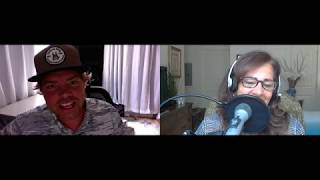
Richie Norton lost family members and had a son in a severe accident, which drove him to build a business around freedom and values from the start. He teaches entrepreneurs to work backward from the life they want, not forward from what's possible, and become that person before they achieve it.
Questions this video answers
October 3, 2019
The Power of Starting Something Stupid (available in 10 languages)
Named one of the world’s top 100 business coaches by Dr. Marshall Goldsmith (2019).
Named to Pacific Business News' Top 40 Under 40 in Hawaii (age 29).
richienorton.com (features the 76 Day Challenge).
Chapters
Okay, my friend. Hi, everybody. Kathy Caprino here. I'm on a podcast roll here number two today and. But nothing could be meeting with my dear friend and inspiration, Richie Norton. Richie, thank you.
Oh, I love you, Kathy. This is so exciting. We've been on a journey together over years now and you've been my biggest supporter and fan. I'm yours as well. So thank you so much.
I'm so thrilled to be here. And I was looking, you know, folks, I love to tell you how I, how I know my guests and I was looking it up. Richie, it was 2013 that your book. I'm going to butcher the title, but I remember the Forbes post that we did, you know how to start something stupid. No, that isn't it. What is it exactly? Yeah, yeah, yeah.
No, the power of starting something stupid. And the Forbes post was about how to start something stupid. Yeah.
I just loved it and people flipped people. You know, I write a lot, so I don't always hear a million things from people. But that one, people were like, wow, so inspired. And so was I. And we were even laughing. I was like, richie, can we do a workshop together? You know, so someday we'll do that.
We will make it happen. That's right.
Let's do it. All right, folks, we are talking about, and Richie's a total expert at this, how to bake your dream life into your business model from day one. And man, you are living, I think, a dream life for, well, your own version. And I think most of us look at what you're doing and going, yep, that's pretty much kind of how I want it. So you're going to tell us all about it, but let me tell you about Richie. All right. Richie Norton is the award winning, best selling, best selling author of the book the Power of starting something stupid in 10 languages.
Yeah. Is that crazy?
Is that crazy for you? I'm sure. And resumes are dead and what to do about it. And I Love this. In 2019, Richie was named one of the world's top 100 business coaches by Dr. Marshall Goldsmith. That's a huge honor.
I know.
I want to talk about that. He's an international speaker, including TEDx and Google startup Grind. I don't even know what that is. And serial entrepreneur. Richie is the founder too, of Global Consulting Circle, creating scaling business models for venture backed startups. Co founder of Is it Pro product.
I know every time either read it or I say it, it sounds like.
It'S some weird accent, but did I get it right?
You got it right. It's proud, like products you're proud of. Proud and product put together should be.
Smart and easy to do. I don't know why I can't. Helping entrepreneurs go from idea to market, full service with global sourcing and end to end supply chain. Wharton founded EDIT today, a multinational video editing service for bloggers. It goes on and on. Folks, we're going to have your. I just can't get over it. And the most important thing is wow. And you were. Even at age 29, Pacific Business News recognized you as the top 40 under 40, best and brightest young businessman in Hawaii where you live. So suffice it to say, you know so much about, I think, turning adversity into power and positivity, about how do I live a dream life, how do I do all this? It seems like you do the work of three people maybe. Are you up all night? Well, you're going to tell us. Let's start right off the get go. Can you, Richie, tell us a little bit about what you've been through in your life and how that fuels you and changes your perspective? Do you mind sharing a little bit?
Yeah, yeah. So everything I do is really, to be honest, is to help me have more freedom of time and essentially help others have more freedom of time. The reason this is so important is because I've learned it doesn't matter how much money you have or how much time you have, it depends on how you spend that money and time that makes the difference. So as you know, my brother in law passed away at 21 in his sleep out of nowhere. And this rocked our world. Like he was living with us in Hawaii. And we all think we're going to grow up and retire at 65 and live our dreams and donate our millions and do all the things we're gonna do. But when I saw that happen to my brother in law was like, aside from the tragedy, you know, and all these things, sadness of it, it was like a wake up call. Like, ah, life is short. That's not just some cliche.
And how old were you, Richie?
27.
Oh man.
I think, yeah, 27. I was 27. Mm. Yeah. Then a few years later, our fourth son, we named him Gavin after my brother in law, Gavin. And we've gotten into this deep before, so I'm not gonna go super deep right now.
Other people don't know, but those who.
Don'T know, like this little baby boy, so sweet, kind of filled the hole in our lives that his uncle left and he caught something called pertussis, also known as whooping cough. And he also passed away and that was just like double, you know, just, just, just too much. It's your worst nightmare, right, as a parent. And it was during that time it was, I mean, the Power Star Racing stupid took me from my idea to, you know, getting it out there. You know how this is like six years and it wasn't until like the last two years that I got serious, you know, about it. But it was during that time that my mind was changing about what it means to be a human, you know, because of these deaths in the family. And I'll just fast forward a lot. Like at some point in time, honestly, I think maybe even the last time we did a podcast, we, we had three foster kids in our home. Have we talked about this before? Oh well, okay. So I did an MBA at Thunderbird and so I moved to Arizona to do that. When I finished, we were going to come back to Hawaii, but I had some opportunity with some venture capital stuff. And then at some point we meet this wonderful woman who met my wife who had three children and she asked, long story short, she asked if we could babysit them. These are cute, like the cutest kids. They're Cuban, Dominican, you know, like just the most adorable people ever. Anyways, this mom asked if we can babysit them and overnight because she's a single mom and she's gonna get a job at night and whatever. We're like, sure. I mean, of course this just happened within a week, right? She doesn't come back.
What?
And you know, she kind of, you know, she kind of kept in touch and stuff and it was just wasn't normal. It was like another night, another night, another night. And eventually again, all within a week, Child protective services knocks on our door. We know nothing, right? We're just being people, we're happy to help, you know. And they're like, yeah. And they explain some things and they say they're going to take the kids and put them in the system. And we're like, whoa, this is heavy. And we say, where are they going to go? And they said, well, no one wants three kids. This is what they say. So we're, we'll probably split them up. It's a seven year old girl, one year old, twins by the way. And they're like. And they're probably gonna sleep in our office until we find somewhere for them to go. I immediately say, we'll take them, you know, and my wife's like, yeah, we'll take like, we're like, we're, we're in this, like, whatever.
How many children did you have at that time?
This is. You know, we went from four to three. So now we're three. And now we're going back up. We're going to six. And they're like, yeah, they thought through it. And they're like, okay, because they're already in your custody, but you're not foster parents, like, certified. There's, like, a whole process. They're like. And there's nowhere for them to go. So it's this whole situation. Like, we'll call them. We'll call it kinship placement, because they can do that, I guess, because they're already in your care. And we're like, we don't know. All right, but wherever. Whatever keeps them, you know, safe and whatever. So we basically overnight go from three to six children. So we're like, beds, diapers, clothes. We just bought a car. Didn't have enough seats for that many people. You know what I mean? Like, all the things. Anyways, long story short, like, gosh, these kids had all kinds of issues. I can't necessarily get into the specifics, but, I mean, there's a boy, girl. There's a boy, girl, twin situation. The boy was malnourished, couldn't even lift himself up. He's 1 years old. The girl's up and walking. There were things. But I totally credit my wife. She brought these kids back up to health and life, both physically and mentally. And, yeah, we love them so much. After, we wanted to adopt him, of course, and. But in Arizona, it's a. I don't know what they call it. But eventually the mom got them back, which is a wonderful thing for her.
After two years shit together. Please. She. She got her.
Yeah, we hope so kind of thing. You know what I mean?
Yeah.
Yeah. So she got them back. And great. Wonderful for her. But it was weird to compare feelings and the trauma, the grief of, like, a son passing away versus our kids leaving who are still alive in the world. Like, there's a finality, right. Of the death. When we have faith, we believe we'll see him again. But this is like, we don't know where they are. We don't know if they're okay. It's every day we think we see.
Another kind of hole in the heart, another version.
So we went. Four kids, and I'm not doing this story justice. There's so many details, but you get the idea. So we go from four kids to three kids to six kids. Then when they leave. This was so hard. We're like, we need to like rebound and gather our three children that are still with us. Got a huddle up. You know, we decided we were gonna go on this. We decided to fly to New York and we were just for one way tickets and just drive across the country and see what would happen. Just be together, you know, adventure.
What a. What a soul.
I know. On the way to the airport.
And how old were your kids? Just so we know.
Let me think. I think my oldest was, I don't know, 12 or 13.
Okay.
Yeah.
And the littlest one was how old?
The littlest would have been like him and the little girl were about the same age. So he would. They grew up together, you know, seven, eight, so about, you know, nine or 10.
Wow.
Yeah, something like that. And on the way to the airport, my wife Natalie, she was gonna go ahead of us for some conference or something, but on the way to the airport, this is, this is, this is. She lost her memory. She. She had a stroke in the car. And we. We don't know why or how it happened. You know, we're just not sure. But she. She couldn't talk, she couldn't. Like she was stuttering. She couldn't remember our names. Like this literally happened. She. So we go to the hospital, just someone on the side of the road and they transfer us to like a major hospital. They do all these brain scans and they can't tell what's going on or what's wrong. They just know that it happened. And she comes, it comes back, right? It comes back and they say, this is so terrible. They say, okay, well, we can't tell if anything's wrong. You can go. And we're like, wait, what? Like you don't know what's going on. We can go. And they're like, we don't know, it could happen again, but we can't do anything and we don't know. And my wife, so, so brave. She. I'm like, okay, well, we're not going to New York. We're gonna go home, we're gonna chill, we're gonna relax. Like, this is, this is. We're done. And she's like, oh, no, I'm not going home. I'm not laying on the bed. If I do that, I'll never get back up. He's like, I am getting on that plane and I'm going to New York, you know, as a way to prove to myself, you know, that I can do this. I'm like, what am I supposed to do? So I give her, I write this little Note, Kathy, it's so bad. I write this little note and I give it to her to put in her pocket. It says, if I forget my name, call this number.
Oh, my God.
And then I'm like. Then I realized after. She's on the plane by herself, by the way, because our tickets were after. I don't know.
My God.
After this happens, I realized, oh, she's gonna forget to give people the note. So bad, so bad, so bad. Oh.
HE laughs. You are just. What a human being. Did she ever need the note?
I don't know. She can't remember. It's so bad, so bad.
I mean, is she fine?
I'm just joking.
Is she fine?
Yeah, she's good. So she goes to New York and, you know, she's still kind of in a daze. And the kids, we follow up later. But, Kathy, we ended up on the road for. We didn't go home. We just didn't re. Enroll the kids in school. We did road school. We went for six months and we went slow, like every night. We didn't know where we were going to sleep. We didn't know where, what we were going to do. We had no idea. We stayed in the city for like a week or so, Went up to Niagara Falls, and then we zigzagged up and down the entire country, all the way down to San Diego, and then we're like, well, since we went coast to coast, we might as well go to border to border. So we went down to Mexico, all the way up the coast, Pacific coast and into Canada.
There are no words for what your family. There's no words that are going to do it justice. But, you know, I have another friend, Mitch Shepherd. She took a year with the kids and went all over the world. And they're little. Can you tell me, and you know the whole point of this? How do we bake your dream life into your business model? But more importantly than strategies and tips, is after doing that for six months with your kids, what do you think was different from if you hadn't done that?
You know what's weird? I'm sure anyone who's been on a road trip for any length of time, even just from your house, taking your kids to elementary school, but like any length of distance when you are. I didn't really think through this, but it sounds like the dream and it was and is. But there's also the other side of it. Like everyone's. Everyone still has their stuff. It all comes out in the car.
And you can see it even more.
Can't you?
You know, pretty startling, I gotta say.
And so it was really cool. Just honestly, we didn't know what's gonna happen. We just did it. It wasn't planned, it wasn't contrived. There wasn't an agenda. It was just, we're gonna spend time together and. And what comes out comes out. And stuff came out, you know what I mean? Like crazy. But it helped us process it, go deep. A lot of times we're traveling to escape and avoid things. But this was not that.
It's like walking into it. Here we go. Going into the cave. I'm never coming out. Can I ask you this? And I don't want to go too deep, but it's.
No, you're good? Yeah.
It seems to me that with what you all have been through in your life, living kind of a normal life with the picket fence and I'm. I go away two weeks to the Caribbean. Nothing. And nothing wrong with any of this, you know, but it seems like you had a paradigm shift in all that loss.
Yeah.
Would you say that's true?
Well, totally. So let's go there. So we get back to Hawaii and we're here for however long. And my son is. My youngest son is crossing the road. It's a highway, you know what I mean? It's an actual highway. Distracted driver. Doesn't even slow down. Cause doesn't even see him. Just runs him over. I can't.
I can't.
Full speed.
And he was alone crossing, and he.
He was absolutely alone. And he was coming back from a friend's house to our house. Like it was a normal thing. And normal day, like just everything's normal. I'm on the mainland doing like speech stuff and about to go to China on a trip. Anyways, we get the call, so I obviously cancel everything, fly home immediately. My wife's there. I get there and I'm in the hot. We're in the hospital for almost two months with this guy having to learn he's fast forward, he's okay, but it's amazing that he's not brain dead. It's amazing he's not paralyzed. And he had to learn to walk again. Like this happened. The interesting thing about him and his mentality is like, it was right around his birthday. He was 11. And yeah, he was turning 12 and we were gonna go shark. He wanted to go shark diving for his birthday. So this is where you swim with the sharks. No cage and no cage. No cage. And they. So in the hospital, he's in a coma. And when he comes to, the first words out of his mouth are something like, I think I have it recorded, too. Where are we still going? Shark diving. The guy's in, like, every body part. I can't move. And this is what he said. Oh, my God. You know. And so let me answer your question in kind of a story format. One thing, one of my friends reached out because actually, the whole community came together. He's a junior lifeguard, so on the North Shore, there's lifeguards. They're the heroes of the town. So he would go to these junior lifeguard programs. They came down, gave him, like, their yellow buoy thing, all signed, super supportive. The people that run famous people that run the shark diving thing, famous photographers came out and, you know, made him videos. Everyone came to support him. And I had a friend looking on the outside, one of my best friends forever. And he said, I didn't think about this. He said, you turned something that was so terrible into something so positive. In fact, my other kids were joking horribly. I don't want to get hit by a bus because they were like. Or a car. They were so like. He was getting so much love and attention and positive vibes from this. Because when you do get metaphorically, even hit by a car, you now have a choice. Is this going to ruin your life or not? When my son died, was it going to ruin our marriage, which it should have, or not? I'm not saying this is easy. I'm not saying it's just as easy as a choice.
Was it a conscious choice to you?
It was 100%. When my son was on that hospital bed, baby, you know, dying, my wife and I, you know, we just were holding hands, we're praying, and we looked at each other and we consciously said, we are. This can tear us apart. We will make his life and his death bring us closer together. I think when you decide beforehand, because you don't know what's going to happen in the future with all the hardness, like you can't ever even understand what's happening in your head or even understand it and anything. What's going to set you off. But I think when you tell yourself, even beforehand, the decision you're going to make, if something comes up, it helps you make decisions in that direction.
I need to understand this. I mean, the amount of tragedy you've had would, I think, kill most people.
You know? You know, it was funny, is you never know how much you can handle until you have to handle it, but you do.
Did you were in growing up, were you someone that had some inner resources, or did you get parenting? I'm all about the childhood. Did you get parenting that taught you these inner resources?
I have to say yes. I can pinpoint a moment. You know what I mean? It was more like my parents were really cool and open. I wonder if we talked about this a long time ago at the. After we were on the air. I can't remember. It was. I remember looking back. People ask me all the time, oh, Richie, you're this way. How. How were your parents, you know, and I have to give them, you know, all the credit. They were. I had great parents. I can't. I can't say I had terrible parents. When I came out of it, I had great parents. I'm a product of them. But. But they didn't shame me in my life.
They didn't like you. Tell us more about that.
Literally felt like I was a kite on a string and I didn't know they were holding the string. I was free to do whatever I wanted. They're making sure I'm safe and they are in the air. But I didn't know it. But if they. But if they would have cut it, I would have fallen.
I'm blinded here. Richie. Hang on one minute.
Yeah, I'm having.
Good Lord, it's windows. The angels are coming in.
Like, for example, the shaming thing. I was actually talking to parents recently about this because they're visiting. They're here. And I said. I said, remember when I got in a car accident? Like, I flipped a car. Like I was. I was off roading in the back. There's nothing I should have been doing. And they were out of town. And when I called them, I thought, because all my friends were like, you're gonna be there, you know, you're gonna kill. You're gonna be in so much trouble. And I thought I'd be like, paying off this debt for the rest of my life. All they said was, oh, my gosh, are you okay?
My God.
There was no punishment. The punishment was self evident. I'm never doing that again. Like, that was the way they parented. They didn't artificially make up stuff to make them feel like they're good parents. They just loved.
I just dung in my head swimming. That happened. All right, well, that's another podcast. We'll talk about it later.
Let me tell you one more thing.
We need to talk about great parenting. Come on in.
But when. So when all these tragedies happen and we're telling them in a. In a terrible series Right. But it's not like they happened one day after another, but they did happen. Like a year here, a year there. And they did happen. But I remember when Ling got hit by a car, I remember thinking, just a thought process. I thought, this is terrible. Does God hate me? Like, why did he say that?
I wanted to ask you, but I thought, now that's just.
Why does he keep wonder.
Because you're such a positive person, did you ever go, what the hell did I do? In another life?
Totally. And then I. Then I. Then I thought. I thought a little bit more logically. I thought, well, it's not like these things are actually connected. Like, they all. They all did happen to me or my family, but it wasn't like it was a cause and effect kind of thing. They just happened. And so where most people would.
Most people would see cause and effect. Yeah, I'm a bad person. I'm being punished. Karma.
So what I told myself was, I was honest. I was walking on the beach, pacing back and forth, just thinking about Lincoln in the hospital. I had to come home to grab something. I'm going right back. But I was thinking through it, and I thought, you know, I can either, like, blame God and hate God and not believe whatever, but I thought, if these aren't necessarily connected and if I'm not necessarily a bad person, this is intentionally happening. If this is just happenstance, you know, and this is the way people. People have a way worse than I do, right? All these kind of things. I thought, what if I just loved God unconditionally because if I blame Him, I can't actually do anything about it, right? But if I. It's victim. If I unconditionally love and just say, I doubt he did this. I doubt he did it on purpose. It's just happening because we're in the world and this is the way the world works, right? And we're all here for reasons, whatever, then I can keep my faith and go to work and get the stuff done that needs to get done to handle it. And I don't know why, even in churches, they don't talk about. We always talk about unconditionally loving people and loving our neighbor. And I don't know why we're always blaming Daddy in the sky. Like, why don't. Why don't we just unconditionally love, too? It helped me.
Wow. It's so, so inspirational. Richie. Holy cow. Now tell us. I mean, we're not like you, unfortunately, you know, Meaning I didn't. I adore my parents dad has passed away. My mom's 95 this week, but I did not have the kite without the string. In fact, I just want to share this quickly. I saw Tony Robbins documentary I Am not yout Guru. And the one thing I'll never forget, the question he asks, think about who you craved love from most when you were a child. Who did you have to be to get it interesting? And I went immediately. I knew it was obedient for my mother and brilliant for my father. And I wrote. I write about this in the upcoming book. If I asked them, dad, I know you're gone, but did I need to be brilliant for you to love me? Of course he would say, no. It's not conscious. It's what they valued. It's what made them who they were and made the child who they wanted the child to be. But to be obedient and to be brilliant, to feel like that's what you need to be loved, it's a crippling damn thing. And I even asked my mom recently, listen, I'm gonna put this in the book. Are you okay with it? And she goes, I could see how you would think you needed to. Of course, I was like, wow, Mom. I mean, it was so freeing that I could say it without her being upset to read it at 95. But what I want, as someone who teaches about parenting, when I was a therapist, I want people to really hear what you're saying. It's like they loved you, your parents, unconditionally. And I think you do that with your kids, but the tether isn't there, that you. For me to love you, you have to do this, this, and this.
No, they. That's right. I mean, I'm no therapist, so you've probably seen a lot more than I have. But I know growing up, when my. My friends who had parents that were holding them, strangling them as tight as possible, they were the ones that were sneaking out the window at night to go figure something out and do something and then come back before their parents knew. It's like, why do you strangle a struggler? Why. Why are you. Let go and let them breathe. You know what I mean?
That's a tweetable. Did you just make that up?
I've put it in a Facebook post before.
Teens are struggling. Let's face it. You can't be a teen and not struggle with something.
Absolutely.
So you're strangling your struggle.
Ha.
All right. That's a tweetable. Holy cow. All right, now let's. I hate to even.
I like you so much.
I love you. All right, let's bake it in. What do we do to have this dream life that we have? What do we have to do here?
So here's what I learned after writing the Power. Starting something stupid. And I love this. I realized when I wrote that book that people, successful people started things. Then I realized successful started successful. People started things that other people or even themselves once said were stupid, crazy, weird. I shouldn't do it. It should be somebody else or not at all. Everything from the telephone to the Model T to Twitter, the three T's of stupidity. So then when people would call me and ask me for help to start their stupid thing, I could help them. I knew I couldn't be the expert on their subject matter, right? But I could be an expert on their business model. So I started helping people figure out how to make money with their idea. But I quickly learned, even if they made hundreds of thousands of dollars, even millions of dollars, no joke happens. I learned it wasn't the stupid idea that they actually wanted in the first place. They wanted what they thought would come after the stupid idea was successful. They thought, I want, for example, freedom to travel with my family, freedom of time, financial independence, whatever. And they thought this stupid idea would get them there. And in psychology, it's actually called final cause that there's actually a term for this I call the success after success. And what I realized was if I began my consults with final cause. Okay, okay, fine, you want to do this thing, I don't really care where it is. That's great. I love your idea. What then? What then? And they'd go, let's just, let's use the same example. I want to travel with my family, I want to have freedom of time. And then I'll say, well, why don't we just start with you traveling with your family and have freedom of time and build a business around that.
Did that usually change the idea?
Changes everything. Well, because, I mean, think about this. So I'll give it a very real example. A guy contacts me and says he's making $250,000 a year. He's an executive, can't handle it, and his kids are getting older and he needs more freedom. You know, it's great. The money's great. There's no time. So what's it worth if you make all the money when you have no time, what is it worth? It's not worth anything considering people die. Alright, so his idea was to start, I won't get into the details of his idea. But it was basically. It was something where he'd have to. He'd own his own building buildings and he would be, you know, managing the stuff that happened there. And so I listened. I asked him how much money he would make. I went through the whole process with. I said, look it, this could make all this money. That's. But, like, are you telling me that freedom means that when you're sleeping at night, you need to wake up and know and remember. Wonder if the door was locked at night? Like, do you literally. I'm not like, saying it judgingly, no. I'm asking literally, like, you want freedom with your kids who are gonna. Who may be 13 now and will be 18 in five years. You think that in five years you'll finally have freedom from the grind, but during that time, your kids will have grown up and left. Is this the business that will give you that freedom? Today, not tomorrow? Two people can have the exact same job making the exact same money. One has all the time in the world. One has no time at all. It all comes down to process. So I started helping people see what they actually wanted. And if you start, this is further than begin with the end.
Why didn't I talk to you five years ago, for God's sake? Damn it. I should have hired you.
You know, like, you've even wrote an article. Covey was a mentor of mine. This is like the next. This isn't. This isn't more, but this is the next step past begin with the end in mind. Because the end in mind is usually get that deal. Yeah, I'm saying screw the deal. What's going to happen after the deal works? That thing that you actually want and you start with that. It could be the same business idea, but generally, even if it is the same idea, you'll operate it completely differently. Like I told the guy, so you're gonna start this business. The only way for you to have the freedom you're telling me you want is to make sure someone else manages it to the point where you never have to walk in. And he's not willing to do that because he's very controlling. And I'm like, well, you need to then start something. Think about this. You know, you can do from your cell phone or something. But what bothers me is not the dream. People can have whatever dreams they want. They can do whatever they want, working night and day. If that's what you want to do. That's if that's what you want to do. That is more power Right, whatever you want. But don't fool yourself to say I'm here and it's going to get me this dream when it won't. That's the point.
And I can, I'm aware of our time, but maybe five more minutes if you wouldn't mind.
Sure.
When you talk about that, where I go is tell me if I'm on the right track in the way you see it or see it differently. So many people say they want something, but the literal process of how they are thinking, operating, behaving, judging, discerning, will never let them have that thing. So can I give you a quick example if. Why I wish I'd consulted with you five years ago. If you said to me what, what did you call it? The cause, the final cost. I think I would have said to you I want to make a huge difference to more than a million women and I want to do it with my ideas, not just one on one coaching.
Cool.
Yeah, but, but the way I operated, I had to be physically present because I was used to how transformation looked. When I'm physically present, like if you call me, I can see in five minutes where you're stuck. And I couldn't figure out how to do that without me being present. Well, if I really want to impact a million people but also have time to play tennis and travel and do an Irish retreat when I'm, which I am next week, you can't also be present with every single person that you're helping. Are you following me?
Totally.
You probably, I'm guessing, would have said, I hear that you want to impact a million people with your ideas. But what I'm also seeing is the way you're operating isn't ever going to let that happen. And for you to live the personal life you want to live, am I on the right track here with what you're.
You're absolutely on track. And let me give kind of an action, an actionable thing for people, both of us and the listeners to do. It starts with a better question. I had a mentor that say ask a better question, get a better answer. So most people have either or thinking, right. They're like, I do this, then I have to do this. Dang it. Right. And it's not. That's. First of all, if you think that way, then it actually is that way.
Right.
But it's not. Doesn't really have to be that way. It's just because you thought of it that way. So the better question would be, for example, for you, like how can I reach million People without having to do this thing. Then even if you don't know the answer yet, the mind over time solves the puzzle.
Yeah.
Or people start talking and you make it relevant to you and your mission and your project and all of a sudden it happens. So, like, if I myself say, how do I make a million dollars? I could easily say, I'm going to go start a McDonald's franchise and I'm going to be in there every day hustling, make a million dollars. But if I say I want a million dollars, but I want to be able to travel with my family full time, then I'm going to see I need to make a business that allows that to happen. In other words.
And I've got to heal the wounds that keep me from actually making that happen.
Like, right, there's software in your head, there's hardware in the body, strategies in the head, tactics are in the hand. You know what I mean? Like, this is how it happens totally with you. But other words, you can, like, you can, and I'm not saying this metaphorically or figuratively, you can literally have that far distant dream that you thought you wanted in the future that would take all these steps to do and make it happen here and now. Like today or tomorrow. Like, I hate saying tomorrow because it's not tomorrow, but you literally can say today. I'm going to now book this trip to Ireland and we're going to do this thing and I'm going to build a business that allows me to do that forever. And so it's instantly present.
Would you say that this is a corollary? I always say to people, here's an example. Oh, Kathy, you've written a book. I want to write a book. And I'm like, ooh, great. What are you writing? I'm not writing anything. You can't go from not writing a word to writing a book. So do it now. Writers write. Singers sing, dancers dance. Do the thing now. Now from.
That's a good point.
Your business. Exactly.
That's a good point.
I feel it's exactly the same. Become that person that you think is so many steps away from who you are today. Be it. It's not that hard to be it tomorrow.
Yeah. Become that person before you become that person. Yeah, it's the only way. It's literally the only way.
Become that person before you become that person. Oh, Richie.
People falsely put up these barriers or ladders or stairs just because that's what they're gathered, the information that's around them. That's what they have.
Do you feel the biggest barrier, the biggest thing that keeps people from understanding? I mean, it's truly very simple. It's not easy because we have to change the programming and deal with the fear, all of it. And you talked about that in starting something stupid. You know, there's fear, there's boulders of fear in the way, or confusion. What do you think?
You're right. There's all these things. There's fears, there's not knowing how, there's not having connections, there's not having money. There's not. Which I think you can overcome all those things, right? Like time, education, experience, money. Not an excuse. No one has them. You get them. Even if you wait till you're 45, 65 to do what you want to do, starting a new project means starting over. Like you're. You know what I mean? Like, you're always learning. But aside from all the, like, things we normally talk about, I think it's labeling. Like, you tell yourself, I'm not this. I have to do these steps to get there, to get that, to earn that label. And if you just said, forget the labels and forget the latter, let's just pretend it's not even me, as if, right? What would have to happen for me, for me to do that thing right now? Then you do it.
You know, I love it. You. You give. One thing I love about this podcast is I think so many of us are in the same space doing similar things in our own special way, but we all have different language for it. We all have a different. So just yesterday, I had a client who's not playing his A game, and he knows it. It's killing him. And he goes, you know, I'm. I'm not the A plus version. I go, I know that's my job to help. You go from the version you are to A quickly, because it's there. You just. You don't see it, but I think you help people. Be an A is the way he viewed it, like a rating. But you're basically saying, and can I just reiterate one other thing? Every single client I have, I look at their career path assessment that they send me, and I know this. Whatever the hell you want, you can do it. That is never a question. It's what is in the way of doing it. Do you see that? That, sure, they can have their product prouduct. That isn't the issue.
No, it's true. And that's what happened. Like, there was a progression and went from like the book to then consulting people to then making the products people wanted for them. So they spend their time selling and giving the experience. And we take care of making it, shipping it, warehousing it, fulfilling it. We do. We do all the work that a normal business would do. They just have to, you know, and we're doing it for really cool people. But when you that I had a mentor. He's actually a president of the university I went to. He said he looked at students as if they were 20 years older. He would look at them and think and treat them as if they were 20 years older.
What do you see that we don't see?
Think about, think. Usually think about this. Even with our own children, you look at them and you treat them as a child. And I'm not. Children should be children. But like, how long does it take for them to actually be treated like an adult? And if you do treat them like an adult, and I mean all the, like, best virtues of an adult, still knowing they're a child, but they actually behave more responsibly when you give them responsibility or you trust them. They do. You know what I mean? So same thing within coaching and working with people. Like, if you treat them as if they already were that person, they're more likely to become that person.
You're 100% right. You're giving them the mirror that they haven't seen. They really are.
That's a great.
We love what we're doing. Tell me this. And again, I've run way over because I can't stop. One more question. What is the biggest dream for you? Maybe that you don't have yet. Can I hear it? Because you're just rocking the world in every kind of corner. What's the biggest dream? I know I didn't prep you on that one.
Okay. So I guess a fear is that it'll all blow up. You know what I mean? Like, it's working well. But at the same time, I've seen so many friends and family have their wonderful things blow up, but they survived. And I've had so many things happen that I'm like, it'll be okay. Right? So I hope that I can continue this success in a larger way that blesses more people in a more mainstream way, you know? And ultimately I want to help people realize that it's a choice. It's always a choice. And that they shouldn't say, I don't have enough time because all they have is time. And I want to. I want to help free people mentally that they can actually, if they want to leave Their job, they can, and it's going to be okay. If a disaster happens, it's okay. But essentially, I want people to live without regret. And I got into this world through social entrepreneurship. Like, my first business was a cashmere company in Mongolia to help people work their way out of poverty. So my whole mentality has always been, why do I. It was literally, if I want to do this work when I'm in retirement, helping other people get out of poverty, do whatever in other countries, whatever, why couldn't I do that now? Then the thought was, well, I have to feed my family. So then I thought, okay, how can I do that work that I want in the future and also feed my family? And that's how I stumbled in the social entrepreneurship, wrote the book do all these Things. So too many people we're talking about beginning with final cause. I'm usually talking about the lifestyle you want that will come from the work you do. Put that, bake that into your business model right now so you can be free immediately. But essentially, if you're not thinking that it's possible to do these things that you want to do, it's not possible. But if you do open your mind to the possibility that it is possible, it will become possible.
So I want to leave on that. You know, didn't Shakespeare say, nothing is but thinking makes it so? I knew. Wearing lots of. He knew his stuff. Oh, Richie, can we talk for another hundred hours? No, we can't. But where can, people? You have a new show coming up too, which I have a new show. Tell us where we can find everything. Your courses, your book, your podcasts. Where do they go?
For now, let's keep it super simpleton dot com.
That's it. Okay.
Richardnorton.com has a thing called the 76 day challenge. My son lived for 76 days, and so I do my projects in that time period. And anyone. Tens of thousands people have taken it. People tell me about their success with it. It kind of holds you by the hand to make these things we're talking about possible. So then you'll be on my email list. I can update people about my upcoming podcasts and other things that we're doing. The next time we're. Me and Kathy are talking, you know, like all these kinds of things. Just go there. It's all there. And you'll be in.
Run, don't walk to Richie. I'm gonna hire you, man. My dream. I need to refine it and help you. Help me. Put the mirror up to me and show me closer than I think, my friend, for taking the time. You're such inspiration. I love you to pieces. Hug up those kids and your wife. You're all just so damn special. Thank you.
Thank you. Love you so much. You're amazing. Thank you.
Bye, my dear. Bye, everyone. If you haven't found brave on that, I give up. There you go. Let us know how you feel about what you learned, what you got, how it's shifting you. That's what we want to hear. Thank you, everybody, and see you next time.
More from Kathy


Elevate Yourself, Elevate Others, and Amplify Good | Chris Cooper | Finding Brave Ep. 334

Finding Brave Epis #333: How Leaders Can Harness AI Without Losing Their Humanity, w/Bennett Borden

Finding Brave Epis 332- How to Stay Brave, Valuable and Visible in the Age of AI, with Raman Rai

Finding Brave Epis 331 - The Power of Positive Disruption, with Dr. Patrick Leddin


Finding Brave Epis 330 - Being 40: Letting Go and Embracing Who You Are, with Stacey Lindsay

Disrupt Career Reinvention with Kathy Caprino - via The Disruption Lab Podcast w/Patrick Leddin

Creating Neurodiversity-Friendly Work Cultures: Simple Workplace Adjustments Matter

Finding Brave Epis 329 - How To Create a Neurodiversity-Friendly Workplace, with Kristen Pressner

Finding Brave Epis. 328: Reclaiming the Power to Trust Your Own Voice, with Dr. Cindy McGovern