Finding Brave 94: How To Tell a Riveting True Story About Who You Are, with Tony Vlahos
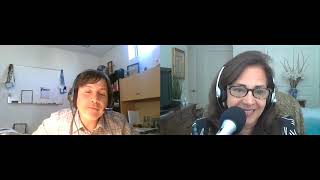
Tony Vlahos explains how senior professionals can craft personal leadership stories that actually connect. He emphasizes vulnerability and flaws over polished cliches, suggests having others interview you to surface real material, and recommends LinkedIn headlines that name your audience and what you deliver.
Chapters
Hello, everybody. Kathy Cabrino here. Welcome to another episode of Finding Brave. How are you finding this? Are you getting a dose of Brave every week? That's my goal. Breakthrough and bravery and closing your power gaps and all sorts of other things. That's my goal in your listening. And I hope you're getting that. I'd love to hear. And I'm so excited to have my dear friend and my inspiring colleague Tony Vlahos with us today from his office at Execut in Connecticut. Tony, thank you for taking the time. Thank you so much, Kathy.
It's always a joy to talk to you and see you.
Oh, I love it. I love it. Now we're talking about something that we're coming out in a big way. Talking about the key steps to becoming a riveting, not just an okay, but a riveting storyteller who. Who boosts your own brand. All right. And we're going to get into what, what the heck do we need here? What is storytelling? How does that boost who I am and what I do in the world? Right, Toni?
Absolutely.
And Tony's here as an expert and I do love to tell everybody how, how I know my guests know. Tony, how long has it been? And you've been on my. Have you been on this podcast before? No, I've been on Best like, yes.
Right?
Yes, that's it. That was my previous podcast with Mofall and we've known each other now. How long? I don't even remember how we met.
It's got to be five or six years.
Five or six years. Can someone introduce us?
Probably Judy Robinette. Probably.
Judy. Judy. Judy who is my. She's my ambassador, my sponsor, my high level influencer. What a soul she is.
She is my fairy godmother in a business suit. That's what she is.
Oh, Judy, I hope you love that judge. She is mine too, and probably a thousand others. Well, we've known each other and had a lot of interesting ups and downs and ins and outs and great things. And interesting things. Oh, there's my cell phone, which I'm supposed to have turned off. Folks. Turning it off. There we go. Let me tell you about Tony. Tony is the chief storyteller. There you go. And head of brand and learning for Execut, the most trusted brand in C senior level executive job search and a premier destination for high performers who want to stay on top of their game in the world of work, as leaders and as a matter of well being. That's an interesting throw in here. We got to talk about that well, being. That's kind of important, really. Since Tony joined the company in 2007, membership has grown from 15,000 to over 800,000 executives through meaningful marketing stories that capture attention, entertain, enlighten, and persuade all in the course of just a few minutes. The past several years, the. In the past several years, the executive execute brand has also come to be known as the storytelling capital for individual executives. Truthfully, I didn't know that. Seeking compelling ways to set themselves apart in the corporate world and achieve greater results in their careers and businesses, that's a massive accomplishment. 15,000 to 800,000 members. What percent growth is that? I'm not a mathematician, as you can see.
Oh, gosh, there are a lot of digits there. Yeah.
Oh, my gosh. Oh, my Lord. All right, so now let. Let us. There's so much to say in so little time. You obviously did this because you're an amazing storyteller. Just who you are. You have the gift. You're, first of all, everyone. He's an amazing composer and a musician. So you have a creative soul. And I think that helps you in everything you do at Execut. Do you agree?
I completely agree that you can't tell a great story without a lot of soul. And, you know, it's a thing. That is what we're really talking about, you know, and we'll talk about other things. And in corporate circles, people talk about other things. They discuss storytelling as a vehicle for this or that, and those are all fine. But. But the essence of the thing has to have soul for one human to touch another. And that's what we're talking about. We're not talking about companies and organizations and growth charts. We are. But to get there, we're talking about soul. So.
So.
Good word.
I just came out of the Irish, you know, retreat in Ireland, and it was a spiritual retreat, people. I'm, you know, I was with Lorna Byrne, who sees and talks to angels. I'm not going to lie. It was soul. It was spirit. But I wanted to find one thing and ask one more thing. Can I, Tony, before we launch in components of a great story? We're not talking about writing books here. We're talking about how you speak of yourself, how you talk about what you do, how you talk about if you're a brand yourself, if you have your own business like I do. We're talking about the way in which you articulate what you're doing in the world and why it matters. That's the story we're talking about. Right, Tony? Did I.
That is correct. As you know, and many of our listeners know, Execut is the destination for senior level executives. These are people who've accomplished a whole lot, whose work has been extraordinary in so many respects, and yet there's always. And yet they wonder why they're stuck or not moving forward or why they're not succeeding in the world of work or in their individual careers. So, yeah, we're talking about that stuff, the stuff that keeps a person at that level from moving forward in the direction they want to as quickly as they want to. And much of that has to do with certainly having all that wonderful stuff behind you. But what's your story? What's your leadership story? How are you telling people about who you are and the difference you can make for them?
I love it. Can I ask you. I've never asked this question on this. What number are we on this podcast? I don't know, 100 something, I think. Can you tell me how you define. It's gotta have soul. The story has to have soul. Can you define that?
Yeah, I think there's so many components to that. You know, fundamentally we're talking about a story with characters and emotion. The characters are gonna be human. And when we start unpacking what a human is, we're talking about someone who desperately wants to be understood and heard and touch people and find meaning in their lives and hopefully create meaning in the lives of others. Otherwise, why do anything, you know? And I think now we're beginning to bleed into the aspect of soul. You know, the stuff that says the spirit that I have needs to be shared in some way. And we often don't understand that about ourselves. We again especially. Well, at least in the corporate context that I look at the world through most days, you know, there seems to be no room for that. We focus on other things. We forget there's something larger about us as people. And I think there's that. That nature that ultimately the Greatest Story has to unleash and allow to go out and touch people. And that's what we're really focused on.
So beautiful. I must be very tired because I'm crying in every one of my podcasts this week. But I want to say. And then let's dimensionalize this. You know what I also think soul is about? It's about the flaws, the vulnerability, the frailties, the specificity of who you are, but the universal universality of that. So, you know, I get teary eyed because I honestly, transparently speaking, I had to. I write five for Forbes posts a Month, that's my contract. And when I'm traveling like I was, it's hard to get it done. And I finished one at 11:56 last night, you know, for the cutoff of that month and honest to goodness. So I consider these post stories and sometimes they're interviews with people, but that's a story and we're going to talk about how you do that. But sometimes it's just my story or tips that emerge, strategies that come from my story and this one came pouring out. And sometimes at the very end I'll say something and I won't even know what I'm saying and I'll go and have a cup of coffee or go take a walk. I'll come back. And sometimes I'm even choked up by what I have said because I don't think I'm saying it. This is sounding way woo woo. I know, but to me it comes from some like your music, it comes from some other place inside of me or some other dimension. And why I get choked up is that it's full of usually compassion and understanding that we are bigger than what this appears.
Yes.
Would you say that that's a nice definition of soul? Maybe.
Certainly in the vulnerability of the human can make all the difference in the difference you want to make, you know.
And that's a tweetable. Well, all the difference in the difference.
You want to make and certainly not being afraid to show people that you're not perfect. You know, newsflash, you know, I'm not perfect. But tell that and storytell that even better and you'll find that you're going to touch people like this. You're going to touch people who, who want to get you and understand you. And the only way to do that, I believe, is to tell them that story and do it bravely. I'm going to use the word that is a part of your lexicon and I'm so glad that it is. And do it in the way that also has the other elements of a great story. It's got a.
What else?
Well, cap, it's got to captivate, it's got to keep you tripping and listening. And it's got to be a shared experience. Often we focus on the storyteller and say, well, they're telling a great story, but it's like anything that you make. It's got to have a great someone who's receiving it too, is open to receiving it. And so I think having that shared experience between the storyteller and the listener is critical. Otherwise you're just kind of telling it to yourself. You know, you're not touching anybody. So those are all critical aspects. And, you know, what I'm describing, I think also starts to get us into the area of trust, and that's the scarcest resource we've got left. So if you're telling a story that is great, it's trusted, and then you've, you've got someone who's leaning in and saying, okay, you have me. You know, let's, let's, let's talk some more about you and what is going on and what's happening in your life. And what can I take from that that maybe I can pass along as well? So that's, that for me is the phenomenon of the storytelling that's really powerful.
And I think folks take notes because I think this is an, an anatomy of a good presentation and talk as well. And I just want to highlight one thing that I want to let you do the talking. I just spoke at the National Network of Executive Women Leadership Summit, and it was the first time I gave live this one hour webinar workshop that I've given before, but not a lot, on close your power gaps, how to rock your career at the highest level. And it was the seven power gaps. And I want to say that I always stand up and say, I'm here in front of you because I was not powerful. I was not what I am today. And. But this time I actually shared a story about one of the power gaps that I had. And people gasped. I've never had that happen before. They were like, oh, like, wow, that's, that's really not powerful what you just shared. But I saw in their eyes that while it was pretty astounding how not powerful I was, they were so relating to every syllable after that. Because if I could be standing there in front of them after that weak vulnerableness that I shared about 20 years ago, then I think they think, oh, she's got something to say here. I mean, she's, she's standing and she's not that really sad, flattened, weak, victimized person.
Yes.
So I think that you, everything you said is, is the anatomy of a powerful speech, powerful talk, not just what we do on our Resume or our LinkedIn profile.
Sure. And of course, the truth is the greatest element, you know, and you standing there, being vulnerable, having lived through something, gone through a challenge, aspiring to something, having a dream and being open enough to share it and being truthful about it, that's also what people are eager to hang on to. Once they find it because it's another rare thing.
You're right. So let me ask you this. Can I. And we didn't plan any of this, folks. I'm putting Tony on the spot. Do you work with more men than women or an equal number or more women than men? Can I ask you that? Because I have a question about men versus women in the. In the corporate world.
Yes, executed. More men than women. We have many, many women coaches and strategists who work with the men, but the clients are mostly men. Yeah.
So now I want to ask you this. What do you think gets in the way of these individuals, men, to tell a powerful, riveting story about themselves? What is it, do you think the one thing that maybe you see that men struggle with a little more than women? I have a guess based on my coaching work with people. What do you think gets in the way of telling a really great story about ourselves?
Gosh, I think fear is a part of it. I believe a mindset is often the thing that gets in the way of so much wanting to step outside of yourself and change the way you might appear to someone else.
So what's your theory with this? I'll tell you. But would you say the fear is like. I really believe that if we're just expounding our own virtues, it's not a story, it's. It's copy. So there has to be some type of vulnerability or realness or something to grab us. I actually see that of high level executive men. That's the last place they want to go. They're not comfortable in any kind of deep dive emotionally. Not all men, not all executives. Don't get me wrong, people. But, you know, for instance, men will write me, don't you work with women? And I'll say, yeah, but a certain kind of. Don't you work with men? Yeah, a certain kind of man. What kind? Someone who's ready to do the deep work, to excavate, to excavate who you really are. I think men are not programmed to do that. They're not culturally supported to do that. They're not societally trained to do that. So this whole thing that we're talking about, the nuggets, the gems that make you who you are, if there's no vulnerability in that, I can't relate. If there's no truth, that's a little hard. I don't mean you're gonna wear it all on your sleeve and make your LinkedIn resume, LinkedIn profile, you know, some sad sack story. I don't mean that, but I got to see the heart there. Yeah, I've got to see this. More than a litany of, you know, the ROI you generated. What do you think?
Well, certainly, And I think along the way, people are reprogrammed and at some point they tell themselves, well, this won't be on the test, you know, if I want that job or I want stakeholders to listen to follow, I simply have to keep saying these things in just this way. And some of the stories that we see that are illustrations of this, of course, are found in that handy dandy resume, you know, which is just chock full of things that don't tell a story. They're just keywords. And like all the wrong keywords. Like, I'm a team player, I'm a leader people can get behind, and I'm innovative and results driven. Well, who isn't, you know, but doesn't tell me anything about you. But what you've told yourself is a lie, which is, I believe that if I simply say these things, along with my amazing background and MBA and gpa, I will move forward because that's all I really need. That's all people are looking for, is the lie we tell ourselves. And possibly men tell that lie better to themselves than women do.
Where did they learn this lie? Where did they learn it? Was it true 30 years ago, maybe? And we, you know, I'm so immersed in writing now, in social media that I almost feel like a millennial in that, you know, things that we did 30 years ago seem so ridiculous now. Like, if I look at my resume from 30 years ago, it's. It's full of those platitudes, right? You know, high level, seasoned marketing executive.
Seasoned, Right, Seasoned. We often joke with, with the executives that you shouldn't refer to yourself as seasoned because that makes people think of a meatloaf or, you know, something like that. And that's not what you are, you know.
So what do we do now? People are listening, going, oh, no. I use those words and I have no. And I. I hear this literally every single day. First of all, I hear, I don't know what my special talents and gifts are. That's gap power. Literally power gap number one. I have no idea. So can you walk us through some strategies? Short of working with you and your team, which we're going to send everybody to, how can people do this on their own, Toni? Where do they begin?
It's really tough to do it on your own, I'll say that, because to be able to step outside of Yourself and look at yourself is a very difficult task. But it begins often with the question, you know, who are you on purpose? You know, what are you about? And those are large conceptual questions that many of us, if we could answer them, don't make the time to. It seems like you don't ever get to the bottom of that one. But that's the hard work, and that's where working with someone who is experienced. Yeah, experience at unraveling and unearthing and uncovering and soul searching with you.
Right, let's do this. And before we do it, I'm going to make you do it, and I'm going to do it. But before we do that, I want to share. You and I were talking. You're an incredible interviewer, and I've been told you, oh, you're one of the best interviewers. Let's keep talking or whatever. I do think that what's. If you're really stuck telling your own story, have a few people that you love interview you as if it's a radio podcast interview. And I think what's really neat is when you have a fantastic interviewer do that, they're able to bring out things in you that even the most illustrious people who I'm interviewing say it a little differently because I'm going in at a direction. Maybe they haven't been asked another way. And so new words come out from that wonderful mix. So if you can't do it yourself, ask three people to interview you, and we'll give you the questions they should ask. But the first one is who are you on purpose? But can you. To give people more specific, tangible strategies? Toni, can I hear what you would answer to who are you on purpose? Like your most raw, honest answer. And I will answer it, too. Who are you on purpose about Myself. Yeah.
Storyteller.
Well, tell me more than that. Tell me more. Gosh, I'm putting you on the spot.
No, you. You are a little bit. But, you know, I would say I'm. I'm a spirit that touches people. And, And.
And why did you do that in the corporate world, do you think, versus your music world? I mean, you do it there too.
But I do.
Put yourself here. I have an idea. Why?
Well, because I believe no matter what we do, what. What path we go down, we. We have to and do bring our gifts with us. And if this is what was given to me, this is what I have to share, whatever path I'm on.
And so I feel like it's not random that you're there. I Think the world of corporate executive, male corporate executives need this. Like, there's no tomorrow.
That might well be true. And certainly when you're head of brand and you look at, you know, the territory, there's. I am felt, you know, I'm not the one who will coach you. I'm not the one who will. Who will sit and develop your strategy. But this idea of storytelling is a part of me. So the brand is now, you know, one in a sense, with, certainly with, as we said, the story, the character, the emotions, the people that you'll meet at Execut and be helped by and ideally transformed by, have that. That common thread we've picked up, which is telling that leadership story in a way that helps people see who you are and what difference you make and what your gifts are. That's quite a large promise, and that's a huge commitment. And you can't fake that. You can't show up and say, well, we'll do your resume and we'll. No, it's not about that. That's a manifestation, possibly of a lot of other great work done, which is, as you know, it's partially therapy, it's partially all kinds of things. And it is about, as you pointed out, also tapping into a vulnerability and opening up that person to be seen, but also see themselves in a way they have not before. And that's the greatest revelation that happens when you work with us. And that's where my joy lies. You know, when I'm talking to someone who we've helped or with whom we're working and is having those epiphanies in real time, you realize that what you're doing makes a huge difference. And that's the most rewarding part. So I guess that's what draws me to doing this, because that human connection is the same whether I'm in front of an audience with a guitar or behind a desk talking to someone about what they've done the last 40 years as a corporate executive, because you have to connect with them and then pick up that thread and pass it along to somebody else.
That's beautiful. That's incredible. If I had to answer this. And folks, we're just going on the fly here. Who am I on purpose? You know what occurs to me? Doing this spiritual retreat and looking at guardian angels who are unconditionally loving. I remember a psychic once told me, you know, when I was 28, you have the ability to love the unlovable in people. And I thought, what the hell are you talking about? But I do think in some way, being a therapist and being a coach, I do love what they find unlovable and filling that with love and shining a light of love on that. I think I'm able to help people heal their self rejection and so they accept and love themselves more and then can see and then that healing allows them to see how really fantastic they are. And everyone is amazing, everyone has gifts, everyone on the planet. I don't even want to hear anyone say, oh, that's not true. It is true. We're all like a thumbprint. And I talk about, I hope this gives some concrete strategies. In my TEDx talk, I talk about take this weekend and Write down the 20 facts of you. A lot of people say to me, I think I've done some huge things, but if I say that, I think other people are going to go, she didn't do that. There was a team. What a braggart. And so I say write down the 20 facts that are irrefutable, that if everybody saw it, they'd say, yeah. And I'm not saying you're going to take credit where credit is not due. You're going to say I led a team that did this and it was, you know, my whatever, my vision that blah, blah, blah. But first you gotta love yourself. You've got to accept that you are pretty fantastic. It doesn't mean you're a narcissist. It means you love yourself and you love everyone else. So there we go. And so I would say for me, who am I on purpose is someone who helps transform people into people who love and accept and realize who they really are and then begins to leverage that.
And as someone who's known you for what, half a dozen years and been interviewed by you at least twice and.
Many other times informally in the diner.
You're some in the diner, right? You're someone who I'm very happy to give an interview to. You don't have to take it from me. And that is a testament to who you are.
See, listen to those words. You're happy to give it and not have it taken from you. That's beautiful. Thank you.
I love.
Thank you. All right, now what else. What can we. We got few minutes. What's what strategies. Let's, let's do it this way. Here's what not to do. What else are you seeing people do? Okay, don't use these banal, cliche words. Seasoned, you know, innovative, whatever. What else are you seeing that people should stop doing and telling their story.
Ah, well, I think we've touched on so many earlier, you talked about the example of taking credit and, you know, there was a team who did this. Well, embrace that. You know, don't be afraid to say that you did what you did. It's the best stories are credible. If you really did it, there's a way to deliver that message and storytelling, your contribution without stop you.
Because you did it here. You said since you joined the company, the membership has grown. You didn't say I did it all without the team.
Oh, heck no. Right?
I mean, but I knew what you meant. Yeah, you have. You know, you had the oversight, you developed the right people, you created the vision that people could get behind. Storytelling is a part of that. So see, folks, it wasn't like, whoa, what a braggart. It was. This is what I've contributed to through my vision, through what matters to me. Okay, wonderful. What else? I cut you off. What else do they need to start doing in telling their stories? Like when you interview someone, Tony, what are you. You know, sometimes years ago, when I was trying to develop a methodology, I would look at, what do I listen to in a coaching session that maybe someone else doesn't? What am I attending to that someone else doesn't? And for me, it became power gaps and those breakdown moments because I believe that when you're confident and clear about who you are and what you want, things go well. That's my belief, that's my mindset. So I look for where are you broken down, where are you power gapped? And if we can close that, you're just going to be off to the races. I think people should look to know what their story is, what do they attend to, what's their mindset, what's their belief, what's their teachable point of view? What do you think about that?
Oh, yeah, completely. And this is where we allow other things about us that we might have done, titles we might have held or hold to get in the way of people understanding something about us that is far more profound and potentially can. Can really make a difference. I would say that's kind of the biggest thing that we find here is people draw conclusions, make assumptions about. Well, they will see that I am a cmo. They will see that I did this. They will say, and you know what? They might see that, but no one will really understand why you did that, the moments leading up to that, what challenges you face, what you drew upon, most important from inside yourself as a person and outside, experiences that shaped you that in a way prepared you for that moment. That's a Way better story than I've been a CFO for 10 years.
You know, you're so right. And you know, I'm going to link to it below. I did. I co hosted a LinkedIn webinar how to polish your LinkedIn profile. But what I say to everyone is do not have on LinkedIn. LinkedIn's my happy place. You know, more than resumes. Do not have your headline be your job title. Good grief. I don't care if you're CEO of the world. You are not your job title. You are not your job. I don't care how illustrious you think it is. You know, so the formula I like is what do you focus on for whom and what are the outcomes? So for me it would be, you know, finding brave coach, speaker, trainer, author, dedicated to the advancement of women in business. So you know what I'm doing and you know why I'm doing it. So don't let your titles, they don't really speak to you because one CEO, one vice president of finance, one vice president of marketing is quite different from another. Look at you and your role and.
I think this is part of the great challenge. You are able to distill and make choices and you know, I'm gonna take a term out of the marketing playbook. Positioning is about sacrifice, you know, so maybe you're not gonna come across as everything to everyone. Guess what? That's better.
It's better than if you're everything to everyone. You're nothing at all. Nothing. It's so vanilla. You know, it's true about niche niching your own business. You know, if I'm trying to support men, women, young, old, you know, educated, not educated, I'm going to be saying nothing.
Right?
What is that? What is that saying? Positioning is about sacrifice.
Yeah, yeah.
You have to choose people.
Exactly. That's hard work. And especially if you've done a lot of things and, and you have transferable skills and. But in the end, people are. And you will need to present an identity and say, it's this. It doesn't change. This is what it is. You might have different titles on different jobs, but who you are on purpose, that is it. And pinpoint that and then storytell that and that's more than half the way there. People will then be able to understand you when they meet you. And there's a whole other complement of things about you that help with the storytelling, but that's the essence of it for me.
Can I add one more thing? And then I want you to tell us where we Learn more about you. I'm sure Execute has a million resources that people need to see. But you know what I think holds people back from doing this? I think people today come from much more of a scarcity mindset. So they think if I go out on a limb and say I lead with soul, there are going to be a lot of companies that don't want that. And I'm afraid. So I would say to you people, the quickest path to your ultimate success is to be who you really are. And you don't want to stuff yourself in an organization that doesn't want you. If there's an organization that looks at the word. And I'm not saying you're going to put soul and spirit all over your LinkedIn profile, but you know, if you have a purpose, driven, and this is your purpose, you don't want to say it for fear that a company will pass you by. You're making a big mistake because you're going to end up working for companies that don't get you. You don't fit in. You're going to be. You're going to wake up and say, why am I trying to achieve an ROI or a successful outcome for a company I don't even believe in? So get over the fear and be who you really are. And that is going to be what attracts incredible opportunities, that you're going to really be able to soar in. Would you agree with that, Tony?
Absolutely. And it's a tough, tough thing. But we say here, fit is everything. You know, it's. It's what works. All the other stuff, not so much. And even all the impressive stuff. Impressive, but not the reason why you're hired. They hire you because they like you. They believe. They believe you can do the job. But again, you have to show up and be you on purpose. And if you're not doing that, they're gonna hire someone else. And it might be you, but it's the imposter version of you, the version you projected because you just wanted that thing so badly that you figured, I'll clean this up and I'll clean that up. Well, suddenly, you know, they don't really know who you are, but you look pretty good on paper. So let's bring them in. And, you know, but it's not gonna last very long, you know, because you will have made those unfortunate decisions early.
I did that. And for two years, it was a living hell because I was not myself, couldn't be myself, would never be accepted as myself, and didn't like anyone around me. What fun that was. Oh, my gosh. All right, where does everyone learn all about you? I'm sure Execute has all sorts of resources we need to know about. And course we'll link below, but tell us where people can learn more, Tony.
Well, about me, I guess. My LinkedIn profile, that's easy enough to get to below. Yeah, Execunet, you can write to me@avlahosexecunit.com or just visit our website, www.executive.com. and that's where you'll learn about the incredible complement of services that are made specifically for people at the senior executive level. And there are many components executives been around for over 30 years, so we certainly have lots of jobs for executives to look at. How we procure them is very different from how other brands do because of our relationships with the recruiters. And you can read more about that on our site. But fundamentally, this deliverable, this system we've developed of telling your leadership story is fundamentally the essence of the brand because it's a very human thing to do. To talk to someone who's facing a challenge or is stuck or wants to get off of the path and do something different with their professional or personal life. And for them not to know how to move from where they are to the next station is where we come in and do the hard work and say, well, let's understand you better. Let's help the people you want to touch understand you better. And it really leads to storytelling. And then through all the ways that people encounter you, whether it's LinkedIn or other social platforms or networking events, to the interview, to being in front of a group of stakeholders giving a talk, those are the places where you either show up or you don't. People either understand who you are on purpose and your leadership story, or they do not. And those are the moments that we inform and help transform into positive experiences for our audience through the help of the amazing coaches and advisors and recruiters and strategists and everyone that's part of the inner circle here at execut who is and in fact have been CEOs and have stood in the shoes of the people who are seeking to make those transformative results happen for themselves. So it's a good, hard and rewarding experience to be a part of this brand from the inside. But as a client coming in, it promises transformative change as you step forward and do the things you want to with your life.
Well, that was a beautiful storytelling moment.
I love it.
Okay. And as a member, you there's a benefit. So many benefits. But you're still doing your wonderful interview series, right? With some. Some of the top thinkers in our country.
Yeah. I was blessed this year to spend an hour plus with Ken Blanchard and I'm sorry, who's the other gentleman? Who. Parker. Parker Palmer, who is just a gem. What a soul he is. And women who are leading organizations, entrepreneurs who who were at the end of their rope and suddenly discovered a new rope, you know.
Such a way with words.
Great, great faculty members of B schools who are not strictly academicians but have built companies and led those companies. And getting to know them as well as I have has been rewarding and mostly for my audience who just, you know, it never ceases to amaze me how when you put two people together, what happens. And in the best positive, best possible way for spirits really to touch and say, well, you've had the same problems I'm facing now, or you overcame a challenge in your personal life, in your home life. I didn't know you had. And now I do. And I know how to maybe connect with you afterwards so you can help me with it. And people do. And no one gets too hung up on the fact that one of us is on a stage and the other one isn't. And that's part of the joy of what I get to do, which is, as you do, bring those. Those two elements together so they're one and they mix up a bit and, you know, what comes out of it is it's something really great for all.
How fantastic. I love talking to you, Tony. I feel the soul. I feel it. I feel authenticity pouring out of every word. Thank you for taking.
Well, thank you so much.
Such a joy soon. You bet I will. I hope you have, you know, really impactful strategies here that you're going to change how you talk about yourself. You're going to embrace and love all of you, all of you. The foibles, the brilliance, the triumph, the tribulations. But you start speaking about yourself in a different way so the world can really see who you are. I can't wait to see what happens when you do that. And thank you for being here and we'll see you next time.
Bye, Kathy.
Bye. Thank you, Tony.
More from Kathy


Elevate Yourself, Elevate Others, and Amplify Good | Chris Cooper | Finding Brave Ep. 334

Finding Brave Epis #333: How Leaders Can Harness AI Without Losing Their Humanity, w/Bennett Borden

Finding Brave Epis 332- How to Stay Brave, Valuable and Visible in the Age of AI, with Raman Rai

Finding Brave Epis 331 - The Power of Positive Disruption, with Dr. Patrick Leddin


Finding Brave Epis 330 - Being 40: Letting Go and Embracing Who You Are, with Stacey Lindsay

Disrupt Career Reinvention with Kathy Caprino - via The Disruption Lab Podcast w/Patrick Leddin

Creating Neurodiversity-Friendly Work Cultures: Simple Workplace Adjustments Matter

Finding Brave Epis 329 - How To Create a Neurodiversity-Friendly Workplace, with Kristen Pressner

Finding Brave Epis. 328: Reclaiming the Power to Trust Your Own Voice, with Dr. Cindy McGovern