Finding Brave 95: Rise To the Greatness You Were Destined For, Dr. Grace Lee
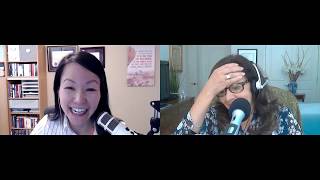
Dr. Grace Lee survived a car accident at 9 that killed her mother, then abandonment, and became a neuroscience expert and career educator. She explains how resilience comes from a strong why and inner work, why your amygdala hijacks decisions, and how reframing questions like "How can I afford it?" changes what you can see.
Chapters
Hello, everybody. Kathy Caprino here, and welcome to another episode of Finding Brave. I cannot tell you how inspiring our guest is today, Dr. Grace Lee, who we have connected. I'd love to share how we learned to be each other, Grace, because I think it's a fun story. But I want you to know Grace truly has such a riveting personal story that if that's all we talked about, you would learn so much about what we're talking about. How to rise to greatness, to the destiny that you were born for. That's really what we're talking about because that's really what we think we're doing, you and I, in the work that we're doing. So we're going to jump right in and talk about that. Talk about unanswered questions. Hang on, folks. You're going to love it. Thank you, Grace, for taking the time and for letting me reschedule while I was off in. Where was I? Italy, Ireland, who knows? It was quite, quite a past few weeks and you've had quite a past few weeks. I want to talk about that. But everyone let me read you Grace's bio because you're going to be floored like I am. Dr. Grace Lee is a career educator, strategic reinventionist, and on the side, a neuroscience expert and a PhD. Right. Grace, best known for being the founder of Career Revisionist, a global, global movement of professionals who are creating an inspired, purposeful, and abundant life. Dr. Lee is on a mission to redefine modern education, teaching men and women to develop strong business acumen, unlock true vocational confidence. Wow. And master their professional destinies. Her teaching and coaching programs are rooted in neuroscience, which is so important. Dr. Lee has established yourself as a leading motivational and informative speaker. She also shares her wealth of knowledge on her YouTube channel and her Career Revisionist podcast, which I was on recently. And it was so fun and I loved how you, Grace, you just, you don't have pre prescribed questions. You just go with what you're interested in learning, which is so, so fun and brilliant. All right, let us. So thank you. Thank you again for taking the time. Can we start with your life story, which is truly riveting and inspiring. Can you tell us? Because I think it's going to create a context for people to understand what we face and how we can use those challenges as a springboard to become who we're meant to be. Will you tell us?
Absolutely. I had what was called a David and Goliath story. You know, I was the David in the story. So It's a biblical story of a giant. And this little village boy was to go and defeat the giant having only using only a slingshot. It's like a story where the odds are stacked up against you and you have a mission, you have a purpose, you have a dream. And it's like getting resourceful. How am I going to do that? And it started in childhood when I was 9 years old. Prior to that childhood was typical for me. I'm originally from Hong Kong and I spent my early childhood years in Hong Kong. And my mom was my best friend. She raised me, she loved me, she accepted me, she taught me some very basic rules of life, you know, principles of living, how to be somebody, how to treat somebody, how to treat other people. Well, and it so happened that when I was nine years old, my family was involved in a car accident. And it was a head on collision, high speed on the highway. My mom was driving and she didn't survive, so she had a head trauma and she was in a coma for a few days. And she died from that. So next to her. Yeah, it was, it was traumatic. And I didn't know about her death until weeks and weeks later. No one told me.
You were in the car, right?
I was in the car in the backseat with my older brother. And there was not enough, a lot of education back then. And my brother and I didn't have our seatbelts on.
Oh, good.
Yeah, my parents, we drove a hatchback. So you're like the whole thing is the back trunk. And because it was a past our bedtime, they put down the back seat and they kind of made a bed for us, laid down some towels, gave us some blankets. And so we were sleeping in the back. It was a bed. And so the head on collision, we just flew.
Out of the car?
No, like, fortunately we didn't fly out of the car, but we flew in the car.
Wow.
Yeah. And I was, we were sleeping and so of course this loud crash wakes us up. And I remember it very well. Waking up to the disaster. Glass everywhere, broken pieces everywhere. And catching a glimpse of my mom trapped in the driver's seat and not talking, not moving. No. And it was scary, but I couldn't move either. I'm still lying there and I couldn't move. So my injuries were the second worst. My mom had the worst and I was the second one. And what happened was I broke my neck. I was just so close to being a quadriplegic and dependent on a respirator for the rest of my life.
Oh, my Gosh.
So I had the halo brace. I had the. I had two casts on my arms. I broke my. Shattered both of my wrists. And that recovery in the hospital, like that, bedridden for months, months and months on that. On that halo brace. And it came time for me to learn to walk all over again with the atrophy in my whole body. I did eventually learn to walk again. But I also.
Can I interrupt you and ask one thing?
Yeah.
When did they tell you your mom had passed right as you woke up from your.
It was sometimes before I got up to learn to walk again. So it was already a couple of months that had passed, and you were.
Thinking she was alive and they were telling you she was.
They didn't tell me she was alive. They just told me she was in the adult hospital.
Oh, wow.
I was in the children's hospital. They just said she's in the adult hospital and she is being cared for right now, but she's. She hasn't woken up.
Wow. Oh, I'm just so moved here. So saddened for you. So go ahead, tell us more. I'm sorry I interrupted.
No, no worries. So then it was this awkwardness of needing to get to know my father for the first time, because when my mom was still with us, she was the primary caregiver, and there was no interaction between me and my father. There was no communication, no relationship, really.
Was he working out of the home and he just wasn't around, or.
He was working inside of the home, really. And I was born into that culture, so I thought it was normal. Yeah, I thought it was normal. I thought everybody's father is like that. And I didn't know. So now fast forward. I'm in the hospital now, and my father's in the room, and I can see him because I'm able to move my eyes. Even though I'm lying, I can move my eyes so I see him. But I was so afraid of him that I didn't talk to him. There was still no communication until such point that, okay, now I'm getting up and I'm walking, learning to walk again. He really didn't know where he was gonna raise me and my brother, what to do with us. It was very difficult and awkward, and so I got to know him through just being around him.
I mean, there was no verbal communication, really. Did he love you? Did you feel that he loved you?
I didn't feel it. No. I didn't feel it.
And he was grieving as well, right? He was not the man. He. He. He was before either. Right?
Yeah. He was definitely grieving it too. But shortly after that, he. He did remarry. Yeah. And he started a family. And so he has now there's like two more daughters. You know, we have quite a few years apart. There's two more daughters. But when he had the first daughter and that she was pregnant with the second one, one day, you know, my father came into my room and he told me he just kind of, at that time, I was 10 years old, came into my room and he said to me that, you know, his hands are tied and he's a tremendous responsibility at his age to care for an infant and an a coming. A baby that's about to be. To be born. And he was just unable to provide for me.
Huh.
He said he just can't. He's unable to provide for me financially and just can't provide for me. So I was off on my own.
How. What does that mean? He kicked you out of the house?
He didn't say get out. He just said that I need to live elsewhere because he just can't. He doesn't have the capacity to care for me as well as, you know, the two kids and the one that's unborn about to be born and everything. So he basically let me know that he doesn't have. I. Doesn't have the financial capacity to take care of me. Right.
And so much to say, but I will hold my tongue.
Right. So that was my. The weight of the world on my shoulders. And I just, in that moment was the thought that not.
You're 10. Did he say that to your brother?
No.
So the brother could stay?
Yeah.
Oh, Grace, I don't believe this.
Yeah. I don't know why. I don't know why. But as an adult now, in retrospect, I mean, sure, he may have still been grieving for my mother. He may have felt overwhelmed because he's having. He's going to have two young girls at his age and he was past 40 at that time, so maybe he was feeling that there was a lot of overwhelm. Maybe in some way he thought that that was best for me.
Did he set up where you would live or he basically threw you out on the street is what we're saying. Yeah. Did he give you a date by which that had to happen?
No, no, no. No date.
Just at some point you have to leave?
Well, I actually left that night. Right there? Yeah, right there.
What did you do?
Well, I had some friends in. In school, so I had some friends that I could call But I was so ashamed of what was happening that I didn't want to say anything. I was so ashamed of my. My family life, my personal life, that I didn't want to tell anyone. I didn't want to be discovered. You know, I just wanted to keep it a secret, so. Because I thought that if someone found out that they would think ill of me or they would feel, you know, they would criticize or, you know, I just didn't want to be discovered.
My gosh. We're taking an hour here. But I have to understand. Were you afraid? Did you feel like I'm less than and not lovable? Or did you took it in you? You were like, something's wrong with me that he doesn't want me. You didn't understand. He's broken and.
Exactly. I wasn't listening. I wasn't angry with him. I wasn't angry with. I didn't hate him. I did not yell at him. I did not. I wasn't witty. I didn't talk back. I just thought, oh, my gosh, I'm not worthy of being loved because I'm the only one that is getting that conversation, having that conversation. So it's me. There's something wrong with me.
Holy cow. What happened? What happened?
I was depressed and I was suicidal for years that happened. And I kept.
And you lived with friends, like, bouncing around?
Yeah, I bounced around. There were. There were days and days where I would just be on the street all night, just hiding and crying and feeling that aloneness. And there were nights that I spent like that and just. Or just running or walking aimlessly. There were nights like that. So everything every day was different and not knowing where I was going to be bounced around to. There were relatives in the proximity. Like, I had relatives in the proximity that did take me in once in a while, but I didn't have a connection with them, and I didn't feel a sense of belonging from them. You know, there was a lot of talk about how. Here's what's wrong with you, Grace. You know, this is. This is your. You know, this is what's wrong with you. These are your flaws. You know, you.
Oh, nice.
Yeah.
Who told you that? The whole family?
Yeah, Relatives did. Yeah. So it reinforced my notion that I'm not worthy. It reinforced my notion.
I'm surprised you're a healthy, loving, giving human being that you are. Tell us. So I know there was a pivotal moment when you were 15, right?
14.
14. What happened?
14 was when I met this couple because I was working at a Restaurant. When I was 11, I started working at a restaurant. I didn't get paid anything because as a minor, I didn't get. I didn't get paid a salary, but I was working at the restaurant. I could eat anytime I wanted, which I did.
You were going to school. You kept up your schoolwork through all this, people. I mean, is this woman incred?
I kept up my schoolwork, but I didn't know why I was doing it.
Yeah. Like, what am I doing here?
Yeah. But it was just something to do. And that was the better than wandering the streets, right?
Yeah.
It was the vein of my existence. So I did it right. And then this restaurant. Now I was working at this restaurant, and I realized, I reckon this is the entrepreneurial me, very early on, that I didn't get a salary, but people left me tips. So then it was me collecting my whole day. His wages were sometimes a dollar, two dollars a day. And so my whole existence, the whole purpose of my life was collecting these coins from the table after people left. And I. And I still believe that I have no chance at a future. Forget it. I'm. It's hopeless, you know, I've given up. That was the whole thing that happened. Until 14. This couple came to eat at the restaurant. They noticed. They were astute, and they said to me, grace, you need a place to stay, why don't you come stay with us?
Oh, God. This was in Hong Kong?
No, this was. By that time, it was already in Canada.
You moved to Canada with a family member?
Immigrated.
Yeah.
Yes.
With a family member?
Yes, with a family member, yeah. So then they came.
What? If you know everyone, you can see this on Grace's website. I just looked at their faces and, you know, I've just been to an angel retreat. These are angels on earth, aren't they?
They are.
And you moved in with them?
I did. I moved in with them. I didn't trust them at first.
Yeah. I didn't get a little scared.
Yeah. I was skeptical. I didn't believe them. I felt like, okay, this is probably just temporary, but I don't want to have a relationship with them, because if I do, they're just gonna hurt me.
And what happened?
Well, it took me two years before I realized that they're the real deal. They meant what they said.
And you lived with them all that time?
Yeah, so.
And they cared for you like a daughter?
They did.
These people?
Yeah.
Are you still in touch with them?
Of course. And now I call them mom and dad.
Oh, God, here we go. I'm Going to. Look at what. I mean, there's so much that's so rich in this story. Those people saved your life.
They gave me a second chance, and they saved my life. And they gave me. They reminded me what it's like to have a sense of belonging. And they made sure. They told me that every day.
Oh, gosh. Did they have children?
They did. When I went. When I lived with them, they were already grandparents.
What people?
Yeah.
Are they still in Toronto?
No, no, they are now citizens of Uganda.
What people? They went to Uganda.
They went to you? When I finished high school. So I stayed with them, and I finished high school with them. I went off to university. Then they moved to Uganda to do missionary work.
Or are they.
Or it's interesting. They first. Initially, they went to Uganda for a vacation, and then they saw the poverty there and the orphans that need. That are so needy in Uganda, they tore up their plane tickets.
My gosh.
And they stayed there. They started an orphanage there.
What? So now, can I just say this when I hear your story. First of all, I'm just. This is a quick aside. When I was a therapist, I'd come home and say, I have no problems. Whatever the hell I thought my problem was, I have no problems. That's how I feel when I hear this story. Number two, what the heck am I doing with my life? I mean, look at these people. They see a need. I was just talking to a friend of mine, said, what does the world want of you, Kathy? And I'm like, oh, the world wants a lot from me. I'm tired, and I got all perturbed. But these people were giving the world what the world wanted from them. This is going to be my next tagline, and I think you are, too. But they see the need and they're going to find a way to address the need.
Yes. And it's the thing you. You have to respond to your calling.
And we're going to talk about that, aren't we? Because I think most people can't hear it, don't understand it, and won't respond to it. And we're gonna make sure to get to that. But we gotta hear the end of this. I know. They move to me. So then you, you know, then you. You started your whole life, you went to university, and I forget what you studied. It wasn't neuroscience then, was it? That was your PhD.
Yeah. The first degree was biochemistry.
Too bad you're not smart. Sorry? You're not smart. Oh, my gosh. And you, you know, scholarships. You made it happen. But you used the coins and all the tips to support yourself.
I did.
Then you get your PhD, then you went into academia.
Yes, I climbed the academic ladder because I was told by society that in order to get a good job, you have to go to school, get good grades. That framework and it. It had a hold on me. I believed it, that that's the only way. So in my limited knowledge, when I was 16 and I finally realized that I don't have to be in survival mode anymore. This couple, they mean what they say, and they are. They are sincere. So finally, Maslow's hierarchy, I could finally start focusing on other things. I had the mental capacity because I'm no longer in survival mode. So that's where I decided my moment of agency, that my education was my ticket to freedom. But my thought process was programmed, preconditioned by society's framework of career planning, that you got to go to school and get a good job.
But I, in this case, I think it was the right thing for you. Look at the foundation of wisdom and knowledge and training and understanding that you have. There's nothing wrong with that, you know, right.
For me, it was the right decision because the scholarship came with a plane ticket to fly me to university. So I didn't. I couldn't have possibly afforded it myself if it weren't for scholarships.
And now you know, your work. Can we talk about. We were chatting before offline, what we really think our work is, and we call it a certain thing. We have a brand, we have something that people can sink their teeth into, but we're actually doing something different. Can we say that?
Yeah, absolutely.
What do you. What. What is your mission right now? What are you helping people do?
To create lives of fulfillment and inspiration, inspired and fulfilling lives. And it is the vehicle to do that is by achieving what I call vocational confidence. That's the vehicle.
You and I. You know, one thing I adore about my work, this podcast. When I intersect with people so often, we are aligned. Heart, spirit. And we're doing similar work, but we do it in a different way, with different language, with different steps, with a different methodology, blah, blah, blah. But we're all. So many of us are trying to do the same thing. Where we've come from hardship, we've come from adversity, we've come from being suppressed, we've come from whatever it is, and we've overcome that and can see what the future can be and that we're truly. I believe we're all destined for greatness. We are all great but if you can't see it, can't recognize it, you know, you can't actualize it. But you are truly exceptional. I mean, having been a therapist, I don't know. Truly a handful of people that could have overcome what you did and not be mentally, emotionally disordered from it.
But I went through that stage too, being mentally disordered from it. I did go through that.
How did you get over that?
Well, that's the thing. It was when I had an intervention from that couple who I call my mom and dad. My parents now my adoptive parents came in, they interviewed and because they saw a need. And for them it was a no brainer.
So what healed your disorder was feeling loved and belonging and realizing it wasn't. I'm putting words in your mouth, I don't mean to, but it wasn't you that deserved this behavior. Is that what they helped? You see?
It's interesting. They didn't actually actively help me with anything. They just gave me my stuff.
They gave you love too, didn't they?
They gave me my space to discover it for me. So I take ownership of it. If they kept on trying to teach me, you know, we're sincere, we actually care about you. Can't you see? There's evidence our life. We don't abandon our own children. They kept telling me that logistically, that's just logic, you know, I wouldn't.
Doesn't get in. Doesn't get into the soul.
They never did that. They never did that. They just carried on their lives and they were just completely unfiltered being themselves. And I was there to observe it. But I had blinders on. I was there to observe. I had blinders on. It was until that moment where I heard my dad's, my adoptive father, his voice outside the door of my bedroom window. And I heard his. It's not that. It's not what he said. It's not what he said.
He's sitting on the edge of my seat.
What is it? He was just talking to a neighbor. He was just talking to your neighbor. But it was the first time I heard his voice, if that makes sense.
Oh, dear. And you felt I belong to him?
I felt. Not that I belonged him. I felt that this couple means what they said. They are sincere and they're the real deal. Because I finally heard his voice. And that's the thing, all the time.
What? Let me understand this. You didn't hear it before. What does that mean, you finally heard his voice?
It means that I didn't listen through my fear, my Fears and my. My worries of abandonment, my survival mentality, all of those emotions that was controlling me so much that it's okay to have them. And it's understandable logistically, why I had those emotions, but I didn't take the time to listen through them. And same thing is true of life planning and career planning. You have fears because you want something. You want to get to the next level, right? And you're going have fears of failure, fears of maybe you're fearing success, too. You got to listen through the fear and act through the fear. And that's what happened in that moment, I finally heard his voice. Through my fears, through the depression, I heard his voice. And when you hear it, it's like you're born again.
Oh, my gosh. What a story. Grace. Holy cow. Well, let's do this. Because I think people learn a number of ways. I think some people learn simply through story, like they will. They can just hang up right now from listening and say, I got it. And I learned so much. Other people learn through strategies. Okay, give me something to do here. I didn't have what Grace went through or what Kathy went through. Give me something to do. And some people learn from the amalgam of those two. So there's so much more to talk about. But you also say. I mean, I'm really interested. I literally have never heard anyone say what you said. I listened through the fear and finally heard. And. And I don't know, because I hear from the heart. I think you also mean your soul heard it. You know, you don't mean audibly. You heard it. You. You. You heard with your soul that this person. I'm safe here. That. That they meet. They're. They're real. They're tan. They're not just physical entities. They're real. Is that a neuroscience process? I mean, did you learn that, that way of talking about what you experienced? Is that from your neuroscience training? I mean, neuroscientifically, is that what really goes on, that there's like a veil, that we're not actually perceiving reality?
Tell us so. Absolutely. It is from neuroscience that I'm able to articulate it. I have the vernacular now to explain it through neuroscience. And that's where my teaching comes from, is founded on neuroscience. But what's actually happening inside of our brain is that there's this primitive part of the brain that's the amygdala. You know, it's the. It's the feelings part, the emotional part of the brain, and it's primitive. It's primitive because it's like, if you believe in evolution, it was the earliest development of the human brain, right.
So it's looking at where, how am I going to get killed? It's look, it's looking at, you know, how do I survive? Where's the tiger, how do I not get eaten for dinner?
Protection from threat, right. And we needed that. Our earliest ancestors needed that to make.
It to the next day.
Yeah. And, but the thing with that, with that one is it doesn't matter whether or not you're scared because someone's pointing a gun to your head or, or you're scared because you're just standing on a stage. The physiological response is identical, right? Your palms are sweaty, your heart rate goes up, your pupils dilate the response. Your body's response is identical to life and death. Or if it's not even your life is not being threatened, you're just standing on a stage and you're scared. It is the same physiological response, but it exists. That exists, the central nervous system does that because then it is thinking, it's protecting you from a threat. So what we, what we're also gifted with as human beings, we're also gifted with the executive centers of the brain. Unfortunately, it's the slower part, right? The emotional one is the quick one. You think fast with it, but the slower part is the executive center. This is like the behind the forehead, the frontal cortex and that is the slow part because that's where you rationale, that's where the reasoning comes in, that's where the deep thinking comes in. It's where you take things in, in the context of what's around you, the realities of what's around you, and you're able to think through these things. Most people have unfortunately, a very simplistic view of the world. But if you really listen through the perceptions, and the thing is, your reality is 100% based on your perception. 100%.
So get that. And you know, look, we're human. I think as long as we're incarnated in the human form, we don't get it either. I mean, we're human beings. I think. In other words, you're very evolved and I can have evolved moments, but I can get as sweaty palmed as the next guy over what feels to me like a tiger is in the room. And really it's, you know, I've got a scary phone call with someone that I have to, you know, say some hard things to.
You know, from a purely neuroscientist perspective, we are all Cave women and men, right? No matter how evolved we believe we are or we think we are, we are all still cave women and men.
There you go. All right, let's take our cave women and men audience. And you said something here in our, in our pre notes that I want to talk about. But let's just say this, folks. I think Grace and I are on the same page, that we are helping what we love to do. Correct me if I'm not getting it right. We love to help you actualize what you're meant to be doing in the world, but we do it through the lens of God career. So, you know, Grace and I were saying, I will help you with LinkedIn. I'll help you with interviewing. I'll help you with how you recognize what you should ask or how your boundaries are broken, how you are accepting and tolerating mistreatment. And yeah, it's going to better your career, but the reality is it's going to better your life. And. But I think for people to make a difference in other people's lives, there needs to be a lens. There needs to be an avenue, a niche and a vessel through which you are going to make that change. And for us, it's careers. Right? Did I get that right for you as well?
Absolutely. And if I could stack upon that.
Please stack away.
So here's the thing about career planning, about life planning, getting the things that you want. Most people go straight to the strategies. Give me the strategies. What are the tactics? How do I do it? They go straight to that. But the thing is you can. I can give you all the strategies. Resume strategies, LinkedIn strategies, interview strategies that are out there. I can give you the best strategies out there that are proven to work over and over again. And I give you the strategies. It doesn't mean that you have vocational confidence, doesn't mean that if the economy were to turn, if jobs were being handed over to artificial intelligence, that you could move with the times, changing market realities. Because strategies and tactics always need to change with context.
There's your neuroscience back. And I would also say I could give you you, you, you and you the same strategy and only you are going to make it work and you won't. Because I believe and I see every minute of the day, it's your internal processes. It's how you operate in the world. And with yourself, I always say, you know, with yourself, others world than your higher self. And so everybody's doing that differently. So I know y' all want strategies, but the inner work has to happen first, yes. Or the strategy can be effective. Right.
It's as much of an inner game as it is outer game. Because the inner game is the only thing in this universe that you have control over.
Right. And, and that's, that's the joy of it. Like, if I'm talking about how do we stop ourselves from mistreatment, People will say, some people, Kathy, you're blaming the victim. No, it's the opposite. I'm taking your victimhood or my victimhood and shifting it so that you never have to be a victim again. So, man, is that not blaming the victim. You're totally missing the point. It's that we can actually rise up from victimhood. So let's. In the, in the vein of helping you people get the strategies you want, let's do two. Let's give two specific strategies about. You know, I'd love to know what you think is the one thing. If you could distill it down to one thing. What was it that helped you survive this abandonment and become the impactful, inspiring individual and force for good in the world? What do you think it was that we can help other people hone?
I have to say that it wasn't at all any one strategy. I didn't focus on strategies. I focused on principles. So there's two things here. There's like, there is the. I know, right? There's the inner game, right. There's the inner game, which is super important and sometimes even more important than the outer strategy. But there's also principles. Principles are different from strategies because principles don't change much over time.
So give us a few principles. One of them was, I'm going to keep putting one foot in front of the other. I think. No, like you didn't give up.
So resilient that not giving up ness, that grit isn't a principle, it's a trait.
I feel like I hear you and I'm not trying to make your story wrong. I feel like there was something about you that kept you going in your mind. Like, I have nothing, but I have these five coins on this table where Mushu pork was. And I'm gonna take these five coins. So is there a principle there? It wasn't there something here and I'm taking it.
Got it. The principle was, I know my reason. I had a very strong. Why very strong.
Which was what? How would you articulate it in your 10 year old mind?
Here's what happened. 10. I didn't know it at 10. I knew it at 16.
Okay. Only what made the 10 year old. Take the coins and not just stop living.
Because. Right. Because it gave me purpose.
It's something to do that propels me forward somehow. Yeah.
Something. Oh, I get a coin and I know it's money. And it feels. And it feels like I got something to do, otherwise there'd be nothing.
Go out of your mind?
Yeah, I go out of my mind.
So that was it. Gave me purpose.
Yep.
So let me. Let me hear your. Shut up, Kathy. Let me hear the principles. Let's give people a way to think about principles. What do they need to know?
Okay, so one of them is if you have a strong enough why, your reason. Right. It gives you that sense of urgency. That's how organizations transform. That's how big companies, Fortune 500, Fortune 100 companies. You want to make a real change in an organization, you have to first create a sense of urgency. They have to realize that the status quo is a dangerous place to be.
And what's your why, Grace?
When I was 16, my why is different now. When I was 16, my why was when I realized that when I listened through and I heard his voice. Remember that one? My why was them. I wanted to give back what they gave me, which was a second chance at life. They gave me my life back, and I wanted to give back to them.
After having so little. And you got that. You wanted to give back.
It's gratitude.
You have a spectacular soul.
It's gratitude because when I heard his voice, what I didn't mention earlier was that my face was pressed against the window of my bedroom listening to him talk to the neighbor. And in that moment, when I heard through my fears and I heard his voice, tears of gratitude started rolling down my face.
What a story. Oh, I want to hug these people. Oh, okay. Now, what is your why today, this second on this call? What's the why?
Earning to give. I was once an orphan. That's my why. Earning to give. Because I was once an orphan. I know what it's like to be abandoned, to be. To feel unloved. There are so many orphans out there. And now my parents have an orphanage in Uganda, and I saw the work that they did. I went to Uganda and I met people there, and I have built homes there, sent money to build houses there. I've sent money to, you know, provide there. There's, like, science labs now, you know, medical centers, homes for children and families. All of that through generous donations around the world. So I've done. I have contributed. I've seen the land. They have 72 acres of land. People Living. And I saw it. Fresh water, everything. Now finally, there's running water. There's no electricity yet. But there's like, things like that, basic provisions. Everyone got their first pair of shoes, for example. It was just. That's how poor that level of poverty there is there. And so my parents are there. They have this orphanage. It's established 20 years now. This orphanage has been in existence. Now there are hundreds of orphans and I sponsor 10 of them.
Oh, wow.
And I want to sponsor giving.
How meaningful for you. Yeah.
And I was their first orphan. My parents first one.
Oh, yeah. I can't take it in. It's too wonderful. These people there are, you know, now we're going spiritual. There are some people whose souls just shine and they're in the right place in this incarnation, in this time, in this history, and maybe they always have been at any time that they incarnate. But where it comes together and they can apply that spirit to bettering the world. And you know, what a gift to know these people and to have received from them and to be able to give back to them in a way that, oh, it's so beautiful. All right, now one more thing you said, and let's leave some people with strategies. You said all the problems you are facing in your career are simply unasked questions. Can you talk about that for us?
Yeah. So I think that there's a lot that can be gained through thinking. You know Napoleon Hill's very famous book, Think and Grow Rich.
Right.
So there's a lot of thinking. I'm not thinking about this. The woo stuff of, oh, you just think and you visualize and boom, your dreams come true. That's not what I mean. There has to be some deep thinking, work that is done. And every time you ask a question, it affects the outcome of your life. You ask a different question, you get a whole. A completely different outcome. Let me give you an example. Yeah. If there was. Okay. So now there's this whole movement towards personal development. And that's a great thing. You don't get personal development, you know, in informal education. I didn't learn anything about personal development during my PhD. It was just science. It was about brain disease. Right. So personal development is a great investment. I myself have invested almost a half a million dollars in my own personal development. And it's important because you need to grow. You need to grow. And the way that I want to impact others, I have to constantly be investing in my own personal development to become the person I need to become so that I can do that you have to be first before you can do. And then you have the things that you want. It is in that order and that order only, you know, become. Then you can do, then you can have what you want only in that order.
Can I ask you this though? Challenge?
Yeah.
I think I always say to people, you don't think you are what you want to be, start doing and the doing will help you become. In other words, you're not spontaneously going to wake up and be that person. It is in the applying. In other words, here's another way to think about insight doesn't change us. Doesn't change us. It's in the action that you take based on insight that then creates change. Would you agree with that?
But here's the thing. Okay, I do agree that. But here's the thing. Sometimes you have an insight and you want to do that, but you realize your ability is not there yet. So you still do have to become to take those actions.
Gotcha. Yeah. So.
So the one about asking different questions is that the questions you ask are key to getting outcomes. And this is, this has been proven by some of the ultra amazing thought leaders like there, like Jeff Bezos and Ray Dalio. This has been amazing. It's been proven. And even Napoleon Hill himself and Carnegie hall himself. Right. And what you do is you set aside time every day, uninterrupted, completely uninterrupted, to ask yourself very, very well worded questions that will guide you towards the outcomes.
What are a few, what are a few questions we can ask people to think about?
Right. So one of my mentors is Robert Kiyosaki and you must know him from Rich Dad, Poor Dad. He wrote that. He's like, he's an investor, he's the stock market guru. Right. So he was one of my mentors. And the first question that I learned that you could ask is this. So say there is something that you want to invest in and it is to help your business or to help yourself in personal development. But the price tag on it is $25,000.
Right.
So rich dad, poor dad. Right. Robert Kiyosaki teaches that poor people will look at that and go, oh, I can't afford it. Right, right. But you say you can't afford it. Everything that comes after I can't or I am powerful words are very powerful because they go right into your subconscious mind. Words are very powerful. So the question you ask produces a different outcome. The question you ask in this case is how can I afford it? And that awakens resourcefulness. Because it's never about a lack of resources. It's always about lack of resourcefulness.
Oh, that's so good, people. I want, I want you to really take that in. Take it in. Say it again. Say it again. Say it again. Grace, the question that you're asking is going to lead you to the definitive position that you're going to take. I can't afford it. I mean, I hear this literally every day. Oh, Kathy, please help me. And then I say, here, the five ways I can help you. And they say, I have no money or time. And I really want to throw my hands up because as long as you say that that will be your life.
It would be your life.
You are, You're. It's a death, Death sentence to your spirit. The question is how? And then. And the, and what I also love is don't come with a handout. You never went with a handout. You started working at age 10, 9, right? I mean, everything you have, you created it from your resourcefulness. What a lot of people have done is there's a laziness of mind, a laziness of resolve, a laziness of space. I don't have it. Maybe some, maybe I'll win the lottery. They, they, they've lost resourcefulness. And part of that, I think, is they can't imagine that they have anything to give that could generate money.
What do you think it comes right down to? The core of the problem is that they don't believe in themselves.
They don't believe in themselves.
They don't believe that they can do it. And so they don't dare ask that question, you see, because they don't believe. They already don't believe in themselves that they, they can't make it happen. So then that's why it's easy just to say, oh, I can't. I can't make it happen. I can't afford that. And what happens is then you get into your comfort zone, which, by the.
Way, is often the most uncomfortable thing you could. I mean, we call it the comfort zone, but it can be hell. I was in a comfort zone of making a ton of money, and it was torture, was hell on earth.
But it's familiar.
It's familiar. And it's the torture you think you signed up for.
One of the most fundamental human needs is have certainty. And that's what familiarity gives us. Even if it's a very negative reality, even if it's abusive and miserable, it's still familiar. And it satisfies that basic human needs. Because the Thing is our brains. We will do everything we can to satisfy our basic human needs in a positive and a constructive way. If that doesn't succeed there, we're going to immediately go to a very destructive and an unproductive way to solve those needs. And that's the human choosing to stay in that status quo, which is a dangerous place to be because they're solving in an unproductive way. They're solving their own need of certainty.
I know what that means. Can you give us one more question that if you can reframe that question, your whole world will change? Do you have another one you can give us?
Yep. What are my blind spots? What am I not seeing? You know, it triggers you to really be brutally honest with yourself and to challenge. To challenge your current way of thinking. Because here's the thing. Everything you have in your life, in your career, is a result of your best thinking.
That's right.
Yeah. Your best thinking caused you to have what you have right now. What you don't have right now. It's your best thinking. So if what you have right now, you're not happy with the outcome, if you're not happy with it, if you're not satisfied with it and you want more, if you want better, then it's time to have better thinking.
My favorite quote in the world is Einstein. You cannot solve a problem on the level of consciousness that created it. It's a consciousness shift, which is what ideas and thoughts can do. And I just want to leave you with a practical example of this. Was I mentioning here, or was this on a call yesterday? Earlier, a friend of mine said, what does the world want from you, Kathy? And I was trying to describe to him that I feel like I'm giving the world what it wants from me, but I'm getting lost in the process because I cannot keep up now, Grace. I can't. I can't keep up from the hundreds of people that reach out the 500 pitches for Forbes. The. And I'm blessed to have it, but I can't keep up. But I want to tell you this, people. The way I know I have a blind spot is when I get perturbed at something that someone says. I mean, if someone's rude to me, I'm perturbed about that. But this guy was like, what does the world want from you? And why are you separating what you want from what the world wants? And I was so perturbed, angry. How dare. I'm driving home going, he doesn't know me. How dare he. And I'M a career coach. I know whenever I get like that, I know that I'm almost in that amygdala. I'm fleeing. I'm fleeing. And so over I learned this. That's my body's response to something threatening. That's going to change me. So I thought about it and I said, you know, I went from really angry and pissed off and resentful to, wow, isn't that curious? Why am I having that reaction to, oh, my gosh, I do want to give the world more of what it wants, but I have to change in the process of how I'm approaching that. That doesn't mean I'm not going to give the world what I want. It means I have to change so much. Yeah.
And it doesn't mean that your emotions will disappear or that you won't feel angry ever again. It just means you get better and better at managing yourself and managing those.
Emotions and not pushing away the very clarity closing, blind spot. Clarity closing. You know, rather than humph. So my strategy, people, are we, a lot of us, cannot see the blind spot, thus the blind spot. But your body can tell you what it is. You know, there are other ways we get information than what we think. So look at where you get mad. Where does your throat get tight? Where do you find? I often find if someone's treating me poorly or I'm angry, my heart starts to beat. It's like thumping out of my chest because I'm angry. And it's my way of saying, you're really angry here. Now, what are you going to do about it? So if you can't figure out what your blind spots are, watch your physiological. Watch your body. Your body. In therapy, we say the body says what the lips cannot.
Yes. I would also say that work with a mentor. A good mentor will get the things that will make you do the things you don't want to do in order for you to become the person you say you want to become.
Beautiful.
Beautiful. To work with a mentor, A mentor who cares about you enough to speak the truth.
Beautiful. Wow. I could speak to you for another 10 hours, guys, but I know you've got to go. You're busy changing the world over there. Where can people get all of your information? Where can they listen to your podcast? Where do they go and everyone go right now?
So my global movement, this is more than a business to me. My global movement is called Career Revisionist. Right. So the website is careerrevisionist.com and just be careful. There's like two Rs there careerrevisionist.com on that website. There's links to my podcast, links to my YouTube channel as well, and for you to connect with me on LinkedIn.
And can we have a link to where we could donate to your parents Ugandan endeavor?
Absolutely.
Will you send that link?
I can send it. I can also say that the orphanage is called Eagle's Wings Children's Village of Uganda.
Oh, my gosh. I want to connect with your beautiful parents. What a what life changing people. Because they are following their purpose and they're pursuing their principles with a very open heart and spirit. If this is so inspirational, Grace, thank you for taking the time. Come back again, will you?
Absolutely.
Come back soon.
My pleasure.
Thank you so much, everybody. We would love to hear what you got out of not only this story, but the strategies. What did it make you think about your life, about your problems, about how you're responding to things that are trying to close your blind spots or address your blind spots, but you're pushing them away? How many of you have said, I don't have the money, the time, the energy, I'm too busy next year? How many of you said it? And how is that working for you? Because I know every time I said that, I just stayed another year in misery. So I hope you'll reach out to Grace, reach out to me wherever you're seeing this and share. What did you learn from this? We would so love to hear and connect with you. Thank you, Grace.
Thank you.
Come again. All right, everybody, have a wonderful brave week and we'll see you next time.
Bye for now.
More from Kathy


Elevate Yourself, Elevate Others, and Amplify Good | Chris Cooper | Finding Brave Ep. 334

Finding Brave Epis #333: How Leaders Can Harness AI Without Losing Their Humanity, w/Bennett Borden

Finding Brave Epis 332- How to Stay Brave, Valuable and Visible in the Age of AI, with Raman Rai

Finding Brave Epis 331 - The Power of Positive Disruption, with Dr. Patrick Leddin


Finding Brave Epis 330 - Being 40: Letting Go and Embracing Who You Are, with Stacey Lindsay

Disrupt Career Reinvention with Kathy Caprino - via The Disruption Lab Podcast w/Patrick Leddin

Creating Neurodiversity-Friendly Work Cultures: Simple Workplace Adjustments Matter

Finding Brave Epis 329 - How To Create a Neurodiversity-Friendly Workplace, with Kristen Pressner

Finding Brave Epis. 328: Reclaiming the Power to Trust Your Own Voice, with Dr. Cindy McGovern