Finding Brave 96: How To Succeed Wildly By Being Defiant, "Weird," and Different, with Sunny Bonnell
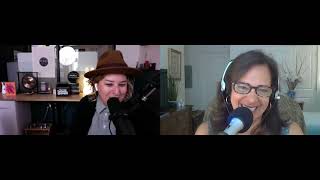
This is a Finding Brave podcast episode (Nov 7, 2019) in which host Kathy Caprino interviews Sunny Bonnell about her book Rare Breed and the concept of embracing one’s distinctive traits to succeed. Sunny defines a "rare breed" as someone "unordinary among the kind," describes seven core traits (rebellious, audacious, obsessed, hot-blooded, weird, hypnotic, emotional) that can be virtues or vices, and shares personal and client stories about leaning into rareness, building the Motto branding agency, and practical resources (a 28-question quiz and online presence) to help listeners identify and use their dominant trait.
Chapters
Do it.
Hello, everybody. Welcome to this episode of Finding Brave. I'm Kathy Caprino and I can't even contain myself. I'm so excited to have Sunny Bunnell with us today. If you read my Forbes blog, you've seen Sunny and her colleague, partner Ashley. Partner at Motto, your company, right? You're partners together.
Yeah, of course. Yeah.
Yes.
Well, and partners in life, too. But partners wrote in the book and you know it. Yeah.
Wow. Lot of togetherness. You're rocking togetherness. And I can't wait to tell you all about Sunny and Ashley. And I just want to say, folks, you know you're listening to a Finding Brave podcast, so obviously there's a piece of you or a full identity of you that is about being brave and bold and courageous. But for so many that I hear from and Sunny, you might share this. We want to be brave. We want to be bold. We're defiant. We're going to be talking about how to be a rare breed, to succeed wildly. Being defiant, being different, being weird. But as we were just talking about, it's not an easy road, is it?
It's.
It's a joyful road. It's a rewarding road. Sometimes, often. But I wouldn't say it's for the faint of heart. So we're going to learn all about what is a rare breed. How do we know it and how do we thrive. Being it. Right?
Awesome.
Read Sunny's amazing bio because already you're still under 30, right? You're 30. Under 30, right?
Oh, I like you already.
Okay, never mind, never mind.
But let me read the bio.
Sunny Ashley, who cannot join us today, but hopefully she'll come on again another time. Hansberger, did I say that right?
That's right.
Good. Our authors of the new book Rare Breed, a guide to success for the Defiant, dangerous and different out from Harper One, which is an amazing publisher. And you're the award winning founders of Motto, one of the top branding and digital agencies for rule breakers and game changers. I've got to know in a minute to just start out saying that, but we'll figure that out in a minute between the two of you. You're members of the Young Entrepreneur Council and have graced lists such as GD USA's Top 25 People to Watch and Inc. 30 Under 30 and America's Corporation Coolest Young Entrepreneurs. That's amazing. Thank you for joining.
Sounds about right.
Happy to be here. And your amazing book is like your quiz is flying through the. You know, thousands of people are taking it. So let us Jump in, tell us what is a rare breed? And I'm really keenly interested. How long you've. Obviously you're a rare breed. How long you knew you were, how long, how it impacted you. I mean, unfortunately, we only have 30 minutes. But tell me how this all started and what is a rare breed?
So at its simplest definition, a rare breed is unordinary among the kind. So at the heart of what that means, it means how do you as an individual, this can extend to our companies, our careers, our life, our work, our brands. How do we stand, stand out amongst the herd? And what I think rare breeds do differently is rare breeds. While others suppress their innate vices, rare breeds lean into theirs. They sort of celebrate them, let them off the leash to vandalize tradition. And it is all about owning who you are. And rare breeds have been with us since the beginning of time. Lenny Bruce was a rare breed. Eve was a rare breed. You know, Mozart was a rare breed. Lady Gaga is a rare breed. I mean, there's many, both that we know the names of and many more that we don't. And the book was really written to help those that have become silenced by society or other forces, whether it be friends, mentors, family, or even our own inner demons, the parts of ourselves that we've made invisible. Rare Breed is about really owning who you are to succeed. Not just the pretty parts, but all of who you are, bringing all of your humanness to the table and making your vices, your virtues.
Look at me. I get choked up. Which is a common thing on this podcast when you talk. Because when. When you talked about people who are brave enough to lean into their rareness, rare breedness, you know what? I felt I was only able to do that when the ecosystem just threw me out. When I got laid off after 20 or 18 years of corporate misery.
Yeah.
And then I said, well, what the hell? I mean, I am done with this. I cannot go back. So why don't I lean into who I feel I really am? So when you said that the difference is that they lean into it, do you think they always did in the research that you. I think you even said, steve, give us a few other names so we can put names to.
People that have always have. Or people that eventually got there.
Yeah, eventually. That we know of as like Steve Jobs is obviously, I think a real are in your research, did these people always lean into it?
So I think it's a fascinating question. I think it's a kind of a question about nature versus nurture. Right. I think we're all born with certain traits, certain DNA that comes with us. And it's the reason, in my opinion, and I'll go back to sort of Carl Jung's theory, but I believe that when you are a baby and your mother. Somebody asks, your mother, for example, let's say she has three children. And somebody says, tell me about which one. You know, tell me about your kids. And these children may or may not be able to talk at this point. A lot of times a mother can say, oh, that's the feisty one. Or this one's the one that's quiet. And so these sort of innate traits, I think, are kind of within us very early on. And of course, as we begin to grow and we begin to take shape in the world, I think that other outside forces, other voices, whether that be our own parents. I mean, one of the very first mirrors we ever look into is our. Is our mom and dad or someone who's been a guardian figure, or maybe there was no mirror at all. But something sort of tells us or begins to shape the way that we see ourselves and the way we think of ourselves. And sometimes over time, I think what happens is that voice either gets awakened or that voice gets silenced at different points in our life. And so when I think of what Rare Breed is trying to do or part of the reason that we wrote it is, I think, so many of us stay silent forever. You know, we don't ever really tap into the true voice that we have or can even hear our own voice, because think about it. Sometimes our mom and dad, they bring their own baggage, maybe their own past failures or hopes and dreams. They cast that upon us, and it starts to shape our identity in the world. Like they want us to make up for maybe things that they didn't accomplish. And so I believe that over time, that begins to sort of steer us in a lot of different, wonky directions. And I don't know if we necessarily don't meet our destiny, but I do think that we go down a lot of wrong paths before we ever really get there. And I think a lot of people go down the wrong path or for a real long time, because no one's ever really given them permission to say, what is it that you want? What is it that you feel that you're being called to do? And to not be made ashamed of that, you know? And again, there's a dark side to this, of course, but, I mean, in the positive way, what are the things that. That you can truly become? And where does that. Where do you meet that puzzle piece that you've been looking for? And I really think that that is kind of what Rare Breed's message is about, is saying, how do we listen for that? How do we know what that is? And how do we lean into the things that maybe other people are telling us we shouldn't be, which are actually our gifts? And how do we turn that into the life we want, the career we want, the brand we want to build, the kind of leader we want to be? I think too many of us are walking around trying to be somebody else.
Oh, Sunny, I couldn't agree more. With every single word. I just want to say this. We were talking. I love HarperCollins. My book coming out, Summer 2020, is the most powerful you. And it's around how to close the seven power gaps that I see women facing more than men. But it's. I can't recognize my talents and who I am. I speak from fear, not strength. I isolate from influential support. I don't know how to ask for what I deserve. I can't challenge mistreatment. And so much of it is exactly what you're talking about with a bit of a different lens. And I just want to say for folks, and there's a quiz that you can take to understand, are you a rare breed? And what trait do you have? But one of the most impactful things that happened to me recently was I was watching Tony Robbins documentary. I am not your guru. And he has this. He asks this question, who did you crave love most from when you were a child, and who did you have to be to get it? And I bring it up because I talk about it in my book immediately. I knew. Brilliant for dad, obedient for mom.
Right.
And unless you unlearn these things, heal and unlearn them, your rare. Your rareness is going to go underground because it's not encouraged or it's scary for you.
Well, and the shadows of those influential people on our life are very long and deep, and they cast a very long shadow on our life. I'm still being chased by the ghost of my parents. So I know what that feels like. And I've been there. And I'm still somehow trying to prove that, you know, and I think that. That we all are in some way. There's somebody that we're out there trying to. To.
What word would you prove right or wrong? Prove that I am good. I am right. I am. What is it that you would say you had been trying to prove? Can I ask you? I think that it comes out.
Yeah, I think that it's. It is that your life is worthy of being witnessed.
Oh, God, you're such a poet.
Well, I was a poet in a prior. In a prior life. Yeah. Yeah. Oh, yeah. No, definitely. I definitely was. Yeah, That's. I. I have a book of writing that a lot of people have told me I should. Should put out there and publish. Just the poet.
Your life is worthy. Say it again, is worthy of being witnessed. That's beautiful. Can you tell the story of that you just gave the talk and who it impacted that you were surprised about?
Oh, yeah, yeah. So this. When Ashley and I, we did an event, a book signing at a client of ours, Johnny Cupcakes, who's also become a friend and mentor, and he's in the book. And we went to his Boston headquarters, Johnny Cupcakes headquarters, and we did a cool little book event there and invited some people and came out to listen to us talk. And there happened to be a family in the audience with a young girl who just happens to be in second grade and had come from a pretty rough past. I don't want to get into detail, but enough to where it had traumatized her to the point that she was not speaking. She wasn't. She was afraid to go into the basement. She wasn't really. Had kind of been forced into herself. And her family said, you know, here's our little girl, and this is somebody who's. Who's really a shell of her former self. And so we didn't think that she was really paying attention to the talk. Couple days later, we get an email from. From the dad and the stepdad, and he says, I don't know what you guys did to inspire our little girl, but she is writing her first novel. She went down into the basement, and he said, what's. You know, what changed? And she said, the two girls from Rare Breed told me that I shouldn't be scared and that I should own who I am. And I was like, now that's pretty powerful. So now she's. Now we've become friends with the family. The sisters reached out. The mother has reached out. Her entire circle of family has reached out and said what an impact the book has had. So it's.
Well, how gratifying and just amazing for you.
Oh, I mean, she's sending us pictures of the front page of her novel, Chapter One, Chapter two. And it's. It's just a very fulfilling thing because we didn't realize that Rare Breed could have that type of impact. I mean, we sort of wrote it for, like a young careerist, young achiever leader who was trying to sort of find their way and was trying to tap into those things. But now we're finding that so many people at the leadership level and people within organizations and people just in jobs trying to find the calling, the click, you know, where they. Where they fit, are finding a lot of power in the book and empowerment to really lean into who they are and sort of tap into that voice. So it's an exciting thing to hear.
I'm seeing rare breed for parents, rare breed for children, rare breed for leaders. So there you.
There you go.
All right, so tell us, you have seven traits that you've identified.
Yes.
Can you tell us about those?
Sure. So rebellious, audacious, obsessed, hot blooded, weird, hypnotic and emotional. What these all actually signify is they all have a positive side, and yet they can also lead to undoing. So they can be a cautionary tale. So we chose them as vices and virtues because they needed to be dualistic in some way, meaning they could uplift as much as they could undo. And so that was kind of the qualifier as we went through it. And they could be used as a superpower, but they could also be used for good. They could also be used for evil. And so it was important for us as we wrote the book to not only highlight what it meant to tap into those things, each of the seven virtues, but also what it meant when it looked like a vice. I mean, some of our greatest hypnotic orators have also been some of the most evil. So you can use that power for good, or you can use it and let it consume you as a dark side. And we wanted to write about both.
And did you study kind of all the elements of the good and the bad and light and dark in these people's lives, or I'm sure you said even to yourself, hot blooded. Yeah, that's Mary or that's Fred. Right. We all know these people. Right. But we just maybe didn't even have a label for them.
Yeah, I think, you know, there's probably some little bit of, you know, we had. Yeah, Well, a lot of people are. A lot of people see themselves, but there's usually a dominant and then there's usually a secondary. So for me, I'm audacious as my primary. My secondary is obsessed. And anyone who knows me would probably say that that's true. And that's what the quiz is really good for, because it allows you to take the quiz you take. It's 28 questions as I mentioned earlier, we work with a. We worked as a psychologist and an English or, excuse me, a professor, and we work through how to qualify what your dominant trait would be. And so we've had people who have taken it multiple times. And like, I get the same answer and it's so on point, but a lot of people have tried to take it multiple times to see if they got a different answer. And it's pretty right on. I mean, almost every. I've not heard anyone yet say that didn't really feel like me. I almost, you know, it like nailed me 100%. So I thought that was pretty cool. But, yeah, I think we, when we were doing and writing the book, we had our own life and blueprint. I mean, it took us 15 years to run our own company and start with $250 in a small town against major, major players much bigger than us, much more money than us. I mean, we rolled pennies. We worked out of an office in the hood. You know, we didn't have any finance, financial backing. Everyone told us we would fail. So we started to kind of write Rare Breed probably over a decade ago. And then as we worked with many, many leaders, now hundreds at this point, been inside all types of organizations, have worked with employees and cultures. We've worked with leaders of all shapes and sizes of, you know, big, big companies like 20th Century Fox, down to smaller innovation disruptors. And we've seen a lot. We've seen a lot in terms of how companies work, how they think, how they operate, the good and the bad, the surprising. And we have made a career out of being able to go into companies now and be able to tell them what they're essentially where they could improve, you know, and we often help them look through the lens of these seven virtues in order to help them build in their competitive differences in ways that they've never thought of. So these tools are really interesting.
And you, your motto is a digital marketing agency?
No, we're branding. So we primarily branding. Yep. So we go in and companies and we help them not only articulate who they are, but we give them kind of a war cry. What is that sort of singular idea? I mean, that's what a motto is. It's the rally call, gets you out of bed every day to go to battle. And so we help companies identify that core idea, and then we help them position themselves using one of the seven virtues, and then we help them sort of extend that those philosophies and those ideas, the culture and the DNA of who they are. Into the brands that they build.
Who wouldn't want to work with you guys? Wow. All right, let me understand this. How did you get into branding?
Literally fell right into it.
What did you study in school? And this is for the entrepreneurs, the startups, the would be startups. You know how you how. What I love about this is like an anatomy of what we do for a living comes from who we are and comes from our lens. So you're doing branding and this thing is emerging as you're doing this work, and now they're melded and they're one. But can you just tell me where you went to school, what you thought you wanted to do?
Yeah. So Ashley and I went to college together. And from high school you knew each other? Yeah, we've known each other since we were kids, so we've grown up together. We went to college together and in our early 20s we were going to college together. And she was going down the path of being a journalist and I was going down the path of being a veterinarian.
Oh, wow.
Yeah. And so my journey was slightly different in that I had been a musician my whole life. So I started out playing guitar and a lot of different instruments when I was 8 years old. And I had really probably been on the track to be a musician at some level. I'd played house of blues for sold out crowds. I'd played all over the country just as a musician. And so while I was in school going down the path of being a veterinarian, I was, you know, practicing music on the side. And I was designing band posters and CDs and CD art for other musicians and including my own band. And so Ashley would help out on the side while we were going to school. At night, we would go and we would develop, we would design taught, self taught, these little. Yeah. These little posters and stuff like that. And then, you know, we got this crazy, audacious idea where we were gonna drop out of college. And we're like, let's just decide. Let's create a branding agency, a design agency. At the time they were called advertising agencies, not branding. Wasn't a real big term back in like 2004, 2005, I think, as a matter of fact, we were the very first branding agency in our community to call ourselves that was not a frequent term. You were either like a graphic designer, you were an ad agency. You weren't really. Nobody even knew what branding was. And so, yeah, we started, we dropped out of college together. Started, as I said, with 250 bucks in our bank. Account and just decided that we didn't like what we saw going on around us and decided to change the conversation. And we just literally did it by practicing it. Like, we got our first client. Our first client kind of became. They didn't know that they were really our first client, but maybe they did. But they just liked our thinking, and they thought that we were different and we were disruptive in the way that we were approaching their problems. And one client turned into another client, another client turned into another client. And just like a domino effect, we just started to get a name very early on for being these kind of outrageous thinkers and pushing companies to think differently because we didn't have a blueprint. Keep in mind, we didn't have anyone else to go to to say this was the wrong way to do it. We were just curious. We were going into companies and we were saying, we. Why do you do what you do? Why does this even matter?
Must have been an amazing storyteller, brand person that you. Yeah, I think these clients that. All right, you know. Yeah, Fox, what the hell? We'll give you a try.
Yeah. I mean, well, that didn't happen until much later. But our very first clients were like mom and pop shops. I mean, these were smaller, smaller companies that were local to our market. I mean, these. But they were tired. What was consistent about them was they were tired of the ordinary. They were tired of doing what everyone else was doing. They were looking for the rare breed. They were trying to be the rare breed in their category. They just didn't know what to call it. And so it made sense to come to somebody like us because we were coming at it from a very fresh perspective. We didn't have another way of doing it. We were just doing it our own way. And so the next thing you know, we've got a couple clients and we go to a. We went to a competition in Atlanta that we ended up getting booed off stage and came back to win it. And that was the moment that kind of started to set us off in the direction of, okay, now we've got some press. Now people are interested in what we have to say now. They're not calling us these girls anymore. Who do we think we are now? They were actually starting to take us seriously. And that's where it started to take shape. And then we began to get bigger clients, more complex clients. We were being brought into companies that had sometimes brilliant cultures and sometimes very ugly ones. And we were being brought in to either strengthen them or tear them down and rebuild them. And it was all because we had a knack for giving people the gift of being able to see themselves and lean into who they are. And we were saying, look, stop trying to be somebody else. Just go be who you are. If you can learn how to be who you are and stop trying to be everybody else, you might actually find that you have something worthy of being said. And that's what we would do.
I want to shine a light on that. You know, I know in my own small business, Forbes writer, you know, career coach, speaker, author. There is so much, even if you try not to read anything, there's so much that gets through about how you're supposed to run a business, how you're supposed to do passive income, how you're supposed to generate revenue. Oh, you shouldn't be engaging so much. You shouldn't be so available. It's so crushing. And I think if you don't develop like early on, it sounds like you listen to yourself. And if you, if you don't, you're just gonna be flattened by the plethora of crappy advice that really is. It tries to be one size fits all, but it's really one size fits nothing. I mean.
Oh, so yeah, that's a fair point. Is that fair?
And you know, back to your. You're poetic. You know, we're striving to have to understand our life is worthy of being witnessed. But you're also, I think, saying my life is worthy of being a model, not just being witnessed, but making an impact so that others can also make their impact. You know, it's big.
Yeah, I think so. I mean, I think we're all a vessel in some way and we have to figure out what to do with that power and what to do, how to not only use it for ourselves. I mean, you know, humans are messy. We can barely deal with our own nonsense, let alone the nonsense of someone else. I think it's, it's, you know, whether you, I think we have to realize that whatever's happened to us in the past, whatever journey we are on, we bring that to the workplace, we bring that to our leadership style. We, we bring that to everything that we're doing. And it shapes the cultures that we build, the companies that we build, the brands that we build. It shapes how we treat each other. And it is something that I think we could all do a little bit better by being more self aware of saying, what is the impact that I'm trying to have and how can I be a conduit for something good? How can I Inspire just one person to go on and do something with their life that makes them feel, feel like they clicked into something that was truly meant for them. And I think many people don't. I think there's a lot of people in jobs they hate. I think there's a lot of leaders running companies that they don't like and they don't know what to do about it. You know, they don't know if there's another way. And the fact is there is another way. It's just the way you don't think. You know, it's the unordinary path which we don't take. Right.
It's, it's being the Rare Breed doesn't even occur to us because so we're selected. I remember your comments made me think when I got laid off and said, that's, that's it. I'm done with being a corporate person and I'm going to be a therapist. My friend said, oh, you're so inspiring. And I said, I want to be inspiring, but first I have to do something inspiring. And we just laugh for five minutes. I don't know why, we just thought that was the funniest thing in the world, but that is exactly how I felt. How can you be inspiring when you so don't inspire yourself?
Right, yeah.
One avenue to this and everybody read this book, whether you're a parent or a leader or an entrepreneur. But one, one thing to think about is what is the path that's going to inspire me? And usually that's the scary path. Now I have like five minutes left with you. Can I ask a few things here?
Yeah, go for it.
Hard to encapsulate, but you said there's kind of the shadow and the light, you know, side of all of these traits of being. Is there a way for you to say what is the one thing that is going to make us more of who we are and positively impactful? Is there one thing, one shift, one step, one thing? And conversely, what makes us go down a destructive path? Being these things like if I look at all of this hot blooded, that can be awesome because you're, you're not going to stand for things that are unstable. But it can also mean you leave a wake of dead, you know, body parts in your wake because you're just so goddamn emotional.
Well, you're like a hurricane, right? And many people don't really understand that's why Rare Breed is about understanding how to cook the gumbo the right way because you're kind of like, you can burn the whole damn batch. If you're not careful, you can over season it. You can. You know, that's the duality, right? The borderland between the light and the dark is actually quite murky for most people. And so what I think rare breeds have done, the ones that we talk about, the ones that we celebrate, are that they have been able to use and tap into that force, that superpower, those selling points, those. Those vices, if you will. And they've been able to use them as forces for good. They've been able to use them to advance their careers, their life, their work, without the destruction that so many of us tend to sort of be the hurricane, the tsunami that tears everything else down around us because we don't know how to. We don't know how to be hot blooded in a positive way. It leads to rage and destruction and intensity. Whereas, like hot blooded really is just about being intense. It's about having passion. Unlike passion, you know, it's. We have that quote, you know, chase down your passion like it's the last bus of the night. Many of us never really know what that feels like. And my hope would be that people reading the book would be able to not only understand where the duality comes in, why these, why these virtues are important to understand that many of us are. Are using them as tools for destruction. We just don't realize it. And the book is really to help us push towards the direction of making it, to using them in ways that are powerful and good. But to your point, Amanda, is there. Is there one kind of takeaway? I mean, it's own who you are. You know, in a world that wants to own you, learn to lean into who you are and celebrate it.
Would you go with me on this for a minute? Given that I'm a former therapist and I love to. I love tips. If I look at my own rare breedness, what I think turned it from a mess to more positive is becoming a therapist, which made me turn myself inside out. So when you're working with someone and you're being critiqued, you are. Your head splits open. You're first of all very compassionate and empathetic with what they're going through. But you're also watching your process. So there's content versus process, which to me is the most powerful thing. So what I would say, tell me if you agree or disagree, start watching yourself and the process of how you engage and operate in life and watch the outcome of your communication. And watch. And I don't mean be neurotically, you know, Worried about it. I mean, watch it when you're hot blooded. Like, frankly, I remember my sister, she's five years older, she used to say, you're a bully. She would perceive me bully. And 20 years later, my boss said, you're a buzz saw. And I go, what, is that good or bad? And he'd say, you get shit done and nobody gets done. Yeah, but I wouldn't need body parts in the way.
Yeah, yeah.
So watch the process of who you are, not just what you're trying to accomplish. You know, we also learn that if you take something that I say and you're hurt by it, I got to attend to the fact that you're hurt by it. Now, that could be your own thing, but it also could be that I just slapped you hard over something I could have said differently.
Yeah, yeah, yeah, it does. I think that what you're also getting at is. And I think this is more applicable to kind of button in what you're saying. But I think that there's a lot of people in. Let's just say that might be like a rebel, for example, in an organization that doesn't celebrate the rebel. Most of the time, we don't want the rebel. We say we want the rebel, but we don't want somebody to come in and upend the status quo. Like, that's not exactly what you want organization. You want things in a certain land. Like, you don't want the rebel, but there are companies out there that celebrate the rebel and want the rebel. You just may not be in that organization. So it's about finding home. And most of us won't give ourselves the grace to go and find what that even looks like for ourselves. We drag ourselves to things that make us unhappy. We go to work every day that we don't love, and we never step back and say, am I just plugged into the wrong fucking place? Like, we just don't even paycheck, that.
We think, what the hell is wrong with me?
Yeah, I got a lot harder. I gotta be different. I got it. Yeah, I gotta. I gotta, you know, put the tag on and dress in a better suit and just put my head down and keep going. Because I have a family to feed and I have bills to pay. But the reality is, is that little by little, you are making the parts of yourself invisible. And over time, you end up like a soulless ship. And I think that if I could give anybody a piece of advice, it's to ask ourselves, do you have the courage to ask yourself that question and more Importantly, do you have the courage to burn the plan and just say, you know what? Maybe I'm not where I need to be and I need to have the courage to be able to find where that place might actually be for me. We don't do it. We don't give ourselves the time or the place or the grace to be able to do something like that. And it's really a shame because I think if we had more people who were. Felt alive and felt truly, truly connected to their work, the world would probably be a little bit of a happier place. People wouldn't walk down the streets of New York not even looking up once. Yeah. Or unleashing on people in those negative ways, you know? And so to your. I think what you said is brilliant. And I think more of us need to ask ourselves why we don't feel fulfilled. What is causing that? You know? And so hopefully Rare Breed is a tool for tapping into those virtues and making them a. Making them a tool for you to be able to say that and make the decision.
I so love it. I want to say one other thing. People, the people that come to me in my course, amazing career project are like, I hate. I want more, different and better, but I don't even know what it looks like. And I sure as hell don't know what to do. And you know what I say to everyone? You don't actually have to burn the plan this minute. You don't know what you want.
Yeah.
So just start exploring. Doesn't mean you're going to quit your job. Doesn't mean you're going to go from a vet to a. Don't even worry about it. Just start being more of the person that you are dreaming to be. And literally, I'm not saying it's magic, but it is. Doors will fly open, you'll meet the right person, but good God, get out of the box.
Yes.
Crushed you. So, yeah, people here burn the plan. They're like, see, I'm too scared. I have a house. I have four kids. They're going to college. All right, calm down, people. It's just, just.
But sometimes you have to burn the plan.
I burn the plan.
I fucking burned the plan. Like, I was. I was going to be a veterinarian. My whole life, like, to death, my whole family was like, whoa, wait, what? Like, they did not understand how I could have been so audacious. There was the audacity that came out. I'm just going to throw away a career. That's pretty safe. Forward. Yeah. Like, I'll make good money. I'll be doing what I love. Like, and yet there was something pulling me in a different direction. And that's just. You have to listen to that and just go.
But let me ask you, did you go from oh, my miserable to I burned the plan or it was, I'm guessing, a process of unpeeling layers, right.
By dropping out of school or. No, I jumped Shep. I mean, it was a pretty. It was a pretty bold move. Yeah, I do. I mean, it went in and dropped out of school and did it. I'm not recommending that for everyone, but not everybody does that.
You can hold a lot of. Yeah, Tim can hold a lot of rejection and fear and, oh, Rare breed.
Got rejected 18 times.
Love that story. Oh, I love.
So, yeah, I've heard no more than I'd like to admit. But, you know, a lot of people hear no and no becomes forever, and no is really an opportunity. No is only but an opportunity. It's all in your perception. So I'm not saying everybody who's listening to this go out and just, you know, burn the plan, but I think that sometimes you have to do something radical to get yourself out of the ditch. You know, burning the tire isn't going to keep getting you. You're not going to get anywhere. Like, sometimes you just got to get out of the fucking car and go ride the horse. This time you got to get out of the truck. Oh, my God.
I could speak to you for hours. You got to come back because there's 5,000 more questions. But, yeah, I'm respectful of your best selling author status here. Where do people learn about you? Where do they hire you?
Yes, so I hope so. All right, quiz rarebreedquiz.com great. We are on social everywhere at thisisrarebreed. That's where the book is at. This is rare breed.com Instagram. We're on Instagram. This is rare breed has two things. We have the Instagram platform and we also have a YouTube series that we just launched with seven episodes that features seven rare breeds. But we dig into one of the. One of the virtues per episode. So our first pilot episode was with Charlemagne the God. Our second one is going to be with Jon Batiste and a couple of other really cool special things coming out. You can see that on YouTube. And then for motto, if you're interested in working with motto, that's just. We are motto everywhere and we are motto dot com.
Thank you for joining me. I love everyone.
So much fun.
So much fun. Come back soon when you have. We don't have to wait this long, but there's going to be Rare Breed for children, parents, leaders.
You got it. That's a great idea.
Thank you for joining me.
Yeah. That was so fun. Yeah. She's over here. She's listening. She's like, give me the thumbs up. But she's, like, working, so I love it.
Hugs to you both and everything. My God. We want to hear. You all want to hear from the listeners, too. How can we help you? How can we help you jumpstart that Rare breed training trait that you know and do the work that you're meant to do? Look at these two women. It's so inspirational. So let us hear from you and let us know how we can help. You know, we make it. You make it sound easy. We know it's not easy. It's not easy under all this, you know?
Yes. There's a lot of gray hair under that.
Please tell us, what's your question? What's your challenge? And let us help you. Okay, cool. Thank you. Thank you so much. Have a great. Are we off air now? We are.
More from Kathy


Elevate Yourself, Elevate Others, and Amplify Good | Chris Cooper | Finding Brave Ep. 334

Finding Brave Epis #333: How Leaders Can Harness AI Without Losing Their Humanity, w/Bennett Borden

Finding Brave Epis 332- How to Stay Brave, Valuable and Visible in the Age of AI, with Raman Rai

Finding Brave Epis 331 - The Power of Positive Disruption, with Dr. Patrick Leddin


Finding Brave Epis 330 - Being 40: Letting Go and Embracing Who You Are, with Stacey Lindsay

Disrupt Career Reinvention with Kathy Caprino - via The Disruption Lab Podcast w/Patrick Leddin

Creating Neurodiversity-Friendly Work Cultures: Simple Workplace Adjustments Matter

Finding Brave Epis 329 - How To Create a Neurodiversity-Friendly Workplace, with Kristen Pressner

Finding Brave Epis. 328: Reclaiming the Power to Trust Your Own Voice, with Dr. Cindy McGovern