Finding Brave 99: Do Less To Live and Work Happier and Better, with Kate Northrup
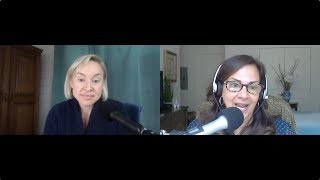
Kate Northrup talks with Kathy Caprino about why doing less leads to better work and life. She connects trauma to productivity struggles and argues that self-love and self-awareness matter more than hustle.
Chapters
Hello, everybody, Kathy Caprino. And welcome to Finding Brave, another episode. And I am so, so thrilled to talk with Kate Northrup today. Kate, thank you for joining. So from Maine, from the beautiful Maine today.
Yay.
And you know, I've been following Kate for years, following her mother, Christian Northrup for years as well. So what an honor. What an honor. And today we're going to be talking about a lot of things that I think are really going to resonate and align with the Finding Brave message. But we're focusing on doing less and living better is how I would call it. And you have a book and a whole world of programs and tools about that. But just a little preamble here, you all probably have heard me say or write about perfectionistic over functioning, which is the term I use for doing more than is healthy, appropriate and necessary and trying to get an A plus in all of it. And you know, we were talking, Kate, before, you know, pressing record that when you do that, this is not just something you change, I think overnight. It's, it's a lifelong journey to change this, but how important it is to shift out of it. And it does take Finding Brave because I think we do it out of fear, we do it out of judgment, we do it out of self rejection. So we're going to learn all about how can we get on the path to doing less but living in a more joyful, peaceful, calm, healthy, perfect way. Perfect. No, that's a hard word. We don't want to strive for perfection. The hell with that. I take that back.
So here we go.
Let me tell you a little bit about Kate. Kate's an entrepreneur, best selling author, speaker and mother and has built a multimedia digital empire with her husband, Mike Watts. That's amazing. I would love to hear about how it is to work with your husband. That reaches hundreds of thousands globally. They are committed to supporting ambitious women to light up the world without burning themselves out in the process. Kate teaches data driven and soul driven. Love that combination time and energy management practices that result in saving time, making more money and experiencing less stress. Kate has a membership of over a thousand entrepreneurs. Love it. Called Origin Collective. That's about infusing more feminine energy into your business and reclaiming your time. And she's also helped over 5,000 students heal their relationship with money, which is so embedded in all of this too, isn't it? Kate, with her signature Money Love course and her first book, A Love Story, has been published in five languages. And her second book now available is Do a Revolutionary Approach to Time and energy management for busy moms. Oh, my God. You got a lot going on, don't you, Kate? So let's dive in here. Can we? I'd love to know, and you share a little bit on your website about this, but how did you start being passionate about doing less? I'm sure there's a personal story in here.
There is. So my personal story is that I was always somebody who prided myself on. On being really productive and capable and total type A overachiever. And I got pregnant with my first daughter, and I was so bone tired that I just, like, couldn't do things anymore. And it wasn't even, like, a mental choice. It was just like, nope, nope. So the pregnancy forced me to slow down. I worked probably half the amount of hours that I had worked before while I was pregnant. And then when our daughter was born, I had a pretty traumatic birth experience, and she was sick. And so she was sick really, for the first year of her life. And it was very difficult. She had really severe eczema. She would wake up every 10 minutes scratching herself, bloody, screaming, and we were obviously exhausted. I had mastitis a million times. I had, you know, infections. Like, it was just. It sucked the year, like, totally sucked. And yet a year after she was born, we were sitting with our accountant, and we realized that we had made the same amount of money during that year as we had made previous years working twice the amount because we had only had 10 hours of childcare for Penelope that first year. And also, I just didn't have the bandwidth to, like, care about our business. But we made the same amount.
How is that. How did you exactly?
Well, I thought, how is this? How did we do that? And so I went. So I basically thought, well, we're not that special. And probably if I did this by accident, I could do it on purpose. So do less. My book and what I'm practicing and teaching is really. I went back in time and looked at, well, what happened. How is that possible?
I'm dying to know.
Exactly. So I, like, I itemized and I looked at what shifted. And I will tell you, I mean, so many things that I wrote a book on it, but one was really sticks out and is the crux, which is that for the first time in my life, I was forced to let my body lead. Yikes. Yeah. And then, amazingly, because our bodies are made of the very same stuff as nature, I got done the things that needed to happen because as this wonderful Lao Tzu quote says, nature never rushes, yet everything gets done.
Beautiful. Can I Dimensionalize that and ask you what I hear and make sure I get it. Because again, I'm a recovering perfectionist over functioner. So my tendency is to do the work of three people. That's my tendency. And we all talk about, you know how we say, oh, we're so busy. I often say that and I'm like, why are you saying that? As if it's a badge of honor? Stop it. But let me ask if this is what happened when you let your body lead, I'm guessing that the peak times that you're able to produce and generate and concentrate, when you allow yourself to do it, then you are going to do three times what maybe you would have when you're beleaguered, exhausted, depressed. Right. So number one, you're doing it when your body says you can do it. I think, tell me if I'm not getting it. Number two, I think your decisions are better.
Yes, right.
Instead of like hardcore, is this you? I tend to my. Any staff I've ever had is like, good lord, slow down. You're like a hummingbird. We can't keep up because I'm desperate to do. Let me try this, let me try that, let me try this webinar. So they're not good decisions. They're based on something else. So you're making better decisions when you're slowing down.
Yeah, exactly. Because it is right. We have a tendency to live outside ourselves. And when we are outside ourselves, we don't make the best decisions for ourselves because we are operating in essentially a separate universe when we are all completely other focused versus self focused. And so I created a system that I call self sourced scheduling that is organizing our lives based on how we feel internally. So we're creating our external lives based on an internal feeling as opposed to creating our external lives based on the external factors of everyone and everything around us, which of course makes us lose ourselves if we ever had ourselves to begin with. I mean, I have a 4 year old daughter and she has not lost herself yet. And so help me God, I will do whatever I can to support how full of herself she is. I want her to be that full of herself forever as much as possible, you know, with, you know, obviously developmentally appropriate layers of. We don't want to raise people, I do not want to raise a narcissist.
Back off a little. And I get. So obviously we're talking about some form of spirituality, some form of. So I'd love your thoughts on this, but I think the whole thing has to start with having A very deep, intimate relationship with yourself.
Yes. Which have never been taught how to do.
Most. Most people listening are going to go, I don't even know what you're talking about.
Exactly.
And when Kathy says to listen to yourself and develop a relationship, what are you talking about? And how do you do that? I mean, isn't that the foundation? It is.
And for me, I was never a meditator. I was like, people who meditate or tell me to meditate are so annoying. And I'm too busy. Like, I have too much going on, and I don't want to because I really like to stay in motion.
Man, you and I are so similar. Like, it's a different feeling to meditate, and sometimes it's annoying. I'm going to be honest.
I still find people who talk about meditation annoying, even though I've become one of those people. And by the way, I'm still not a daily meditator. Maybe someday, okay? But here's what I found was so profound for me. And this is not going to be what people expect for me to create this intimate relationship with myself and tune in with myself. What happened is I got my period back after my first daughter. And it was like, the first time I acknowledged really, that my period could be anything more than a nuisance because I hadn't had it for so long with the pregnancy, and then I didn't get it for 13 months after she was born. And before I got pregnant, I had lost my period for quite a while because I did this crazy intense fitness nutrition program. So I, you know, I. It was like borderline eating disorder. So I didn't have it for all this time. And then it came back, and it was like this feeling of my body. I was my own again because my body was no longer a receptacle for my daughter or her primary, you know, her only nourishment source. So I was mine again. And. But really, sort of for the first time, because now I was my own as a mother, which is such an intense rite of passage. And I began to. I got obsessed. I got obsessed with tracking my period and taking notes on my experience of the four phases of the menstrual cycle and learning about them and learning about the brain chemistry and hormones and the whole is from the spiritual aspect. I read everything I could, and I got into this intimate relationship with myself by tracking my cyclical energy. And I felt like. No one told me everyone talks about loving themselves, right? And it's like, what is. I don't even know what that means. How do you do that? And for me, tracking my cycle and noticing how I felt was one of the most profoundly loving things I could do, because instead of trying to be different, I was noticing how I am.
Wow.
Yeah. So for me, that's how I did it.
Can I share with people? So I'm beyond the period stage now, but I want to highlight a few things if I can. So Kate and I are all about. I think let's just tell the brutally honest truth here, because we don't hear that very much. I have two kids who are 22 and 25, and, oh, my God, we plan for our children. We adore them. What a gift. And I will say, preparing to get pregnant, being pregnant, and then nursing, I felt like, when am I going to be able to drink what I want, have caffeine? It was, I'm going to be honest, an awesome responsibility that this body was growing another body. And some people love it and live every minute. I felt stressed. I, like, if I'd had a sip of coffee, my mother, who's 95, was like, it was the happiest time of my life. And I felt great. I'm like, what in the hell are you talking about? I did not feel great. I almost had preeclampsia. So I want to normalize that for everyone. You are what you are. And let's not look at I should be, should be, should be, should be. And I'm less than right. But what's interesting is now that I don't have a menstrual cycle, I have to tune into my body in a different way. But I think our point is whether you have one, whether you don't have one, whether you never had one. What we're asking is know yourself in a deeper way, and that's physical, emotional, spiritual, behavioral. And it can be from, you know, I learned as a therapist, our body says what our lips cannot.
I love that phrase.
So good.
Do you know who's is that?
I don't know who's that is. I just. I just. The professor said it. I know, but. So I had chronic illness, four years of an infection of the trachea, and I. Every three months, I'd lose my voice and it would be burning pain. Well, I do believe in energy healing, and I've studied it. What is that? That's pain. Deep in the seat of your personal expression. Now, I know, folks, some of you are going to go, what? This is just too off the charts. But I believe that the body says what the lips cannot. So if that's the first way you learn about yourself. Just listen.
Well, yeah, and our bodies are here. They're the only thing that is with us the whole time. Our kids will not be, our spouse will not be, our friends will not be, our parents will not be. But for me, my relationship with my body, it's like, oh, well, here I am. Yes, we're spirits and souls living in a physical experience, but we are having a very physical experience and it dictates a lot of our lives. So why not get into loving relationship with it by getting to know it as opposed to trying to change it all the time. Our culture is so obsessed with trying to change our bodies. And we can change our bodies in a loving way. Absolutely. We can take care of them. But I think the listening and the just asking, like, how do I even feel today? What is going on?
What is going on? What hurts? What's. I love it. Can I go back to from the entrepreneurial perspective, Kate, the doing less. Can you talk about for anyone who's starting a business or like me running a small business, can you give us some tips about how do we nip the that perfectionist took over functioning urge in entrepreneurial life?
Yes. So, number one, there's a simply analytical part, which is the doing an 8020 analysis on your time, your activities, your revenue, your business, your customers, everything. So what 20% of activities give you 80% of the results? What 20% of customers bring in 80% of the revenue? What 20% of offerings bring in 80% of the revenue'? You know all of that stuff because then it becomes really obvious what you can just get rid of. And I am a huge believer. I'm not much of a gardener, but I really love petunias and I've nailed it with petunias. And with the petunias, if you do not deadhead every day or every couple of days, meaning nip off the dead. Nip off the dead buds. So we have to deadhead our lives and our businesses all the time. And I'm far more interested in what you get rid of than adding most of the time. We think as entrepreneurs, if we want to make more revenue and have a bigger impact, there's something we're not doing that we need to add in. Nine times out of 10, it's something that you're doing that you should stop doing.
I got a question for you. I'm going to ask you as a consultant. Would you.
Great.
And I have an answer for this, but I want to hear what you think. There are several things I do that don't generate much revenue, but I live for them.
Yeah, well, that's. They feed me and which does bring in revenue. If you're feeling okay.
There you go.
I believe if it needs to bring you results or it needs to bring you joy.
Beautiful.
Ideally.
But I see, I love that. And I know you're in a iconic class. Get the word out. Because there's so much cool, crappy, crappy ass entrepreneurial advice and there's so much crappy coaching advice. It's not all about. And some of it is a male worldview, frankly, that you have to be. You have, your revenue has to be over a million or you're not doing anything. But I really, I think there's a female worldview and I don't mean to paint every woman with the same brush, but that if it feeds you in some way that's important, that's sustaining, that makes you feel alive, then it doesn't have to be making you, you know, half a million dollars. Would you agree with that?
A hundred million percent.
Do you hear what I hear? The pressure. The pressure, sure.
Yeah.
If it's not making money, let it go.
Yes. And if it's not making money, but it lights you up, keep doing it. Who cares? We're not taking the money with us anyway. And no one's, no one is lying on their deathbed thinking, I wish I had made more money. But they are saying, and this is Bronnie Ware's work, the top five regrets of the dying. She says, like one of the top five is I wish I had given myself permission to be happier.
I want to tell you I wrote because that was such an inspiration. The five regrets. Top five regrets of mid career professionals. Oh, and it's, it's not so different from, you know, it's who I wish I spoke up to, who I wish I didn't keep in my life, what I wish I listened to instead of what I did. Same deal. Love it. And so more about do. Oh, you talked about earlier. The. I do want to hear about the hidden productivity superpower that you talk about in your book. But something about hyper productive trauma response. Can you talk about that a little bit?
Yeah. So this is not my work. I just, My work is adjacent to this. But I heard it the other day and when you said you have a background as a therapist, I was like, well, I don't know. It just came up. So there's a woman named Erica Chitty Cohen who's a beautiful. Doing beautiful work around birth and female health and all Kinds of incredible things. And she brought up a concept of productivity or obsession with productivity as a post trauma response. So overachieving as post trauma response. And when I heard it, I just started to cry because I just knew it was right. Like, I just know that's so right on. And I've touched around the edges of this, you know, certainly workaholism, right? Or how we are wanting to stay in motion and stay busy because it's avoiding a feeling. Oftentimes, oftentimes it's avoiding something under the surface. And if we stay in motion, if we stay busy, then we don't have to feel that thing. Whether it's a conversation we need to have in our marriage or the fact that we're doing work that's totally not in alignment with who we are or, you know, I mean, there's so many things. But when I heard this idea of overachieving as a post trauma response, I just thought, I feel like that is such a cultural, like this insidious thing in our culture that we would. Because working and staying busy is such a great way. It's such a great avoidance strategy. And it's not. I'm not saying this is true for everybody, but if you heard that and it resonates, then maybe looking at what are the fear patterns that keep us running all the time? Because it is powerful. We think like, oh, well, it's because I have to make money. But all of the data. And if you track your own time, you'll realize that the money making activities are not. They don't actually have to take you that much time. That's what I proved in that first year of motherhood for myself. Whoa, what have I been doing then? Working 50 hours a week all my adult life. If I could have worked 10 hours a week and made the same amount of money, and then I really have to look at, well, then why all the busyness? And that is a spiritual question and an emotional question, not a productivity that's huge.
Can I riff on two things there? I have been so floored in the past two, three, four years since I understood what narcissism, literally narcissistic personality disorder is. And every time I talk about this, I think of Brene Brown, who I adore. And if I were to have her on the show, I think she would probably say, based on what she writes, labeling people, it divides us and it's not a good thing. From my experience, when you've been on the receiving end of a narcissistic personality disorder, I don't mean, oh, he's a little self centered. I mean, personality disorder. You are so damaged and you don't know what hit you. But what's been so shocking to me is I run a course. The amazing career project. More than 60% of the women who come are all perfectionistic over functioners. That's who is drawn to my work. When I say, do you think you had a narcissist as a in childhood? They're like, I don't even know what that is, but I can't believe what you're saying. So I have seen that perfectionistic over functioning, doing too much is tied to having a childhood where there's a narcissistic parent. And part of that trauma is there's conditional love. You are only going to be loved if you do this, sound like this, look like this, win that award. And so that's the trauma that I'm seeing carrying over. So I'm actually going to really. I can't wait to check out Erica is her name.
Yeah, Erica Chinny Cohen. We're going to have her on our podcast to talk more about it because I want to know more.
I want to know more. Now. I do want to say this too. A lot of people that listen to this podcast are not entrepreneurs. They work in the corporate world. And I want to honor you all. And I can always hear what my listeners are thinking. Like I can hear when they, you said, you know, just work less. What they're going to say is f off. I can't work less. What do you mean? But I have found in working with thousands of corporate women, you can work less. It's, you can. Like I had one woman who says, gosh, I'm so stressed. I, you know, do emails all through the night. I said, does your boss expect that of you? And then there's hemming and hawing. Well, no, not really. I said, it's your boundaries. And I know you and your mom talk about boundaries a lot. It's your boundaries. It's your belief that you have to do that. Now. Not all the time, people, but so often it's you that's allowing that. It's you that's perpetrating that and it's you that's sustaining that. Does that make sense, Kate?
100%. We really have to take radical responsibility for our lives. Now, I understand that if you work in a corporate environment, you cannot just suddenly work 20 hours a week.
I'm coming in till noon.
I totally get that. However, more and more is popping up around what's called a results only work environment. Ro It's a philosophy. Turns out I've been running my company like this the whole time. I didn't know it was like a philosophy.
Oh, it had a name.
And I love this because now I have something to name the way we run our business. But it's worth looking into because here's the truth. The data does not support the standard 40 hour workweek, which by the way, the average American works 47 hours a week. And at 49 hours a week for women, that is when the statistically significantly our mental health starts to decline. So just two more hours a week than the average, our mental health starts to plummet. Okay, so this is major, major, major. There's no Data that supports 40 hours is a good amount for humans to work. It just was created during the industrial revolution based on how machines work. And we've just kept doing it because no one bothered to question it. Now, interestingly, companies that are moving towards like a 34 or 30 hour work week or even less are noticing that their productivity is increasing or at least remaining the same because there are fewer call out sick days and their employees are happier because happier people are more productive. There's so much data supporting this. And so if you feel like you've checked in with yourself and you're like, no, my boundaries are solid. It's my boss, that's the problem. You may consider presenting some of this data. And I wrote all about it. I think it's chapter two and do less. I can't remember which chapter it is, but it's all outlined there.
And I'm guessing when we get to the point where like I've always been a late night person, that is who I am, I get up late and I if we could also make those 30 hours the time where we're most productive. It's four, right?
Yes.
Rather than it's got to be 9am.
To blip cares like when the work is done, right? We just hired it. We just brought on a new employee. And she was like, so what are the hours? And we all work virtually. And I was like, whenever the hell you want, whenever you feel like working. And she was like, well, what about timesheets? I was like, I don't want to see a timesheet. I just. You have to.
Timesheet is a dirty word, right?
Just do your work. I don't care, you know, And I, and I. My dream is that more and more companies move this direction because what it is, is, it is seeing the people who work with us as whole, capable humans who don't need to be babysat. Like.
Yeah. What a novel idea, right? Yeah, I love it. All right, now, I'm aware of our time, but can I ask you this? You. You clearly. Life happens to you, and then you look at what's happened. You're one of those people.
I'm one of those.
And I call it, turn our mess into a message. I mean, you know, we're passionate about. Wow, I just went through a rough phase here. And let me see what I can learn and teach, because then. Then it's not for naught. I think that's probably how you operate, right?
It is. I actually had a dream. This is so crazy. I had a dream many, many, many years ago where there was a book on my bookshelf next to my bed in the dream. And I pulled the book off the spine of the book said Unforgettable was the title of the book. And I opened up the book and the page that I opened to said, if you are to live in the light, you must earn your living with the sharing of insight.
Wow.
And I'll never forget this dream. And so from that moment forward, I was like, I guess this is what I'm supposed to be.
Say it again. Say it again.
If you are to live in the light, you must earn your living through the sharing of insight.
What a beautiful, poetic, powerful message.
So that's.
That is what I do.
I just kind of share what I.
Think, oh, my God, what a great way to make a living. So can you, in the. Along those lines, it doesn't have to be around, do less, but can you tell us for your life what the biggest three lessons have been for men, for women, for whatever? I know I didn't prepare you.
No, this is great. I love it. Number one. Number one lesson has been, my worth is not based on what I do. My worth is not based on how much I have gotten done. So that's number one.
Can I. Wait, can I ask about that? My worth is not based on what I do. Does that mean on the volume that I produce or even how good I am as a mom or.
Yep.
What is your worth based on?
Do you think it's inherent for all of us? I mean, I think it's also who we are. You know, it's like, what. What presence do we bring? Who is our essence? And, of course, that impacts how good of a mother I am, you know, and how good of a wife I am and all of those things. But, like, as opposed to sort of the tallying of like, what did I do today? Or what did I do this year? How good am I? That has been a big life lesson.
Beautiful.
Another one has been that that the truth is healing.
Tell us more about that. So.
I, as many of us did, grew up in a household where it's very WASPy household where we. Everything looked fine and everything was supposed to be fine. And really it was not an environment where we just said what we felt in the moment. And I had to learn the skill of having uncomfortable conversations because I used to think that the truth hurt people. But what I've come to realize is that when said with love, the truth heals people.
Oh, that's beautiful.
That's a big one for me.
That's huge.
And then I think the third one is one I'm learning now. Or it's really something about bliss and pleasure and the permission to feel good and how that can fuel our lives. Like how important it is to prioritize bliss and pleasure. That really, like, that is what we're here for, I believe. And so I'm more like in that one. I don't have like a good summary.
Love it. Can I add to that that I believe that women are programmed not to prioritize bliss? It's not just that we don't know how we are programmed. One, don't put yourself first to. You know, it's funny, I grew up, my dad, we called him a funster. He was, he died six years ago, but he was the most fun loving. But my mom, who 95, I love her, she would say, yeah, your father, it's all about the fun. It was like a negative thing. Like there's something wrong with being all about the fun. And so I would, I would suggest, folks, that you look at the programming you got around fun and bliss and, and you're gonna peel layers of what you were told, you know. Oh, that's a powerful one. But really what are we doing on this planet here? Is it, is it just a struggle and stress and be beleaguered or is it to live full out with, with a lot of bliss? Right. That's a powerful one. Thank you for sharing those. You're welcome. Kate, where do we learn all about, where do we get your book? You have something important coming out. Where do we get it all?
So katenorthrup.com is the best place and I do have my book, Do Less, which you can get anywhere. And I have a brand new Do Less planner because so many people asked me, hey, with these concepts that you share. Do you have a planner? Could you make one? And I was like.
And that means every day, you know, it guides. There's steps and system.
Yep. So that's available at. At my website as well.
I want to ask one other thing because I have one more minute. Can you tell us the biggest lesson about mothering that you face? Yeah.
That. Okay, how do I sum it up? It's really about the lesson. It's about letting go and letting things that, like, the most important thing I need to do is let things be how they are as opposed to how I want them to be. Wow.
Will you say a little more about that?
Yeah, I mean, I. I just thought because I always wanted to be a mom, that it. It would feel natural and, like, it would feel good. And mothering does feel good sometimes. And sometimes it really sucks. And so. But it's harder as everything when I am trying to make it be different than it is, but when I can just be like, well, right now I'm sitting on the floor, and my husband doesn't come home for two hours, and I am so bored, and I do not know what to do with these children, and they're. They're asking me for things constantly. They won't stop. Rather than try to make that be different, if I just really sit and be with them, it does get more fun, and it does get easier, and at least I'm not wasting energy trying to speed the time up.
So does that mean as you're sitting there going, good Lord, I'm so bored, you say, all right, I'm bored.
Yeah.
Okay, let's see if I can get less bored.
Yeah. Or just like, oh, just even admitting, like, I'm bored and just sitting there and then. And then seeing if, like, well, can I dive a little deeper into something that one of them is doing? Could I put on music? Because, you know, I love music, and I know I love to dance. And then when I'm feeling more joyful, they'll feel more joyful. Like. But what I'll use, what I. What I am learning not to do is, like, try to get into a flurry of activity to get. To push through the moment, right? So, like, to not get on my phone, to not try to clean the whole kitchen, to not have a spotless living room, to just, like, be there on the floor being bored.
I love it. I just want to just applaud and hug you for this. There is so much about what a good mother is and what you should feel. And I got tears in my eyes. When you said that. Because at a earlier point in our lives, we had a nanny and I had a corporate job, and I remember the nanny could sit on the floor with my daughter for hours, Alphabet and reading, and I couldn't. And I looked at her and went, I'm a crappy mother. Look at this. And she would make her homemade food, and I'm crappy. And then I remember another nanny's sister, I had met her, and she said, pardon me, I'm losing my voice talking about it because I worked out of the home a lot of hours. The sister said, do you like being a mother? And I was like. I got so defensive. But what I sensed she meant was, how can you be the kind of mother you are and not be home with your child from 7 to 6? And what I want to say to you people is, I'm 59. And I remember that comment.
What a thing to say to somebody.
What I want to say to you is, don't let the world shame you for the kind of person you are, because it's. It's devastating. I think nothing has shamed me more than comments about my parenting.
So true.
Would you agree with that?
Oh, my gosh.
I mean, when someone judges me as a parent, it's. It's hit so hard. So I hope people, what you're getting. I get choked up. Kate, what I think we're saying is just find a way to love yourself. Not try to make yourself different, not try to judge. You're not good enough, you're not smart enough, you're not loving enough. It's just a waste. Just love yourself. Would you say that's a theme for today?
I would.
Thanks so much for joining, Kate. Thank you so much, folks. I hope you got something out of this. We'd love to hear from you. Wherever you see this podcast, wherever you can comment, you know, how are you? Take Kate's planner. How is it helping? How is, you know, the anti meditation. Meditation. How about. How about we don't have to sit on a mountain? We. I can't cross my legs, you know, because I broke a leg and it won't cross. We don't have to cross our legs to meditate. Just be with yourself. Just listen to yourself for two minutes. Just ask yourself, how am I feeling? Oh, why is my neck hurting? What is my neck saying? Just find a way. Find. Find a way today and every day to love yourself a little more. And I think you will end up doing less but living better, as Kate teaches. Thank you, everybody. Thank you, Kate. Again, come back soon. Have a wonderful, brave, self loving week, everybody, and see you next time. Bye.
More from Kathy


Elevate Yourself, Elevate Others, and Amplify Good | Chris Cooper | Finding Brave Ep. 334

Finding Brave Epis #333: How Leaders Can Harness AI Without Losing Their Humanity, w/Bennett Borden

Finding Brave Epis 332- How to Stay Brave, Valuable and Visible in the Age of AI, with Raman Rai

Finding Brave Epis 331 - The Power of Positive Disruption, with Dr. Patrick Leddin


Finding Brave Epis 330 - Being 40: Letting Go and Embracing Who You Are, with Stacey Lindsay

Disrupt Career Reinvention with Kathy Caprino - via The Disruption Lab Podcast w/Patrick Leddin

Creating Neurodiversity-Friendly Work Cultures: Simple Workplace Adjustments Matter

Finding Brave Epis 329 - How To Create a Neurodiversity-Friendly Workplace, with Kristen Pressner

Finding Brave Epis. 328: Reclaiming the Power to Trust Your Own Voice, with Dr. Cindy McGovern