Finding Brave Ep 136: How to Know When You Have a Book Inside of You and How to Start, Bruce Gelfand
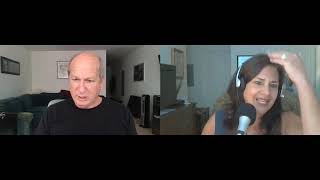
Bruce Gelfand on recognizing you have a book in you: develop a daily writing practice, write bad first drafts, and push through resistance. He treats writing as channeling an inner voice and emphasizes craft over rushing to market.
Chapters
I'm sorry. Hello everybody. This is Kathy Caprino. Welcome to Finding Brave. This week I'm laughing hysterically because I am so excited about our guest today, Bruce Gelfand. And we are gonna have so much fun. You know, every podcast is fun, but sometimes it's a little bit like, well, we'll leave it no excavating. Whereas it's just going to be such a joy to pick your formidable brain. Bruce, about what's the question? How to know if you. How to know if you have a book inside you.
You said tell us every guy that you get on the line here. All right, what's the question?
What's the question? How to know if you have a book inside you and how to start. I'm going to introduce Bruce. I have worked with Bruce writing the first foray into writing a screenplay, which was, oh, an interesting process, I would say. Tough, probably a little like when one reads my new book, there's some places you have to go that you probably weren't prepared to go. And it's excavating. But it was an amazing journey and I cannot wait to get back to that. And so without further ado, I want to introduce you to Bruce. Listen to this bio, which of course he didn't give me. I had to dig out. Bruce's Bruce is a writer, teacher and writing coach in Santa Monica and he has taught hundreds of writing workshops and seminars and venues around the world and has worked with thousands of writing students from masters in the field to absolute beginners. His private coaching clients include CEOs, corporate trainers, academy and Emmy award winning writers, directors, actors, leaders in the worlds of politics, health and spirituality. And as a writer, Bruce has over 30 years of experience in theater, film, television and publishing in both New York and Hollywood. His plays. I want to ask you a question about Hollywood in a minute. His plays have won national place playwriting awards and been produced off Broadway in theaters and in theaters around the country. He has written numerous feature films and movies for television as well as writing and directing a feature length documentary, the Family Safe. He is also a writer of fiction, nonfiction songs, Good Grief award winning poetry. His book Brighter the Light, Deeper the Shadow was published in 2004 and you also have a writer's hour program for writers of all levels. And I've heard amazing things about it. So Bruce, welcome. Welcome to Finding Brave.
Thank you.
Okay, let's dig in here. I was telling you right before we recorded that so many women that I hear from, and men too, whether they're in corporate life or entrepreneurial Life have something they want to share. And that could be an article, a blog, a blog post, a book, a memoir. I just was playing tennis with a young woman who I'm sending your way because she's writing her own memoir and doesn't know how to finish it. So can you start us off, Bruce? You hear from thousands of writers. How do we know when we really have a book inside of us or when it's some other fancy that maybe we should be putting our energy elsewhere? How do we know?
I'm consulting my formidable brain at the moment, and I'm realizing that it has gone on vacation. So you'll have to settle for my less formidable brain.
Perfect.
You know, I don't know. I don't know the answer to that question. It's a great question. I think it's a question that is. We don't know what we don't know. And I think, you know, books are. Books are marathons. Books, for the most part, are not sprints. They're marathons. I think everybody's got a story to tell. I think everybody's got a voice. I think every boy. Everybody's voice is as distinct as their fingerprint, as distinct as their soul. Print, if you like. And I feel like the world is less without it. And so, I mean, I just believe that. I believe in the sanctity of each voice. And I also believe that, you know, voice is just spirit in language.
So, quote, voice is spirit in language.
Well, I think it's. That's really where I come from. It's really how I began as a writer, which is. Which began really as a voice in my head when I was 4 years old and I was in the hospital, very, very sick.
Didn't know this?
Oh, yeah. I mean, literally remember it as though it were yesterday and I was hemorrhaging. It's a long story. It's actually a very funny story, but I wound up in the hospital by myself.
How old?
I was 4 years old. And luckily our pediatrician had been home. It was a Sunday, and I was bleeding out. And he threw a blanket around me and threw me in the back of his station wagon, rushed me to the hospital. And so I was sitting in this very scary hospital room Sunday. Late. Late Sunday afternoon, early Sunday evening, the light is going down. There's people screaming and yelling as it happens on a Sunday night in the hospital, and I'm all by myself, and I look out the window, and there's this golden sort of light on the factory. You know, the hospital. Factory. Smokestacks. It's just beautiful. And all of a sudden, out of nowhere, this feeling kind of comes over me that is just this overwhelming sense of connection and bliss. Like I'm just like the happiest guy in the world. And I feel connected to everything going. The smokestacks, the scary hospital room, the people who are screaming. And I just feel really calm and relaxed. And this voice comes on in my head that I'd never heard before and says, everything is fine. You're gonna be fine. And I believed it. I believed that voice. And it became something like. It was like when I left the hospital, when I survived and got out of the hospital, I went looking for that voice. And I couldn't find it anywhere. I couldn't find it in my family. I couldn't find. I asked people about it. Nobody knew what I was talking about. People thought I was nuts. And. And I wasn't old enough to really call it a religious experience or God or any of that. None of that made any sense to me or meant anything to me. I just knew I had this voice in my head that spoke to me when I needed it the most. And it was the sweetest, kindest, gentlest, most powerful voice. And all I wanted to do is be in conversation with it all the time. What could be better? And. And I started to learn how to write, you know, penmanship. And. And I found that when I sat down with a pencil and a blank piece of paper, that voice would come on in my head and it would talk to me and I would write stuff down. And I found that when I sat down with a blank piece of paper and a pencil, I could engage with that voice. And it was like the only way I could engage with that voice that I could find. And so I figured, well, I want to do this all the time. This is. This is it. And. And I discovered that writing would be a way for me to do that. And that's really how I became writer. And I. And then I started writing, you know, I want. I was the kid who was the writer in the family who would write the poetry of the people who were dying or the anniversary poems or the birthday poems. And I was the go to guy who did that. And I found I would get acknowledged and, you know, people like that when I would provide that. So I got the sort of the double whammy. I got a little ego squirt from people loving that I could provide this. And I. But I really, what I got was this kind of secret connection, the secret relationship I had with this Voice.
I need. I need to ask a question here, Bruce. I never knew that story. Do you think that's the voice of God or spirit or your own voice?
I have no idea. And honestly, I don't. Doesn't matter to me. I actually would say it's a voice that's inside of me, but it's bigger than me. And I've written things at very young ages that I had no business knowing anything about. And I know when I'm really. I'm in the work. I'm in the zone of the work, as writers say or, you know, athletes say or whatever. I've really disappeared on the page. And something is coming through me, that I'm just a channel. I'm just a vessel, an instrument. I'm sort of guiding it. But something is coming through me. I'm tapping into something that's much bigger than that moment, that day. My life. It's what it feels like. And that's the most exhilarating thing about writing. It's just. You feel connected to something so much bigger than yourself. It's thrilling, intoxicating. Nothing. It's that same feeling again that I got when I was four in the hospital of feeling just completely at home in this body, on this planet, connected to stuff without any. There's no brokers, there's no middlemen. There's no. None of that. And there's no, you know, it's. And over the years, you create your own ceremonies around it. You create your own talismans around it. Everybody, every writer I know has crazy superstitions about things. You just want to be in that space. And one of the things that I teach people now and I have for years is how to find that space in yourself. I believe everybody has. I mean, the idea is to disappear on the page so that that feeling, that energy, that voice, whatever yours is, comes through. Most of the reasons we stop or we don't even get started is there's all this crap in the way. And the scar tissue can be, you know, a third grade teacher who just destroyed a composition you wrote. Or it could be an ant who was very prohibitive. I mean, there's a million reasons why people don't connect to that voice in themselves. And there's a million reasons why people don't have. Permit. Feel permission to put it down, to share it and to contribute it, really, to the. To the sort of the chorus of the world. And it doesn't have to be with language. Writers use language. Painters use other things. Sculptors use other things. You know, there's no, there's no, there's no corner on the market in terms of how you do it and how you access that portal. But I do believe that it's something bigger than we are. Thank God there's something operating that's bigger than us because we would have destroyed ourselves a long time ago if there wasn't.
Oh, my gosh. Now let me. Wow.
I'm not even. We wouldn't get started.
No, we won't get going there. Can I echo back some things I hear from my perspective and get your thoughts? So I often talk about the highest self and some people don't like it. Some people like, what the heck is that? You. The. The language you just used is a perfect description of it, where you get out of the ego and. And we're so in the ego and so in the personality every second when you have that moment. And some people have it in a blink of an eye, like 4 years old, and that's it. They never have it again. Some people live in it and a lot. But I think that what you have described is you just gave me an answer to a question of mine, which is some of the most viral things I've ever written came from that place that I didn't know what I was going to write. I had to write a post. I don't know. And all of a sudden, and I'm almost in a zone, and I almost wake up 30 minutes later after having typed, sure. And it's almost fully formed.
Sure, sure. Yeah. I think that's. That's the. That's the you that isn't you. That's you. That's much more than you.
Right.
And I. That's the you that's us, really, that's connected to all of us. You know, one of the things I like to say is I like is when people ask me what I do is I. Is that I dance people into the mystery of their own voice. And the dance part is important because I want it to be joyful. I want it to be fun. You know, one of the ancillary things that happened with that experience I told you about when I was four. You know, one of the byproducts of that, which is something I've been dealing with my whole life, is I came to believe because of that experience that that voice was mainly accessed when I was in deep shit, when I was in trouble, like sick and almost dying in a very high dramatic moment. And it also was that I was able to access it because I was alone. And it was a solitary sort of experience. And so a lot of my life has been about unlearning those particulars of the experience. So I don't want to have to be suffering and on the verge of dying in order to experience that voice. I don't want to have to be alone and a solitary character in order to experience that voice. And I've spent a lot of my life both very like with a lot of illness and a lot of solitude.
Wow.
So, you know, so everything comes with consequences and those are, those are consequences of that experience. Would I trade the experience for anything? Not at all. I mean, I felt gifted and blessed and chosen and all those things. But it comes with baggage and you have to sort out the baggage.
Can I ask you something that is. It's a reframe of what you just said.
Yeah.
What if it's not that you only get. It's not that the gift of the voice only comes when you're solitary or ill. What if you came into this life and you were, were going to be solitary and ill and the universe gave you a gift to help make that easier.
That may be. That certainly may be. I mean, I don't, I don't.
I like that interpretation better.
I just want to have fun and I want to be able to give, contribute my gift. I'm still that four year old kid who can't believe he's having the excitement that he's having as much fun as he's having in that moment. And you know, and certainly when I'm. When I'm teaching or coaching, working with someone, the great thing about that for me is it's not about me. And so I get to disappear and I get to just go over and stand with you or whoever I'm working with because I can hear and see where the, where that energy lives in you. That's part of. One of the things that was given to me as part of this process is I can recognize it in other people. I can see it, I can feel it, I can smell it. And it's not. And it's not always pretty. It's not always. I mean, I believe in all the seven chakras. I believe in everything is sacred from the crown to the root. So sometimes it's messy. Sometimes one has to get. Be willing to get a little messy. You know, you gotta, you gotta be willing to get a little wet if you're gonna sing in the rain. Right? So that's.
Love it.
That's.
I love it. And I know, you know, I know everything you're sharing is how you showed up. For me as a coach, I just want to say this to people because I want to offer some practical tips for you people as well, you know, so I'm a non fiction writer and a blogger and I'm way comfortable with that. So my happy place. But writing a screenplay and what you saw, I remember, I think we had, you know, seven sessions or so. I have a few more you immediately saw. And I think this is what probably you see almost all the time. You would give me an exercise and because I was so not in my swim lane, I was like, am I even doing this right? I spent so much energy and you would say, let me tell you folks what I mean. If you're going to write a screenplay, you have to have characters and they need to be incredibly well formulated that they exist, you know, so you'd say, all right, here's your exercise. You got Mary, you got John, you got da da da da da. Tell me about them. And I would do it. And now that you're telling me what you're telling me, there'd be moments where they would completely come alive, but then some part of my brain would tamp it down and say, where is this coming from? And get all freaked out. Or is this good enough? Or is this what you want? I mean, I was completely aware that 80% of it was all worried. And then you would say, not in that way. You were always very kind, but it's great. Stop agonizing and now let's get down to business. And then you would ask me more questions. But one thing I did want to highlight in terms of what you said that I think is really fascinating with this book. How do I say this when I'm talking about the power gaps that I've experienced? I've pretty much overcome a lot. Not all of them and not completely, but there was one in particular acquiescing instead of saying stop to mistreatment that I still, it's sexual harassment. I still feel it. I can barely talk about it. This particular thing that happened without getting all choked up. And when I decided to write the chapter, I decided it wouldn't be someone else's story like the others, it would be my story. And I thought it was great. Woohoo. I'm finally telling my story. And I thought it was memoir. Oh my God. The panel of readers unilaterally hated it.
Why?
Because they said, yeah, in a lot of ways you look like you've overcome a lot, but here you, you need to read Your own book. You are still. You're trying to get your day in court. You are. And what. What. Why I'm tying that in, Bruce, is I think that there was so much of me in it, but the me that hadn't healed, that that's all that was coming through, that that wasn't helpful to the readers.
I understand. And it was. It was. I'm sure it was. It was a different tone. It was a different.
Everything was different.
Well, and. And. And, you know, if you had chosen to write. It might just be a different kind of book. If you had started the book with this story and had actually feathered the story throughout the course of the book and used yourself an example as an example of how each one of the steps. I haven't read your book, but each one of the steps took you to the next one. Given how this person starts off at the beginning, as I'm assuming, very wounded and kind of victimy and no power and all that, and winds up at the end having taken. Having read your. Having lived your book empowered and you know, but it's. But yeah, I mean, it's a different. It's a different tone. It's not gonna. It's a different kind of.
I guess where I'm going there. You're right about all of it. But in a way, the rest of the book, I tapped into my higher self. That book. I was way down in the weeds of the wounded self.
Yeah.
And it was jarring.
Okay, I got it.
And I. Fascinatingly what they said about it.
And I have to say. And again, I don't have. I haven't read your book and I have the context for the book, but I'm a believer in all of it. I'm a believer that it's all good and it's all. It's showing up for a reason. If you're agonizing over something with a character, I would have you. It's very practical. I would have you write into the agonizing. To me, whatever shows up is exactly right to have show up. And you write from that place and you. Trust may not take you where you want to go, but it'll take you where you need to go.
I want to give people an example of that. When I was working with you, I had sprained my back in this very weird, random way. And I was incapacitated physical therapy, like, from one little move in the. You know, in the storage unit where all my stuff was after getting divorced and moving out of our house. And so I'm telling You that la da la la. And you go, wait a minute, wait a minute. Why don't you have, why don't you write a letter to your back and ask your back to talk to you about what this is? That thing was incredible. My back spoke to me. I've told people this story and they're like, really? Your back spoke to you? Uh huh, what? Remember I read it to you or gave it to you. It was, you know, it was just not material that was in my conscious mind.
Well, it's the genius of the human experience that we have all these portals, all these things that are carriers of communication. And having had a lot of illness in my life, I'm a huge believer in the voice of the body. And there are microphones everywhere and all you got to do is flip them on and record it, write it down. And it takes you into a way and it's very practical. It might may sound like woo woo something. Oh, the guy lives in Santa Monica. He must be like, you know, whatever. It's exactly the opposite of that. It couldn't be more concrete, grounded. You're just actually signing off on the fact, well, if this is what's showing up as a communication, then okay, I accept, I surrender to that and I'm going to write it down because I'm going to trust that something bigger may be going on here that I can't see, you know, and again, it's what I'm going to write into what I don't know, I don't know. And requires a little faith, and it requires a practice of faith. Every time you hit a blank, it's the great thing about writing. Every time you hit a blank piece of paper, whether you've done it, whether you've won a Nobel Prize or you're a total beginner, you're starting again. You're a beginner, you're starting with a blank slate. And nothing can be as terrifying, right? And nothing can be as thrilling because everything's possible with a blank piece of paper. And how do you start? It's like taking a first breath.
All right, let's get to that. Let's give some practical. But I do want to say this. You're defining for me what bravery and power is. It's going to make you, it's going to take you to a place where you need bravery and power. You know, you can't be just weak and fall apart. You got to sit with how uncomfortable this is, you know, and it takes both of those things. I feel.
Yeah, I actually think every Inhale and every exhale. Inhale is hope, and exhale is faith. And I think each one of those is its own act of courage. And it's. And we do it every moment, and we do it as a choice to stay alive in the body present the way things are. There's every reason in the world not to do it. Like, you know, and if we really did submit to all the fear and all the terror and all the. None of us would take another breath again.
That's right. You wouldn't. Get out of bed. All right, now let's get practical, which I know is hard. And I'm going to ask you to do something that when people ask me, I say I've got to diagnose a little. Like when someone says, I hate my career, what do I do now? Okay, well, there's a million ways to hate your career, and there's million reasons why you hate your career. And I can't just diagno. I can't just give you some advice. But let's. So let's pretend you're on the phone with me. Oh, and I do want to shout out to Laverne McKinnon, who's an amazing producer in Hollywood who's worked with you, and she's a love. And I've interviewed her. We'll definitely link to that in the show notes. But she recommended you so highly. Let's pretend I called you up on the phone for that first time, and I said, bruce, Laverne recommended you. And here's the deal. I would like to write a screenplay. I think it's a screenplay. Okay, but. Or let's make it easier for people, because not everybody wants to write a screenplay. Let's say they think they want to write a book, and it might be a nonfiction. You're laughing because the book isn't easy. I'm guessing. Let's say it's nonfiction and they think they want to start a blog, but they do think they have a book. If I said to you, can you walk me through what the process would be in your mind for me to begin to write this book? What are the practical things you're gonna have me do that are gonna get this thing birthed? What. What practically. What would you have me do?
Well, you know, we. I would find out. Well, it's funny, because I don't need would. The first thing I would do is I'd give it. I'd give you a little writing exercise. Like, if you remember I did that with you. I. And it's like, if I'm. If we're gonna, if you want to become a great tennis player, I gotta see you whack a few balls. I gotta see your backhand. And I gave you. And I, and I've used, for years, I've used an exercise from Ralph Waldo Emerson is one of my, one of my heroes. The genius exercise that I call. And literally for 30 years I've used this. And, and it's a 15 minute thing. And people, I give it to people and they write for 15 minutes and when they're done, I have everything I need to know about that person on the page.
No way.
Yeah, no, totally.
And I mean, you gave this to me and I was like, is this good enough and should I go longer and should I go, oh, good, great.
I can see this, you know, I can see every syllable is a choice. Every space between syllables is a choice. It's breathing, inhale, exhale. And part of my relationship with writing and language is I get to, I can slow it down that much so for myself. So I get to read because people were always communicating. We never stop communicating.
So what kinds of things would you get from that?
I would find out. I would, you know, it's. I would see your, see how you hit the ball over the net and I would see words that popped. I would, I mean, again, it would be, this is. We're using an abstract thing here. But I would, and I would start, I would start to hear assignments to give you that would lead you from your power. Because I also believe that we work best from our places of comfort and safety. And I'm not a believer in really, I don't believe in beating the hell out of ourselves for art or for, I think if it's, if it's too hard, if it's too difficult, then get up and walk away and don't go back. It's not worth it. My intent is always to make it a joyful process, but joyful in an authentic way. Not in a phony way, not in a way that's always going to come back and get you. But like organically joyful. And organically joyful might be writing into one of the most painful experiences of your life, might be writing into your back that's killing you. But again, if you can, you can anim. You can give. If you believe that everything has a voice, then I would give you certain assignments. Look, the first. How do you become a writer? How do you write this book?
Right?
First thing is you gotta, you got to be willing to, like, if you get up in the morning, deep, brush your teeth. You know, at a certain point, if you want good teeth hygiene, you get up in the morning and you brush your teeth and you don't think about it. You don't make it a referendum on self esteem. You don't agonize over it. It's just, you do it right. Well, it's like that with, with working out. It's like that with yoga. Everybody's got stuff that they're really, that they, that they're motivated, that they care enough about, that it's in their schedule of the day. And they've stopped agonizing over it. They've stopped debating whether it's, you know, writing because it's, it's so intimate, always, for a lot of people, becomes a referendum on self esteem. And who the hell, who do I think I am? And why, why would anybody care about this? And why should I bother? Well, if you can give yourself five minutes a day to sit down and put something on a piece of paper, write something down, and if you can do that for five minutes, the way you brush your teeth for five minutes, you can become a writer. And so much of it is about developing a practice and then practicing the practice and you know, making you. You know, people think you need discipline, and I actually just think you need. I don't like the word discipline because discipline implies dragging something kicking and screaming somewhere it doesn't want to go. I prefer the word commitment. Commitment is something you make, is a co thing. You make an agreement. If you're staying in a marriage out of a sense of discipline, there's probably something off about the marriage. You know, we're talking about a marriage with yourself, with that part of yourself that has a voice that wants to be heard, that has a story to tell. It doesn't matter what anybody else thinks about it. If that. If you have a story to tell and you have a voice and you want to tell it, then you can write that book.
I love it. Now, let me ask you a few things here. You're the writing coach, I'm not, but I see things a little differently. So I would love your take on how I see it.
Sure.
Let's talk about non nonfiction. Bruce, I see so much crap out there that should not become a book. And I'm gonna tell you something that's a real bugaboo of mine and I've mentioned it a few times. I have a friend who's a coach building a practice. He went to a really expensive marketing gurus 10 week course. What did she say, just write a book? Doesn't matter what's in it. The fact that you have some published thing is going to give you credibility. I turned gray like that. Second, I got so mad, I coughed up a hairball and I said, that's so wrong. First of all, you're wasting your own time. Secondly, you're wasting everyone else's time who reads this thing. And thirdly, it's going to give you no credibility if it's terrible. So this is what I want to say. Let me. Let me say it, and you tell me. I think I am going to do a sequel to this, as per your recommendation, about my thoughts about what it is to write a great nonfiction book. But to me, part of it being good is that it's not just an exercise in hearing you speak, that you've done some vetting that, like, for me, I like them to be research based. That it isn't just. And I'm talking nonfiction. It isn't just. I'm gonna make up some stuff and I'm gonna just share it without the intellectual, emotional vetting. So for people who are listening, you know, and I will do a sequel, but for me, it was interviewing a lot of people and getting their amazing nuggets and not just listening to myself. And it was also writing it and writing it again and writing it again and editing it, then getting feedback, then writing it again. Like, just as you say, every word, every letter, every syllable. There's work to be done to get this to be finally honed. So I would tell you, from what I see, not everyone is a writer, and not everyone can be a good writer. Tell me what you think. I don't think you agree with that.
I think everybody can be a writer. I think not everybody can be a good writer, and I think very few people can be a great writer. I think it has to do with who you are, where you're coming from, what your intentions are. Clearly this marketing guru's intention was to sell and make money and market. It was more about marketing. She's not. I mean, everybody's. It really. One has to. And I think it's legit. That's what she's writing books about. That's what she's telling people. It doesn't matter what's in your book. Just get a book so you can add it to your brand, so you can sell in the back of the room. So it gives you authority and legit. Yeah. Okay. Well, that's. That's. She's. She's. That's where she's coming from. And that's what writing books are about for her.
Yeah.
And that's the kind of writer she is and the kind of coach she is. Okay. God bless. If that's where. If that's what it's about for you, then you should go to her seminar and do it. People have different reasons for wanting to tell their stories or wanting to write books.
That's fair.
And people. So it's important to, you know, that's not even remotely what I would be interested in doing ever. In a heartbeat. And you know, why I do what I do comes from a very different place. And it's literally. It's harder to sell, it's harder to make, because the culture is not geared toward that as much as it's geared toward marketing and branding and all that. I think one has to lit. One has to search one's heart and one's soul and see what. Because there's time, and it needs to be worth your time to sit down and do this. Even writing a bad book takes time.
Right.
So it has to be worth your time and effort. You know, to me, there's a stunning lack of intimacy, connection, nuance. I mean, I go back to what drew me to language and books and poetry and the theater. I feel connected to other human beings. There's enlightenment. I get to learn more about myself. Having read this book, I'm not sure that, you know, whatever I would learn about myself having read that marketing person's book. It has to do with marketing. It doesn't have to do with why I'm alive, why I'm doing what I'm doing. You know, we all come from different places, I think, you know, I don't. I don't like the word should whole lot, because I think it's. Because I think it just shuts people down. I also think I've known people who've written things, their first couple of books or their first couple of screenplays. The worst. The worst garbage you've ever read in your life. But. But they taught them something. Yes. And they learned. Look, I think craft is the key here. And you're. You're doing interviews, you're doing research. The vetting you're talking about is part of the craft of writing a good nonfiction book. You're willing to actually work harder and do the heavy lifting and invest in the craft. And craft is just the bridge of something that starts off about you and winds up about me. So. And I. That becomes the gift to me.
What is it starts out about Me. But it becomes about.
About me. Yeah. Because you read a great story or a great book or you watch a great movie, and if it's. If the person who created it were the people that created it, in case of a movie, if they've done their work, at a certain point you're not. You're watching the movie and you're following the story and the characters, but it's your life that you're having an experience with and it's showing you something, it's connected, making you laugh, it's making you cry. It's. You know, that feeling of being, you know, when you're in the presence of a good work of art.
Yeah.
There's a me too experience in that.
Transported. But it's also you being transported and you're.
You're creating the experience with the creators. So it becomes a dialogue between creator and audience, between writer and reader. And that's the best kind of stuff as far as I'm concerned.
All right, Bruce, we're going to get practical here. Now. Two more questions. I'm aware of our time. Let's do it this way. What are two mistakes? Things you really should stop doing? If you're in the process of trying to write something, stop doing these two things. What would they be?
One thing would be stopped judging what you write. Be willing to be bad. Be willing to be awful. The worst.
I remember you said that I would like this to be bad from you. Kathy, please. You're gonna disappoint me if it's not bad. Well, of course. I was like, woohoo.
I can be bad in many ways. The more accomplished and smarter someone, more accomplished someone is in their field, the more critical they are, all this. And the more. The harder it is to sort of break the back on that perfectionist thing. And you gotta be willing to put down what's there and let it be crappy. Let it be the worst crap that was ever put down on a page. And practice that. And practice crap. Yeah, practice, practice.
Whatever you got. Practice.
Practice giving yourself permission. You're opening up valves here. So part of the thing is to take all those judges, all those editors, all those. You can't do this. Who the hell do you think you are? All those voices and leave them outside the room. And for the period of time that you give yourself 15 minutes or a half an hour or two hours or whatever, just have a party, have a blast, and put down whatever it is that you want to put down and see where it takes you and just. You have no idea where it will take you.
All right? So thing number two is, stop worrying about it being crap. Work it. Work what you got. Just do it.
Well, I just think, whatever it is, write it down.
Whatever it is, write it down. Okay, but that's still a proactive. What's something else not to do?
Leave the judgment out. Okay, what else not to do? What else not to do?
Like when you were looking at my stuff a few years ago, what did you tell me not to do?
I'm not sure.
I don't know what I think you do that. I don't think you do it.
I think it was. It was about. Don't. I just think one of the things I tell. Excuse me, I tell people all the time is with a timed writing exercise like in a writer's hour is. And I. May I do this as a joke, but I'm speaking to the junkie who needs to win, right? And I think whoever writes the most, wins. It's the most words. Whoever has the most words wins.
That's what people think.
Well, that's, you know, so that's what you want. There'll always be people in the. In the room. They'll say, oh, who will stop and say, well, what do I win? Right. But what I'm trying to do is engage all those voices, all those competitive voices and all those voices that are going to rebel against the competitive voice.
So you want the most words possible, because then it's a stream. Stop going back.
Okay, I want quantity.
Quantity. Let me see it. Okay.
The more quantity there is, the more there, the more chunks, the more diamonds will be in the chunks.
All right. All right. One more final thing here, Bruce. When someone comes to you and says, I'm blocked, like this young woman today, yesterday on the tennis court, I'm blocked. I got all the chapters, but I. But I'm blocked here. Okay, what do you find? If you had to summarize what most blocks are generated from, what are they?
Well, I think the blood, the block. A block is like the disturbance in the force. Right? It's. And I would. I would just have her right into the block.
What does that mean?
It means literally sit down and write. She can write. You can start with I'm blocked. I don't know.
Or Dear Block.
Or Dear Block. Right. There you go. Letters are great because they're a very focused, intimate form of communication.
Dear block. Can you tell me why you're here?
Yeah. What's the deal? What are you doing here? What do you want? Because the block wants something.
Oh, love that.
It'S keeping you from something. And it's got a legitimate. Like a character has a legitimate issue that is, you know, will call him an antagonist or her an antagonist in the story, but a block is just the antagonist, just the villain of the story. What is it? What does the block want? What is it doing here? What is it? What is it afraid is going to happen if it doesn't block this person? Because that's ultimately what it's saying is, I'm saving your life. I am your survival. If I don't block you, you're going to do something that going to be really, really bad for you. That's going to cost you. Like you're going to go over a cliff. Something terrible is going to happen.
This voice of the block says that the protector. Let me ask this. When I think about writing this book, there were times, and I know what they are now, that sitting down to do it was. I can't even describe it. It was the hardest physical thing to do. It was almost like there was a vortex pushing me away. So I'd be like, oh, I think I need to do laundry. Let me clean the house. And I noticed that I would do that in the beginning when I really didn't have the structure down of the chapters yet. And I would. It would be so difficult to just start typing, which is not my normal way. But by chapter three, I figured it out. It was the woman's story, it was her advice, it was my advice, it was an expert's advice. And then it was an internal exploration, external exploration, and the reframe. That's the last. And I was like, you created a comfort zone. I created a structure. And then it went. But if I were to ask you, what is that Fish? Physical experience of. I hate this. I can't do it. What is that? Is that. What the heck is that?
What the hell is that? I think it's a. It's a fear of the unknown. It's a fear of failing. It's a fear of, you know, it's all. I mean, we bundle our fears and they show up and they'll show up all at once, like there's a party going on and here we are and Party of fear. We are not going to let her sit down and do this. And she's going to try to drag herself there and she's going to come up with all these. She's going to have the cleanest house in the world and make a fortune on poker credit.com. she's going to have an Affair with somebody in, you know, in New Zealand online to do. She's going to do anything to avoid.
I was getting anything.
Well, look at the juice that. That has. Look how powerful that is.
It was. I mean, that's powerfully attracting.
And I would. I would. And so part of. As a practical thing, I would. One thing I would. I would suggest is you write into that resistance.
I wish I'd asked you. Damn.
And I would ask the resistance, what's. What's the deal? What do you want? What's going on? And the resistance might very well have negotiated with you terms. And terms might have to do a lot with the fact. I mean, some people, everybody's different. Everybody has a different comfort zone for you. Having structure, having. And these chapters that you created, these. They're, you know, they may not. They may not wind up being the final things, but for the moment, they give you a structure that you can work into, that gives you some buffer. So it's not just this. You're just flailing around.
It's like a vessel in which to put yourself, of course, that. That then allows more of yourself to be.
And the vessel. The vessel needs to be pliable enough, flexible enough, and willing enough to ship shape, to. To change its shape, to look or to be tossed out and have a new shape put in, because the material will tell you ultimately what the shape wants to be. But it's great to impose a shape early on, just as a way of getting started. So you have something to put something in.
Exactly.
The phrase. That's what the phrase suspending display is about. It is every. Yeah, you suspend disbelief. Like disbelief is everywhere.
Like, I always thought that meant. All right, he's flying. And I know humans don't fly, but somehow within this structure, I'm going to let that human fly. I thought that's what suspend disbelief meant. How are you meaning it here?
That I'm talking about the inner voice, the inner critic in you that's saying, this doesn't work. This won't work. What's the point? Why am I doing this? Nobody cares. You know, who the hell do I think I am? All the. All those voices that are absolutely keeping you from sitting down in that chair. I mean, the voices of your resistance are powerful and I believe are in direct proportion to the voices of. To the, you know, for lack of a better phrase, the good guys, you know, the voices of the resistance. There's a balance thing going on here. And I think, and I believe the brighter the light, the deeper the shadow. I also believe the deeper the shadow, the brighter the light. So part of it is giving voice to the resistance. They're part of. They're part of the story. They may not. They may not wind up in the final product, but I just believe that part of the writing process, this is everybody, every writer's process, you know, And I think if your resistance, if you have no resistance and you think everything that comes out of you is ice cream and perfect, then that's going to be the kind of book you have. And maybe it is, who knows? But usually it's like that marketing guru where it doesn't matter. You can tell depth and richness and nuance and layers and, you know, and to me, I trust the writers I trust the most are the writers who've done their due diligence, who've put in the time and done the heavy lifting and refined, refined reflection, refined their process.
Bruce, I could talk to you for hours. I can't wait to work with you now on this story that we've got. That won't be a screenplay for now, but I can't wait. Now that book number two's birth. Here comes the novel, the story, whatever it is. I can't wait. Now, where do people learn about you, Bruce? Where do we send them?
Where do you send them?
Your website, right?
Just my name. Brucekelphan.com.
Great. And your Writer's Hour, you're in the summer session now, but Writer's Hour, we're.
In the August part of the summer session. It's open and available. Anybody who's interested, people can. All levels email me.
Yeah.
The really neat thing about the Writers hour is it's really was started as a gift during the beginning of the pandemic. I just wanted to offer something where people could. Could connect and be human about things. And it. The response has been overwhelming. There are people that hundreds of writers have participated, people all over the world. And for one hour, eight. And there's never more than eight people in a group. And for one hour, and we read side. We read something that I, either I've written or somebody else has written from it. I create a writing exercise. People do the exercise for 15 minutes. They read what they've written, they get feedback and commentary, and in an hour, it's over. And it's amazing how intimate and how connected people can get.
In an hour, everybody race to this. I don't care what level, I don't care how bad you think you are. Go to Bruce's Writers Hour. It's.
It's magical, actually.
It's really magical. And the connection piece is magical. Just like my course.
From it, people, you know, projects have started, business alliances have begun, friendships. I mean, literally, people get very connected. It's a very safe space. And when you invite someone into a space to open up and you make it safe enough, they almost can't not open up. And it could be received in that way from total strangers.
It's a life changing experience. It's not a small thing.
It's really sort of intoxicating and beautiful, but it, and there's not. It's very practical, it's very authentic. And it's been medicine for me for sure.
I can't thank you for being here enough. Just, I could listen to you for hours. Thank you for your wisdom and your spirit and your soul and helping us, what do you call it, shepherd our projects into the world and our beautiful thinking and ideas. So people, you know who to go to. If you're. If you have something inside you, you don't know what it is, it doesn't matter. Listen to Bruce. He's. He's the perfect one to go to.
Well, yeah, I mean, honestly, we'll, we, we figured out and, and, and the process of it coming out is thrilling.
We can see that in your eyes.
No, it is. And it's a privilege to be on that end of it. For me.
Thank you so much for being here, Bruce. Come back again. I hope you love it. People, let us know, you know, Wherever this is, LinkedIn, Twitter, Instagram. Follow me on Instagram, will you? I'm starting to build it there. Igtv. It's a ball. Anyway, any questions you have, you're a supermarket of connection. All right, my dears.
Thank you.
Thank you. Thank you so much. And we'll see you next time.
Okay, bye.
More from Kathy


Elevate Yourself, Elevate Others, and Amplify Good | Chris Cooper | Finding Brave Ep. 334

Finding Brave Epis #333: How Leaders Can Harness AI Without Losing Their Humanity, w/Bennett Borden

Finding Brave Epis 332- How to Stay Brave, Valuable and Visible in the Age of AI, with Raman Rai

Finding Brave Epis 331 - The Power of Positive Disruption, with Dr. Patrick Leddin


Finding Brave Epis 330 - Being 40: Letting Go and Embracing Who You Are, with Stacey Lindsay

Disrupt Career Reinvention with Kathy Caprino - via The Disruption Lab Podcast w/Patrick Leddin

Creating Neurodiversity-Friendly Work Cultures: Simple Workplace Adjustments Matter

Finding Brave Epis 329 - How To Create a Neurodiversity-Friendly Workplace, with Kristen Pressner

Finding Brave Epis. 328: Reclaiming the Power to Trust Your Own Voice, with Dr. Cindy McGovern