Finding Brave Ep 137: Leading and Thriving in Unpredictable Times With Polar Explorer Alison Levine
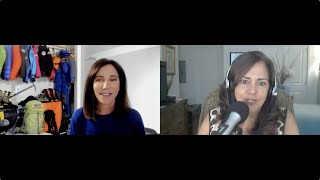
YouTube interview (Finding Brave Ep 137) with Alison Levine discussing her journey from childhood health challenges to becoming a history-making polar explorer and mountaineer. Topics include her medical history and surgeries, how she began climbing (first mountain at 32), major feats (Adventure Grand Slam, 600-mile West Antarctica traverse in Jan 2008), leadership lessons from extreme environments (embracing fear, allowing failure, empowering all team members, 'one foot in front of the other'), a candid team story from a 5-person Antarctic expedition, and her current documentary about Pasang Lamu Sherpa (the first Nepali woman/Sherpa to summit Everest). Also includes concrete facts (summit elevation 29,035 ft; 'death zone' above 26,000 ft; film budget $1.3M, $900K raised).
Questions this video answers
54
17, 30, and 44
January 2008
29,035 ft
Above 26,000 ft
Chapters
Hello, everybody.
Welcome to this episode of Finding Brave. Once again, I'm beyond excited to have our guest, Alison Levine today. You know, there's, there's almost always a story of who's on this show and how it happens. And Alison and I were just talking about when your book came out in 2014, what a journey that's been like everything you've done, everything's a big journey for you. And the ups and the downs and the thrills and the, you know, what is that from the Olympics? The agony of defeat. What did they used to say?
The thrill of victory and the agony of defeat.
So we all have some defeating moments, but you are just going to be blown away by Allison's story and insights. And I'm so. If you're not inspired by this, I don't know what's going to inspire you. So, Alison, thank you for being there with your gear in the back. I want to do this, folks. I want to read Alison's short bio, but then I want to read a paragraph from her long one as an illustration of, you know, we can give two sentences about who we are, but there's so much juice and for everyone, there is so much that's inspiring. So much that's rich. I just think you're a perfect example of this. So here's the short bio of Alison. Alison Levine, Team captain, First American Women's Everett Expedition. A New York Times best selling author. Look at this. On the edge leadership lessons from Mount Everest and other extreme environments.
You're so prepared. I want to see your.
You wear all sorts of things around your face and a helmet and everything. When you climb, don't you have to protect your skin?
Yep.
We'll have to take a look at it, but here's the longer. This is only one paragraph of a long bio and we'll link to your full bio because it's riveting and you are a warrior spirit. I was just Talking about my 96 year old mom who overcame Covid, but to me, you are this. You are a warrior. So Allison is history. History making polar explorer and mountaineer. She served as the team captain. We just said this. The first American women's Everest expedition climbed the highest peak on each continent and skied to both the north and south poles. I didn't know this till I read this. A feat known as the Adventure Grand Islam, which only 20 people in the world have achieved. Allison.
Yep, that's right.
In January 2008, she made history as the first American to complete not even American woman, just the First American. Yeah. To complete a 600 mile traverse across West Antarctica to the South Pole, following the route of legendary explorer Reinhold Messner. It goes on here about the peaks you've climbed, what you've endured, but also you. Your bio shares that you had three heart surgeries. Yeah, I did. From Reynolds disease, which causes the arteries that feed our fingers and toes to collapse in the cold. And you have overcome all of this? Yes.
So the Raynaud's disease is actually separate than the heart problem because I was born with a hole in my heart that got bigger as I got older. And so I had my first surgery when I was 17, another one when I turned 30, and then one when I was 44. So I'm 54 now.
54.
It's been a while.
You look 31. All right, folks, are you as desperate as me to understand? Can you tell us, how did you get into climbing?
How did I get into climbing? Oh, my gosh.
Okay.
So I was born and raised in Phoenix, Arizona. And when I was younger, I was always really intrigued by the stories of the early Arctic. You know, the Arctic and Antarctic explorers, the early mountaineers. And I would read these books, and I would watch these documentary films, but I never, I think, because it was an escape from the oppressive heat in Phoenix, so it was just an escape from all of that. But I never thought that I would actually go to those places because of my health problems. So it wasn't until after my second.
Heart surgery, how old then.
That this light bulb went on in my head, and I thought, okay, if I want to know what it is like to be Reinhold Messner and ski for 600 miles, you know, across Antarctica, then I should go do that instead of just reading about it. If I want to know what it's like to be these explorers going to these remote mountain ranges, then I should go to the mountain ranges instead of just watching documentaries about them. And if these other guys can get out there and do that stuff, then, you know, why can't I do it, too? So I didn't climb my first mountain until I was 32. That was my first one. So that's when I started.
Wait a minute. I have questions. Were you an athlete at all?
No, not really. But, I mean, I trained really hard and everything, but I was not much of an athlete growing up just because of my health problems. So I didn't. I didn't get diagnosed until I was 17, because I grew up in a very tough love family. And so when I would complain about shortness of breath, Or I feel like there's an elephant sitting on my chest. I can't breathe. My chest hurts. My mom would just chalk it up to, you know, nerves. Oh, you're just nervous for your piano recital. And I'd say, mom, I don't, I don't think that's it. And she'd say, well, how can you be sure? I'm like, no, doctor, because I take guitar lessons. Like, she just was like, oh, it's, you know, nerves. I'm sure it's something. And they just, we just learn to ignore things, you know, ignore pain and discomfort and suck it up. And so that's why I never really went to a doctor until when I was 17, I lost consciousness, and the, the friends that I was with at the time had the good sense to rush me to the emergency room. And that's how I got diagnosed with his hole in my arm.
Oh, my goodness. What can I ask? I'm just, you know, former therapist interested in, you know, I always say we are what our childhood taught us to be unless we unlearned it and some of us need to unlearn some things. Was that, was that kind of passed on that stoic, we don't go to doctors, we don't. Was it a military family? Was it now just ancestry?
My mom just believed in, you know, toughing it out, sucking it up, no whining, no crying, no complaining. And so we just learned to sort of be very stoic. And, you know, that has served me well in some circumstances and not well in other circumstances because, you know, part of, you know, being your authentic self is being vulnerable and admitting when you're struggling and people around you, people who care about you, want to help you, they want you to succeed, they want you to be happy, they want you to feel supported. And so if you're always like, yeah, I'm fine, I'm fine, I'm fine, I don't need help, I'm good. I don't feel pain, I don't feel discomfort. Then people aren't going to know that you need help. So. And we all need help, right? We can all use a bit of support every now and then. And I've learned over the years on my expeditions that a few kind words of support can completely change the outcome of a situation and I would argue could completely change somebody's life, right? Just knowing that somebody cares. And so, you know, I just grew up being like, don't worry about me. Like, I'm the low maintenance one. Like, you don't, you know, I Don't need anything. I'm good. I'm good. I'm good.
Can I ask one other question about this?
Yeah.
Did you have other siblings?
I have two brothers, one older, one younger.
Did one of them need a little more help? Mind me asking?
I would say my younger brother, probably definitely. Like, I would say, probably still needs more help at 50. At age 50.
Yeah. I asked that just because. Well, first of all, I couldn't agree more. You know, when we talk about the power gaps there in my book, number three is isolating from influential support. You know, it's. It's not getting the help you need. It's not admitting, you know, not asking for what you deserve. Well, that's another power gap. So you are so right. And, you know, for it to come from you, the warrior who accomplished a lot, that, look, you're. You're only pretending. If you're going through life and you don't think you need help, I mean, it's.
Oh, my gosh. It just means. Sorry.
All right, thank you. So thank you for saying that. But I brought up your siblings because some people really come out of their family seeing that one person in the family was needful of help, and we did not want to be a burden, and we didn't want to add to any other challenge in the family. So we often kind of hid that. We.
Yeah. And I think also, like, my father was bipolar, and my mother suffered from severe depression. And so you just don't, like, as a kid, you don't want to add to that. You don't want to add to the drama or the. Like, you. You know, when you have a parent that's severely depressed, like, my mom would not leave her room until the kids got up. We got up. We got up. We got ourselves dressed, and we left for school, and then she would come out of her room. She just didn't want to be around people. And so you, as a kid, you don't want to, like, call attention to yourself or be.
Any more of a burden or.
A burden. Yeah, you just don't want to be a burden to your parents. And so I think I grew up very much in that mindset.
Wow. Fascinating. All right, so you had this idea, I really want to do this. So can I even dimensionalize this for people that have a big dream, but don't let them have. Don't let themselves even go down the path. Did it really occur as a light bulb? Or if you dimensionalize it, were there some other things that helped create a readiness for it?
Well, it was more like this light bulb went on, and I thought, I want to go do the things that I haven't been able to do until now, you know, because I had these health problems. I never really did anything physical. I had never really traveled very much other than had been on a couple of business trips to Europe, but had never traveled by myself. So I. I used all my frequent flyer miles, and I just went to Tanzania by myself. I went to Africa by myself. And I. I found a guide for. I think I paid a local guide $300 to be my guide on Kilimanjaro. And I just found a guide at the base of mountain, a guide in porters that would take me on the climb. And I just thought, why not? I'm going to try it. I mean, I don't.
And you had. You had prepped for that. You had trained for that at home.
Yes, I trained for it. Well, I trained for it just by doing, like, spin classes, because I knew it wasn't a technical climb. You didn't need any special. You didn't need any of this. Didn't. To climb Kilimanjaro, you don't need. It's basically just a long trek at altitude. It's over 19,000ft, so you definitely feel the altitude, but you don't need an ice axe or crampons or a harness or anything like that. And I didn't own. Coming from Phoenix, I didn't really own any warm clothes, so I borrowed everything. I borrowed a backpack and a fleece jacket and a Gore Tex jacket from friends or friends of friends. And then I bought my own hiking boots because I knew that I needed to be, you know, for my feet to be comfortable. So I bought my hiking boots, but just borrowed everything else I needed and then use my frequent flyer miles. And I just went over by myself. And I was supposed to actually go on this trip with two girlfriends, But a couple of weeks before the trip, they decided they wanted to go to Club Med in Cancun instead. And for me, that wasn't as exciting, because growing up in Phoenix, I was used to warm weather and just kind.
Of a world apart, those two things. Yeah.
I wanted to go do something that I read, you know, something that I read about is something that excited me, something that I felt like I couldn't do before. I wanted to do something that the people, the heroes I was reading about were doing and just thought, well, I can at least go try, right? I can try. The worst that'll happen is I'll turn around before I Make it to the top, but at least I'll get to give it a try so I won't have to wonder. For me, the thought of failure isn't bad at all. But what I don't like is just the thought of always having to wonder about something and not having an answer.
Right.
Just not talk about. I like.
Yeah, I mean you have so much to talk about in terms of how to approach fear, how to approach failure, what bravery is. I mean what you just said just came tripping off your tongue. Look, if failure isn't the issue, I don't, you know, wasn't going to break me if I didn't complete it.
I didn't want to have to wonder.
Yeah. So for you it sounds like the thing that would hurt the most is not doing the thing that would make you most proud of yourself. Is that right?
Yes. Not trying and not knowing to me is so much worse than failure. And I will quote Pitbull. I love this quote by Pitbull. And he said I do not understand the word lose. I only understand the word learn. Right. So from every failure, you know or something where you feel like you lost out or something, you just have to look at the learnings that come from it. Right. I don't know the word learn, I don't know the word lose. I only know the word learn. And if you embrace that philosophy, it makes you a lot less afraid of failure. And so failure is one thing that happens to you at one point in time. That's all it is. Failure is one thing that happens to you at one point in time. It doesn't define you, it never defines you.
Do you, you know, so I, I hear from, as you do, a lot of high level professional women, mid to high level and they are invariably are something I call perfectionistic over functioners. Doing more than is appropriate, healthy and necessary and trying to get an A plus in all of it. And when you tell a perfectionistic over functioner what you just said, they nod, they consciously get it, but it doesn't get in. So do you. Aside from everything we've talked about for years about. Look, people, I mean the way I would say it is you can't get to the life you're really wanting to live without fear, without failure. You can't. It's a myth.
It is a myth.
I mean if it's that close to you and that easy, it's not something you're dreaming about. Right. So what can we say, Alison, that's going to get through to the perfectionistic over Functioner who says, I hear what she's saying, but failure is excruciating to me.
So the way I think about failure is that every time you fail, you're doing a favor to the people who may follow in your footsteps down the road. So an analogy I'll use for that is Mount Everest. Almost everyone has heard of Sir Edmund Hillary and Tenzing Norgay, right? Sir Edmund Hillary and Tenzing Norgay, first guys to ever summit Everest. But guess what? There were dozens of climbers who tried and failed before those two made it to the summit. But those two, Sir Edmund Hillary and Tenzig Norgay, the famous ones, those guys had the benefit of all the four, one one from those earlier climbers.
Did they, did they read it and they said, oh my God, we can't do it.
All the data, all the research, all the information from those earlier climbers and granted those earlier climbers never became household names like Hillary and Norgay. But you know, if it weren't, if they didn't have the guts to try it first, SREDM and Hillary and Tenzin Norgay may never have made it. You just don't know. I mean, my point is when you're going to try really hard things, you have to give yourselves, you know, and your teams the freedom to fail. Because you never know who's going to be following in your footsteps down the road, who will go on to achieve really great things because of your past experience even if you didn't have the outcome that you wanted at the time.
So two things I would love to highlight and hear what you think. One, one thing that occurs to me is a Buddhist philosophy. Don't over attach to an outcome. And I was speaking to yesterday to Lorna Byrne who I've done some work with in Ireland. She sees angels, Alison, she sees and speaks to angels. And we did an Irish retreat there with 20 women and I was talking to her about my book that just came out and that it's exhausting, you know, trying to, I'm trying to get it in the hands of a million people. And you know what she said? She has five best selling books and she's dyslexic and illiterate. She, she dictates the book from what the angels are telling her into the computer. She can't read and she can't write and she's illiterate. But you know what she said? I said how did you do five best selling books? Like how did you even endure that? And she said in the most humble way that she is. She said, all you need is to help one person. In other words, like, as I was saying, I wanted to help a million people. And when her response was just help one person, I realized I'm overly attaching to this outcome. That's in some way making me crazy. Yeah. How about just one person?
And that one person repeats it to one person.
Right. It's not just one person, but it's so often what you attach to that makes you sick. Right. And the other thing I wanted to ask you is this what you said? And I'm guessing other people would have thought it because I thought it. Yes. If you fail, you're helping the person next up succeed. But some of the people I work with, they wouldn't be happy about that. They want the kudos.
Right.
How do you understand what I'm getting at here? Like, our ego makes us so unhappy, I think so often. Yeah. It sounds to me like, yes, you wanted to make sure you hit the summit, but if you could help some other person behind you do it, you would feel pretty darn good. Can you talk about that?
Yeah. When you put so much, you know, know, blood, sweat, and tears into something, you. You want it so much for yourself. I mean, look, when I was the team captain for the first American women's Everest expedition, we didn't make it to the summit. That was my first attempt, and I didn't make it. I didn't make it until I went back eight years later. But we came to within 275ft of the summit, and we had to turn back in bad weather. That is crushing. You're on that mountain for two months. Two months.
Two months.
You miss it by what feels like that much. Right.
You really couldn't. You couldn't do.
229,035Ft is the elevation of the summit. We turned around less than 300ft from the summit because of bad weather. The problem is that you, when you're up at that elevation, they call it the death zone. Above 26,000ft, that's when human life can no longer be sustained. Your body is literally starting to die. At that elevation. You have to take five breaths for one step, so you're moving really slowly. So it could take you hours to go a few hundred feet. And we didn't feel like we had that much time left of a decent weather window. And when we came back, you know, if we just thought of it as, oh, we didn't make it, we didn't get to the top, you know, that's pretty crushing. But what we had to do is think about it. As you know, this was an altitude record for every single member of our team. We sent a great message about what a team of women can do, you know, when they lock arms and work together. We were the first team of American women to climb the mountain together. Like, we felt like there was a lot of good that came from that. But I will be honest and say, like, so many people focused on the fact that we didn't make it, you know, and we got back down, and I remember going to work, and this one guy that I work with, you know, I walked in and he's like, oh, I feel so bad for you. All that effort and you guys didn't make it. I mean, that's probably going to haunt you forever. And I'm thinking, no, only when people like you say stuff like that. That's what. But you have to keep it in perspective and just think of it, you know, you have to realize, first of all, the summit can never, ever be the goal. The summit is because the summit's only the halfway point on a mountain. Once you get to the summit, you have to be able to get yourself back down. So the goal always has to be, you know, come back alive, Come back with all your fingers and toes. Come back as friends with the people that you're with. Come back having learned a lot of great lessons along the way. So I think that really knowing what the goal is and having. Making sure your team has a strong understanding of that, because if you go to that mountain thinking your goal is the summit, like, that's actually quite dangerous, because coming back alive is so much more important.
You're right, Allison. This is so important. It's how you frame your goals.
It is hard. I mean, let's be honest, it is hard when you put so, so much into something and you don't make it, but you're paving the way for someone else. And then somebody else goes and, you know, gets all the accolades when they do it based on maybe groundwork that you laid. Like, look at, you know, going back again to Sir Edmund Hillary, intense Norgay, and all the earlier climbers that. That tried and, you know, kind of laid the groundwork for the rest of the people that came after them. And so, you know, you know, what.
I'm taking away here. And, you know, we can distill down life in some short, you know, bullet points and sound bites, but your mindset, how you frame what's important to you and what is a goal and how you are going to face it. When you don't reach that goal, it's going to make or break your life. How you frame what you're going for. Like, if I even take it to a leadership place, I've had some new clients or people who want to be clients, and they'll. I'll say, what are you coming to coaching for? And they'll say something like, I'm a director and I need to be a vice president, or I need to make 80,000 more. And I'll say, I don't take on clients for that goal. And they're so confused. Aren't you a leadership coach for women or whatever, Career coach? Yes, I am. But why do you want that title? What does it mean to you? And invariably when someone's obsessed about that, it's because they don't feel recognized and valuable. And I can guarantee that title ain't gonna do it for you.
Right?
So what we have to do is find the way for you to be valuable and feel valuable and feel recognized first. Then we'll figure out what the goal is. Does that resonate with you?
That's so important. And especially on, you know, on these teams that I've been on, on various expeditions. When you're in a remote, extreme environment, everybody, you know, it's very easy for your head to go to a dark, dark place. And you have to make sure that you remind people how important they are and how valued they are as team members. And don't make the mistake of thinking that just because somebody got a raise or got a promotion or got recognized at a meeting or something, you know, set a sales record, that they know how important they are to as a person.
Right.
People need to know they're important as a human being, not just as like the top sales person or the marketing director or the, you know, head of quality assurance or whatever. They. People need to know that you care about them as a person, not just about them as a person who's delivered an outcome.
Right.
Bottom line.
Right. Oh, what other leadership lessons do we need to know and everyone we're going to link to your book, but what else do we know? Do we need to know as leaders and managers of people?
So there's a few things. First of all, everybody has to empower themselves to think and act like a leader. Every single person on the team needs to be empowered to think and act like a leader. Especially today when everyone's working remotely. You don't have somebody that you can just lean over into their cube or knock on the door of their office and ask for advice. People have to be a lot more independent in their decision making processes and what they do every day. So everybody's got to be empowered to think and act like a leader, regardless of title or tenure. Right? Leadership is not about how many people report to you or how big of a budget you oversee. Leadership's about realizing that every single member of a team has a responsibility to help the team move toward a goal. And everybody also has a responsibility to be looking out for one another. You can't leave that, especially in today's environment, you cannot leave that to one person or a couple of people with certain titles. The other thing to remember is that fear is just a normal human emotion, okay? I don't want people to ever beat themselves up for feeling scared. People will ask me, you know, how are you not scared in these environments? I'm scared out of my mind in these environments. But what I realized is that fear as a normal human emotion can actually work in your favor. It can keep you alert, aware of everything going on around you. Fear is only dangerous when it paralyzes you. Complacency, on the other hand, will do you in every single time. Complacency is what is dangerous. Fear is not dangerous. Complacency is. And the other thing that is so critical to remember is that you can be scared and brave at the same time.
Finding brave tweetable. Say it again. You can be. In fact, you will be scared, scared.
And brave at the same time. Just keep going, you know, and the other thing I want to remind people is that you don't have to be, you know, the best, fastest, strongest climber to get to the top of mountain. Because we're all climbing big mountains right now, right? Figurative mountains. We are climbing big mountains in our lives. You don't have to be the best, the fastest and the strongest. You just have to be absolutely relentless about putting one foot in front of the other. That's how you get to the top of a mountain. One foot in front of the other. You don't have to be, I'm never the fastest or the strongest. I'm 5 foot 4, I'm small, I'm slow, it's okay. Like, you find your own pace. You don't have to keep pace with people that are faster and taller who had three times the leg span and the lung capacity on the mountain. You find your own pace. You put one foot in front of the other and you remember that when you feel like you can't go on, you can take one More step, right? Because we can always take one more step. So when I feel like I can't do this, I think I'm going to have to turn around. But I can take one more step. Then you take your one more step. And then after you've taken one more step, then you figure out, okay, well, hang on, I can take one more. All right, well, hang on. Now that I'm here, I can take one more after that. And you realize that getting to the top of a mountain, even though it feels like Mount Everest is 29,035ft, that feels completely mind blowing and overwhelming and oh my God, there's no way. But when you realize it's just about taking one step over and over and over, you can always do that. So break the big intimidating tasks down into much smaller parts. And I think they're so much easier to tackle that way.
I so love these points and they dovetail so well about, you know, even what's in the book here that a lot of people for, let's talk about careers or for their life, they think that they have to make a gargantuanly large change if they're unhappy in their careers and they think they have to throw the whole thing out. I'm in hr. I actually want to be, blah, blah, blah, chuck it. But it's not that you won't get there that way. It's through the micro step, the one step at a time. Because then you are going to be more of an energetic match to this big thing you want. You can't leap to it. You've got to make that change now. If you want to write, start writing. So many people say, ah, you wrote two books. I want to write.
Oh, good.
What are you writing? I'm not writing. Well, how can you write a book if you haven't written one word? So I couldn't agree with you more. I just love it. I have to. I want to learn something from you. And then I want to talk about your. You're working on a documentary. I can't wait to hear. But can I ask this sensitive question? Obviously, on your teams, I'm guessing there have been weaker links. Someone who didn't have the mindset, someone who collapsed under the disappointment. Someone who, someone who physically, you know, was keeping the team back. Can I ask you. I know that you're a shining leader because you're a leadership expert. Can I hear kind of your best moment in those times? And can I hear just so we all think you're human and not perfect, where you you know, you weren't who you needed to be. Can we.
Yes. So I'm glad you asked about that. This is actually wrote about this in my book. It's chapter six of my book and it seems to be everybody's favorite chapter. But prior. So it's about my Antarctic expedition where we skied 600 miles across Antarctica from the edge of the continent to the South Pole. Prior to that expedition, I had this mindset of you got to be fast, you got to be strong, you got to give it your all, you got to prepare, you got to train, you got to show up and, and be the mvp. Right? Like that was always my goal. I want to be the MVP on every team I'm on. You know, I might not be the strongest or the fastest, but I, you know, I'm a strong contributor. So I'm going to train, I'm going to prepare, I'm going to show up, I'm going to be that person. Because who wants weak people on their team, right? Weak people that drag the team down, they hinder our progress. Like we just wish they would like quit the job or transfer to another department or have something heavy fall on them, right? We just like, we don't want those Team Antarctic expedition. I was that person. No, I trained as hard as I could, yet I was the slowest, weakest person on our team.
How many people are on a team?
5 people on our team. And I was hindering our progress because even though I trained as hard as I possibly could, I have limitations physically, let's face it. Yes. So I'm 5 foot 4, you know, 110 pounds. The law of physics basically dictates that my teammates who are 6 foot 4, 220, 230 pounds are going to be able to drag 150 pound sled because we each had to drag 150 pound sled with our gear and supplies harnessed to our waist. And I couldn't drag the sled as quickly or as efficiently as my teammates.
And you were the captain, Were you the captain of the.
No. We had this amazing team leader named Eric Phillips, who's this Australian polar explorer. He's incredible. But so I was hindering my team's progress and let me tell you.
Oh, what a feeling.
No way to hide that. But you're the slowest, weakest person because everyone's out in front of you. And I felt horrible. And I just automatically assumed that no one wanted me on the team because I kept thinking about how I used to feel about weak people. I don't want this person on my team. Why am I saddled with this person? And I then was that person. And so I just assumed no one wanted me on the team. So I was struggling physically, and then I was struggling psychologically, emotionally, because I was so convinced that no one wanted me there and that they were upset that they had agreed to let me join this team of polar explorers. Well, about five nights into the trip, I overheard this conversation between our team leader, Eric, and my team teammate, George, this big Canadian guy, six three, 220 pounds. And I overhear them saying, you know, poor Allison, she's really struggling with the weight of her sled. And George said, I know, she's so much smaller than everybody else. And Eric said, you know, I really think we should help her out. And George said, let's do it. I'm in. Let's take some weight out of her sled. And the next morning they got out of the tent and in a really sneaky way, they instead of getting out of the tent and saying, hey, like, you're slowing us down, we're going to take weight out of your sled so you can keep up. They did it in a sneaky way. Eric said, before we start skiing today, I just want to weigh everybody's sleds. I need to make sure they're all about even. So George, like, let's pick up the end of each of these sleds. Like, let's weigh them and make sure they're all about the same. And so they're picking up everybody's sleds and they're like, oh, yeah, this one feels okay. Then they each picked up the ed, you know, an end of my sled, like this big 150 pound sled. And they picked it up and they simultaneously, like, they drop it to the ground. They start clutching their backs. Oh, my God. This is the heaviest sled of anyone on the team. This is crazy. You're dragging more weight than you should be dragging. Like, we need to make this more even. And they start taking weight out of my sled and putting it in their own sled. And now they are own sleds, heavier so that they could make my sled lighter.
Why am I crying? Because look at that leadership. Understanding that they didn't make you feel bad. And by hearing that they weren't like this poor sht fool, you know, they, you could feel the respect they had for you.
They could have said, hey, look, you're slowing us down, so we're going to take weight out of your Sled. And we'll make our sleds heavier so you can lighten your load and keep up. Like, they did it. They did it in this sneaky way. And I knew what they were doing because I overheard them and it meant so much.
What a leader.
They were willing to sacrifice for me. They were willing to make their jobs harder so that I could keep up with them. That sent me this message that they wanted me to be a part of the team, that they wanted me to succeed. And that made me. That motivated me so much to try to find another way to contribute. So what I noticed was these tall guys, they could not shovel snow very well. So at the end of the day, you pitch your tent, and you have to build a snow barricade around your tent to protect it from the elements. And these tall guys bending over, wrenching their backs to use the short little snow shovel to, like, they were really hurting their backs shoveling snow. Well, I'm shorter to the ground, so I can shovel snow more easily. So that next night, after they took the weight out of my sled every night, like, I was like, hey, you guys, like, let me make this snow barricade for your tent. Like, I'll shovel the snow. And they were like, wait, what? Like, why do you want to shovel the snow? And I'm like, oh, that's my gift. That's my gift. I grew up in Phoenix. Yeah. I never got to shovel snow growing up in Arizona, so I love to shovel snow. So I grabbed the snow shovel, and I would shovel the snow and make the barricade as often as I could. So I found a way to play to my strength. You know, I thought being short was a weakness, and in hauling the sled, it was. But in shoveling snow, it was a strength. So it was a great lesson for me in that if we are so focused on comparing ourselves to other people in areas where they are strong, we may never uncover what makes us truly strong and what makes us, you know, valuable. And your weakness does not determine your value. Your weakness does not determine your value. It doesn't. And, you know, we all have weaknesses, and some of them are weaknesses that we will never overcome. But we can always compensate, right? Find a way to compensate. So that's how you do.
Oh, my gosh. I love it. And, you know, another key thing is you didn't. You know, you grew up with, let's not be a burden, right? And so that's where you're gonna go when these things happen. But you overcame it. You didn't Stay in the victim burden mode. You know, I've got to have you on again. And you can.
I would love to. I would love to.
How you did this, like, how. How your mindset was shifted. It's so beautiful. But I'm respectful of your time. Tell us about the documentary now that you're working, so.
Oh, thank you for asking about that. I'm working on this documentary about this woman who I think defines bravery in every sense of that term. I mean, so it's a documentary called. The working title is the Glass Ceiling. So there's. We have a website, it's theglass ceilingmovie.com, but it's a documentary about the first female Sherpa to ever summit Mount Everest. And she was this amazing woman because. So her name was Pasang Lamu Sherpa. And she was amazing because.
And what's a Sherpa?
Sherpa is. Thank you for asking, because a lot of people assume Sherpa means are carrying things up a mountain. Sherpa is actually an ethnicity. It's the Sherpa people live in Nepal. It's an ethnic and racial. It's a racial. Ethnic religious minority in Nepal. They're Buddhists in a Hindu culture. And so they are a minority group in Nepal. And most of the. The people that work in the mountains and the Himalayas are of Sherpa descent. So this woman, Pasang Lamu Sherpa, saw her brothers and her uncle and her father climbing Mount Everest. And she wanted to climb Mount Everest as well. But the government of Nepal would not allow female Sherpas to climb. They would only let the men climb. And this woman couldn't read, couldn't write, couldn't even speak the national language because the Sherpas speak a different dialect. And she never had an opportunity to go to school to learn the national language in Nepal, but she found the courage to fight the government of Nepal for equal rights for all women over there. So she broke through that barrier. She was finally granted access to climb Everest. So how crazy is it, first of all, that women from all these foreign countries could come climb Everest, but women from Nepal were not permitted to because they were discriminated against, and especially Sherpas, who were kind of the lowest of the low on the caste system. So she became a hero to the people of Nepal for, you know, breaking these barriers. She tried three times, unsuccessfully, to summit the mountain. She finally achieved success at reaching the summit on her fourth attempt. And she became the first woman from Nepal to summit Mount Everest. And, you know, became this household name. Everybody was celebrating her success, but she died on the way down. She never got to tell her story.
What did she die of?
It's a little bit of a mystery. She was with another Sherpa. They were both struggling. We have been told by some people on the mountain that she stopped to help this other Sherpa that was struggling. They both ran out of oxygen. A storm came in, and people were not able to reach them to try to rescue them and bring them additional oxygen, and they both perished on the mountain. And she became a hero to the people of Nepal. There's, you know, a mountain named after her. A school, roads, a library. She's. Every kid learns about her in school. She's super famous there. She's on the Nepali postage stamp. But no one outside of the country knows her story. And we just think it's a really important story for everyone to learn about because it really does prove that regardless of race, gender, you know, socioeconomic background, anyone can change a country if they just have courage. That's all it takes is courage. And this one had it. So we're making a documentary about her. We have three Oscar nominees on our film team, and we're hoping it'll be a movie that people will enjoy and learn a lot about courage from.
Do we have a link that we can look at something of it?
Yeah. So there is a trailer online. It's theglassseilingmovie.com you can check out the trailer and read more about Pasang and her life. And one of my favorite quotes from the movie, the film. We interviewed a lot of young female Sherpas about what she meant to them. And there's this one female Sherpa that she looks right in the camera and she says, because of the song Lama Sherpa. Now, when someone tells me I can't do something, I just look him in the face and say, watch me. Oh, wow. Yeah. Oh, my gosh.
And when is it out? When do you think it's coming out? You're talking.
Well, it's a huge film, so it's a $1.3 million film budget, and we've raised $900,000. So we have to still raise the last 400 for post production and to finish it, but I'm confident.
Let me help with that. Send me info, and I'll spread the word. I'll spread the word. Oh, Alison, I could talk to you for hours. Thank you for joining.
Please, can we do this again sometime, Please? Yes.
Two seconds later, I'm writing you. I could talk to you for hours.
What a story. You're so. Thank you for what you do. First of all, I'm super excited about your book.
Thank you.
Thank you for what you do. Just empowering women and helping them find courage in their everyday life and in their careers and for going after what they want. Thank you for doing that. You impact. Impacts someone else. So it's that, you know, that chain, that ripple.
Thank you. Same back. Right back at you. Thank you for being here. And we will. Tell us the best site for. For the best URL for people to learn everything about you. Is it Allison Levine?
You can just go to my website, alisonlevine.com and if you have questions for me, please don't hesitate to ask questions. There's a contact form. If you fill up that contact form and send me an email, your email is going to come straight to me. Straight to me, not to my assistant.
Thank you. Thank you. All right, folks, Allison means it. When you get a chance to speak to someone like this, do it. Write your questions, write your challenges. Allison's the one to. To help you reach the summit, really, of your life.
Thank you, everybody. Have a great week.
Thanks, Alison. See you soon. Bye.
Thanks for having me. See you.
More from Kathy


Elevate Yourself, Elevate Others, and Amplify Good | Chris Cooper | Finding Brave Ep. 334

Finding Brave Epis #333: How Leaders Can Harness AI Without Losing Their Humanity, w/Bennett Borden

Finding Brave Epis 332- How to Stay Brave, Valuable and Visible in the Age of AI, with Raman Rai

Finding Brave Epis 331 - The Power of Positive Disruption, with Dr. Patrick Leddin


Finding Brave Epis 330 - Being 40: Letting Go and Embracing Who You Are, with Stacey Lindsay

Disrupt Career Reinvention with Kathy Caprino - via The Disruption Lab Podcast w/Patrick Leddin

Creating Neurodiversity-Friendly Work Cultures: Simple Workplace Adjustments Matter

Finding Brave Epis 329 - How To Create a Neurodiversity-Friendly Workplace, with Kristen Pressner

Finding Brave Epis. 328: Reclaiming the Power to Trust Your Own Voice, with Dr. Cindy McGovern