Finding Brave Ep. 323: How to Negotiate Success in Your Career and Relationships, with Scott Tillema
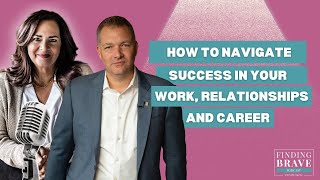
FBI negotiator Scott Tillema explains how crisis negotiation principles work in careers and relationships. Connection requires empathy and a blank-slate mindset. Leaders often fail by moving too fast, skipping feedback, and letting bias cloud judgment.
Chapters
Hello everyone. This is Kathy Caprino and welcome to my podcast, Finding Brave. I've created the show for everyone who longs to create something bold and brave in their life, to rise up, speak up, and stand up for who they are and to reach their highest and biggest visions. Each week I'll be speaking with inspiring guests from all walks of business, leadership, entertainment, the creative arts, and the entrepreneurial world. And they'll be sharing their intimate stories of finding brave and offer their best strategies for building your most rewarding, joyful, and meaningful life, business, and career. Hello everybody, welcome to another episode of Finding Brave. Ooh, there I am, a little horse. It's been a busy time, a wonderful busy time, and I hope you are having a fantastic Finding Brave week. And I am so excited to— truly, I really am— to have our amazing guest Scott Tillema with us today. Scott, I know you're in the middle of so much going on. Thank you for taking the time to join us here on Finding Brave. So great.
Hi, Kathy. Hello to your audience. Super excited to join you for some Finding Brave.
Finding Brave. And you are the man to talk about that. Oh, can't wait. And folks, we are talking about— let me put my glasses on— A Hostage Negotiator's Guide to Connection and Influence. Can you not wait? I'm so excited. Let me tell you about Scott and Before I even do that, you know, I love to talk about how I meet my guests, and some of them are longtime colleagues and friends. Scott is a new friend, and interestingly, the amazing Allison Fragale introduced us. She, you know, referred me to you because of your amazing speaking work and influence work, and her podcast is out today, which is not the day you all are seeing it, but, um, I'm really thrilled about what Allison shared, and we had a ball talking about, because we see things slightly differently. But that's what, that's what makes a horse race, you know, how we all have a different lens and you have an amazing lens. So let's share so you all know people what Scott's about. Scott is an award-winning keynote speaker helping leaders have difficult conversations so that they can increase their influence and achieve better outcomes. With over 20 years of law enforcement experience, he's a trained hostage negotiator by the FBI and by the world's top hostage negotiators. I cannot wait to dig into this. I can't imagine what your experience has been like. He's been trained in business negotiation through the Harvard University Program on Negotiation and specializes in high-stakes communications and negotiation, focusing on how leading, Through influence and trust is where we find success. A professional speaker and corporate trainer, Scott's mission is to inspire people to become the powerful and uplifting leaders we need today. All right, there's more. Check out the show notes and you can read everything about Scott there. But let us dig in, Scott. First of all, you know, I love to talk about people's backgrounds from childhood on, like how they got into the work they got into, what they're passionate about. So how did you get into hostage negotiation?
I'm so Yeah, it's an interesting field, and surprisingly, they don't just let people be hostage negotiators.
You don't just knock on the door and interview, right?
Right, right. You have to have some background, some education. Uh, so very briefly, my education, my formal education, I've, uh, got an undergrad in behavioral science with a master's degree in psychology, and it's probably the, the good fields to have if you are going to be working to influence somebody and negotiate with them in these high-stakes situations. So having good education was a really good start. Uh, I had been in law enforcement for about 5 years before I was selected to be a hostage negotiator on this regional SWAT team, which served 70 different cities around Chicago, 1.8 million people over 5 counties. So we were big, we were busy. It was a fabulous experience to have done this type of work. But I think at your core, when we're looking at who would make a good hostage negotiator, You have to have some of these intangibles. You have to be a good communicator. You have to be warm. You have to be able to connect with somebody and you have to be able to tolerate a little bit of crisis because we're meeting people on their very worst days in their worst moments. No one's ever called for the SWAT team because they're having a barbecue and things are good. We're dealing with crisis and difficult times, and what I've learned As I speak and work with leaders in the corporate space now is crisis isn't reserved for the SWAT team. We're all experiencing this in our teams, in our organizations, in our families. So these techniques and structures that I've learned in these life or death conversations are so needed and so interesting to people outside of the law enforcement lane. Oh, wow.
How fascinating. Okay. I've got to dig in a little deeper if I could. So you studied behavioral science and psychology. You know, I was interested in that but didn't. I studied English and then later became a marriage and family therapist, got a master's in MFT, which is about systems and power and communication and hierarchy and homeostasis. And oh, it's so fascinating. And I know now why I was drawn to therapy and psychology. But can I ask you— not— you don't have to bare your soul here, but to study that in college. It's early on to be— to know that you're interested in behavioral science and psychology. Were there reasons from childhood that made you interested in that? Can I ask?
Yeah, of course. This is Finding Brave. You've got, you've got the whole buffet here today.
Okay.
So I think I'm very lucky in that my childhood, I would describe it as very normal and unremarkable, which I think is what so many kids just wish for and dream for. But I lived in suburban Milwaukee, about a quarter mile from the city proper, and everybody was kind of the same and everything was the same. And, you know, it was just kind of normal and boring. And then I went off to the University of Wisconsin, and now I'm surrounded by 46,000 students, a very liberal university, people from all over the country, all around the world. And I was just fascinated with people because now I'm seeing people who are very, very different from me, come from very different backgrounds, have very different beliefs. So I think that I was really kind of motivated by, by this curiosity of all these different people. They're not all like me. They're very different. So what about them makes them tick? Why do they have these beliefs? Why do they do the things that they do? And I think that early curiosity really kind of pushed me into this behavioral science. Why are people doing the things they do? Why do they think why they think? But more importantly, how can we move them in a direction that we want them to go, which is critical when you're a professional negotiator.
And you didn't, you didn't know that when you entered school. You, you probably were undecided as a major, and then you, then this kind of emerged for you as an interest.
So it was a, it was a bit of a journey. I ended up with 3 majors, so I graduated with a triple major and a certificate. I was having a very good time. I wasn't kind of figuring out where I wanted to go, so I took on political science, I took on behavioral science, uh, I took out, I don't even know what my, my third major was, sociology, and then a criminal justice certificate on top of that. I was having a good time, and anyone who has been to or attended the University of Wisconsin will let you know that there is no hurry to get out of there when you are an undergrad.
Wow, that's a fascinating journey. All right, now, you know, I realize as I say the words hostage— hostage negotiation, does it always mean that you are negotiating with the person holding hostages? That's what that means, right? There's no other nuance to that, or are there other situations that you as a hostage negotiator would be called in for?
Yeah, that's exactly what that means. You are negotiating with a person who is holding someone hostage, not letting them go, making threats to their life or their well-being. But I think it's very insightful to ask this question because most of our negotiations are not hostage negotiations. In fact, many states and organizations refer to these people doing this work as crisis negotiators because in our experience, a majority, a large majority of our discussions are with a single individual who's in crisis.
And that's what I had in my mind, like someone ready to kill themselves or someone ready to do something. But the people— that it's not hostages per se, is that right?
Right, right. Yeah, hostages, you have a whole bunch of people in there. You have a person and some others, but usually it's just one-on-one. They're, they're considering suicide. Maybe they've got a warrant and they're armed and barricaded inside a home, a business, wherever that might be. And we're talking with a person who's experiencing this crisis. They're having a really, really bad day. And instead of way back when, where law enforcement would just use force and create a, a confrontation, in the '70s, New York City decided, well, what if we paired a psychologist with a police officer and we figured out a way to talk to somebody? And they stole these concepts from counseling and therapists and said, we are gonna take what you know and how we change behavior over 2 years. And try to do it in 2 hours.
I think I would be really good at this job. But you know what strikes me, Scott? And we're gonna talk about your, your speaking and your work, I promise. But I'm so fascinated. Well, all of this informs your work, but you've said this a number of times right on in these first 5 minutes. It's a person having a really bad day. That is so empathic. I think the vast majority of people in the world would not characterize those kinds of crisis as they're just really struggling. They're really having a terrible day. I just find that a loving way to frame it. Does that make sense what I'm saying?
For sure. And if we wanna be successful in influencing someone else, which is what we're trying to do, reach a safe, peaceful surrender, influence begins with connection. Yeah. And connection begins with a dialogue. And the block to dialogue and the block to connection is judgment. And it's easy to say this person is a bad guy, this person is a criminal, this person is a jerk, they should go to prison forever.
Or they're insane, you know, they cracked up, you know, those kinds of words.
Of course, it's easy to do when you're far away from that. But as you get closer to this, you realize that's not helpful to me right now. And the question always has to be, what is my goal here? What am I trying to accomplish? That's what negotiation is is all about. What am I trying to accomplish? What agreement are we trying to reach? And I can't do that if I'm going to be judgmental, if I'm going to be prejudiced and come in with these beliefs of what I think I know about this person or their situation or their background. You have to come in with this real blank slate and try to connect with them and understand how did we get here today.
God's got— you know, sometimes when my guests speak, I'm floored at the synergies. Quickly, Um, when I was in my internship as a therapist, there was a mandated guy from the court, mandated him to come. He was beating his daughter, and I was new to doing this work, and I, you know, I, I don't truck with that. So I, I had a hard time session one, and I went to my supervisor. I said, what do I do with this? And this is how I remember what she said. She said, if you cannot find a way to connect with this individual, but find something to love in this person, you will never be able to be of help. And I'm like, what? Love? Huh? What do you mean? And she said, because you're coming from a place of judgment. Judgment can never help. And I was like, what is she talking about? How am I going to do this? But that I mustered it, Scott, and I somehow tried to understand how we got here. Why was he hitting her? And, and quickly, I've told the story before, but he said I said, you know, what's behind you doing that? Not why, because why often puts people on the defensive. And he said, because she doesn't respect me. And it occurred to me that maybe he was beaten by his father. And I said, did your father hit you? And he said yes. And I said, and did you respect him? He said yes. So you could see that in a nutshell, in a 3-minute conversation. Now, I don't think that was really respect, what he had for for his father. He was scared to death of him. But once I could see the person and how he was formed and the sadness that he had that she didn't respect him, I was able to say, I think that you're going to find that hitting her is never going to get her respect. And he could hear that. So I think it's very similar, but I— maybe to what you've done in, um, these kind of crisis situations.
Yeah, very much so. Very much so. Very much so. Because if they feel like I'm judging them, if they feel like I don't understand them, we're not going to have the connection. And it's, it's just so mind-blowing that it changes your mindset. It changes how you approach everything. When we really ingrain the idea, if you want influence, influence begins with connection. Because we can force people to do what we want. I'm up here in the organizational chart. We can make them do this, but people need to choose to follow you. They need to choose to do this thing, that's when we're really gonna see the big change. And we are not gonna have any influence without the connection that somebody feels. Here's someone who cares about me, and here's someone who wants what's good for me. And this isn't manipulation because ultimately I think this is in their best interest if we can resolve this peacefully without violence, without them hurting themselves or anybody else. And sometimes you're in such a dark place, you can't see the path in front of you. You can't see how do I get out of this because you're just struggling to get by.
Wow. All right. So I wanna draw a parallel between and how you got into being a global speaker on this, but it, it must be very difficult for the person, especially if you're actually dealing with a person who's holding people hostages, cuz they're doing that for a purpose that they think is gonna serve them. Right. But And if you're in a crisis with someone, and let's everyone think about it, even in your own life and in your own leadership and your own teams, but how do you in the most effective way possible, I don't wanna say make the person, but lead the person to believe that you do have their best interest at heart? How do you bridge that? Because I mean, I can see, I can feel your energy. A person who's in a crisis is probably gonna feel that you're, you could be on their side. But when we're talking about leadership, which you often do in your talks, so many of us know this leader doesn't have my best interest at heart. I don't really think they do. I think they often have the company, the bottom line's best interest, the success, the growth. We're bringing in AI whether you like it or not. So what am I saying here? How do you help someone understand, I really do have your best interests at heart? So maybe you can talk about it first in hostage negotiation, but then now to the work that you do. And you're dealing with leaders and managers mostly in your talks. Is that right?
Yeah, of course. Leadership from organizations and companies truly around the world. I've had the opportunity to work with YPO on 3 different continents. I work with a major corporation in Australia. New Zealand, Italy, all over the place. So I get a good idea of how leadership works and what the challenges and struggles are. And I find— to answer your question first, how do we do this in negotiation, in crisis negotiations? I see 4 big principles at play. It's understanding, timing, delivery, and respect. And if we can work on these 4 things— understanding, timing, delivery, respect— and we could spend hours and hours going into each one. This is the framework that allows us to create that connection. If I work first to understand what the situation is, I can listen to them, but I've also got a team behind me doing some research, having interviews, checking social media to try to get as much information as we can because your power in negotiation is information and options. Yes, there's something to having tactics at the table, but your power is information and options. So I wanna work first to understand during the negotiation, before the negotiation, and throughout. This is a, a big goal of mine. Next is the, the timing piece is your strategy. So often we think about what we're going to say, and if we're really elite, we think about how we're going to say it, but rarely does anybody give consideration to the right time to deliver the message.
Mm-hmm.
And sometimes the person across the table from us, if they're in crisis, they can't even process what we're saying because they're in such a, a state of commotion. And are we triggered? Was there something done or said that maybe got me off base a little bit that I'm not in the right position to most powerfully deliver my message? So we have understanding timing delivery. Not what you say, it's how you say it. The elements of rate, rhythm, pressure, volume, tone are all in play here because we can say the same thing very, very differently and have it be received in a completely different way. And in the movies, you got Denzel Washington on the phone strutting up and down Fifth Avenue. He looks like a million bucks. I love that. Keep doing that, Hollywood. Awesome. But in the real world, I'm sitting face to face with you. If I'm the primary negotiator, you're sitting right across from me and you're my coach. And in real time, you're listening in too, and you're coaching me. All right, let's take it easy. Let's turn down the volume here. Let's slow down a little bit because these conversations are so critical. It's truly life or death that you've got a team supporting you. So we have understanding, timing, delivery, and respect. And respect is more than just being respectful. Yes, please, no, thank you. Yes, sir, no, ma'am. It's understanding the drivers of human behavior. And this is some of the psychology and behavioral science coming into play. And if somebody doesn't feel respected, not think, but feel respect, we're never going to have that connection. And it's more than just respect. But if we can work on these 4 things, understanding, timing, delivery, respect, I just see that as a circle. We're going around and around, and that circle represents against the bond that we are trying to create. And once we have that bond, once we have that connection, they're going to feel us, they're going to experience us in an entirely different way. And the only thing that's getting in the way of doing that is our patience or our impatience and demand to get this done right away because it's uncomfortable. There's yucky emotions here. We have to sit with somebody in their deepest, darkest moments and be able to work around that circle.
There is so much to dig in here about this. Um, I just wanna say that as a coach, all of these things are exactly what we need to be attending to. And when I think of, I'm usually pretty good at these things, but you brought up some good points that I wanna tease out. We're not a tabula rasa. We're a, you know, a blank slate. We're bringing stuff to every conversation. So we might have had a bad day, we might have had bad traffic and someone flipped us the finger, or we're worked up. So we also have to regulate ourselves fully. And I notice, I've noticed that if I've made an error in coaching, it's certainly one of these things. Either not, I'm not understanding the full context, so they're presenting to me a situation and I'm assuming maybe they're, they're at a higher level of emotional regulation than I think. I didn't understand that they were on the tipping point, right? Or the timing of it in the conversation. What I said might have been perfect 40 minutes later, but when I said it, even though I thought it was self-evident, they weren't ready for it. And I remember my dad who died at 93, 13 years ago, said there's 7 ways to say things. He made up numbers. He was a scientist, but 7 ways to say the same thing. But there are so many ways to say the same thing. But the nuance of the language, the timing, the tone, just what you're saying, is going to dramatically influence how the person receives it, right? Is this—
am I grabbing it? For sure. And, and I challenge anybody listening or watching right now, the next time you have something bad happen in a relationship where personally, professionally, I want you to go back and check which one of these 4 things failed. Was it understanding? Did I not work to understand? Was my timing off? Was my delivery wrong? Did I lack respect, or did they sense that I didn't respect them? And I will guarantee that you can pinpoint it's one of these 4 things that failed because we don't use one of these 4 things. We have to use all of these 4 things together. And when things go wrong, I just want people to diagnose it. What did you miss here? And you're going to say, yep, my, my timing was wrong, that I shouldn't have come in at this time or shouldn't have bothered them at this time, or my delivery was off, something about my rate, my tone, the, the volume. And, and you can diagnose it really easy. And why this is so important is because we all have the ability to be powerful verbal influencers. And I know that because this is not a natural thing for me. I didn't come out as a powerful communicator. I was actually very shy. I got picked on a little bit when I was a kid because I was bad at baseball. So I wasn't the guy up on stage. I was a little bit more quiet and reserved. So I know if I can learn this, anybody out there can learn these techniques. We all have the power to be incredible verbal influencers.
Do you find that, however, I have a challenge. I don't think you can be if you don't have empathy and you don't want to. Cultivate empathy. I think we have to understand how to stand in people's shoes. And I'll, you know, as an aside, I've worked with personality disordered people, let's say narcissism, and also the impact of narcissism on other people. And one trait that I see— this is not to demonize— but if you, if you truly lack the ability to understand someone's worldview or point and have respect for it, even though you don't agree, you're going to have a very hard time being a great communicator. Would you agree with that, Scott?
A great positive communicator. Because take the narcissists that we all know in our life. Are they powerful communicators? Yes, they are. They powerfully impact me in a very negative way. We just think about the positive. We think about where we're short in our communication and our connection. You're still a powerful communicator, but we sometimes don't realize or have the accountability accountability of the negative impact we're having on relationships, teams, and organizations. So I would challenge that they are powerful communicators, but not in the way that we need them to be.
Oh, so such a good point. All right, more questions. Um, when you had the team behind you, and I'm, I'm, there's a reason I'm asking this question, would anyone say, slow down, Scott, don't do that, Scott, don't go there, we just found something? Well, aside from what they're finding looking online, Did you ever get in the moment in your ear, uh-uh, Scott, go the other direction there? Did you ever get that kind of feedback from the team?
For sure. And the only person that's allowed to talk to the primary negotiator is the coach right across from me. So from time to time, they'll hand me a note or they'll give me a hand signal or a nonverbal because the negotiations team lead is interacting with the other components of the team. They're in the command center and maybe the snipers are out there and they can see something. And I'm saying, hey, we got to move this person from the basement upstairs. And like, no, no, no, keep them there.
Oh, I see.
I don't need to know why. I don't need to know what's going on. I just need to trust my team when they're saying, let's do this. Or I'm going to ask about, you know, so do you have any pets? Because pets is a powerful hook for so many people. And maybe they just found on Instagram that Sprinkles the cat just passed away. And hey, I start to go down the pets road and I'm getting the big uh-uh. I'm gonna pivot really quickly off of that and trust my team has the information that I don't have because I'm overwhelmed, I'm overloaded, I'm intensely focused on this conversation, but I need everybody else to be just as intently focused on all their pieces to make sure that we succeed as a team.
I feel like there's a corollary in leadership. Can you draw on that? In other words, if we're just up there and we won't listen to other people and we don't have trusted advisors and mentors and coaches, We're going to go amiss because we have a little bit of a limited, you know, tunnel vision. So I think the corollary is listen to your trusted people about, you know, this direction, you're taking it a little too fast, or you in that meeting, you kind of shut down comments that were contrary to where you were going. You just shut them down in a way that isn't going to engender support. Am I making sense?
Yeah. And this is fun because we've all experienced bad leaders, we've all experienced terrible leadership, and we know how frustrating and horrible that is. This is why people leave their jobs, because they can't stand working with this leader anymore, right? But with leaders, one of the first things— and I teach these 4 principles on a full-day leadership class— one of the first things I want to share with them is it's not about you. Why? At what point did this become about you? It's about the success of the team and the organizations that you are leading. And you can't do this yourself. You're not running a consultancy where it's one person that's doing the whole show. At some point, if we move you up into leadership, you have to— you can't do this all yourself. You're not expected to do it yourself. And the success of everybody in the organization contributes to the success of the team. And that's what's gonna allow you to look good. So the expectation that it's all on my shoulders, and sometimes just changing that mindset that it's not all on you, that you have the help or you can get the help to give you the support you need to get to successful outcomes. And when we experience great leadership, it's, it's almost a bad thing because this leader then ruins leadership for everybody else who's gonna come after them because they leave you with such a positive impression. They empower you. They inspire you to do great things, to transform who you are and the work that you're doing. And then we go back to having a bad leader and it's just, it's devastating because that support, that secure base encouragement that has been there is now gone. So I think in leadership it's around how do we, we as a team succeed and our success becomes your success.
I love it. So tell me, within these four trajectories, um, what are you seeing? You know, we write books and we give talks, many of us, because we're saying the same thing over and over because we see the same problems over and over, and we know, oh no, we need a framework for these people. Within this or any other framework you teach for leaders on stage or when you're working with them, what are some of the most egregious but common things we're doing wrong as leaders, as managers in crisis situations? You know, can you give us a few that you're— every day you're like, oh, here we go again with that. Let me say what I always say. I'd love to hear so that we learn it and we don't have to hear it again.
Yeah, I think that first of all is we move too fast, that we feel an artificial pressure to get things done right now. And sometimes that hurts us. And I'll fully acknowledge that there are moments and times where we have to make a decision right now and action needs to be taken right now. But when you're sitting in your office and that email comes in, does it need to be attended to right now? Do we have to have this conversation right now. And if your power in leadership comes from information and options, why don't we start going around the circle again and begin with working to understand and say, what's going on here with this person? What's going on here with this situation? Because your decision is going to be very impactful. And the mistakes we make are because we're running too quickly to say, this sounds like a great idea. And it might be a good idea, but let's see what other ideas are out there. And going back to if we want influence, influence begins with connection. Connection begins with a dialogue. If we don't build the relationships with people around us, there is no dialogue because it's tough to walk into the boss's office and say, hey, boss, I don't agree with what's going on here. I have concerns with the direction this is going. I don't like what decisions you're making. Like, that doesn't happen. That's how people get fired. So if we aren't inviting the conversation, we're failing to even begin that process. So let's begin by understanding what's my person effect? How do people experience me? What's it like to be on the other side of me? And then we can start to realize, okay, I have some blocks to dialogue here. But going back to your initial question, we move way too quickly because we think that everything's an emergency. We're conditioning our brain by swiping through social media now, now, now, now, now, when most situations don't require this and the most important ones I would say just require us to simply slow down.
And the biggest mistake, are you seeing that in people managing and also moving forward on an idea? Or, you know, AI came to mind. You know, there's so much pressure for leaders to integrate it in. And sometimes it's being rolled out. What the research says is people are feeling so not heard and dehumanized from how it's rolled out, not the tool itself. But are you seeing that, that going too fast mostly in making a decision or not gathering the facts the way and the context the way that is needed to move forward effectively?
Yeah, for sure. If we can add that piece of let's work to understand, I think as a society, This would be a great goal for 2026 for all of us, every person and every family and every team and every organization. My whole goal is to work to understand. When I teach this, and I introduced these 4 principles in my TED Talk in 2016, the first one is let's seek to understand. And people who have read The 7 Habits go, oh, that's from Covey. Seek first to understand, then to be understood. And I say, that's not what I said. That's not what I believe, and that's not what I'm asking you to do. I don't want anyone, anyone to be having this mindset. I'm gonna first understand you and then you're gonna understand me. Work to understand, period. The end. There's no more to that sentence. Work to understand. Because when we go work to understand, then to be understood, now I'm waiting because it's gonna be my turn as soon as you're done talking, finish your sentence because I'm ready to work to understand. Period.
You're already thinking, how do I get over? How do I get my thing done? So I gotta learn about them first, and then I'll get what I want. No, no.
Rich, the whole job is simply to understand. And the enemy of empathy, which we absolutely need, the enemy of empathy is problem solving. And this is such a big challenge for so many people that I'm sitting with somebody, hey, I just lost my job. Hey, well, we got social workers back here that can help you find a new job. Uh, we're not problem solving in this moment. No, that's the enemy of empathy. Your only job is to understand the situation and think of how different that conversation is if you sit with somebody and they only work to understand you. And when we get into influence, my approach is I'm gonna allow them to make a decision about what happens next, not me. And as a trusted coach, I can ask them questions. I can guide their thinking, but it's not about me being understood here so you can do what I want you to do. I want you to come to that decision yourself because when you make that decision, man, it's totally different. You are gonna invest every ounce of energy to get behind that decision, not only to get yourself outta this little jam that we're in, but how you're gonna live your life moving forward.
Oh, God, Scott, I wish everyone would listen to you. You know, as you were speaking, I got a little triggered. You know how when we think back of our many-year career, there's trigger points, some amazing and some not so amazing.
That's right.
Well, when I was laid off after 9/11, the, the boss who I had really respected, they had to lay off a lot of people. 100 people were laid off, I think. And I was a vice president, last in, you know, made a lot of money. What this is, what he said, this is harder for me than it is for you to lay me off after one month after moving to a new home because I was promised the world at that company. And I will never forget it because it, it is so tone deaf. It is so lacking in empathy. I just moved my little kids and my husband and to a new community in a big home because I was promised the moon. 'Buy the biggest house you can,' is what they said to me, which is not really copacetic, frankly. Um, so I invite everyone— I mean, maybe a reframe of that would be, 'I'm so sorry to be delivering this news to you. I'm so sorry. This is so difficult.' But don't make it about you.
That's it.
All right, think about that conversation. Yeah, go ahead.
Imagine that conversation if right before this person told you this, someone whispered in their ear, this conversation is not about you. Yeah, go ahead. And now, I'm so stressed out. Nope, start over. This is not about you. Nothing you say is about you. It's entirely about them. And you're not alone in this story. From stage, one of the stories I tell about how we choose to deliver the message is my wife got laid off from a major American retailer with a form email. Dear colleague, blah, blah, blah, your employment's done. The end. And 4 months later, they called her up and said, hey, we want you to come back and work for us. Hey, I mean, how does that email sit with most of you? For anybody who's out there listening, you get this email. You worked for an organization for 24 years. And you get an email, "Dear Colleague, you're done." How does that feel different?
I have some choice words for that.
Yeah.
What I would like to say if they asked me to come back.
And they did ask her to come back, and she had some choice words. And of course, never went back to work for that organization. It's because someone made a decision not to have that conversation. Because I think the first idea here in leadership is going to take courage. All these other things we're gonna teach you, but this is a choice. We're— it's going to take courage to have tough conversations, to break bad news. And this is part of what you're signing up for when you choose to be a leader.
Oh, I love it. Now help us with this. I'm sure you get this question a lot. So much today in the business world is about protecting yourself. So, you know, I'll, I work with people who are looking for jobs and and, you know, pivoting and getting into leadership at higher levels and have confusion about certain things. But a lot of people will tell me, I interviewed for that, I got to the 5th interview, and then I didn't get it. And of course they gave me no feedback. And I say to them, they're not going to give you feedback because it doesn't behoove them to give you feedback. We wish they would, but there's litigation from feedback. There's, that's not fair, that's not legal. So you're not going to hear it. I'm sorry to say that's But how often do you find that leaders are not saying and doing what they need to because they're afraid of repercussions? In other words, if this manager had said to me, I'm sorry, I've worked with you for blip number of years and I think the world of you. I'm sorry that you're on this list. I'm sorry, whatever. But that is about him, isn't it? But I think people don't say the right things because they're scared of what HR is gonna say, or, uh-oh, I better not. Am I making sense? What do you think?
Yeah. And I think there's a lot of fear out there for a variety of reasons. And I think the most powerful moments of growth are these feedback conversations. And if we've established the relationship, you can give some pretty direct feedback. Or, or some may, maybe observations that aren't super positive. And it's okay because the relationship is solid and I feel that you are here to support me. And once, and, and this is why we have to have connection because if you gimme feedback, which might be the exact feedback I need, but I don't feel like there's a connection there, I'm gonna start telling myself this story of you don't like me. There's a lot of reasons that you don't want me here. You're just trying to fire me. So this is why the connection is so critical and we're afraid to give feedback. And one of my mentors told me one time very directly, he goes, Scott, you talk too much. I was like, and then I probably in the moment started talking to be defensive and explain. Wait a minute.
What do you mean?
Right.
And he meant in a managerial setting or with your, at meetings or?
I think just broadly, maybe.
Wow.
And I thought about that and I was like, well, I'm a professional speaker. I, I get interviewed on podcasts. Part of it is speaking quite a bit, but I, I thought about that in the interpersonal sense and how that's been conditioned that sometimes we have to just speak and speak and speak. But when you sit down with somebody else, maybe I need to take that down. And from somebody else, that could be hurtful. It could be critical. Somebody online says this about me. He's like, well, what does this jerk know? But I know this person knows me. He cares about me. He wants me to be successful. So when he said this, I sat with him and I said, can you give me an example of this? Or can you show me how I can get past this? We went into a whole long thing on transactional analysis, and really, really great conversation. But it takes courage to give that feedback. And because the relationship was strong, I experienced it in a way that he's telling me this. Because he wants to support my growth and success. And that was such a moment for me to say, I need to be able to sit with someone and not feel the urge to ask questions and take direction and start being the leader of this conversation and maybe allow them a little bit more space. Wow.
And I am aware of our time. I want to keep you a few more minutes if you have it, Scott. You know what comes to mind in interviewing Allison Forgale? Um, how do I want to put this? So often, you know, in our interview she talked about women are often given the feedback, you're too nice, you're too warm, or whatever. And she's— her research is showing that it's not really the over-warmth, or it's not that they're too nice, it's that there needs to be demonstration of competence in a way that this person can understand. So they're conflating your nice, meaning you're not competent. We can't trust you to do what the hard stuff is. So she talks all about that. But one thing I just do wanna point out, there are, huh, how do I wanna say this? Um, often people are coming to you, giving you advice that is biased.
Wow.
So in that case, you talk too much. Okay, maybe you do, but often as, as women, and there's other groups that get these things, but, um, you're too warm, you're too kind, uh, you're too soft. Hmm. There, what I'm, what I'm asking here is that we don't take every ball that we don't catch, every ball that's thrown at us. We also, we have to know, like, and trust and respect what the person who's giving us this feedback. And we have to understand sometimes there are biases that make the feedback off. Does this make sense to you?
Or sure. And first of all, Allison is amazing. Everybody should have her book, Likeable Badass. It's the best. She's a wonderful person. So 100% a fan of Allison Forgayle. But I agree with this. And as a professional speaker, I was in a class once and the instructor was teaching us Sometimes after your stage talk, people will come up and give you advice or give you feedback on your talk. And they say, just ignore that. Don't even listen to it. Don't even allow them the space to give you that feedback. They are not a professional speaker. They are not on stage in front of 1,000 people. And if they are, maybe they have a different perspective. And there's plenty of people who say, you know, I always— I was just in a class with another speaker, 84 years old, and he says, for 50 years, I always poll the audience asking them, How they experience me. And okay, I mean, there, there has to be an in-between on this one because the best speakers in the world, Mel Robbins is not asking her audience afterwards, you know, how did I do today? Tony Robbins doesn't have a feedback survey afterwards to say, how can I improve my speech? At some point you're just at a level where you're, you're that good.
Yeah.
And you've honed it over so many years, you know, but I bet they're still getting coaching from people who have understood and mastered their craft and have an understanding of what they're trying to do. Because from time to time, I'll introduce a new story in my keynote or try to make a new point or maybe add something for a particular client or demographic. And maybe it's not quite as polished as some of the other pieces here. And this is something that I'm working on. I'm still practicing this. I'm still working on it. And I agree, we don't have to hear and value every piece of feedback that comes to you. Just recently, I did a LinkedIn post about my head talk, and I pointed out I have 624 thumbs down, and I screenshotted a bunch of nasty comments that people put in there. And I said, you don't need to listen to this. This doesn't bring value to your day. Just because somebody says it doesn't mean that we have to take this in and it impacts who we are. We can just say thank you and move on.
But there is a fine line. I mean, I would say, and I know you say this, you would too. We can't just disregard the negative feedback because it hurts. We do have to say, huh, is there a theme? Is there a thread of this negative feedback that I could have done it a little differently? Oh, like somebody had a terrible thing to say about something I did about feminism years ago, and it was guys and they were angry. And I said, what is the theme that they're all objecting to that they see that I I said. And because I have to look at it, I have to understand why am I not reaching some people. And there was a thread, I think, for instance, feminism means to a lot of people, you're rising women above men. And that is never the intention or the word, the meaning that I was going with. To me, it meant equity for all, you know, whatever, we won't go there. But I do think we can't just close our eyes at the negative feedback. It's important to look at it and understand where could this be going that it could be helpful to me in some way.
For sure. And when you get that, to ask them, you know, what is your goal or what is your intent in sharing this with me? I think a lot of people say, I want you to be better. I think that this could be better if we make this adjustment. And I just got done. Coaching with Ben Nemtin, one of the top motivational speakers in the world. And he analyzed my keynote and there was a ton of negative feedback in there. He goes, you have to pause a little bit more here. Hold that pause. Hold that right here. Change the nonverbal. I don't like the nonverbal here. Like we're digging into these most minor things. And he goes, this is what creates a great keynote, these very small, subtle things. And it's tough to get that negative feedback. But I chose— here is someone who is a master of the craft, who I have I have tremendous respect for. I want to hear what this person has to say. And it's not about me and my feelings. It's about the outcome of being a great keynote speaker.
And I would call that constructive feedback. You know, negative is a word that means, "Ow, I don't want to hear it. It's mean." Great. All right. Leave us with one other essential— if we only get one thing from your next talk that we go listen to, or one thing from your videos or this podcast, what's the one thing you wanna leave us with about your core messages?
We, we all have the ability to change somebody else, that people are watching us and we don't realize it. We may not say we're a leader, we might not be the person in front of the room, but I trust for every person listening, anybody watching, there is somebody watching you right now. And you are impacting them in ways that you might not even understand. So if you have a moment, maybe you reach out to some folks, maybe a text message, maybe a phone call. There's someone who's really, really in need of your connection because people depend on you. You have influence beyond what we recognize, beyond what we realize. So let's not ever forget that connection is at the core of influence. So take a moment and connect with somebody out there who you maybe haven't heard from, who needs a phone call, who needs a knock on the door, because this is the foundation of allowing us to be very powerful, influential people.
What a beautiful message to leave us with, Scott. I could talk to you all day, but we can't. You, you're running off to do 20 things like writing another talk. Where do people soak up all of this amazingness? Where do we send them? Scott, where's the best place?
Yeah, please find me online at ScottTelemann.com. I handle my social media, so I'm on LinkedIn. If you're on LinkedIn, please connect, send me a message, would love to say hello. I think that it's tough in podcasts to connect, but when people reach out and say, hey, I heard you on Finding Brave, I want to learn more, let's dig into this, I always try and make an effort to at least say hello and see how we can be of service.
Scott, thank you so much. What a gift you are to the world and to leadership and anyone who's trying to make a meaningful positive impact in the world in any way that shows up for them. You are such a, such a gift. Thank you for joining. Thank you.
Thanks for having me on, Kathy Caprino.
Oh, come back again. And everybody, I hope this inspires you to think differently about your communication and what can be tweaked. You know, not negative feedback here, but constructively, how can you make that positive impact that you're longing to in a bit of a different place, different way. But I also love— Scott, there are people watching us that we don't realize. We're more influential than we realize. So I think that's a responsibility that we should take very seriously. So if you're struggling, you know, uh, I don't feel like my highest self, I'm not confident, then it's time to get some help so that you can shine that light in the brightest way you can, because we need it today. We need it desperately. And as Scott says, wherever you see this, it's on all the platforms. If you have a question, please comment, and both of us will do our best to, to answer or address or help you on your journey. We'd love to hear from you, and definitely share it with someone you know that could benefit. Thank you again, Scott, and everyone, thank you for being part of this Finding Brave journey. I love it so much. I hope you're getting a lot out of it, and have a wonderful Finding Brave 2 weeks, and we will see you next time. Thanks so much for joining us today, and please don't forget to check out findingbrave.org for more programs, resources, and tips. And tune in next time for your weekly dose of Finding Brave.
More from Kathy


Elevate Yourself, Elevate Others, and Amplify Good | Chris Cooper | Finding Brave Ep. 334

Finding Brave Epis #333: How Leaders Can Harness AI Without Losing Their Humanity, w/Bennett Borden

Finding Brave Epis 332- How to Stay Brave, Valuable and Visible in the Age of AI, with Raman Rai

Finding Brave Epis 331 - The Power of Positive Disruption, with Dr. Patrick Leddin


Finding Brave Epis 330 - Being 40: Letting Go and Embracing Who You Are, with Stacey Lindsay

Disrupt Career Reinvention with Kathy Caprino - via The Disruption Lab Podcast w/Patrick Leddin

Creating Neurodiversity-Friendly Work Cultures: Simple Workplace Adjustments Matter

Finding Brave Epis 329 - How To Create a Neurodiversity-Friendly Workplace, with Kristen Pressner

Finding Brave Epis. 328: Reclaiming the Power to Trust Your Own Voice, with Dr. Cindy McGovern