Finding Brave Ep. 324: Avoiding the Biggest Job Application Mistakes Today, with Sam Wright
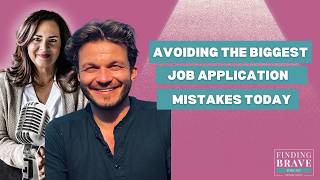
Sam Wright from Hunter.co shares data from 1.6 million job applications: the average search now takes 80-90 days instead of 50, and tailoring your resume to the specific job description can double your interview rate. Generic resumes are the biggest mistake. Two-page resumes outperform one-page ones when the content is relevant.
Chapters
Hello everyone, this is Kathy Caprino and welcome to my podcast, Finding Brave. I've created the show for everyone who longs to create something bold and brave in their life, to rise up, speak up, and stand up for who they are and to reach their highest and biggest visions. Each week I'll be speaking with inspiring guests from all walks of business, leadership, entertainment, the creative arts, and the entrepreneurial world. And they'll be sharing their intimate stories of finding brave and offer their best strategies for building your most rewarding, joyful, and meaningful life, business, and career. Hello everybody, welcome to another episode of Finding Brave. Kathy Caprino here, so excited about today's episode. You know when you have a topic in your life or work that is constantly being referred to and there's so much data on, but the data morphs and the advice morphs and people need this information, but we almost can't keep up. That is what we're talking about today with the wonderful Sam Wright. Sam, thank you. Calling from Brazil. Thank you for being here with me and, uh, so appreciate it. I can't wait to dive in on avoiding the biggest job application mistakes today. Thank you for coming. I know you're so busy, but we're going to have fun.
So happy to be here. Yeah. And just like want to say that Goal for the time that we have is just to be as helpful as possible to folks who are in their job search, answer the questions they want to get to, and just want to make sure that we're giving lots of valuable information today.
That's who you are. I know it. Thank you for that. So everyone, let me tell you about Sam. And to Sam's point, it would be so great if after you hear this, if you have follow-up questions, we'd love to hear them because we know that in 40 minutes, You know, this is a massive topic that changes. So we're hoping that we can be as helpful as possible as things change. So here we go. Let me tell you about Sam. Sam Wright is on the founding team of Hunter.co, H-U-N-T-E-R.co, an AI-powered resume builder and job search platform where he combines analyses of over 1.6 million applications and hundreds of thousands of resumes 'With also hundreds of one-on-one career coaching calls,' which I think is quite unique in your field that you're, you're gonna tell us about it, but you're having so many calls with people, which actually transforms data. You know, you, I, I'm guessing you're gonna tell us, but when you're talking to humans about their challenges, you see the data differently. I find I do anyway. Well, uh, so with hundreds of one-on-one career coaching calls to offer data-backed best job search practices, Rooted in empathy and compassion to meet this moment of immense change and uncertainty. And that really, I think that really epitomizes who you are, Sam. So let us dive in. You have a new report out and I, you know, dove into it. Is that a good place to start? We're going to certainly talk about the biggest application and job search mistakes people are making, but you want to talk about the biggest highlights of the report that jumped out to you? Would that be helpful?
Yeah, that sounds great, Kathy. Thanks again. I, I think that it's a perfect place to start really because, uh, what we try to do is offer data-backed best practices for the job search. And this report really is our biggest launch ever in terms of a data drop on job search trends. Um, and, and that's where we can actually inform what we know to be mistakes because we know what success looks like, uh, in a way that not a lot of other folks have access to, um, because Hunter has this job search tracker. So job seekers are using this tool, track and manage their job search. And they're telling us along with their application, application material, like their resumes and their cover letters, did they get an interview? Did they get an offer? At what company? At what role? And we're able to anonymize that data and, uh, provide a really great insights and analysis into the job market, into resume best practices. We're able to debunk myths like, hey, the one-page resume, actually, we don't really see any statistical correlation to that improving interview rates even for entry-level jobs. So there's a ton of advice and myths that we can bust. And yeah, you know, personally, it was like when you're on the job search and let's say you apply to 10, 20 jobs and you just don't hear back. Your mind is naturally gonna start to race and it's gonna be wondering, is it me? Is it the job search? You know, is it the job market? Is it, is it what I'm doing? And so that's the goal that we have is, is to really share and showcase to job seekers that, hey, yeah, over the past year, the average job search time has increased from about 50 days to 80 to 90 days according to our Hunter data.
Wow.
And, and there are some things that you can do to improve, but we're also dealing with a really tough market right now.
That's, you know, that's information that I think people need to hear because when you're in a vacuum doing this alone and, and the, you know, we have negativity bias, our brains. So we're looking at how we can, how we feel we failed. So if we're not hearing back or we're instantly hearing back, no thanks, we just don't understand it. There's no context for it unless we're talking to people like you. So Thank you so much. So job— the job search process is taking longer. And do we think that's primarily because of the market, because of the uncertainty, because of so many layoffs, so many closings? Is that what it is? Is that why it's taking so long?
It's a mix of a lot of things. And one thing that sticks out, of course, people— front of the mind is AI, right? And we have some data. We surveyed over 1,000 job seekers, and we saw that about 60% 60, 70% of folks are saying, I'm safe, AI, I don't have anything to worry about. Well, 12% of folks told us that actually they've already had a layoff or have lost their job as a result of some form of automation. And so we're seeing sort of conflicting viewpoints there where some folks are feeling really great and others are saying, hey, this has already affected me and my life. That said, we have 4 generations in the workforce now, right? We've got everybody from boomers alpha that's starting to enter. And so we are seeing, and the latest Bureau of Labor Statistics data supports this, that there's not as many jobs as job seekers right now. And that's a very scary place to be. We're constantly looking at occupational churn. So occupational churn being, are we seeing people actually move out of the jobs that they used to have, let's say, in white-collar knowledge work into some other profession or role? We're not seeing a huge shift there, but there's a few 2 things that we're kind of looking out for to see what are these major shifts going on and trying to make sense of it while at the same time thinking about the individual, right? Like the individual is trying to get a job. They're not really, you know, they can't really care about Bureau of Labor Statistics numbers and, you know, these big sort of shifts in demographics and in international affairs and economics and technological disruptions. They're looking for a job today. And so So yeah, I'm hoping that we can just kind of dive in and share what those folks can really be doing to support.
Let's do that. But I, I wanna ask, tease out one little thing for the people who say, no, it's not really affecting me versus those who say it already has, or it is.
Mm-hmm.
I'm guessing there's two, two factors there. One, it already is in a lot of segments, in a lot of sectors, in a lot of, but for the people who think it isn't, You know, I'm talking to so many people that I can even see that it will impact them, but they're not seeing it. No, I think we're fine in what we're doing here. I would like you to think bigger. I'd like you to think, if AI, if I could incorporate AI in my own processes at work in ways that the company isn't even telling me to do it, what would I do? Would you agree with that statement that for some sectors, yeah, no, it hasn't hit yet, but for some people, I think maybe they have blinders on and they don't think it is?
What do you think? Yeah, that's a great point, Kathy, and I think it harkens back to the best time to get ready for a job search is before you're actually, you know, while you're in point, right? And before you're actually needing it. Nobody. Will not benefit from being prepared for being on the market, for making sure that you're documenting the impact that you're having, the size, scope, scale of the work that you're doing, for integrating and learning and using new tools so that you're a little bit more resilient when it comes to this crazy technological disruption that we're seeing.
Great. Thank you for that. All right, let's start with the biggest mistake you see people making that you would say if we could correct this, blip percent of, of you looking for a job would find it faster and better. What, what's the biggest one?
Absolutely. It's this idea of tailoring the resume to match the job description. And that sounds kind of fancy, um, but it's really basic and it harkens back— it's common sense. Um, the focus is that the best person that matches the job description the test is the most likely to get interviewed and the most likely to get hired. Yes, we have referrals that have a big impact, but really what we see is when you're applying— and Hunter has really insightful, uh, data on this because we have a kind of a generic resume builder, and then we have a resume builder that helps people tailor their resume to match the job description— and we see a 2x increase in application interview conversion rates when folks are taking the time to tailor that summary section, to make this— make sure that the skills section is not every skill that you have, but all of the skills that the employer is looking for and listing in the job description. So we're talking about making more signal and less noise in your resume, and that's where you get deep, rich context that you're providing an employer to make an informed decision. And that is, uh, that is common sense. That has kind of always been the case, and it still is the case, just with the AI tools, we need to be more precise and more sophisticated and more accurate when it comes to our application material and our resumes.
I'm so excited to talk about this because this is what you hear constantly. But I want to dig in because, you know, I want you all to know I'm on job boards too. I'm looking for consulting, I'm looking for teaching, I'm looking for board advisory roles. I'm living it exactly what you're talking about. And I know what it's like when you're beleaguered and exhausted. You don't want to tailor your resume to everything you don't want, or the COVID letter. You just don't, because you think you know what you're great at and you think you also know what you want to do. And if the tweak is going to require you to move a little off what you think is your pillar, it also makes you a little nervous, I think. But when we say tailor it, Sam, So, you know, I need to say this: never lie and never embellish. It will come back and bite you because you're, you're putting out in the world a falsehood that you're going to have to somehow maintain and sustain, and you can't. Never, never, never. That's not what we're asking. But can you give a specific example so people can breathe and understand? Okay, tailoring is not spending 5 hours, you know, and your tool does it beautifully. And even on LinkedIn as well, you know, it'll say you're a 50% match. Here's what matches, here's what doesn't. And you're not going to lie and say the things that don't— you have. But can you give an example of someone who might have adjusted it to tailor it exactly to the role and then they're in the 2x that, okay, they, they got the role? What kinds of things are we, are we being asked?
Absolutely. Yeah. Yeah. Perfect example. You know, you mentioned I've met with about 500 tech job seekers in the past. Last year. I want to try and meet with 1,000 this year, uh, free one-on-one 15-minute sessions. It informs the products that we're building at Hunter. It, uh, it's— it showcases the brand that we want to have, which is data-backed best practices for the job search and being on the job seeker side and on the side of the job seeker.
And when you— in your interview, Sam, are you looking at their resume with them and you're listening to I know they're 15-minute free calls. You're listening to what they want, you're looking at their tools, and you're, you're offering suggestions. Is that what you're doing, Kathy?
I start every call the same. I say, we have a short amount of time, we've got 15 minutes. I'm here to be as supportive as and as helpful to you in your job search as possible. I have them send over their resume, uh, first. I say, do you want to start with the resume or do you have other questions for me? And we just dive right in.
Who wouldn't wanna do that?
And yeah, I mean, I, I think the biggest thing is, um, for me, I, I meet with folks that are just, they haven't talked to anybody about their career and their job search and friends and family. It's kind of, it, it's, it's, there's a bias there, you know what I mean? It's not a third party perspective that can, that can really sit there and listen. And, and sometimes I'll say, Kathy is sometimes it's just a listening session and I listen for 15 minutes. Whatever the person needs to get off, to vent, to, you know, get off their chest. And we go from there. And so, but that informs, I'm not saying that I'm, you know, some, this is not, you know, this isn't perfect altruism here. Like I do benefit from this because I build tools for job seekers and I hear their stories. I understand their problems. And yeah, I wanna get into exactly what you mentioned.
Like, Yeah.
What can somebody do to tailor their resume and how that, how to really do that?
Um, let's do it.
So tailoring your resume, the first thing, and, and the biggest example that I have, I was on a call with a guy, um, where we were running through his resume and the summary section was just a bunch of words and it said results-driven, you know, IT manager with 10 years of experience, right? Yeah. Your eyes kind of glaze over. And then I scroll down to the second page and buried in one of the achievements is that he ran a $190 million project as the, as the head of IT.
And I'm like, that goes at the top.
That goes at the very top. Uh, we have hiring managers have TikTok brains the same as us. It's, you know, 8 seconds reviewing resumes. Put, lead with the most interesting impactful thing that you've done in your career aggregated across all of your work. If you've been in sales for 3 different roles and each different role you've helped bring in a few million dollars, add all of those up and say, I'm a, uh, an account executive that's, that's grown $100 million in business over the course of 6 years. Wow.
Wow.
That says so much more than I'm a results-oriented, detail-driven, you know, these, these types of buzzwords that really is what AI just spits out. Um, uh, if you just try to have ChatGPT write the resume for you, it doesn't have enough context. And so that's one of the biggest things, Kathy, that I think people could take away from this in terms of tailoring their resume.
I have a question for you. Does the Hunter tool help them do that? So it looks through and it'll say this adds to $100 million in sales boost. Will it do that?
Yeah. So a lot of people ask me like, you know, why do you use Hunter as opposed to just ChatGPT? And you're right, you can do some good things if you know what to do with ChatGPT, but We have engineers that have spent thousands of hours at this point, a team of engineers working at Hunter to engineer these prompts. And each one goes through 5 to 20 different steps of prompt engineering to get better results. And this was one of the biggest pet peeves of mine, Kathy, is when we launched the resume builder 2 years ago, almost every one of them started with results driven.
Ah.
And I was just like, no, we're done with this. We're gonna show the results. Um, and so what we did is we re-engineered the summary generator. We actually have— maybe we can leave it as a comment or people can reach out— a free resume summary generator right on our landing page or one of our landing pages, um, that will exactly that, look at all of your, your achievements within your resume and count, add them all up and try to put them front and center in the first sentence of the resume.
I'm hopping on there right now.
Yeah, it's not perfect every time, but it is cool because then you really start to see like Yeah, I'm, I'm pretty hot. Like, I got a lot of good stuff. Exactly. Exactly.
Oh my gosh. I can't wait to try it. We should do a before and after of my resume. How about it?
There we go.
Oh boy. All right. I do want to say a few things. Tell me what you think. Yeah, I did. And oh, I'm so interested. We could go on for hours. You know, my happy place is LinkedIn. Big following. I love it. It's the cocktail party in the sky to me. Why wouldn't we love it and be there not just for job search? But, um, what I see is a mistake there. And not everything is the same with, with what we're doing on LinkedIn and a resume. To me, some people have said, and I would agree, LinkedIn, we're really creating a narrative that runs through the whole— your whole life of work. And, you know, there's more room for story. And but what I see people do in the headline of LinkedIn our words, I mean, that's your real estate. Same with the resume. This is your, your ad. And they'll say compassionate, empathic, community-driven right there in the headline. And, you know, community-driven is important when you're in a community-facing role that it's about building a community. But what I try to tell people, and I'm really interested in what you think, Sam, I think our values are so important, but when people are looking to see if you're a fit for the job, the values aren't the first thing they're looking at. They're looking at, can you walk into this role? Have you done what this role needs? Have you solved the problems that this role is solving? And how well did you solve them? I feel. Are you seeing— so there's results-driven, proven, proven expertise. Oh my gosh, those words.
Seasoned.
Seasoned. Oh, please. But it's not that we're not saying you aren't seasoned. It's that every word matters there.
Yes. Yeah.
Anything you would add to that? Would you agree with what I'm sharing there?
Yeah, that's a great point, Kathy. I'd never thought of that before in that framing where the value is so important to us and it is important. And yet those words really matter as the hook. And when someone— you have to put yourself in the shoes of a hiring manager or recruiter that has hundreds of applications. They're reviewing hundreds of LinkedIn profiles and headers. How do you maximize that and showcase the most impressive things that you've done? And I try to tell people not to tell. But to show, right? So you're a community leader, community-driven. How big of the community— how big of a community have you created? Or how much engagement do you get from those communities that you created? You know, try to showcase that you did those.
Impact. Impact, right?
Exactly.
I'm even thinking, you know, I'm a career leadership and executive coach. I do all of those things. Now, some people say, well, you can't be good at all of it if that's— and I don't agree because they're all to me inextricably linked. But if I'm looking for a leadership coaching role, I'm going to not emphasize at the beginning the career growth work. I'm emphasizing leadership. So it's also about what does this role need and what aspects of what you're great at are tailored completely directly to that. Would you say that I'm on the right path?
I think that's right. And, and, um, less num— less letters, more numbers. Because those numbers, as long as, like you said, they're— make sure they're accurate and make sure you can defend them in an interview. Sometimes I see people put a percentage that's like, I grew this by 13%, and I'm like, well, like, like, where— how did you calculate that? Like, like, or it's like, I did, you know, increase team productivity by 13%, and like, how did you get to that very specific number? Make sure the numbers really kind of make sense to somebody. And jump off the page. That's, that's really important.
All right. So we were understanding how to tailor. We're understanding now what that means. You understand that this is really an ad for you. So every word needs to articulate why I can come in and do this role as I understand it and why I'm the one. Is there a second runner-up worst mistake people make?
I, I want to go back to the, the pages of the resume because I think that actually speaks to a little bit more than just, uh, the page length. Um, but one page or two page, it does not matter. In fact, we found a statistical correlation to two-page resumes performing better on average than, uh, one page across all role, uh, roles, entry-level, all industries, uh, senior level. Um, so what, what's the big lesson there though? It's not like to like add a bunch of random words to your resume to get to 2 pages. No, it's, it's that the quality of the content is what matters the most, not the, the length of it, right? Not like what we're really trying to do is say like, if you have a lot of great things and you're really excited to share them and you know that they're relevant to that job that you're applying to, again, tailoring to match, um, don't cut yourself short and make the margins crazy and make the font tiny and do all of these things to try and get it on 1 page. You know, put your best foot forward, lead with a hook, and if you get them to scroll, that's what we're trying to do on a resume, right? Because it doesn't all fit in the one page there. You want to get them to scroll, and they're much more likely to do that if your hook and your summary is really locked in. And then if it's one page, if it's two page, maybe even if it's three pages, it doesn't matter. You're providing interesting, relevant, context-rich content that somebody is reviewing and seeing and determining whether they want to go forward work at an interview.
I'm so glad you said 3 because, you know, I've been working a long time. I can't fit it into 2, and I put the 3 because I was a marketing and product development and researcher and, uh, you know, marketing VP, and that informs everything I do because I was a high-level professional, but then a therapist, then a coach, then a writer, speaker, trainer. So 3 is okay. 3 isn't getting rejected.
3 is okay. We don't see a we don't see a big drop-off at all. So it really matters about the quality of the content as it relates to the job.
Okay. Now we're talking about resumes. What about COVID letters? Is it the same deal? Definitely tailor it. Definitely be specific. Any, any terrible mistakes you're seeing with the COVID letters?
Yeah, this one I have to say, stay tuned on. We haven't run as much analysis on cover letters in terms of best practices. We're looking to do that in Q2 of this year when we drop our Q1 Job Search Trends report. What I will say is, having hired and having reviewed lots of applicants and having talked to lots of folks and reviewed their applications is, if it's a great cover letter, include it. If you're gonna just create an AI-written cover letter, it's not in your own voice, it doesn't really connect, it's not, it's not really good, then it's not worth it. It's generally speaking probably not worth it. So really try to provide, and that's kind of the broader picture here is, What our data suggests is applying to 10 to 15 or 10 to 20 jobs per week with a well-tailored resume that matches the job description.
Wow.
I just got off a call this morning with a job seeker who was applying to 30 jobs a day.
And how many jobs are we a fit for, you know?
Yeah, that's too many. And of course, you know, the easy apply button is a concern there, right? Because you get sort of complicit to think that you're doing something by just pressing a button like a slot machine, right? It's not— that's not how we win. Um, but consistency of 10 to 20 jobs and a handful of those, you probably do have enough time to put together a nice cover letter, especially if you have a gut feel when you're looking at a job and you're like, I really want this one. Um, I would say give that cover letter a go.
So you mean forego a cover letter in some of them? Don't even bother uploading? That's just a question I I'm interested.
I would say just make sure that— I would say it's good to have, and a great cover letter will help you. So ideally, every job that you're applying to has a great cover letter, great resume. But if you're going to just not do that and create an AI-generated one, it's better not to have that at all. So it's really focused on the—
So helpful. I would love to digress for one minute and talk about AI if I could.
Yeah.
I am— I have my own digital tool. It was trained on 3 million words. Now the free version is 150,000 words. I look at what it's responding to people, and I, you know, I'm pleased with it. Um, but this I want to say— ChatGPT is the tool I use. Um, this is what I really want to hit home with: it's only as good as the context you give it. And I'm seeing that people aren't giving it context. So for instance, I write a lot, right? I write posts, I write letters, I write articles. I always write it first.
Yep.
And say, and it knows me now. I've been on it thousands of hours. You know, it knows, yeah, you should draw in your 7 power gaps to that. I'm like, okay, thanks, Chat. But I'll say, what do you think about this? And And honest to goodness, it knows my voice well enough that the tweaks that it makes are typically in my voice. And when I say, "What? That's wrong," or, "I would never say that," it says, "My bad, you're right, you would," you know, whatever. I say that because when we say use ChatGPT, the mistake I see people making is there's no context they're giving. So write a cover letter for this job. But okay, well, what am I saying about you? What do you want? So I would say people shape it. Don't— because we all can tell. I can even tell when a LinkedIn post is just AI generated and it's not in the voice of the human. What do you think about that?
Yeah, I think that's perfectly accurate. I would say the biggest factor here is the context and is learning how to— these tools are amplification tools, right? Like you, Kathy Caprino, have done the work. You've written the words. You've put in all of that craftsmanship into the work that you do, and that's why you're getting great results out of those tools that folks are benefiting from. But, you know, and we actually just finished reviewing over 40 resume builders that have AI tools built in. Most of them do. And we really just wanted to know, like, what— how are people building in this space? Like, what do these tools look like? What would be best in class for an AI resume builder? And we made a design decision in ours to say, don't make stuff up. And we were using one of the tools and it just put in, you know, grew revenue $12 million and it's totally made up, totally out of nowhere, right? And you're like, that's gonna land you in some hot water, right? And what we did is we say, hey, hey chat, because our tool is built off of ChatGPT and a sophisticated sort of prompt engineering context, um, different context windows that go into it. But our, uh, you know, our engineers have put in that we put a little box that says X or Y, and that's the variable. And it says, hey, here's kind of a good structure, a good template for showcasing impact. You go fill in that data because we don't have it yet. And I'll stay— I'll say stay tuned on this too because we think we're on to something really big in, in the job search space with regard to context windows and generating, you know, really rich context windows for, for job seekers. Getting more and more data established, cuz that's what career coaches, great career coaches will spend hours from you just extracting that information, learning from you and, and getting that out of your head because it only exists in your head. And so, So that's the focus and that's the— yeah, there's some pretty big things that we'll be launching here in the next couple of months around that.
So can't wait. That just reminds me, just to dimensionalize it, I had a client years ago who I had 6 sessions with. In the 5th session, it came out that a development she initiated changed the airline industry. I said, let's call her Sally. What? Sally, why is this the 5th hour that I've— and I didn't know that. And this is what I want to tell you all, folks. There's reasons, and often it hits women harder. But I said, why isn't that on LinkedIn? Why are you not talking about it? And what a lot of people say is, well, I'm afraid someone's going to say I didn't do it. And I said, did you do it or did you not do it? And what they struggle with, and this is really important, is, well, I didn't do it alone. There was a team. Well, of course, you know, we don't want you to take credit for what the team did, but you led the team. So, what did you do that the team couldn't do without you? You got the resources, you got the buy-in, you got the visibility for that project, whatever, you got the bid for it. So, please think like ChatGPT or like your tool that is saying, give me that rich data that we need from you. Don't worry about, did I do it? You know, don't lie ever, but think about what I did at the highest level. And then you can scale it back if it sounds like you're taking too much credit, but particularly women, they're always not— they, I don't want to paint everybody with the same brush, but often women are worried they're sounding like braggarts.
Well, that's a, that's a great point. And I think, so I come from a sales perspective, right? I've been 10 years in software sales, right? And all my life, my great-grandmother, when I was 7 years old said I was gonna be a salesman, right? So, you know, there's—
Cute.
So yeah, I was out there selling lemonade on the street, right? But not everybody is a salesperson, nor should everybody be a salesperson. And oftentimes the person that doesn't, that sells themself the best, but may not be the best person for the job is the one that gets the job. And so I really want to focus, 'cause you know, I think of like my brother who's a very humble person, right? Who would never want to brag. We're very different personalities. Um, but, and he, he may be the best worker for the job, but he needs to share that and showcase that in the job search. And that's what I think really good— so I'm getting on a roll here.
I love it.
Uh, you know, that's what Kathy, I think really good career coaches and resume writers, and I think there will always be a place and space, you know, Hunter is a tool that complements career coaches, complements resume writers, um, and, and supports job seekers as the kind of the backing, right, the backbone foundation. But really that focus on giving somebody the confidence to share and showcase what they're really good at and what they've done. And sometimes it takes 5 sessions to get it out there. And hopefully Hunter will provide some tools that help to get that out there quicker or prompt people, nudge people to remember those things. But The job search is not really a place to be humble. You certainly want to, you know, you want to do it in a way that is truthful, right? That is showing that you're a team player, not taking credit for everything. But you need to put your best foot forward, and it's a place to showcase that. And your resume is a brag sheet.
I love it. And I want to take 2 minutes, if I could, just to dimensionalize this, because I can hear in my head what listeners are thinking, "Yeah, but I don't really know how to do this." So I wanna give an example. Years ago, I did a TEDx talk, "Time to Brave Up," and in it I talked about an exercise that's also in my book, "The Most Powerful You," how to recognize your special talents. One way to do it is identify the 20 facts of you. So this is what I mean. Mm-hmm. We're not bragging when we're sharing facts. They're facts. So I want you to think about this weekend, the 20 things you are most proud of. It's funny that you talk about lemonade stand and, and I, I said it on the Glassdoor, um, podcast this week too, that I want you to think about the things that you are most proud of. I don't care if others are most proud of it. It's what you are most proud of. And it could be the lemonade stand when you were 8 and you made $100 and you gave Give it to your— the most important charity in your world. It's what you're most proud of and then the skills that allowed you to do that. That's what you want to dimensionalize, right?
Yeah.
Now, of course, those facts of you have to be relevant to the job. But for instance, if someone says, you know, why would— why should we hire you as a coach? I might say I had an 18-year corporate career and it was high level and I've lived the challenges of that. So I'm not just sitting in my jammies you know, making it up about what life is really like. Number 2, I'm a trained therapist, so I go deeper. We don't do therapy and coaching, but I am looking for breakthrough, that you're different at the end of the call than before the call, more confidence, etc. Number 3, I've written 2 books on career growth. Number 4, blah blah blah. I don't feel like that's bragging. I feel like that's fact. Yeah, so I'm not at all uncomfortable sharing that.
Yeah.
So I encourage you all to think of the 20 facts of you that relate to this job that aren't going to make you, you know, cringe. They're facts. Does that resonate?
That resonates for sure. And hopefully that, yeah, gives the folks listening that have jobs or even are, you know, or looking for jobs or have jobs right now to dust off that resume and think about that and do that exercise exactly what you mentioned. Because it's going to be helpful moving forward in your career. Everybody can benefit from updating their LinkedIn on a regular basis to include those facts, exactly what you're mentioning, Kathy Caprino.
Love it. And now, you know, my guests do a prep form and you did something really interesting and I do want to talk about it if it's okay. You had a life before this and having to do with farming, right? Another identity, am I right? Yeah, I, you know, I think I'm going to do a solo podcast on the myth of the dream job, and, and I want to talk all about that. But I also want to talk about who we are above and beyond our jobs, and that a lot of people are, in my view, overly identifying with a role or a title That's right. Or how much they're making.
Yeah.
And I feel like the happiest people, the most fulfilled people, the people fulfilling their highest and happiest potential are more than their job. And they know that they are. Can you talk about identity? And do you mind? It's a little bit off track about— not about Hunter, but yeah. Can you talk about your view of that? Because I think it's fascinating.
Yeah, thanks for the space for that. I call myself a part-time farmer. Both my brothers are full-time farmers on our family's 5th generation farm. It's been organic since the '70s when my hippie uncle came back from Woodstock to start a back-to-the-land movement.
Where's the farm? Where is it?
It's in Western Washington. Yeah, yeah, just north of Seattle. And yeah, so I think that a lot of— folks, everybody, basically everybody in the world comes from farmers. It just depends on how many generations back you go. 90% of people were in agriculture and farming, you know, 150 years ago, 200 years ago, when this country was founded, it was 90% small-scale farmers. And I think that does actually tie into my work with people in job search and job seeking, because it's like, what do we spend our time doing to provide value to others? And it used to be growing food for our families, right? And now, and it's actually in the name Hunter, right? Now it's like, you know, going out to beg the woolly mammoth at Costco, right? Because, you know, you've got it, you've got your job and you've got some money and you're able to provide for you and yours. And I think that's so, so important. But I never want to forget my farming roots. You know, I have a digital remote job. I'm remoting into this call from São Paulo, Brazil, you know, and I always want to and try wherever I can. I sort of document this on Instagram, this life of a part-time farmer and connecting to the soil is really important to me. And it grounds me literally and reminds me where I come from and what this life is all about, which is in one form or another, spending good time with the people that we love and care about, eating good food and creating a resilient, supportive, nurturing community that feeds our minds, our bodies, and our souls. And so that's where I get my internal motivation. It's where, yeah, it's deeply personal to me. And yeah, it's what I try to do as much as I can every day. We're human, we make mistakes, we're not perfect, but that's sort of the guiding light. The North Star. And yeah, thanks, Kathy, for giving me that.
Look at me, I'm choked up. And I want to tell you, I, from the minute I met you, I could sense that, you know, kind of a grounded spiritual— that's a hard word for a lot of people, but there's something more. And you know, I was talking to someone the other day, I'm having the following I have on LinkedIn. I'm in the sphere of very illustrious people. And that said, I don't want to compete with some of what they're doing. It's not of interest to me. And, and I remember when I left corporate life after a really kind of brutal layoff after 9/11, I said if I could help one person a day bypass the pain I've had in, in a lot of these environments, you know, there was some bad stuff It's a good day. Well, that's not— if you're doing that, you're not scaling, you're not making millions, um, you know, you're not running a $50 million company typically, um, because it's the one-on-one growth you're, you're helping. And you can do that in groups and communities as well, which I try to. But I— what I'm taking from your story is, who are we at our core? What makes us feel alive? What makes us feel like, I know why I'm on the planet today?
Yeah.
And so I'm gonna, I'm gonna bring it down to earth. In the people that you speak with, do you feel— this is not a judge, judgy thing, but I mean, today's hard. We have so much uncharted territory and the sands are shifting and people are scared. Do you think that the vast majority of people you talk to have that sense of an identity beyond their work.
You mentioned breakthroughs, and I think in these times of disruption, there's opportunity for a lot of, a lot of breakthroughs. And one man comes to mind that I spoke with probably about 6 months ago now. He was a used car salesman, but I got on a call with him, and man, he could talk. He was just charismatic, the energy, like I was like, take my money, whatever you're selling. He wanted to get into, into tech sales. Um, but we got into it, uh, you know, 10, 15 minutes in. Um, and he says, you know what I really want? I really wanna go to my son's Little League practices. And sometimes I need to go, uh, I, I need to work late at the car dealership. I don't have that flexibility. And, uh, he's like, that's, that's what I care about because he's growing up and I don't wanna miss those moments. Right. And, and so that's, people have real core, very specific motivations that matter to them. And in my work, I'm really agnostic. I will just work with anybody because I know almost everybody has that really human moment connection of what they're trying to do. And oftentimes it's about friends and family and being supportive and being good to their community. And so exactly, I think we're kindred spirits in that way, Kathy Caprino. You know, helping that one person has so much more impact and value. And what I try to do in my work is help that one person and then try to share with others that experience that, that, that was learned from there, that breakthrough. So that brings more people in to have more of those, uh, those experiences. And, um, ultimately we're just looking for more security and more time to, to enjoy what it is to be human on this planet. Planet.
So, oh my gosh, I don't want to say another thing. Let's end it. But before we do, I mean, just so beautiful. Is there anything else that you would say, darn it, I didn't say this on the show, that you see people struggling terribly and with a just a tweak, with just a redirection, it'll go so much easier for them? Anything else? Because of course we're not talking about interviewing. Once you get the interview, there are things we have to do. That's another story. That's another podcast. Anything else you would say, darn it, I would be remiss if I didn't share this?
Yeah, let me just finish with a few nuts and bolts on the, on the ATS AI side of things. I just got off a call with a recruiter at Microsoft who gave me a really good inside scoop, and I want to share with as many people far and wide that really the most important thing is that tailoring the resume to match the job description. By and large, we had 60% of folks say that they were being auto-rejected by AI in a survey that we did of, of 1,000 folks. And there just isn't any evidence that that is the case. We have Workday going through a massive discrimination lawsuit right now that's, I think, going all the way up to the Supreme Court around automated tools that auto-reject and screen candidates. So I think that there's a lot of myths that we're working to bust at Hunter around applicant tracking systems. What are they? How do they work? How is AI being used on the hiring side? And really what this hiring manager said is the biggest things that you can do is try to be one of the first to apply to the job, have a great application, and you don't really need to worry about— if somebody else had a great point that I talked to the other day. If you are feeling when you're getting advice from someone, a career coach or resume writer, If you're feeling afraid or scared or they're, they're evoking negative emotions, you probably wanna run away from that person.
Oh, I love it.
Because you know, there's, there's a lot of, everybody and their uncle has advice on job search and they have anecdotal tips. Um, and they'll tell you scare, scary things that maybe will make you give them money, uh, to, to try and, to try and make it go away. Um, but all of the evidence suggests that it's not the applicant tracking system, it's not this, nebulous AI. It's just being really good, really connected, and knowing, you know, tailoring your resume and knowing that it's a really hard market. And, you know, I say that about 10% of the people that I meet with are doing everything right, and it's just a really difficult market. But one man that I met with back in July just sent me a really wonderful note and allowed me to share it on my LinkedIn the other day saying, thank you, thank you. When I met with you, I started tailoring, I started applying to more jobs in the way that you shared, and it made an impact. And now he's getting a job. It's 6 months later, which is not ideal, but it was a turning point, and it was a moment after already searching for a really long time that he ended up getting that role. So consistency is key.
I just have to ask one question so I understand, and then I'm going to let you go. So you mean that there's a lot of talk about I'm getting discriminated against or rejected through the applicant tracking system. And I, I haven't been following the legal ramifications to that, but people are saying maybe, you know, because of my name or whatever, I'm getting bounced out. And is that what you're saying they're saying? And yeah, there's actually not a lot of evidence that— tell us more so we really understand.
Yeah, I don't want to discount anybody's lived experience. And, and certainly there's, there's these adjudications that are going on that are, that are true, and people can look up what's going on there. But what I want to focus on is oftentimes we want to— when we go through that first 20 applications and we're not hearing back, we, we look for something to blame. And a lot of times this applicant tracking system, you see it on LinkedIn, you see it on Reddit, a lot of different advice that just isn't true. Like, it used to be that parsing a resume to understand what's in resume was, was pretty hard for software to do. That's not really the case anymore. Um, so your resume probably is able to be read. Um, it just hasn't been read because of the sheer volume of, of candidates. Um, and, and the last component of that is that the, uh, the biggest disqualifying factor, and this is what I learned from, uh, from this recruiter, is, um, these pre-qualification questions. So it's not that your resume is being like auto-rejected, but they may have listed a few questions around around visa sponsorship, around, you know, are you willing to relocate, these types of like little questionnaires, you know, when you're filling out an application.
Right.
Those are the ones that tend to be the disqualifying factors. Wow. And those are kind of the non-negotiables for the company. And so if you're not able to answer those accurately and truthfully and you feel like you're answering no to a lot of the things that you feel like they really need, maybe it's not best to invest your time in that application.
It's not the right job.
And to move on. Exactly. And so, so that's, I think, really important to remember.
What a humanistic, beautiful approach. I, I hope everyone feels uplifted, calmer. I love your advice. If this is feeling wrong, career coach, whoever it is, the advice you're getting, I mean, sometimes we don't want to do what it like. It's important that you tailor your resume. No, that feels wrong. Sometimes it feels wrong 'cause we just don't wanna do it. So of course we're asking for a little self-awareness. But if you're really just getting very nervous and agitated, find another helper. We've gotta feel good in the process and feel like there's hope. Sam, I love talking to you. I could talk 5 more hours. Come back on again. But where do people soak up all of it? Hunter, they can use my affiliate link. I'm so proud to be a supporter of it and I give it out. To everybody who asks, and I'll share that in show notes. But where do people soak up your work? On Instagram, on LinkedIn, where do they go?
Give us— Yeah, please connect on Instagram @parttimefarmer_sam. If anybody's interested in that side of me. On the LinkedIn side, you should be able to find me, Sam Wright Hunter. My name should come up. You'll see a profile image with sunflowers in the background. I grow sunflowers on my family's So, so that's a little indicator. Yeah. And then Hunter.co, we have our annual job search trends report. We have the best AI resume builder list that we just dropped today. So people will be able to see that when this comes out. And yeah, love to connect with anybody and everybody and just try to be as helpful as possible to folks. And yeah, I appreciate them taking the time to listen to us today.
Thank you so much. And if they did want— you're going to get inundated now— the 15-minute free call, Do they book that through the site, Hunter.co?
Yeah, I share with everybody that I limit it to 10 to 20 max per week. So just for my own sake, so 2 to 5 per day. I do do them in the morning. It gets me going. It gets me energized to support folks. So sometimes there's a backlog, but anybody can reach out, and I do my best to respond to everybody.
I'm so grateful for your work. I'm so excited to know all about Hunter and send people to you. Thank you for everything you do in the world. Way you do it. Thank you so much, Sam. Come back again.
Yeah, yeah. Thanks for the— thanks for the opportunity, Kathy. It was great to chat.
So fun. All right, people. Oh, I feel so— I feel so excited and energized. There's hope. Don't give up hope. Yes, it's difficult times, but there are ways through it. Uh, and we really would love any questions you have wherever you see this posted. You know, both of us are are doing our best to help one person at a time, as many as we can. So share. You're going to see this on LinkedIn. Share your questions. We'll do our best to help you on your journey, and I hope you feel supported by this. We'd love to hear. Thank you again, Sam, and I wish you all a wonderful two Finding Brave weeks, and we will see you next time. Thanks so much for joining us today, and please don't forget to check out findingbrave.org for more programs, resources, and tips. And tune in next time for your weekly dose of Finding Brave.
More from Kathy


Elevate Yourself, Elevate Others, and Amplify Good | Chris Cooper | Finding Brave Ep. 334

Finding Brave Epis #333: How Leaders Can Harness AI Without Losing Their Humanity, w/Bennett Borden

Finding Brave Epis 332- How to Stay Brave, Valuable and Visible in the Age of AI, with Raman Rai

Finding Brave Epis 331 - The Power of Positive Disruption, with Dr. Patrick Leddin


Finding Brave Epis 330 - Being 40: Letting Go and Embracing Who You Are, with Stacey Lindsay

Disrupt Career Reinvention with Kathy Caprino - via The Disruption Lab Podcast w/Patrick Leddin

Creating Neurodiversity-Friendly Work Cultures: Simple Workplace Adjustments Matter

Finding Brave Epis 329 - How To Create a Neurodiversity-Friendly Workplace, with Kristen Pressner

Finding Brave Epis. 328: Reclaiming the Power to Trust Your Own Voice, with Dr. Cindy McGovern