Finding Brave Ep #38: Embracing Your Age and Wisdom - The Making of a Modern Elder, with Chip Conley
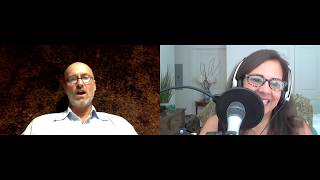
Chip Conley on why midlife isn't decline but a chance to become a modern elder. He argues companies waste older workers by ignoring their wisdom, and shares how phased retirement and intergenerational mentoring benefit everyone.
Chapters
Hello, everybody. Welcome to Finding Brave this week. This is Kathy Caprino. And what a month it's been. I have to say there's been a lot of Finding Brave moments for me, including spraining my knee and it not healing and going for the MRI tomorrow and what that's done to my ego, which is just going to be all about what we talk about, embracing who we really are. And I'm so excited to share with you all my guest today, Chip Conley. Chip, thank you for joining us in the middle of something very important for you.
Well, you know, you started with organ recitals, and I might recite some of my organs that are not looking like they used to either.
But, you know, okay, maybe not, maybe not. And next time we say we'll say we will. But everyone, we are talking today about something I was just telling Chip. I literally hear about this every, perhaps every single working day that I'm at my desk working with professional women. And I'm calling it embracing your age and wisdom, the making of a modern Elder. But we're going to get into all of this, what this means. But first, let me tell you all about Chip. Chip Conley is the author of the new book Wisdom at the Making of a Modern Elder. Best selling author in hospitality entrepreneur, Chip is a story strategic advisor at Airbnb. I can't wait to hear more about that. And at age 26, which totally blows me away, he founded Joie de vivre hospitality and turned it into the second largest boutique hotel brand in the world. After selling his company in 2010, he joined Airbnb as the head of global hospitality and strategy, helped turn it into the world's largest hospitality brand. Conley has received hospital. Yes. Hospitality's highest honor, the Pioneer Award. Wow. He serves on the boards of the Burning Man Project and the Esalen Institute and is the author of Peak and the New York Times bestseller Emotional Equations. Wow. Thank you for being here. Chip, I want to tell you, I read in your materials that you draw heavily on Maslow and Victor Frankel, and I just fell off my chair because if you haven't read Man's Search for.
Meaning, now another organ's broken.
That's right. Oh, my. That book. I read a lot of books, as I know you do. That is and was the most instrumental book I've ever read. Man's Search for Meaning. Viktor Frankl. So I'm dying to hear how. Why those two. Abraham Maslow and Viktor Frankl. And. And then we're going to jump into what we're talking about here, what is the making of a modern elder? But tell me first about those two experts and psychiatrists.
Sure. My two favorite leadership advisors are both psychologists. And I really appreciate the intersection of psychology and business. It can be a complex intersection. But what I loved about Maslow is Maslow helped us to see how people could have priorities in life. And there's a hierarchy of priorities, a hierarchy of needs. And then I applied that to organizations in my own company, 3,500 employees, our employees, our customers, our investors. And that helped us go through two once in a lifetime downturns in the same decade. And then with Frankel, I had a flatline experience. I actually died on stage giving a speech. We won't go into more details on that if you don't unless you want to.
I do want to.
That night in the hospital, I had his book in my briefcase because I've always found Frankl's book at Man's Search for Meaning to be a great reminder that my life is joyous and I should be more full of gratitude. I'm not in a concentration camp. And understand that meaning is what really created fuel for people. I ended up turning that really difficult experience for me of having a flatline experience into an equation. Despair equals suffering minus meaning, with the idea behind there that suffering is sort of ever present. It's always there if you want it. But the meaning and despair are sort of inversely proportional to each other. So the more meaning you have, the less despair you have. So once I sort of figured that out, I was like, okay, going through, going into the Great Recession, going, having a lot of difficult things happening in my life at that time, I was able to realize that if on a weekly basis, I just made an inventory of all the things that gave me meaning this week, that focus on the meaning helped reduce the despair.
That's so beautiful. I have to say, the people I'm most drawn to have, I would say, a depth of understanding and that many people don't. And often that comes from life changing experience. I mean, I think in a way those breakdown. Not in a way, those breakdown moments are what create breakthrough. Because we need that perspective shifting thing, don't we?
The key is to make sure that you just don't have them, you know, every year.
Yeah, I would agree.
Every decade maybe, or every, you know, maybe, you know, each stage of your life. But you know what, here's one thing, Kathy, that I really appreciate. And this has been sort of my evolution here at Airbnb. Going from being the boy Wonder, starting a company at age 26 and then joining Airbnb at age 52. And not being the boy wonder, being the modern elder. I was twice the age of the average employee. One of the things we don't talk a lot about, although you might talk to your clients about it, is there's a lot of transitions that happen in midlife. And we as a culture, as society. Society is amazing about how it creates rites of passage and rituals and celebrations to help people through transitions. And if you think about it, you know, in puberty, you have quinceaneras and bat mitzvahs and bar mitzvahs. And when you're moving from adolescence to adulthood, you have graduation ceremonies and commencements for high school or college. You're gonna make a commitment to someone in marriage, you have a wedding, you have a baby, you have a baby shower, you die, you have a funeral. But between baby shower and funeral, nada. And it's partly because midlife, which is defined now as 45 to 65, didn't exist, you know, 100 years ago.
Right. That was death.
47 years old was longevity in 1900, and then it was 77 by the year 2000. So we added 30 years to our lives. But we have done zero to recognize that midlife is a period of life that now, frankly, is maybe 35 to 75, because I think people are going to live longer and they're feeling irrelevant earlier. And so we need to figure out how to address the fact that this is a period of life that has all kinds of transitions. Menopause, divorces, leaving a career, leaving a company, changing locations. And we have not figured out how to provide the rites of passage for that.
Oh, my gosh, you're so right. And I don't want to take up our time. We have so much to talk about. But I have to ask you a question that has just occurred to me. Part of, I think, the difficulty of transitions is there's intense mixed emotions. So, for instance, I'm recently divorced after 30 years. I moved from a big house in Downsize to a beautiful small apartment. Yes, this is me. This is you, me, Right? And my daughter's 24, and my son is going to be a senior in college, and we're really close, and he's leaving the house tomorrow. There. Even my dog, who can't be left alone, my beagle. There's so many mixed emotions. I love her. She adds meaning to my life. But there's some burden there. I'm going to say it. You know, it's like having an infant. I think what's hard is our society doesn't allow us to have mixed emotions. Like it's. It's not comfortable. In other words, you should be happy your son's going off to college again and I'm thrilled for him. But there's mixed. I'm sad, I'm lonely when he leaves because we have so much fun. What do you think about mixed emotions in his life?
When you look at little kids, what you notice about young children is when they're at their most present, they don't have a mixed emotion.
No, it's pure.
The emotions you see about anger or whatever it is, it sits in its purest form. So the process of going from childhood to becoming an adult is learning the. And becoming more fluent about the equations of emotions happening inside of you. You're not just having the purity of a singular emotion, you're having multiple emotions at once, which can be complicated. And therefore what's shocking to me is we don't have emotions classes where we help people teach, like emotions 101 in college. Not a bad idea. So people could really understand and become a little more self aware about what's happening inside of them. But yes, I agree.
I think you've said it so beautifully. So let's jump into the thing we're really focused on now, which is, well, we'll start here with ageism. How people. I don't know how old you are, chip, but I'm 58. How?
I'm 58 in two months.
Oh, really? I'm 58 in one month. Two months. June 2nd was my birthday.
Wait, oh, so you. So you're a 1960 baby?
1960.
I'm a 1960 baby, but two months from now, I'm turn 58 on Halloween.
Oh. Oh, that's got some meaning, I'm sure. Wow. Spirits rising. All right, so tell us what you feel is going on here from your perspective and also from dealing with so many employees. What's happening? Why do we feel so kicked to the curb? And what's going on?
Well, what's going on is that there's a structural change, not just in the economy, but just in how we value things. And historically, we valued wisdom because in many ways things weren't changing that quickly. And so the elders in the society would pass on, you know, land wisdom about how to farm properly and how to understand like farmers. Farmer's Almanac was all about understanding things that, you know, a 20 year old wouldn't understand, but an 80 year old certainly would. As things changed we moved into an industrial society and so brawn became more important, and brawn is more for a 20 year old than an 80 year old. And then brain became important in the tech economy. And so we are in an era right now where digital intelligence, maybe what I call dq, is maybe more important than IQ or eq. And therefore, if digital intelligence is the defining characteristic of what most companies are looking for, who is the most digitally savvy out there? What's the digital natives? The digital natives are young people. Because you and I, I love the fact we're the same age. You and I grew up where the dominant technology of our era was television, but that had zero effect on our career. But these kids, and I shouldn't call them kids because they're young adults and they're middle aged adults starting to be. Some of them millennials are in their mid-30s and later, they grew up with technology. Yeah. So in many ways it supercharged their career path. And so some of the resentment that boomers have towards millennials and some Gen Xers is partly because, frankly, they have gotten the great benefit of becoming so fluent in their technological skills and prowess that it gives them a huge career benefit. So what is that?
Like a language? Isn't it? It's a language that some of us at our age are, are hanging on. Like, I think I'm pretty savvy, but you can't.
We're doing, we're doing a video call.
Zoom. I love it, but it's not at all the same as growing up at age 2, looking at your iPad, you know, So I think you're doing that, but you know what I mean?
But here's the opportunity. Here's the opportunity. So I think the pendulum is starting to swing in the opposite direction. So pendulum swing very, very wide to one direction, saying, everybody wants a millennial in their company, and not just one, maybe hundreds of them. And in essence, many of the fastest growing companies in the world have been started by people that are younger. Not just in 40, but sometimes younger than 30. I mean, they start their businesses maybe in there, even some, maybe younger than 20. So you see that and what's great is it's beautiful for innovation. But we expect these young digital leaders to miraculously embody the relationship and leadership wisdoms we have had decades to learn. What I think is the opportunity, the grand alliance here, is to create a generational potluck like we've never seen before, because we have five generations in the workplace at the same time. Yeah, I can teach these here at Airbnb I was the mentor to the CEO and I was also his intern because I was an intern in the sense that I didn't know a thing about technology, but I knew a lot about leadership and strategy and emotional intelligence. So I think what I've been able to help here is to create a trade agreement. They give me DQ digital intelligence and I give them EQ emotional intelligence. And we're both better off for it.
There's so much to say. I just want to hug you up for something. You said you were an intern. You know, I love that so many people that have reached a level of success you have and are a thought leader and influencer, best selling author, would never say that. And that's one thing I think that's special for all of us to understand that. I mean, I talk about humility. I'm not a fan of humility for women because we've been slapped with it to death. But I feel that there's a humility there that you understand that you are learning and gaining as opposed to these young whippersnappers. But I have to ask a question.
Yeah, we can complain as much as we want, but this is the world we live in. And so the question how do we resiliently adapt and resiliently adapt in a way that works for us and for society?
So I've got a million questions, but one thing. There's DQ and. Right. D. Yeah. And. But let me ask you this. I just spoke to a potential new client yesterday who talked about one particular field. I'll leave it out. But she said all they want are young, young people. Do you think some of that is because it's not just the digital understanding, it's that these kids are killing themselves and working themselves to the bone and we don't want to do that anymore and we have better things to do.
I think some of it's that, I think some of it's, you know, as you're an older worker, especially if you're experienced in the same workplace, you've made increases in salaries over a long period of time and so you can be more expensive. But there's a lot of, there's a whole lot of. When you talk about who's more expensive, younger or older workers, there's a lot of variables in the equation which we can get into. What I will say is this, is that there's a lot of hubris from young people. A lot of young people. And that's maybe cultural. You know, it's just sort of, that's part of the generation now here at Airbnb, but other companies is when you create an environment where you have a mixture of ages, just like a mixture of genders and mixture of races, you create a better workplace and more effective teams, Especially if your customers are the full range of people on the planet, then you want to have people in the room who represent that. And in tech companies, what you see is maybe 5 to 10% of tech employees are 40 or older, the younger companies, and that's not healthy if you're serving a customer base out there that is all ages.
So you know that and I know that. And about 1,000 authors have written about it. There's been 10,000 research studies about it, that we need diversity if we're going to serve a diverse, you know, we know it. It's not happening yet. So I sense that your new book, Tell Me if I'm Wrong, is talking to us as individuals about how to embrace and embrace who we are, but also build an intergenerational bridge. But I feel like the bigger impediment is the CEO, the leader, the senior managers. What do you think about that?
Yeah, and the recruiting team. So, I mean, my book is written primarily for people in midlife, but it's written for anybody who's trying to understand how to create more intergenerational collaboration. There's one chapter, the ninth chapter of the book, that's really written for the CEO and HR teams of the world. And it really shows with great evidence why many of the stereotypes around older people are not accurate. And the 10 number, you know, the top 10 ways you can be a more age friendly company in a smart way, that's good for your bottom line, good for your reputation. And so I, what I'm hoping to do is making sure that this book, Wisdom at Work, is a book that's catalytic. It actually creates some movement. And the good news is I'm being asked to give a lot of speeches at large companies about this, and they're getting it. I mean, the idea of diversity, the idea of taking diversity, which most companies at this point are pretty clear about, that relative to gender and to race, they may not be doing it very well, but at least they know the value of it. And to actually expand that and say, why not apply it to age as well? I mean, there's others, sexual orientation, disabilities, etc. But the two that people know the most are gender and race. Expand that and include age because frankly, it's good for the company, it's good for society. And in a world in the US where we have a 4% unemployment rate and was under 4% recently as well, we need to look for new ways to recruit people that previously might not have been working. So there's a lot of people who I think are going to live and work till much later in their life than they thought they were going to. I love it out of necessity in other cases because they just love it. So let's take that into account as a long term strategy for recruiting.
Oh, how wonderful. So can you give it, you said there is 10 practical steps. Can you give us the three that you feel you're not really seeing here? You're not seeing management and recruiting folks doing this. They say they are, but they're not.
Yeah, I think one of them is. This is, this is the most obvious one for me. And in fact, it's part of the reason I went to just a consultant status here at Airbnb. There's all this data out there that says older workers 50 and older, one of the things that they want as a benefit in the future is the ability to move to a part time role and then sort of slide out over time and make sure that the company sort of doesn't have this cold turkey perspective of on your 65th birthday or on your 51st birthday or whatever, whatever the date is, you're gone. Because there's institutional wisdom there and knowledge that that person has. And also those people, actually the older person says, you know what, I don't want to leave all of that behind. I don't want to leave my community of people I built 15 or 20 years of relationships with. And then all of a sudden I'm gone. And so companies know this. HR departments say it's one of the higher priorities for older workers. And then yet almost no companies offer that kind of gradual process of going from full time to part time, as well as 401k programs and all kinds of other matches. It's only for full time employees. Health care, insurance, some of these things are only for full time employees. So that's an obvious one because that one's like, okay, yes, there's a cost involved. You know, if you are offering some benefits to people who are actually part time, it costs the company a little bit more. We're talking about a fraction of the people in the company who this is affecting. And frankly, they're often the ones who have all that institutionalized. So that's one great example. I'd say another example would be larger companies. This is a particularly relevant, it's less relevant To a smaller company, there's something called ERGs. ERGs are employee resource groups. And they're obviously, they're using affinity groups where people within a company say, I am a woman and I want to be part of other women, part of women at IBM. And we as a group have a. You know, we have a. In our office, we have 500 people in the office, and 250 of us are women. And, you know, 100 of us are on this women's group. And so they meet regularly. And you see that with affinity groups around demographics, very, very few companies have an ERG for people who are older. And frankly, people who are older are nervous about even setting them up, because especially in the tech world, you almost don't want to out yourself. This is sort of like, you know, gay people 20 years ago, 10 years ago, in some places still today, you don't want to out yourself because all of a sudden you might get ostracized, or in this case, you might actually be seen as like, oh, I didn't realize, Joe. Or more important, Josephine. Because women actually have this even worse than men in terms of the ageism issues. They don't want to out themselves. So what you have is you have a collection of people who are whispering about things that are happening with them, but don't have any kind of organizing platform as a demographic group. We're starting to see this change in the tech world. Here at Airbnb, we created something called Wisdom at Airbnb, and it's people 40 and older. Now, the 40 and older sounds like, wait, they're not that. They're not that old.
Wait a minute here.
But honestly, in this workplace, 40 and older is a small fraction of the workplace. So that's another good example. And then I'd say the third example is a more abstract one, which is most companies have. If you're a bigger company or even smaller one, you might have, like, an Asia strategy. Like you say, how are we going to go out? Asia's growing so big. How are we going to grow in Asia? Or how are we going to create a new strategy around this or this? No companies I'm aware of, or very few of them, have a longevity strategy. We're all going to live longer. That means both our employees are going to be here longer and our customers are going to be here longer. So what does that mean in terms of the lifetime value of a customer? What does that mean in terms of how do you tap into that institutional wisdom and that intergenerational collaboration? Most companies have spent zero time looking at something that we saw a 30 year increase in longevity in the 20th century from 47 to 77. And now we have biotech and we have all kinds of other things that may actually extend that even further. So who, what companies are actually getting smart about this?
Oh, gosh. I have this burning question, Chip, How'd you get so smart when you were 26 and you did. I mean, you know, people listening here, oh, there's so much I want to ask. I would also, before I ask you this question, I do think, and maybe you're not targeting anyone who isn't in the corporate world, but I want to say for people listening, I got laid off after 9 11, when I was 41, in a way that was so brutal, I snapped. And I said, I will never return to corporate America. I mean, it was never a really good fit for me. I always felt out of the box. I just felt, oh, the politics made no sense. So it led me to become a therapist and then to start my own business as a coach and a writer. And I do want to throw this out to people who are listening. I do believe that for a segment of the world, fitting into a corporate box, even if it's a fluid one, is not the right thing. So I would say to anyone who feels like I love what Chip is saying, I couldn't agree more. But I'm not experiencing it in any damn place I go and work. And, you know, it might be like it was for me. I wanted to be my own boss. I wanted to call the shots. I wanted to partner with who I wanted to partner with. And what do you think about that idea that maybe it's time for people who feel that way to go their own way?
Well, you know, the thing that a lot of people don't know is the fastest growing demographic of entrepreneurs in the US today is people 55 and older.
Who said, you know, I'm done with this.
Exactly. You know, shows it, like, on every time anybody's done a research study that's shown this, the question is, why is it that people 55 and older are starting businesses? And there's two really fundamental reasons, actually, there's three. The first one is they did get laid off and they can't get a job.
Right. They're like, well, I'm gonna make lemonade from this nonsense.
Exactly. And we're not talking about, you know, necessarily big tech companies that they're gonna create. They're like, you know, a consulting business or a design company or something. You know, a Subway franchise, who knows? So that's number one. Number two is there's a lot of people at age 45, 55, 65 even, who just said, I'm tired of working in a toxic environment. I want to create an environment where I have the influence over the culture. And I may only have three employees, but at least I feel like I have some autonomy. I can feel proud about the place I'm creating. So that's a second reason. Yes, and then there's a third reason is they want to create work that matches their lifestyle. And so in that case it could be like they say, you know what, I want to work part time, but the company I work for doesn't even have that as an option. So I'm going to start my own part time business and I'm an entrepreneur now, but it's all in the intention is to keep it part time because I want to have a good life. And so these are three exceptionally good reasons. And so for those who really want to learn about that, I talk about it a little bit in the book in terms of how people start a business, you know, later in life. There's a beautiful TED talk by a guy named Paul Tasner, T A S N E R 66 years old, who started his first business at that age. So there's more and more evidence out there that, you know, going out and doing it on your own is not something that's just meant for, you know, 20 year old hoodie wearing boys.
I love it. Now go back and please answer my question. How did you do this at 26, your first. Amazing how, you know, people listening here want to learn not just the what, but the how. Right? How did you do it? How did you have that kind of thinking?
I had, I had a little bit of background in commercial real estate to. So I didn't have any background in hotels, but I knew something about real estate and hotels are a form of real estate. I was working for a real estate developer. I wanted to create a real estate division in that company focused on hotels. They didn't want to do that. So I said, I'm going to go start my own company. And they laughed and said, you don't know a damn thing about hotels. And I said, you know, I don't, but I can actually talk to people who do. And I know a lot about real estate. And so I'm going to actually go out and buy a broken down motel in the center of San Francisco in a bad neighborhood and go out and raise money because I'm from middle class families. I raised money from people I went to college and graduate school with and friends of the family. And I bought this bankrupt little motel or 44 room motel on an acre of land. And I learned from the ground up from people in the company that I hired that knew more than I did. And I was very humble about just having to learn. And it took me three and a half years and that first property to get it to a place was like it was succeeding. And then I grew. And over the course of 24 years, I created 52 boutique hotels and you know, about 50 different restaurants.
Did you have entrepreneurship in your family history or were you really?
No, I mean my father. Ultimately, around the same time that I was creating my business, he created a real estate business himself, but no entrepreneurship there. But I had it in my bones from age 10 and 12, you know, creating a little restaurant in my parents living room or dining room. And I always had a fascination with creating, creating things that people wanted. I wanted to make people happy. That's why I called my company Joie de Vivre. You know French for Joy of life, right?
Man, you have so much to teach us all. Now what, what do we need to know that we haven't covered about these? A modern elder? What do the listeners need to understand that we haven't covered?
I think that the thing people need to know about being a modern elder versus a traditional elder, the traditional elder of the past was full of reverence. People revered them. The modern elder is full of relevance. And relevance basically means that you better be able to learn and evolve your identity. This is not about people coming to you and bowing down and out of obligation, showing reverence for you. It's about you actually being as much of a learner or a student as you are a teacher. I called myself at Airbnb because at age 52, I joined a tech company and I had no tech experience and I had to learn everything about tech. I said I am an intern as much as I am a mentor. And the reason I said that, and I called myself a menturn mentor, good with sticky language. The reason I liked that is because it was a recognition that I would intern publicly and mentor privately. And what I mean by that is interning publicly basically meant I was open to being the dumbest person in the room. But I asked a lot of why and what if questions that a four year old might ask. Not what and how questions. What and how questions are optimization questions. Like once you've already said, okay, we're on this path, how and what are we going to do to optimize it? Why? And what if questions are inefficient questions, but they can sometimes create the ability to see a blind spot. And our company was full of blind spots and a great company. So I asked these questions and it led to people saying, wow, Chip sometimes asks the most off the wall questions, like right there. So I ended up becoming the intern who publicly asked a lot of questions. And people called me catalytically curious because I was catalyzing other people to be curious as well, because I was surrounded by people who were young and they were know it alls, because that's what you thought you had to be as a young person in Silicon Valley is you have to be the smartest person in the room. And I was proving that you can be the dumbest person in the room and still be extremely valuable. Now, that's the interning publicly. The mentoring privately was that nobody wants me mentoring them in the middle of a meeting. Someone the age of their parent, that was more like a private thing. And I'd have private conversations and say, hey, I noticed something in the meeting. You know, would you like some advice on that? You know, and if you don't, don't worry about it.
Would that be on an idea that that person posited or their approach or particularly?
It had to do a lot to do with like how someone was running a meeting and if meeting didn't go well, but you know, it would come from a place of humility. It would come from a place of like, I'm here to serve you, from a place of not competing. One of the great things about being older in a land full of mostly young people is people don't see you as competitive. And that's actually a good thing in the sense that you're not a threat.
You're not a threat to them.
They're much more willing to be candid with you, authentic with you, learn with you. Mutual mentoring is the future. You know, I mentored people, but I also was mentored by them in subjects I didn't know well. So I think the bottom line here is I think that the idea of a modern elder is that they are curious and wise at the same time.
All right, one final thing here. Oh, stay on another half hour. Can you be honest? When you came with that beautiful mind that you have an open heart, did you experience experienced people going, who's this guy? The heck does he think? So I have another point to make here. I think that for someone to succeed in doing what you did you have to have a bedrock of confidence that will not be shaken? And I don't want to be a genderist, but my world is women's issues. And I think women struggle with this more, and not simply because of neurobiology, but because of culture and society. We're playing we. You know, there's a million things going on. But I think in order for us to do what you're saying, we have to accept that people aren't going to be. That people will be uncomfortable, that people will be maybe threatened. What is this guy? What does this woman think she's got? You know, I remember coming into my last VB job that almost killed me. I felt so pressured to make an impact. Day one. Well, I should have shut up. I mean, what can you. What can you say? Without knowing the business well enough, they wanted me to change things within three seconds, I should have said, I'm not doing that. Let me learn. But in order to do that, you have to have a lot of confidence that you will learn and you will make an impact. So what do you say about confidence?
Well, I would tell you there's a beautiful Harvard Business Review article and on this subject by Zenger and Folkman. Those are the two. And I actually talk about it in my book, Wisdom at Work, and we'll.
Link to it below.
Yeah, there's a beautiful, beautiful study that showed the following is that there's a sense that as people get older, they get more set in their ways. But what they were able to show is that as people get older, they start getting a little more confident in their skills and in their point of view and to some degree, in their intuition. And this is particularly true of women. And as people get more confident, they're more willing to take feedback. And as they get more feedback, they get better. And the thing that's beautiful about this study is they show that women starting around age 35 or 40 start getting into a flow where they actually start getting to a level of confidence. That confidence breeds confidence and success breeds success. And yes, you can be in difficult environments. And I'm not a woman, so I don't know. But what I can say is when you have that confidence and you show the evidence of why you should have that confidence, it leads to this. This beautiful sense of you get better at what you do because you're open to feedback from people because you're confident. And so the key is when you think of people in the confident, you think like, well, they don't want to hear feedback because they're cocky? No, they're just confident and they actually have a growth mindset. Read Carol Dweck's book Mindset. It's all about how do you move from a fixed to a growth mindset. That is part of what makes a person more confident. Because actually, instead of being fearful of actually failing and always feeling like they're just trying to prove themselves, they're just constantly trying to improve themselves.
Good grief. That's so helpful. Do you have a course coming? You have your book, but do you have a course on becoming the modern elder?
I have, I have an academy. I have a campus. So I have the Modern Elder Academy.
Come physically to it.
Three acres of beachfront property in Mexico, an hour north of Cabo San Lucas and Baja. And the yes, you can go to modernldracademy.org and people come for one week or two week programs to learn how to repurpose themselves in midlife and to mine the mastery of what they have and the wisdom of what they've built. It's the first midlife wisdom school in the world with its own curriculum.
How long has this been in existence? Two days.
It was in beta program from January to June this year with 153 people who went through it and then gave us feedback. And it opens to the public November 4th.
Oh my gosh. I am going to. You know, everybody who's following me needs to attend. I have a feeling, you know, and, and you know, why do we have to be over 40 to attend that? Why don't we get into that mindset younger, you know. Right. No. You'll let me know. Oh Chip, it's so inspiring. I, I love your work. Aren't we blessed to have your work in the world? Thank you for joining. And where can people learn all about this? Of course we'll link to it below. But where do we send folks?
If you go to chipconlee.com, c o n l e y chipconlee.com, you will see both me and my part of the site. You'll see the book Wisdom at Work part of the site and you'll also see the Modern Elder Academy part of the site.
It's so I just want to leave everyone with this, just a very healing experience to have you talk about not just what we hear every day, that, oh, there's so much wisdom in people over 50, but it's wisdom that needs to be incorporated. That needs. But not just one way. It's an exchange of wisdom that we have to. It's just Kind of a spiritual concept, if you ask me, that we're honoring what everyone has to offer, but we need to be open to that. Am I onto something?
Yeah. Let's recognize that our peak as adult humans physically is probably our 20s. Financially, in terms of salaries, it's usually between mid-40s and mid-50s. But our peak as humans, as emotional beings who understand other humans and understand ourselves, goes into our 50s, 60s, 70s, and 80s. So the thing we have to look forward to is the fact that if you want to play on the playing field of who's the best physical or who's the got the biggest salary, maybe for those of us who are, you know, 58, playing on the wrong playing field, the playing field that we should be playing on. And I think that more companies need to be focused on is the playing field of humans. And so we are, you know, hopefully growing whole more than we are growing old.
Oh, that's just the way to end. All right, but let me throw in a finding brave tip again. If you feel like what's going on in your world doesn't match this beautiful perspective, then do something. Do something different. Maybe it's your work culture, maybe it's a conversation with your hr, maybe it's becoming a consultant. But I think we all know what despair feels like when the meaning isn't there and when the dignity. I just did a Forbes interview today. Doesn Donna Hicks. When the dignity is no longer there. But we can have control over that by changing what's going on for us, right, Chip, would you agree?
Absolutely.
Thank you so much for joining. It's so inspiring. I can't wait to I'm going to see at the Academy with my bathing suit on. All right, everybody. Thank you, Chip. Thank you so much. And everyone, I hope you feel this infuses you with, with some bravery to be the intern, be the mentor, embrace everything you are, everything you've learned, but also everything we want to learn. We want to keep learning and growing, and that's a beautiful thing. Nothing to feel vulnerable and ashamed about. Have a wonderful week, everyone, and we'll see you next time. And thanks again, Chip.
Thank you.
More from Kathy


Elevate Yourself, Elevate Others, and Amplify Good | Chris Cooper | Finding Brave Ep. 334

Finding Brave Epis #333: How Leaders Can Harness AI Without Losing Their Humanity, w/Bennett Borden

Finding Brave Epis 332- How to Stay Brave, Valuable and Visible in the Age of AI, with Raman Rai

Finding Brave Epis 331 - The Power of Positive Disruption, with Dr. Patrick Leddin


Finding Brave Epis 330 - Being 40: Letting Go and Embracing Who You Are, with Stacey Lindsay

Disrupt Career Reinvention with Kathy Caprino - via The Disruption Lab Podcast w/Patrick Leddin

Creating Neurodiversity-Friendly Work Cultures: Simple Workplace Adjustments Matter

Finding Brave Epis 329 - How To Create a Neurodiversity-Friendly Workplace, with Kristen Pressner

Finding Brave Epis. 328: Reclaiming the Power to Trust Your Own Voice, with Dr. Cindy McGovern